

Wenn Sie mit einer Tasche voller Ladegeräte aus Europa, England oder Australien in New York, Toronto oder Mexiko-Stadt ankommen, stehen Reisende vor einer Herausforderung, da die Steckdosen im Hotelzimmer völlig anders sind als in ihrem Heimatland und der gelieferte Strom geringer ist, als die Geräte verarbeiten könnten. Die Steckdosen im nordamerikanischen Stil sind auf dem gesamten Kontinent, von Kanada bis Panama, identisch, wodurch sie eine größere Nutzerbasis haben, aber gleichzeitig für Reisende verwirrend sind.
Der Leitfaden enthält viele nützliche Details zu nordamerikanischen Steckdosen und Steckern, einschließlich der beiden Steckertypen (A und B), ihrer von NEMA definierten Standards, der Spannung und Frequenz (120 V und 60 Hz), der Steckdosendesigns, der Länder mit ähnlichen Systemen und der Notwendigkeit für Reisende, herauszufinden, ob sie einen Adapter, einen Konverter oder gar nichts benötigen.
In Nordamerika werden Stecker und Steckdosen vom Typ A und B verwendet, die in den USA, Mexiko und Kanada sowie in den meisten Ländern Mittelamerikas und der Karibik dem gleichen NEMA-Standard entsprechen. Typ A besteht aus zwei flachen parallelen Pins, während Typ B die gleichen zwei flachen Pins mit einem runden Erdungsstift unter diesen beiden Pins hat. Die USA, Kanada, Mexiko, Japan und große Teile Lateinamerikas können ihre Stecker direkt in die Steckdosen stecken. Besucher aus Großbritannien (Typ G), Europa (C/E/F), Australien (Typ I), China und den meisten asiatischen Ländern müssen einen Adapter verwenden, um die Form ihrer Stecker zu ändern.
Typ A (auch NEMA 1-15 genannt) ist der herkömmliche nordamerikanische zweipolige (oder flache Klingen-) Stecker mit zwei flachen Klingen, die etwa 1,5 mm dick und etwa 15,9–18,3 mm lang sind. Der Abstand zwischen den beiden Pins beträgt etwa 12,7 mm. Der Stecker vom Typ A ist ungeerdet, hat keinen Erdungsstift und eine Stromstärke von 15 A/125 V.
Die beiden Klingen eines Steckers sind normalerweise polarisiert. Eine der Klingen ist breiter als die andere; zum Beispiel beträgt die Breite des Neutralpols etwa 7,9 mm, während die Breite des Phasenpols 6,3 mm beträgt. Das Design ermöglicht das Einstecken des Steckers nur in einer Richtung, was die Sicherheit der Lampe oder des Geräts gewährleistet.
Gegenstände, für die der Stecker vom Typ A verwendet wird: Kleingeräte und doppelt isolierte Geräte wie Lampen, Handy-Ladegeräte, tragbare Radios, zweipolige Kabel in verschiedenen Geräten. Benutzer von Geräten mit diesem zweipoligen US-Stecker finden die Stecker, die nicht nur in Steckdosen vom Typ A, sondern auch in Steckdosen vom Typ B passen.
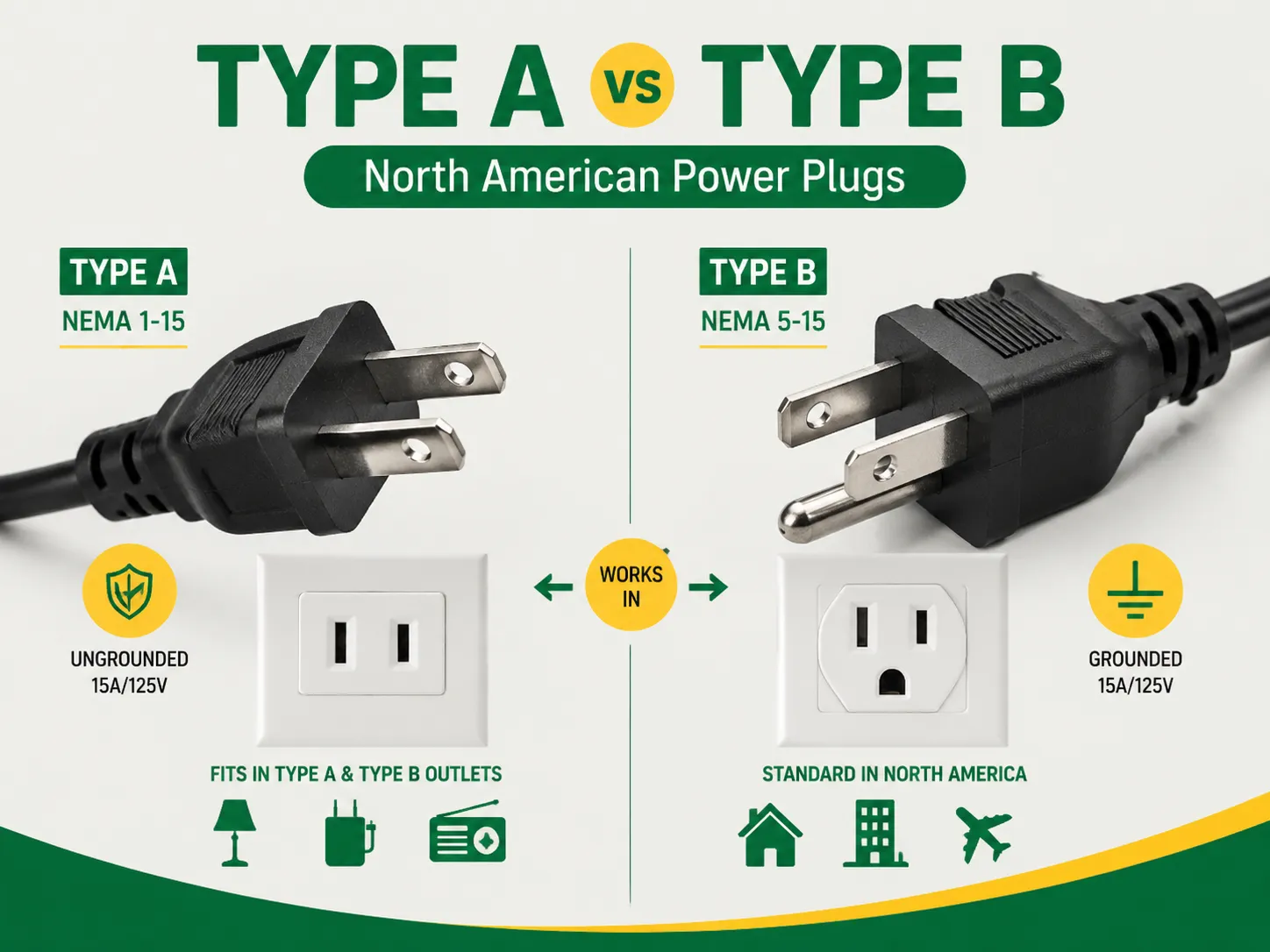
Offiziell als NEMA 5-15 bekannt, ist Typ B der Standardstecker in Nordamerika und verwendet die gleichen dualen flachen parallelen Klingen wie Typ A plus einen runden (U-förmigen) Erdungsstift unter den Klingen; dieser Stift hat einen Durchmesser von 4,8 mm und ist etwas länger als die Klingen, was sicherstellt, dass der Erdungsstift zuerst verbunden wird, bevor der Strom aktiviert wird. Die Nennstromstärke für diesen Stecker beträgt 15 A/125 V.
Wo Typ B zu finden ist: überall, da dieser Stecker seit den 1960er Jahren überall dort installiert wurde, wo Gebäude gebaut wurden, und in Häusern, Hotels, Büros und Flughäfen in den USA, Kanada und Mexiko verwendet wurde. In den meisten Fällen ist die moderne Steckdose vom Typ B, verfügt aber über USB-C-Ladeanschlüsse und TR-Schutzschieber, die jetzt Teil des Codes für Neubauten sind. Der Stecker vom Typ A passt in die Steckdose vom Typ B, während der Stecker vom Typ B nicht in die Steckdose vom Typ A passt (da der Erdungsstift keine Verbindungsmöglichkeit hat).
Wenn Sie Steckdosen in einer nordamerikanischen Immobilie aufrüsten, folgen moderne Steckdosen – einschließlich integrierter USB- und intelligenter Optionen in der IGOTO Steckdosenreihe – dem gleichen Typ A/B/NEMA-Fußabdruck, sodass sie in jede Standarddose passen.
NEMA steht für National Electrical Manufacturer’s Association, die die Standards für Stecker und Steckdosen in Nordamerika festlegt. Die wichtigen Codes sind:
| NEMA-Code | Gängiger Name | Konfiguration | Nennwert |
|---|---|---|---|
| NEMA 1-15 | Typ A | 2 flache parallele Pins, ungeerdet | 15 A / 125 V |
| NEMA 5-15 | Typ B | 2 flache Pins + runder Erdungsstift, geerdet | 15 A / 125 V |
| NEMA 5-20 | Typ B (20 A) | 2 flache Pins + Erdungsstift, eine Klinge um 90° gedreht | 20 A / 125 V (Küchen, Bäder) |
| NEMA 6-15 / 6-20 | 240-V-Steckdosen | 2 flache Pins + Erdungsstift, für 240-V-Geräte | 15-20 A / 240 V (Trockner, Klimaanlagen, Elektroautos) |
| NEMA 14-30 / 14-50 | Trockner / Herd / Elektroauto | 4 Pins (2 Phasen + Neutral + Erde) | 30-50 A / 240 V |
Für Reisende sind nur die Typen 1-15 (Typ A) und Typ 5-15 (Typ B) relevant – alle anderen Typen sind spezialisierte Stecker für höhere Ströme. In jedem Hotel und jedem Haus finden Sie eine 120-V-Universalsteckdose.
Nordamerika arbeitet mit einem 120-Volt-, 60-Hertz-System – das in den USA (120 V), Kanada (120 V) und Mexiko (obwohl Mexiko mit etwa 127 V etwas höher liegt) identisch ist. Diese Spannung liegt etwa halb so hoch wie die des Restes der Welt (220–240 V), was den anderen Teil des gesamten Kompatibilitätsproblems darstellt.
Die Spannungsebene funktioniert auch in:
Die Spannung ist nicht kompatibel mit Großbritannien, Europa, Japan, Australien, Neuseeland, China, Indien, Singapur und den meisten afrikanischen Ländern, da diese alle 220-240V verwenden und unterschiedliche Steckerformen haben.
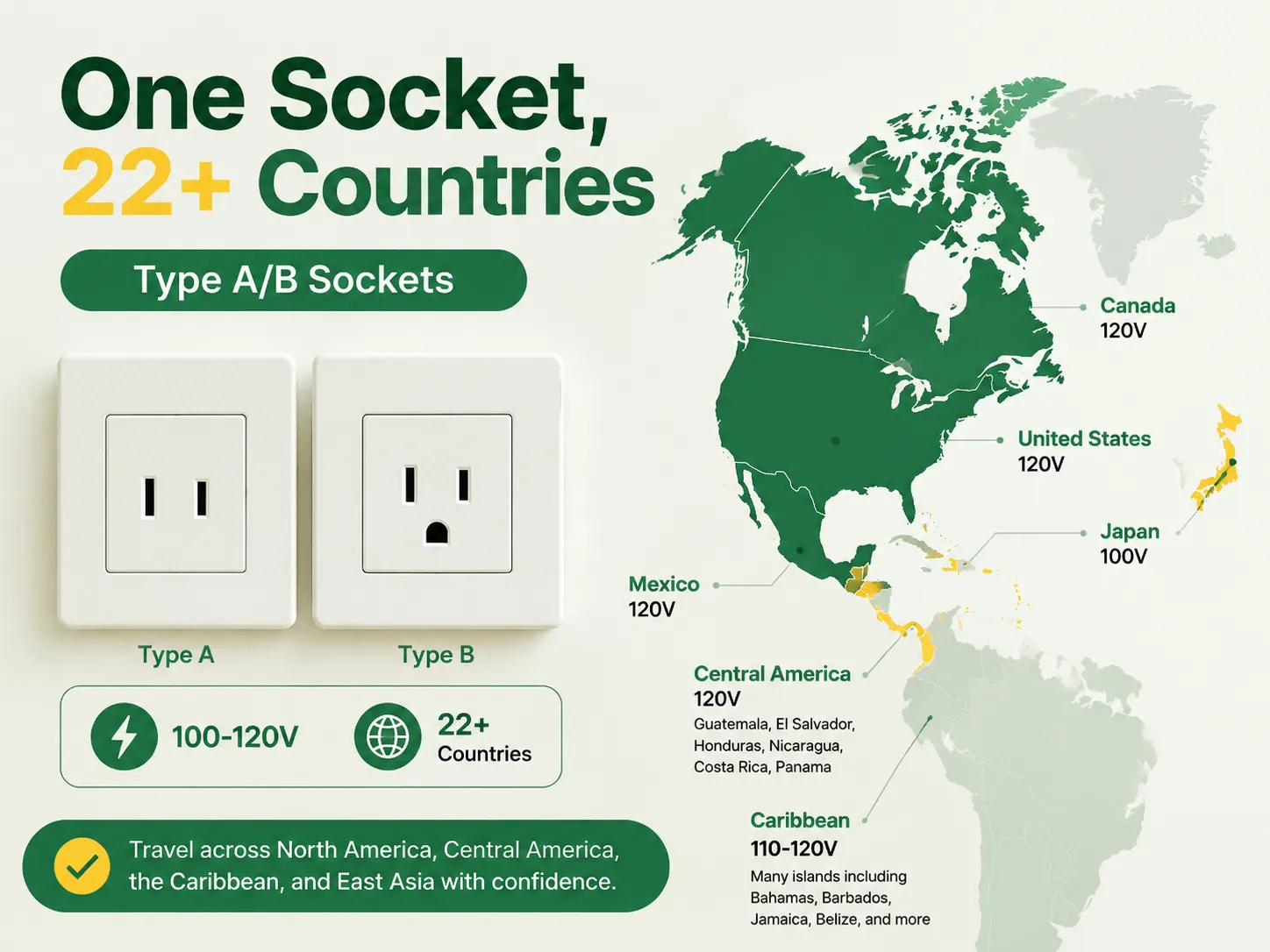
Die elektrische Standardisierung Nordamerikas ist unübertroffen: ein Steckertyp wird in mehr als 22 Ländern verwendet. In dieser Hinsicht sind die Stecker in den folgenden Regionen identisch:
Alles in allem kann eine Person von den USA nach Kanada reisen und bis nach Panama, ohne jemals an Steckdosenadapter denken zu müssen, was dieses elektrische System für Reisende aus den USA so benutzerfreundlich macht.
| Land / Region | Startseite Stecker | Adapter benötigt? | Benötigter Spannungswandler? |
|---|---|---|---|
| USA, Kanada, Mexiko | A / B | NEIN | NEIN |
| Zentralamerika, die meisten Karibikinseln | A / B | NEIN | Nein (110-127V) |
| Japan | A / B | NEIN (Stecker passen) | Normalerweise nein (100V vs. 120V) |
| Taiwan | A / B | NEIN | Nein (110V) |
| Vereinigtes Königreich / Irland | G | Ja | Ja (für Geräte, die nur 230V benötigen) |
| Festland-Europa | C / E / F | Ja | Ja (für Geräte, die nur 230V benötigen) |
| Australien / Neuseeland | ICH | Ja | Ja (für Geräte, die nur 230-240V benötigen) |
| China | A / C / I | Vielleicht (A passt; C/I benötigen Adapter) | Ja (220V vs 120V) |
| Südkorea | C / F | Ja | Ja (220V) |
| Indien | C / D | Ja | Ja (230V) |
Wichtiger Hinweis: Ein Adapter kann nur die Form des Steckers anpassen, aber keine Änderungen an der Spannung vornehmen. Wenn beispielsweise ein britischer Haartrockner mit nur einem Adapter in eine US-Steckdose gesteckt wird, erhält er 120V, wo er 230V erhalten sollte, was bedeutet, dass er kaum laufen und sich gefährlich aufheizen wird.
Allgemeine Regel: Wenn dort INPUT: 100-240V (oder 110-240V) steht, kann das Gerät mit Dual-Spannung arbeiten und benötigt nur einen Adapter. Wenn dort nur 120V oder 230V steht, handelt es sich um eine Einzelspannung, und wenn es aus einem Land mit 230V-Standard stammt, benötigt es in Nordamerika einen Wandler. Die meisten Handy-Ladegeräte, Laptop-Adapter, Kamera-Ladegeräte und Zahnbürsten-Ladegeräte sind Dual-Spannungs-fähig, während die meisten Haartrockner, Lockenstäbe und älteren Geräte dies nicht sind. Für die breitere Logik internationaler Stecker und Steckdosen – und wie das NEMA-System in die weltweiten Standards passt – unsere Anleitungen zu verschiedene Arten von elektrischen Schaltern und Steckdosen und der Grundlagen der Dimmer-Schalter-Installation decken die Hardwareseite von Wandgeräten ab.
Eine schnelle Überprüfung dauert nur zehn Sekunden; Sie müssen nur auf das kleine Etikett am Gerät oder an seinem Netzteil schauen, das sich normalerweise in der Nähe des Kabelanschlusses befindet.
| Beschriftungstext | Bedeutung | Benötigt in Nordamerika (aus 230V-Land) |
|---|---|---|
| “INPUT: 100-240V, 50/60Hz” | Dual-Voltage, weltweit | Nur Adapter |
| “INPUT: 110-240V” | Dual-Voltage | Nur Adapter |
| “INPUT: 100-120V” | Einzelspannung (NA/Japan-Standard) | Nur Adapter, wenn aus 120V-Land; Wandler, wenn aus 240V-Land |
| “INPUT: 220-240V” | Single-Voltage (230V-Standard) | Adapter + Wandler |
Wenn Sie aus einem Land reisen, in dem die Spannung zwischen 220V und 240V liegt, sollten Sie entweder einen Dual-Spannungs-Haartrockner mitnehmen oder einen vom Hotel bereitgestellten Reisehaartrockner verwenden.
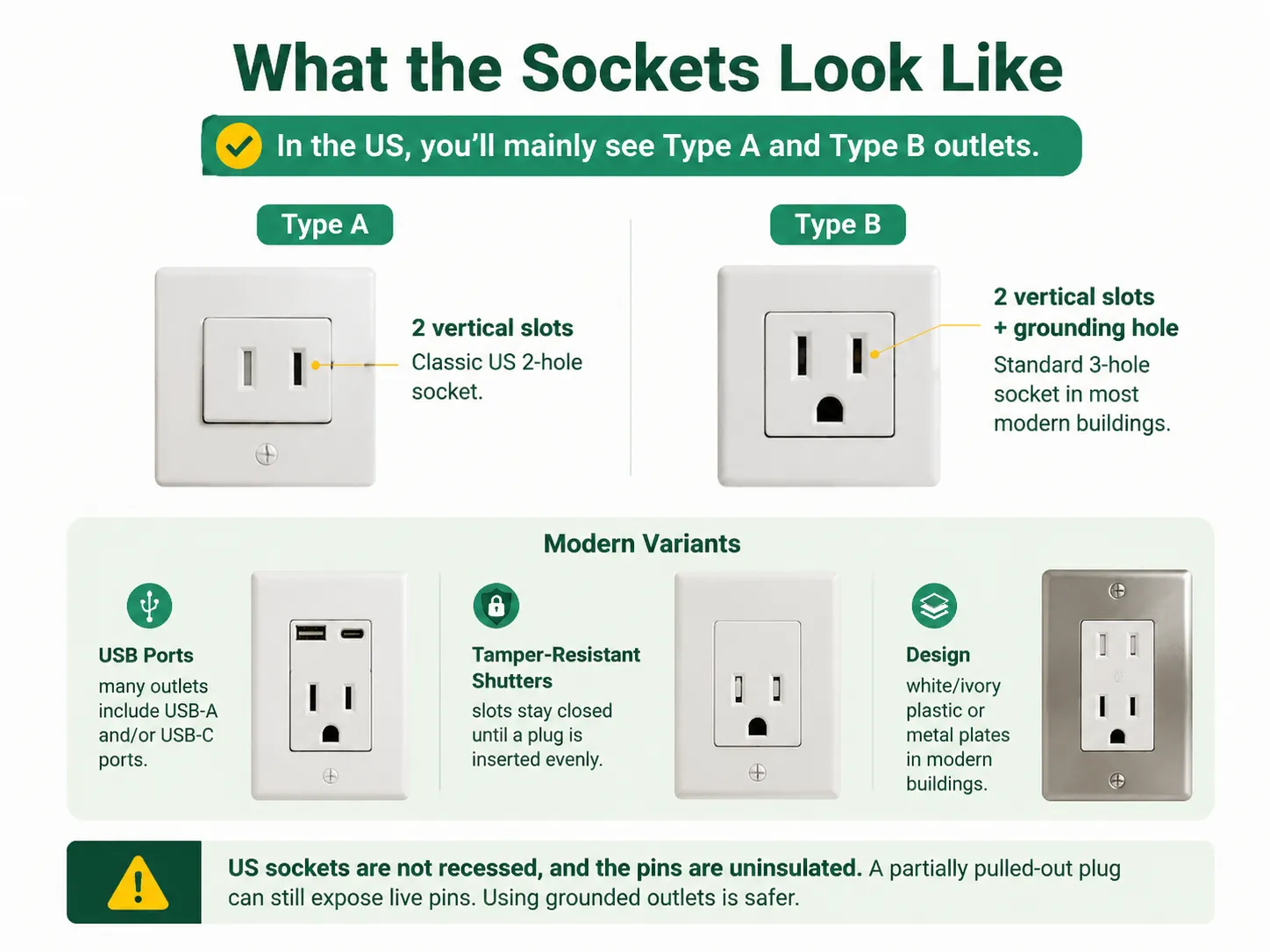
Die Identifizierung der Anschlüsse erleichtert das Reisen:
Die US-Steckdose ist sehr bekannt dafür, dass sie nicht in die Wand eingelassen ist und ihre Pins keine Isolierung haben, was bedeutet, dass ein nur teilweise eingesteckter Stecker immer noch stromführende Pins hat. Sie ist bei normaler Verwendung sicher genug, aber sie ist ein weiterer Grund, geerdete, zertifizierte Steckdosen zu verwenden – wie die manipulationssicheren und USB-ausgestatteten Steckdosen in der Anleitung zur Nachrüstung von USB-Steckdosen, und die intelligenten Wandsteuerungen, die in der IGOTO Smart-Schalter-Reihe für den gleichen nordamerikanischen Standard-Formfaktor erhältlich sind.
Für Vielreisende, die zwischen Regionen mit 120V und 240V Stromversorgung wechseln, ist es ratsam, hochwertige Universaladapter ($25-$45) zu verwenden.
Die in Nordamerika verwendeten Stecker und Steckdosen umfassen Typ A (mit zwei flachen parallelen Pins, die ungeerdet sind, bekannt als NEMA 1-15) und Typ B (mit zwei flachen Pins und einem runden Pin, der als Erdung dient – NEMA 5-15). Das System wird in den USA, Kanada, Mexiko, Mittelamerika und einem Großteil der Karibik verwendet. Die Verwendung von Typ-A-Steckern passt in beide Steckdosentypen, während Typ-B-Stecker der neue Standard in allen modernen Gebäuden sind.
Es gibt zwei Arten von elektrischen Steckern: Typ A (NEMA 1-15), ein 2-poliger, ungeerdeter Stecker, der hauptsächlich für doppelt isolierte Geräte und Ladegeräte verwendet wird. Typ B (NEMA 5-15) ist ein 3-poliger, geerdeter Stecker, der hauptsächlich für Elektrogeräte und Computer verwendet wird. Ihre Nennleistung ist ebenfalls gleich bei 15 A und 125 V.
Absolut richtig. Kanada verwendet, genau wie die USA, exakt die gleichen Stecker vom Typ A und Typ B, die gleiche Spannung von 120 V und die gleiche Frequenz von 60 Hz. Daher können ein US-Stecker und ein kanadischer Stecker austauschbar verwendet werden. Die von der NEMA in den USA und der CSA in Kanada festgelegten Standards bestimmen die Kompatibilität dieser Stecker.
In den Vereinigten Staaten von Amerika werden die Steckdosen vom Typ A (NEMA 1-15) und Typ B (NEMA 5-15) bei 120 V/60 Hz verwendet. Der Typ B ist der heutige Standard mit zwei Schlitzen mit vertikalen Öffnungen und einem runden Loch zur Erdung; andererseits ist der Typ A offensichtlich die zwei vertikalen Schlitze in älteren Gebäuden, in denen Typ-A-Stecker verwendet werden könnten. Steckdosen vom Typ NEMA 14-30 oder 14-50 für höhere Leistung sind nur für Trockner, Herde und Ladegeräte für Elektrofahrzeuge bestimmt.
Der nordamerikanische Steckdosentyp ist ein Beispiel für Standardisierung. Das Steckersystem Typ A und B, das mit 120 V/60 Hz betrieben wird, wird in mehr als 22 Ländern Nordamerikas verwendet, von Kanada im Norden bis Panama im Süden. Daher ist es bei der Verwendung von 120-V-Steckern der einfachste Anschluss für elektrische Geräte. Für Besucher aus 220-240-V-Ländern ist diese Standardisierung wieder hilfreich, da sie die Antwort einfach macht: Typ A/B-Adapter für die Form und ein Spannungswandler für jedes Gerät, das mit einer Spannung betrieben wird – basierend auf der zehnsekündigen Überprüfung des “INPUT”-Etiketts.
Mit anderen Worten, für jeden Reisenden, der nach Nordamerika kommt, lautet die Antwort: Die Stecker aus den USA/Kanada/Mexiko/Japan passen einfach; alle anderen benötigen den Adapter; Reisende aus Regionen mit 230 V benötigen einen Spannungswandler für jedes ihrer Einzelspannungsgeräte – Etiketten geprüft, und ein geeigneter Universaladapter löst alle Probleme, sodass Besucher die wunderschöne Landschaft Nordamerikas ohne Sorgen über verbrannte Ladegeräte genießen können.
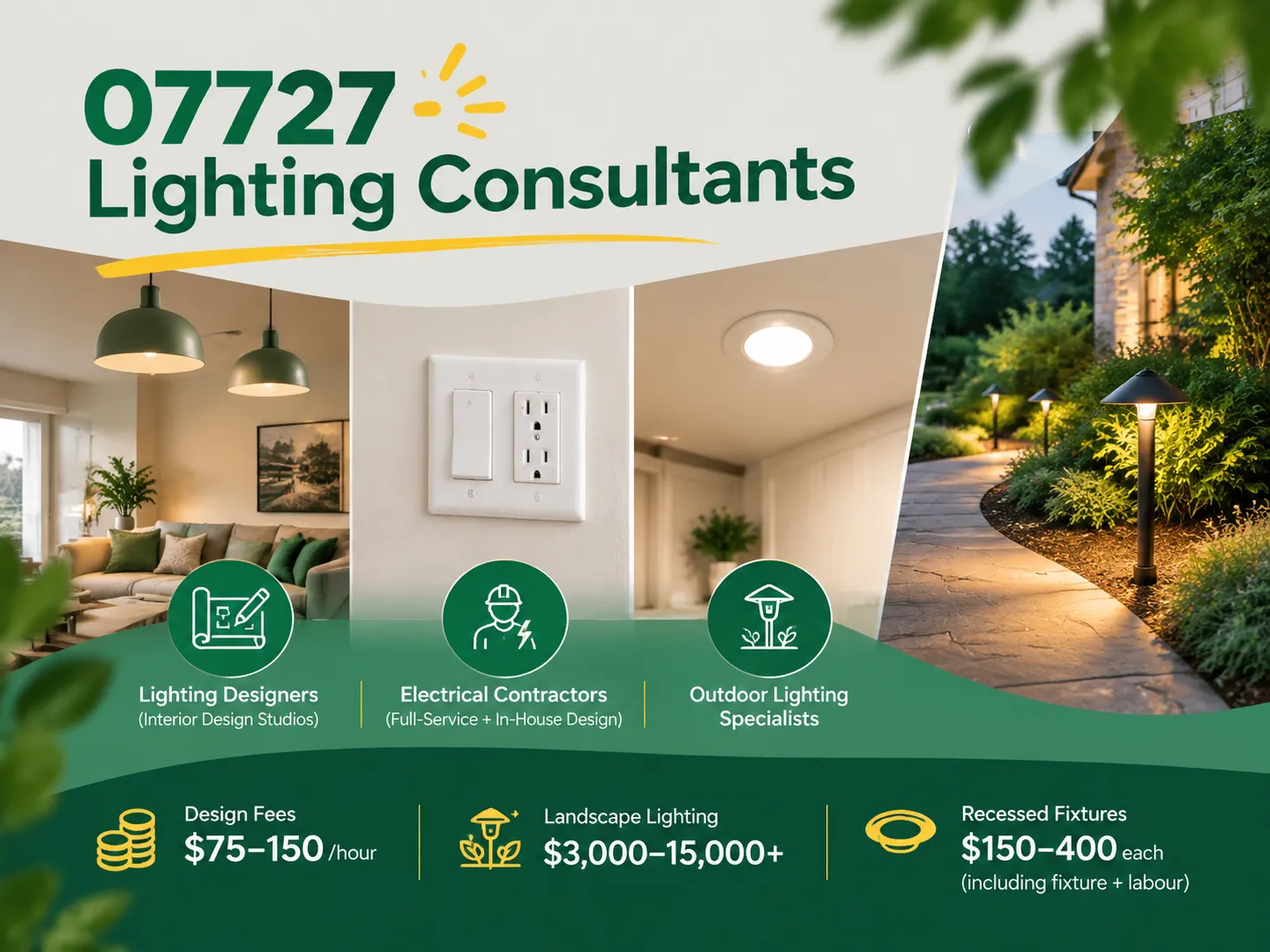
Farmingdale, zusammen mit Teilen von Wall Township und Tinton Falls, New Jersey, teilen sich die gleiche Postleitzahl 07727. Die meisten der in den 1950er bis 1990er Jahren erbauten Häuser existieren heute noch. Die meisten der Hauseigentümer renovieren ihre Häuser anstatt neue Häuser zu bauen. Hauseigentümer neigen dazu, viel mehr auszugeben für […]

Der Begriff “07984 Lichtberater” vermittelt den Menschen den Eindruck, dass die fünf Ziffern eine Art Postleitzahl darstellen, die den Ort angibt, an dem Lichtberater Dienstleistungen anbieten. Dies ist jedoch falsch: Es gibt kein Postgebiet mit dem Code 07984, der lediglich ein Code für mobile Telekommunikation in Großbritannien ist. Das bedeutet, dass die […]
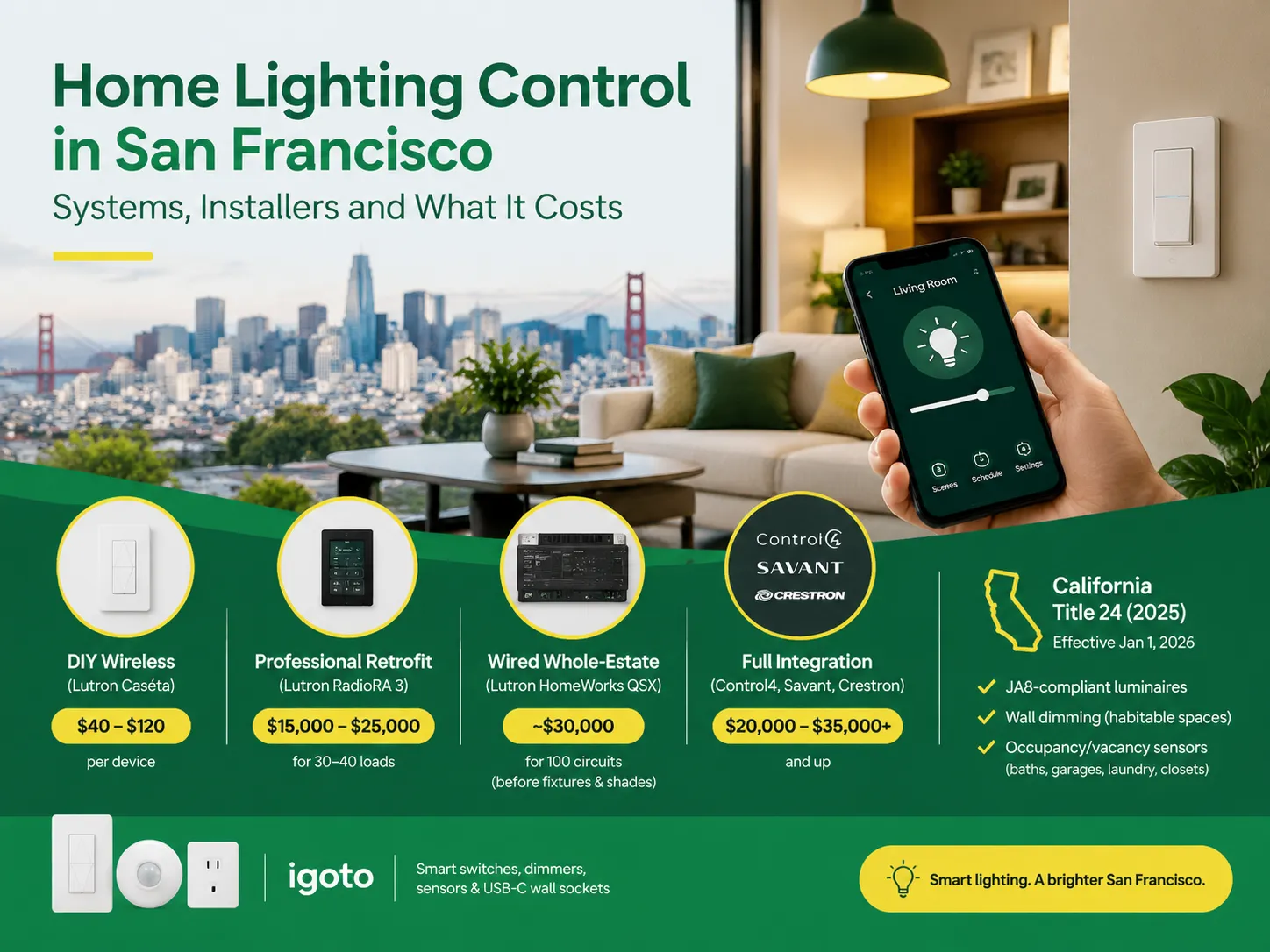
San Francisco ist nicht der durchschnittliche Markt für Beleuchtungssteuerungen. Der Wohnungsbestand ist alt und dicht, und der elektrische Code erlaubt nicht so viele elektrische Installationen wie fast überall sonst in den USA. Die meisten Häuser, die komplexe Beleuchtung wünschen, sind viktorianische oder edwardianische Gebäude, bei denen niemand mit dem Öffnen beginnen möchte […]

 Nr. 6 Tuozhan Road, Leshang Pioneer Park, Yueqingwan Bay Harbor, Stadt Yueqing, Provinz Zhejiang


