

Európából, Angliából vagy Ausztráliából származó töltőkkel teli táskával megérkezve New Yorkba, Torontóba vagy Mexikóvárosba, az utazó kihívással szembesül, mivel a szállodai szoba elektromos konnektorai teljesen eltérőek lesznek az otthoniaktól, és az ellátott áram kevesebb lesz, mint amit a berendezés kezelni tudna. Az észak-amerikai stílusú konnektorok az egész kontinensen azonosak, Kanadától Panamáig, ezáltal nagyobb felhasználói bázist alkotva, de ugyanakkor zavaró az utazók számára.
Az útmutató számos hasznos részletet ismertet az észak-amerikai konnektorokról és dugókról, beleértve a két dugótípust (A és B), a NEMA által meghatározott szabványaikat, a feszültséget és frekvenciát (120V és 60 Hz), a konnektorok kialakítását, a hasonló rendszerekkel rendelkező országokat, valamint azt, hogy az utazóknak ki kell deríteniük, szükségük lesz-e adapterre, átalakítóra, vagy semmire sem.
Észak-Amerikában az A és B típusú dugókat és konnektorokat használják, amelyek megfelelnek ugyanannak a NEMA szabványnak az USA-ban, Mexikóban és Kanadában, valamint Közép-Amerika és a Karibi-térség nagy részén. Az A típus két lapos, párhuzamos érintkezőből áll, míg a B típus ugyanazokat a lapos érintkezőket tartalmazza egy kerek földelő érintkezővel, amely e két érintkező alatt található. Az USA, Kanada, Mexikó, Japán és Latin-Amerika nagy része közvetlenül használhatja a dugóit a konnektorokban. Az Egyesült Királyságból (G típus), Európából (C/E/F típus), Ausztráliából (I típus), Kínából és a legtöbb ázsiai országból érkező látogatóknak adaptert kell használniuk a dugóik alakjának megváltoztatásához.
Az A típus (más néven NEMA 1-15) a hagyományos észak-amerikai kétpólusú (vagy lapos pengés) dugó, amelynek két lapos pengéje van, körülbelül 1,5 mm vastag és körülbelül 15,9-18,3 mm hosszú. A két érintkező közötti távolság körülbelül 12,7 mm. Az A típusú dugó földelés nélküli, nincs rajta földelő érintkező, és 15A/125V névleges áramerősséggel rendelkezik.
A dugó két pengéje általában polarizált. Az egyik penge szélesebb, mint a másik; például a nulla érintkező szélessége körülbelül 7,9 mm, míg az élő érintkező szélessége 6,3 mm. A kialakítás lehetővé teszi, hogy a dugót csak egy irányban lehessen bedugni, ami biztosítja a lámpa vagy a készülék biztonságát.
Az A típusú dugót használó tárgyak: kis készülékek és dupla szigetelésű eszközök, mint például lámpák, mobiltelefon-töltők, hordozható rádiók, kétpólusú kábelek különböző eszközökben. Az ezzel az amerikai kétpólusú dugóval rendelkező eszközök felhasználói nemcsak az A típusú fali konnektorokban, hanem a B típusú fali konnektorokban is megtalálhatják a dugókat.
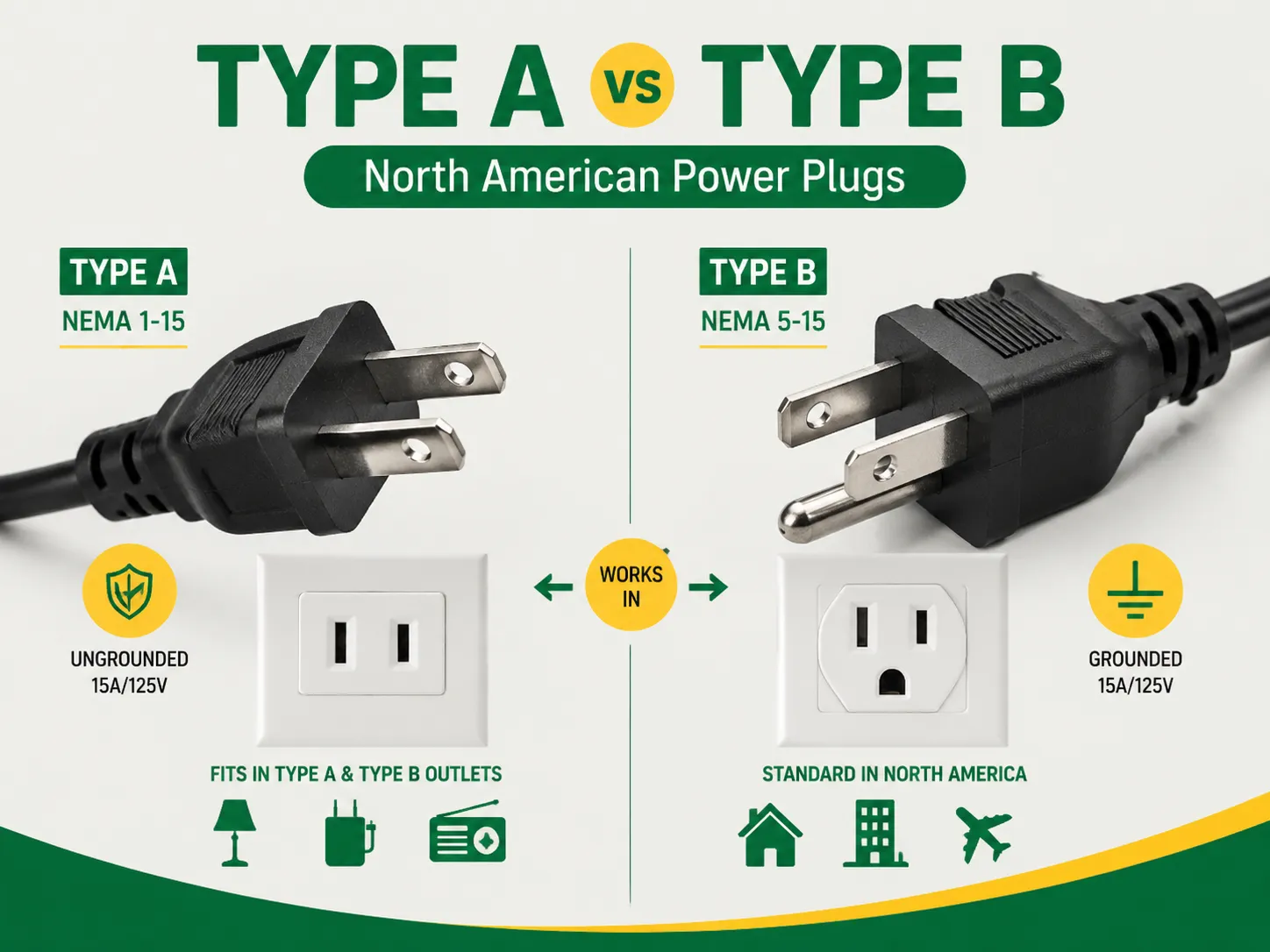
Hivatalos nevén NEMA 5-15, a B típus vált az észak-amerikai szabványos dugóvá, és ugyanazokat a kettős lapos párhuzamos pengéket használja, mint az A típus, plusz egy kerek (U alakú) földelő érintkezőt a pengék alatt; ez az érintkező 4,8 mm átmérőjű, és valamivel hosszabb, mint a pengék, ami biztosítja, hogy a földelő érintkező előbb csatlakozzon, mielőtt az áramellátás bekapcsolódik. Ennek a dugónak a névleges áramerőssége 15 A/125 V.
Hol található a B típus: bárhol, mivel ezt a dugót mindenhol beépítették, ahol épületeket építettek az 1960-as évek óta, és otthonokban, szállodákban, irodákban és repülőtereken használták az Egyesült Államokban, Kanadában és Mexikóban. A legtöbb esetben a modern konnektor B típusú, de USB-C töltőportokkal rendelkezik, valamint a TR redőnyök is részei az új építésű épületek kódexének. Az A típusú dugó illeszkedik a B típusú konnektorba, míg a B típusú dugó nem illeszkedik az A típusú konnektorba (mivel a földelő érintkezőnek nincs hova csatlakoznia).
Ha egy észak-amerikai ingatlanban konnektorokat újít fel, a modern aljzatok – beleértve az USB-integrált és okos opciókat a IGOTO konnektor kínálatban – ugyanazt az A/B/NEMA lábnyomot követik, így bármilyen szabványos dobozba beszerelhetők.
A NEMA a National Electrical Manufacturer’s Association rövidítése, amely az észak-amerikai dugók és konnektorok szabványait határozza meg. A fontos kódok a következők:
| NEMA kód | Közös név | Konfiguráció | Névleges érték |
|---|---|---|---|
| NEMA 1-15 | A típus | 2 lapos párhuzamos érintkező, földelés nélküli | 15A / 125V |
| NEMA 5-15 | B típus | 2 lapos érintkező + kerek földelés, földelt | 15A / 125V |
| NEMA 5-20 | B típus (20A) | 2 lapos érintkező + földelés, egyik penge 90°-kal elforgatva | 20A / 125V (konyhák, fürdőszobák) |
| NEMA 6-15 / 6-20 | 240V-os konnektorok | 2 lapos érintkező + földelés, 240V-os készülékekhez | 15-20A / 240V (szárítók, klímák, elektromos járművek) |
| NEMA 14-30 / 14-50 | Szárítógép / tűzhely / elektromos jármű | 4 érintkező (2 fázis + nulla + földelés) | 30-50A / 240V |
Az utazók számára csak az 1-15 (A típus) és az 5-15 (B típus) típusok relevánsak – minden más típus speciális, nagyobb áramfelvételű dugó. Minden szállodában és otthonban egy 120V-os univerzális konnektor található.
Észak-Amerika egy 120 voltos, 60 hertzes rendszeren működik – ami az USA-ban (120V), Kanadában (120V) és Mexikóban (bár Mexikóban kissé magasabb, kb. 127V) azonos. Ez a feszültségszint a világ többi részén használt feszültség (220-240V) körülbelül fele, ami a kompatibilitási rejtvény másik részét alkotja.
A feszültségszint a következő helyeken is működik:
A feszültségszint nem kompatibilis az Egyesült Királysággal, Európával, Japánnal, Ausztráliával, Új-Zéld….
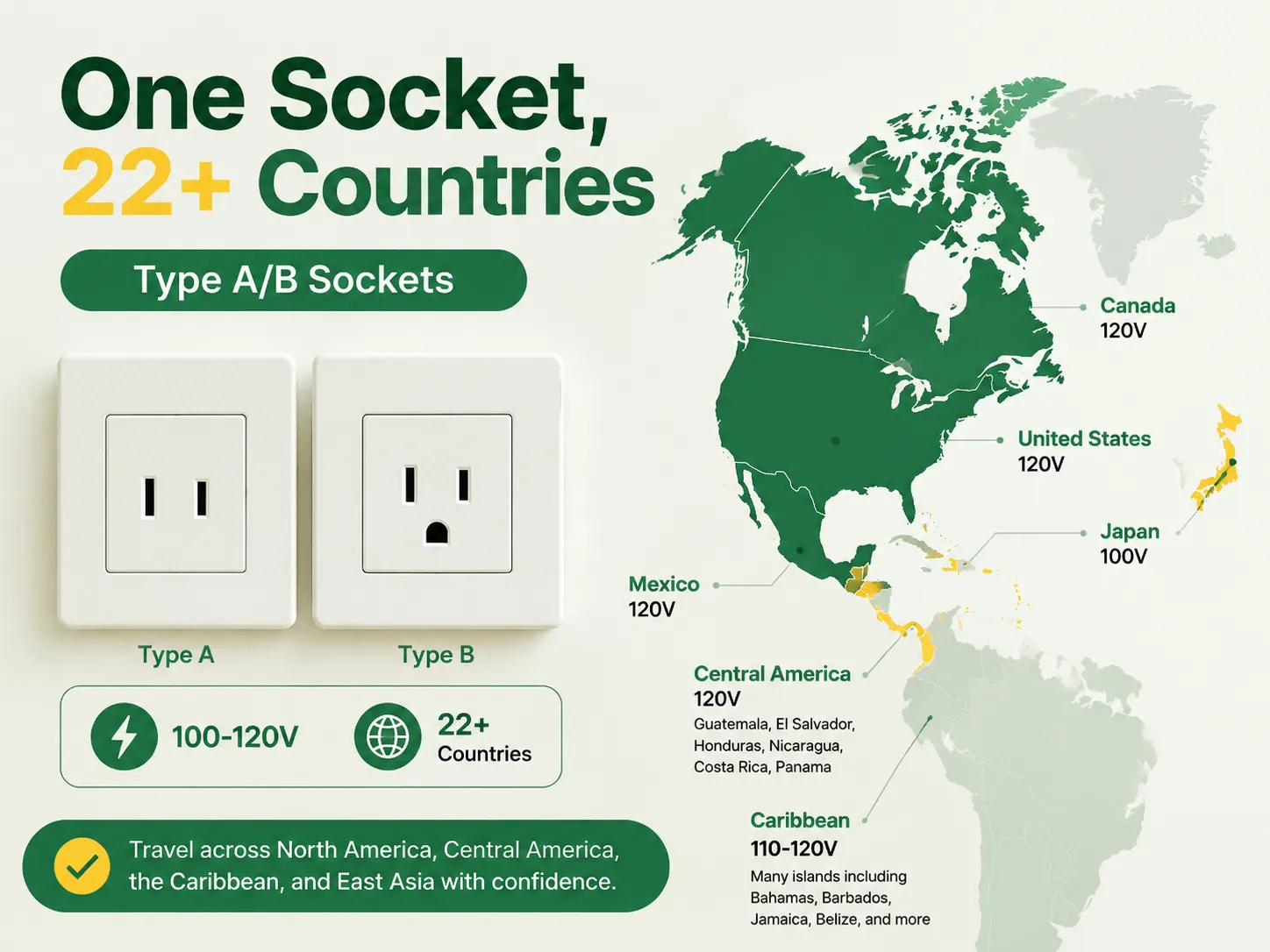
Észak-Amerika elektromos szabványosítása páratlan: egyetlen dugó kialakítást több mint 22 országban használnak. Ebben a tekintetben a dugók az alábbi régiókban azonosak:
Összességében egy személy érkezhet Kanadába az USA-ból, és egészen addig, amíg fél világot meg nem tesz Panamáig, soha nem kell gondolnia a dugóadapterekre, amelyek ezt az elektromos rendszert annyira utazóbaráttá teszik az USA-ból érkezők számára.
| Ország / Régió | Otthoni dugó | Adapter szükséges? | Feszültségátalakító szükséges? |
|---|---|---|---|
| USA, Kanada, Mexikó | A / B | Nem | Nem |
| Közép-Amerika, a legtöbb karibi ország | A / B | Nem | Nem (110-127V) |
| Japán | A / B | Nem (a dugók illeszkednek) | Általában nem (100V vs 120V) |
| Tajvan | A / B | Nem | Nem (110V) |
| Egyesült Királyság / Írország | G | Igen | Igen (csak 230V-os eszközökhöz) |
| Kontinentális Európa | C / E / F | Igen | Igen (csak 230V-os eszközökhöz) |
| Ausztrália / Új-Zéland | én | Igen | Igen (csak 230-240V-os eszközökhöz) |
| Kína | A / C / I | Talán (az A illeszkedik; a C/I adaptert igényel) | Igen (220V vs 120V) |
| Dél-Korea | C / F | Igen | Igen (220V) |
| India | C / D | Igen | Igen (230V) |
Fontos megjegyzés: az adapter csak a dugó alakját tudja kompatibilissé tenni, de a feszültségen nem változtat. Például, ha egy brit hajszárítót egy amerikai konnektorba dugunk csak adapterrel, akkor 120V-ot fog kapni, ahol 230V-ot kellene kapnia, ami azt jelenti, hogy alig fog működni, és veszélyesen túlmelegszik.
Általános szabály: ha INPUT: 100-240V (vagy 110-240V) felirat szerepel rajta, akkor az eszköz kettős feszültségen is működik, és csak adapterre van szüksége. Ha csak 120V vagy 230V szerepel rajta, akkor egyfeszültségű, és ha egy 230V-os szabványú országból származik, akkor Észak-Amerikában átalakítóra van szüksége. A legtöbb telefontöltő, laptop adapter, kameratöltő és fogkefetöltő kettős feszültségű, míg a legtöbb hajszárító, hajcsavaró és régebbi eszköz nem az. A nemzetközi dugók és aljzatok szélesebb logikája – és hogy a NEMA rendszer hogyan illeszkedik a világ szabványai közé – útmutatóink a különböző típusú elektromos kapcsolókhoz és aljzatokhoz és a a dimmer kapcsoló telepítésének alapjai a fali eszközök hardveroldalát fedik le.
Egy gyors ellenőrzés mindössze tíz másodpercet vesz igénybe; csak meg kell néznie az eszközön vagy a tápegységén található kis címkét, amely általában a kábelbevezetés környékén található.
| Címke szövege | Jelentés | Szükséges Észak-Amerikában (230V-os országból érkezőknek) |
|---|---|---|
| “INPUT: 100-240V, 50/60Hz” | Kettős feszültségű, világszerte | Csak adapter |
| “INPUT: 110-240V” | Kettős feszültségű | Csak adapter |
| “INPUT: 100-120V” | Egyfeszültségű (NA/Japán szabvány) | Csak adapter, ha 120V-os országból érkezik; átalakító, ha 240V-os országból érkezik |
| “INPUT: 220-240V” | Egyfeszültségű (230V szabvány) | Adapter + átalakító |
Ha olyan országból utazik, ahol a feszültség 220V és 240V között van, akkor vagy kettős feszültségű hajszárítót kell vinnie, vagy a szálloda által biztosított utazó hajszárítót kell használnia.
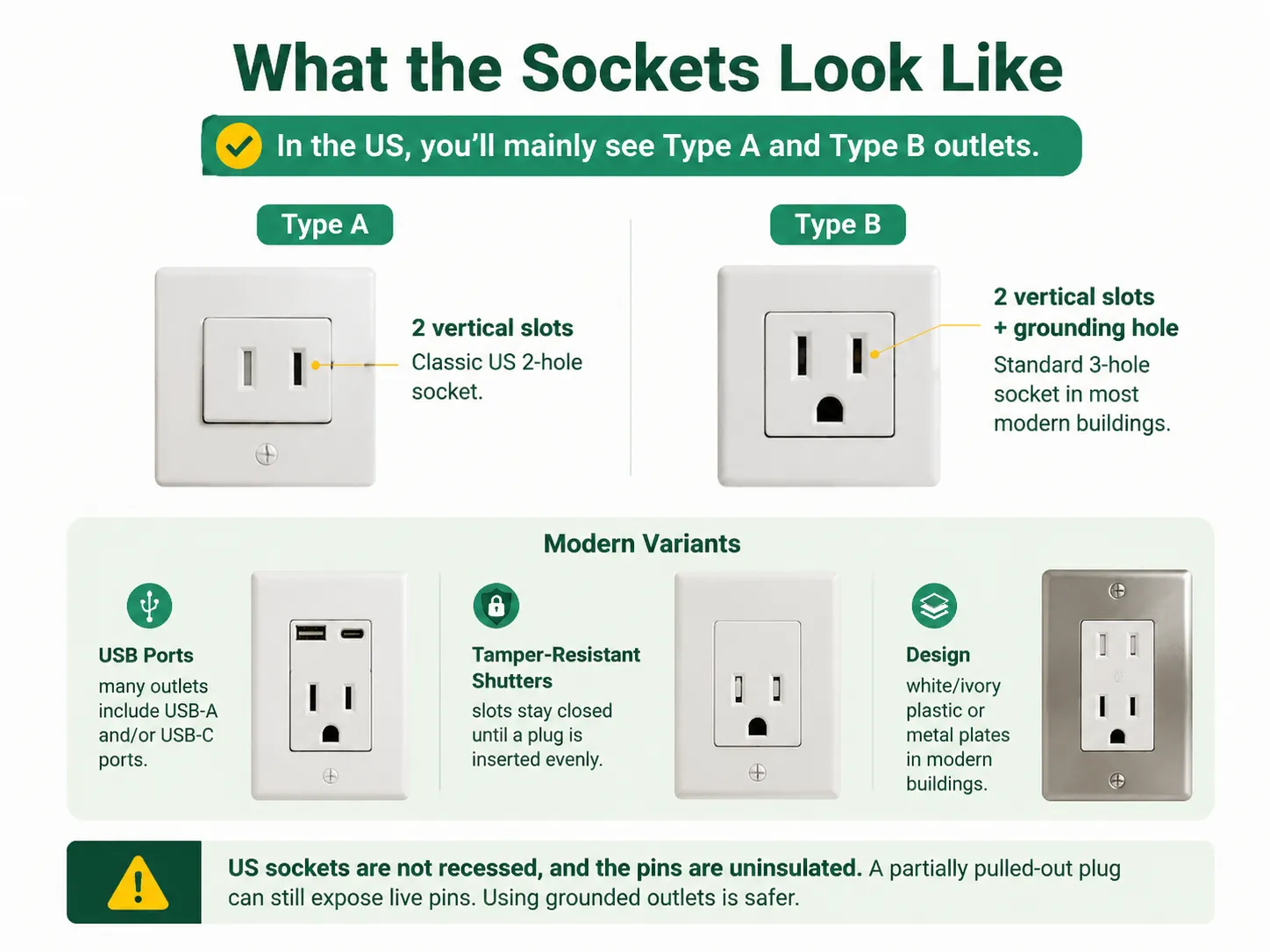
A csatlakozók azonosítása megkönnyíti az utazást:
Az amerikai típusú aljzat arról ismert, hogy nem süllyesztett a falba, és a tűi nem szigeteltek, ami azt jelenti, hogy egy részlegesen bedugott dugónál is érintkezők állnak rendelkezésre. Normál használat mellett elég biztonságos, de ez még egy ok arra, hogy földelt, tanúsított aljzatokat használjunk – mint például a tamper-álló és USB-vel felszerelt aljzatok a USB aljzat frissítési útmutatóban, és az okos fali vezérlők, amelyek elérhetők a IGOTO okoskapcsoló sorozatban ugyanazon az észak-amerikai szabványos lábnyomon.
Azoknak, akik gyakran utaznak a 120V és 240V közötti feszültségű régiók között, ajánlott magas minőségű univerzális adaptereket használni ($25-$45).
Az Észak-Amerikában használt dugók és aljzatok közé tartozik az A típus (két lapos, párhuzamos, földelés nélküli érintkezővel, NEMA 1-15 néven ismert) és a B típus (két lapos érintkezővel és egy kerek érintkezővel, amely földelésként szolgál – NEMA 5-15). A rendszert az USA-ban, Kanadában, Mexikóban, Közép-Amerika nagy részén és a Karib-térség nagy részén használják. Az A típusú dugók mindkét típusú aljzathoz illeszkednek, míg a B típusú dugók az új követelmény szabványt jelentik minden modern épületben.
Kétféle elektromos dugó létezik: A típus (NEMA 1-15), amely 2 tűs, földelés nélküli, főként kettős szigetelésű készülékekhez és töltőkhöz használatos. A B típus (NEMA 5-15) egy 3 tűs, földelt dugó, amelyet főként elektromos eszközökhöz és számítógépekhez használnak. A névleges értékük is megegyezik: 15A és 125V.
Teljesen helyes. Kanada, akárcsak az USA, pontosan ugyanazokat az A és B típusú dugókat, ugyanazt a 120V-os feszültséget és ugyanazt a 60Hz-es frekvenciát használja. Ezért az USA dugó és a kanadai dugó felcserélhetően használható. Az USA-ban a NEMA, Kanadában pedig a CSA által megadott szabványok határozzák meg ezeknek a dugóknak a kompatibilitását.
Az Amerikai Egyesült Államokban az A (NEMA 1-15) és a B típusú (NEMA 5-15) aljzatokat 120V/60Hz feszültségen használják. A B típus a két függőleges nyílású és egy kerek földelőnyílással rendelkező aljzat, és ez a mai szabvány; másrészt az A típus nyilvánvalóan a két függőleges nyílású aljzat a régebbi épületekben, ahol az A típusú dugók használhatók lennének. A nagyobb teljesítményű NEMA 14-30 vagy 14-50 aljzatok csak szárítókhoz, tűzhelyekhez és elektromos járművek töltőihez használhatók.
Az észak-amerikai aljzat típus egy példa a szabványosításra. Az A és B típusú dugórendszert, amely 120V/60Hz feszültségen működik, több mint 22 országban használják Észak-Amerikában, Kanadától Panamáig. Ezért, ha valaki 120V-os dugókat használ, ez a legegyszerűbb csatlakozó az elektromos eszközökben. A 220-240V-os országokból érkező látogatók számára ez a szabványosítás ismét hasznos, mivel egyszerűvé teszi a válasz felismerését: A/B típusú adapter az alakhoz és feszültségátalakító minden egyfeszültségű készülékhez – a “BEMENET” címke tíz másodperces ellenőrzése alapján.
Más szóval, minden Észak-Amerikába utazó számára a válasz a következő: az USA/Kanada/Mexikó/Japán dugói egyszerűen becsatlakoznak; mindenki másnak adapterre van szüksége; a 230V-os régióból érkező utazóknak feszültségátalakítót kell beszerezniük minden egyes egyfeszültségű készülékükhöz – a címkék ellenőrzése, és egy megfelelő univerzális adapter megvásárlása megoldja az összes problémát, így a látogatók csak Észak-Amerika gyönyörű tájait élvezhetik, anélkül, hogy az égett töltők miatt aggódnának.

Farmingdale, valamint Wall Township és Tinton Falls egyes részei, New Jersey, ugyanazt a 07727-es irányítószámot használják. A 1950-es és 1990-es évek között épült házak többsége ma is létezik. A háztulajdonosok többsége felújítja házát, ahelyett, hogy új otthonokat építene. A háztulajdonosok hajlamosak sokkal többet költeni […]

A “07984 világítástechnikai tanácsadók” kifejezés azt a benyomást kelti az emberekben, hogy az öt számjegy egyfajta irányítószámot képvisel, amely jelzi azt a helyet, ahol a világítástechnikai tanácsadók szolgáltatásokat nyújtanak. Ez azonban helytelen: nincs 07984 kódú postai terület, ez csupán egy mobil távközlési kód Nagy-Britanniában. Ez azt jelenti, hogy a […]

San Francisco nem az átlagos világítási vezérlő piac. Az ingatlanállomány régi és sűrű, és az elektromos kód nem engedélyez annyi elektromos telepítést, mint szinte bárhol máshol az Egyesült Államokban. A legtöbb olyan otthon, amely bonyolult világítást szeretne, viktoriánus vagy edwardi épület, ahol senki sem akarja elkezdeni a nyitogatást […]

 No.6 Tuozhan Road, Leshang Pioneer Park, Yueqingwan Bay Harbor, Yueqing város, Zhejiang tartomány


