

Se viaggi spesso, probabilmente sai che preparare la valigia per Singapore è una delle cose più semplici da fare in Asia, ma anche una delle più difficili perché utilizza spine di tipo UK (invece di quelle di tipo US). Se hai bisogno di un trasformatore, di un adattatore di spina o di entrambi dipende da due domande che i turisti confondono di solito.
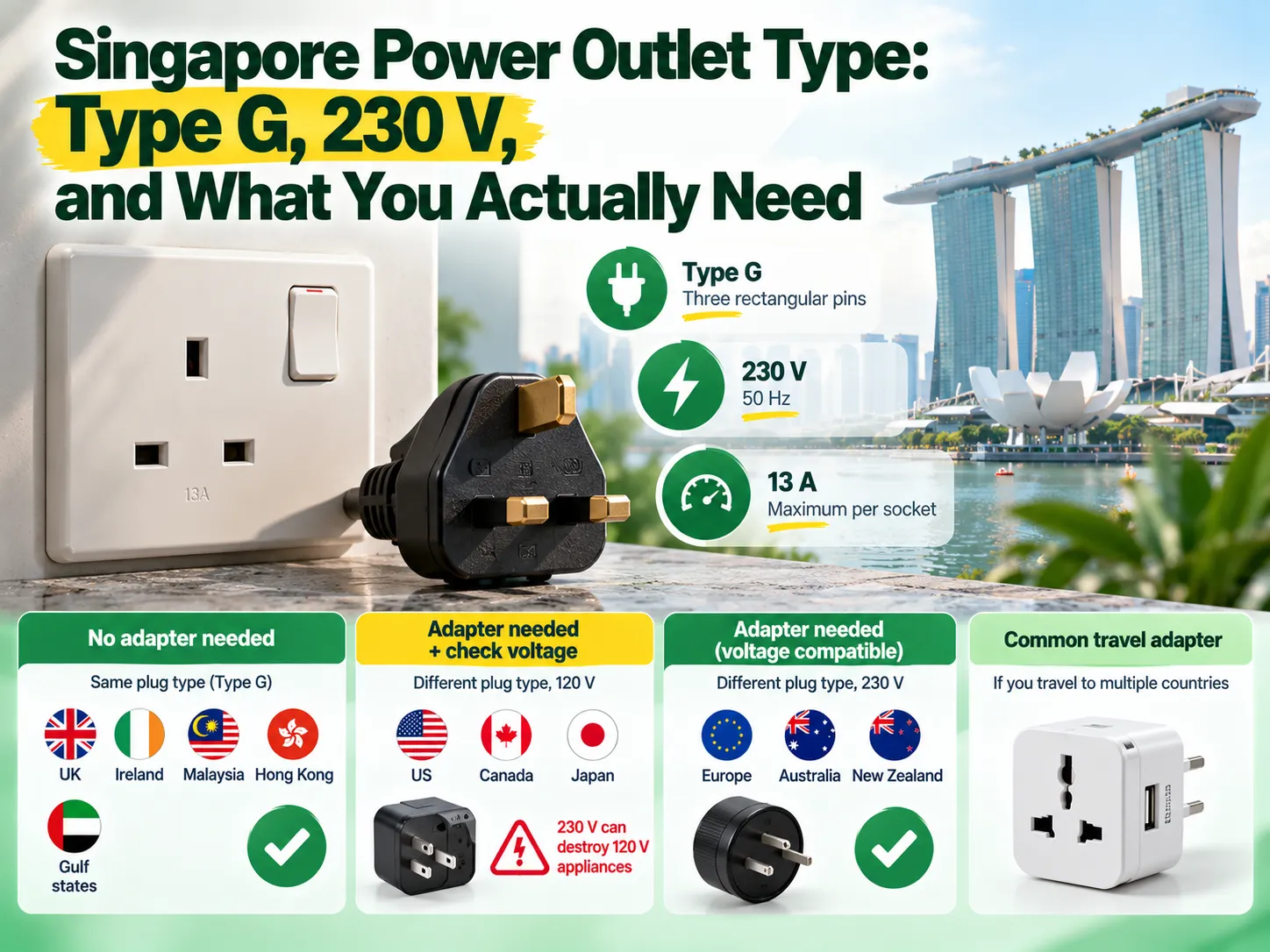
In breve: A Singapore, la spina utilizzata è il Tipo G, che si basa sullo standard britannico BS 1363 della norma SS 145 con le stesse caratteristiche. La tensione di alimentazione di Singapore e la frequenza sono 230 V e 50 Hz. I visitatori provenienti da Regno Unito, Irlanda, Malesia, Hong Kong e alcuni stati del Golfo non avranno bisogno di nulla. I visitatori provenienti da USA, Canada e Giappone dovrebbero utilizzare un adattatore e controllare la tensione. Pertanto, gli apparecchi progettati per una fornitura di 120 V saranno danneggiati. I visitatori provenienti da paesi europei, Australia e Nuova Zelanda avranno bisogno solo dell'adattatore, poiché la tensione è la stessa.
La disposizione di tre pin rettangolari nel Tipo G è unica. I due pin piatti in basso sono posizionati per fungere da pin attivo e neutro, mentre quello più lungo in alto funge da pin di terra. Il motivo per cui il pin di terra è più lungo è che consente di stabilire la connessione di terra prima di quella attiva.
Tutte le spine a Singapore seguono questo schema e possiedono caratteristiche di design uniche che le rendono una delle spine più sicure al mondo. Le principali caratteristiche includono:
L'immagine più ampia di come le forme delle spine variano a livello globale — e perché ci sono quindici tipi nominati piuttosto che uno — è esposta in questa panoramica dei diversi tipi di prese a muro e dove ciascuna di esse è utilizzata.
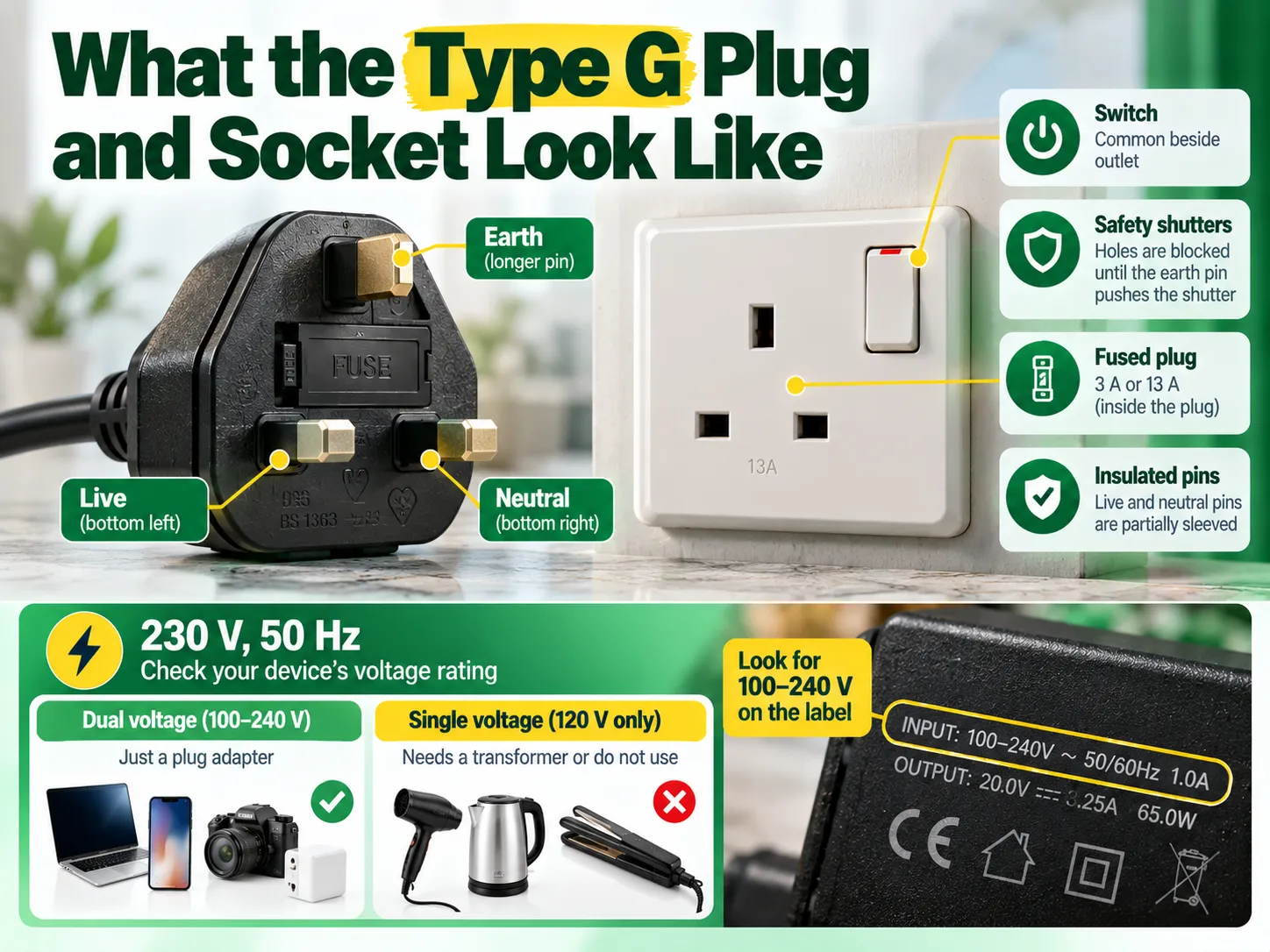
Singapore è alimentata con elettricità a 230 V, 50 Hz, che è conforme agli standard europei, a differenza del Nord America. La rete è gestita da SP Group ed è conosciuta per essere una delle reti più stabili del mondo. La tensione fornita è quasi sempre entro alcuni punti percentuali del valore nominale.
Questo numero implica due cose importanti:
Per evitare problemi quando si viaggia a Singapore, assicurati di cercare l'etichetta a doppia tensione. La maggior parte dei laptop, caricabatterie per telefoni, caricabatterie per fotocamere, caricabatterie per spazzolini elettrici e altoparlanti portatili dell'ultimo decennio sono progettati per funzionare nell'intervallo di 100 – 240 V, 50/60 Hz e richiederanno quindi solo un adattatore per la spina quando utilizzati a Singapore. Gli unici dispositivi che presentano un potenziale rischio di guasto sono quelli che consumano elettricità direttamente (asciugacapelli, piastre, bollitori, ecc.).
Qui è dove la maggior parte della confusione scompare, perché la risposta dipende interamente da dove provieni.
| Provenendo da | Il tuo tipo di spina | Adattatore necessario? | Voltaggio |
|---|---|---|---|
| Regno Unito, Irlanda, Malesia, Hong Kong | Tipo G | NO | Compatibile a 230 V |
| UAE, Qatar, Bahrein, Kuwait, Oman | Tipo G | NO | Compatibile a 230 V |
| Arabia Saudita (edifici più recenti) | Tipo G | Di solito no | Compatibile |
| Europa (Tipo C, E, F), Italia, Svizzera | Pin rotondi | SÌ | Compatibile — solo adattatore |
| Australia, Nuova Zelanda | Tipo I | SÌ | Compatibile — solo adattatore |
| USA, Canada | Tipo A / B | SÌ | Incompatibile — controlla ogni dispositivo |
| Giappone | Tipo A / B | SÌ | 100 V — convertitore necessario per alcuni dispositivi |
| India | Tipo D / M | SÌ | Compatibile — solo adattatore |
Se il tuo paese utilizza il Tipo G, dovrai portare i tuoi caricabatterie e lasciare l'adattatore a casa. Se il tuo paese non utilizza il Tipo G, c'è solo una copertura Tipo G per l'intero viaggio — Singapore non ha variazioni regionali come alcuni paesi più grandi. La suddivisione regionale completa, inclusi quali parti del mondo condividono quale standard, è trattata in questa guida a tipi di spina e presa per regione.
No, e questa è l'assunzione più costosa fatta da un viaggiatore del Nord America. Una spina di Tipo A dagli Stati Uniti ha due lame piatte e parallele e non si adatta a una presa di Tipo G perché la presa è incassata e i suoi sportelli non si apriranno affatto. Inoltre, una spina di Tipo B con il suo pin di terra rotondo non funzionerà nemmeno.
La tension è più importante di questo. Se un dispositivo dagli Stati Uniti, che è valutato solo per 120V, è collegato a 230V tramite un adattatore economico, si guasterà. Pertanto, l'ordine corretto delle operazioni per un viaggiatore statunitense è il seguente: utilizzare prima un adattatore e poi controllare l'etichetta di ogni dispositivo prima di collegarlo. Le distinzioni tra le configurazioni nordamericane e il resto del mondo sono esposte in questa spiegazione del il tipo di presa nordamericana, which is worth reading if you are deciding whether a device will travel at all.
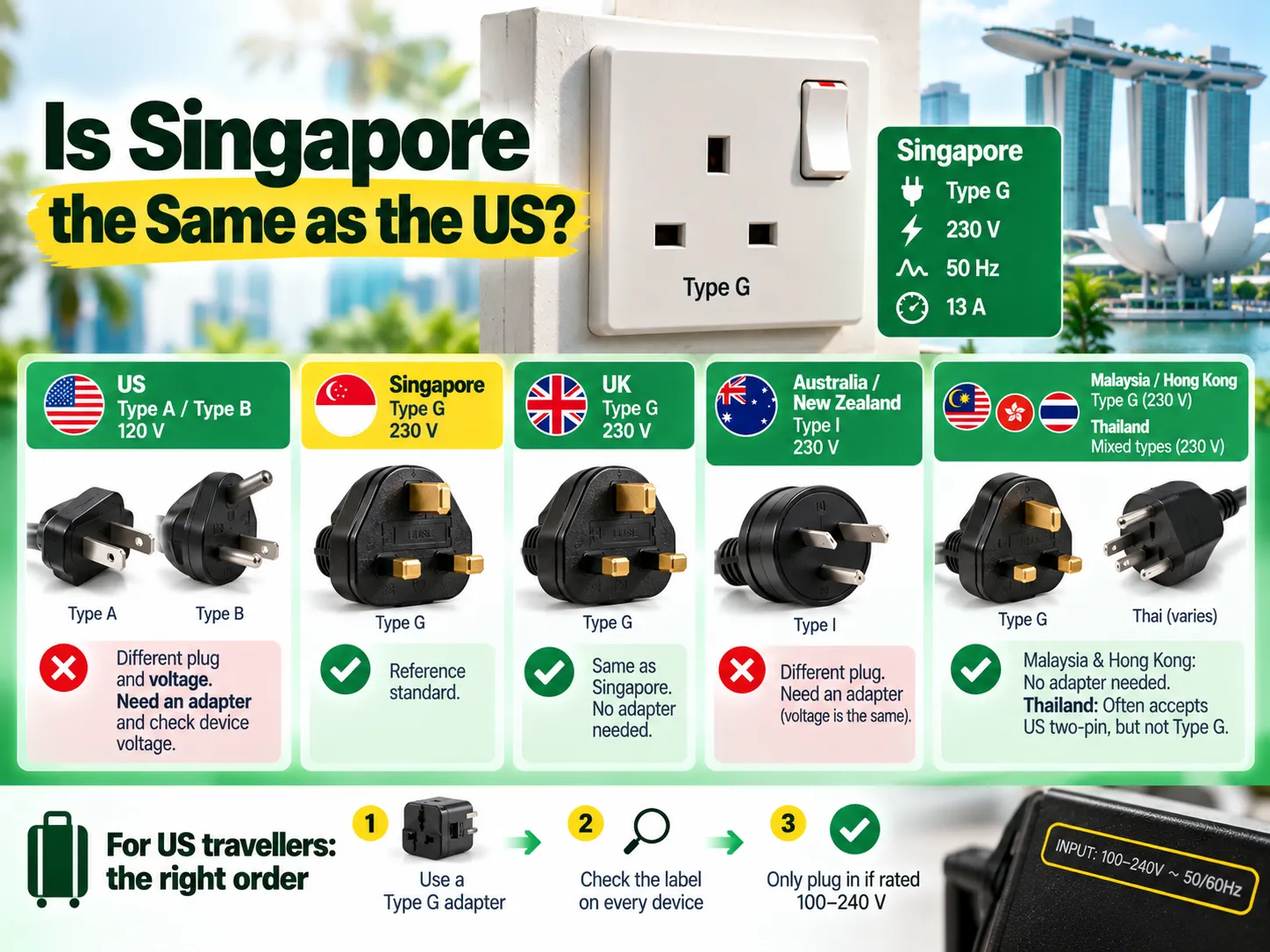
Just like the UK: yes, absolutely. Singapore adopted British standards, meaning that the connectors, sockets, fuses and other power supply infrastructures are the same. So if you have an appliance from the UK, you can use it in Singapore without needing anything else.
Just like Australia: no. Australia and New Zealand use standard I, with three flat pins, and with the exact same voltage and frequency (230 V / 50 Hz) — naturally, the voltage is the same, and you would just need a plug adapter for Type I.
Just like its neighbors: mixed. Malaysia, Hong Kong, and Brunei also use G without needing adapters, while in Thailand, things are different, as there are many different plug types used, depending on the building. Thus, a Thai socket can sometimes accept a US two-prong plug without an adapter, but may not be suitable for G. That kind of regional inconsistency is exactly why travel itineraries through Southeast Asia need more than one adapter even though the voltage stays broadly the same across the region, as set out in this guide to the socket types used in Thailand.
This mistake is the one that can result in a person losing a laptop. A plug adapter only changes the shape of the connector being used; it doesn’t contain any electronics. But a voltage converter changes the voltage from 230V to 120V. If you buy the wrong one, your appliance will fit well only to burn out immediately after.
Cost of appliances in Singapore: plug adapters range from 5-30 SGD while voltage converters and converters for 120V appliances start at 30 SGD onwards (depending on the wattage). If your appliance is a dual-voltage one, it means that it is 10 SGD device, not 100 SGD.
Pay attention to adapters sold in airports. Plug Type G that is sold in the shop for 5-10 SGD will be priced upper 15-30 SGD in Changi, and uncertified plugs will have greater overheat and an electrical short-circuit risks than certified plugs. Opt for certified adapters with a fuse instead of picking the cheapest one on the market. The same logic applies to the European systems, where the differences between Type C, Schuko and the French and Italian variants catch people out — covered in this breakdown of Spine e prese elettriche europee if your trip continues onward from Singapore.
Most plug types ensure protection of the wiring behind the wall. However, Type G goes a step further and protects the appliance itself, as it has the fuse in the plug rather than in the panel. This is why you can find both 3 A and 13 A fuses on sale in every supermarket in Singapore, and also why a UK appliance with a 3 A fuse cannot power a 2-kW heater.
For a manufacturer or importer, this means compliance and not travelling. Plugs sold in Singapore need to have an adequate fuse for the load and devices that are to be installed permanently should have appropriate certification and the EMA SAFE mark. The power outlets should have a shutter system as well. Mistakes here lead to customs problems and disruptions related to shipment.
The coverage is acceptable and becoming better but it is still not consistent.
In case you are staying at a hotel that is on the older side or need more devices to be powered by one electrical socket, it is better to go for a power strip rather than buy an additional adapter.
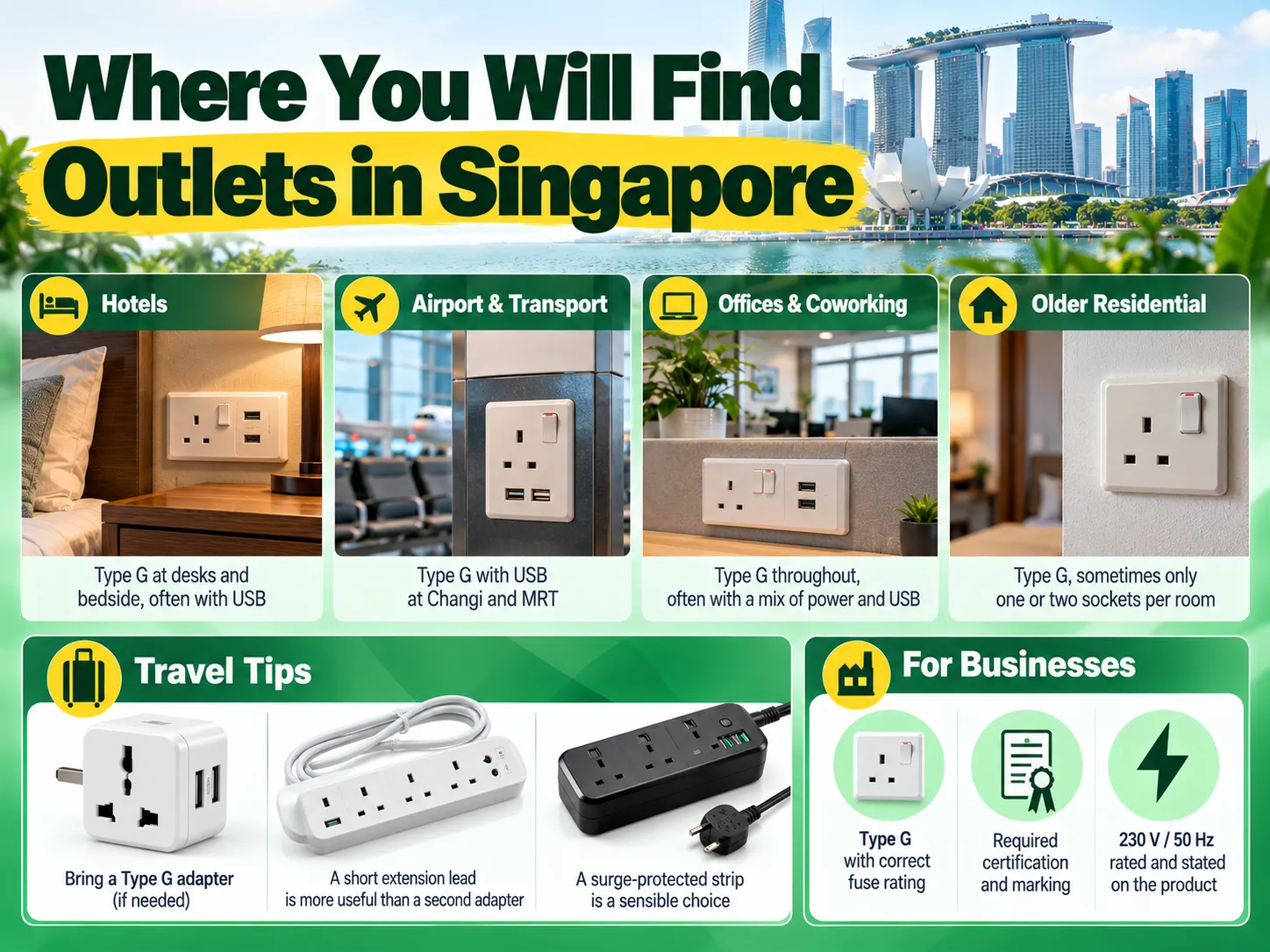
The sale of a product for permanent use depends on three requirements:
A reusable multi-region adapter does not qualify as a travel adapter. A travel adapter is a consumer gadget whereas a shuttered Type G socket rated for 13 A is a different product made under a different standard. The use of one related to another causes the failure of a compliant order at the border.
The type G adapter with three rectangular pins arranged in a triangular shape by itself won’t be needed unless, of course, you are coming from the UK, Ireland, Malaysia, Hong Kong or one of the Gulf states. It would be advisable to get a Type G fused adapter instead of unfused, as not only is it available at a price ranging anywhere between S$5 to 30 but you’re better off buying it in your home country rather than at the airport where it would be two to three times more expensive.
Type G is standardised under SS 145 standards and is largely similar to British BS 1363. Type G has three rectangular pins, the use of an in-plug fuse, sleeved live and neutral pins, and shuttered sockets, with a voltage of 230 V and 50 Hz.
No. The Type A and Type B plugs in the United States will not fit the Type G sockets in Singapore, and their voltages are different – 230 V versus 120 V. American visitors will require a universal plug adapter and must ensure that every device works on voltage ranging from 100 to 240 V. If one-plug appliances are used, they will get destroyed.
No, in Australia, plug type I is used, which has three flat pins arranged in a V shape. Because the voltage and frequency settings in Australia are identical at 230 V / 50 HZ, this means that in Australia, an adapter would be sufficient. However, because the pins are physically different, such as in shape or size, this form of connection will not work in Australia and therefore it must be used.
The voltage and the plug type used in Singapore are Type G 230V 50Hz. Unlike the North American plug which is a different voltage altogether, its shape also varies from that used in Australia. From your travel itinerary, you can deduce what kind of a plug you will need for your appliances. If you are coming from a Type G country, no adapter is necessary. If you are from a 230V country, an adapter will suffice. If your previous destination was a 120V country, you will need an adapter plus careful examination of the appliance tags.
If you travel often, then you probably know that packing for Singapore is one of the simplest things to do in Asia, but also one of the most difficult because it uses UK-type plugs (instead of the US-type ones). Whether you need a transformer, a plug adapter or both depends on two questions that tourists […]
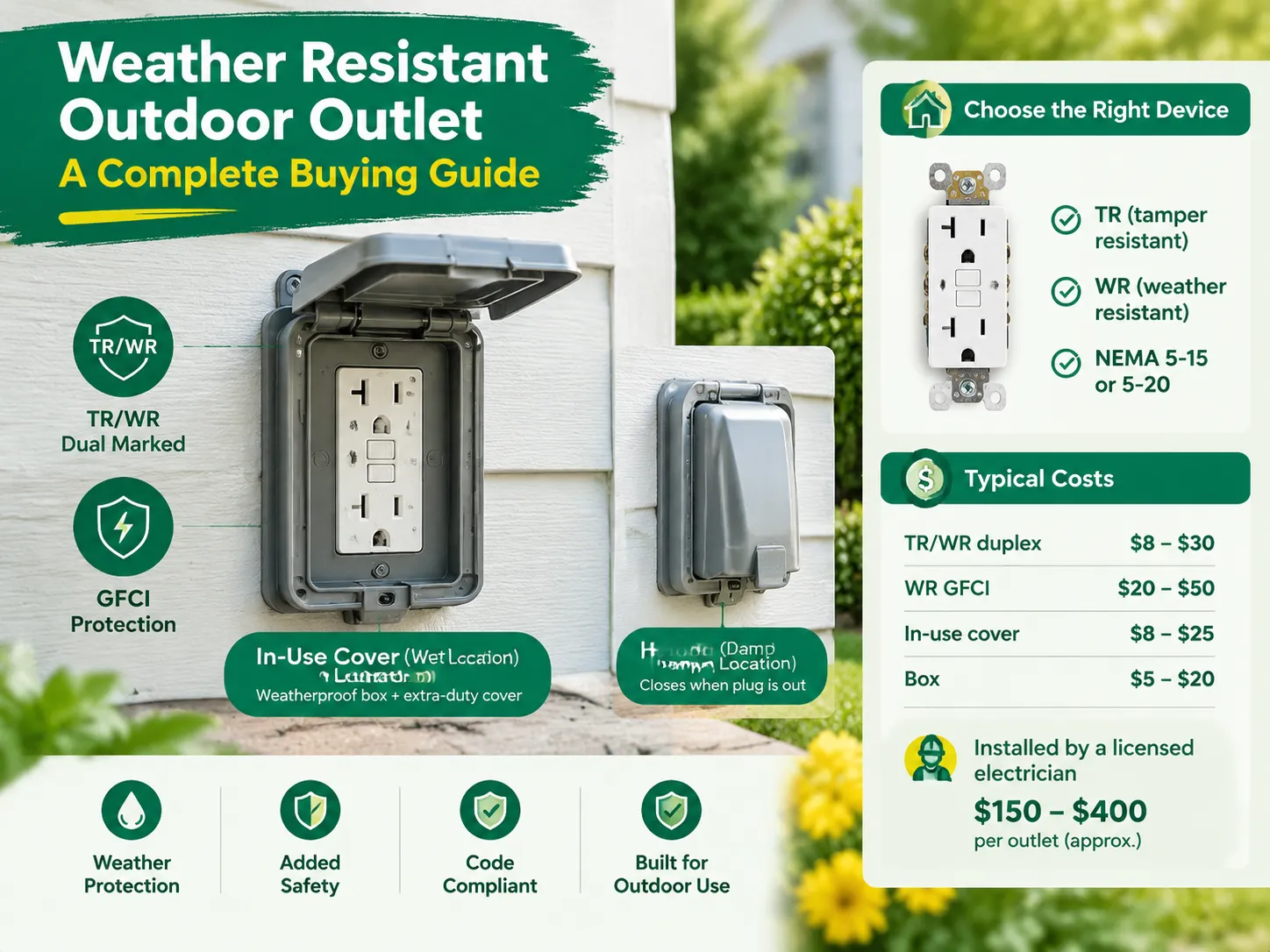
Le prese esterne impermeabili non devono essere confuse con le normali prese esterne. Anche se queste prese esterne possono essere considerate prese esterne di tipo WR, esse sono dotate di un involucro che garantisce la loro impermeabilità con o senza un dispositivo. Inoltre, la spina esterna deve essere resistente al vandalismo e includere un RCD. Ogni presa resistente alle intemperie dovrebbe essere identificata […]
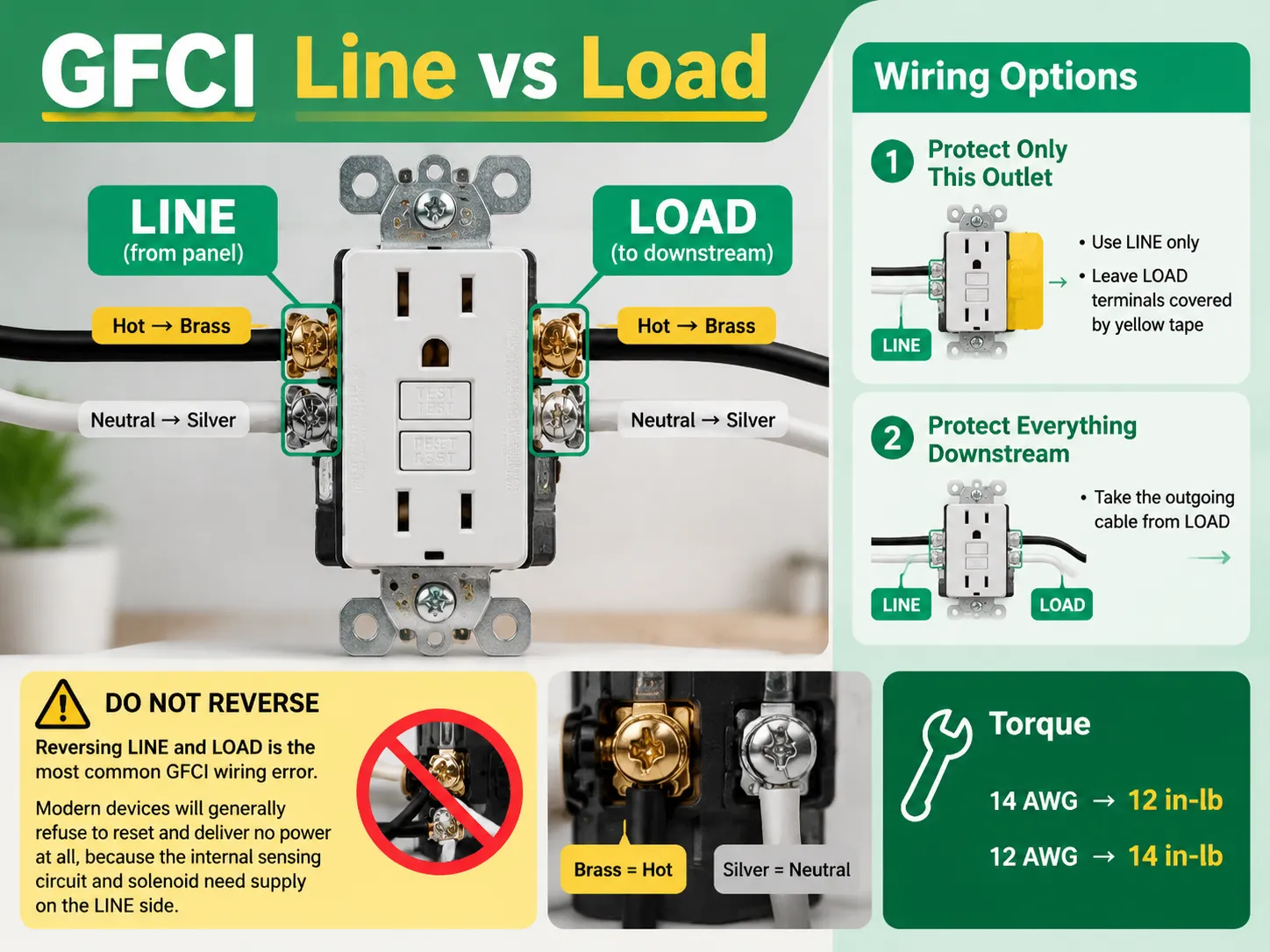
Due tipi di terminali possono definire come funziona una presa GFCI: Un terminale è per una presa individuale e l'altro terminale può proteggere diverse prese da una singola presa GFCI allo stesso costo. Utilizzare il terminale appropriato consente di sfruttare i risparmi sui costi derivanti dall'uso di una singola GFCI, mentre l'utilizzo di […]

 No.6 Tuozhan Road, Leshang Pioneer Park, porto della baia di Yueqingwan, città di Yueqing, provincia di Zhejiang


