

เขตเทศบาลแรนดอล์ฟในมอร์ริสเคาน์ตี้มีรหัสไปรษณีย์ 07869 ซึ่งตั้งอยู่ติดกับโดเวอร์ทางทิศตะวันตกและเดนวิลล์ทางทิศตะวันออก มีเส้นทาง 10 ที่ตัดผ่านเขตเทศบาล; บ้านที่เป็นเจ้าของโดยเอกชนหลายพันหลังสามารถพบได้ในเขตเทศบาลนี้กระจายอยู่ทั่วเนินเขาและป่าไม้สีเขียว เมื่อคุณป้อนหมายเลขนี้ในการค้นหาผู้เชี่ยวชาญด้านแสงสว่าง คำถามของคุณอาจจะง่ายกว่าที่ปรากฏในผลการค้นหา นั่นคือ: “ฉันควรโทรหาใครและมันจะมีค่าใช้จ่ายเท่าไหร่?” แต่สิ่งนี้คือความกังวลหลักของบทความนี้; มันจะไม่กล่าวถึงทฤษฎีการออกแบบแสงสว่าง แต่จะมองเข้าไปใกล้ตลาดแสงสว่างในท้องถิ่นและบริษัทที่มีอยู่ในตลาดนั้น.
เขตเทศบาลแรนดอล์ฟในมอร์ริสเคาน์ตี้ได้รับมอบหมายรหัสไปรษณีย์ 07869 ซึ่งมีขอบเขตติดกับโดเวอร์ทางทิศตะวันตกและเดนวิลล์ทางทิศตะวันออก เขตเทศบาลนี้ถูกตัดผ่านโดยเส้นทาง 10 และเป็นที่ตั้งของบ้านที่เป็นเจ้าของโดยเอกชนหลายพันหลังที่กระจายอยู่รอบ ๆ เนินเขาและพื้นที่ป่าไม้ เมื่อคุณพิมพ์หมายเลขนี้เพื่อค้นหาผู้เชี่ยวชาญด้านแสงสว่าง คุณอาจมีคำถามที่ง่ายกว่าที่ปรากฏในผลการค้นหา นั่นคือ “ฉันควรติดต่อใครและฉันจะต้องจ่ายเท่าไหร่?” นี่คือสิ่งที่บทความนี้จะพูดถึง เนื่องจากบทความนี้จะไม่ครอบคลุมพื้นฐานของการออกแบบแสงสว่าง แต่จะมุ่งเน้นไปที่ผู้เล่นที่แตกต่างกันในธุรกิจแสงสว่างในเมืองนี้.
รหัสไปรษณีย์บ่งบอกว่าคุณตั้งอยู่ในเขตเทศบาล Randolph หากคุณพบว่าตัวเองอยู่ในเขตเทศบาล Randolph คุณจะดำเนินงานใน Morris County ภายใต้เขตอำนาจของ JCP&L และในเขตเทศบาลที่มีกรมการก่อสร้างของตนเองและกระบวนการก่อสร้างของตนเอง.
การพูดถึงเรื่องนี้นำไปสู่ประเด็นสำคัญหลายประการ กฎระเบียบการก่อสร้างได้รับการจัดทำโดยรัฐนิวเจอร์ซีย์ผ่านรหัสการก่อสร้างที่รวมกันซึ่งกรมกิจการชุมชนมีอำนาจในการบริหารรหัสการก่อสร้างและไฟฟ้า อย่างไรก็ตาม เป็นเทศบาลที่ดำเนินการอนุญาตและตรวจสอบ ดังนั้นโครงการไฟส่องสว่างในเทศมณฑลแรนดอล์ฟต้องได้รับการอนุมัติจากเจ้าหน้าที่การก่อสร้างท้องถิ่นแทนที่จะเป็นสำนักงานของมณฑล และการไหลของเอกสารอาจแตกต่างจากที่ใช้โดยผู้รับเหมาในเดนวิลล์หรือร็อคอะเวย์.
หากคุณกำลังมองหาที่ปรึกษาด้านไฟส่องสว่าง “ใน 07869” มักหมายความว่าคุณกำลังมองหาที่ปรึกษาที่ทำงานภายในรัศมีที่กำหนดแทนที่จะอยู่ในเขตเทศบาลอย่างเคร่งครัด ที่ปรึกษาส่วนใหญ่สำหรับแรนดอล์ฟยังทำงานในโดเวอร์ (07801), ร็อคอะเวย์ (07866), เดนวิลล์ (07834), วอร์ตัน (07885), ไมน์ฮิลล์ (07803) และในบางเมืองที่อยู่ห่างไกล เช่น เชสเตอร์, เมนแธม, มอร์ริสทาวน์ และฟลอรัมพาร์ค.
สต็อกที่อยู่อาศัยของแรนดอล์ฟอธิบายถึงลักษณะเฉพาะหลายประการของความต้องการไฟส่องสว่างในท้องถิ่น จำนวนมากของบ้านที่สร้างขึ้นตั้งแต่ประมาณปี 1960 ถึง 1990 ได้ติดตั้งเพียงโคมไฟเพดานหนึ่งดวงต่อห้องและสวิตช์ไฟที่ตั้งอยู่ข้างประตู บางทรัพย์สินขนาดใหญ่ในพื้นที่ป่าไม้ของแรนดอล์ฟเกี่ยวข้องกับการติดตั้งไฟที่ใกล้เคียงกับการติดตั้งโครงสร้างพื้นฐานขนาดเล็ก: ไฟส่องสว่างในภูมิทัศน์, ไฟส่องสว่างทางสถาปัตยกรรมกลางแจ้ง, แผงไฟฟ้าที่มีการสำรองจากเครื่องกำเนิดไฟฟ้า ฯลฯ และไม่มีอะไรที่มีอะไรเหมือนกันมากนัก.
นี่คือจุดที่มันทำให้สับสนสำหรับตลาดท้องถิ่น ดังนั้นจึงควรกล่าวอย่างชัดเจน.
เมื่อพูดถึงการให้คำปรึกษาด้านไฟส่องสว่างในที่อยู่อาศัยในแรนดอล์ฟ จุดสนใจจะอยู่ที่การปรับปรุงและการปรับเปลี่ยน ในกรณีนี้ อาจมีการทำงานในครัว, เพิ่มห้องนอนหลัก, เสร็จสิ้นการปรับปรุงห้องใต้ดิน และสร้างการขยายเพิ่มเติมให้กับบ้าน ซึ่งจะต้องมีคำแนะนำที่เป็นประโยชน์เกี่ยวกับปัญหาต่างๆ เช่น จำนวนวงจร, การสลับ, ชั้นของไฟส่องสว่าง, ความเหมาะสมของอุณหภูมิสีในความสัมพันธ์กับวัสดุที่ใช้ และที่สำคัญที่สุดคือวิธีหลีกเลี่ยงสถานการณ์ที่น่าอับอายเมื่อพื้นที่ที่ได้รับการปรับปรุงอย่างสมบูรณ์แสดงให้เห็นถึงโคมไฟฝังสี่ดวงที่พอดีกับสี่เหลี่ยม สิ่งที่พวกเขามักจะได้รับคือแผนเพดานที่เสร็จสิ้นล่วงหน้า, ตารางของโคมไฟที่มีหมายเลขชิ้นส่วนเฉพาะ, แผนการควบคุม และข้อกำหนดการติดตั้งสำหรับช่างไฟฟ้าในการเสนอราคาอิงจากสิ่งนี้.
เมื่อพูดถึงการให้คำปรึกษาด้านไฟส่องสว่างในเชิงพาณิชย์หรือสถาบัน สถานการณ์จะแตกต่างออกไปอย่างมาก เส้นทาง 10 ในแรนดอล์ฟมีการดำเนินการเชิงพาณิชย์ในรูปแบบของร้านค้าปลีก, สำนักงาน, การปฏิบัติทางการแพทย์ และร้านอาหาร ในขณะที่มณฑลมอร์ริสมีพื้นที่อุตสาหกรรมและสำนักงานที่อุดมสมบูรณ์ งานประเภทนี้มักจะมุ่งเน้นไปที่การปฏิบัติตามรหัสพลังงาน, ความสามารถในการขอคืนเงิน และบางครั้งข้อกำหนดด้านฟอโตเมตริก ในกรณีนี้ ที่ปรึกษาจะมีส่วนร่วมเฉพาะในด้านไฟส่องสว่างของโครงการที่จัดทำโดยบริษัทวิศวกรรม, ผู้รับเหมาก่อสร้างออกแบบและสร้าง หรือหน่วยงานไฟส่องสว่าง.
| ที่อยู่อาศัย | เชิงพาณิชย์ / สถาบัน | |
|---|---|---|
| จุดกระตุ้นทั่วไป | การปรับปรุง, การเพิ่มเติม, การสร้างใหม่ | การติดตั้ง, การปรับปรุง, การอัปเกรดตามรหัส, โครงการคืนเงิน |
| ใครจ้างที่ปรึกษา | เจ้าของบ้าน, บางครั้งสถาปนิกหรือผู้สร้าง | สถาปนิก, วิศวกร, ผู้รับเหมาก่อสร้างทั่วไป, หรือเจ้าของโดยตรง |
| ข้อจำกัดหลัก | การเดินสายไฟที่มีอยู่, โครงสร้างเพดาน, งบประมาณ, รสนิยม | รหัสพลังงาน, เป้าหมายความสว่าง, แสงจ้า, คุณสมบัติในการคืนเงิน, กำหนดการ |
| ผลลัพธ์ที่ต้องส่งมอบ | แผนเพดานสะท้อน, ตารางอุปกรณ์, แผนผังการควบคุม | การศึกษาโฟโตเมตริกเต็มรูปแบบ, เอกสารการปฏิบัติตาม, ตารางอุปกรณ์ |
| ฐานค่าธรรมเนียม | รายชั่วโมง, แพ็คเกจคงที่, หรือห้องต่อห้อง | เปอร์เซ็นต์ของมูลค่าโครงการ, หรือต่ออุปกรณ์ / ต่อพื้นที่ |
| มุมคืนเงิน | จำกัด; โปรแกรมอุปกรณ์หรือซองจดหมายเป็นครั้งคราว | สำคัญ; สิ่งจูงใจด้านแสงสว่างเชิงพาณิชย์ NJ Clean Energy |
| ระยะเวลา | หลายวันถึงหลายสัปดาห์ | สัปดาห์ถึงเดือน |
ข้อสรุป: อย่าจ้างที่ปรึกษาแสงสว่างเชิงพาณิชย์สำหรับงานในครัว, หรือขอให้ผู้ออกแบบที่อยู่อาศัยจัดทำการออกแบบโฟโตเมตริกเพื่อตอบสนองความต้องการของผู้ตรวจสอบรหัสพลังงาน แม้ว่าทักษะของพวกเขาอาจทับซ้อนกัน แต่ผลลัพธ์ที่แท้จริง, ซอฟต์แวร์ที่ใช้ และโครงสร้างค่าธรรมเนียมจะแตกต่างกันมาก.
คำนี้ไม่ชัดเจน, ดังนั้นงานจึงถูกแบ่งออกเป็นส่วนๆ ที่ปรึกษาที่มีความสามารถทำบางส่วนหรือทั้งหมดต่อไปนี้ ขึ้นอยู่กับความต้องการ.
ในกรณีที่โครงการขับเคลื่อนโดยการออกแบบ ที่ปรึกษาจะทำตามกระบวนการที่ได้จัดตั้งขึ้นโดยนักออกแบบนั้น โหมดการทำงานนั้นมีข้อตกลงและความคาดหวังด้านเอกสารของตนเอง และรายละเอียดของวิธีที่ขอบเขตแสงสว่างเข้ากับกระบวนการทำงานของมืออาชีพด้านการออกแบบจะถูกกำหนดไว้ในภาพรวมนี้ วิธีการที่ขอบเขตแสงสว่างและอุปกรณ์ไฟฟ้าถูกจัดการในโครงการที่นำโดยการออกแบบ.
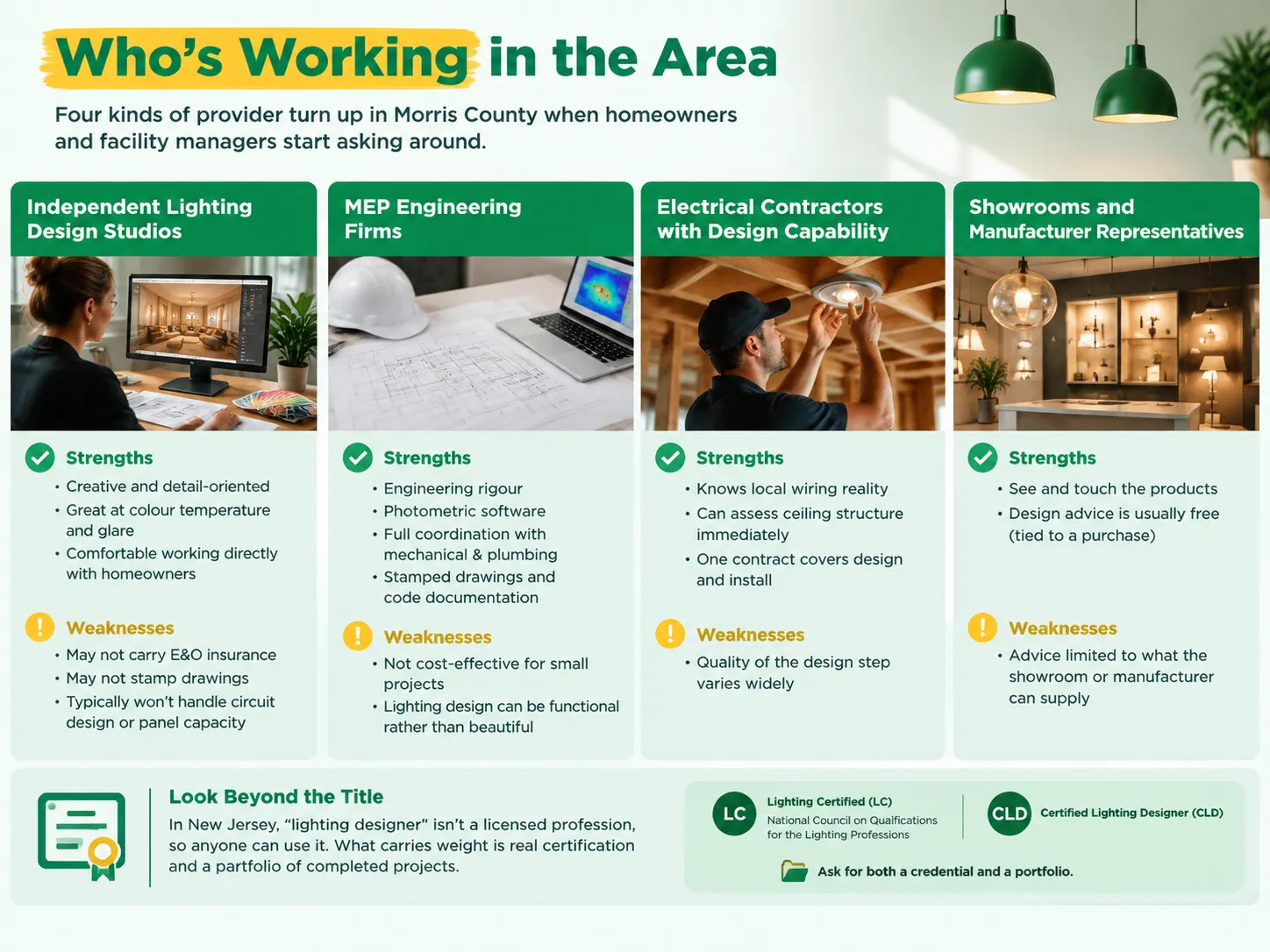
ในมอร์ริสเคาน์ตี้ มีนักออกแบบแสงสว่างสี่ประเภทที่มืออาชีพและเจ้าของบ้านปรึกษา แต่ละประเภทมีข้อดีและข้อเสียที่แตกต่างกันของตนเอง.
เมื่อมองหานักออกแบบในรัฐนิวเจอร์ซีย์ โปรดจำไว้ว่าการรับรองไม่ได้หมายความเสมอไปว่ามีชื่อเสียง อาชีพนักออกแบบแสงไม่ได้มีการควบคุม ดังนั้นจึงสามารถใช้โดยใครก็ได้ การรับรองที่พูดถึงไม่ใช่ชื่อ แต่เป็นการรับรองและผลงาน คุณสามารถมั่นใจได้ว่าการปฏิบัติอาจมีน้ำหนักมากกว่าทฤษฎี.
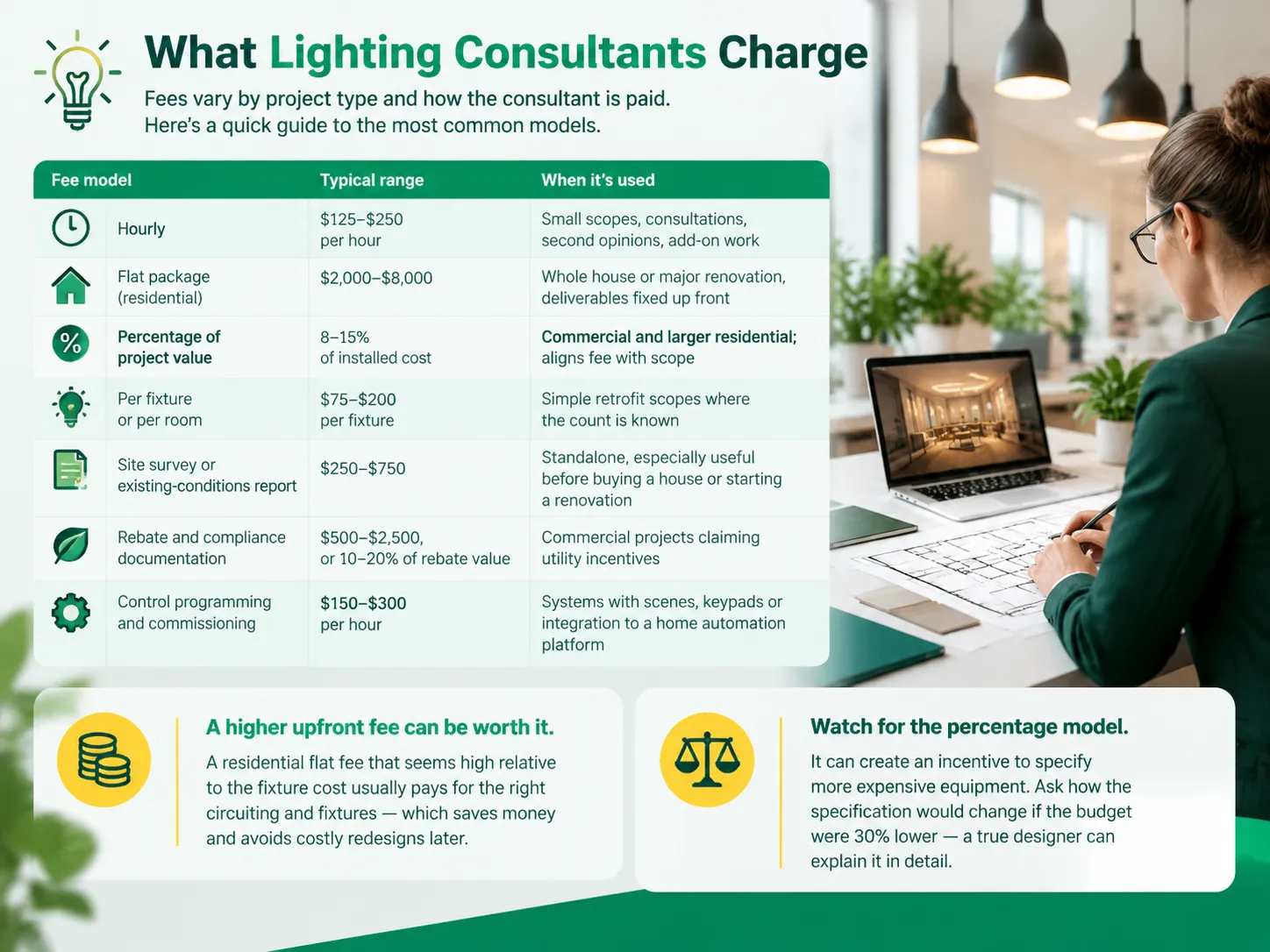
ราคาตลาดสะท้อนในสี่รูปแบบที่แตกต่างกัน และมันสำคัญมากที่จะต้องระบุรูปแบบที่เสนอให้คุณ.
| โมเดลค่าธรรมเนียม | ช่วงปกติ | เมื่อมันถูกใช้ |
|---|---|---|
| รายชั่วโมง | $125–$250 ต่อชั่วโมง | ขอบเขตเล็ก ๆ การปรึกษา ความเห็นที่สอง งานเพิ่มเติม |
| แพ็คเกจคงที่ (ที่อยู่อาศัย) | $2,000–$8,000 | บ้านทั้งหลังหรือการปรับปรุงครั้งใหญ่ ผลลัพธ์ที่กำหนดไว้ล่วงหน้า |
| เปอร์เซ็นต์ของมูลค่าโครงการ | 8–15% ของต้นทุนที่ติดตั้ง | เชิงพาณิชย์และที่อยู่อาศัยขนาดใหญ่; จัดให้ค่าธรรมเนียมตรงกับขอบเขต |
| ต่ออุปกรณ์หรือห้อง | $75–$200 ต่ออุปกรณ์ที่ระบุ | ขอบเขตการปรับปรุงที่ง่ายซึ่งจำนวนที่ทราบ |
| การสำรวจสถานที่หรือรายงานสภาพที่มีอยู่ | $250–$750 | แบบแยกเดี่ยว โดยเฉพาะอย่างยิ่งมีประโยชน์ก่อนการซื้อบ้านหรือเริ่มการปรับปรุง |
| เอกสารการคืนเงินและการปฏิบัติตาม | $500–$2,500 หรือ 10–20% ของมูลค่าการคืนเงิน | โครงการเชิงพาณิชย์ที่เรียกร้องสิ่งจูงใจจากสาธารณูปโภค |
| การเขียนโปรแกรมควบคุมและการเปิดใช้งาน | $150–$300 ต่อชั่วโมง | ระบบที่มีฉาก คีย์แพด หรือการรวมเข้ากับแพลตฟอร์มอัตโนมัติในบ้าน |
มีข้อเท็จจริงบางประการเกี่ยวกับตัวเลขเหล่านี้ เริ่มต้นด้วยอัตราค่าบริการแบบคงที่ที่มีค่าใช้จ่ายสูงมักจะไม่ได้หมายความว่ามันไม่เป็นประโยชน์ เพราะมันครอบคลุมสิ่งที่ช่วยให้คุณประหยัดเงิน: การเดินสายไฟที่ถูกต้องและการเลือกอุปกรณ์ที่เหมาะสมที่ทำเพียงครั้งเดียว การออกแบบโครงการแสงสว่างใหม่หลังจากที่ผนังสร้างเสร็จแล้วจะทำให้มีค่าใช้จ่ายสูงมาก.
แง่มุมที่สองของโมเดลเปอร์เซ็นต์นั้นง่ายต่อการมองข้าม เมื่อที่ปรึกษาได้รับค่าตอบแทนเป็นเปอร์เซ็นต์ของค่าใช้จ่าย เขาจะมีแรงจูงใจในการแนะนำอุปกรณ์ที่มีราคาแพงกว่า นี่ไม่ได้หมายความว่าโมเดลนี้ไม่ถูกต้อง แต่ก็คุ้มค่าที่จะถามว่าออกแบบจะเปลี่ยนไปอย่างไรหากงบประมาณลดลง 30%.
มีสาเหตุหลักสามประการของปัญหาในการออกแบบโครงการแสงสว่างตามที่ระบุโดยจุดล้มเหลวทั่วไปของการออกแบบ.
เป็นไปได้ยากที่องค์ประกอบที่กล่าวถึงข้างต้นจะมีความน่าสนใจมากนัก อย่างไรก็ตาม มันคือสิ่งเหล่านี้ที่จะทำให้การติดตั้งที่ทำงานได้อย่างราบรื่นและถูกต้องแตกต่างจากการติดตั้งที่ต้องมีการปรับเปลี่ยน หากคุณกำลังทำการประสานงานด้วยตนเองแทนที่จะจ้างให้ทำ คำแนะนำเกี่ยวกับการเลือกกล่องและความเข้ากันได้ของอุปกรณ์จะถูกครอบคลุมในคู่มือนี้ การเลือกกล่องไฟฟ้าสำหรับเต้าเสียบและสวิตช์, และมันคุ้มค่าที่จะอ่านก่อนถึงขั้นตอนการติดตั้งเบื้องต้นแทนที่จะอ่านหลังจากนั้น.
แผนการจัดแสงคือแผนไฟฟ้า ซึ่งในรัฐนิวเจอร์ซีย์ต้องปฏิบัติตามกฎสองข้อ: รหัสการก่อสร้างแบบสากลและรหัสไฟฟ้าสากล แม้ว่าที่ปรึกษาของคุณไม่จำเป็นต้องเป็นช่างไฟฟ้า แผนที่ผลิตขึ้นควรสามารถปฏิบัติตามได้ในทางปฏิบัติ.
นี่คือข้อผิดพลาดทั่วไปบางประการของแผนการจัดแสงที่ไม่ดี:
Heights are one of these details that seem insignificant, until you find yourself in the room where either the switches do not line with the door casing or the dimmer appears to have intentional placement in the hallway but should not have been normal. If you want the practical conventions rather than the code citation, this piece on standard light switch height from the floor covers the typical figures and when accessible-design rules change them.
The switching is the aspect of lighting design where the difference between good and bad design is most noticeable in real life.
In the past, lighting control was straightforward: one switch for each grouping of lights and maybe a dimmer. Nowadays, it is common to see a mixture of conventional switches, trailing-edge dimmers, multi-way dimmers, occupancy sensors, and various keypads in a refurbished building and it presents a problem. Each kind of device has its own requirements, such as the kind of wiring used, whether the device is compatible with the others, etc.
The problem of compatibility is what confuses people. The fact that not every LED lamp or fixture can work with dimmers poses no problem as long as the curve of the controlled voltage is compatible between the two devices. Thus, if a phase-cut dimmer is used in tandem with a device meant for 0-10 V control, it may cause problems like flashing, hum, limited dimming capabilities or no minimum light at all. When a dimmer has a minimum load requirement higher than the fixture’s, it may not function at all, which can be a predicament, which can be solved by having the compatibility chart. This is basically a table given by the manufacturer that shows compatibility between certain drivers and lamps.
In addition to compatibility issues, the installation can be a problem too, as a wonky wiring scheme in a three-way or using a dimmer on the wrong leg can make the system behave as if there were faulty devices involved.The wiring arrangement for a straightforward dimmer installation on an existing circuit is set out step by step in this guide to การติดตั้งสวิตช์หรี่ไฟ, and reading it before you brief a contractor is a good way to spot whether the person quoting you actually understands the circuit.
Scene programming gives you that last step of convenience. A house with eight keypads and no programming set up is worse than one with regular switches because no one knows what anything does. Make sure that you allocate a budget for programming time. It is inexpensive during the commissioning phase, but it becomes costly when the dissatisfied client attempts to fix it after six months of living with it.
We need to clarify the limits of this term because “lighting” refers to various professions and products.
A lighting designer is the one who creates a lighting system, while an electrician carries on the installation work. The manufacturer produces fixtures. There is also the fifth, frequently ignored element, which is the switches, dimmers, sockets, and plates that are operated by the customer during many hours every day long after everything has been arranged and all the designers have left the place. This latter part of the business does not take up much space in any lighting project in terms of money but is the part that allows to define whether the project will please you in five years from now.
IGOTO specializes in this fifth part of the business. We manufacture wall switches, sockets, plugs, and other electrical apparatus and sell them through distributors and contractors. If you are engaged in specifying a project located in New Jersey, your consultant will most likely never mention a certain brand. The difference between a device that makes a smooth dimming effect for fifteen years and one that starts buzzing after three years is made at the plant, with the help of contacts, components, quality control experts, and various tests. That’s the part of the project we look after, and if you want to see what the range covers, the formats used across different regional standards are set out in this overview of wall socket and light switch formats for different markets.

Here are six inquiries that set an effective consultant apart from an enthusiastic one.
Next piece of local advice. Here, the bottleneck is determined by electrician’s schedule, not by design. If you are planning to rebuild, use the lighting consultant at the same time as designer.
A lighting consultant determines how a space will be illuminated and records it adequately to make light fixtures. As the reality is the survey of existing conditions, working on the essential needs of each area, designing the lighting in layers (ambient, general, accent, decorative), choosing specific fixtures giving their specific numbers, calculating the illuminance if necessary, designing the control scheme, coordinating with the electrician and builder and ensuring everything is done correctly. On commercial projects, they have energy code regulation and utility rebate documentation. They do not install anything and do not design the electric systems in most of the residential projects either, as it’s the job for the electrician.
The hourly rates for this industry typically range from $125 to $250. The total cost of a full residential design package ends up being anywhere from $2,000 to $8,000 on average depending on the complexity of the project. Commercial projects are usually charged on the basis of 8 to 15% of the project’s value, or on a per-fixture basis in the range of $75 to $200 per fixture. An independent site assessment or existing site report would cost $250 to $750. Control systems programming and commissioning are billed at around $150 to $300 on an hourly basis.
Not necessarily. If you are merely changing fixtures in an existing room, an electrician and even a showroom may be enough to make it work without spending much money. You may need a consultant in cases where more than one room is involved, when remodeling is taking place, when there is a need for a control system or automation, or even when a room is utilized differently than initially planned. The most obvious scenario is a renovation that has not yet reached the rough-in stage.
Electricians install and sign off the electrical work such as circuits, boxes, wiring, devices, and connection to panel. Lighting designers will determine what needs to be installed and why. There is a crossover, as an electrical contractor with design abilities can do both, but the roles are different and the certification and licensing are also different. Electrical work in the state of New Jersey requires a certified electrical contractor as well as a permit from local construction office. Lighting designer is not a licensed title in the state, thus the qualification to check is the certification such as Lighting Certified (LC), or Certified Lighting Designer (CLD) etc. as well as examples of completed projects.
For a single room home job, one week to two weeks from the first site visit until specification is issued. For a whole house remodel, the amount of time involved will be three to six weeks, with completion time determined by how long it takes to finalise architectural drawings; a design cannot be marked off against a design plan that is still in formative stages. For commercial work, the timeframe can vary from a few weeks for a simple fit-out to several months for a complete building as a result of the coordination with other trades and review cycles. Also include the time for control programming at the end; this is commonly a different visit after the electrician has completed his part.
The lighting design industry in Randolph, New Jersey, 07869 is relatively small and consists of four types of companies; independent studios, MEP engineers, electrical contracting companies that specialize in lighting design, and showrooms which combine lighting design with product sales. All companies have good professionals, therefore an error by a customer may be hiring the wrong company type.
Cost calculations are fairly straightforward. Prices start from $125 per hour, then can be up to thousands of dollars for residential assignments and can account for 8%-15% of construction projects. However, this raises the question of how many points if the specifications contain all necessary details like the amount of the installed lighting, compatibility checks, and a visit to the site after installation. If yes then money is not wasted on sketches.
Two pieces of important advice, firstly, it is advisable to hire a lighting design consultant before starting implementation of a project, at this time the consulting services are the cheapest. Secondly, certification does not guarantee anything in this field, therefore it is always better to check the portfolio of the designer.

เมือง Randolph ในเขต Morris เชื่อมโยงกับรหัสไปรษณีย์ 07869 ซึ่งตั้งอยู่ระหว่าง Dover ทางทิศตะวันตกและ Denville ทางทิศตะวันออก มีเส้นทาง 10 ที่ตัดผ่านเมืองนี้; บ้านที่เป็นเจ้าของส่วนตัวหลายพันหลังสามารถพบได้ในเมืองนี้กระจายอยู่ทั่วเนินเขาสีเขียวและป่าไม้ เมื่อคุณเข้าสู่ […]

เมื่อมีคนถามคำถามว่า “GFCI outlets เสียไหม” พวกเขาอาจกำลังถามว่าเอาท์เล็ทจะใช้งานได้นานแค่ไหนก่อนที่จะล้มเหลว ไม่มีคำตอบที่แน่นอนหรือเด็ดขาดสำหรับคำถามนั้น เนื่องจากแต่ละสถานการณ์มีความเฉพาะตัว; ดังนั้น GFCI outlet แต่ละตัวควรทำงานได้อย่างถูกต้องตราบใดที่ไม่มีปัจจัยอื่นที่ส่งผลต่อ […]
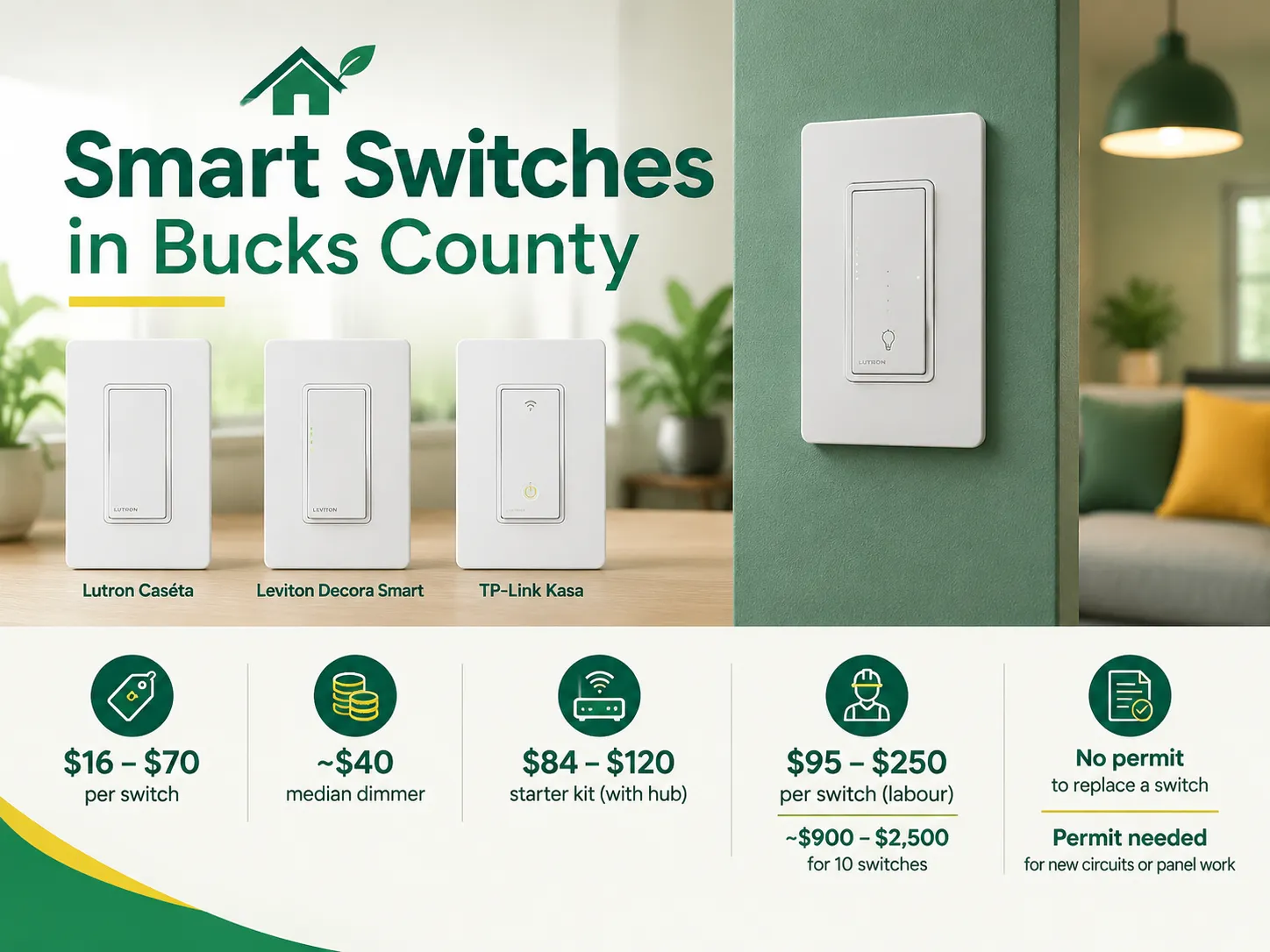
การซื้อสวิตช์อัจฉริยะในเขต Bucks ค่อนข้างยุ่งยาก โดยความยากลำบากนั้นเป็นเรื่องของลักษณะของอสังหาริมทรัพย์ในท้องถิ่นมากกว่าความพร้อมใช้งานของระบบต่างๆ หนึ่งสามารถขับรถจาก Solebury ซึ่งบางหลังสามารถย้อนกลับไปถึงปี 1790 ไปยัง Warrington ซึ่งมีการก่อสร้างใหม่บางส่วนที่สร้างขึ้น […]

 No.6 Tuozhan Road, Leshang Pioneer Park, ท่าเรืออ่าว Yueqingwan, เมือง Yueqing, จังหวัดเจ้อเจียง


