

Đến New York, Toronto hay Thành phố Mexico với một túi đầy bộ sạc từ Châu Âu, Anh hay Úc sẽ mang đến cho du khách một thử thách vì các ổ cắm điện trong phòng khách sạn sẽ hoàn toàn khác với ổ cắm ở quốc gia của họ và dòng điện được cung cấp sẽ thấp hơn mức thiết bị có thể xử lý. Các ổ cắm kiểu Bắc Mỹ giống hệt nhau trên khắp lục địa, từ Canada đến Panama, do đó tạo ra một lượng người dùng lớn hơn nhưng đồng thời cũng gây nhầm lẫn cho du khách.
Hướng dẫn này nêu bật nhiều chi tiết hữu ích về ổ cắm và phích cắm Bắc Mỹ, bao gồm hai loại phích cắm (A và B), các tiêu chuẩn của chúng được xác định bởi NEMA, điện áp và tần số (120V và 60 Hz), thiết kế ổ cắm, các quốc gia có hệ thống tương tự và yêu cầu du khách tìm hiểu xem họ có cần bộ chuyển đổi, bộ đổi nguồn hay không cần gì cả.
Ở Bắc Mỹ, phích cắm và ổ cắm Loại A và Loại B được sử dụng, tuân thủ cùng tiêu chuẩn NEMA ở Hoa Kỳ, Mexico và Canada, cũng như hầu hết Trung Mỹ và Caribe. Loại A bao gồm hai chấu phẳng song song trong khi Loại B có cùng hai chấu phẳng với một chấu nối đất tròn nằm bên dưới hai chấu này. Hoa Kỳ, Canada, Mexico, Nhật Bản và phần lớn Mỹ Latinh có thể cắm trực tiếp phích cắm của họ vào ổ cắm. Du khách đến từ Vương quốc Anh (Loại G), Châu Âu (C/E/F), Úc (Loại I), Trung Quốc và phần lớn các quốc gia Châu Á phải sử dụng bộ chuyển đổi để thay đổi hình dạng phích cắm của họ.
Loại A (còn gọi là NEMA 1-15) là phích cắm hai chấu (hoặc lưỡi dẹt) thông thường của Bắc Mỹ, có hai lưỡi dẹt dày khoảng 1,5mm và dài khoảng 15,9-18,3mm. Khoảng cách giữa hai chấu khoảng 12,7mm. Phích cắm Loại A không có nối đất, không có chấu nối đất và có định mức dòng điện là 15A/125V.
Hai lưỡi của phích cắm thường được phân cực. Một trong hai lưỡi rộng hơn lưỡi kia; ví dụ, chiều rộng của chấu trung tính khoảng 7,9 mm trong khi chiều rộng của chấu nóng là 6,3 mm. Thiết kế này cho phép cắm phích cắm theo một hướng duy nhất, đảm bảo an toàn cho đèn hoặc thiết bị.
Các vật dụng sử dụng phích cắm Loại A: các thiết bị nhỏ và thiết bị cách điện kép như đèn, bộ sạc điện thoại di động, radio di động, cáp hai chấu trong các thiết bị khác nhau. Người dùng các thiết bị có phích cắm hai chấu của Hoa Kỳ này có thể tìm thấy phích cắm phù hợp không chỉ với ổ cắm tường loại A mà còn với ổ cắm tường loại B.
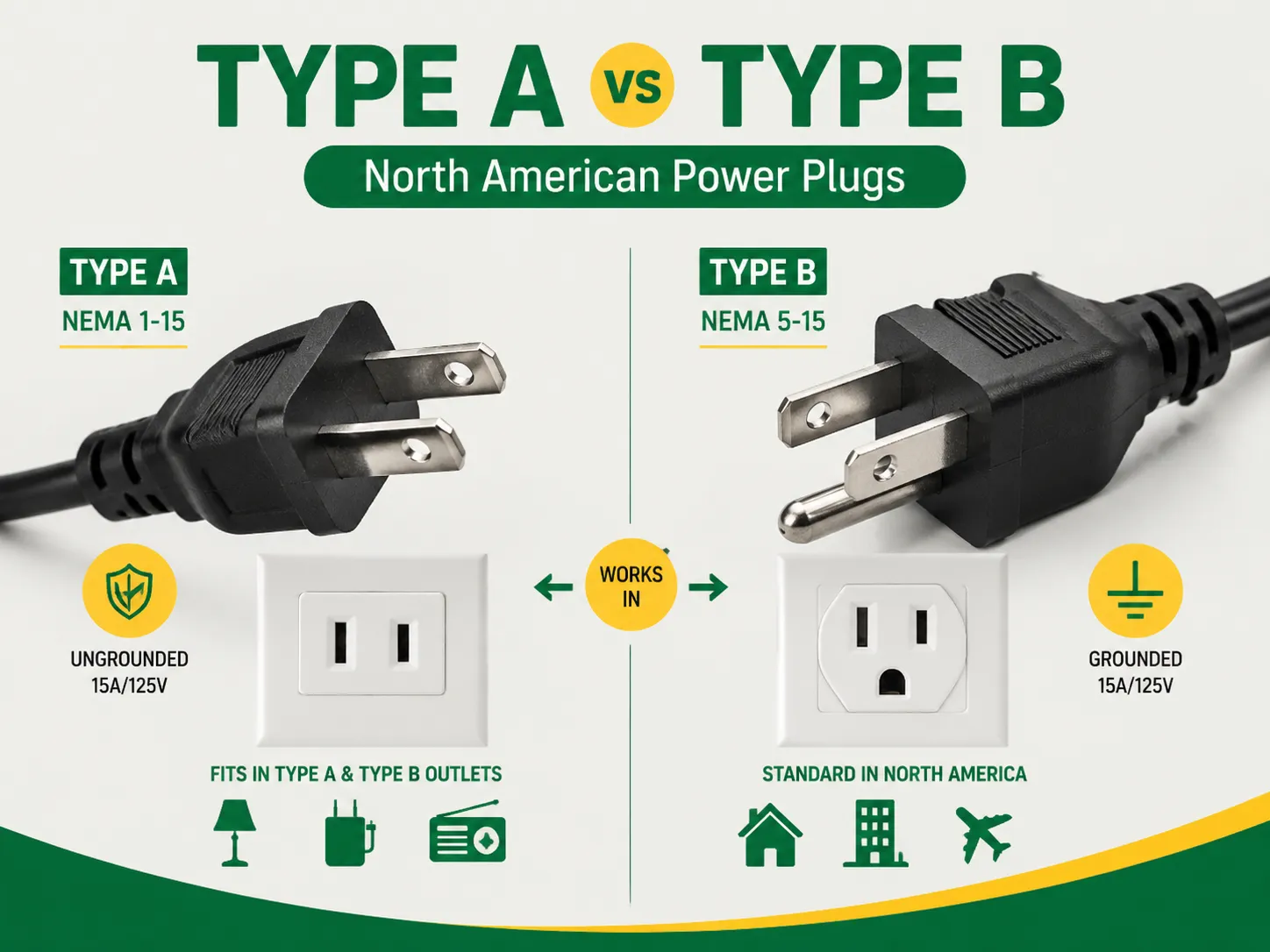
Chính thức được gọi là NEMA 5-15, Loại B đã trở thành phích cắm tiêu chuẩn ở Bắc Mỹ và sử dụng cùng hai lưỡi phẳng song song như Loại A cộng với một chấu nối đất tròn (hình chữ U) bên dưới các lưỡi; chấu này có đường kính 4,8 mm và dài hơn một chút so với các lưỡi, đảm bảo chấu nối đất được kết nối trước khi bật nguồn. Dòng điện định mức cho phích cắm này là 15 A/125 V.
Nơi tìm thấy Loại B: bất cứ đâu, vì phích cắm này đã được lắp đặt ở bất cứ đâu có tòa nhà được xây dựng từ những năm 1960 và được sử dụng trong nhà, khách sạn, văn phòng và sân bay ở Hoa Kỳ, Canada và Mexico. Trong hầu hết các trường hợp, ổ cắm hiện đại là Loại B nhưng có cổng sạc USB-C, cũng như các cửa trập TR hiện là một phần của quy chuẩn trong xây dựng mới. Phích cắm Loại A khớp với ổ cắm Loại B, trong khi phích cắm Loại B không khớp với ổ cắm Loại A (vì chấu nối đất không có cách nào để kết nối).
Nếu bạn đang nâng cấp ổ cắm trong một bất động sản ở Bắc Mỹ, các ổ cắm hiện đại — bao gồm cả các tùy chọn tích hợp USB và thông minh trong dòng ổ cắm IGOTO — tuân theo cùng một kiểu dáng Loại A/B/NEMA, vì vậy chúng lắp vừa vào bất kỳ hộp tiêu chuẩn nào.
NEMA là viết tắt của Hiệp hội Nhà sản xuất Điện Quốc gia, nơi đặt ra các tiêu chuẩn cho phích cắm và ổ cắm ở Bắc Mỹ. Các mã quan trọng là:
| Mã NEMA | Tên gọi thông thường | Cấu hình | Định mức |
|---|---|---|---|
| NEMA 1-15 | Loại A | 2 chấu phẳng song song, không nối đất | 15A / 125V |
| NEMA 5-15 | Loại B | 2 chấu phẳng + chấu nối đất tròn, có nối đất | 15A / 125V |
| NEMA 5-20 | Loại B (20A) | 2 chấu phẳng + chấu nối đất, một lưỡi xoay 90° | 20A / 125V (nhà bếp, phòng tắm) |
| NEMA 6-15 / 6-20 | ổ cắm 240V | 2 chấu phẳng + chấu nối đất, cho thiết bị 240V | 15-20A / 240V (máy sấy, điều hòa, xe điện) |
| NEMA 14-30 / 14-50 | Máy sấy / bếp nấu / xe điện | 4 chấu (2 nóng + trung tính + nối đất) | 30-50A / 240V |
Đối với du khách, chỉ có loại 1-15 (loại a) và loại 5-15 (loại B) là có liên quan — tất cả các loại khác là phích cắm chuyên dụng có dòng điện cao hơn. Những gì sẽ được tìm thấy trong mọi khách sạn và nhà ở là ổ cắm đa năng 120V.
Bắc Mỹ hoạt động trên hệ thống 120 volt, 60 hertz – giống hệt nhau ở Hoa Kỳ (120V), Canada (120V) và Mexico (mặc dù Mexico cao hơn một chút ở khoảng 127V). Mức điện áp này chỉ bằng khoảng một nửa so với phần còn lại của thế giới sử dụng (220-240V), tạo thành phần còn lại của câu đố về khả năng tương thích tổng thể.
Mức điện áp cũng hoạt động ở:
Mức điện áp không tương thích với Vương quốc Anh, Châu Âu, Nhật Bản, Úc, New Zealand, Trung Quốc, Ấn Độ, Singapore và hầu hết Châu Phi vì tất cả đều sử dụng 220-240V và có hình dạng phích cắm khác nhau.
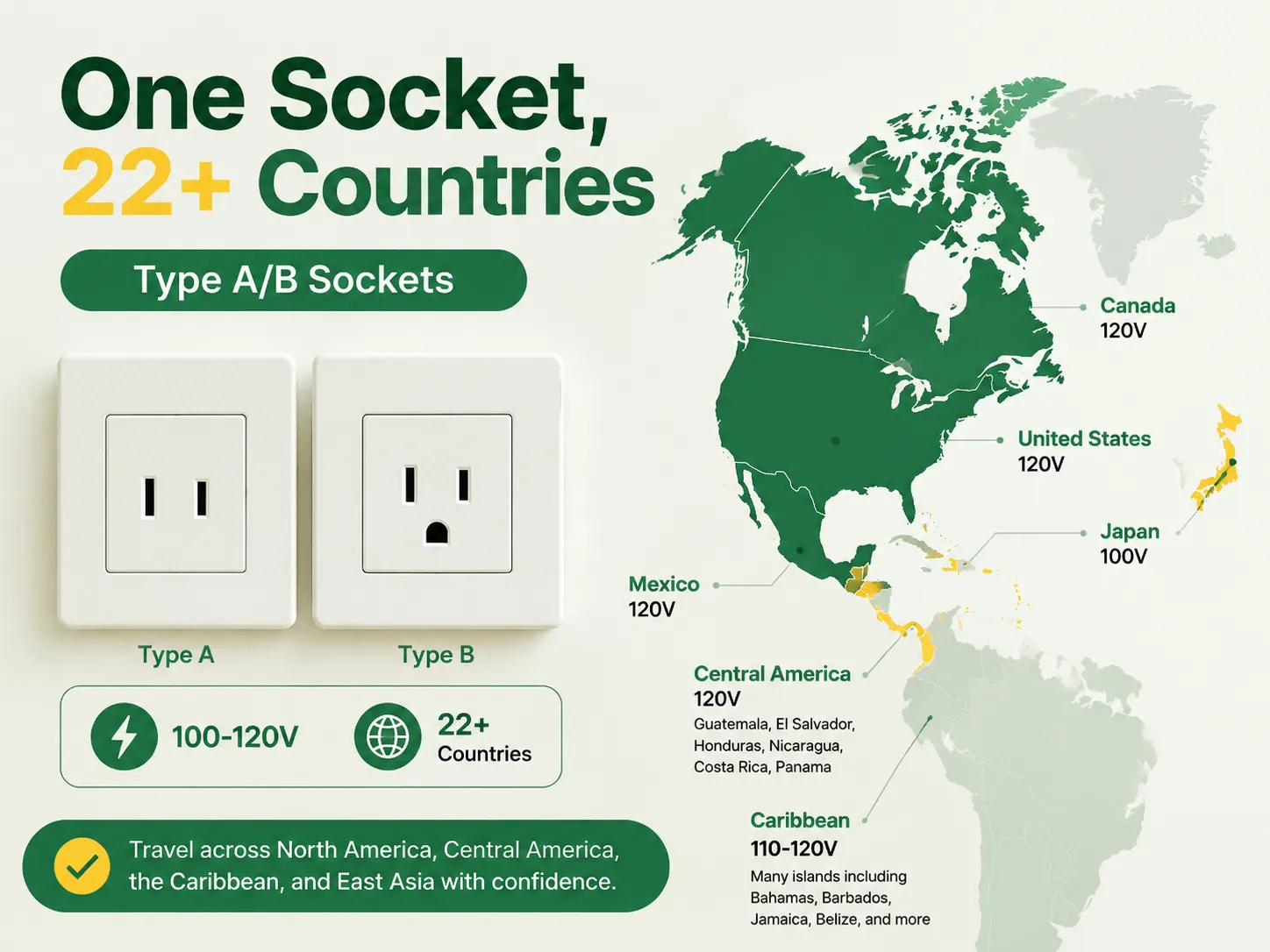
Tiêu chuẩn hóa điện của Bắc Mỹ là vô song: một thiết kế phích cắm được sử dụng ở hơn 22 quốc gia. Về vấn đề này, các phích cắm giống hệt nhau ở các khu vực sau:
Tóm lại, một người có thể đến Canada từ Hoa Kỳ và cho đến khi đến nửa vòng trái đất, đến Panama, không bao giờ phải nghĩ về bộ chuyển đổi phích cắm, điều này làm cho hệ thống điện này rất thân thiện với du khách từ Hoa Kỳ.
| Quốc gia / Khu vực | Phích cắm gia đình | Cần bộ chuyển đổi? | Cần bộ chuyển đổi điện áp? |
|---|---|---|---|
| Hoa Kỳ, Canada, Mexico | A / B | KHÔNG | KHÔNG |
| Trung Mỹ, hầu hết Caribe | A / B | KHÔNG | Không (110-127V) |
| Nhật Bản | A / B | KHÔNG (phích cắm phù hợp) | Thường không (100V so với 120V) |
| Đài Loan | A / B | KHÔNG | Không (110V) |
| Vương quốc Anh / Ireland | G | Đúng | Có (cho các thiết bị chỉ 230V) |
| Châu Âu đại lục | C / E / F | Đúng | Có (cho các thiết bị chỉ 230V) |
| Úc / New Zealand | TÔI | Đúng | Có (cho các thiết bị chỉ 230-240V) |
| Trung Quốc | A / C / I | Có thể (A vừa; C/I cần bộ chuyển đổi) | Có (220V so với 120V) |
| Hàn Quốc | C / F | Đúng | Có (220V) |
| Ấn Độ | C / D | Đúng | Có (230V) |
Lưu ý quan trọng: bộ chuyển đổi chỉ có thể làm cho hình dạng của phích cắm tương thích nhưng không thực hiện bất kỳ thay đổi nào đối với điện áp. Ví dụ, nếu một máy sấy tóc của Anh được cắm vào ổ cắm điện của Mỹ chỉ bằng bộ chuyển đổi, nó sẽ nhận được 120V thay vì 230V, nghĩa là nó sẽ hoạt động yếu và nóng lên đến mức nguy hiểm.
Quy tắc chung: nếu nó ghi INPUT: 100-240V (hoặc 110-240V), thì thiết bị có thể hoạt động ở điện áp kép và chỉ cần bộ chuyển đổi. Nếu nó chỉ ghi 120V hoặc 230V, đó là điện áp đơn, và nếu nó đến từ một quốc gia có tiêu chuẩn 230V thì nó cần bộ chuyển đổi ở Bắc Mỹ. Hầu hết các bộ sạc điện thoại, bộ chuyển đổi máy tính xách tay, bộ sạc máy ảnh, bộ sạc bàn chải đánh răng đều có điện áp kép, trong khi hầu hết máy sấy tóc, máy uốn tóc và các thiết bị cũ hơn thì không. Đối với logic rộng hơn về phích cắm và ổ cắm quốc tế — và cách hệ thống NEMA phù hợp với các tiêu chuẩn của thế giới — các hướng dẫn của chúng tôi về các loại công tắc và ổ cắm điện khác nhau và các nguyên tắc cơ bản về lắp đặt công tắc điều chỉnh độ sáng bao gồm khía cạnh phần cứng của các thiết bị tường.
Kiểm tra nhanh sẽ chỉ mất mười giây; bạn chỉ cần nhìn vào nhãn nhỏ trên thiết bị hoặc trên bộ nguồn của nó, thường nằm ở khu vực ngay quanh đầu nối cáp.
| Văn bản nhãn | Ý nghĩa | Cần thiết ở Bắc Mỹ (từ quốc gia 230V) |
|---|---|---|
| “ĐẦU VÀO: 100-240V, 50/60Hz” | Điện áp kép, toàn cầu | Chỉ cần adapter |
| “ĐẦU VÀO: 110-240V” | Điện áp kép | Chỉ cần adapter |
| “ĐẦU VÀO: 100-120V” | Điện áp đơn (tiêu chuẩn NA/Nhật Bản) | Chỉ cần adapter nếu từ quốc gia 120V; cần bộ chuyển đổi nếu từ quốc gia 240V |
| “ĐẦU VÀO: 220-240V” | Điện áp đơn (tiêu chuẩn 230V) | Adapter + bộ chuyển đổi |
Nếu bạn đi du lịch từ bất kỳ quốc gia nào có điện áp từ 220V đến 240V, bạn nên mang theo máy sấy tóc điện áp kép hoặc sử dụng máy sấy tóc du lịch do khách sạn cung cấp.
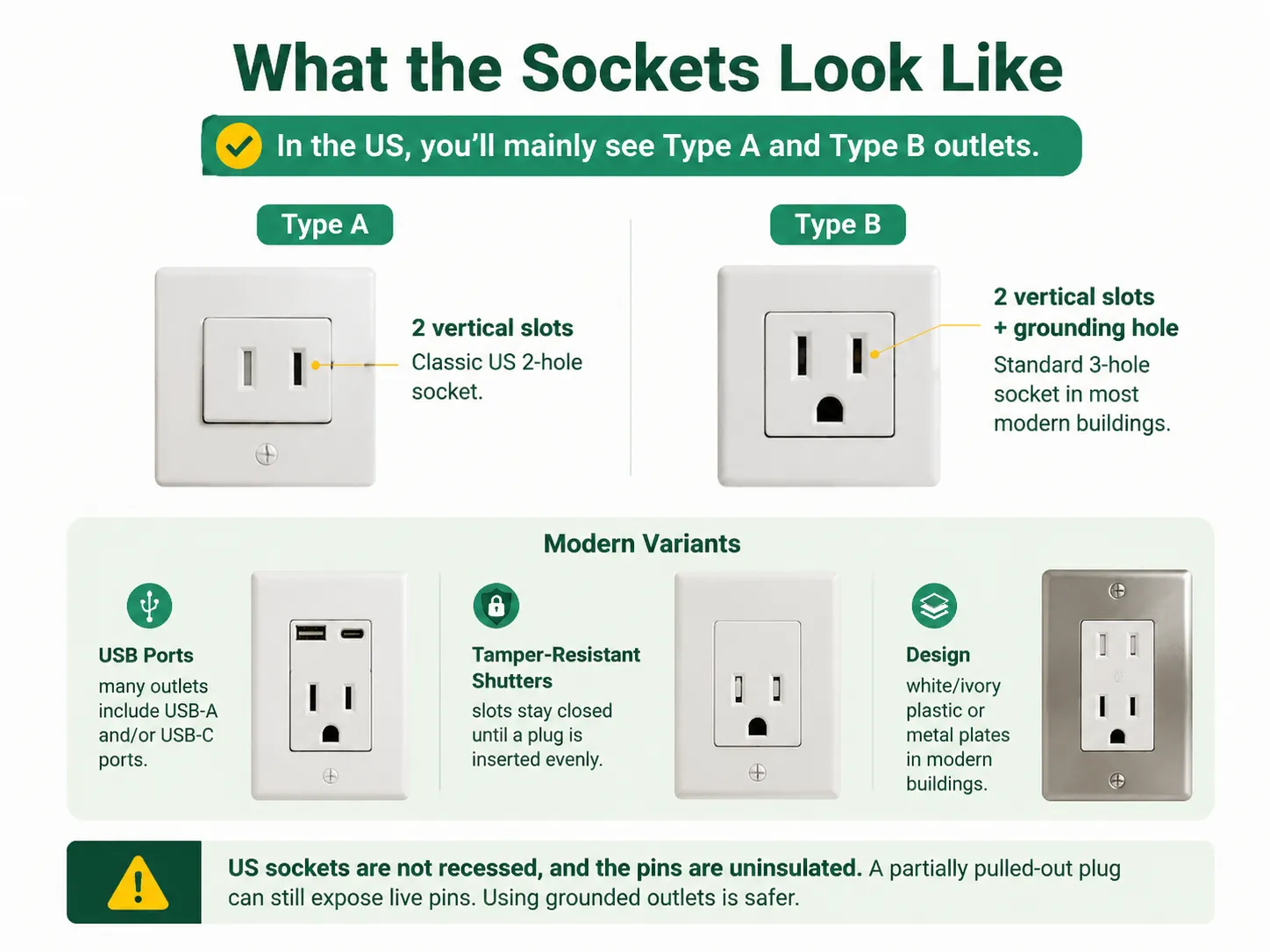
Nhận dạng các đầu nối giúp việc đi lại dễ dàng hơn:
Ổ cắm loại Mỹ nổi tiếng vì thực tế là nó không được gắn âm vào tường, và các chân của nó không có lớp cách điện, nghĩa là một phích cắm chỉ được cắm một phần vẫn còn các chân đang có điện. Nó đủ an toàn khi sử dụng bình thường, nhưng đó là một lý do nữa để sử dụng các ổ cắm được nối đất, được chứng nhận — như các ổ cắm chống giả mạo và tích hợp USB trong hướng dẫn nâng cấp ổ cắm USB, và các bộ điều khiển tường thông minh có sẵn trong phạm vi công tắc thông minh IGOTO cho cùng một dấu chân tiêu chuẩn Bắc Mỹ.
Đối với những người thường xuyên đi lại giữa các khu vực có nguồn điện 120V và 240V, nên sử dụng bộ chuyển đổi đa năng cao cấp ($25-$45).
Phích cắm và ổ cắm được sử dụng ở Bắc Mỹ bao gồm Loại A (với hai chân dẹt song song không nối đất, được gọi là NEMA 1-15) và Loại B (với hai chân dẹt và một chân tròn đóng vai trò nối đất — NEMA 5-15). Hệ thống này được sử dụng ở Hoa Kỳ, Canada, Mexico, hầu hết Trung Mỹ và phần lớn Caribe. Việc sử dụng phích cắm Loại A phù hợp với cả hai loại ổ cắm, trong khi phích cắm Loại B là tiêu chuẩn mới được yêu cầu trong tất cả các tòa nhà đương đại.
Có hai loại phích cắm điện: loại A (NEMA 1-15) là loại 2 chân không nối đất chủ yếu dùng cho các thiết bị cách điện kép và bộ sạc. Loại B (NEMA 5-15) là loại 3 chân nối đất chủ yếu dùng cho các thiết bị điện và máy tính. Định mức của chúng cũng giống nhau ở mức 15A và 125V.
Hoàn toàn chính xác. Canada, giống như Hoa Kỳ, sử dụng chính xác cùng loại phích cắm Loại A và Loại B, cùng điện áp 120V và cùng tần số 60Hz. Do đó, phích cắm Hoa Kỳ và phích cắm Canada có thể được sử dụng thay thế cho nhau. Các tiêu chuẩn do NEMA ở Hoa Kỳ và CSA ở Canada quy định khả năng tương thích của các phích cắm này.
Ở Hoa Kỳ, các ổ cắm loại A (NEMA 1-15) và loại B (NEMA 5-15) được sử dụng ở mức 120V/60Hz. Loại B là hai khe cắm với các lỗ mở dọc và một lỗ tròn để nối đất và là tiêu chuẩn hiện nay; mặt khác, loại A rõ ràng là hai khe cắm dọc trong các tòa nhà cũ nơi phích cắm loại A có thể sử dụng được. Các ổ cắm NEMA 14-30 hoặc 14-50 công suất cao hơn chỉ dành cho máy sấy, bếp lò và bộ sạc cho xe điện.
Loại ổ cắm kiểu Bắc Mỹ là một ví dụ về tiêu chuẩn hóa. Hệ thống phích cắm Loại A và B, hoạt động ở 120V/60Hz, được sử dụng ở hơn 22 quốc gia trên khắp Bắc Mỹ, từ Canada ở phía bắc đến Panama ở phía nam. Do đó, nếu sử dụng phích cắm 120V, đó là đầu nối đơn giản nhất để sử dụng trong các thiết bị liên quan đến điện. Đối với du khách từ các quốc gia 220-240V, tiêu chuẩn hóa này lại hữu ích ở chỗ nó giúp dễ dàng nhận biết câu trả lời: bộ chuyển đổi loại A/B cho hình dạng và bộ chuyển đổi điện áp cho mỗi thiết bị hoạt động ở một điện áp — dựa trên việc xác minh nhãn “INPUT” trong mười giây.
Nói cách khác, đối với bất kỳ du khách nào đến Bắc Mỹ, câu trả lời là: phích cắm từ Hoa Kỳ/Canada/Mexico/Nhật Bản chỉ cần cắm vào; những người khác cần bộ chuyển đổi; du khách đến từ khu vực 230V cần có bộ chuyển đổi điện áp cho từng thiết bị điện áp đơn của họ — đã kiểm tra nhãn, và mua bộ chuyển đổi đa năng phù hợp sẽ giải quyết mọi vấn đề, chỉ để du khách tận hưởng cảnh đẹp của Bắc Mỹ, mà không phải lo lắng về bộ sạc bị cháy.
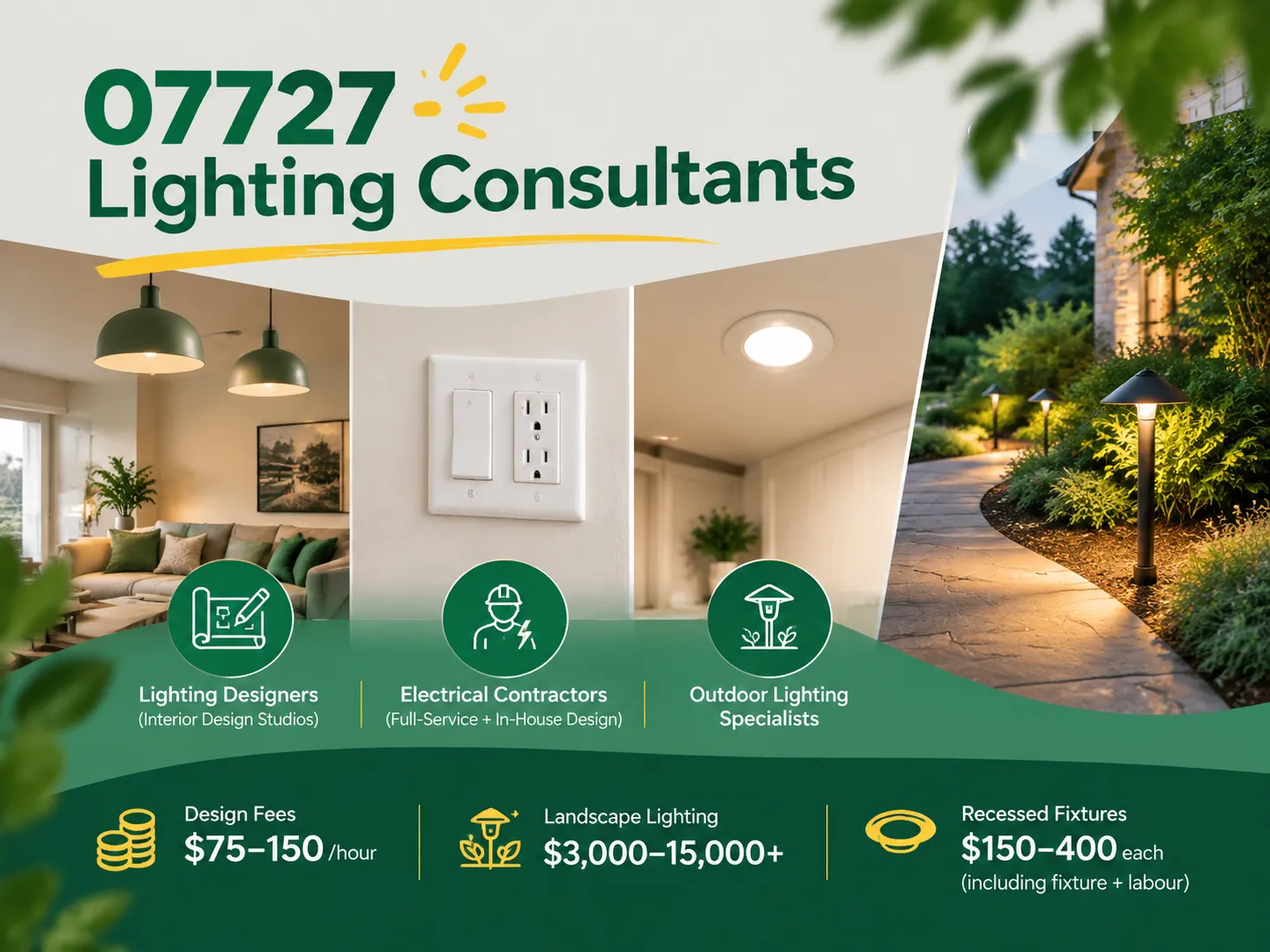
Farmingdale, cùng với một phần của Wall Township và Tinton Falls, New Jersey, chia sẻ mã bưu chính 07727. Hầu hết các ngôi nhà được xây dựng từ những năm 1950 đến 1990 vẫn tồn tại cho đến hôm nay. Hầu hết các chủ nhà đang cải tạo ngôi nhà của họ thay vì xây dựng nhà mới. Các chủ nhà có xu hướng chi tiêu nhiều hơn cho […]

Thuật ngữ “07984 lighting consultants” khiến mọi người có ấn tượng rằng năm chữ số này đại diện cho một mã bưu chính nào đó chỉ ra nơi mà các nhà tư vấn chiếu sáng cung cấp dịch vụ. Tuy nhiên, điều này là không chính xác: không có khu vực bưu chính nào được mã hóa 07984, mà chỉ là mã của viễn thông di động ở Vương quốc Anh. Điều này có nghĩa là […]
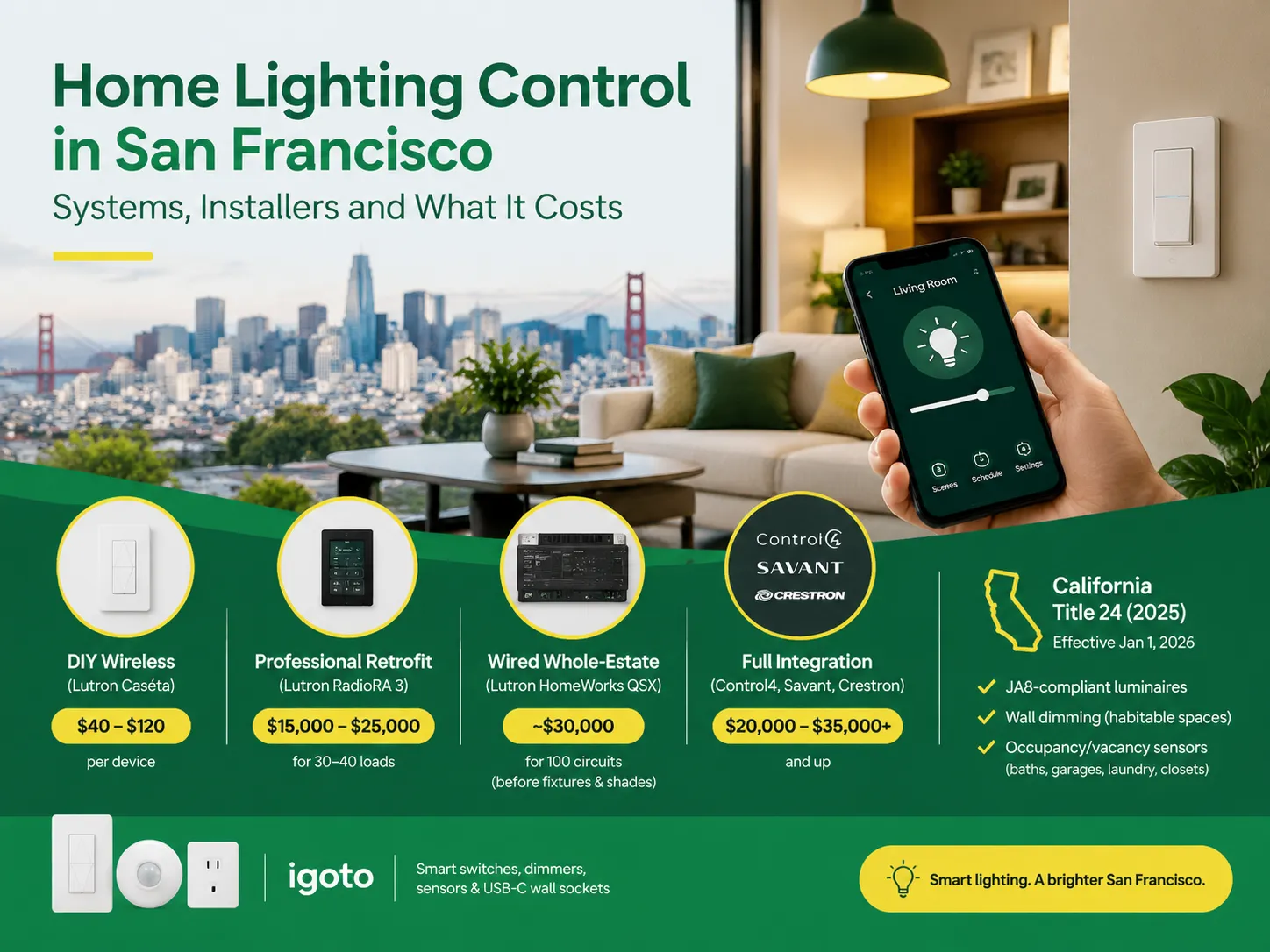
San Francisco không phải là thị trường điều khiển ánh sáng trung bình. Kho nhà ở cũ và dày đặc, và mã điện không cho phép nhiều lắp đặt điện như ở hầu hết các nơi khác ở Hoa Kỳ. Hầu hết các ngôi nhà muốn có ánh sáng phức tạp là các tòa nhà Victorian hoặc Edwardian, nơi không ai muốn bắt đầu mở […]

 Số 6 Đường Tuozhan, Công viên Tiên phong Leshang, Cảng Vịnh Yue Khánhwan, thành phố Nhạc Thanh, Tỉnh Chiết Giang


