

إذا كان لديك غرفة طويلة، ممر، أو درج وترغب في التحكم في مفتاح ضوء واحد من ثلاثة مواقع مختلفة، والتي تكون واحدة في كل طرف من الغرفة وواحدة في المنتصف. إذن، من المحتمل أنك تسأل واحدة من أكثر الأسئلة شيوعًا وسوء فهمها حول توصيلات المنزل. الجواب مفاجئ: الدائرة ليست موصولة باستخدام ثلاثة مفاتيح ثلاثية الاتجاهات. بدلاً من ذلك، عندما يتم التحكم في دائرة من ثلاثة مواقع، يتطلب الأمر مفتاحين ثلاثيي الاتجاهات في كلا طرفي الدائرة ومفتاح رباعي الاتجاهات ليتم توصيله باستخدام موصلين مسافرين. تناقش هذه المقالة كل ما يتعلق بالمفهوم، الأدوات، الخطوات المعنية في التوصيل، تخطيط المحطات، عملية التحقق، والمواصفات لتجنب الأخطاء التي يرتكبها الهواة في الغالب.
الرد قصير: للتحكم في ضوء واحد من ثلاثة مفاتيح، تحتاج فقط إلى مفتاحين ثلاثيي الاتجاهات ومفتاح رباعي الاتجاهات بدلاً من ثلاثة مفاتيح ثلاثية الاتجاهات. يحصل المفتاح الثلاثي الأول على الطاقة من خلال محطته المشتركة ويرسل التيار عبر السلكين المسافرين. يكون المفتاح الرباعي بالقرب من المركز ويقوم بتبديل المسافرين عند محطاته. يستقبل المفتاح الثلاثي الأخير أسلاك المسافرين ويعيد إرسال الطاقة الموصلة إلى المصباح. لذا، كلما تم تشغيل أحد المفاتيح الثلاثة، يتم تشغيل أو إيقاف الضوء بغض النظر عن وضع المفاتيح الأخرى. يجب عليك إيقاف الطاقة من قاطع الكهرباء، والتحقق منها باستخدام جهاز اختبار، ووضع علامة على كل سلك بشكل صحيح، واتباع المخططات الموضحة أدناه.
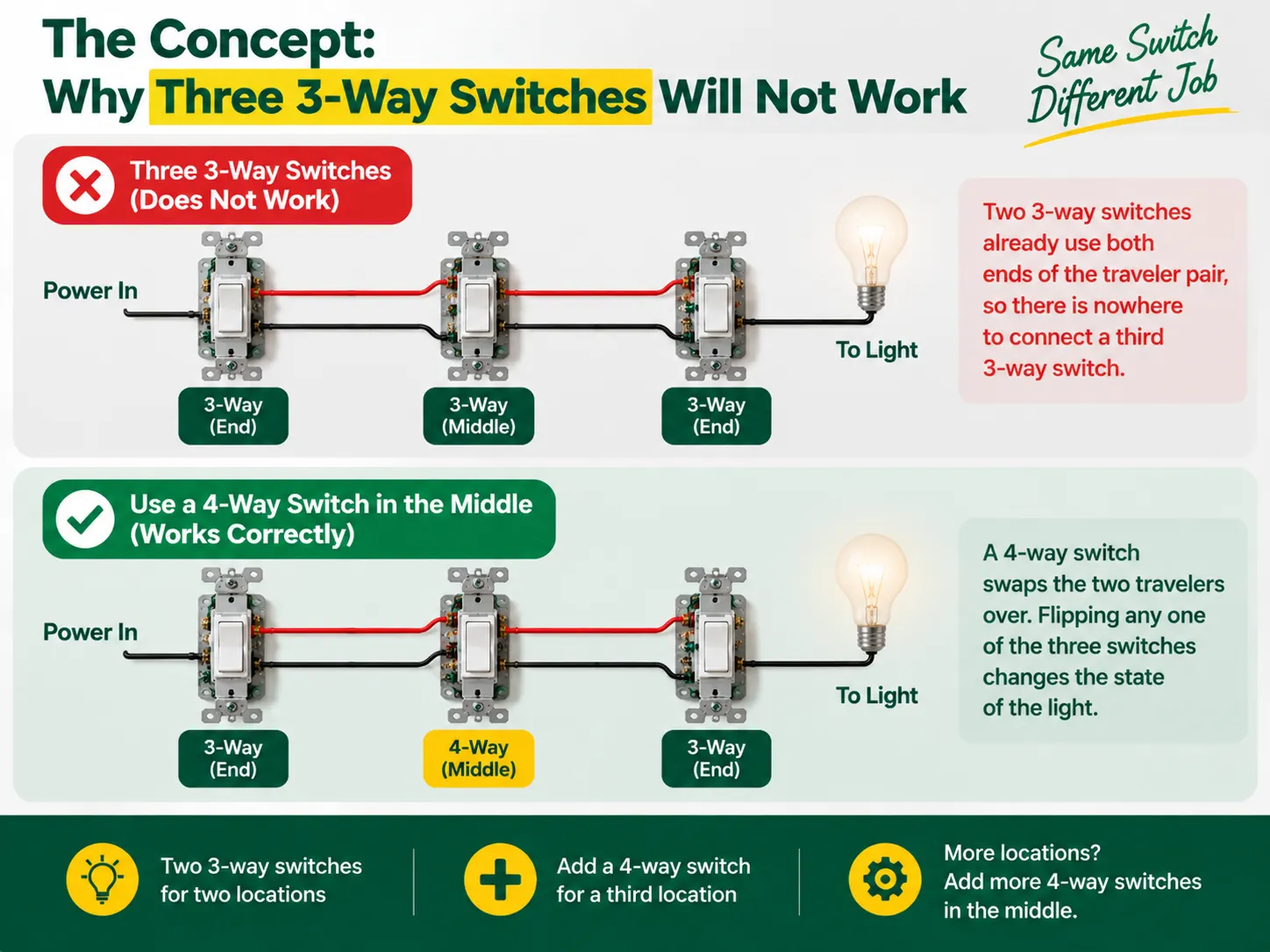
لا توجد علامات تشير إلى “تشغيل” و“إيقاف” في المفاتيح الثلاثية الاتجاهات لأنها ليست مفاتيح بالمعنى الحقيقي — فهي تعمل كمفتاح يربط بين سلكين مسافرين. يتم إرسال الطاقة إلى أحد المسافرين بواسطة المفتاح الثلاثي الأول ويختار المفتاح الثلاثي الآخر أي مسافر يتلقى الطاقة ويؤدي إلى المصباح. وبالتالي، فإن الشريكين في هذه العملية من ربط المصباح يشكلان سلسلة، حيث يجب أن تتطابق مدخلات المفتاح لكي يضيء المصباح، لذا ينطفئ الضوء ببساطة عن طريق تغيير المفتاح.
ومع ذلك، عندما تتم إضافة موقع ثالث، يميل المرء إلى رؤية أن النظام التقليدي لمفاتيح 3-way قد أنشأ بالفعل اتصالًا مع كلا طرفي كابل المسافر، مما يمنع توصيل مفتاح إضافي هناك. ما هو مطلوب هو جهاز مختلف تمامًا يسمى مفتاح 4-way، والذي يتم تركيبه بين مسافرين جاهزين لتبديلهما. مع وجود مفتاح 4-way في مكانه، سيكون كل مفتاح قادرًا على تغيير حالة الضوء في كل مرة يتم فيها تشغيل المفتاح أو إيقافه، وبالتالي تحقيق النتيجة المرغوبة من ثلاثة مواقع. إذا كانت هناك حاجة لتوصيل المفتاح الرابع، فإن عدد الأجهزة الموجودة في مكانها يزداد ولكن المبدأ هو نفسه.
قبل البدء، من المفيد فهم كيف تتناسب عائلة المفاتيح بأكملها معًا - الفرق بين التصميمات 1-way (قطب واحد)، 2-way (3-way)، وintermediate (4-way)، وكيف يتم تصنيفها عبر الأسواق، موضح في دليلنا لأنواع المفاتيح الكهربائية المختلفة.
| عنصر | تخصيص |
|---|---|
| مفاتيح 3-way × 2 | واحد لنهاية الإمداد، واحد لنهاية الضوء؛ كلاهما مع طرف “مشترك” بالإضافة إلى طرفين مسافرين |
| مفتاح 4-way × 1 | للموقع الأوسط؛ أربعة أطراف (زوجان من المسافرين) |
| سلك | 14 AWG على دائرة 15 A أو 12 AWG على دائرة 20 A (لا تخلط الأحجام على دائرة واحدة) |
| كابل | 14/2 أو 12/2 (خط، محايد، أرضي) بالإضافة إلى 14/3 أو 12/3 بين الصناديق الثلاثة للمسافرين الاثنين بالإضافة إلى المحايد |
| صناديق ووصلات الأسلاك | صناديق تقاطع بالحجم الصحيح، وصواميل أسلاك أو وصلات رافعة، وشريط كهربائي |
| أدوات | جهاز اختبار الجهد (غير تلامسي ومقياس متعدد)، مفكات، قواطع أسلاك، كماشة ذات أنف إبرة، مصباح يدوي |
التطور الأكثر أهمية في تحديثات الكود الكهربائي الأخيرة هو متطلب أن يتم تضمين كابل محايد في كل صندوق مفتاح بحيث يمكن دعم الأجهزة الذكية في المستقبل. إذا كان ذلك ممكنًا، استخدم أسلاك ثلاثية الكابلات (تشمل المسافر الأحمر) ومرر كابل محايد عبر جميع صناديق المفاتيح. إذا كان مشروعك يستبدل مفاتيح قديمة بدلاً من الأسلاك الجديدة، فإن الانضباط في فحص الصناديق والاستبدال في دليل استبدال مفتاح الضوء ينطبق في كل موقع.
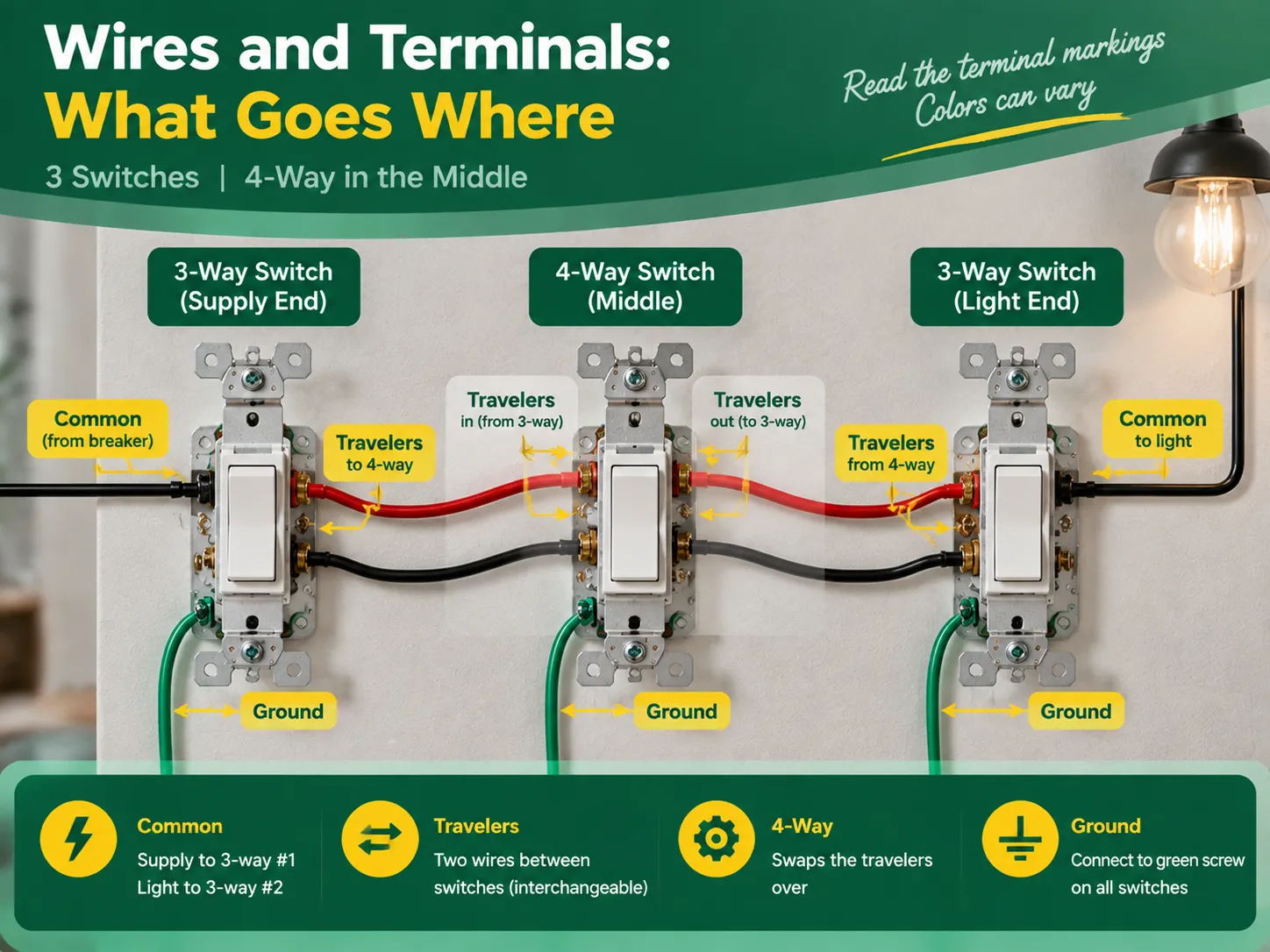
على الرغم من أن تسميات الأطراف هي نفسها للمفاتيح عالية الجودة، إلا أن الألوان تختلف بناءً على الشركة المصنعة، ومن ثم من المستحسن دائمًا التحقق من النص على الجهاز. تنص القاعدة المقبولة عالميًا على أن:
| قاعدة | يُحوّل | طرف | ما يتصل |
|---|---|---|---|
| مشترك (خط) | 3-way #1 (نهاية الإمداد) | برغي أغمق، أو معلم بـ COMMON / C | سلك الإمداد الساخن (من القاطع) |
| Travelers | 3-طريق #1 | برغيان متبقيان (نحاسي، أو معلمان 1 و 2) | سلكا المسافر الاثنين المتجهين إلى 4-way |
| زوج المسافرين في | 4-way (الوسط) | زوج من الأطراف | المسافرين القادمين من 3-way #1 |
| زوج المسافرين الخارجين | رباعي الاتجاه | الزوج الآخر من الأطراف | المسافرين المتجهين إلى 3-way #2 |
| Travelers | 3-way #2 (نهاية الضوء) | برغيان للمسافرين | المسافرين القادمين من 4-way |
| Common (load) | 3-way #2 | Common terminal | The switched wire running to the light |
The two traveler wires should preferably be colored the same (for example, the black wire and red wire in cable 14/3 for the US or two identical wires in the three-core-and-earth UK cable). In this case, it is good news to know that travelers may be changes without any concerns, provided that they remain unchanged when passing the 4-way switch. However, the common terminal is not interchangeable.
Act with deliberation, one compartment at a time, and treat every wire as hot until you eliminate the doubt.
The verification comes in three steps during which the two common wiring mistakes can be identified – incorrect wiring and crossed traveler continuity.
Almost all unsuccessful three-switch circuits can be attributed to one of the following errors:
Almost none of the aforementioned mistakes can escape being revealed during continuity check; hence “the checking part” is so important.
No, you will never have three 3-way switches in one circuit. You need two 3-way switches to control one light via three power sources, plus one 4-way switch in the middle. To add more than three switches to control the light, you will add another 4-way switch between the 3-way switches.
There are five most practial mistakes: using three 3-way switches instead of two 3-way and one 4-way switch, incorrectly connecting the power source to the traveler terminal instead of the common terminal, switching the neutral instead of connecting it through the wires, incorrectly connecting the travelers in the 4-way switch, and skipping the grounding and labelling of the wires. All these mistakes can be detected by a continuity test before turning the power on.
The 3-way switch has one dark marked terminal (the common terminal) to which the wire from the hot supply at one end and wire from the light at that end of the circuit should be connected. The two brass traveler terminals are to take two wires connecting the 3-way switch with the 4-way one. In the 4-way switch, one pair of traveler wires is to be connected to one pair of terminals.
If these three lights are to be switched on/off simultaneously from all three locations, then the multi-way circuit needs to be made in the same way but the lights have to be connected in parallel from the load-end common terminal. If each of the switches from each location is to control its own light, it is not a multi-way but three independent circuits.
The process of wiring a single light to three switches is an interesting illustration of how understanding the basics leads to effective electrical project completion. In this case, the key concept is the fact that a multiway circuit consists of two 3-way “selector” switches and one or more 4-way “mutator” switches in between. To create a three-way circuit one simply requires two 3-way switches and a 4-way switch wired in a way so that the line feeds the common terminal of the first 3-way switch, travelers run through the 4-way switch, and the common terminal of the last 3-way switch leads to the light. To complete the wiring project correctly, one must do the following: follow the terminal configuration mapping, wire the neutrals straight passing through all boxes, ground components as needed, mark the load and line terminals, and look up for a continuity check on the circuit after its completion. It is also important to remember that only quality switches should be used in the project and that the best switches come from reliable manufacturers. This specific aspect of the process is discussed in detail in the articles on the choice of an electrical switch and socket manufacturer since all the techniques used to check the quality of electrical switches and connectors are the ones used in the manufacturing process of electrical devices.
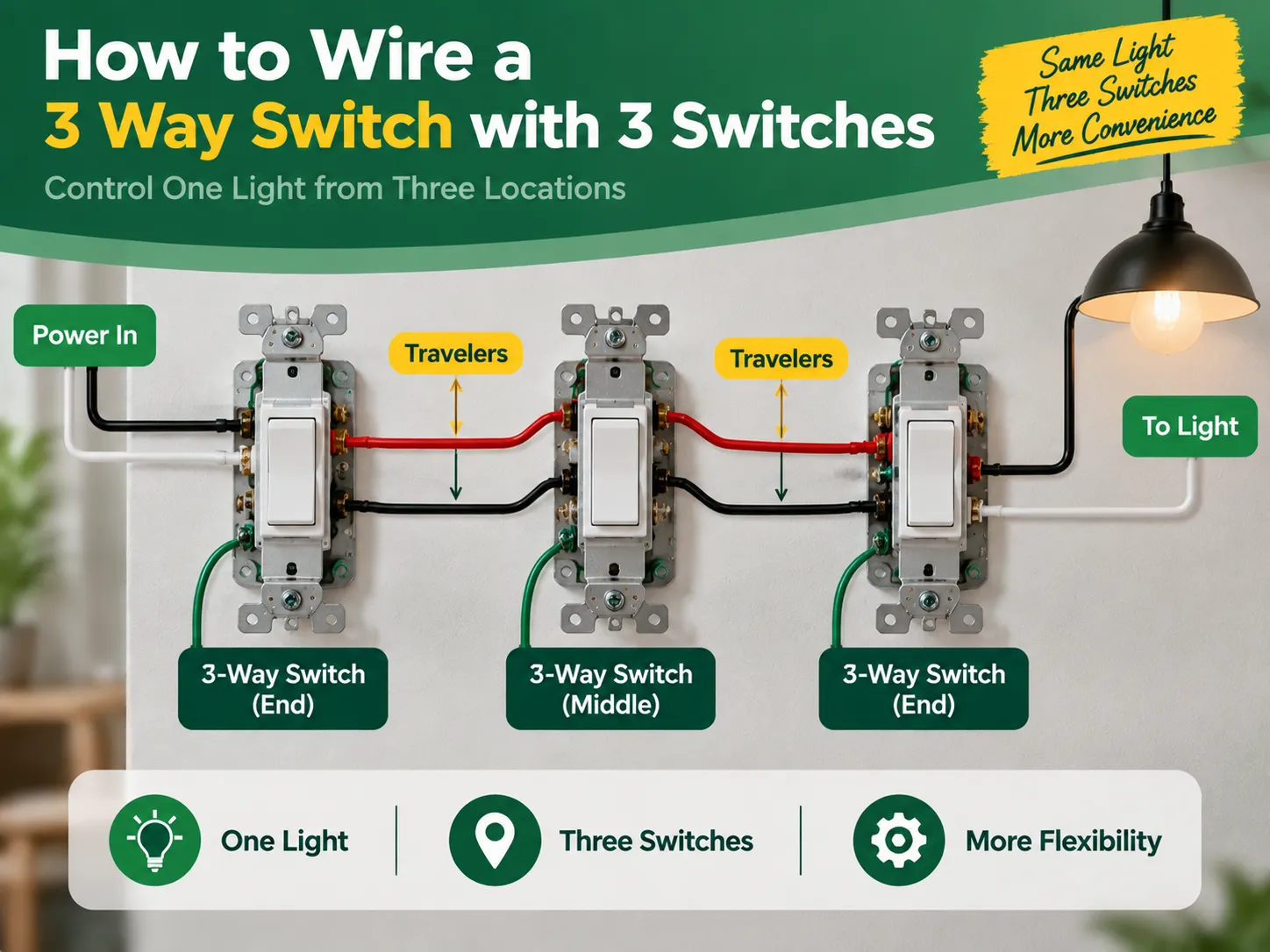
If you have a long room, hallway, or staircase and want to control one light switch from three different locations which are one at each end of the room and one in the middle. Then you are probably asking one of the most frequently asked and misunderstood questions about home wiring. The answer is surprising: […]

يقدم حي غرينتش مزيجًا فريدًا من الأهمية التاريخية والحداثة، والتي يمكن رؤيتها في مواقعها التاريخية فضلاً عن مبانيها السكنية المعاصرة. في غرينتش، يت coexist القديم والحديث في تناغم. على الرغم من وجود المباني القديمة من العمارة الجورجية، يمكن تركيبها مع […]
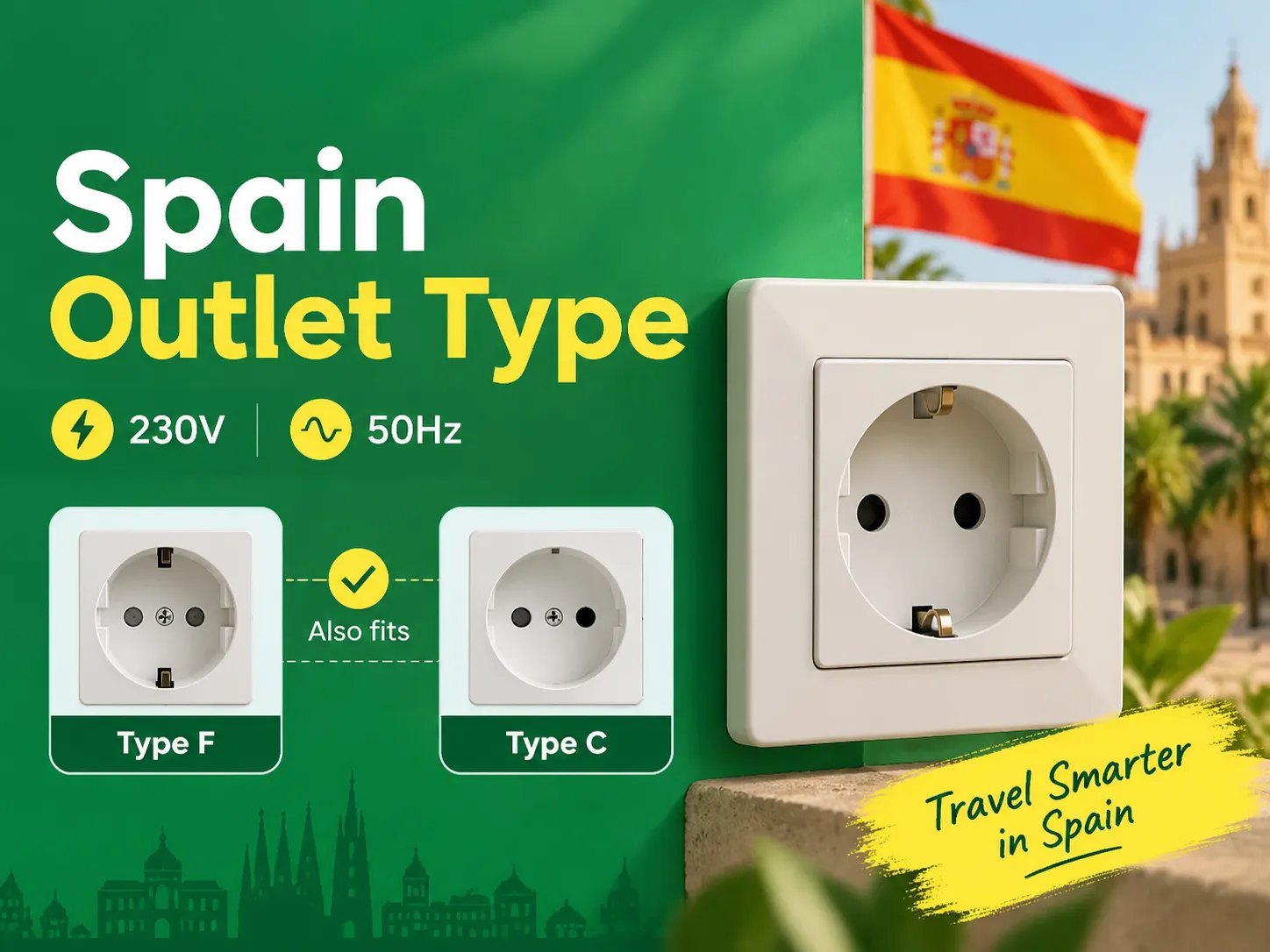
إذا كنت تعرف قواعد الدبوسين الدائريين، ستجد أن إسبانيا واحدة من أبسط الأماكن في أوروبا للحفاظ على شحن أجهزتك وتوصيلها، حيث أن الدول عبر القارة لديها نفس مقابس التوصيل. يحتاج أولئك الذين يسافرون إلى إسبانيا من المملكة المتحدة والولايات المتحدة وآسيا إلى محول واحد فقط. يشرح هذا المقال كل […]

 رقم 6 طريق Tuozhan، حديقة Leshang Pioneer، ميناء خليج Yueqingwan، مدينة Yueqing، مقاطعة Zhejiang


