

بلدة راندولف في مقاطعة مورس مرتبطة بالرمز البريدي 07869 الذي يحده دوفر من الغرب ودينفيل من الشرق. هناك الطريق 10 الذي يعبر البلدة؛ يمكن العثور على آلاف المنازل المملوكة بشكل خاص في هذه البلدة متناثرة في التلال الخضراء والغابات. عندما أدخلت هذا الرقم في البحث عن محترفي الإضاءة، كان استفسارك ربما أبسط من ذلك الذي قدمته نتائج البحث، وهو: “من يجب أن أتصل به وكم سيكلفني؟” لكن هذه هي القضية الرئيسية في هذه المقالة؛ لن تتناول نظرية تصميم الإضاءة بل ستنظر عن كثب في سوق الإضاءة المحلي والشركات الموجودة في ذلك السوق.
تم تعيين بلدة راندولف في مقاطعة مورس بالرمز البريدي 07869، يحدها من الغرب دوفر ومن الشرق دينفيل. تعبر البلدة الطريق 10 وهي موطن لآلاف المنازل المملوكة بشكل خاص التي تتناثر حول منطقة التلال الخضراء والغابات. عندما كتبت هذا الرقم للبحث عن متخصصي الإضاءة، كان لديك على الأرجح سؤال أسهل في ذهنك مما هو معروض في نتائج البحث، وهو “من يجب أن أتواصل معه وكم سأضطر لدفعه؟” هذا ما ستتناوله هذه المقالة حيث لن تغطي أساسيات تصميم الإضاءة ولكن ستركز على اللاعبين المختلفين في مجال الإضاءة في هذه المدينة.
يشير رمز ZIP إلى أنك تقع في بلدة راندولف. إذا كنت في بلدة راندولف، فستعمل في مقاطعة موري ضمن ولاية JCP&L، وفي بلدة لديها قسم البناء الخاص بها وعملية البناء الخاصة بها.
الحديث عن ذلك يؤدي إلى العديد من النقاط المهمة. يتم توفير لوائح البناء من قبل نيو جيرسي من خلال قانون البناء الموحد الذي بموجبه تمتلك إدارة الشؤون المجتمعية السلطة لإدارة لوائح البناء والكهرباء. ومع ذلك، فإن البلديات هي التي تعالج التصاريح وتقوم بالتفتيشات. وبالتالي، يجب أن يتم الموافقة على مشروع الإضاءة في بلدية راندولف من قبل المسؤولين المحليين عن البناء بدلاً من مكاتب المقاطعة، وقد يختلف تدفق الأوراق عن ذلك المستخدم من قبل مقاول في دينفيل أو روكواي.
إذا كنت تبحث عن مستشارين للإضاءة “في 07869”، فهذا يعني عادة أنك تبحث عن مستشار يعمل ضمن دائرة معينة بدلاً من أن يكون حصريًا في أراضي البلدية. تعمل الغالبية العظمى من المستشارين في راندولف أيضًا في دوفر (07801)، روكواي (07866)، دينفيل (07834)، وارتون (07885)، مين هيل (07803)، وفي بعض المدن البعيدة، مثل تشيستر، ميدنهام، موريس تاون، وفلورهام بارك.
يفسر مخزون المساكن في راندولف العديد من الخصائص الفريدة لمتطلبات الإضاءة المحلية. تم تجهيز عدد كبير من المنازل التي بنيت من حوالي 1960 حتى 1990 بمصباح سقف واحد فقط لكل غرفة ومفتاح ضوء يقع بجوار الباب. تتضمن بعض العقارات الأكبر في المناطق الحرجية في راندولف إضاءة قريبة جدًا من تركيب بنية تحتية صغيرة: إضاءة المناظر الطبيعية، إضاءة معمارية خارجية، لوحات مدعومة بمولدات، إلخ، ولا تتشابه كثيرًا.
هنا تصبح الأمور مربكة للسوق المحلي، لذا يستحق الأمر أن يُذكر بوضوح.
عندما يتعلق الأمر باستشارات الإضاءة السكنية في راندولف، يكون التركيز بطبيعة الحال على التجديدات والتعديلات. في هذه الحالة، قد يقوم المرء بعمل تجديد للمطبخ، إضافة جناح غرفة نوم رئيسية، إكمال تجديد القبو، وبناء إضافة للمنزل، مما يتطلب نصائح عملية بشأن قضايا مثل عدد الدوائر، التبديل، طبقات الإضاءة، ملاءمة درجة حرارة اللون بالنسبة للمواد المستخدمة، والأهم من ذلك، كيفية تجنب موقف محرج عندما يظهر مكان تم تجديده بشكل مثالي بأربعة تركيبات مدمجة تناسب مربعًا. ما يحصلون عليه عادة هو خطط سقف مسبقة التشطيب، جدول التركيبات بأرقام أجزاء فريدة، خطط التحكم، ومواصفات التركيب ليقدم الكهربائي عرضًا بناءً عليها.
عندما يتعلق الأمر باستشارات الإضاءة التجارية أو المؤسسية، تكون الحالة مختلفة تمامًا. يفتخر الطريق 10 في راندولف بالنشاط التجاري في شكل متاجر تجزئة، مكاتب، ممارسات طبية ومطاعم، بينما تمتلك مقاطعة موريس مساحات صناعية ومكتبية غنية. يعتمد هذا النوع من العمل أكثر على الامتثال لقوانين الطاقة، الأهلية للحصول على خصومات، وأحيانًا، متطلبات فوتومترية. في هذه الحالة، من المحتمل أن يكون المستشار معنيًا فقط بجوانب الإضاءة في المشروع الذي تم الحصول عليه من قبل شركة هندسية، مقاول تصميم وبناء، أو وكالة إضاءة.
| سكني | تجاري / مؤسسي | |
|---|---|---|
| الزناد النموذجي | تجديد، إضافة، بناء جديد | تجهيز، تحديث، ترقية مدفوعة بالمعايير، مشروع استرداد |
| من يستأجر المستشار | مالك المنزل، أحيانًا المعماري أو المقاول | المعماري، المهندس، المقاول العام، أو المالك مباشرة |
| القيود الرئيسية | الأسلاك الحالية، هيكل السقف، الميزانية، الذوق | كود الطاقة، أهداف الإضاءة، الوهج، أهلية الاسترداد، الجدول الزمني |
| المخرجات | خطة السقف المنعكس، جدول التركيبات، تخطيط التحكم | دراسة فوتومترية كاملة، وثائق الامتثال، جداول المعدات |
| أساس الرسوم | بالساعة، حزمة ثابتة، أو لكل غرفة | نسبة من قيمة المشروع، أو لكل تركيبة / لكل منطقة |
| زاوية الاسترداد | محدودة؛ برامج الأجهزة أو الغلاف العرضية | كبيرة؛ حوافز إضاءة تجارية NJ Clean Energy |
| المدة | من أيام إلى بضعة أسابيع | أسابيع إلى أشهر |
الخلاصة: لا تشارك مستشار إضاءة تجارية في أعمال المطبخ، ولا تطلب من مصمم سكني تقديم تصميم فوتومتري لتلبية متطلبات مراجعة كود الطاقة. على الرغم من أن مهاراتهم قد تتداخل، إلا أن المخرجات الفعلية، والبرامج المستخدمة، وهيكل الرسوم مختلفة تمامًا.
المصطلح غير واضح، لذا يتم تقسيم العمل إلى أجزاء. يقوم المستشار الكفء ببعض أو كل ما يلي، اعتمادًا على المتطلبات.
في حال كان المشروع مدفوعًا بالتصميم، يتبع المستشار ببساطة العمليات التي وضعها المصمم بالفعل. تلك الطريقة في العمل لها تقاليد وتوقعات وثائق خاصة بها، وتفاصيل كيفية تناسب نطاق الإضاءة مع سير عمل المحترف في التصميم موضحة في هذا العرض. كيفية التعامل مع نطاق الإضاءة وأجهزة الأسلاك في المشاريع المدفوعة بالتصميم..
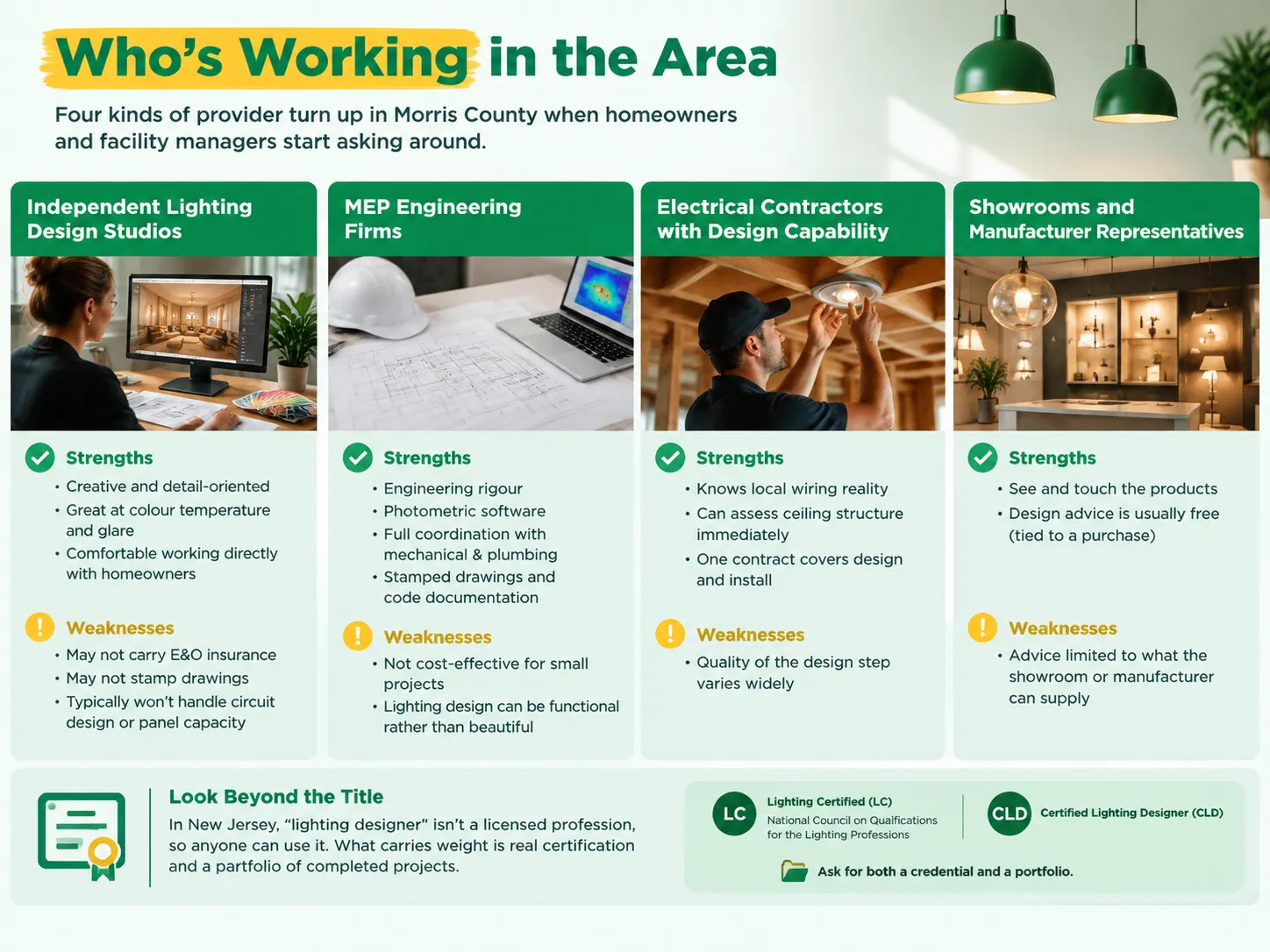
في مقاطعة مورس، هناك أربعة أنواع من مصممي الإضاءة الذين يستشيرهم المحترفون وأصحاب المنازل. كل نوع له مزاياه وعيوبه المميزة.
عند البحث عن مصمم في نيو جيرسي، تذكر أن الاعتماد لا يعني دائمًا اللقب. مهنة مصمم الإضاءة غير منظمة، لذا يمكن لأي شخص استخدامها. الاعتماد الذي يتحدث عنه ليس لقبًا، بل هو شهادة ومحفظة أعمال. يمكنك أن تكون متأكدًا من أن الممارسة قد تفوق النظرية.
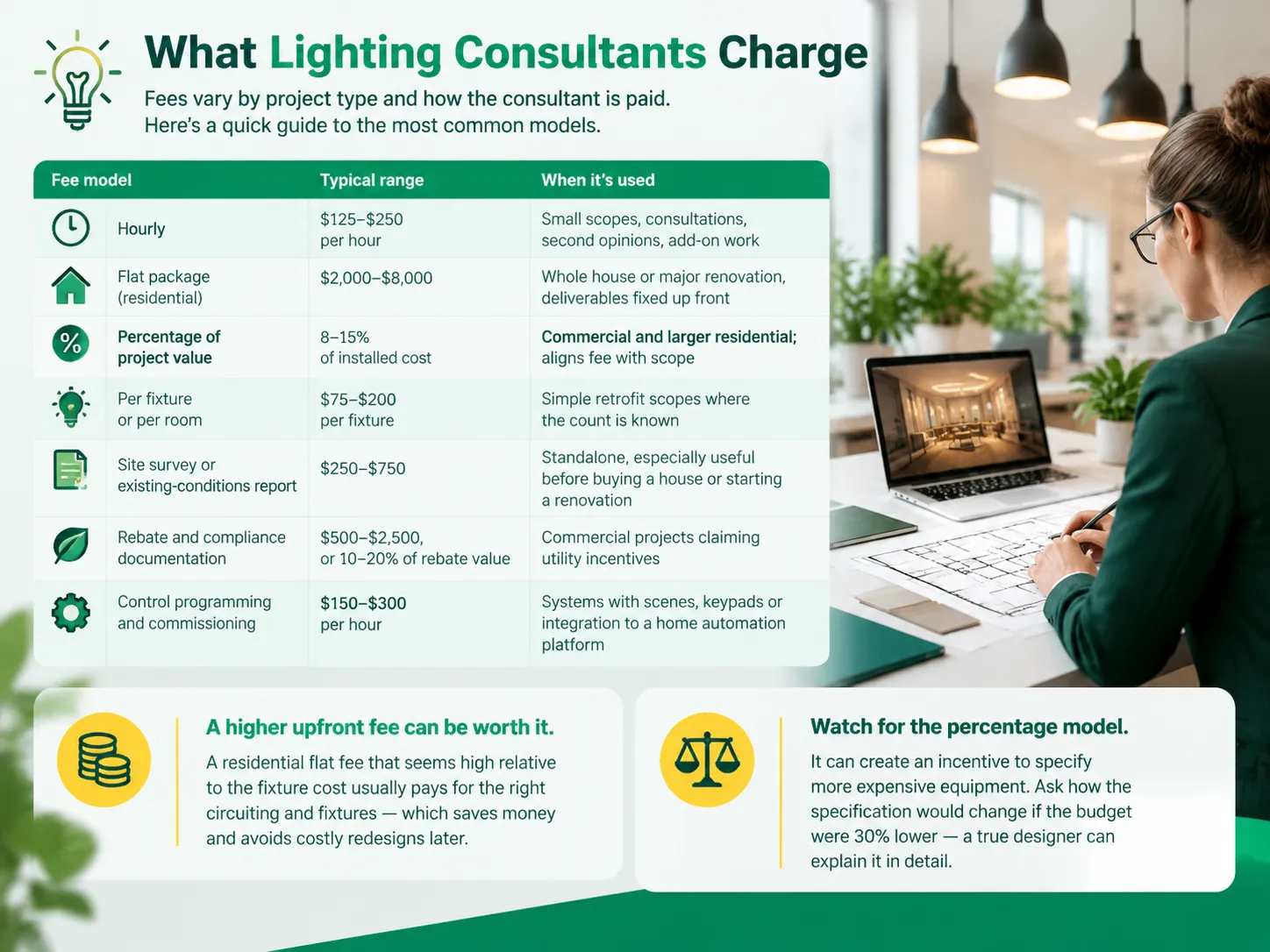
يتم عكس تسعير السوق بأربع طرق مختلفة، ومن المهم جدًا تحديد الطريقة المعروضة لك.
| نموذج الرسوم | النطاق النموذجي | عندما يتم استخدامه |
|---|---|---|
| بالساعة | $125–$250 في الساعة | نطاقات صغيرة، استشارات، آراء ثانية، أعمال إضافية |
| حزمة ثابتة (سكنية) | $2,000–$8,000 | منزل كامل أو تجديد كبير، تسليمات محددة مسبقًا |
| نسبة من قيمة المشروع | 8–15% من التكلفة المثبتة | المشاريع التجارية والسكنية الأكبر؛ تتماشى الرسوم مع النطاق |
| لكل جهاز أو لكل غرفة | $75–$200 لكل جهاز محدد | نطاقات تجديد بسيطة حيث يكون العدد معروفًا |
| مسح الموقع أو تقرير الظروف الحالية | $250–$750 | مستقل، مفيد بشكل خاص قبل شراء منزل أو بدء تجديد |
| مستندات الخصم والامتثال | $500–$2,500، أو 10–20% من قيمة الخصم | المشاريع التجارية التي تطالب بحوافز المرافق |
| برمجة التحكم والتكليف | $150–$300 في الساعة | أنظمة مع مشاهد، لوحات مفاتيح أو تكامل مع منصة أتمتة المنزل |
هناك بعض الحقائق حول هذه الأرقام. للبدء، عادةً ما لا تعني الرسوم الثابتة المكلفة أنها غير مفيدة، لأنها تغطي شيئًا يجعلك موفرًا للمال: الدوائر الصحيحة واختيار التركيبات المناسبة التي تتم مرة واحدة. إعادة تصميم مشروع الإضاءة بعد بناء الجدران يجعلها مكلفة جدًا.
الجانب الثاني من نموذج النسبة من السهل تجاهله. عندما يتم دفع أجر المستشار كنسبة من التكلفة، يحصل على الحافز لاقتراح أجهزة أكثر تكلفة. هذا لا يعني أن هذا النموذج غير صحيح، ولكنه بالتأكيد يستحق السؤال عن كيفية تغيير التصميم إذا تم تقليل الميزانية بمقدار 30%.
هناك ثلاثة أسباب رئيسية للمشاكل في تصميم مشروع الإضاءة كما تشير نقاط الفشل الشائعة في التصاميم.
من غير المحتمل أن تكون العناصر المذكورة أعلاه جذابة جدًا. ومع ذلك، فهي التي ستفرق بين التركيب الذي يعمل بسلاسة وصحيح من التركيب الذي يحتاج إلى تعديل. إذا كنت تقوم بالتنسيق بنفسك بدلاً من توظيف شخص آخر، فإن الاعتبارات العملية حول اختيار الصناديق وتوافق الأجهزة مغطاة في هذا الدليل لـ اختيار صناديق كهربائية للمخارج والمفاتيح, ، ومن المفيد قراءته قبل مرحلة التركيب الأولية بدلاً من بعدها.
خطة الإضاءة هي خطة كهربائية، والتي في نيو جيرسي تتطلب الامتثال لقانونين: قانون البناء الموحد وقانون الكهرباء الوطني. على الرغم من أن مستشارك لا يحتاج بالضرورة إلى أن يكون كهربائيًا، يجب أن يكون من الممكن الامتثال للخطة المنتجة عمليًا.
إليك بعض الفخاخ الشائعة لخطة إضاءة سيئة:
Heights are one of these details that seem insignificant, until you find yourself in the room where either the switches do not line with the door casing or the dimmer appears to have intentional placement in the hallway but should not have been normal. If you want the practical conventions rather than the code citation, this piece on standard light switch height from the floor covers the typical figures and when accessible-design rules change them.
The switching is the aspect of lighting design where the difference between good and bad design is most noticeable in real life.
In the past, lighting control was straightforward: one switch for each grouping of lights and maybe a dimmer. Nowadays, it is common to see a mixture of conventional switches, trailing-edge dimmers, multi-way dimmers, occupancy sensors, and various keypads in a refurbished building and it presents a problem. Each kind of device has its own requirements, such as the kind of wiring used, whether the device is compatible with the others, etc.
The problem of compatibility is what confuses people. The fact that not every LED lamp or fixture can work with dimmers poses no problem as long as the curve of the controlled voltage is compatible between the two devices. Thus, if a phase-cut dimmer is used in tandem with a device meant for 0-10 V control, it may cause problems like flashing, hum, limited dimming capabilities or no minimum light at all. When a dimmer has a minimum load requirement higher than the fixture’s, it may not function at all, which can be a predicament, which can be solved by having the compatibility chart. This is basically a table given by the manufacturer that shows compatibility between certain drivers and lamps.
In addition to compatibility issues, the installation can be a problem too, as a wonky wiring scheme in a three-way or using a dimmer on the wrong leg can make the system behave as if there were faulty devices involved.The wiring arrangement for a straightforward dimmer installation on an existing circuit is set out step by step in this guide to تركيب مفتاح تخفيت الإضاءة, and reading it before you brief a contractor is a good way to spot whether the person quoting you actually understands the circuit.
Scene programming gives you that last step of convenience. A house with eight keypads and no programming set up is worse than one with regular switches because no one knows what anything does. Make sure that you allocate a budget for programming time. It is inexpensive during the commissioning phase, but it becomes costly when the dissatisfied client attempts to fix it after six months of living with it.
We need to clarify the limits of this term because “lighting” refers to various professions and products.
A lighting designer is the one who creates a lighting system, while an electrician carries on the installation work. The manufacturer produces fixtures. There is also the fifth, frequently ignored element, which is the switches, dimmers, sockets, and plates that are operated by the customer during many hours every day long after everything has been arranged and all the designers have left the place. This latter part of the business does not take up much space in any lighting project in terms of money but is the part that allows to define whether the project will please you in five years from now.
IGOTO specializes in this fifth part of the business. We manufacture wall switches, sockets, plugs, and other electrical apparatus and sell them through distributors and contractors. If you are engaged in specifying a project located in New Jersey, your consultant will most likely never mention a certain brand. The difference between a device that makes a smooth dimming effect for fifteen years and one that starts buzzing after three years is made at the plant, with the help of contacts, components, quality control experts, and various tests. That’s the part of the project we look after, and if you want to see what the range covers, the formats used across different regional standards are set out in this overview of wall socket and light switch formats for different markets.

Here are six inquiries that set an effective consultant apart from an enthusiastic one.
Next piece of local advice. Here, the bottleneck is determined by electrician’s schedule, not by design. If you are planning to rebuild, use the lighting consultant at the same time as designer.
A lighting consultant determines how a space will be illuminated and records it adequately to make light fixtures. As the reality is the survey of existing conditions, working on the essential needs of each area, designing the lighting in layers (ambient, general, accent, decorative), choosing specific fixtures giving their specific numbers, calculating the illuminance if necessary, designing the control scheme, coordinating with the electrician and builder and ensuring everything is done correctly. On commercial projects, they have energy code regulation and utility rebate documentation. They do not install anything and do not design the electric systems in most of the residential projects either, as it’s the job for the electrician.
The hourly rates for this industry typically range from $125 to $250. The total cost of a full residential design package ends up being anywhere from $2,000 to $8,000 on average depending on the complexity of the project. Commercial projects are usually charged on the basis of 8 to 15% of the project’s value, or on a per-fixture basis in the range of $75 to $200 per fixture. An independent site assessment or existing site report would cost $250 to $750. Control systems programming and commissioning are billed at around $150 to $300 on an hourly basis.
Not necessarily. If you are merely changing fixtures in an existing room, an electrician and even a showroom may be enough to make it work without spending much money. You may need a consultant in cases where more than one room is involved, when remodeling is taking place, when there is a need for a control system or automation, or even when a room is utilized differently than initially planned. The most obvious scenario is a renovation that has not yet reached the rough-in stage.
Electricians install and sign off the electrical work such as circuits, boxes, wiring, devices, and connection to panel. Lighting designers will determine what needs to be installed and why. There is a crossover, as an electrical contractor with design abilities can do both, but the roles are different and the certification and licensing are also different. Electrical work in the state of New Jersey requires a certified electrical contractor as well as a permit from local construction office. Lighting designer is not a licensed title in the state, thus the qualification to check is the certification such as Lighting Certified (LC), or Certified Lighting Designer (CLD) etc. as well as examples of completed projects.
For a single room home job, one week to two weeks from the first site visit until specification is issued. For a whole house remodel, the amount of time involved will be three to six weeks, with completion time determined by how long it takes to finalise architectural drawings; a design cannot be marked off against a design plan that is still in formative stages. For commercial work, the timeframe can vary from a few weeks for a simple fit-out to several months for a complete building as a result of the coordination with other trades and review cycles. Also include the time for control programming at the end; this is commonly a different visit after the electrician has completed his part.
The lighting design industry in Randolph, New Jersey, 07869 is relatively small and consists of four types of companies; independent studios, MEP engineers, electrical contracting companies that specialize in lighting design, and showrooms which combine lighting design with product sales. All companies have good professionals, therefore an error by a customer may be hiring the wrong company type.
Cost calculations are fairly straightforward. Prices start from $125 per hour, then can be up to thousands of dollars for residential assignments and can account for 8%-15% of construction projects. However, this raises the question of how many points if the specifications contain all necessary details like the amount of the installed lighting, compatibility checks, and a visit to the site after installation. If yes then money is not wasted on sketches.
Two pieces of important advice, firstly, it is advisable to hire a lighting design consultant before starting implementation of a project, at this time the consulting services are the cheapest. Secondly, certification does not guarantee anything in this field, therefore it is always better to check the portfolio of the designer.

تتعلق بلدية راندولف في مقاطعة موريس بالرمز البريدي 07869 الذي يحده دوفر من الغرب ودينفيل من الشرق. هناك الطريق 10 الذي يعبر البلدية؛ يمكن العثور على آلاف المنازل المملوكة بشكل خاص في هذه البلدية متناثرة في التلال الخضراء والغابات. عندما دخلت هذا […]

عندما يسأل شخص ما السؤال “هل تفسد مآخذ GFCI”، قد يكونون في الحقيقة يسألون عن مدى طول عمر المأخذ قبل أن يفشل. لا توجد إجابة محددة أو مطلقة على هذا السؤال حيث أن كل حالة فريدة؛ لذلك يجب أن تعمل كل مآخذ GFCI بشكل صحيح طالما أنه لا توجد عوامل أخرى تساهم في […]
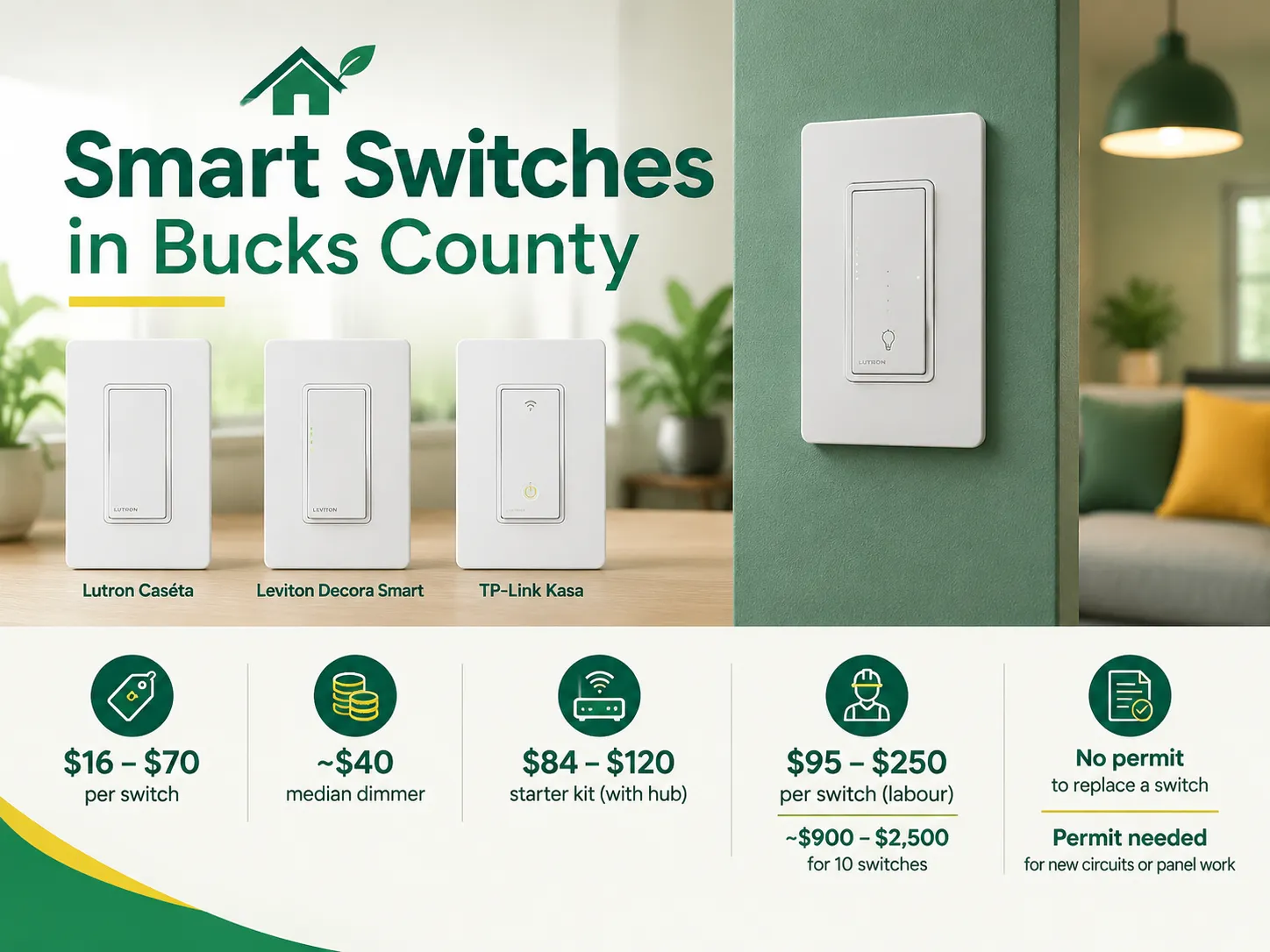
شراء المفاتيح الذكية في مقاطعة باكس يعد أمرًا معقدًا نسبيًا، حيث أن الصعوبة تتعلق أكثر بخصائص العقارات المحلية بدلاً من توفر الأنظمة. يمكن للمرء القيادة من سولبوري، حيث يمكن أن يعود تاريخ بعض المنازل إلى تسعينيات القرن التاسع عشر، إلى وارينجتون، حيث تم بناء بعض الإنشاءات الأحدث […]

 رقم 6 طريق Tuozhan، حديقة Leshang Pioneer، ميناء خليج Yueqingwan، مدينة Yueqing، مقاطعة Zhejiang


