

Příjezd do New Yorku, Toronta nebo Mexico City s plnou taškou nabíječek z Evropy, Anglie nebo Austrálie představuje pro cestovatele výzvu, protože elektrické zásuvky v hotelovém pokoji se budou zcela lišit od těch v jejich zemi a dodávaný proud by byl nižší, než by zařízení zvládlo. Severoamerické zásuvky jsou po celém kontinentu identické, od Kanady po Panamu, což z nich činí větší uživatelskou základnu, ale zároveň matoucí pro cestovatele.
Průvodce obsahuje mnoho užitečných podrobností o severoamerických zásuvkách a zástrčkách, včetně dvou typů zástrček (A a B), jejich norem definovaných NEMA, napětí a frekvence (120 V a 60 Hz), designu zásuvek, zemí, které mají podobné systémy, a potřeby cestovatelů zjistit, zda budou potřebovat adaptér, převodník, nebo nic.
V Severní Americe se používají zástrčky a zásuvky typu A a B, které odpovídají stejné normě NEMA v USA, Mexiku a Kanadě a ve většině Střední Ameriky a Karibiku. Typ A se skládá ze dvou plochých paralelních kolíků, zatímco typ B má stejné dva ploché kolíky s kulatým uzemňovacím kolíkem, který se nachází pod těmito dvěma kolíky. USA, Kanada, Mexiko, Japonsko a velké části Latinské Ameriky mohou používat své zástrčky přímo v zásuvkách. Návštěvníci z Velké Británie (typ G), Evropy (C/E/F), Austrálie (typ I), Číny a většiny asijských zemí musí použít adaptér k úpravě tvaru svých zástrček.
Typ A (také nazývaný NEMA 1-15) je konvenční severoamerická dvoukolíková (nebo plochá) zástrčka, která má dva ploché kolíky o tloušťce přibližně 1,5 mm a délce asi 15,9–18,3 mm. Vzdálenost mezi dvěma kolíky je asi 12,7 mm. Zástrčka typu A je neuzemněná, nemá uzemňovací kolík a má proudové zatížení 15 A/125 V.
Dva kolíky zástrčky jsou obvykle polarizované. Jeden z kolíků je širší než druhý; například šířka neutrálního kolíku je přibližně 7,9 mm, zatímco šířka fázového kolíku je 6,3 mm. Tento design umožňuje zasunutí zástrčky pouze v jednom směru, což zajišťuje bezpečnost lampy nebo spotřebiče.
Předměty, pro které se používá zástrčka typu A: malé spotřebiče a dvakrát izolované přístroje, jako jsou lampy, nabíječky mobilních telefonů, přenosná rádia, dvoukolíkové kabely u různých zařízení. Uživatelé zařízení s touto americkou dvoukolíkovou zástrčkou najdou zástrčky pasující nejen do zásuvek typu A, ale také do zásuvek typu B.
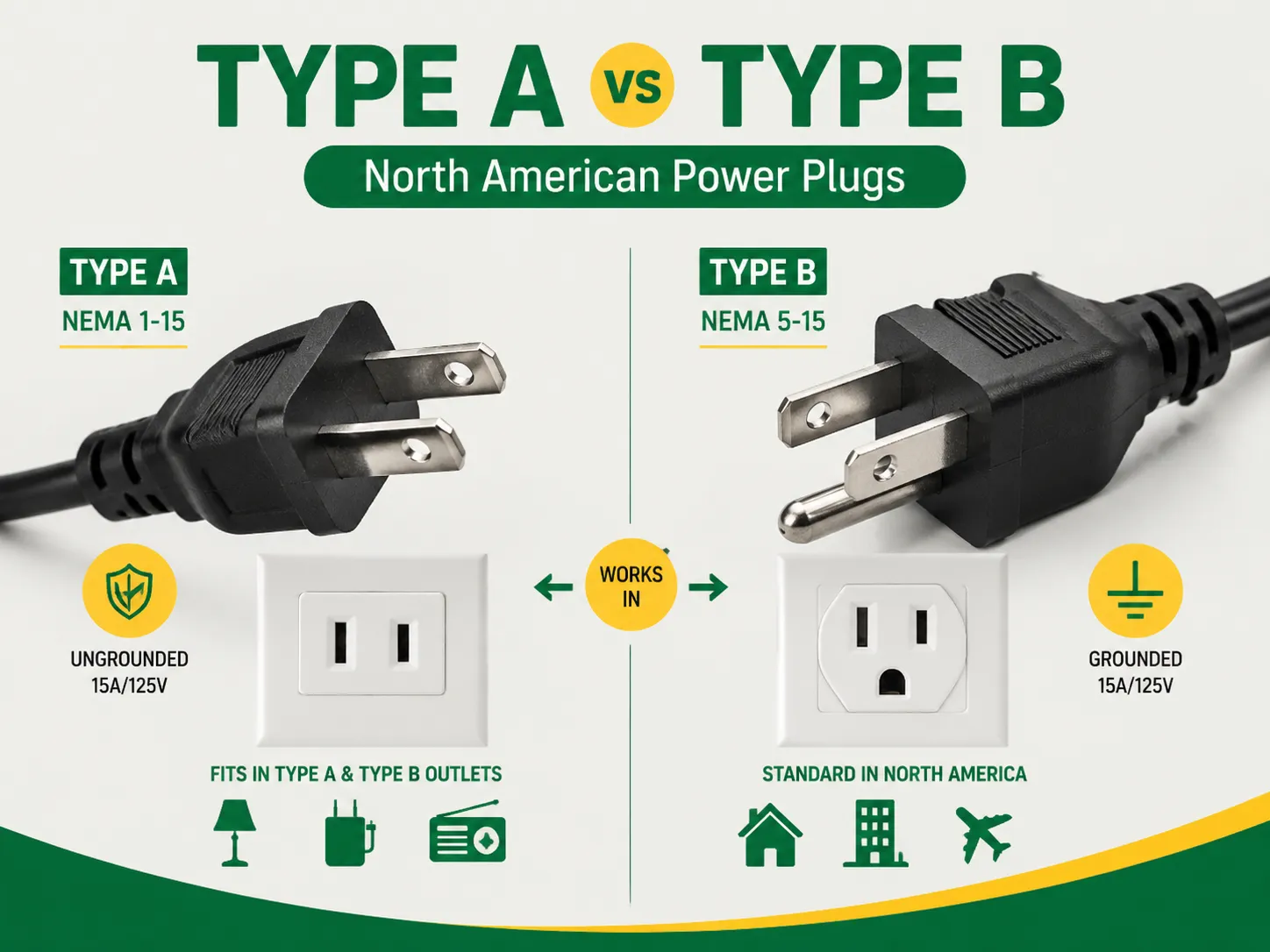
Oficiálně známý jako NEMA 5-15, typ B se stal standardní zástrčkou v Severní Americe a používá stejné dva ploché paralelní kolíky jako typ A plus kulatý (U-tvarovaný) zemnící kolík pod kolíky; tento kolík má průměr 4,8 mm a je o něco delší než kolíky, což zajišťuje, že zemnící kolík se připojí před aktivací napájení. Jmenovitý proud pro tuto zástrčku je 15 A/125 V.
Kde se typ B nachází: všude, protože tato zástrčka byla instalována všude tam, kde byly budovy postaveny od 60. let 20. století a používala se v domácnostech, hotelech, kancelářích a na letištích v USA, Kanadě a Mexiku. Ve většině případů je moderní zásuvka typu B, ale má nabíjecí porty USB-C a také TR závěrky, které jsou nyní součástí kódu pro novou výstavbu. Zástrčka typu A pasuje do zásuvky typu B, zatímco zástrčka typu B nepasuje do zásuvky typu A (protože zemnící kolík nemá kam se připojit).
Pokud modernizujete zásuvky v severoamerické nemovitosti, moderní zásuvky – včetně integrovaných USB a chytrých možností v řadě zásuvek IGOTO – sledují stejný půdorys typu A/B/NEMA, takže se instalují do jakékoli standardní krabice.
NEMA znamená National Electrical Manufacturer’s Association, která stanovuje normy pro zástrčky a zásuvky v Severní Americe. Důležité kódy jsou:
| Kód NEMA | Běžný název | Konfigurace | Hodnocení |
|---|---|---|---|
| NEMA 1-15 | Typ A | 2 ploché paralelní kolíky, neuzemněné | 15 A / 125 V |
| NEMA 5-15 | Typ B | 2 ploché kolíky + kulatý zemnící, uzemněné | 15 A / 125 V |
| NEMA 5-20 | Typ B (20 A) | 2 ploché kolíky + zemnící, jeden kolík otočený o 90° | 20 A / 125 V (kuchyně, koupelny) |
| NEMA 6-15 / 6-20 | 240V zásuvky | 2 ploché kolíky + zemnící, pro 240V spotřebiče | 15–20 A / 240 V (sušičky, klimatizace, elektromobily) |
| NEMA 14-30 / 14-50 | Sušička / sporák / elektromobil | 4 kolíky (2 fázové + neutrální + zemnící) | 30–50 A / 240 V |
Pro cestovatele jsou relevantní pouze typy 1-15 (typ A) a typ 5-15 (typ B) – všechny ostatní typy jsou specializované zástrčky s vyšším proudem. V každém hotelu a domácnosti najdete univerzální zásuvku na 120 V.
Severní Amerika funguje na systému 120 V, 60 Hz – což je identické v USA (120 V), Kanadě (120 V) a Mexiku (ačkoli Mexiko je mírně vyšší, kolem 127 V). Tato úroveň napětí je přibližně poloviční oproti tomu, co používá zbytek světa (220–240 V), což tvoří druhou část celkové hádanky kompatibility.
Úroveň napětí také funguje v:
Napěťová úroveň není kompatibilní s Velkou Británií, Evropou, Japonskem, Austrálií, Novým Zélandem, Čínou, Indií, Singapurem a většinou Afriky, protože všechny používají 220–240 V a mají různé tvary zástrček.
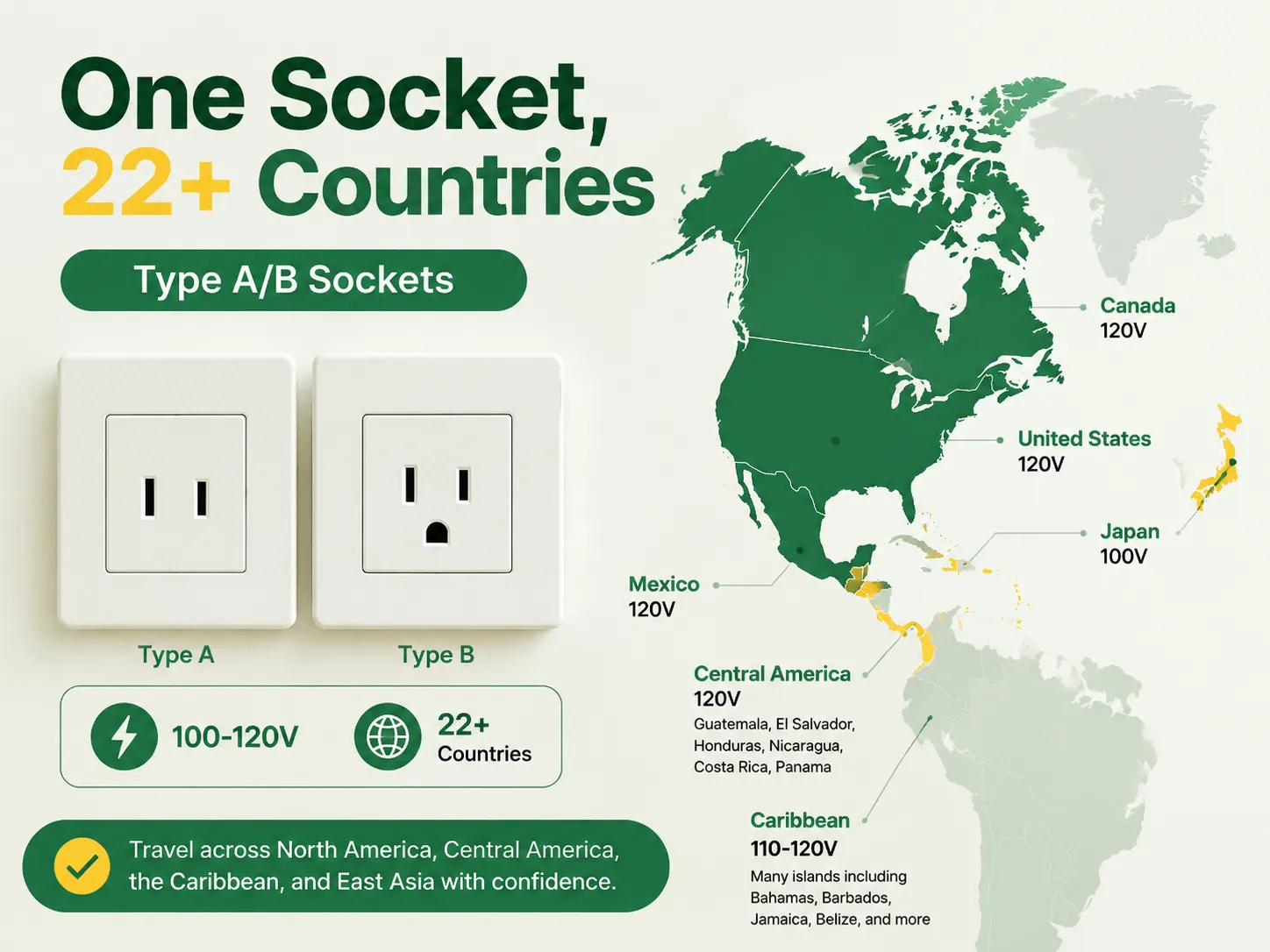
Elektrická standardizace Severní Ameriky je bezkonkurenční: jeden design zástrčky se používá ve více než 22 zemích. V tomto ohledu jsou zástrčky v následujících regionech identické:
Celkově lze říci, že člověk může přijet do Kanady z USA a až do poloviny světa, do Panamy, aniž by musel přemýšlet o adaptérech do zásuvky, které činí tento elektrický systém tak přátelským pro cestovatele z USA.
| Země / Region | Domácí zástrčka | Potřebujete adaptér? | Potřebujete napájecí konvertor? |
|---|---|---|---|
| USA, Kanada, Mexiko | A / B | Žádný | Žádný |
| Střední Amerika, většina Karibiku | A / B | Žádný | Ne (110–127 V) |
| Japonsko | A / B | Žádný (zástrčky pasují) | Obvykle ne (100 V vs. 120 V) |
| Tchaj-wan | A / B | Žádný | Ne (110 V) |
| Spojené království / Irsko | G | Ano | Ano (pro zařízení pouze na 230 V) |
| Pevninská Evropa | C / E / F | Ano | Ano (pro zařízení pouze na 230 V) |
| Austrálie / Nový Zéland | Já | Ano | Ano (pro zařízení pouze na 230–240 V) |
| Čína | A / C / I | Možná (A pasuje; C/I potřebuje adaptér) | Ano (220V vs 120V) |
| Jižní Korea | C / F | Ano | Ano (220 V) |
| Indie | C / D | Ano | Ano (230V) |
Důležitá poznámka: adaptér může pouze upravit tvar zástrčky, ale neprovádí žádné změny napětí. Například, pokud je britský fén zapojen do americké zásuvky pouze s adaptérem, dostane 120 V tam, kde by měl dostat 230 V, což znamená, že bude fungovat sotva a bude se nebezpečně zahřívat.
Obecné pravidlo: pokud je uvedeno INPUT: 100–240 V (nebo 110–240 V), pak zařízení může pracovat na duální napětí a potřebuje pouze adaptér. Pokud je uvedeno pouze 120 V nebo 230 V, jedná se o jediné napětí, a pokud pochází ze země se standardem 230 V, potřebuje v Severní Americe převodník. Většina nabíječek na telefony, adaptérů na notebooky, nabíječek na fotoaparáty a nabíječek na zubní kartáčky je duální napětí, zatímco většina fénů, kulm a starších zařízení nikoli. Pro širší logiku mezinárodních zástrček a zásuvek – a jak systém NEMA zapadá do světových standardů – naše průvodce různými druhy elektrických spínačů a zásuvek pokrývají ovládací stranu stěny. základy instalace stmívače pokrývají hardwarovou stránku nástěnných zařízení.
Rychlá kontrola zabere jen deset sekund; stačí se podívat na malý štítek na zařízení nebo na jeho napájecí zdroj, obvykle umístěný v oblasti bezprostředně kolem vstupu kabelu.
| Text štítku | Význam | Potřebné v Severní Americe (ze země s 230 V) |
|---|---|---|
| “INPUT: 100-240V, 50/60Hz” | Dvourozsahové, celosvětové | Pouze adaptér |
| “INPUT: 110-240V” | Dvourozsahové | Pouze adaptér |
| “INPUT: 100-120V” | Jedno napětí (standard NA/Japonsko) | Pouze adaptér, pokud ze země s 120V; převodník, pokud ze země s 240V |
| “INPUT: 220-240V” | Jednorozsahové (standard 230V) | Adaptér + převodník |
Pokud cestujete z jakékoli země, kde je napětí mezi 220 V a 240 V, měli byste si buď vzít fén s duálním napětím, nebo použít cestovní fén poskytovaný hotelem.
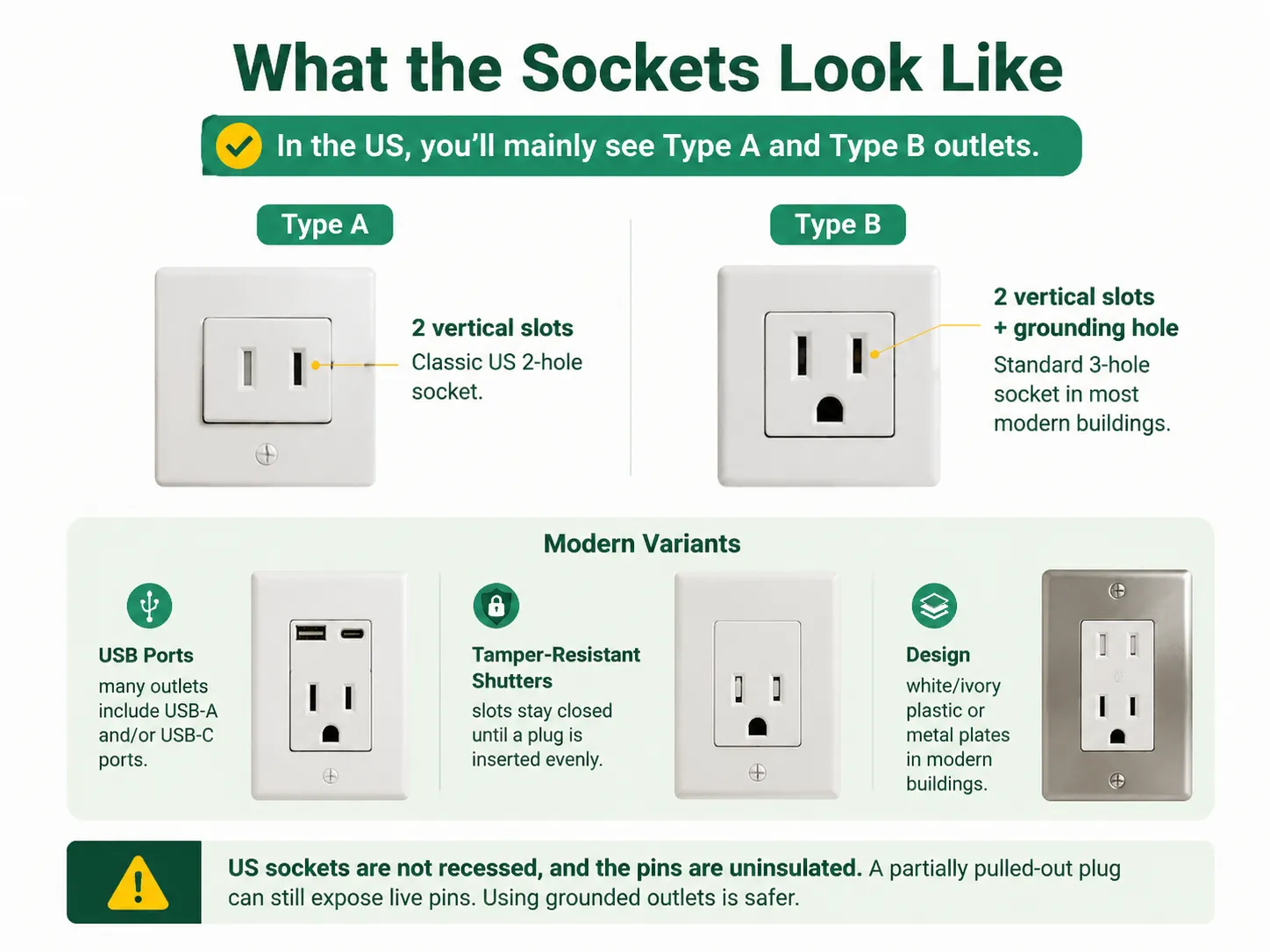
Identifikace konektorů usnadňuje cestování:
Americká zásuvka je velmi dobře známá tím, že není zapuštěná ve zdi a její kolíky nemají žádnou izolaci, což znamená, že částečně zasunutá zástrčka má stále živé kolíky. Je dostatečně bezpečná při běžném používání, ale je to další důvod k použití uzemněných, certifikovaných zásuvek – jako jsou zásuvky odolné proti manipulaci a vybavené USB v průvodci modernizací USB zásuvek, a chytré nástěnné ovladače dostupné v řady chytrých vypínačů IGOTO pro stejný standardní severoamerický formát.
Pro časté cestovatele mezi regiony s napájením 120 V a 240 V je vhodné používat vysoce kvalitní univerzální adaptéry ($25-$45).
Zástrčky a zásuvky používané v Severní Americe zahrnují typ A (se dvěma plochými paralelními kolíky, které jsou neuzemněné, známé jako NEMA 1-15) a typ B (se dvěma plochými kolíky a kulatým kolíkem, který slouží jako uzemnění — NEMA 5-15). Systém se používá v USA, Kanadě, Mexiku, většině Střední Ameriky a velké části Karibiku. Použití zástrček typu A se hodí do obou typů zásuvek, zatímco zástrčky typu B jsou novým standardem ve všech současných budovách.
Existují dva typy elektrických zástrček: typ A (NEMA 1-15), což je 2kolíková neuzemněná, používaná hlavně pro dvojitě izolované spotřebiče a nabíječky. Typ B (NEMA 5-15) je 3kolíková uzemněná zástrčka používaná pro většinu elektrických zařízení a počítačů. Jejich jmenovitý výkon je také stejný při 15A a 125V.
Absolutně správně. Kanada, stejně jako USA, používá přesně stejné zástrčky typu A a B, stejné napětí 120 V a stejnou frekvenci 60 Hz. Proto lze americkou a kanadskou zástrčku použít zaměnitelně. Normy stanovené NEMA v USA a CSA v Kanadě určují kompatibilitu těchto zástrček.
Ve Spojených státech amerických se používají zásuvky typu A (NEMA 1-15) a typu B (NEMA 5-15) při 120 V/60 Hz. Typ B jsou dva sloty s vertikálními otvory a jedna kulatá díra pro uzemnění a je to dnešní standard; na druhé straně, typ A jsou samozřejmě dva vertikální sloty ve starších budovách, kde by byly použitelné zástrčky typu A. Zásuvky NEMA 14-30 nebo 14-50 s vyšším výkonem jsou pouze pro sušičky, sporáky a nabíječky pro elektromobily.
Severoamerický typ zásuvky je příkladem standardizace. Systém zástrček typu A a B, který pracuje při 120 V/60 Hz, se používá ve více než 22 zemích Severní Ameriky, od Kanady na severu po Panamu na jihu. Proto, pokud někdo používá 120V zástrčky, je to nejjednodušší konektor pro použití v elektrických zařízeních. Pro návštěvníky z 220-240V zemí je tato standardizace opět užitečná v tom, že usnadňuje rozpoznání odpovědi: adaptér typu A/B pro tvar a transformátor napětí pro každé zařízení pracující na jednom napětí — na základě desetisekundové kontroly štítku “INPUT”.
Jinými slovy, pro každého cestovatele přijíždějícího do Severní Ameriky je odpověď: zástrčky z USA/Kanady/Mexika/Japonska prostě pasují; všichni ostatní potřebují adaptér; cestovatelé z regionu 230 V si musí pořídit transformátor napětí pro každé ze svých jednonapěťových zařízení — zkontrolované štítky a zakoupený vhodný univerzální adaptér vyřeší všechny problémy, takže návštěvníci si mohou bez obav z přepálených nabíječek užívat krásnou krajinu Severní Ameriky.
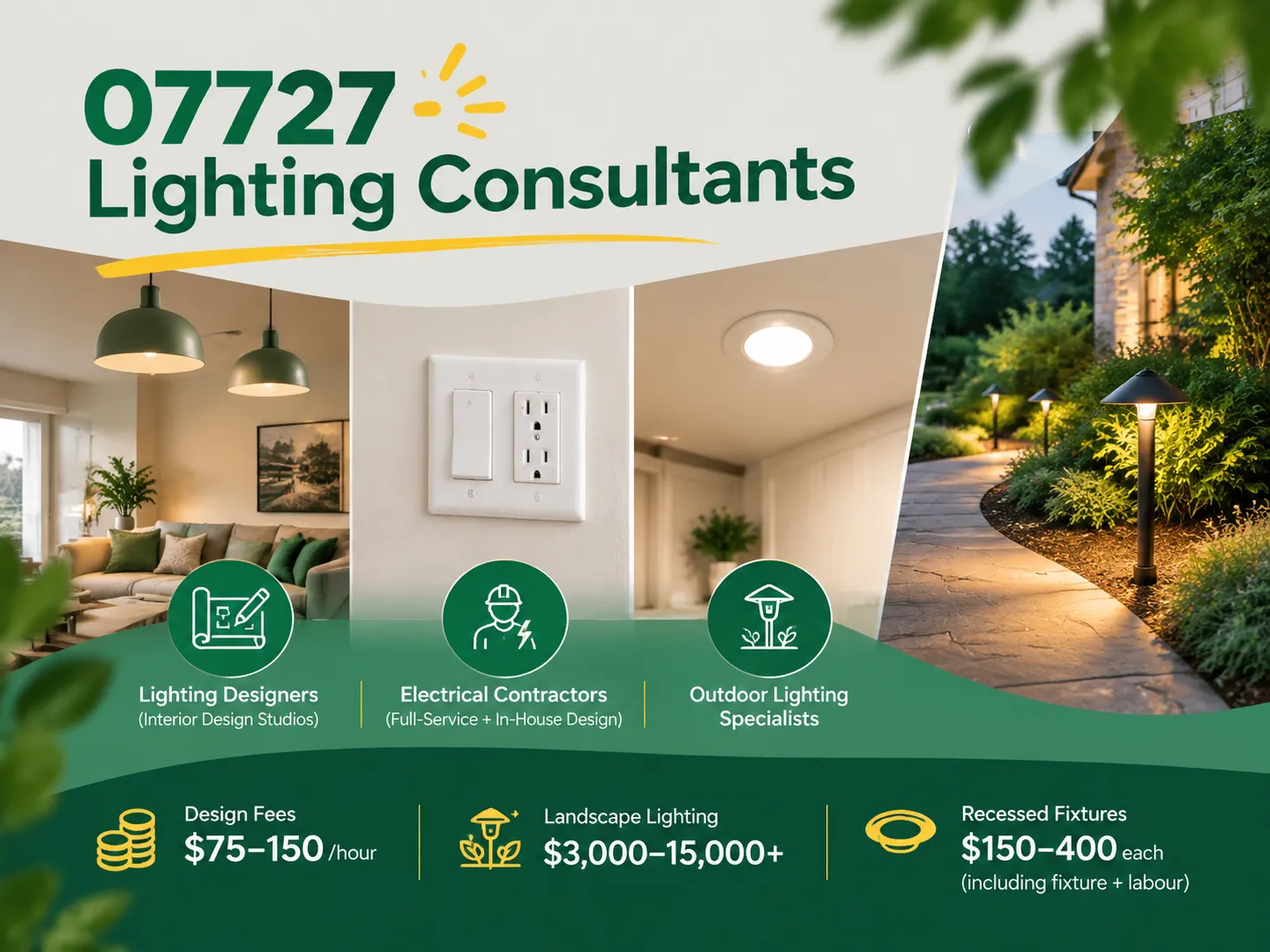
Farmingdale, spolu s částmi Wall Township a Tinton Falls, New Jersey, sdílí stejné PSČ 07727. Většina domů postavených od 50. let do 90. let stále existuje dnes. Většina majitelů domů renovuje své domy místo stavby nových domů. Majitelé domů mají tendenci utrácet mnohem více za […]

Termín “07984 osvětoví konzultanti” dává lidem dojem, že pět číslic představuje nějaký druh poštovního kódu, který označuje místo, kde osvětoví konzultanti poskytují služby. To je však nesprávné: neexistuje žádná poštovní oblast kódovaná 07984, což je pouze kód mobilních telekomunikací ve Velké Británii. To znamená, že […]
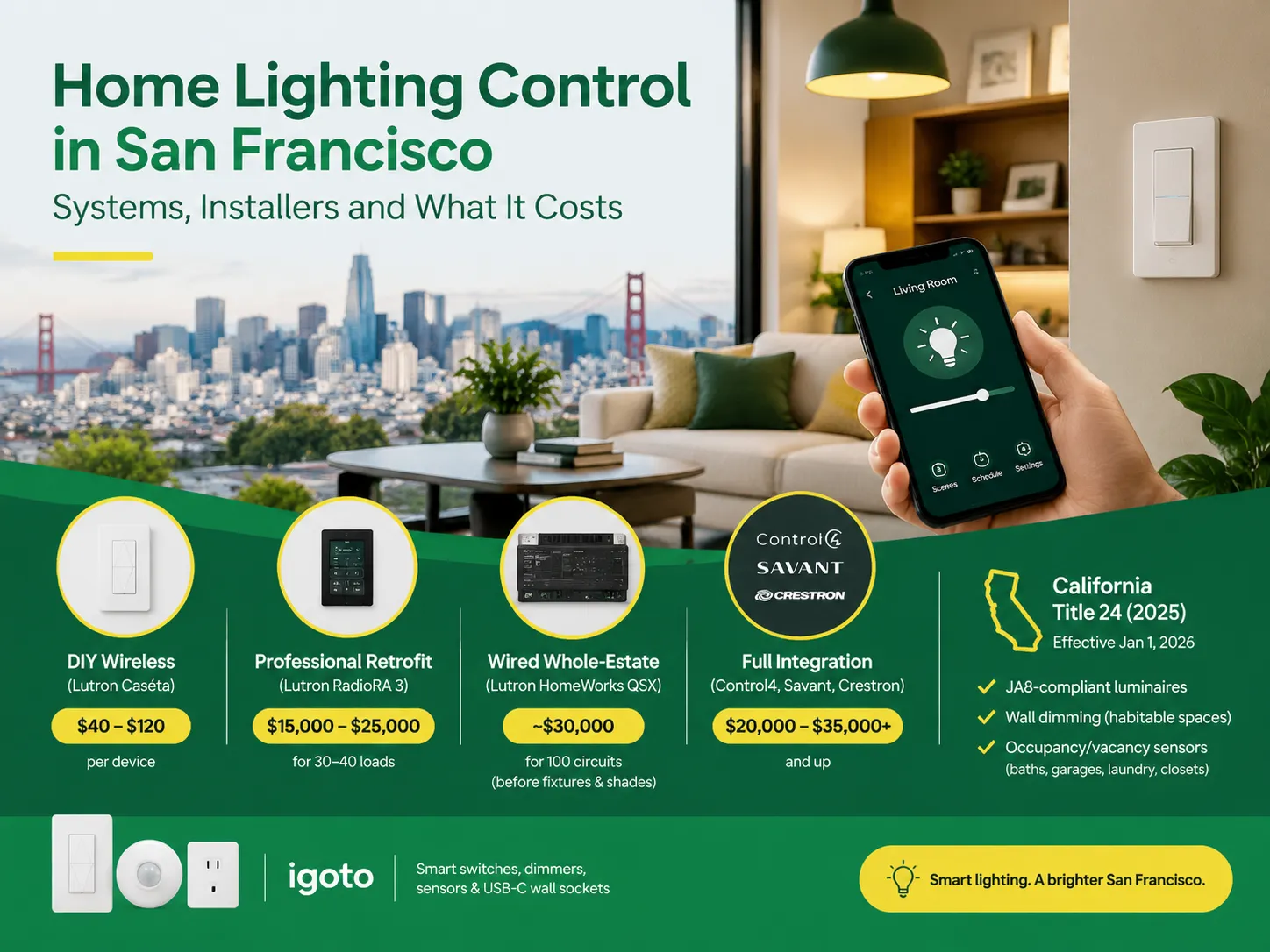
San Francisco není průměrný trh s osvětlením. Bytový fond je starý a hustý, a elektrický kód neumožňuje tolik elektrických instalací, kolik je povoleno téměř kdekoli jinde v USA. Většina domů, které chtějí složité osvětlení, jsou viktoriánské nebo edwardiánské budovy, kde nikdo nechce začít otevírat […]

 No.6 Tuozhan Road, Leshang Pioneer Park, Yueqingwan Bay Harbor, Yueqing city, Zhejiang Province


