

Une ampoule scintillante peut être interprétée comme un problème local — l'ampoule usée, le luminaire mal connecté, ou il se peut que vous ayez un variateur bon marché. Mais s'il y a plus d'une ampoule qui scintille simultanément, dans différentes pièces, vous devez voir la situation différemment. De nombreuses ampoules scintillantes signalent un problème en amont : une connexion électrique commune, un circuit commun, ou l'alimentation. C'est une information essentielle, car certains problèmes pourraient être résolus en changeant l'ampoule, tandis que d'autres présentent un réel danger et nécessitent une intervention urgente de la compagnie d'électricité ou d'un électricien agréé.
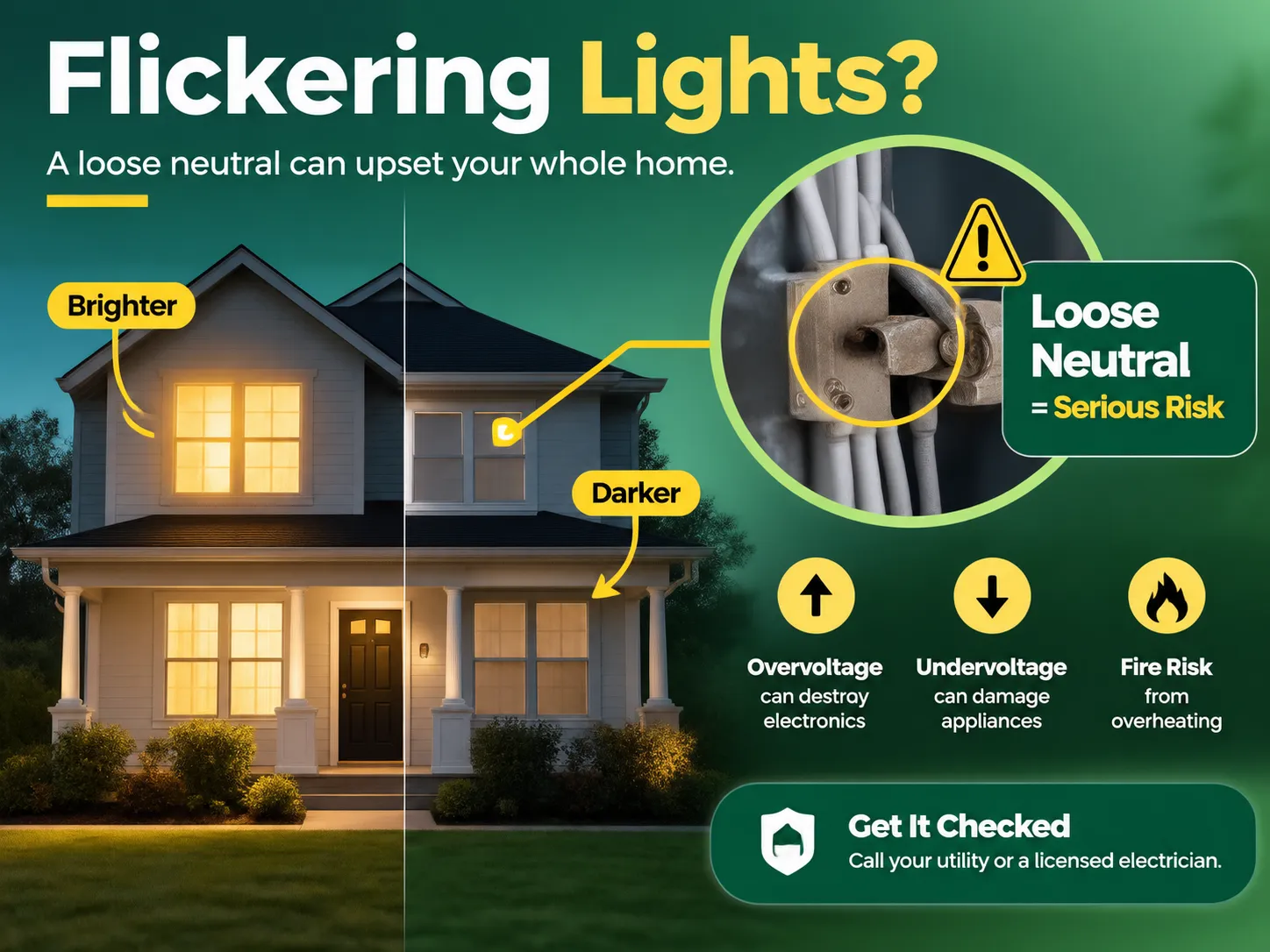
La réponse à cela est simple : si les lumières scintillent dans différentes pièces en même temps, c'est très probablement le résultat d'un problème dans le circuit en amont, par exemple des connexions lâches dans une ou plusieurs parties du circuit, un disjoncteur défectueux et/ou des bornes, un neutre coupé ou une tension inégale du côté du fournisseur d'électricité. La chose la plus importante à déterminer pour répondre à cette question est quand le scintillement se produit. Si les lumières s'éteignent chaque fois qu'un gros appareil comme la climatisation, le réfrigérateur, la pompe de puits ou le sèche-linge commence à fonctionner, cela indique souvent une chute de tension en raison d'une connexion lâche ou insuffisante. Si le scintillement se produit indépendamment de l'allumage de gros appareils, on doit suspecter un dommage dans le fil neutre ou la ligne d'alimentation, ce qui pourrait potentiellement être le pire scénario. Si le scintillement se produit uniquement dans un circuit, le problème se situe dans ce circuit spécifique. Le scintillement seul ne signifie pas un risque d'incendie, mais si le scintillement se produit avec une odeur de brûlé, un bourdonnement, des plaques chaudes ou des lumières clignotantes, cela signifie en fait une urgence – éteignez tout et appelez un électricien/compagnie d'électricité !
Le nombre de luminaires dans l'analyse est le premier aspect critique à examiner, conduisant à la division de l'analyse en trois parties.
Si un seul luminaire scintille, le problème est localisé soit dans l'interrupteur, le driver, le composant de l'ampoule, ou la prise. Le câblage est en bon état.
Si plusieurs luminaires scintillent, le problème semble se situer quelque part le long du câblage, ce qui peut indiquer la connexion de la boîte de jonction, le disjoncteur, ou un variateur ou interrupteur responsable de l'alimentation de plusieurs luminaires.
Dans le cas où les lumières clignotent de manière intermittente à travers différents circuits et pièces, le problème se situe en amont des circuits de dérivation dans la boîte de jonction, la connexion principale, le fil neutre, ou le fournisseur de services. C'est ce cas qui pose le plus grand danger.
Il y a une autre dimension à considérer en plus du nombre de luminaires clignotants : si le clignotement coïncide avec un certain événement dans le temps. Un clignotement qui se produit en même temps que certains appareils s'allument suggère qu'il y a un problème avec la tension et la génération de charge. Un clignotement qui est aléatoire, continu, ou qui se produit lorsque aucun appareil n'est allumé suggère une défaillance de l'alimentation ou une défaillance de connexion des fils. Un clignotement qui se produit à certains moments de la journée et qui est pire pendant les heures de pointe indique une surcharge de l'utilitaire et une connexion thermique défaillante. Établir ces connexions est la principale partie du diagnostic et ne prendra pas longtemps.
| Cause | Modèle | Gravité | Qui le répare |
|---|---|---|---|
| Neutre de service ouvert ou lâche | Clignotement continu ou lié à la charge dans toute la maison ; certaines lumières brillantes tandis que d'autres sont faibles au même moment | Urgence — risque de surtension détruisant l'équipement et d'incendie | Utilitaire et électricien agréé |
| Connexion lâche du bornier principal ou du disjoncteur principal | Clignotement dans toute la maison, souvent accompagné de bourdonnement ou de chaleur au panneau | Urgence — arc à courant élevé | Électricien agréé |
| Connexion lâche dans une boîte de jonction partagée | Clignotement sur les circuits alimentés par cette boîte ; peut s'aggraver lorsque les appareils sur ces circuits fonctionnent | Élevé — chauffage résistif à l'articulation | Électricien agréé |
| Disjoncteur défaillant | Clignotement sur un circuit ; disjoncteur chaud, bourdonnant, ou se déclenchant plus souvent | Haut | Électricien agréé |
| Fluctuation de tension de l'utilitaire ou transformateur de distribution défaillant | Clignotement dans toute la maison, à l'échelle du quartier, souvent corrélé aux conditions météorologiques ou à la charge | Modéré à élevé, selon l'ampleur | Utilitaire |
| Câblage sous-dimensionné ou chute de tension excessive sur un long parcours | Clignotement lorsque les charges sur ce parcours tirent du courant | Modéré — stress sur l'équipement, au fil du temps | Électricien agréé |
| Variateur incompatible avec les lampes LED | Clignotement ou scintillement sur le circuit atténué, souvent à des niveaux bas ; peut affecter plusieurs luminaires sur un seul variateur | Faible — nuisance plutôt que danger | Propriétaire ou électricien |
| Driver LED défaillant ou électronique de lampe | Luminaire individuel ou un lot du même modèle | Faible | Propriétaire |
| Neutre partagé sur un circuit de branchement multi-fils | Flicker or equipment misbehaviour when loads on the paired circuits run | Moderate — often a wiring error | Électricien agréé |
| Aluminium branch conductors with poor terminations | Flicker with load, particularly in older properties | High — known fire risk | Électricien agréé |
The table gives importance to neutral connection in modern split-phase service systems. It is the neutral connection that helps stabilize 480 volts in the two hot wires. When loose or high-resistance problems occur, the reference of the neutral changes. This causes the two hot wires to become unequal in voltage. If this happens one hot wire may have a voltage above what it is supposed to carry while the other hot wire may get a voltage lower than the standard voltage. Therefore loads connected to the two wires would behave as if they are connected in series. The outcome of this phenomenon is not just mere flickering of lights; it may result in high voltage on one side of the house and low voltage on the other.
Some of this process can be done safely while some not. The instructions which appear below stop where the panel becomes loose and might pass.
The discipline of testing before touching is the same as for any electrical work, and the sequence for a fixture-level job is set out in our guide to remplacer un interrupteur, which covers isolation, proving dead, and safe termination.

The required repairs will depend on which layer is causing the issue.
Where a dimmer cannot be made to work with a given fitting — usually because the lamp electronics and the dimmer’s output stage are fundamentally incompatible — the alternatives are covered in our article on dimming LED lights without a dimmer switch.
A number of identical light fittings failing shows that there is a common issue with such fixtures; that is the driver electronics. The warranty can come into play here, and it is likely that replacing these fittings will be more affordable than repairing them.
Flickering lights do not necessarily represent a danger. For many years, a low-quality LED bulb connected to an incompatible dimmer will flicker without any threat to safety. The only query that one could have in such a case is if the flickering is a result of a hot joint.
A problem should be taken as a proper hazard and action should be taken if any of the following indicators appear:
What happens is that the loose connection has a higher resistance than that of copper. Therefore, when current passes through the faulty connection, it produces heat. The resulting heat burns the surface of the wire and increases resistance, which leads to even more heating. The process repeats herself. Therefore, the faulty connection is more dangerous than light bulb failure.
Several devices in the system can be at fault for flicker, while knowing who to blame can help save time.
| Appareil | Flicker symptom it causes | Action |
|---|---|---|
| LED lamp | Individual fixture flickers or shimmers; often a batch from the same production run | Swap for a known-good lamp to test |
| LED driver | Flicker that worsens over time or appears at certain brightness levels | Replace the fitting or driver |
| Variateur d'ambiance | Flicker or buzz on the dimmed circuit, particularly at low output | Match the dimmer to the load, or replace it |
| Standard switch | Flicker when the switch is touched or wiggled; warm plate | Replace, and check the terminations behind it |
| Lamp holder or socket | Flicker that changes when the lamp is moved | Replace the holder |
| Disjoncteur | Flicker on one circuit with warmth or buzzing | Replace with a device listed for the panel |
| Outlet or receptacle | Flicker correlated with a load plugged into that outlet | Replace; back-stabbed connections are a common culprit |
When it comes to changing light switches and plugs, quality of the product comes in play. Instead of the most economical product, specification-grade technology with screw terminals and excellent contact components ensure high performance of the devices in the circuit already experiencing problems. The selection criteria — certification, contact material, terminal design, and documented ratings — are the same ones set out in our guide to choisir un fabricant de commutateurs et de prises électriques, and they matter most where the installation has a history of heat or intermittent faults.
Understanding which switch type is appropriate for the circuit also prevents the mismatches that cause an installation to be reopened later, and the families are described in our overview of différents types d'interrupteurs utilisés dans les installations électriques.
The majority of flickering issues occur due to connections that either have never been properly done or have been slowly but surely failing for years.
The answer is negative. Temporary dimming caused by a major motor start-up is a standard phenomenon due to inrush current, and a low-cost LED bulb used with an incompatible dimmer may flicker for an indefinite time without a technical problem. The most important indicator of a problem is the pattern: continuous flickering, flickering that appears independently from the load, flickering accompanied by heating, smell, or noise, and flickering that results in brightening in some parts of a house and dimming in the other parts of it. All of these patterns are indicative of the connection or supply fault rather than a characteristic of a lamp driver and should be investigated.
If a number of bulbs connected to one fixture flicker together, it could be caused by a driver/ballast issue, especially if the bulbs were replaced at the same time and all of them are flickering. If several different fixtures connected to one switch or dimmer flicker, then the switch/dimmer becomes the common point, and its compatibility with the load should be checked. If the lights powered from different circuits flicker together, then check the shared connections upstream and the power source, as it is impossible to have a common fixture problem in this case.
This is totally dependent on the symptoms and the flickering pattern.Such flickering on an LED circuit (which has no heat, smell, or sound) is simply a nuisance instead of a risk, and its resolution involves either compatibility with a proper dimmer or an improvement in the lamp quality. Flicker that is accompanied by warmth, buzzing sounds, a burning odor, or alternating bright and dim light in multiple rooms can be viewed as a risk to safety, and thus needs urgent attention. In case of doubt, the simplest thing to do is to turn off all devices in the affected circuit and turn off the main switch; the actual repair is less expensive than potential damage taken.
The flicker itself does not create danger as the cause of flickering (the loose or high-resistance connection) has to do with it. Current passing through a poor joint generates heat at that very point, thus causing the oxidation of a conductor, which raises resistance and generates even more heat. Eventually, steady functioning of the whole above-mentioned cycle leads to arcing, which can ignite the surrounding material. Various warning signals that flicker has transformed from a nuisance into a danger include smell of burning stuff, warm faceplates with changed colors, buzzing or crackling sounds, burnt marks, and frequent failures of the devices on the same circuit. All of these need immediate shutting down of electronics and the assistant of an electrician to be summoned.
Yes, it can and is the worst common cause of the whole house flicker. In a split-phase supply system, neutral serves as a reference point, maintaining equal parameters of both 120V phases. When it is loose and has high resistance, it can cause the two phases to be divided as one of them will become more powerful, while the other one will require supply of energy. The appearance of lights appearing in some part of the house while they are fading in another part indicates that there can be damaged electronics and even burned engines instead of ordinary flickering bulbs. It is better to hurry up and turn off the power from the main switch and call either utility or an electrician.
The presence of several flickering lights is a sign rather than a diagnosis. In order to determine the cause of multiple flickers, two questions must be answered: the number of affected circuits and simultaneous events. Flickering lights in one fixture indicate a lamp or driver malfunction. Flickering lights in one circuit indicate a shared connection problem or malfunctioning circuit breaker. Flickering lights occurring in the whole house, especially in case of some lights glowing brighter while some dimming in different rooms, indicate a neutral problem or supply issue — this situation is the one that can cause equipment damage or fires. Learn the symptoms of nuisance flickering and dangerous flickering — heat, smell, buzz, burn marks, bright and dim lights, and turn off the power at the main switch instead of simply watching the lights. Fix the problem yourself by replacing dimmer, lamp, or improperly connected device. Leave panel, lugs, and connections to an electrician and report your flickering issues to the utility company instead of waiting for something to break down. There are usually normal explanations of flickering; in case of unusual ones, it’s better to pay attention to them immediately.
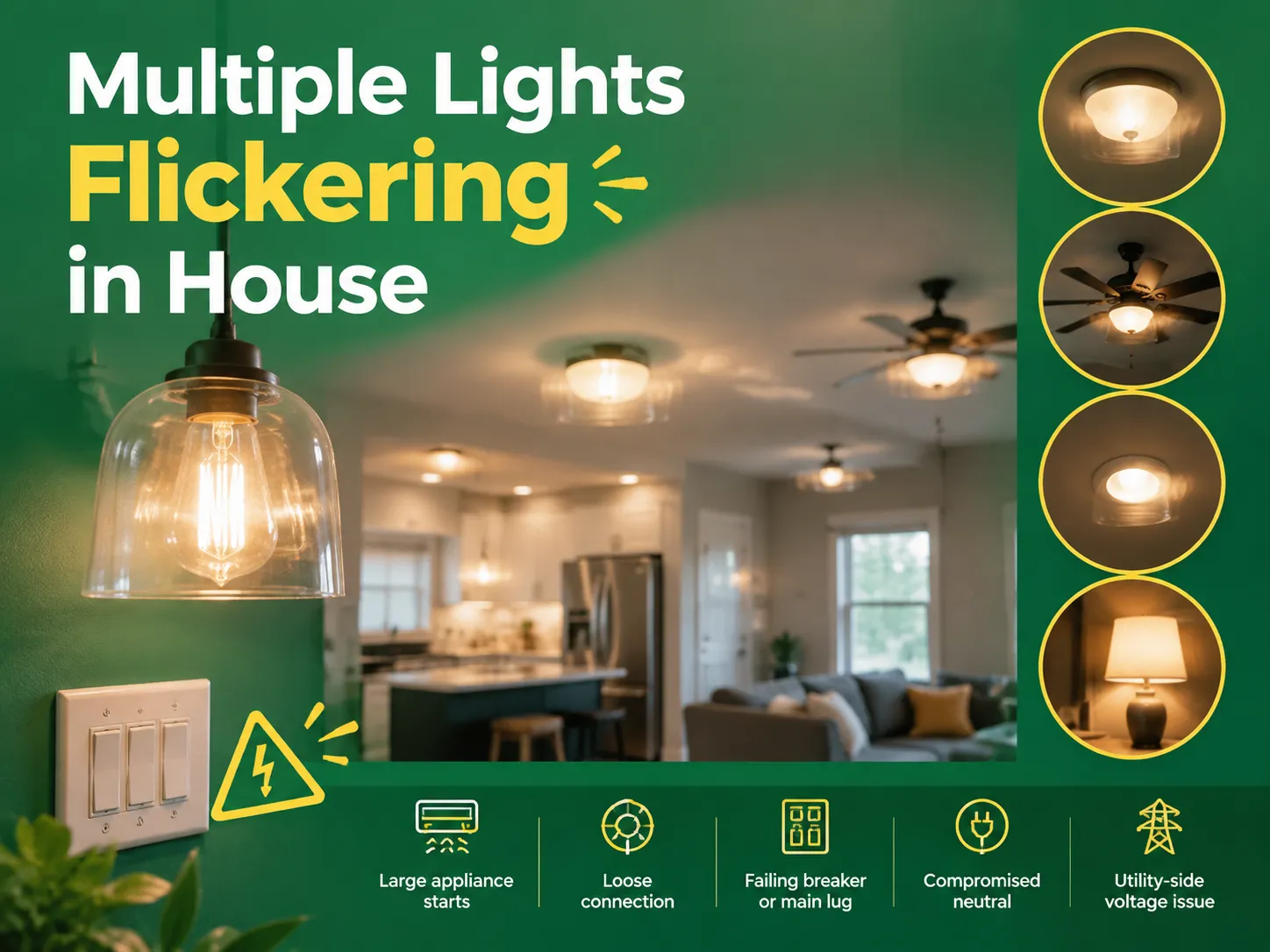
A flickering bulb can be interpreted as a local problem — the bulb worn out, the light fixture connected poorly, or it could be that you have a cheap dimmer. But if there is more than one bulb flickering simultaneously, in different rooms, you need to see the situation differently. Many flickering bulbs signal a […]
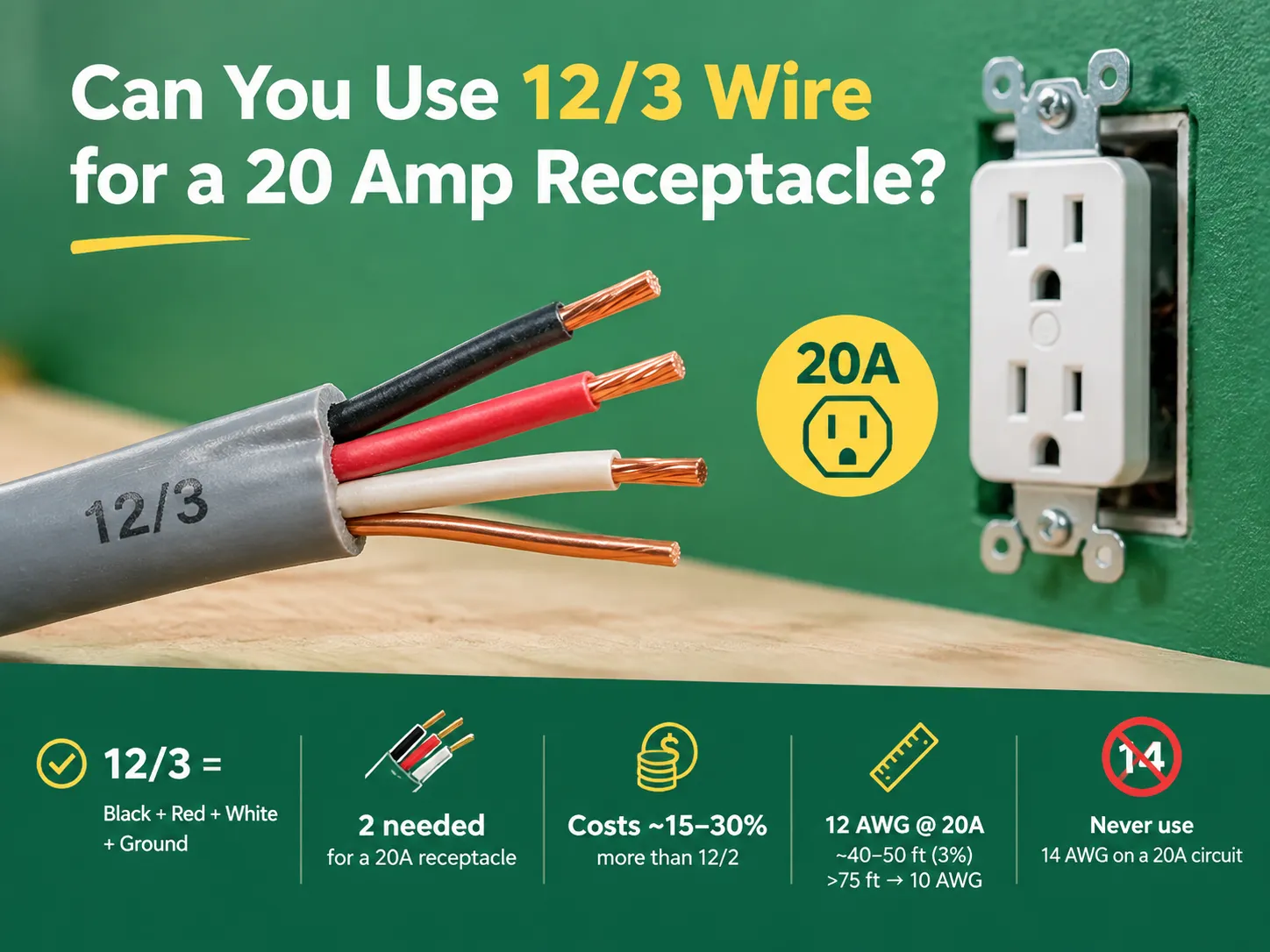
Le fil de douze calibres et les circuits de vingt ampères vont si bien ensemble que les questions proviennent généralement d'une source différente. Il se peut que l'installateur ait un morceau de 12/3 restant d'un projet de câblage antérieur ou peut-être que le fournisseur n'a que des câbles 12/3 en stock. La question se pose de savoir si […]

La situation exceptionnelle présente dans le secteur des appareils électriques de Dubaï, qui combine des appareils conformes aux normes britanniques avec des réglementations d'un service public ainsi qu'une agence nationale supervisant la mise en œuvre des réglementations nationales, nécessite que les appareils soient capables de supporter les températures élevées et l'humidité rencontrées dans la région en raison de sa situation côtière, et aussi […]

 No.6 Tuozhan Road, Leshang Pioneer Park, port de la baie de Yueqingwan, ville de Yueqing, province du Zhejiang


