

Jeśli często podróżujesz, to prawdopodobnie wiesz, że pakowanie się do Singapuru jest jedną z najprostszych rzeczy do zrobienia w Azji, ale także jedną z najtrudniejszych, ponieważ używa wtyczek typu brytyjskiego (zamiast amerykańskich). To, czy potrzebujesz transformatora, adaptera wtyczki, czy obu, zależy od dwóch pytań, które turyści zazwyczaj mylą.
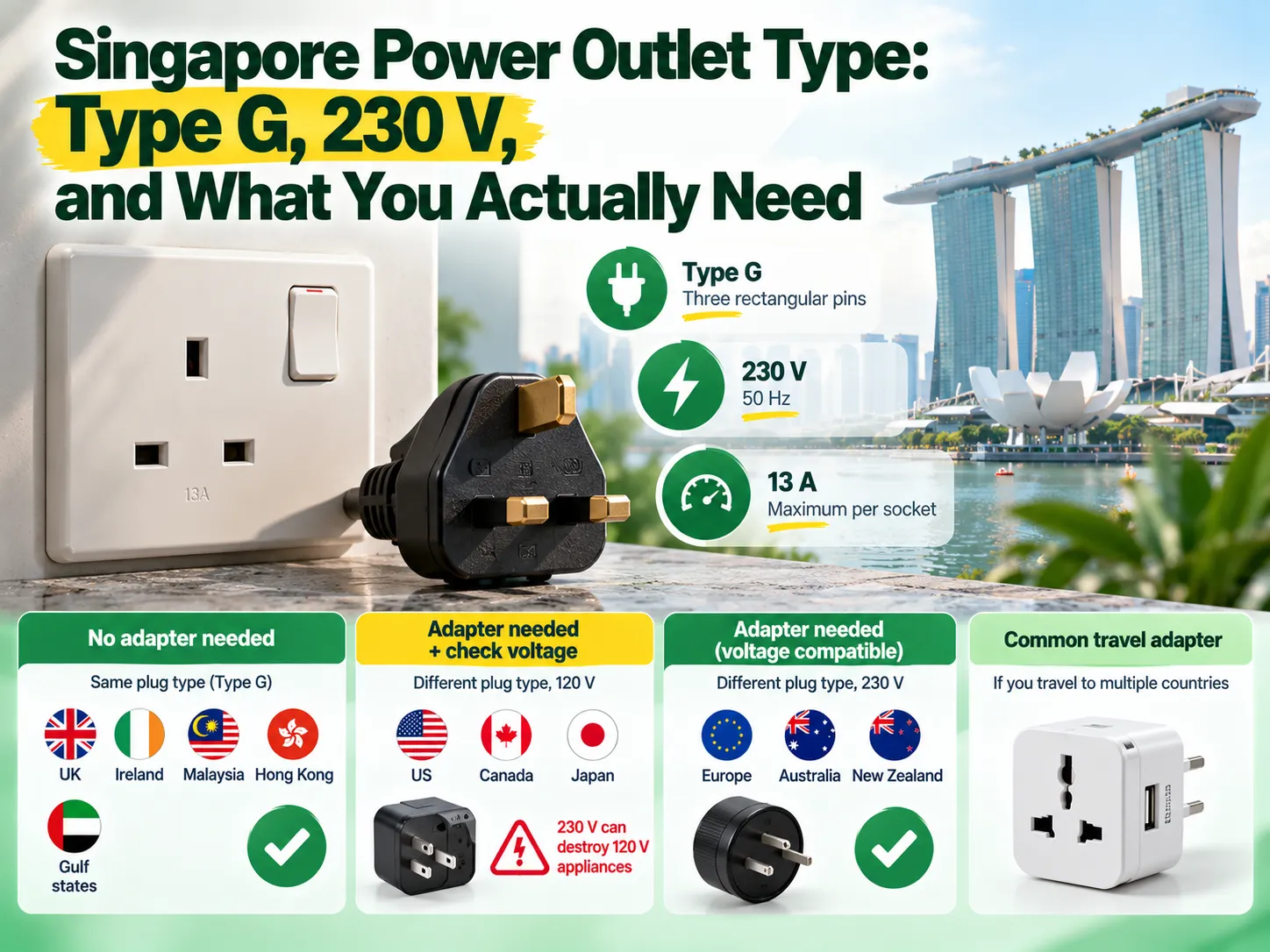
Krótko mówiąc: W Singapurze używana jest wtyczka typu G, która opiera się na brytyjskim standardzie BS 1363 z normy SS 145 z tymi samymi cechami. Napięcie zasilania w Singapurze i częstotliwość wynoszą 230 V i 50 Hz. Odwiedzający z Wielkiej Brytanii, Irlandii, Malezji, Hongkongu i niektórych państw Zatoki nie będą potrzebować niczego. Odwiedzający z USA, Kanady i Japonii powinni używać adaptera i sprawdzić napięcie. W przeciwnym razie urządzenia zasilane napięciem 120 V zostaną uszkodzone. Odwiedzający z krajów europejskich, Australii i Nowej Zelandii będą potrzebować tylko adaptera, ponieważ napięcie jest takie samo.
Ułożenie trzech prostokątnych pinów w typie G jest unikalne. Dwa płaskie piny na dole są umieszczone w celu pełnienia funkcji pinów fazowych i neutralnych, podczas gdy dłuższy pin na górze pełni funkcję pinu uziemiającego. Powód dłuższego pinu uziemiającego polega na tym, że pozwala on na nawiązanie połączenia uziemiającego przed połączeniem fazowym.
Wszystkie wtyczki w Singapurze odpowiadają temu wzorowi i posiadają unikalne cechy konstrukcyjne, które czynią je jednymi z najbezpieczniejszych wtyczek na świecie. Główne cechy to:
Szerszy obraz tego, jak kształty wtyczek różnią się na całym świecie — i dlaczego istnieje piętnaście nazwanych typów zamiast jednego — przedstawiony jest w tym przeglądzie różnych typów gniazdek ściennych i gdzie każdy z nich jest używany.
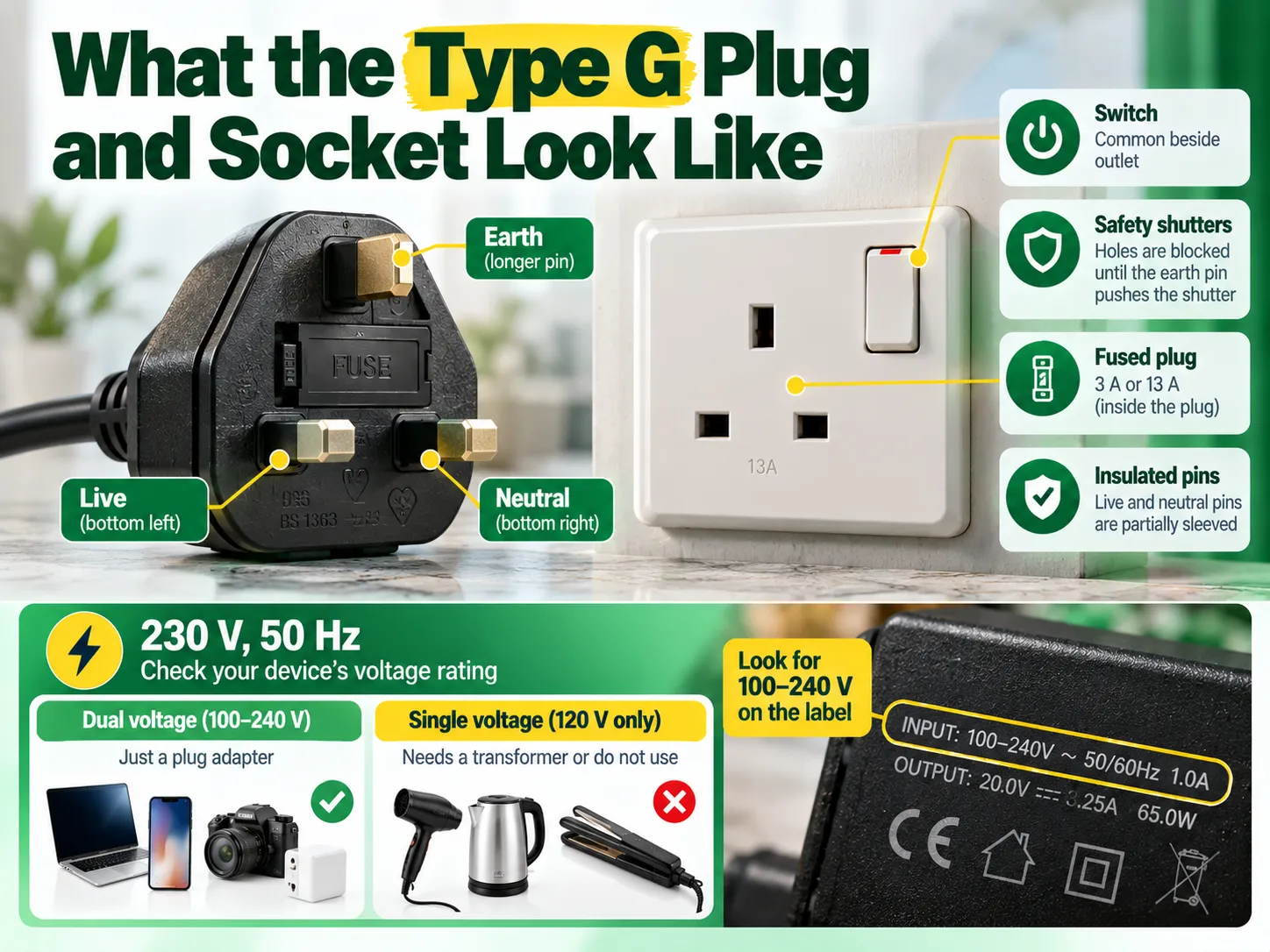
Singapur jest zasilany prądem o napięciu 230 V, 50 Hz, co jest zgodne z europejskimi standardami, w przeciwieństwie do Ameryki Północnej. Sieć jest obsługiwana przez SP Group i jest znana jako jedna z najbardziej stabilnych sieci na świecie. Dostarczane napięcie jest prawie zawsze w granicach kilku procent wartości nominalnej.
Ta liczba implikuje dwie ważne rzeczy:
Aby uniknąć problemów podczas podróży do Singapuru, upewnij się, że szukasz etykiety z podwójnym napięciem. Większość laptopów, ładowarek do telefonów, ładowarek do aparatów, ładowarek do elektrycznych szczoteczek do zębów i przenośnych głośników z ostatniej dekady jest zaprojektowana do pracy w zakresie 100 – 240 V, 50/60 Hz i dlatego będą wymagały tylko adaptera wtyczkowego podczas używania w Singapurze. Jedynymi urządzeniami, które mogą mieć potencjalne ryzyko awarii, są te, które zużywają energię elektryczną bezpośrednio (suszenie włosów, prostownice, czajniki itp.).
Tutaj większość zamieszania znika, ponieważ odpowiedź zależy całkowicie od tego, skąd przyjeżdżasz.
| Przyjeżdżając z | Twój typ wtyczki | Czy potrzebny adapter? | Woltaż |
|---|---|---|---|
| Wielka Brytania, Irlandia, Malezja, Hongkong | Typ G | NIE | Pasuje do 230 V |
| ZEA, Katar, Bahrajn, Kuwejt, Oman | Typ G | NIE | Pasuje do 230 V |
| Arabia Saudyjska (nowsze budynki) | Typ G | Zazwyczaj nie | Pasuje |
| Europa (typ C, E, F), Włochy, Szwajcaria | Okrągłe piny | Tak | Pasuje — tylko adapter |
| Australia, Nowa Zelandia | Typ I | Tak | Pasuje — tylko adapter |
| USA, Kanada | Typ A / B | Tak | Niedopasowanie — sprawdź każde urządzenie |
| Japonia | Typ A / B | Tak | 100 V — konwerter potrzebny dla niektórych urządzeń |
| Indie | Typ D / M | Tak | Pasuje — tylko adapter |
Jeśli twój kraj używa typu G, będziesz musiał zabrać swoje ładowarki i zostawić adapter w domu. Jeśli twój kraj nie używa typu G, jest tylko jedna pokrywa typu G na całą podróż — Singapur nie ma regionalnych wariacji jak niektóre większe kraje. Pełny podział regionalny, w tym które części świata dzielą który standard, jest omówiony w tym przewodniku do typów wtyczek i gniazdek według regionu.
Nie, i to jest najdroższe założenie, jakie może mieć podróżny z Ameryki Północnej. Wtyczka typu A z Stanów Zjednoczonych ma dwa płaskie i równoległe ostrza i nie pasuje do gniazdka typu G, ponieważ gniazdko jest wpuszczone, a jego przesłony w ogóle się nie otworzą. Ponadto wtyczka typu B z okrągłym pinem uziemiającym również nie zadziała.
Napięcie jest ważniejsze niż to. Jeśli urządzenie z USA, które jest oceniane tylko na 120V, zostanie podłączone do 230V za pomocą taniego adaptera, ulegnie awarii. Dlatego poprawna kolejność działań dla podróżnego z USA jest następująca: najpierw użyj adaptera, a następnie sprawdź etykietę każdego urządzenia przed podłączeniem go. Różnice między konfiguracjami północnoamerykańskimi a resztą świata są przedstawione w tym wyjaśnieniu o typie gniazdka północnoamerykańskiego, which is worth reading if you are deciding whether a device will travel at all.
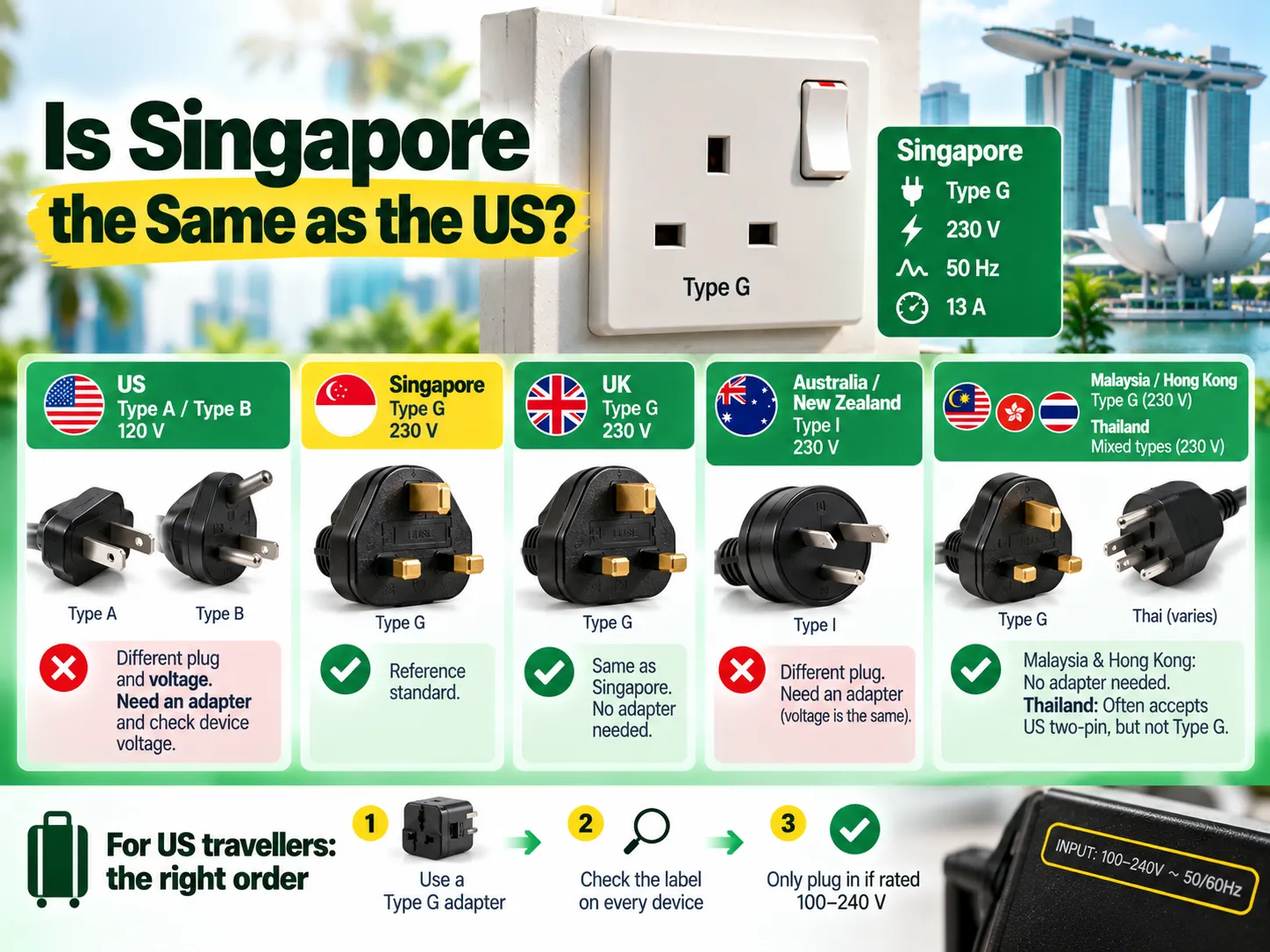
Just like the UK: yes, absolutely. Singapore adopted British standards, meaning that the connectors, sockets, fuses and other power supply infrastructures are the same. So if you have an appliance from the UK, you can use it in Singapore without needing anything else.
Just like Australia: no. Australia and New Zealand use standard I, with three flat pins, and with the exact same voltage and frequency (230 V / 50 Hz) — naturally, the voltage is the same, and you would just need a plug adapter for Type I.
Just like its neighbors: mixed. Malaysia, Hong Kong, and Brunei also use G without needing adapters, while in Thailand, things are different, as there are many different plug types used, depending on the building. Thus, a Thai socket can sometimes accept a US two-prong plug without an adapter, but may not be suitable for G. That kind of regional inconsistency is exactly why travel itineraries through Southeast Asia need more than one adapter even though the voltage stays broadly the same across the region, as set out in this guide to the socket types used in Thailand.
This mistake is the one that can result in a person losing a laptop. A plug adapter only changes the shape of the connector being used; it doesn’t contain any electronics. But a voltage converter changes the voltage from 230V to 120V. If you buy the wrong one, your appliance will fit well only to burn out immediately after.
Cost of appliances in Singapore: plug adapters range from 5-30 SGD while voltage converters and converters for 120V appliances start at 30 SGD onwards (depending on the wattage). If your appliance is a dual-voltage one, it means that it is 10 SGD device, not 100 SGD.
Pay attention to adapters sold in airports. Plug Type G that is sold in the shop for 5-10 SGD will be priced upper 15-30 SGD in Changi, and uncertified plugs will have greater overheat and an electrical short-circuit risks than certified plugs. Opt for certified adapters with a fuse instead of picking the cheapest one on the market. The same logic applies to the European systems, where the differences between Type C, Schuko and the French and Italian variants catch people out — covered in this breakdown of Europejskie wtyczki i gniazdka elektryczne if your trip continues onward from Singapore.
Most plug types ensure protection of the wiring behind the wall. However, Type G goes a step further and protects the appliance itself, as it has the fuse in the plug rather than in the panel. This is why you can find both 3 A and 13 A fuses on sale in every supermarket in Singapore, and also why a UK appliance with a 3 A fuse cannot power a 2-kW heater.
For a manufacturer or importer, this means compliance and not travelling. Plugs sold in Singapore need to have an adequate fuse for the load and devices that are to be installed permanently should have appropriate certification and the EMA SAFE mark. The power outlets should have a shutter system as well. Mistakes here lead to customs problems and disruptions related to shipment.
The coverage is acceptable and becoming better but it is still not consistent.
In case you are staying at a hotel that is on the older side or need more devices to be powered by one electrical socket, it is better to go for a power strip rather than buy an additional adapter.
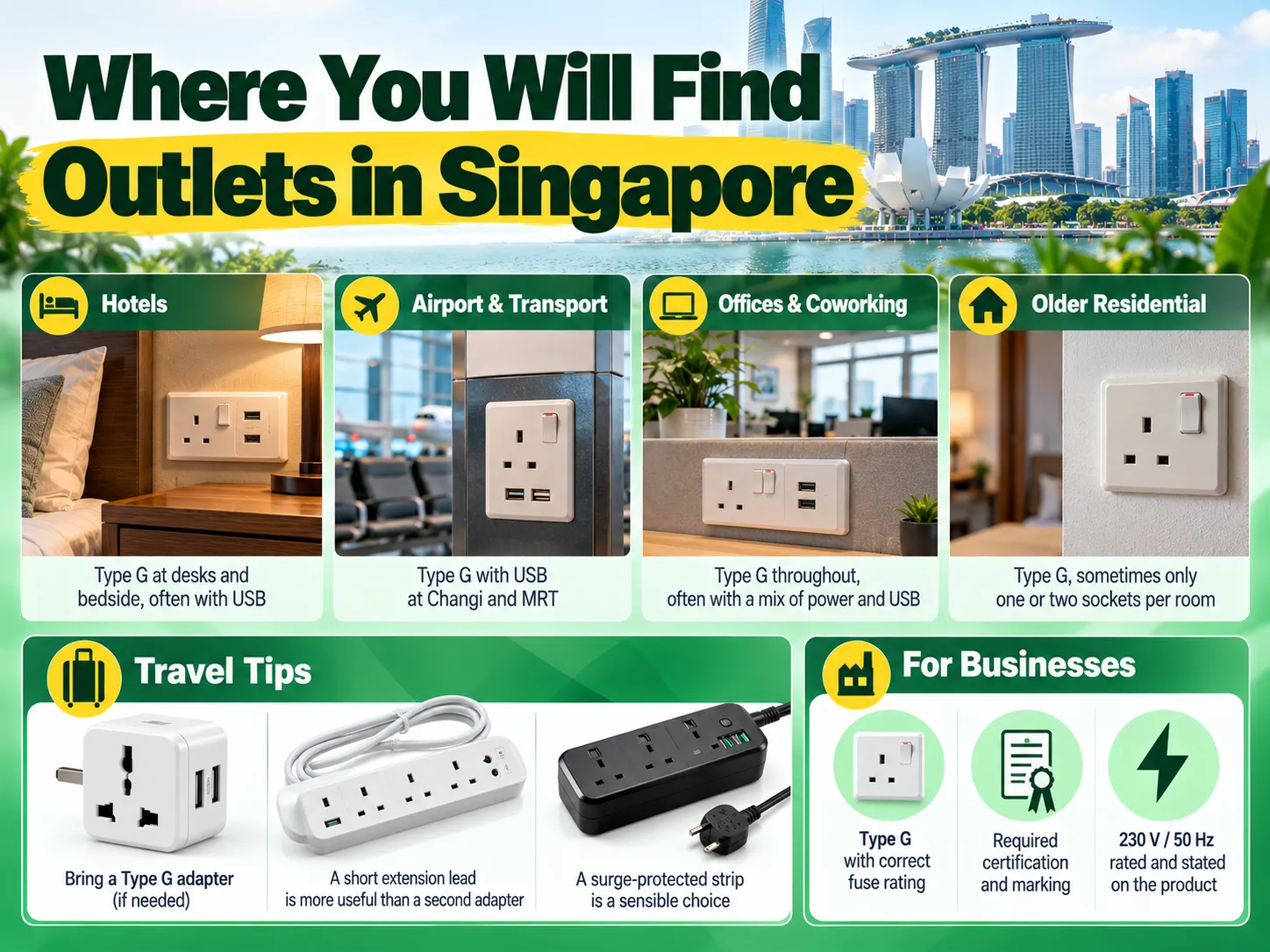
The sale of a product for permanent use depends on three requirements:
A reusable multi-region adapter does not qualify as a travel adapter. A travel adapter is a consumer gadget whereas a shuttered Type G socket rated for 13 A is a different product made under a different standard. The use of one related to another causes the failure of a compliant order at the border.
The type G adapter with three rectangular pins arranged in a triangular shape by itself won’t be needed unless, of course, you are coming from the UK, Ireland, Malaysia, Hong Kong or one of the Gulf states. It would be advisable to get a Type G fused adapter instead of unfused, as not only is it available at a price ranging anywhere between S$5 to 30 but you’re better off buying it in your home country rather than at the airport where it would be two to three times more expensive.
Type G is standardised under SS 145 standards and is largely similar to British BS 1363. Type G has three rectangular pins, the use of an in-plug fuse, sleeved live and neutral pins, and shuttered sockets, with a voltage of 230 V and 50 Hz.
No. The Type A and Type B plugs in the United States will not fit the Type G sockets in Singapore, and their voltages are different – 230 V versus 120 V. American visitors will require a universal plug adapter and must ensure that every device works on voltage ranging from 100 to 240 V. If one-plug appliances are used, they will get destroyed.
No, in Australia, plug type I is used, which has three flat pins arranged in a V shape. Because the voltage and frequency settings in Australia are identical at 230 V / 50 HZ, this means that in Australia, an adapter would be sufficient. However, because the pins are physically different, such as in shape or size, this form of connection will not work in Australia and therefore it must be used.
The voltage and the plug type used in Singapore are Type G 230V 50Hz. Unlike the North American plug which is a different voltage altogether, its shape also varies from that used in Australia. From your travel itinerary, you can deduce what kind of a plug you will need for your appliances. If you are coming from a Type G country, no adapter is necessary. If you are from a 230V country, an adapter will suffice. If your previous destination was a 120V country, you will need an adapter plus careful examination of the appliance tags.
If you travel often, then you probably know that packing for Singapore is one of the simplest things to do in Asia, but also one of the most difficult because it uses UK-type plugs (instead of the US-type ones). Whether you need a transformer, a plug adapter or both depends on two questions that tourists […]
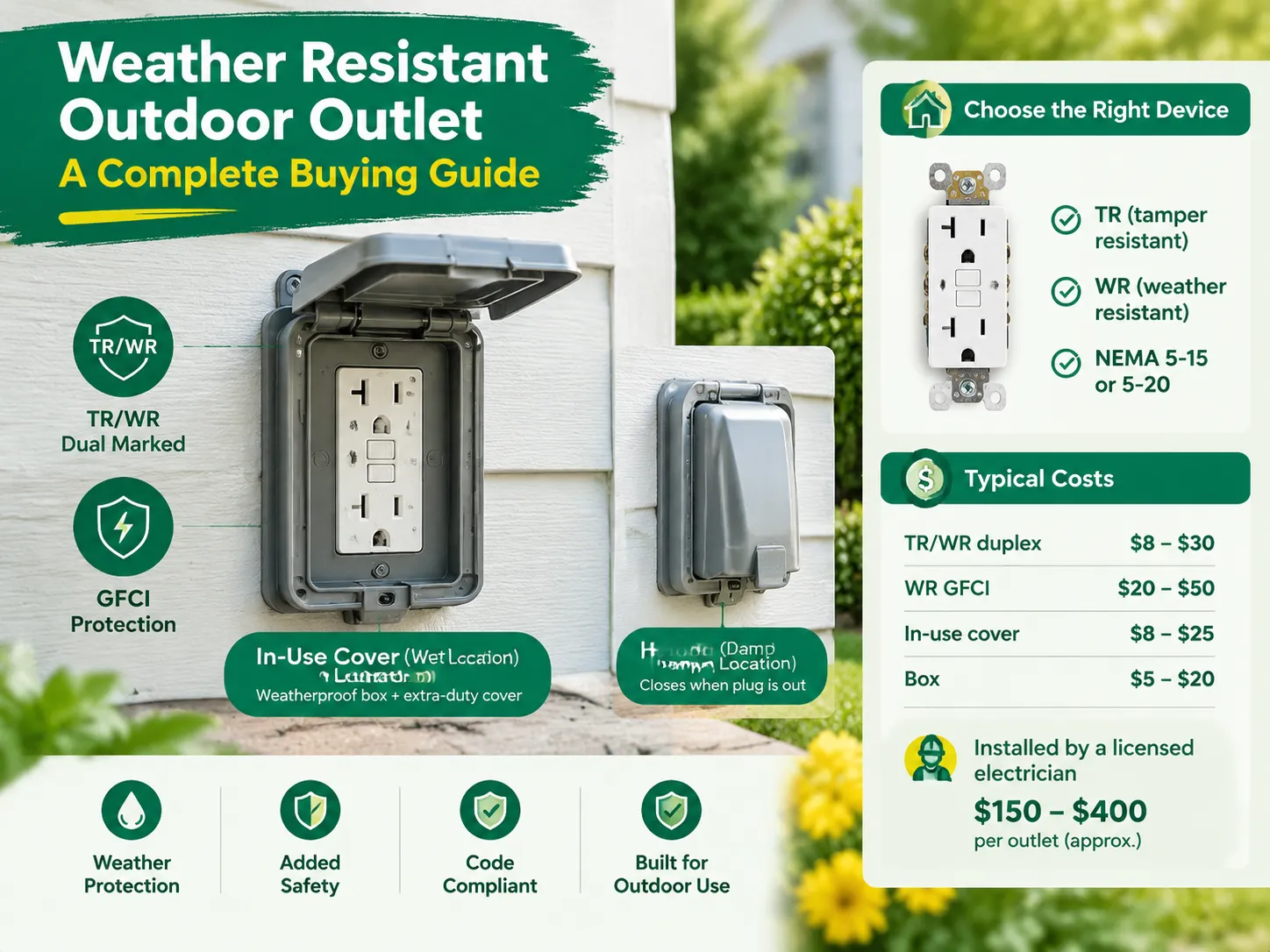
Wodoodporne gniazda zewnętrzne nie powinny być mylone z zwykłymi gniazdami zewnętrznymi. Chociaż te gniazda zewnętrzne można uznać za gniazda zewnętrzne typu WR, są one również wyposażone w obudowę, która zapewnia ich wodoodporność z urządzeniem lub bez. Dodatkowo, wtyczka zewnętrzna musi być odporna na wandalizm i zawierać RCD. Każde gniazdo odporne na warunki atmosferyczne powinno być oznaczone […]
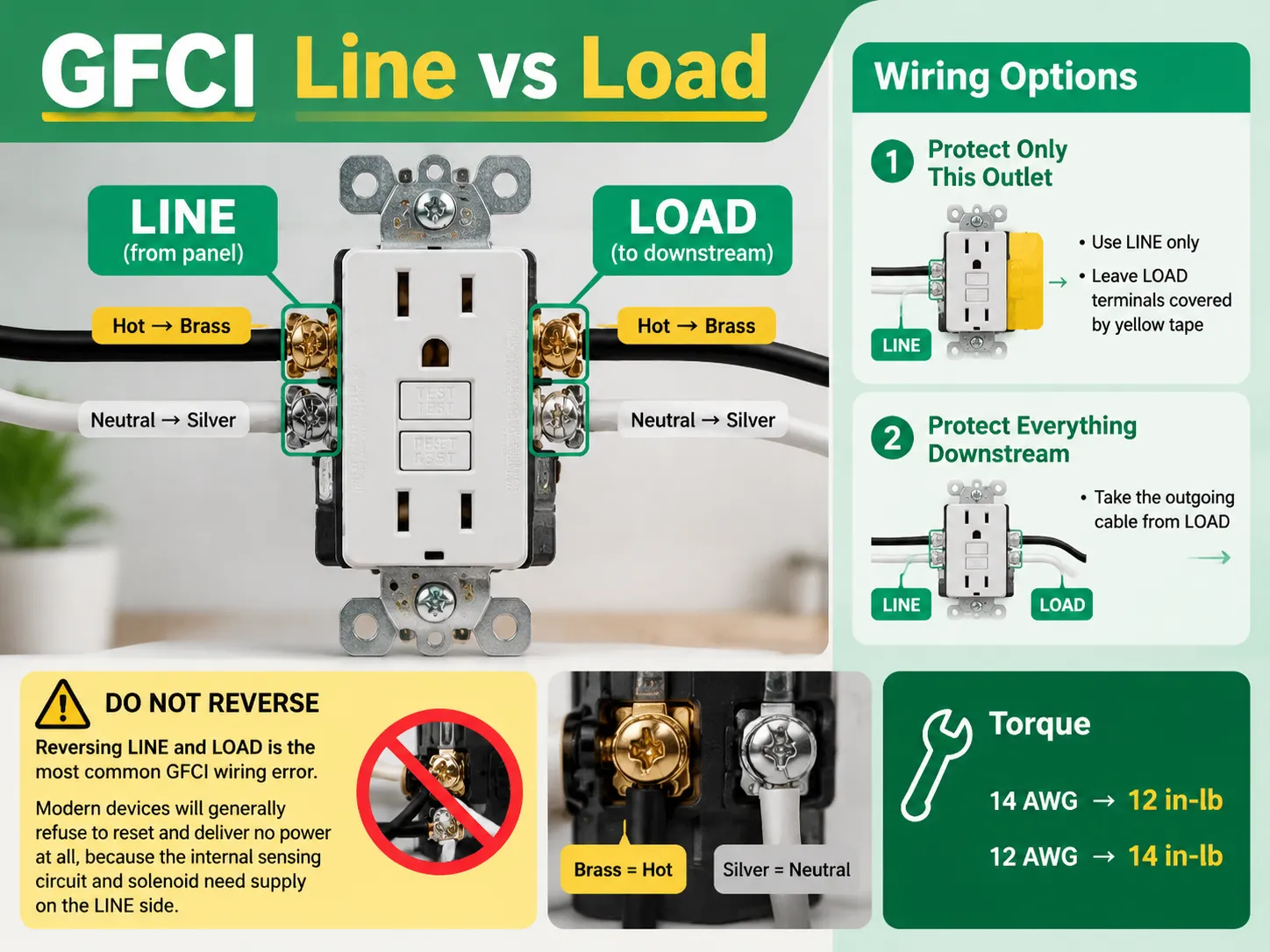
Dwa rodzaje zacisków mogą określać, jak działa gniazdo GFCI: Jeden zacisk jest przeznaczony dla pojedynczego gniazda, a drugi zacisk może chronić kilka gniazd z jednego gniazda GFCI przy tym samym koszcie. Użycie odpowiedniego zacisku pozwala skorzystać z oszczędności kosztów związanych z używaniem jednego GFCI, podczas gdy używanie […]

 Droga Tuozhan nr 6, Leshang Pioneer Park, port Yueqingwan Bay, miasto Yueqing, prowincja Zhejiang


