

Прибытие в Нью-Йорк, Торонто или Мехико с сумкой, полной зарядных устройств из Европы, Англии или Австралии, ставит путешественника перед проблемой, поскольку электрические розетки в гостиничном номере будут совершенно отличаться от розеток в их стране, а подаваемый ток будет ниже, чем оборудование может выдержать. Розетки североамериканского типа идентичны на всем континенте, от Канады до Панамы, что делает их более распространенными, но в то же время сбивает с толку путешественников.
Руководство содержит множество полезных сведений о североамериканских розетках и вилках, включая два типа вилок (A и B), их стандарты, определенные NEMA, напряжение и частоту (120 В и 60 Гц), конструкцию розеток, страны с аналогичными системами и необходимость для путешественников выяснить, понадобится ли им адаптер, преобразователь или ничего.
В Северной Америке используются вилки и розетки типа A и B, соответствующие тому же стандарту NEMA в США, Мексике и Канаде, а также в большинстве стран Центральной Америки и Карибского бассейна. Тип A состоит из двух плоских параллельных штырьков, а тип B имеет те же два плоских штырька с круглым заземляющим штырьком, расположенным под ними. США, Канада, Мексика, Япония и большая часть Латинской Америки могут использовать свои вилки непосредственно в розетках. Посетители из Великобритании (тип G), Европы (C/E/F), Австралии (тип I), Китая и большинства азиатских стран должны использовать адаптер для изменения формы своих вилок.
Тип A (также называемый NEMA 1-15) — это обычная североамериканская двухконтактная (или плоская) вилка, имеющая два плоских лезвия толщиной примерно 1,5 мм и длиной около 15,9–18,3 мм. Расстояние между двумя штырьками составляет около 12,7 мм. Вилка типа A не заземлена, не имеет заземляющего контакта и рассчитана на ток 15 А/125 В.
Два лезвия вилки обычно поляризованы. Одно из лезвий шире другого; например, ширина нейтрального штырька составляет примерно 7,9 мм, а ширина фазного штырька — 6,3 мм. Такая конструкция позволяет вставлять вилку только в одном направлении, что обеспечивает безопасность лампы или прибора.
Объекты, для которых используется вилка типа A: мелкая бытовая техника и устройства с двойной изоляцией, такие как лампы, зарядные устройства для мобильных телефонов, портативные радиоприемники, двухконтактные кабели в различных устройствах. Пользователи устройств с такой двухконтактной вилкой США могут найти вилки, подходящие не только для розеток типа A, но и для розеток типа B.
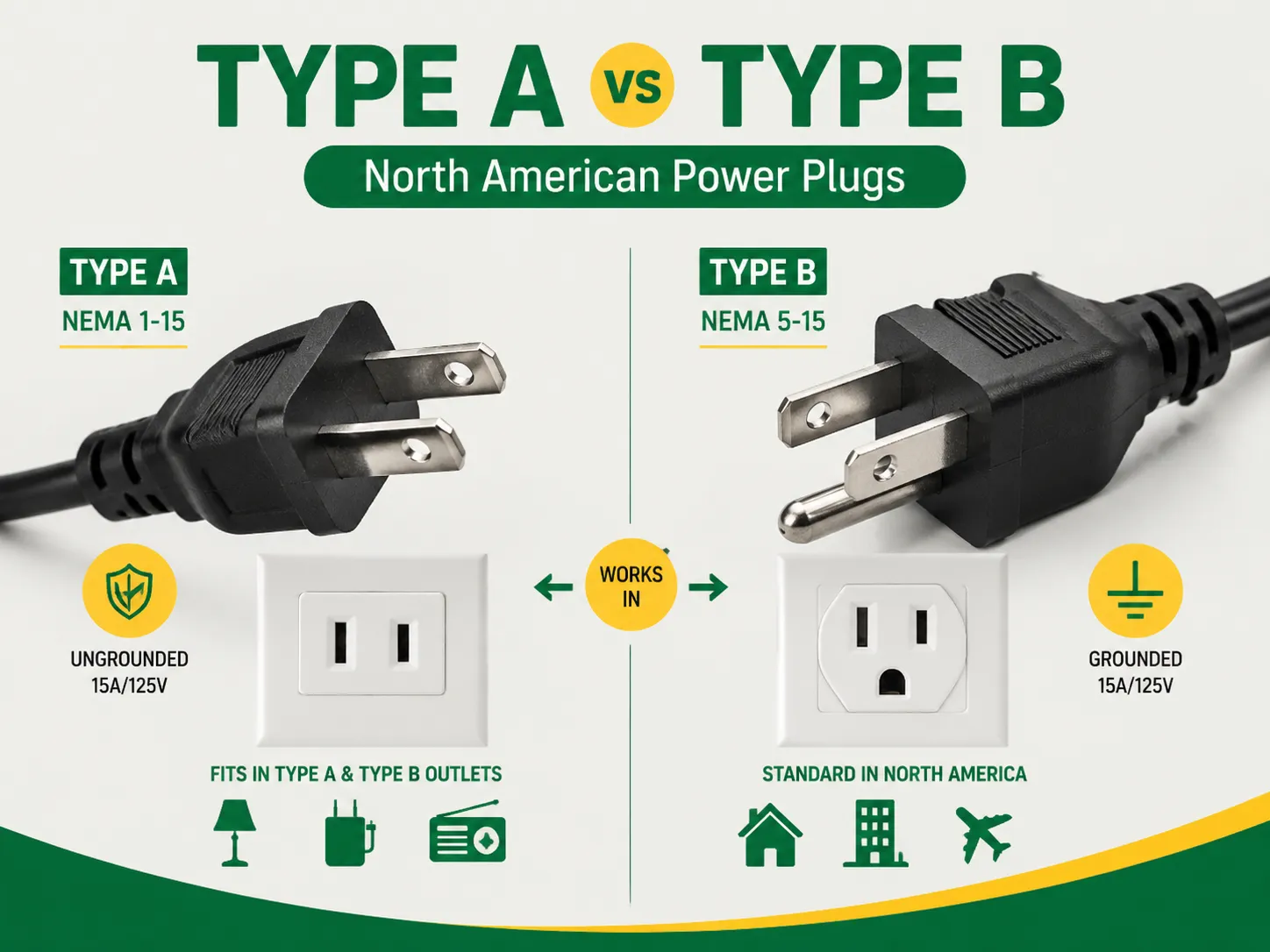
Официально известный как NEMA 5-15, тип B стал стандартной вилкой в Северной Америке и использует те же двойные плоские параллельные лезвия, что и тип A, плюс круглый (U-образный) заземляющий штырь под лезвиями; этот штырь имеет диаметр 4,8 мм и несколько длиннее лезвий, что гарантирует, что заземляющий штырь подключается первым перед включением питания. Номинальный ток для этой вилки составляет 15 А/125 В.
Где встречается тип B: везде, поскольку эта вилка устанавливалась везде, где строились здания с 1960-х годов, и использовалась в домах, отелях, офисах и аэропортах в США, Канаде и Мексике. В большинстве случаев современная розетка имеет тип B, но также оснащена портами зарядки USB-C, а также защитными шторками TR, которые теперь являются частью кода при новом строительстве. Вилка типа A подходит к розетке типа B, а вилка типа B не подходит к розетке типа A (поскольку заземляющий штырь не может подключиться).
Если вы обновляете розетки в североамериканской собственности, современные розетки — включая интегрированные USB и умные варианты в диапазоне розеток следуют тому же типоразмеру типа A/B/NEMA, поэтому они устанавливаются в любую стандартную коробку.
NEMA означает National Electrical Manufacturer’s Association (Национальная ассоциация производителей электрооборудования), которая устанавливает стандарты для вилок и розеток в Северной Америке. Важные коды:
| Код NEMA | Общее название | Конфигурация | Рейтинг |
|---|---|---|---|
| NEMA 1-15 | Тип A | 2 плоских параллельных штырька, без заземления | 15 А / 125 В |
| NEMA 5-15 | Тип B | 2 плоских штырька + круглый заземляющий, с заземлением | 15 А / 125 В |
| NEMA 5-20 | Тип B (20 А) | 2 плоских штырька + заземляющий, одно лезвие повернуто на 90° | 20 А / 125 В (кухни, ванные комнаты) |
| NEMA 6-15 / 6-20 | Розетки 240 В | 2 плоских штырька + заземляющий, для приборов 240 В | 15-20 А / 240 В (сушилки, кондиционеры, электромобили) |
| NEMA 14-30 / 14-50 | Сушилка / плита / электромобиль | 4 штырька (2 фазных + нейтраль + заземление) | 30-50 А / 240 В |
Для путешественников актуальны только типы 1-15 (тип A) и 5-15 (тип B) — все остальные типы — это специализированные вилки с более высоким током. В каждом отеле и доме вы найдете универсальную розетку на 120 В.
Северная Америка работает по системе 120 вольт, 60 герц — что идентично в США (120 В), Канаде (120 В) и Мексике (хотя в Мексике напряжение немного выше, около 127 В). Этот уровень напряжения примерно вдвое ниже, чем используется в остальном мире (220-240 В), что составляет другую часть общей проблемы совместимости.
Уровень напряжения также работает в:
Уровень напряжения несовместим с Великобританией, Европой, Японией, Австралией, Новой Зеландией, Китаем, Индией, Сингапуром и большей частью Африки, поскольку все они используют напряжение 220-240 В и имеют разные формы вилок.
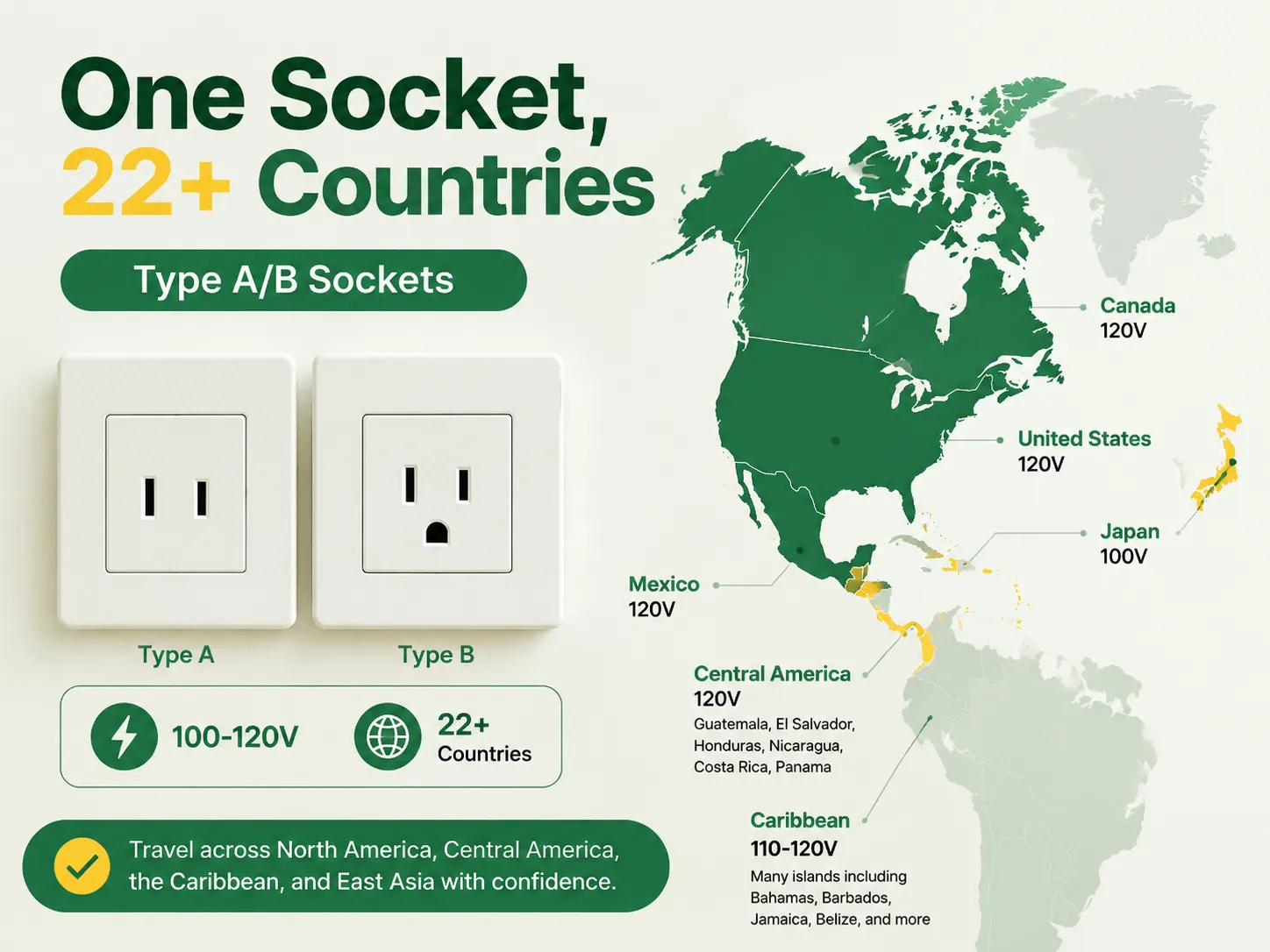
Электрическая стандартизация Северной Америки не имеет себе равных: одна конструкция вилки используется более чем в 22 странах. В этом отношении вилки идентичны в следующих регионах:
В общем, человек может приехать в Канаду из США и, не доезжая до половины мира, до Панамы, никогда не думать об адаптерах для вилок, которые делают эту электрическую систему такой удобной для путешественников из США.
| Страна / Регион | Домашняя вилка | Нужен адаптер? | Нужен ли преобразователь напряжения? |
|---|---|---|---|
| США, Канада, Мексика | A / B | Нет | Нет |
| Центральная Америка, большая часть Карибского бассейна | A / B | Нет | Нет (110-127 В) |
| Япония | A / B | Нет (вилки подходят) | Обычно нет (100 В против 120 В) |
| Тайвань | A / B | Нет | Нет (110 В) |
| Великобритания / Ирландия | Г | Да | Да (для устройств, работающих только от 230 В) |
| Материковая Европа | До / Ми / Фа | Да | Да (для устройств, работающих только от 230 В) |
| Австралия / Новая Зеландия | я | Да | Да (для устройств, работающих только от 230-240 В) |
| Китай | Ля / До / Ми | Возможно (тип А подходит; для типов C/I нужен адаптер) | Да (220 В против 120 В) |
| Южная Корея | До / Фа | Да | Да (220 В) |
| Индия | До / Ре | Да | Да (230 В) |
Важное примечание: адаптер может только изменить форму вилки, но не вносит никаких изменений в напряжение. Например, если британский фен будет подключен к американской розетке только с помощью адаптера, он получит 120 В вместо положенных 230 В, что означает, что он будет работать еле-еле и нагреваться до опасного состояния.
Общее правило: если указано INPUT: 100-240 В (или 110-240 В), то устройство может работать при двойном напряжении и просто нуждается в адаптере. Если указано только 120 В или 230 В, это одно напряжение, и если оно из страны со стандартом 230 В, ему нужен преобразователь в Северной Америке. Большинство зарядных устройств для телефонов, адаптеров для ноутбуков, зарядных устройств для камер и зубных щеток являются двухвольтовыми, в то время как большинство фенов, плоек и старых устройств — нет. Для более широкой логики международных вилок и розеток — и того, как система NEMA вписывается в мировые стандарты — наши руководства по различным типам электрических выключателей и розеток и основы установки диммера охватывают аппаратную часть настенных устройств.
Быстрая проверка займет всего десять секунд; вам просто нужно взглянуть на небольшой ярлык на устройстве или на его блоке питания, обычно расположенный в области непосредственно вокруг входа кабеля.
| Текст на этикетке | Значение | Требуется в Северной Америке (из страны с напряжением 230 В) |
|---|---|---|
| “ВХОД: 100-240 В, 50/60 Гц” | Двойное напряжение, по всему миру | Только адаптер |
| “ВХОД: 110-240 В” | Двойное напряжение | Только адаптер |
| “ВХОД: 100-120 В” | Одновольтовое (стандарт Северной Америки/Японии) | Только адаптер, если из страны с напряжением 120 В; преобразователь, если из страны с напряжением 240 В |
| “ВХОД: 220-240 В” | Одно напряжение (стандарт 230 В) | Адаптер + преобразователь |
Если вы путешествуете из любой страны, где напряжение находится в диапазоне от 220 В до 240 В, вам следует либо взять с собой фен с двойным напряжением, либо использовать дорожный фен, предоставляемый отелем.
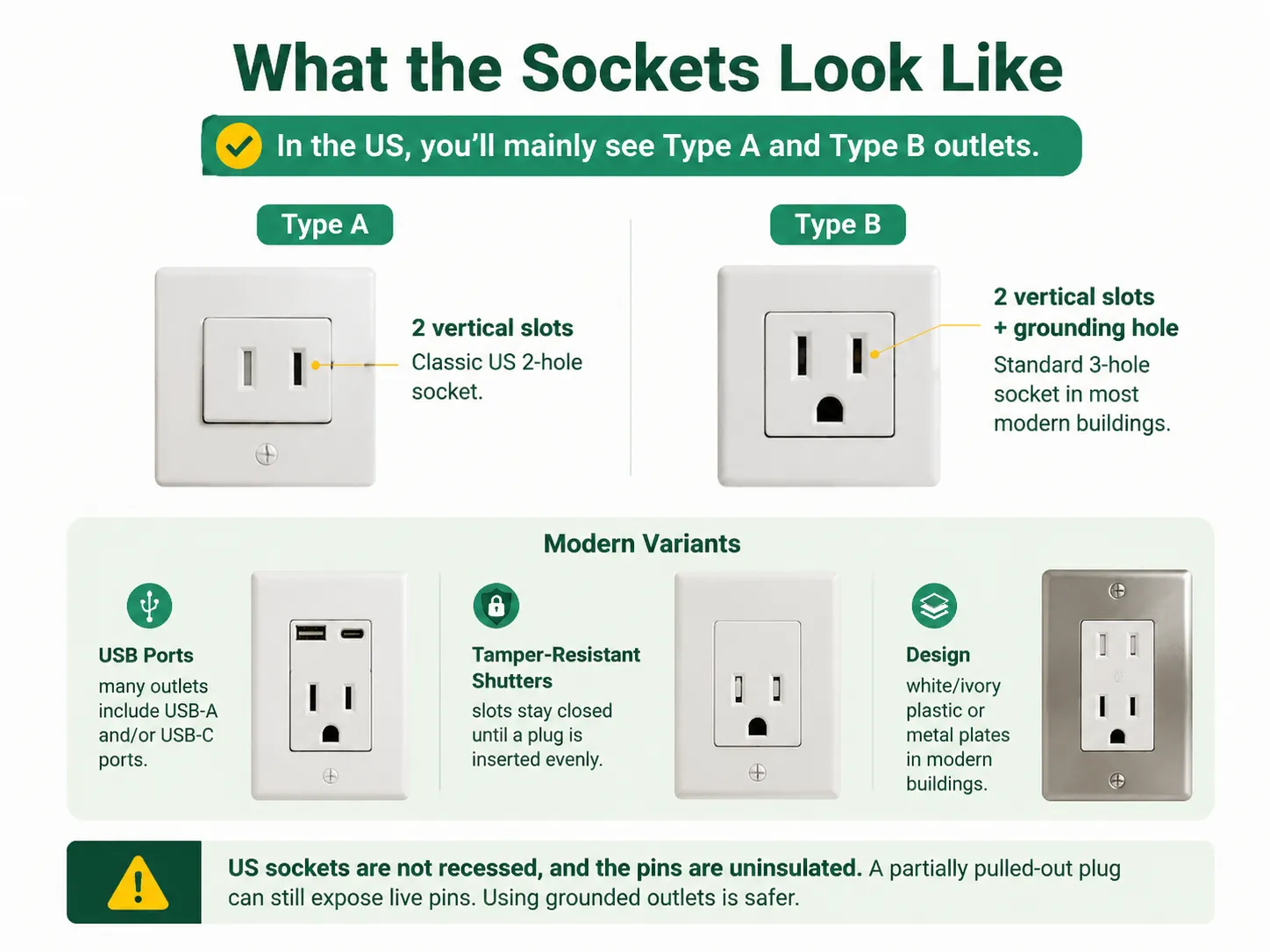
Определение разъемов облегчает путешествие:
Американская розетка очень известна тем, что она не встроена в стену, а ее штыри не имеют изоляции, что означает, что вилка, будучи частично вставленной, все еще имеет доступные контакты под напряжением. Это достаточно безопасно при нормальном использовании, но это еще одна причина использовать заземленные, сертифицированные розетки — такие как защищенные от несанкционированного доступа и оснащенные USB розетки в руководстве по обновлению USB-розеток, и умные настенные выключатели, доступные в линейке умных выключателей IGOTO для того же стандартного североамериканского размера.
Для частых путешественников, перемещающихся между регионами с источником питания 120 В и 240 В, рекомендуется использовать высококачественные универсальные адаптеры ($25-$45).
Вилки и розетки, используемые в Северной Америке, включают тип A (с двумя плоскими параллельными штырями без заземления, известными как NEMA 1-15) и тип B (с двумя плоскими штырями и круглым штырем, который действует как заземление — NEMA 5-15). Эта система используется в США, Канаде, Мексике, большей части Центральной Америки и большей части Карибского бассейна. Использование вилок типа A подходит для обоих типов розеток, в то время как вилки типа B являются новым обязательным стандартом во всех современных зданиях.
Существует два типа электрических вилок: тип A (NEMA 1-15), который представляет собой 2-контактную вилку без заземления, используемую в основном для приборов с двойной изоляцией и зарядных устройств. Тип B (NEMA 5-15) — это 3-контактная вилка с заземлением, используемая для большинства электрических приборов и компьютеров. Их номинальная мощность также одинакова — 15 А и 125 В.
Абсолютно верно. Канада, как и США, использует те же вилки типа A и типа B, то же напряжение 120 В и ту же частоту 60 Гц. Следовательно, вилка США и канадская вилка могут использоваться взаимозаменяемо. Стандарты, установленные NEMA в США и CSA в Канаде, определяют совместимость этих вилок.
В Соединенных Штатах Америки используются розетки типов A (NEMA 1-15) и B (NEMA 5-15) при напряжении 120 В/60 Гц. Тип B — это два слота с вертикальными отверстиями и одно круглое отверстие для заземления, и это сегодняшний стандарт; с другой стороны, тип A — это, очевидно, два вертикальных слота в старых зданиях, где вилки типа A были бы применимы. Розетки NEMA 14-30 или 14-50 с более высокой мощностью предназначены только для сушилок, плит и зарядных устройств для электромобилей.
Североамериканский тип розетки является примером стандартизации. Система вилок типа A и B, работающая при напряжении 120 В/60 Гц, используется более чем в 22 странах Северной Америки, от Канады на севере до Панамы на юге. Поэтому, если использовать вилки 120 В, это самый простой разъем для использования в электроприборах. Для посетителей из стран с напряжением 220-240 В эта стандартизация снова полезна, поскольку она упрощает распознавание ответа: адаптер типа A/B для формы и трансформатор напряжения для каждого устройства, работающего при одном напряжении — на основе десятисекундной проверки этикетки “INPUT”.
Другими словами, для любого путешественника, приезжающего в Северную Америку, ответ таков: вилки из США/Канады/Мексики/Японии просто подходят; всем остальным нужен адаптер; путешественникам из региона с напряжением 230 В необходимо приобрести трансформатор напряжения для каждого из их одновольтных устройств — проверенные этикетки и купленный подходящий универсальный адаптер решат все проблемы, оставив посетителям только возможность наслаждаться прекрасными пейзажами Северной Америки без беспокойства о сгоревших зарядных устройствах.

Фармингдейл, вместе с частями Уолл-Тауншипа и Тинтон-Фоллс, Нью-Джерси, имеют один и тот же почтовый индекс 07727. Большинство домов, построенных с 1950-х по 1990-е годы, все еще существуют сегодня. Большинство домовладельцев занимаются ремонтом своих домов, а не строительством новых. Владельцы домов, как правило, тратят гораздо больше на […]

Термин “07984 lighting consultants” создает у людей впечатление, что пять цифр представляют собой почтовый индекс, который указывает место, где консультанты по освещению предоставляют услуги. Однако это неверно: нет почтовой зоны с кодом 07984, который является лишь кодом мобильной связи в Великобритании. Это означает, что […]

Сан-Франциско не является средним рынком управления освещением. Жилищный фонд старый и плотный, а электрический кодекс не позволяет проводить столько электрических установок, сколько разрешено почти везде в США. Большинство домов, которые хотят сложное освещение, являются викторианскими или эдвардианскими зданиями, где никто не хочет начинать открывать […]


 Дорога Туочжан №6, пионерский парк Лэшанг, гавань залива Юэцинвань, город Юэцин, провинция Чжэцзян


