

Подключение во Вьетнаме — это простая задача по сравнению с большинством стран Азии, и так же просто сделать одно из устройств неработающим. Вилки принимаются по всему миру, но напряжение — нет. Эти два факта верны для каждого отеля во Вьетнаме от Ханоя до Кан Тхо, и хорошо, если вы их знаете, чтобы избежать множества проблем. В этом руководстве вы узнаете, что находится в стене, какие типы вилок подходят куда и какие типы путешественников будут нуждаться в адаптере в своих чемоданах. Вы также будете проинформированы о различиях в требованиях к электрическим розеткам для зданий и гостиничных номеров.
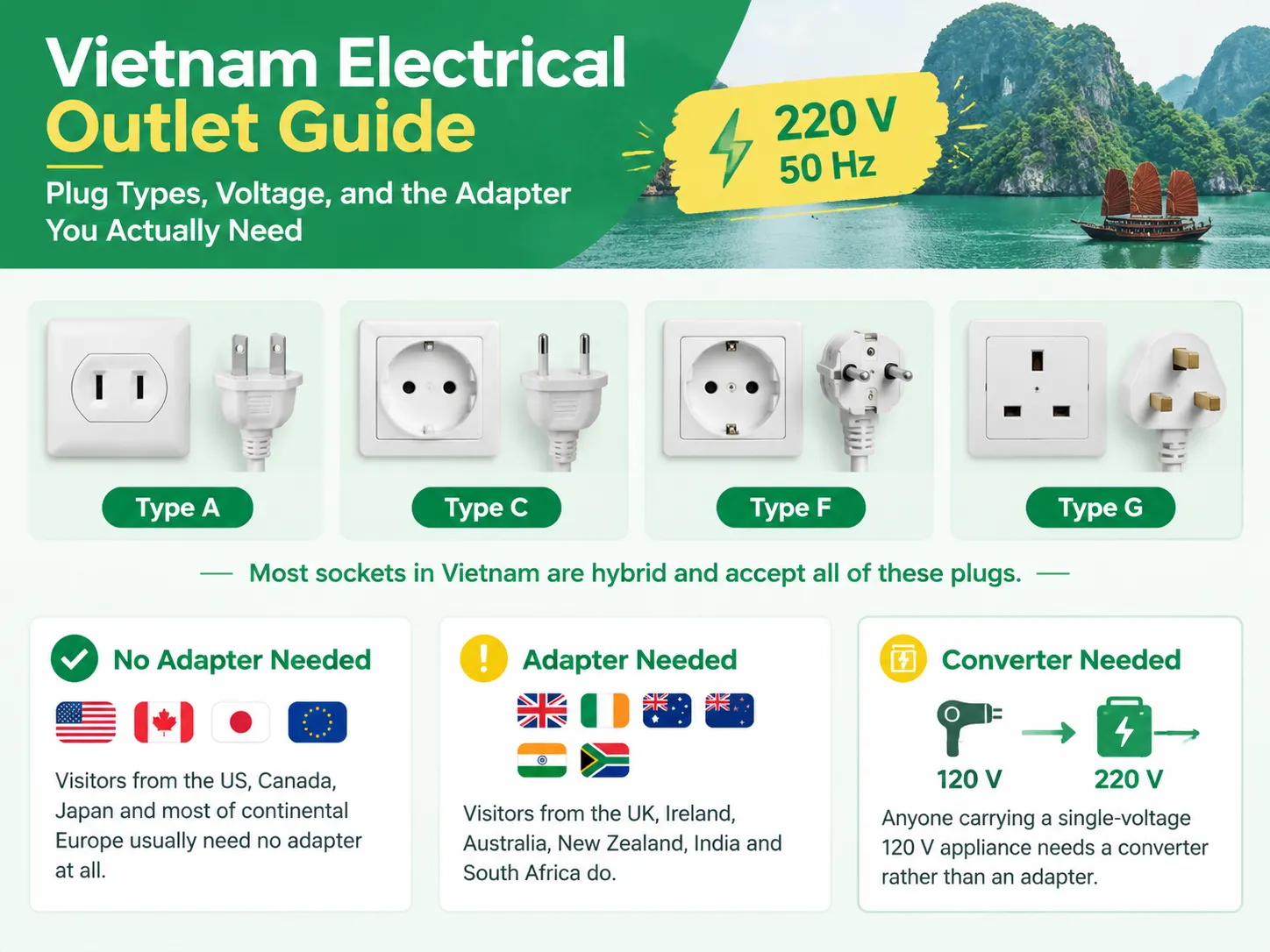
Краткий ответ: Вьетнам использует напряжение 220 В при 50 Гц и типы вилок A и C — плоская и круглая соответственно, с вилками типа F, также используемыми в современных зданиях, и типом G, используемым в некоторых отелях более высокого стандарта. В основном используются гибридные розетки, способные принимать различные типы вилок. Туристы из США, Канады, Японии и большинства стран материковой Европы обычно не нуждаются в адаптере, в отличие от тех, кто приезжает из Великобритании, Ирландии, Австралии, Новой Зеландии, Индии и Южной Африки. Путешественник, взявший с собой однонаправленное устройство на 120 В, должен будет взять преобразователь.
| Приезжая из | Тип вилки | Нужен адаптер | Проблема с напряжением |
|---|---|---|---|
| Соединенные Штаты, Канада, Мексика | A, B | Нет, A подходит | Да, если устройство только на 120 В |
| Япония | A, B | Нет | Да, устройства на 100 В |
| Великобритания, Ирландия | Г | Обычно да | Нет |
| Германия, Франция, Нидерланды, Испания | C, E, F | Редко; Schuko требует гибридную розетку | Нет |
| Австралия, Новая Зеландия, Аргентина | я | Да | Нет |
| Индия, Шри-Ланка | C, D, M | Часто да | Нет |
| Южная Африка | M, N | Да | Нет |
| Китай | A, C, I | Обычно нет | Нет |
В этих таблицах есть два сюрприза для путешественников из Австралии и Соединенных Штатов. Собранная информация указывает на то, что австралийцы думают, что их устройства будут работать где угодно в Азии, основываясь на том, что они прекрасно работали на Бали и в Таиланде, в то время как во Вьетнаме они не работают. Тем временем американцы думают, что для поездки во Вьетнам потребуется адаптер, который имеет 220 вольт, в то время как такой необходимости нет, так как физические формы контактов одинаковы.
Тип A — это один из двух плоских параллельных контактов, используемых в США и Японии. Он не заземлен и имеет номинальную мощность 15 А и 125 В соответственно. Хотя это самый старый тип во Вьетнаме, он все еще доминирует за пределами городских районов.
Тип C — это Europlug, имеющий два круглых контакта диаметром 4 мм. Он не заземлен и его номинал составляет 2.5 А. Он использовался в то время, когда французы были во Вьетнаме.
Тип F — это вилка Schuko. У Schuko есть два круглых контакта, каждый из которых имеет диаметр 4,8 мм, и два боковых заземляющих контакта с номиналом 16 A. Schuko присутствует в новых зданиях и современных отелях, часто в тех же розетках, что и вилки типов A и C.
Тип G — это британская вилка с предохранителем и прямоугольными контактами. Британская вилка имеет номинал 13 A. Вилка в основном используется в современных отелях и обслуживаемых апартаментах.
Тип D — это индийская вилка с тремя круглыми контактами. Она все еще используется в некоторых старых зданиях на севере Индии.
Полная таксономия, включая размеры контактов и номиналы тока, соответствующие каждой форме, изложена в этом справочнике о типах розеток, используемых по всему миру, который стоит посмотреть перед покупкой адаптера для многократной поездки.
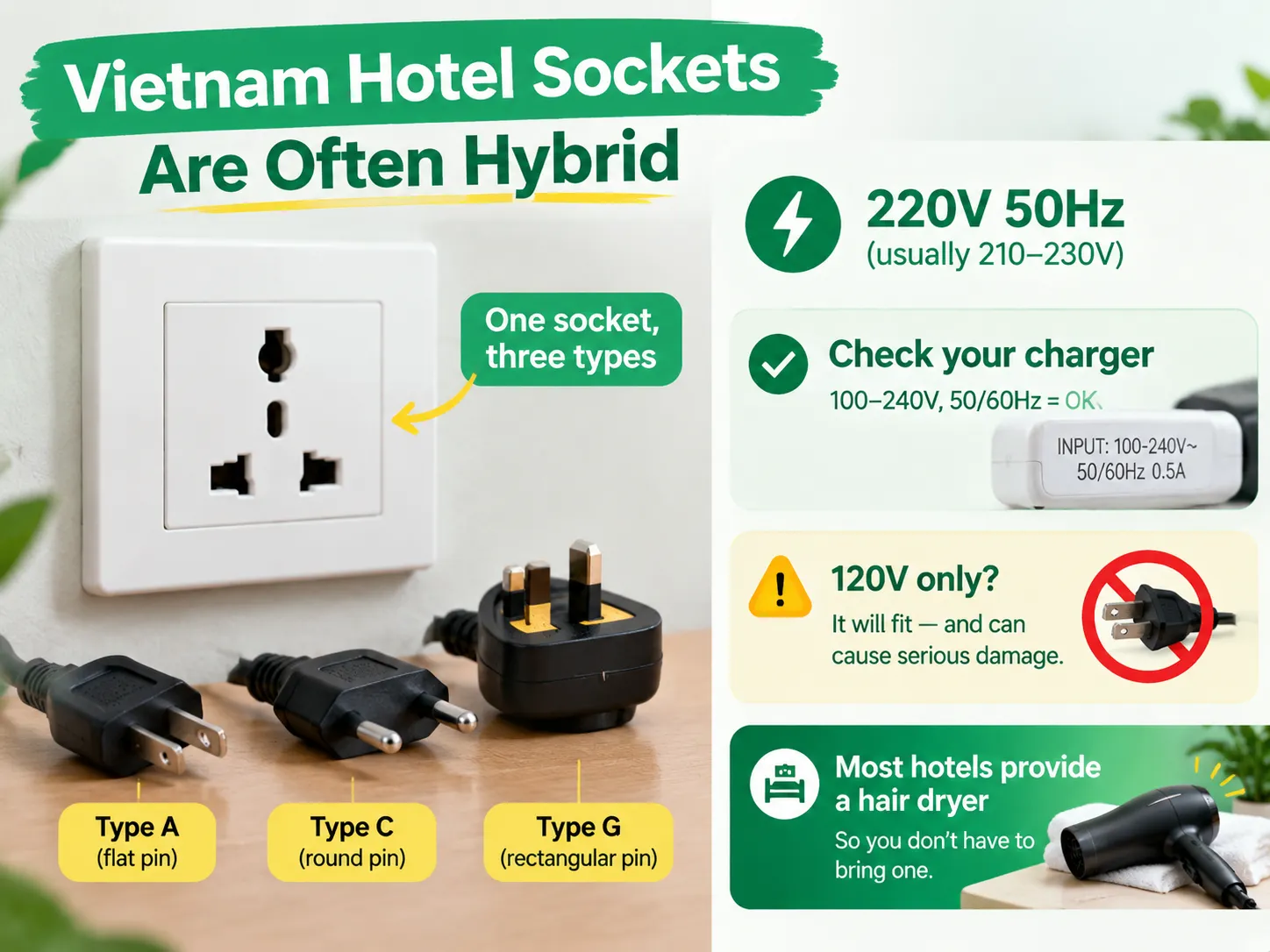
Многие розетки, найденные во Вьетнаме, называются “три в одном”, так как они могут принимать три различных типа контактов на одном выходе. Многие другие места по всему миру использовали аналогичные конструкции, но разница в том, что розетки во Вьетнаме отличаются от универсальных розеток, которые принимают все типы оборудования, но не служат заземляющими точками. Вместо этого розетки во Вьетнаме созданы для работы с различными напряжениями и продаются как практичные продукты.
Причина этого заключается в наследии зданий в этой стране: начиная с французского колониального правления и Советского Союза до десятилетия быстрого развития, а также последней волны строительства, сосредоточенной на роскошных отелях. Владельцы отелей, обновляющие отели, построенные в 1990-х годах, предпочитают использовать эти “три в одном” розетки, чтобы их гости могли подключать свои устройства независимо от местных стандартов напряжения. Таиланд решил ту же проблему тем же способом, и результатом там является такой же разнообразный набор розеток, описанный в этом руководстве о типах электрических розеток Таиланда.
Для путешественника ключевой вопрос “подойдет ли моя вилка?” полностью зависит от того, в каком здании он находится, и именно поэтому в таблице выше использовался термин “обычно” для определения адаптеров питания в каждой стране. Британский турист, остановившийся в четырехзвездочном отеле в Хошимине, обнаружит, что в столе встроена розетка типа G. В гостевом доме в Далате он этого не увидит!
Вьетнам нацелился на номинальное напряжение 220 V и частоту 50 Hz, которые поставляются EVN или Электричеством Вьетнама. Фактическое напряжение электричества, поступающего из розетки, может варьироваться от 210 V до 230 V, но летом оно снижается еще больше в часы пик, что может быть проблемой для чувствительных устройств, таких как кондиционеры.
Правило большого пальца здесь касается зарядных устройств, которые у вас есть. Просто проверьте каждое зарядное устройство, и вы увидите указанное напряжение “100-240 V, 50/60 Hz”, что означает, что большинство зарядных устройств, включая зарядные устройства для телефонов, ноутбуков, камер, пауэрбанков и зубных щеток, которые были произведены за последние 15 лет, могут нормально работать во Вьетнаме, используя только адаптер для вилок. Единственная система, где эта проверка не проходит, — это североамериканский стандарт 120 V, и именно поэтому тип розетки Северной Америки причиняет больше повреждений за границей, чем любой другой, исключительно потому, что контакты подходят ко многим иностранным розеткам.
A simple “$120” means that the machine is going to fail immediately, and most likely also burn. What’s dangerous is that it will fit. An American hair dryer will perfectly plug into Vietnamese Type A socket and will give double voltage. Hair dryers, curling irons, straighteners, old electric razors, and cheap kitchen appliances are the most frequent victims.
Most mid-class and good hotels provide hair dryers, which single-handedly eliminates the most common failure from your packing.
In North America and Japan, devices make use of a frequency of 60 Hz while most countries operate at a frequency of 50 Hz. Dual-voltage devices are indifferent to the frequency as they rectify AC supply to DC in their circuits. However, devices that have an AC motor or clock have to take the frequency into account.
If an induction motor made for 60 Hz is run on 50 Hz, it will operate about 17% slower. It will also consume more energy in performing the same task. An AC clock will lag 10 minutes an hour. Old stereos can create hum due to magnetic interference from transformers. However, none of the devices will break down entirely, but will give faulty performance that will be blamed on the devices rather than supply.
For the short term, such variation may be of no consequence; however, those importing machinery to Vietnam or installing electrical fittings in factories where such machines are used should take the frequency into account when designing the specifications.
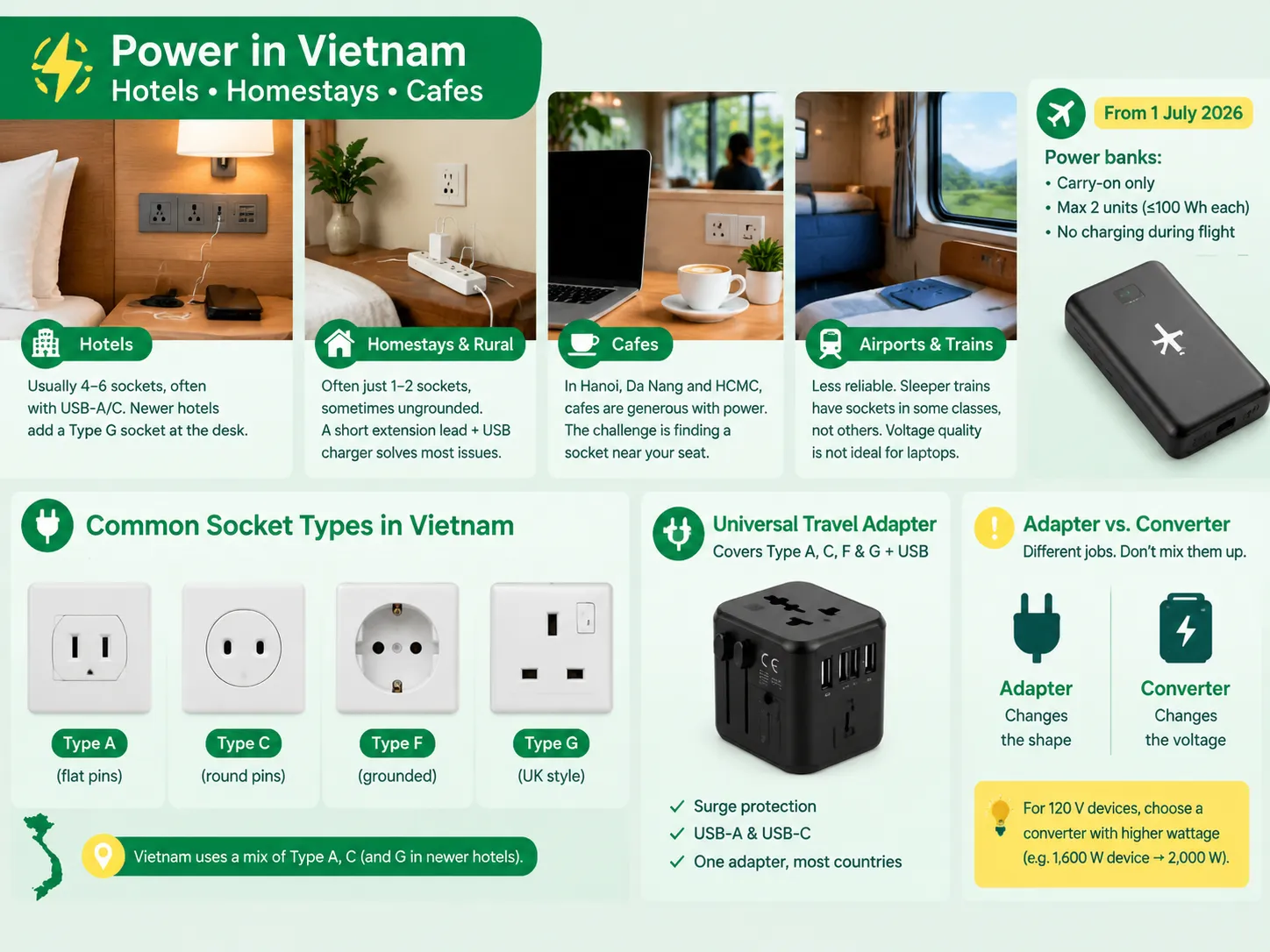
Normally, city hotels may provide four to six sockets in one room, many of which would be hybrid sockets. Two of them might be new types of sockets with USB-A and USB-C ports on the bedside panel. Newer hotels are known to use G-type sockets containing charging facilities on the office desk.
Staying in homestays may provide you with one or two sockets in the entire room, some of which might be A-type but ungrounded sockets. They might share the same electrical circuit with the water heater. But you can always use an extension cable and multiport USB to fulfill your needs.
Hanoi, Da Nang, and Ho Chi Minh City cafes are generous in providing electric power, and it seems that many cafes, designed with working clients in mind, make profit because of the availability of socket outlets. So perhaps you can find plenty of sockets near your seat.
Aviation and train traveling is much less predictable. Reunification Express use electric sockets in some types of cars, but not in others. Also, the quality of voltage might not be performed well enough till the train arrives to its destination.
If you have decided to travel within the country domestically, keep in mind that starting from July 1, 2026, the Civil Aviation Authority of Vietnam permits taking no more than two power banks with capacity not greater than 100 W each in carry-on luggage and the use of power banks for charging devices in flight will be prohibited.
An adapter changes the shape of the connection. A converter changes the voltage. They are different products and confusing them is how devices get destroyed.
| Device input | Plug compatible | Plug not compatible |
|---|---|---|
| 100–240 V dual voltage | Nothing needed | Plug adapter only |
| 220–240 V only | Nothing needed | Plug adapter only |
| 120 V only | Converter needed | Adapter plus converter |
A universal travel adapter is the most effective solution for everybody since it works with types A, C, F, and G together and also comes with USB charging. Make sure to buy one with a surge protector rather than the least expensive option found at the airport; the older buildings have poor earthing, and the extra protection costs only a small amount of money.
When using a converter with a 120 V device, make sure that it has a wattage higher than that of the device. For example, a 1,600 W hairdryer will need a converter rated above 2,000 W, and using an inadequate converter will either blow a fuse or overheat it. However, on a two-week trip, it is easier to carry a cheap dual-voltage hair dryer bought at the destination than bother with a large converter.
While travelling within the region, it becomes even harder to sort out the adapter issue, as countries don’t share the same standards. A guide to the sockets and adapters you need in Bali shows the Indonesian pattern, which accepts Type C and F and is genuinely different from Vietnam’s A-and-C mix. Anyone doing a multi-country Southeast Asia itinerary should buy universal and stop thinking about it.
In preparing to sell into the Vietnamese market, there are four important implications to consider.
Choose the socket, not the adaptor. A dual-standard outlet is a good option for hotels but not for factories; using a specific standard decreases maintenance as well as stops chances to plug in inappropriate devices. The outlet should correspond to the type of equipment that is going to be connected.
Grounding is a problem. Most local sockets are ungrounded two-pin devices and a building, which uses such sockets everywhere, exposes itself to electrocution risks that can’t be eliminated by reliable RCDs. Really grounded sockets of Type F or Type G should be used for the applications that include machines with metallic casings.
Capacity should be sufficient. A 2.5 A Europlug socket is not the same as a 16 A socket with another face-plate. Therefore, kitchens, workshops, and places with heaters need sockets designed according to the electric circuitry of this area.
Voltage is important. A voltage range of 210 V-230 V and an additional drop during the peak moments mean that instruments requiring a precise voltage of 220 V will be faulty. A device should state that it nominal voltage is 220 V, but it is able to work at a voltage from 190 V to 250 V.
This is the layer being supplied by Igoto; these are switches and socket outlets along with power strips operating according to the local standard, and the route of OEM and private label is available for all distributors wanting their branding on the face-plate.
It is most advisable for travelers to buy a universal adapter for Type A, C, F and G plugs, since the types of sockets in Vietnam vary across types of buildings. However, if you’re coming in from America, Canada or Japan, and your appliances work with both low and high voltage, you don’t actually need an adapter. If traveling in from Australia or New Zealand, however, an adapter is indeed necessary.From the UK or Ireland you almost certainly need one, since the rectangular-pin pattern described in this guide to the Ireland outlet type only fits where a hotel has deliberately installed that socket.
In case you are carrying devices that are rated for 100 to 240 volts, you will need a plug adaptor, but not a voltage converter. The types of sockets that you will need to consider are types A and C which represent the types that you will find almost anywhere, plus types F and G if you are staying somewhere new and fancy.
From the perspective of the physique, there are no such requirements. Vietnamese Type A socket can accept US Type A plug directly, while it can also work for hybrid sockets in hotels. The most important point to look at is voltage: looking at the input ratings of every device and leaving everything that is indicated to be operating on 120 volts unless a converter rated for more than its power is in the possession of the traveler.
The two-pin (round or flat) configuration is what’s needed in the sockets; consequently, an adapter that has the correct Type C pins on the wall end will be compatible with most sockets across Vietnam, including those found in older buildings that use the round-only configurations typically installed in the French times. A universal plug that has C, F or G on the wall end will work for every scenario.
Vietnam uses a voltage of 220 V and a frequency of 50 Hz, so its electrical sockets may accommodate devices that run on either of these frequencies. If your device is rated from 100 V to 240 V, you need to be careful only about the shape of the plug, which is usually not an issue.However, if your device is rated 120 V, technology-wise, you should leave it in your suitcase, as it will become incompatible the moment it is plugged in.
Plugging into Vietnam is an easy job compared to most countries in Asia and so is making one of the gadgets go dead. The plugs are globally accepted, but the voltage is not. These two facts are true about each hotel in Vietnam from Hanoi to Can Tho and it is good if you know […]

Управление коммерческим освещением в Миннеаполисе теперь является необходимостью, а не вариантом. С введением нового NEC 1 июля 2023 года, обнаружение присутствия теперь стало юридическим требованием в большинстве коммерческих зданий без каких-либо изменений закона со стороны государственных органов. Таким образом, обсуждение изменилось с “если” […]
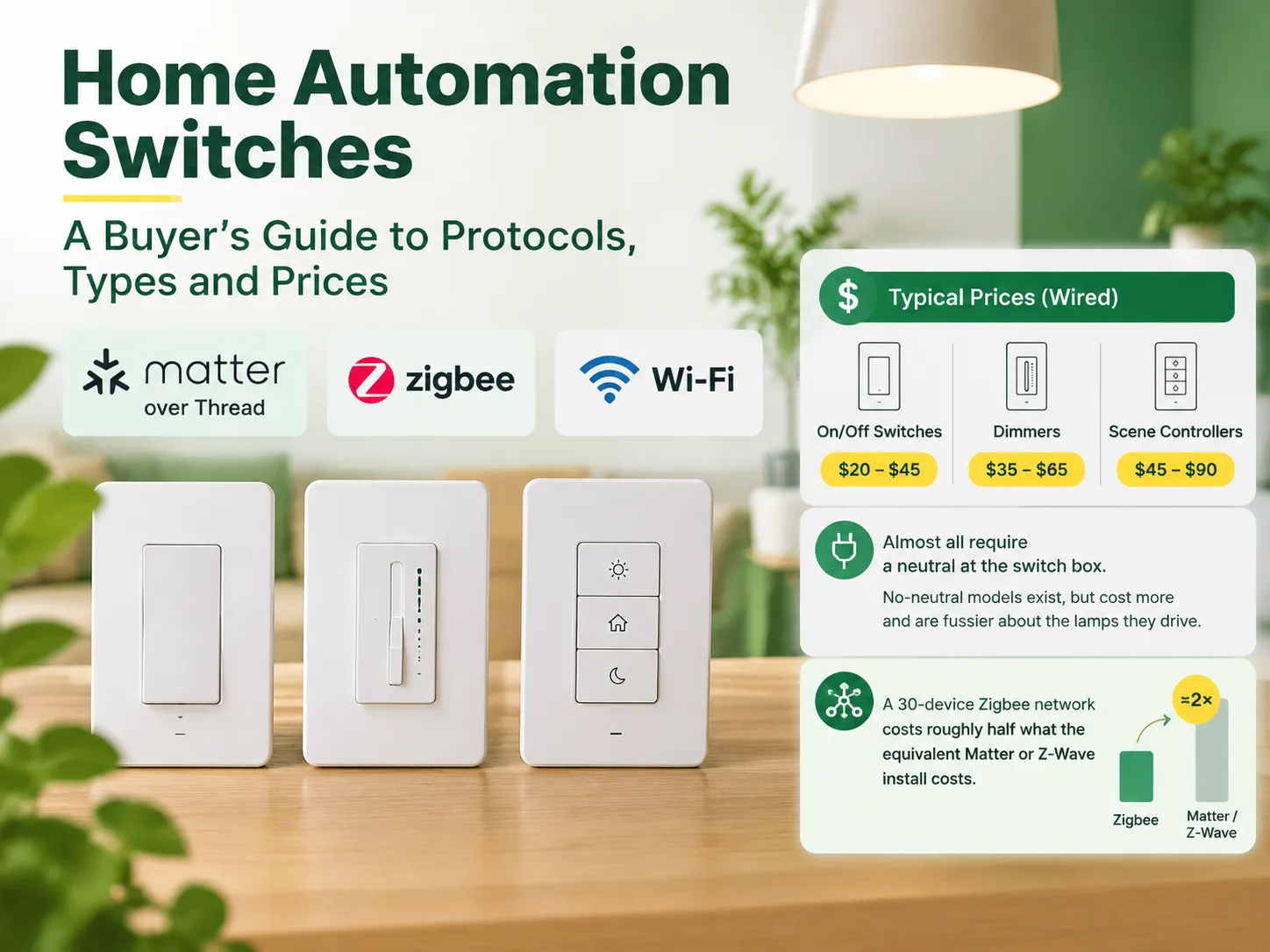
Покупка переключателя для домашней автоматизации — это не просто покупка светового переключателя. Для светового переключателя вам нужно выбрать только цвет и количество групп, которые вы хотите. Для переключателя автоматизации едва ли что-то так просто, так как вам также нужно выбрать протокол, систему хаба, есть ли существующая проводка […]


 Дорога Туочжан №6, пионерский парк Лэшанг, гавань залива Юэцинвань, город Юэцин, провинция Чжэцзян


