

Žica od dvanaest AWG i kola od dvadeset ampera se tako dobro uklapaju da se pitanja obično postavljaju iz drugog izvora. Može se desiti da instalater ima komad 12/3 preostao od ranijeg ožičavanja ili možda dobavljač ima samo 12/3 kablove na skladištu. Pitanje se postavlja da li prisustvo dodatnog provodnika ima posledice za domaće ožičavanje. Odgovor se čini jednostavnim, ali postavlja neka pitanja u vezi sa kodom koja utiču na korišćenje žica, uključujući ograničenja malih provodnika u Nacionalnom električnom kodu, način na koji žica od dvanaest AWG može preneti dvadeset ampera pre nego što se pojave problemi sa padom napona, koje prednosti može ponuditi dodatni provodnik i šta se može desiti ako se utvrdi da je provodnik premali. Sledeći vodič razmatra sve ove aspekte kao i zahteve za instalaciju utičnica.
Kratak odgovor: Uistinu, 12/3 bakarna žica je pogodna za kola utičnice od 20 A i odgovara minimalnoj potrebnoj veličini žice u Nacionalnom električnom kodu (NEC) pomenutom u Članu 240.4(D). “3” označava da kabl ima tri izolovane žice, tj. crnu, crvenu i belu, plus jednu goli uzemljivač. Dakle, potrebne su vam samo crna i bela žica u običnom kolu od 20 A, dok se crvena ostavlja neiskorišćena ili koristi u graničnom kolu. Očekuje se da će 12/3 žica biti 15-30% skuplja od 12/2, a druga žica utiče na proračune zapremine kutije. Što se tiče pada napona, 12 AWG dobro funkcioniše na 20 A do oko 40-50 stopa. Nakon otprilike 75 stopa, pad napona će premašiti 3% koji je odredio NEC za kola, i treba koristiti 10 AWG.
Metoda imenovanja električnih kablova je jednostavna jer zahteva samo dve cifre, koje su obe značajne.
Prva cifra označava debljinu žice koristeći Američki sistem debljine žice. Na primer; debljina žice od 12 AWG je bakarna žica širine 2,05 mm. Druga cifra označava koliko provodnika ima u žici. U primeru imena žice 12/3, to znači da postoje tri izolovana provodnika u ukupnom broju. U slučaju 12/3 NM-B kabla, tri provodnika su crna, crvena i bela izolovana. Takođe postoji četvrta žica koja je gola žica.
Dakle, 12/3 nije jedinstveni proizvod; već predstavlja jednostavan žicu od dvanaest kalibra. Stoga tip žice 12/2 u svom značenju i kvalitetima. U Americi boje žica određuju njihovu ulogu; crna i crvena žica su žice pod električnim pritiskom, dok je bela žica žica koja ne prenosi nikakvu struju, dok se gola koristi za povezivanje svih uređaja u potrebni krug. Konvencije koje se primenjuju na uređaje koje ovi provodnici napajaju obuhvaćene su u našem pregledu različitih vrsta prekidača koji se koriste u električnim instalacijama, a ista logika se primenjuje na ožičenje utičnica.
U situaciji kreiranja kruga za standardni električni uređaj od 20 A mora postojati jedna vruća žica, neutralna žica i gola efikasna uzemljenja. Stoga se može primeniti žica 12/2 i četvrta nije potrebna; međutim, postavlja se pitanje da li viška žica može uticati na rad kabla.

Smernice su sažete i jasne.
Ograničenja preopterećenja za male provodnike. Član 240.4(D) Nacionalnog električnog koda (NEC) postavlja ograničenja zaštite od preopterećenja za male provodnike, ograničavajući upotrebu 14 AWG na 15 ampera, 12 AWG na 20 ampera i 10 AWG na 30 ampera. Tako, zbog ograničene sposobnosti eliminacije toplote tokom rada, 12 AWG postaje preporučena žica za krug od 20 A dok 14 AWG ne može ispuniti ovu ulogu, iako je praktično sposobna to učiniti.
Ampacitet. Kada se razmatra ampacitet, ključno je uzeti u obzir tip provodnika kao i temperaturnu ocenu izolacije i uslove instalacije. Što se tiče 12 AWG bakra, može se osloniti na vrednost od 20 A navedenu u vezi sa 60°C i vrednost od 25 A povezanu sa 75°C. NM-B kabl se najčešće razmatra u vezi sa ocenom od 60°C, što znači da je 20 A tačno vrednost koja je potrebna, bez dodatne margine sigurnosti. Međutim, ako je ambijentalna temperatura previsoka ili su provodnici grupisani zajedno, smanjenje će početi da utiče na praktični ampacitet.
Provodnici koji nisu u upotrebi. Ništa ne zabranjuje korišćenje neiskorišćenih provodnika. Jedini zahtev je da takvi provodnici budu sigurno završeni, izbegavajući kratke spojeve.
Popunjenost kutije. U smislu popunjenosti kutije, ovde može nastati potreba za dodatnim provodnikom koja može izazvati određene troškove. Prema članu 314.16 Nacionalnog električnog koda (NEC), mora se uzeti u obzir zbir svih provodnika. Kada se uključuje izolovani četvrti provodnik u kablovskom prolazu, potrebno je proveriti da li će kutija moći da ga smesti.
Provodnik koji nije u upotrebi može se iskoristiti ako se pažljivo planira, kao što je objašnjeno u nastavku.
| Opcija | Kako to funkcioniše | Zahtevi i upozorenja |
|---|---|---|
| Zatvorite ga i ostavite | Završite crvenu žicu sa konektorom na oba kraja i označite je kao neiskorišćenu | Potpuno usklađeno; računajte je za popunjenost kutije; ostavite je dovoljno dugom da je kasnije identifikujete |
| Višefazni granački krug | Crna i crvena napajaju dva odvojena kruga koja dele jednu belu neutralnu | Zahteva dva neuzemljena provodnika na suprotnim fazama i istovremeno isključenje svih provodnika na panelu, obično putem dvopolnog prekidača ili odobrenog povezivanja; GFCI i AFCI aranžmani zahtevaju pažnju |
| Dva utičnica, jedan kabl | Napajajte prvu utičnicu na crnu, povežite u seriju na drugu poziciju na crvenu, ili podelite duplex utičnicu | Dozvoljeno gde kutija i ocena uređaja to omogućavaju; podeljeni duplex zahteva odvojivu tablicu i, u nekim konfiguracijama, dvopolni prekidač |
| Trofazno ili višelokacijsko prebacivanje | Koristite crnu i crvenu kao provodnike putnike između prekidača | Legitiman način korišćenja 12/3, iako je krug krug za osvetljenje, a ne krug za utičnice |
| 240 V krug | Crna i crvena kao dva neuzemljena provodnika, uzemljenje za sigurnost, bela zatvorena | Ne može služiti standardnoj 120 V utičnici; potrebna je 240 V naprava ili 240 V opterećenje |
Pogledajmo pažljivo višefazni granski krug jer je to razlog za kupovinu 12/3 kabla. To je vrlo tipična greška koja se pravi, stoga vredi pažljivo razmotriti. Kada dva kruga dele isti neutralni provodnik, struja kroz taj provodnik izjednačava dva kruga umesto da ih sabira, što funkcioniše samo kada su provodnici iz dve različite faze. Važno je ovo ispravno uraditi jer u suprotnom neutralni provodnik mora nositi ukupnu struju iz oba kruga, stoga zakon zahteva da se u takvim slučajevima krug odmah isključi iz napajanja, a korišćenje dvopolnog prekidača je uobičajena praksa u takvim slučajevima. U slučaju da višefazni krug napaja opremu koja bi trebala da se oslanja na GFCI prekidače, postaje mnogo složenije i zapravo mnogi električari odlučuju da ne koriste tu vrstu kruga u kuhinjama i kupatilima.
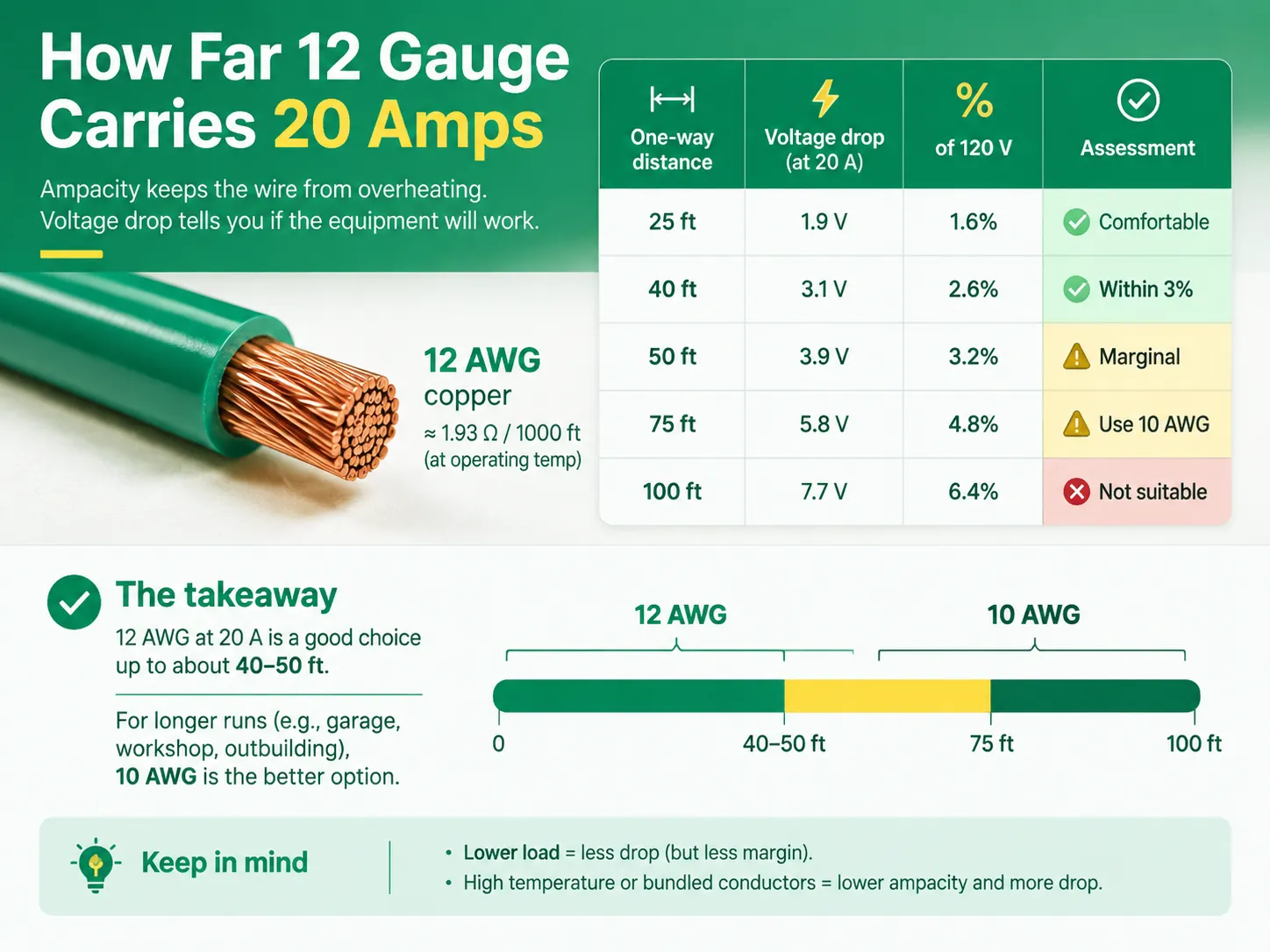
Ampacitet ukazuje da li će se provodnik pregrejati, dok pad napona određuje da li oprema na drugom kraju funkcioniše ispravno.
Prema NEC-u, pad napona u granskom krugu ne bi trebao da premaši 3%, dok ukupni pad napona od tačke usluge do tačke korišćenja ne bi trebao da premaši 5%. NEC stoga dozvoljava određenu varijaciju od ovih vrednosti u stambenom kodu, ali one i dalje postoje.
Razlog za gornje vrednosti je taj što oprema ne funkcioniše ispravno zbog niskih napona. Pri niskim naponima, motori se pregrevaju, elektronika se resetuje, a otpornik ne radi na očekivani način.
The twelfth gauge copper wire has a resistance of about 1.93 ohms per 1,000 feet at the operating temperature. In 120 volts circuit, the total voltage drop when carrying 20 amps is calculated as presented below.
| One-way distance | Approximate voltage drop at 20 A | Percentage of 120 V | Assessment |
|---|---|---|---|
| 25 ft | 1.9 V | 1.6% | Comfortable |
| 40 ft | 3.1 V | 2.6% | Within the 3% recommendation |
| 50 ft | 3.9 V | 3.2% | Marginally over the recommendation |
| 75 ft | 5.8 V | 4.8% | Too much; step up to 10 AWG |
| 100 ft | 7.7 V | 6.4% | Clearly unsuitable |
On a practical note, 12 AWG cables can handle up to approximately 40-50 feet and 10 AWG is suitable for lengths of about 75 feet or above. Since residential circuits have many receptacles that fall within this distance, the combination is considered standard. Distances in cases of circuits connected to the detached garage or some other outbuilding have to be calculated.
There are two factors involved in the decline in number. The first is that in a circuit that rarely draws the full 20 amps, there is less drop. However, designing on this assumption does not give you any margin for any errors. The other factor involves derating the conductors and the drop that is caused due to the wire’s background temperature or if the envelope has too many wires inside.
Failing in a known way, undersized conductors in a 20 A circuit help bring about the code’s strict insistence on 14 AWG wire.
The popular mistake is to install a bigger fuse to avoid nuisance tripping. However, it can be dangerous because in case of using 12 SWG wire with 20 A circuit connected to a circuit with 30 A fuse, wire will be able to heat up, and it will happen without activating the circuit breaker.
| Kabl | Use it for a 20 A receptacle circuit? | When to choose it |
|---|---|---|
| 14/2 | бр | 15 A circuits only; prohibited on a 20 A circuit by NEC 240.4(D) |
| 12/2 | Yes — the standard choice | Ordinary 20 A receptacle circuits; cheaper, easier to pull, less box fill |
| 12/3 | Да | When you need a second ungrounded conductor: multiwire branch circuits, 240 V loads, or traveller conductors |
| 10/2 | Yes — oversized | Long runs where voltage drop exceeds 3%, or high-temperature derating |
| 10/3 | Yes — oversized | 240 V circuits at long distance, or 30 A circuits |
A basic 20 A receptacle circuit likely calls for a 12/2 wire size. While you could use 12/3, this is actually unnecessary since normally there is no use made of the third conductor. If you have some 12/3 leftover, using it does not increase costs in principle apart from some additional box fill and some extra labor to run it through the framing.
When it comes to working with 12 AWG wire, note that the wire is generally stiffer than 14 AWG, as well as it bends more stiffly, leading to the complication of the installation.
The sequence below assumes a conventional daisy-chained receptacle circuit with the cable used in 12/2 fashion. Safe isolation and verification come before anything else, and the general technique — including how to identify conductors when colours are unconventional — is covered in our guide to replacing a light switch, which follows the same discipline.
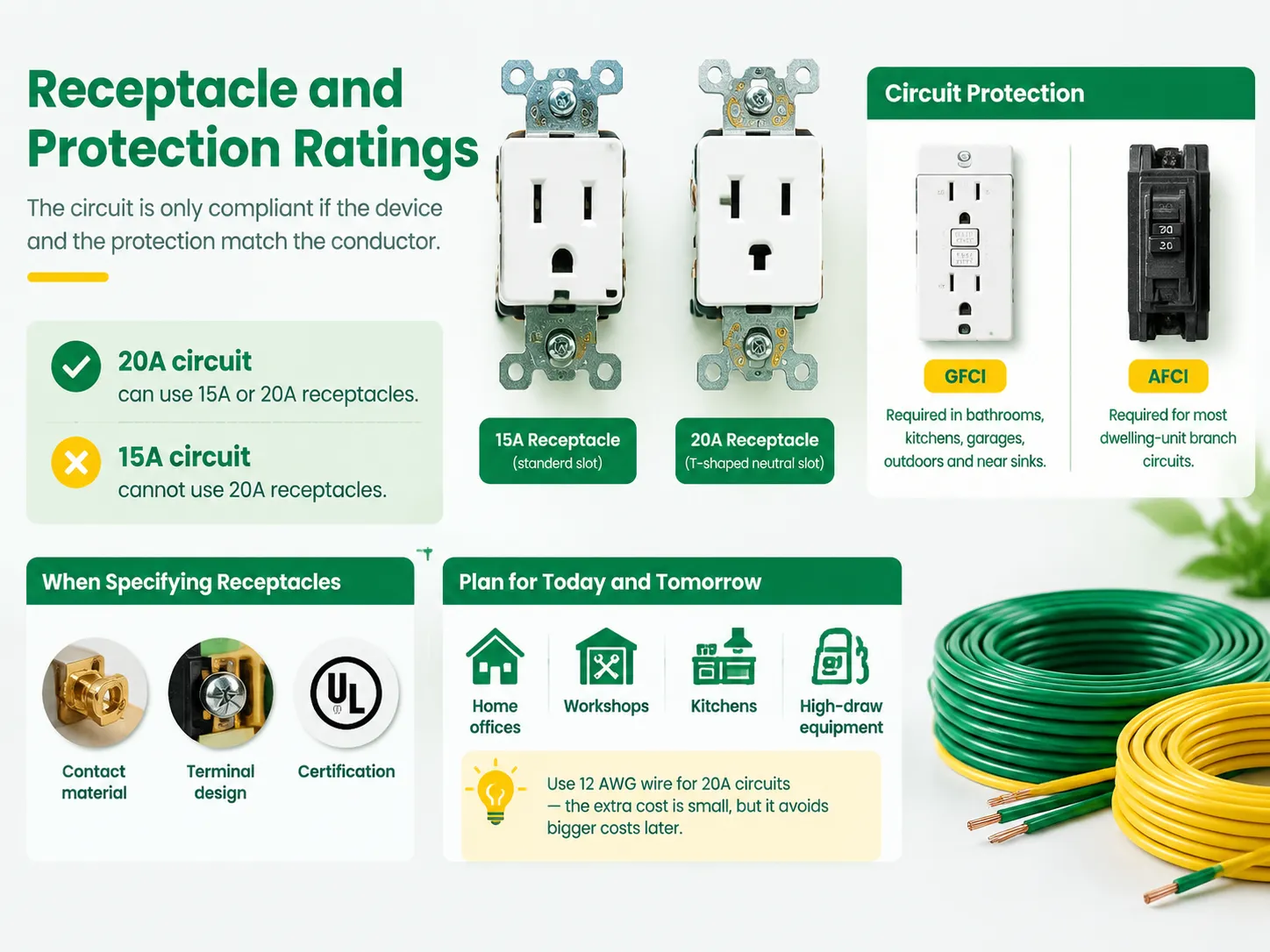
The circuit is only compliant if the gadget and the protection coincide with the conductor.
Receptacle Capacity. A 20 A circuit may have a 15 A receptacle in use. This may surprise some people, but 15 A receptacle is fit for transferring 20 A through to devices relying on it, hence, making it admissible for a 20 A circuit. Conversely, a 20 A receptacle should not be mounted on a 15 A circuit as the latter is not able to provide the power of the device. As to the majority of households, the difference will be seen in face style, which is the way the receptacle looks and in a certain quality of the device, which is better in most cases.
Where receptacles are being specified for a project rather than replaced one at a time, the selection criteria extend to contact material, terminal design, and certification — the same discipline set out in our guide to choosing an electric switch and socket manufacturer.
Capacity is the other half of that decision. Modern receptacle circuits increasingly support more than lamps and vacuum cleaners, and the load profile of the devices plugged into them is changing, as discussed in our article on USB zidne utičnice i brzo punjenje. Planning the circuit for that reality costs nothing at the wiring stage and a great deal later.
A representative example of how a modern device in this family is documented is our FS328-V dimmer specification, which is the level of detail a specifier should expect before committing a circuit to a device.
One final note for people who install a 20 A circuit: 20 A circuits are being used more often for home offices, workshops, kitchens, or any other location that has a lot of powerful appliances. The cost of using 14 AWG or 12 AWG wire is not much different when considering the cost of opening up a wall later, therefore it might be best to use twelve gauge.
Absolutely. Twelve-gauge copper is a universal wire for any typical 20 A circuit due to it (Secretary Committee (erroneous text: “due to its”), National Electric Code or NEC) being the lowest size acceptable by NEC under the rules for small conductors provided in Article 240.4(D). Standard wire assembly for a 20 A company is a 20 A receptacle using 12 AWG wire and protected with a 20 A breaker. The only requirement is the circuit protection shall follow the convention and must be calibrated at 20 A. This means one cannot install 12 AWG wire and substitute a 30 A breaker for a standard company operation since such actions would disable the protection provided to the wire.
In practice, twelve-gauge copper is the generally accepted wiring solution as well. An alternative solution for 20 A circuits would be ten gauge wire; however, this is only necessary for runs of wire longer than 75 feet where the voltage drop is nonnegligible, or if wire is exposed to high temperature or tightly bundled with other conductors. Fourteen-gauge wire cannot be used in 20 A circuits since according to Article 240.4(D) fourteen AWG wire only limits the performance at 15 A.
When it comes to 20 A current conduction capacity (ampacity), the answer is yes – conducted current is mainly limited by voltage drop rather than the distance. With regard to 20 A of conducted current, 12 AWG copper wires have nearly 3.9 V drop at 50 ft run length and nearly 5.8 V drop at 75 ft run. Therefore, the voltage drop ratio at 20 A of current conduction is approximately 3.2% and 4.8% respectively which allows for the distance of up to 40-50 ft for a 20 A current conduction along 12 AWG wire without any significant voltage drop. In case of longer wire runs it would be better to use ten AWG wire.
Yes, it is possible to install 12/3 wire to a socket as it does not contradict any regulations. One need only close the red wire to both ends in order to utilize it exactly the same way as it is done for 12/2 wires. Another alternative could be a multiwire circuit installation powered by 12/3 cable.
The installation will be highly unsafe, as well as not compliant with any wiring regulations. The thing is that under normal conditions nobody can use fourteen gauge wire for conduction of more than 15 A since Article 240.4(D) of the (wrong phrase: “the”) National Electric Code says that fourteen AWG wire is limited to 15 A. This is why current load will overheat the wire making it unfit for the installation.
For a circuit with a receptacle of 20 A that is made with twelve-three wire, it is permissible as well as reasonable and does not compromise whatsoever. Twelve AWG is the least that the code allows for a 20 A outlet and the extra insulated wire may or may not be used, and compliant capping can be done in two minutes. The important part of making the circuit safe is everything that surrounds the cable: a 20 A circuit being protected with a 20 A circuit breaker, wall socket that corresponds to output rating, GFCI or AFCI protection that is mandated by location, correctly torqued terminations, and run that is short enough for impedance to stay below three percent. If all the above is above board, then the question of whether to use 12/2 or 12/3 depends on convenience and cost rather than compliance.
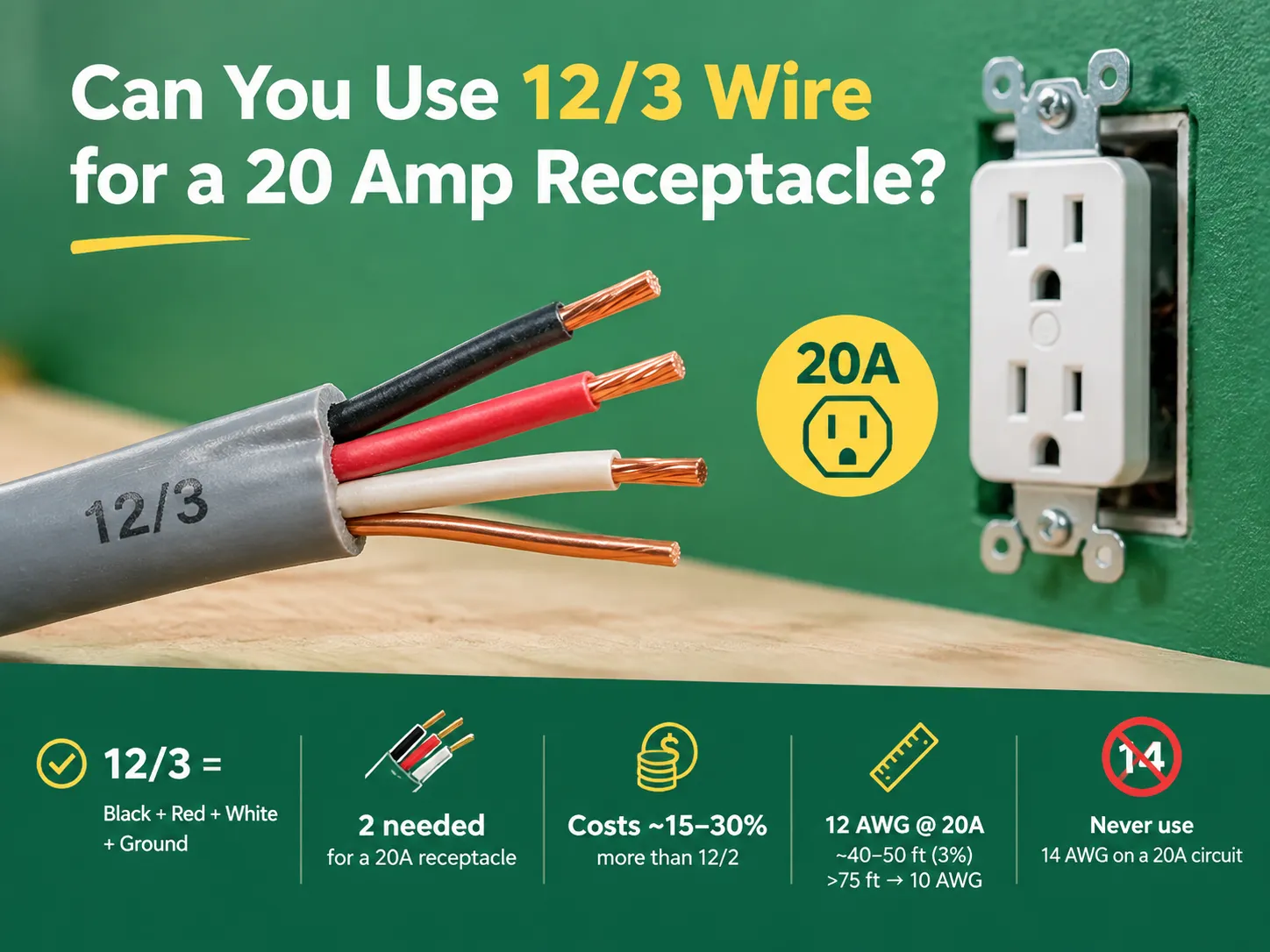
Twelve-gauge wire and twenty-amp circuits go together so well that the questions generally arise from a different source. It may be the case that the installer has a piece of 12/3 left over from an earlier wiring project or perhaps the supplier only has 12/3 cables in stock. The question comes up as to whether […]

Izuzetna situacija u sektoru električnih uređaja u Dubaiju, koja kombinuje uređaje prema britanskim standardima sa propisima iz javnog preduzeća, kao i nacionalnom agencijom koja nadgleda sprovođenje nacionalnih propisa, zahteva da uređaji budu sposobni da izdrže visoke temperature i vlažnost koje se javljaju u regionu zbog njegove obalne lokacije, kao i […]

“Koliko utičnica je dozvoljeno na 20 ampera?” je jedno od najpopularnijih pitanja koje ljudi postavljaju kada je u pitanju rad sa električnom energijom kod kuće. Nažalost, to je takođe jedno od pitanja na koje je najčešće pogrešno odgovoreno; većina ljudi bi dala broj zasnovan na ličnom mišljenju umesto […]

 Но.6 Туозхан Роад, Пионирски парк Лесханг, лука у заливу Иуекингван, град Иуекинг, провинција Зхејианг


