

Ako često putujete, verovatno znate da je pakovanje za Singapur jedna od najjednostavnijih stvari u Aziji, ali i jedna od najtežih jer koristi britanske utikače (umesto američkih). Da li vam je potreban transformator, adapter ili oboje zavisi od dva pitanja koja turisti obično mešaju.
Ukratko: U Singapuru se koristi utikač tipa G, koji se zasniva na britanskom BS 1363 standardu SS 145 sa istim karakteristikama. Napon napajanja u Singapuru i frekvencija su 230 V i 50 Hz. Posetioci iz Velike Britanije, Irske, Malezije, Hong Konga i nekih zalivskih država neće trebati ništa. Posetioci iz SAD-a, Kanade i Japana treba da koriste adapter i provere napon. Tako će uređaji sa napajanjem od 120 V biti oštećeni. Posetioci iz evropskih zemalja, Australije i Novog Zelanda će trebati samo adapter, jer je napon isti.
Raspored tri pravougaona pina u Type G je jedinstven. Dva ravna pina na dnu su postavljena da služe kao živi i neutralni pinovi, dok duži pin na vrhu služi kao uzemljeni pin. Razlog za duži uzemljeni pin je taj što omogućava da se uzemljenje uspostavi pre nego što se uspostavi živa veza.
Svi utikači u Singapuru se pridržavaju ovog obrasca i poseduju jedinstvene dizajnerske karakteristike koje ih čine jednim od najsigurnijih utikača na svetu. Glavne karakteristike uključuju:
Šira slika o tome kako se oblici utikača razlikuju globalno — i zašto postoji petnaest nazvanih tipova umesto jednog — postavljena je u ovom pregledu različitih tipova zidnih utičnica i gde se svaka od njih koristi.
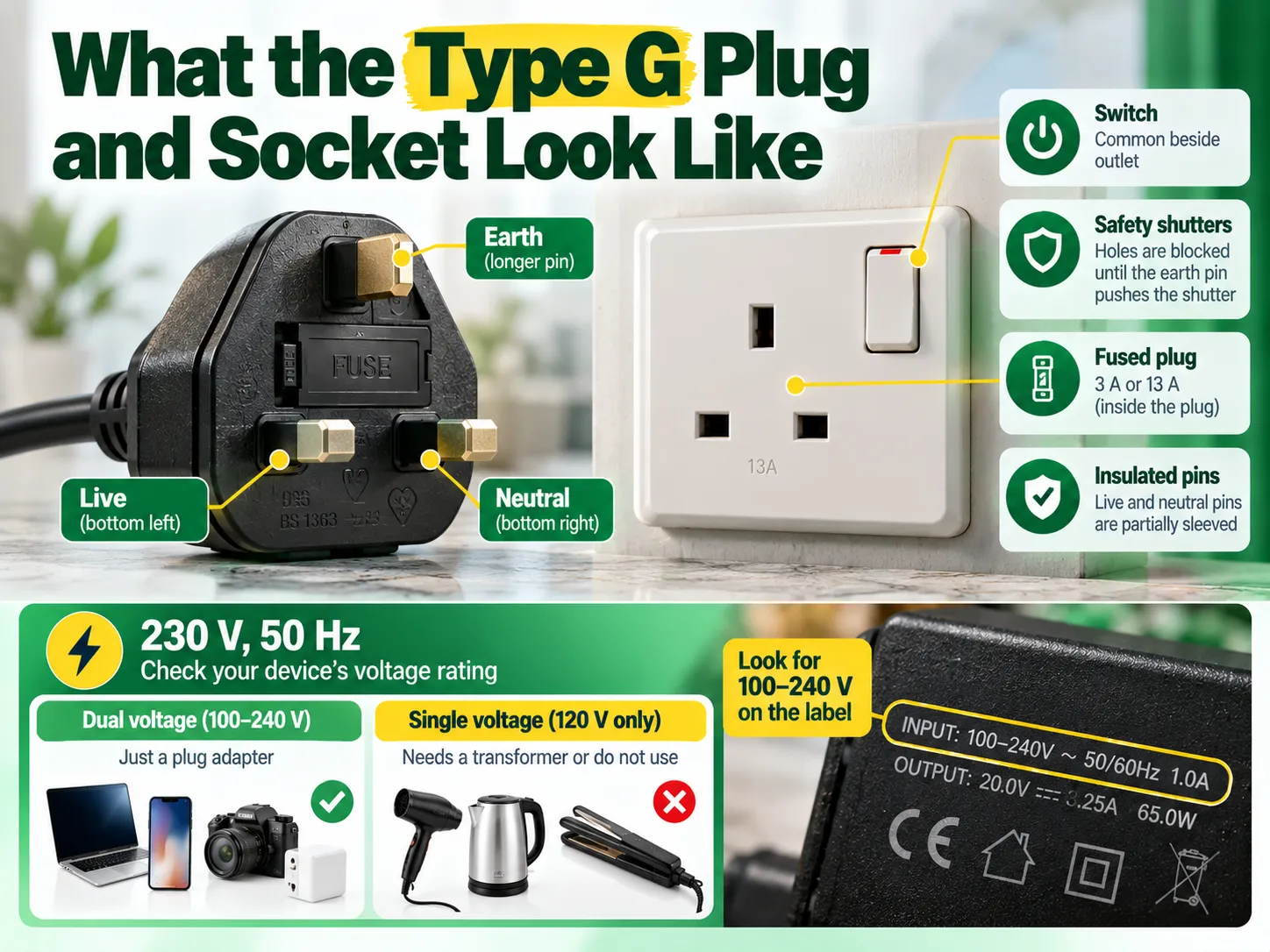
Singapur se napaja strujom od 230 V, 50 Hz, što je u skladu sa evropskim standardima, za razliku od Severne Amerike. Mrežu upravlja SP Group i poznata je kao jedna od najstabilnijih mreža na svetu. Isporučeni napon je gotovo uvek unutar nekoliko procenata nominalne vrednosti.
Ova brojka implicira dve važne stvari:
Da biste izbegli probleme prilikom putovanja u Singapur, obavezno potražite oznaku za dvostruki napon. Većina laptopova, punjača za telefone, punjača za kamere, punjača za električne četkice za zube i prenosivih zvučnika iz poslednje decenije dizajnirana je da radi u opsegu od 100 – 240 V, 50/60 Hz i stoga će zahtevati samo adapter za utikač kada se koriste u Singapuru. Jedini uređaji koji imaju potencijalni rizik od kvara su oni koji direktno troše struju (fenovi, pegla, kuvala itd).
Ovde većina konfuzije nestaje, jer odgovor zavisi isključivo od toga odakle dolazite.
| Dolazeći iz | Vaš tip utikača | Da li je potreban adapter? | Волтаге |
|---|---|---|---|
| Velika Britanija, Irska, Malezija, Hong Kong | Tip G | бр | Odgovara na 230 V |
| UAE, Katar, Bahrein, Kuvajt, Oman | Tip G | бр | Odgovara na 230 V |
| Saudijska Arabija (novije zgrade) | Tip G | Обично не | Odgovara |
| Evropa (tip C, E, F), Italija, Švajcarska | Okrugli pinovi | Да | Odgovara — samo adapter |
| Аустралија, Нови Зеланд | Тип I | Да | Odgovara — samo adapter |
| SAD, Kanada | Tip A / B | Да | Neodgovara — proverite svaki uređaj |
| Јапан | Tip A / B | Да | 100 V — konverter potreban za neke uređaje |
| Индија | Tip D / M | Да | Odgovara — samo adapter |
Ako vaša zemlja koristi tip G, moraćete da ponesete svoje punjače i ostavite adapter kod kuće. Ako vaša zemlja ne koristi tip G, postoji samo jedan tip G poklopac za celo putovanje — Singapur nema regionalne varijacije kao neke veće zemlje. Potpuna regionalna podela, uključujući koje delove sveta dele koji standard, obuhvaćena je u ovom vodiču za tipova utikača i utičnica po regionima.
Ne, i ovo je najskuplja pretpostavka koju putnik iz Severne Amerike može napraviti. Tip A utikač iz Sjedinjenih Država ima dva ravna i paralelna oštrica i ne uklapa se u tip G utičnicu jer je utičnica udubljena i njeni zatvarači se uopšte neće otvoriti. Štaviše, tip B utikač sa svojim okruglim uzemljenim pinom takođe neće raditi.
Napon je važniji od ovoga. Ako se uređaj iz SAD-a, koji je ocenjen samo za 120V, poveže na 230V putem jeftinog adaptera, doći će do kvara. Stoga, ispravan redosled operacija za putnika iz SAD-a je sledeći: prvo koristiti adapter, a zatim proveriti oznaku svakog uređaja pre nego što ga priključite. Razlike između severnoameričkih konfiguracija i ostatka sveta su objašnjene u ovom objašnjenju o severnoameričkom tipu utičnice, which is worth reading if you are deciding whether a device will travel at all.
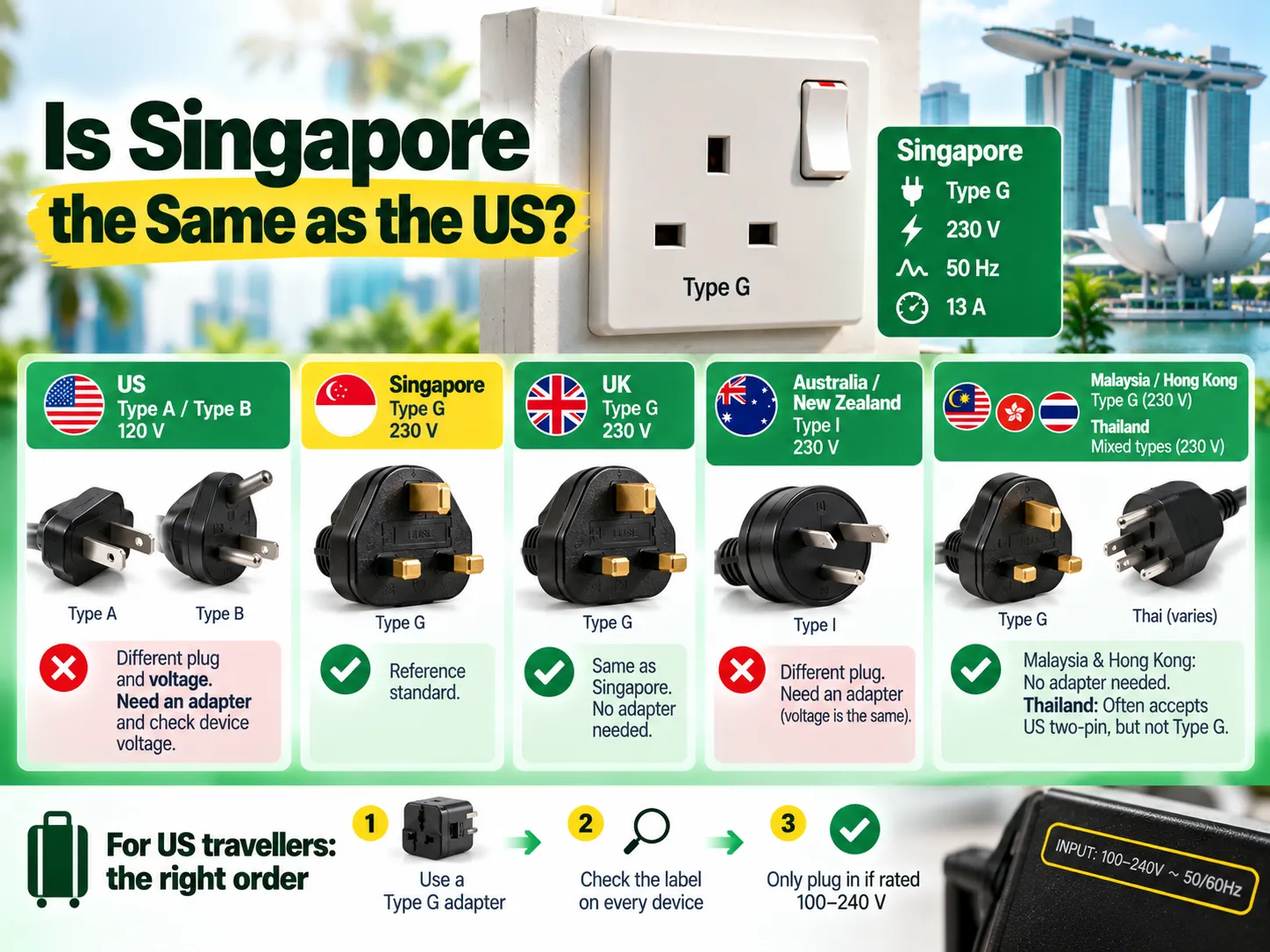
Just like the UK: yes, absolutely. Singapore adopted British standards, meaning that the connectors, sockets, fuses and other power supply infrastructures are the same. So if you have an appliance from the UK, you can use it in Singapore without needing anything else.
Just like Australia: no. Australia and New Zealand use standard I, with three flat pins, and with the exact same voltage and frequency (230 V / 50 Hz) — naturally, the voltage is the same, and you would just need a plug adapter for Type I.
Just like its neighbors: mixed. Malaysia, Hong Kong, and Brunei also use G without needing adapters, while in Thailand, things are different, as there are many different plug types used, depending on the building. Thus, a Thai socket can sometimes accept a US two-prong plug without an adapter, but may not be suitable for G. That kind of regional inconsistency is exactly why travel itineraries through Southeast Asia need more than one adapter even though the voltage stays broadly the same across the region, as set out in this guide to the socket types used in Thailand.
This mistake is the one that can result in a person losing a laptop. A plug adapter only changes the shape of the connector being used; it doesn’t contain any electronics. But a voltage converter changes the voltage from 230V to 120V. If you buy the wrong one, your appliance will fit well only to burn out immediately after.
Cost of appliances in Singapore: plug adapters range from 5-30 SGD while voltage converters and converters for 120V appliances start at 30 SGD onwards (depending on the wattage). If your appliance is a dual-voltage one, it means that it is 10 SGD device, not 100 SGD.
Pay attention to adapters sold in airports. Plug Type G that is sold in the shop for 5-10 SGD will be priced upper 15-30 SGD in Changi, and uncertified plugs will have greater overheat and an electrical short-circuit risks than certified plugs. Opt for certified adapters with a fuse instead of picking the cheapest one on the market. The same logic applies to the European systems, where the differences between Type C, Schuko and the French and Italian variants catch people out — covered in this breakdown of Evropski električni utikači i utičnice if your trip continues onward from Singapore.
Most plug types ensure protection of the wiring behind the wall. However, Type G goes a step further and protects the appliance itself, as it has the fuse in the plug rather than in the panel. This is why you can find both 3 A and 13 A fuses on sale in every supermarket in Singapore, and also why a UK appliance with a 3 A fuse cannot power a 2-kW heater.
For a manufacturer or importer, this means compliance and not travelling. Plugs sold in Singapore need to have an adequate fuse for the load and devices that are to be installed permanently should have appropriate certification and the EMA SAFE mark. The power outlets should have a shutter system as well. Mistakes here lead to customs problems and disruptions related to shipment.
The coverage is acceptable and becoming better but it is still not consistent.
In case you are staying at a hotel that is on the older side or need more devices to be powered by one electrical socket, it is better to go for a power strip rather than buy an additional adapter.
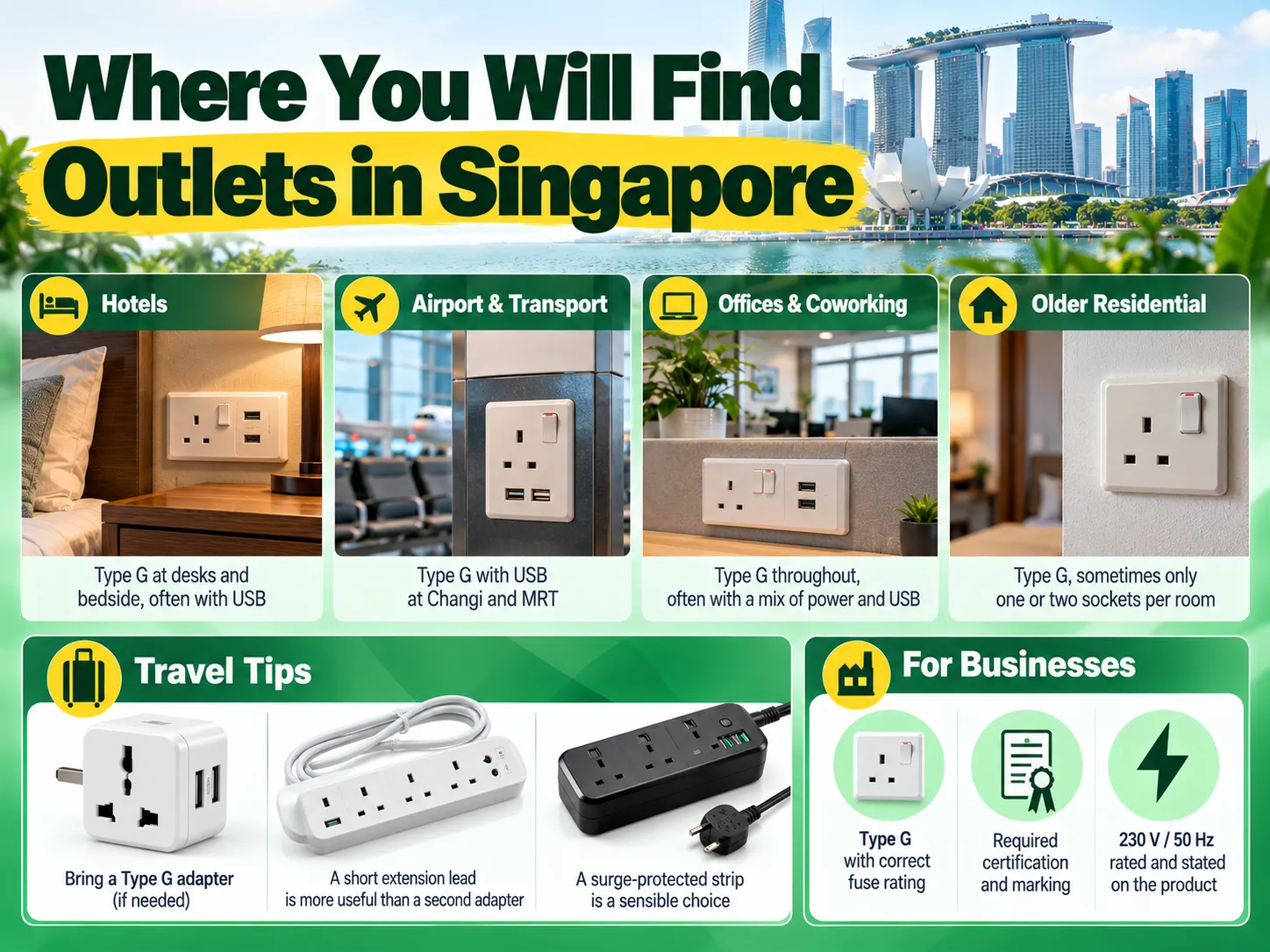
The sale of a product for permanent use depends on three requirements:
A reusable multi-region adapter does not qualify as a travel adapter. A travel adapter is a consumer gadget whereas a shuttered Type G socket rated for 13 A is a different product made under a different standard. The use of one related to another causes the failure of a compliant order at the border.
The type G adapter with three rectangular pins arranged in a triangular shape by itself won’t be needed unless, of course, you are coming from the UK, Ireland, Malaysia, Hong Kong or one of the Gulf states. It would be advisable to get a Type G fused adapter instead of unfused, as not only is it available at a price ranging anywhere between S$5 to 30 but you’re better off buying it in your home country rather than at the airport where it would be two to three times more expensive.
Type G is standardised under SS 145 standards and is largely similar to British BS 1363. Type G has three rectangular pins, the use of an in-plug fuse, sleeved live and neutral pins, and shuttered sockets, with a voltage of 230 V and 50 Hz.
No. The Type A and Type B plugs in the United States will not fit the Type G sockets in Singapore, and their voltages are different – 230 V versus 120 V. American visitors will require a universal plug adapter and must ensure that every device works on voltage ranging from 100 to 240 V. If one-plug appliances are used, they will get destroyed.
No, in Australia, plug type I is used, which has three flat pins arranged in a V shape. Because the voltage and frequency settings in Australia are identical at 230 V / 50 HZ, this means that in Australia, an adapter would be sufficient. However, because the pins are physically different, such as in shape or size, this form of connection will not work in Australia and therefore it must be used.
The voltage and the plug type used in Singapore are Type G 230V 50Hz. Unlike the North American plug which is a different voltage altogether, its shape also varies from that used in Australia. From your travel itinerary, you can deduce what kind of a plug you will need for your appliances. If you are coming from a Type G country, no adapter is necessary. If you are from a 230V country, an adapter will suffice. If your previous destination was a 120V country, you will need an adapter plus careful examination of the appliance tags.
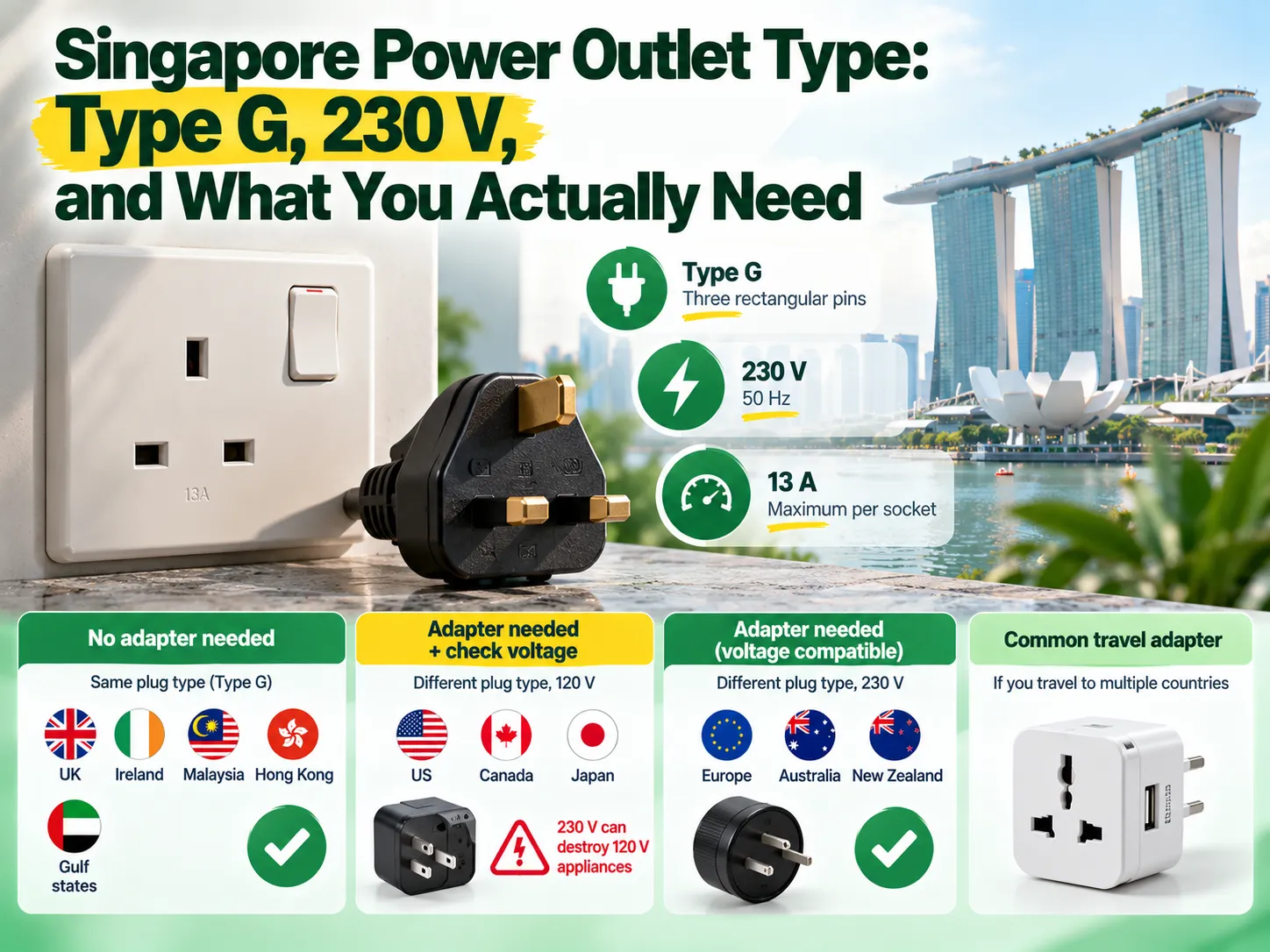
If you travel often, then you probably know that packing for Singapore is one of the simplest things to do in Asia, but also one of the most difficult because it uses UK-type plugs (instead of the US-type ones). Whether you need a transformer, a plug adapter or both depends on two questions that tourists […]
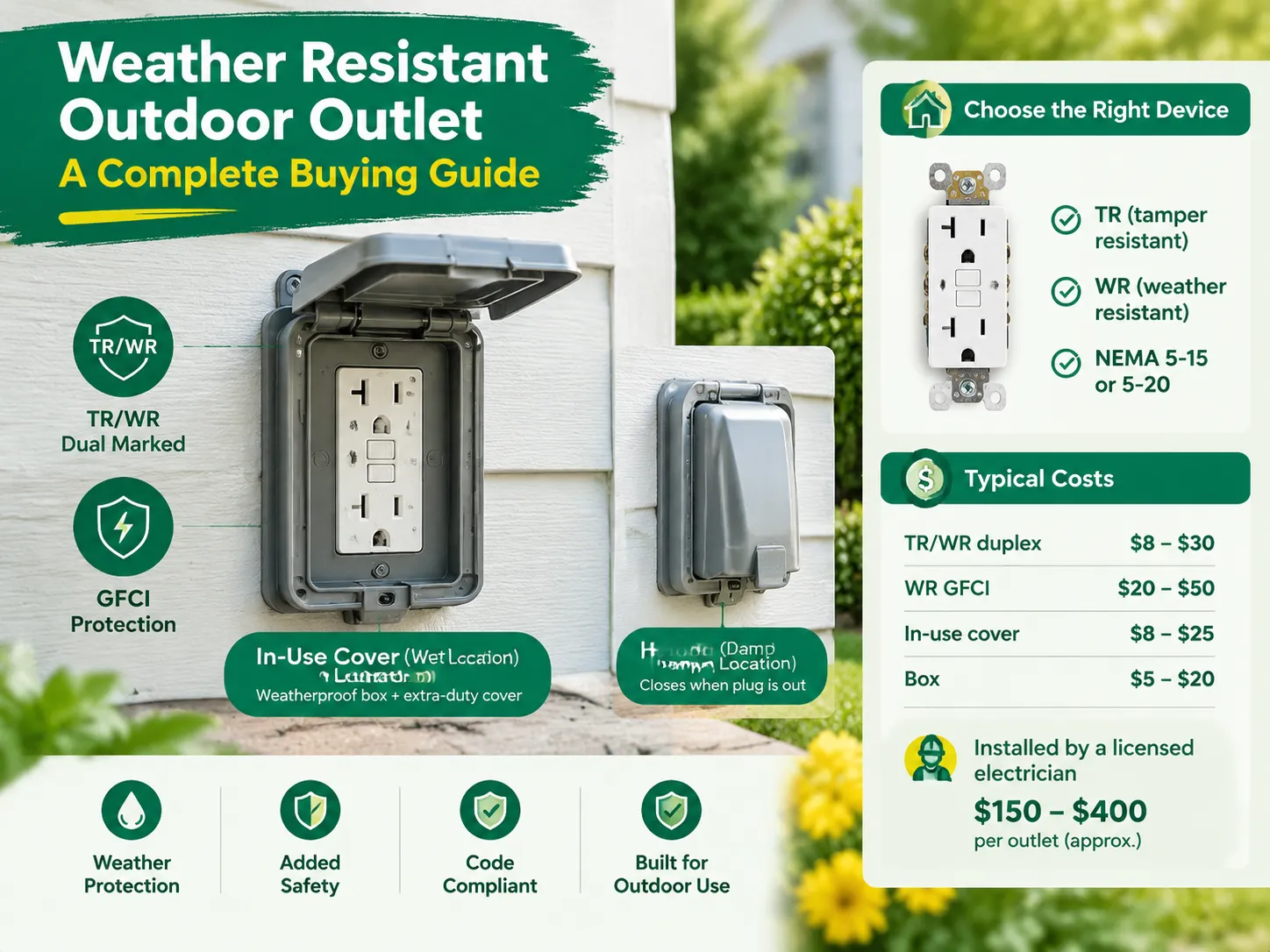
Vodootporne spoljašnje utičnice ne treba mešati sa običnim spoljašnjim utičnicama. Iako se ove spoljašnje utičnice mogu smatrati WR-tipom spoljašnjih utičnica, one takođe dolaze sa kućištem koje obezbeđuje njihovu vodootpornost sa ili bez uređaja. Pored toga, spoljašnja utičnica treba da bude otporna na vandalizam i da uključuje RCD. Svaka vremenski otporna utičnica treba da bude identifikovana […]
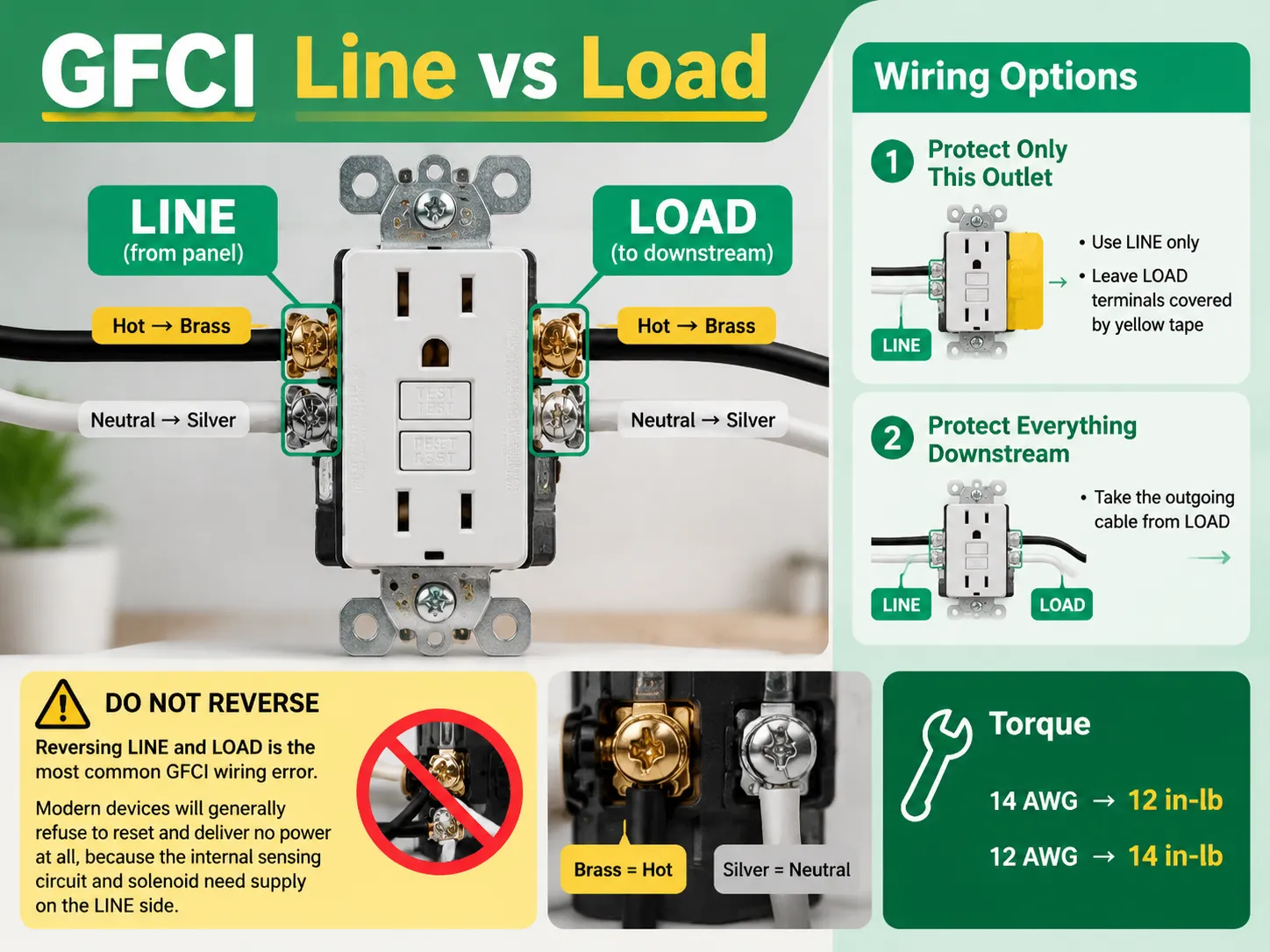
Dva tipa priključaka mogu definisati kako GFCI utičnica funkcioniše: Jedan priključak je za pojedinačnu utičnicu, a drugi priključak može zaštititi nekoliko utičnica iz jedne GFCI utičnice po istoj ceni. Korišćenje odgovarajućeg priključka omogućava vam da iskoristite uštede troškova korišćenjem jedne GFCI, dok korišćenje […]

 Но.6 Туозхан Роад, Пионирски парк Лесханг, лука у заливу Иуекингван, град Иуекинг, провинција Зхејианг


