

Nya Zeeland är en liten men distinkt elektrisk marknad. Om du köper smarta strömbrytare i Nya Zeeland, hanterar du en kontaktstandard som är annorlunda än någon annanstans i världen, en godkännandeprocess med sin egen pappersarbete, och ett ledningssystem som utesluter hälften av de smarta strömbrytarmodeller som finns tillgängliga utomlands. Denna artikel kommer att svara på vilken typ av system som används i landet, vem som säljer dem, och vad ‘smart’ betyder i Nya Zeeland. Den kommer också att diskutera den utan-neutral fällan som förvirrar de flesta köpare, priser i NZ-dollarn och pappersarbetet som måste kontrolleras innan några betalningar görs.
Kort sagt: Nya Zeeland använder 230 V / 50 Hz elektricitet som levereras genom AS/NZS 3112 Typ I uttag som har tre platta stift och är olika från kontakter som finns i Europa, Storbritannien och Nordamerika. Alla strömbrytare är designade enligt AS/NZS 3133-standarder och följer de grundläggande krav som anges i AS/NZS 3100. Elektriska apparater måste ha ett överensstämmelseintyg till WorkSafe NZ och bära en RCM-märkning. De främsta aktörerna på marknaden är Schneider Electric-produkter som PDL, Iconic, 600-serien och Saturn. Samma märken producerar produkter under Clipsal, HPM av Legrand och andra etiketter. Den genomsnittliga kostnaden för en vanlig strömbrytare är NZ$14-48 och den smarta strömbrytaren kostar NZ$60-150 plus kostnaden för installation av en elektriker på NZ$80-120. Allt arbete med den fasta ledningen måste utföras av en kvalificerad elektriker.
Det viktigaste som man bör förstå om Nya Zeelands elektriska utrustning är att den inte är brittisk eller europeisk även om 230 volt ser tillräckligt bra ut för att tillhöra Europa. Konfigurationen av Nya Zeelands kontakt följer AS/NZS standard 3112, som har tre platta stift i form av en triangel där två levande stift är installerade i en vinkel och ett stift är rakt. Det andra landet som använder denna konfiguration är Australien. Nästan ingen annan använder det.
| Parameter | Nya Zeeland | Praktisk konsekvens |
|---|---|---|
| Nominell spänning | 230 V (240 V nominellt i äldre dokumentation) | Kompatibel med europeiska/australiensiska enhetsbetyg, inkompatibel med 120 V nordamerikansk utrustning |
| Frekvens | 50 Hz | Ej utbytbar med 60 Hz utrustning där frekvensen är viktig |
| Kontakt- och stickproppstandard | AS/NZS 3112, Typ I | Tre platta stift; ingen europeisk eller brittisk kontakt passar |
| Typisk stickproppsbetyg | 10 A standard, 15 A för tyngre användning | 10 A vid 230 V är cirka 2,300 W per uttag |
| Typisk strömbrytarbetyg | 10 AX / 20 A beroende på sortiment | Strömbrytarbetyg överstiger ofta stickproppsbetyget, vilket är viktigt för belysningslaster |
| Terminologi | “Strömpunkt”, inte “uttag”; “central”, inte “panel” | Användbart när man skriver en specifikation eller pratar med en lokal elektriker |
| Grounding | Obligatorisk jordning på stickproppskretsar | Ingen tradition av ojordade uttag som i vissa europeiska marknader |
Innan några inköp görs, är det tillrådligt att känna till en ledningskonvention: i den stora majoriteten av hemmen i Nya Zeeland är belysningskretsen inställd för att slutföra slingan vid taket istället för vid strömbrytaren. Denna punkt kommer att utvecklas vidare någon annanstans i denna guide eftersom det är den största boven när det gäller att smarta strömbrytare inte fungerar korrekt i Nya Zeelands hem.
Marknaden för ledningstillbehör i området är mer oligopolistisk än vad internationella kunder förväntar sig. Några varumärken genererar det mesta av utbudet.
| Märke | Sortiment | Position på NZ-marknaden |
|---|---|---|
| PDL av Schneider Electric | Ikonisk, Iconic Styl, Iconic Essence, 600-serien, Saturn | Marknadsledaren. Ett nyzeeländskt märke sedan mitten av 1900-talet, en del av Schneider Electric sedan 2001, och fortfarande det självklara valet för Kiwi bostads- och lätt kommersiellt arbete |
| Clipsal | Ikonisk, Solis, 2000-serien | Schneiders australiensiska syskonmärke, som säljs i stor utsträckning i NZ med överlappande produktfamiljer |
| HPM av Legrand | Aqua Life, Excel Life | Legrands australiska märke; starkt inom väderbeständig och utomhusväxling |
| Legrand | Excel Life, Arteor | Designledda och kommersiella serier, ofta specificerade för premiumprojekt |
| Schneider Electric | Resi9, Wiser | Skyddsenheter och Wiser smarta hemplattform som PDL-enheter integreras med |
| Specialist- och importerade märken | Shelly, Fibaro, Aeotec, Philips Hue och liknande | Retrofit och DIY-nära smart kontroll; certifiering och supportkvalitet varierar kraftigt |
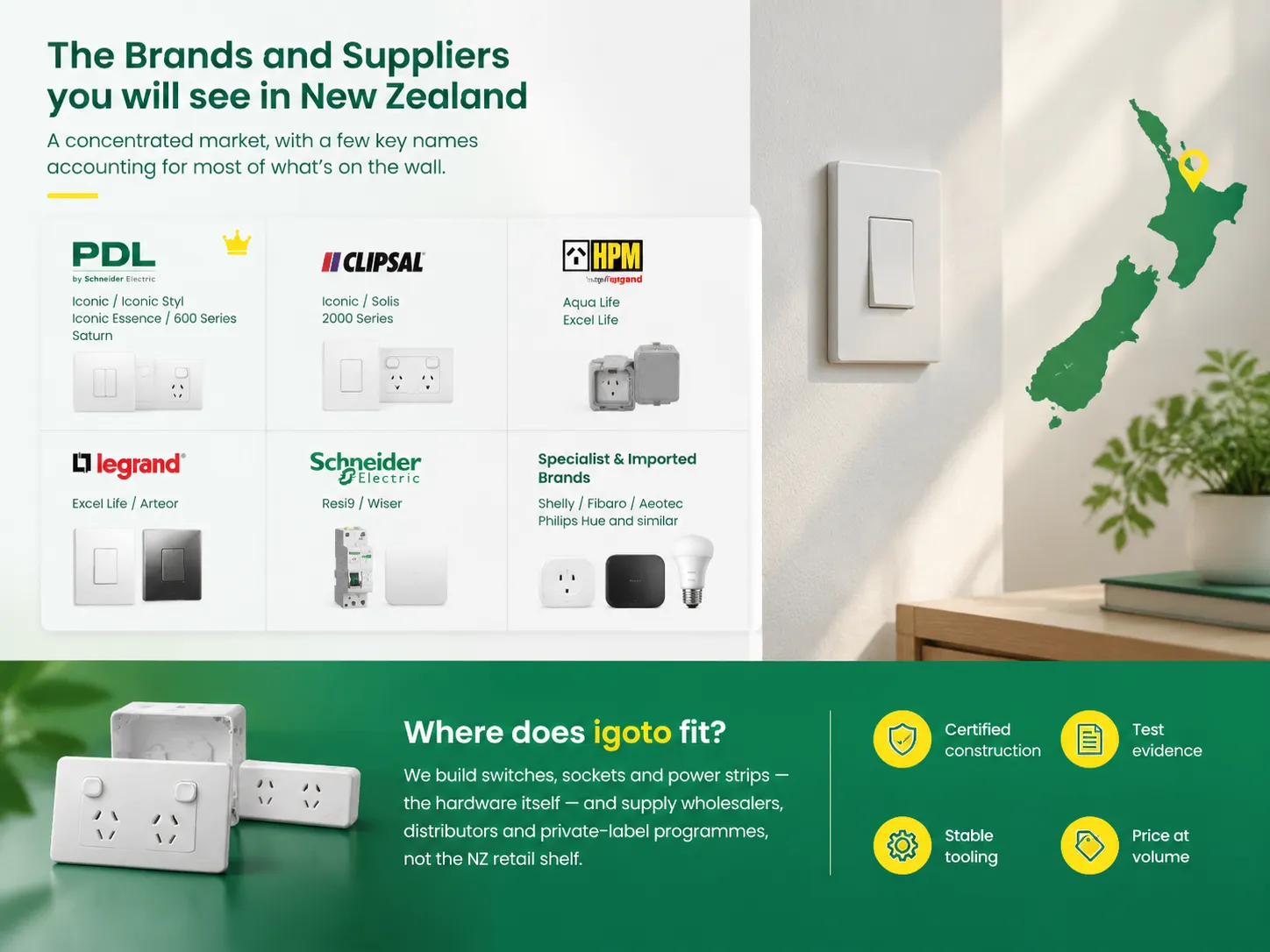
Komponentsegmentet ligger precis under det ovan; det består av saker som strömbrytare, uttag och grenuttag som tillverkas av leverantörer som riktar sig till grossist- och privatmärkesverksamheter, snarare än detaljhandelsmarknaden. igoto verkar inom detta segment. Det är viktigt att påpeka här att båda företagen kan lösa olika uppgifter. Om uppgiften är att hitta en lösning som kan integreras med en redan befintlig installation, är det bättre att välja varumärket som äger lösningen eftersom det är här billiga enheter tenderar att stöta på problem. Å andra sidan, om uppgiften är att köpa strömbrytare och uttagsutrustning i större skala, eller använda en privatmärkesproduktlinje, handlar det om komponenttillverkning. Testet som ska tillämpas är detsamma oavsett, och det anges i hur man bedömer en tillverkare av strömbrytare och uttag, oavsett vilken marknad du köper för.
Tre olika alternativ kan klassificeras under termen “smart”, vilket leder till att människor köper fel produkt för sina behov.
Protokollen som används för att ansluta system här är relativt enkla, med Bluetooth som används för lokal hantering, Zigbee för mesh-nätverksändamål, Wi-Fi för alla enheter som är anslutna över molnet, och Z-Wave-protokollet i äldre installationer. På marknadssidan är varje av Apple HomeKit, Google Home, Amazon Alexa och Home Assistant-plattformarna ganska friska, och PDL-enheter kommunicerar genom Wiser-ekosystemet. Det är extremt svårt att få ut det mesta av enheterna, och därför kan det kosta en förmögenhet att göra fel val i början, eftersom att matcha plattformen kan vara ett extremt kostsamt misstag som man helst vill undvika till varje pris.
Ansluten hårdvara sitter i enhetslagret snarare än plattformsnivån. En Wi-Fi smart gardin- och dimmerströmbrytare är ett bra exempel på typen: specificerad av en installatör eller distributör för att göra ett jobb bra, inte byggd för att äga ett ekosystem. Den distinktionen betyder vanligtvis mer än funktionslistan, eftersom en enhet som försöker vara en plattform tenderar att bli varken eller.
Detta är problemet som förvirrar majoriteten av människor, men att lista ut detta är långt mindre kostsamt nu än när det är dags att installera enheter.
En vanlig belysningskrets i Nya Zeeland fungerar annorlunda. Med denna typ av kablage går strömmen till takrosen eller ljusarmaturen innan den kopplas ner till switchboxen. Detta är okej för gammaldags strömbrytare, eftersom de bara fungerar genom att bryta en ström, men det är ett problem för många typer av smarta strömbrytare som kräver en neutral ledning för att driva elektroniken.
Nu, låt oss gräva djupare i denna fråga.
De angivna priserna baseras på rekommenderade detaljhandelspriser i Nya Zeelands dollar enligt den aktuella NZ-elförsörjningslistan och installationsprisriktlinjer. Handels- och volympriser är vanligtvis lägre.
| Artikel | Produktkostnad (NZD) | Installation (NZD) |
|---|---|---|
| Standard väggströmbrytare, 1-gång (t.ex. PDL Iconic) | $14 – $16 | $80 – $120 per strömbrytare (om det behövs) |
| Standard väggströmbrytare, 2-gång | $24 – $48 | $80 – $120 per strömbrytare |
| Premium finish strömbrytare (Iconic Essence, Iconic Styl) | $35 – $50 | Samma som standard |
| Väderbeständig strömbrytare, IP44 – IP66 | $36 – $58 | Platsberoende |
| Smart ljusströmbrytare (ansluten) | $60 – $150 styck | $80 – $120 per strömbrytare |
| Smart dimmer switch | $80 – $200 each | $80 – $120 per strömbrytare |
| USB powerpoint (USB-A / USB-C) | $40 – $80 each | $80 – $100 per point |
| Smart thermostat (for context) | $200 – $400 | $150 – $250 |
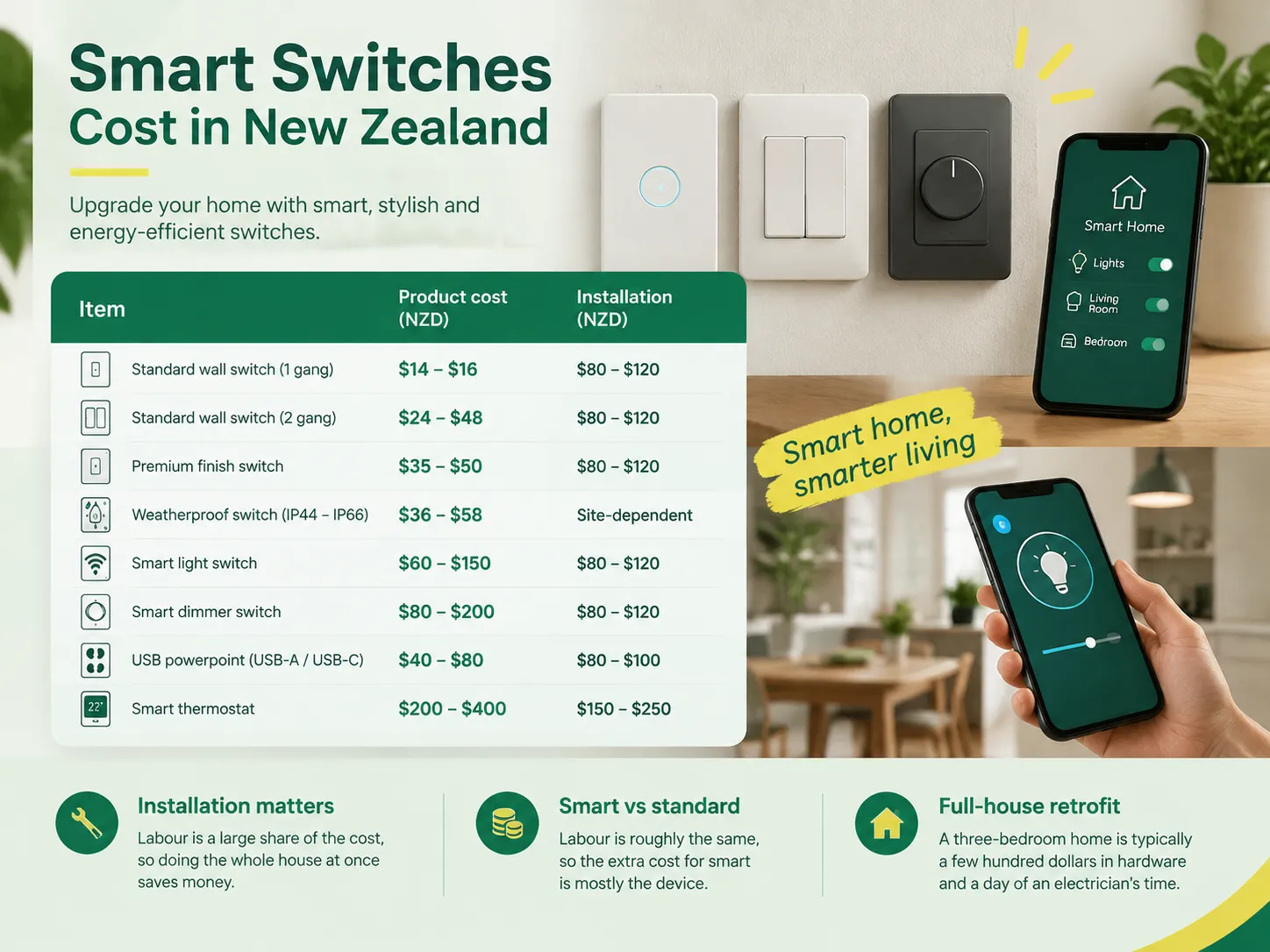
Two things that are really important to highlight. The cost of the installation is considerable, so changing an entire house at once is much cheaper than doing it in a room-by-room fashion because the electrician is already available for the work, meaning the switchboard can remain open. Also, the difference between a $15 switch and a $120 one is completely due to the cost of the hardware as the installation will last about the same amount of time for both options.
So in the case of a full-house installation, one can have a sensible budget for a three-bedroom house in several hundred dollars of hardware plus a day working for an electrician, depending on the number of switches that require replacing and the wiring processes. Combining other work to be done at the same time is where the hourly rate will be well paid off.
The New Zealand’s electrical safety guidelines come as nothing less than rigid, and imported smart switches have proven to be a frequent source of compliance issues. The following six points are worth verifying:
The certification documents belonging to these products specify the ratings for each model and very often contain information about certain compatible grid, cover, and mounting accessories that are being part of the certified combination. It may seem to be insignificant, but this aspect should not be overlooked. In modular systems, the certified product may be a combination of the switch and a compatible grid or the cover rather than the switch itself. This means that by installing the wrong cover in the modular system, a person may be violating the certification.
| Situation | What I would specify | Varför |
|---|---|---|
| Rental property | Standard modular switch range, robust finish | Cheap to replace, easy to source, survives tenant wear |
| Owner-occupied family home | Standard range plus smart switches at key positions (entry, living, bedroom) | You get the convenience where it is actually used, without paying for it in every room |
| Older villa or heritage interior | Premium finish range that suits the period detail, or a relay behind the existing plate | Preserves the appearance; hardwired replacement risks visual mismatch |
| New build | Full modular range, neutral run to every switch position, smart-ready grid | Future-proofing costs almost nothing at first fix |
| Coastal or exposed outdoor | Dedicated weatherproof range, IP56 minimum | Standard plates corrode and fail within a few seasons |
| Commercial or retail fit-out | Commercial-grade devices, separate lighting control system where scene control is needed | Duty cycle and loading are higher; consumer smart hardware is not rated for it |
Whenever an electrician is on the premises, there is little extra cost in doing additional work since there is already someone there, and two upgrades can always be added.
The first upgrade is the installation of power points with USB ports, which in New Zealand sell for around $40-80 each plus installation costs and gets rid of the annoying wall-warts that accumulate in kitchens and bedrooms. However, technology has advanced in the meantime and equipment that was cutting-edge just a few years ago is now outdated. It is worth checking what a USB point actually supports before buying a house full of them, which is the ground covered in the USB wall outlet and fast-charging guide.
The next one is outdoor lighting control, and that fits well with the weather-resistant systems in use everywhere and also is one of the few upgrades associated with safety and comfort.
Sometimes, but this varies depending on the kind of switchboard used. In many older residential homes in New Zealand, light wiring is looped through the ceiling, meaning that the cable feeding the switch does not receive a neutral wire, which means that most wired smart switches will not work. Check for a neutral wire first. If there is none present, you will need to go for either a two-wire smart switch which is built specifically for this scenario or else use smart LED light bulbs or else put in a relay at the light fitting instead.
Indeed, this applies to all types of hardwired switches, as they involve a fixed wiring installation that only licensed electricians are allowed to perform in New Zealand. The legal alternatives are smart plugs that can easily be plugged in or smart bulbs that can be installed in a socket like a normal bulb. Fix an installation budget of around NZ$80-120 for each switch plus a lower price for each unit in case of multiple installations.
The cheap alternatives are often non-compliant . A switch that is sold on the New Zealand market must meet the requirements of AS/NZS 3100 and AS/NZS 3133, be certified by WorkSafe with a supplier declaration of conformity that indicates that it has been tested for that particular model and hence found to be safe to be installed. All this compliance costs money, which is the difference between a switch that is legal and safe to install and an electrical switch that your electrician will not install.
Modularity and breadth of range. PDL Iconic provides you with the advantage of separating mechanism, grid and cover plate which is beneficial as you are able to alter the appearance without having to rewire. Standard, premium finish and connected switches are all available using the same mounting system. Using a standard fixed switch will save you money but to alter anything, you need to replace the whole unit.
Where smart lighting structures are useful: entry and hallway lights operating on programs, interior spaces capable of scene management, lights in locations which are hard to reach or even outdoor lights and anywhere remote control or voice activation is genuinely useful. Where smart lighting structures would not be of any value: rooms where it is easiest to operate with a traditional switch on the wall. This is how people waste a lot of money create systems which they won’t even use.
The most popular choices are solutions from Schneider Electric (the iconic series with Bluetooth or Zigbee modules and using the Wiser platform) and Clipsal, while other Legrand ranges include Excel Life and HPM. Besides, other imported systems like Shelly, Fibaro, and Aeotec are available for retrofitting and DIY-related work but they have different certifications and levels of support, therefore, be sure to check compliance before starting a full home installation.
Smart switches in New Zealand are easy to purchase if people understand three simple local facts. The type of plug used is a Type I plug, as per AS/NZS 3112, which is not compatible with the plugs used in Europe or the United Kingdom. The latest switches must meet the demands of AS/NZS 3133, which falls under the AS/NZS 3100 specification and has undergone supplier’s declaration for WorkSafe and RCM marking. At the same time, many old homes in New Zealand do not have a neutral wire to the switch that serves as a major deciding factor for the category of the product in question.
As far as the price is concerned, budget NZD 60–150 for a smart switch and NZD 80–120 more for installation, which costs the same whether one is installing a NZD 15 switch or a NZD 150 switch. The biggest economy comes from carrying out the work in one visit. Make sure to check if the suppliers carry the required combination of the switch and the grid, and run a neutral wire through all switch locations, if the wall is open.
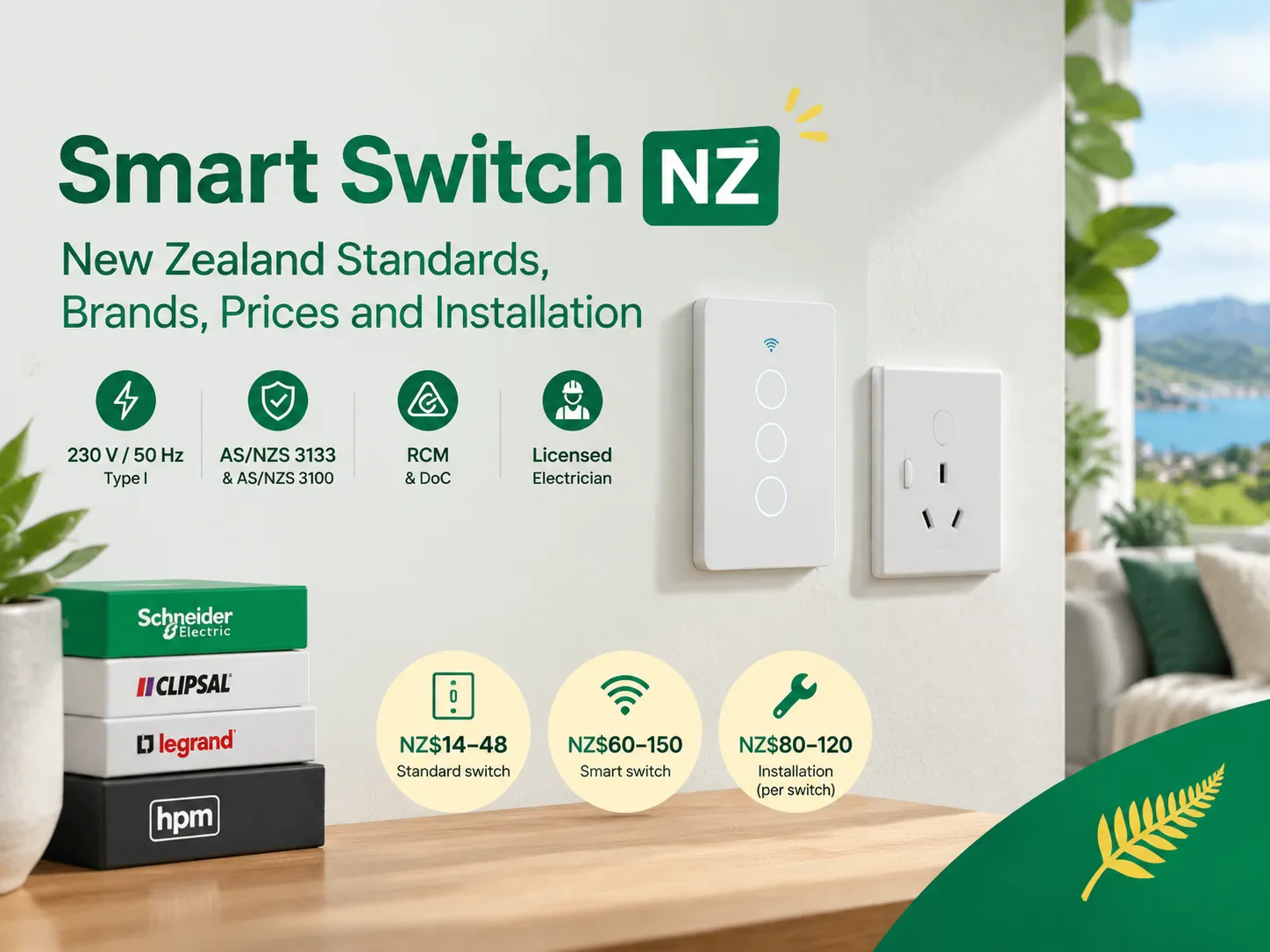
New Zealand is a small but distinct electrical market. If you are buying smart switches in New Zealand, you are dealing with a plug standard that is different from anywhere else in the world, an approval process with its own paperwork, and a wiring system that excludes half of the smart switch models available overseas. […]
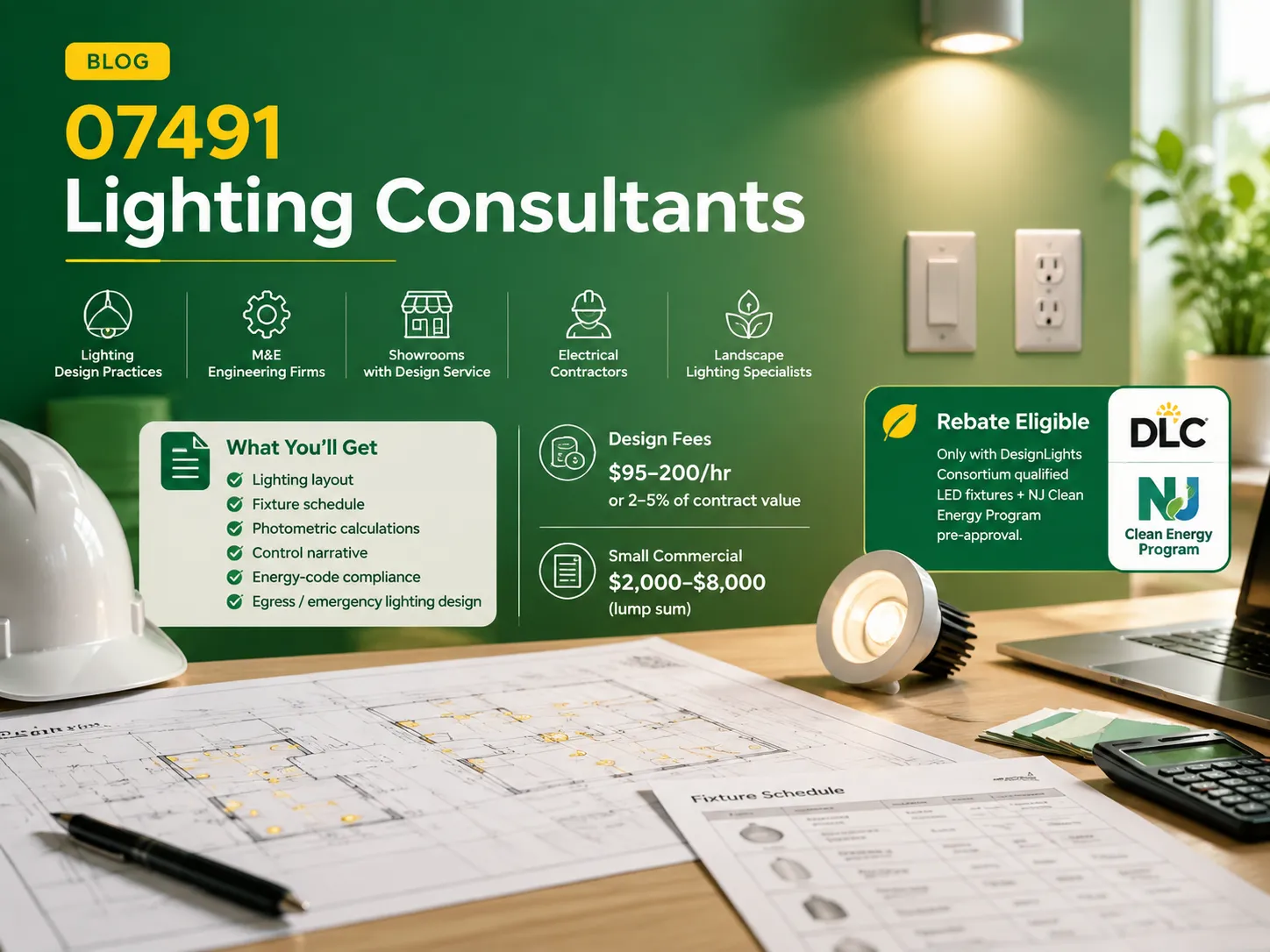
Om du behöver hjälp med belysning i 07491-regionen, är det viktigt att ställa två avgörande frågor: vem som arbetar i närheten och hur mycket som debiteras för tjänsterna. När det gäller den första frågan kan man enkelt hitta svaret angående fakta och siffror eftersom marknaden i norra New Jersey inte är så bred. […]
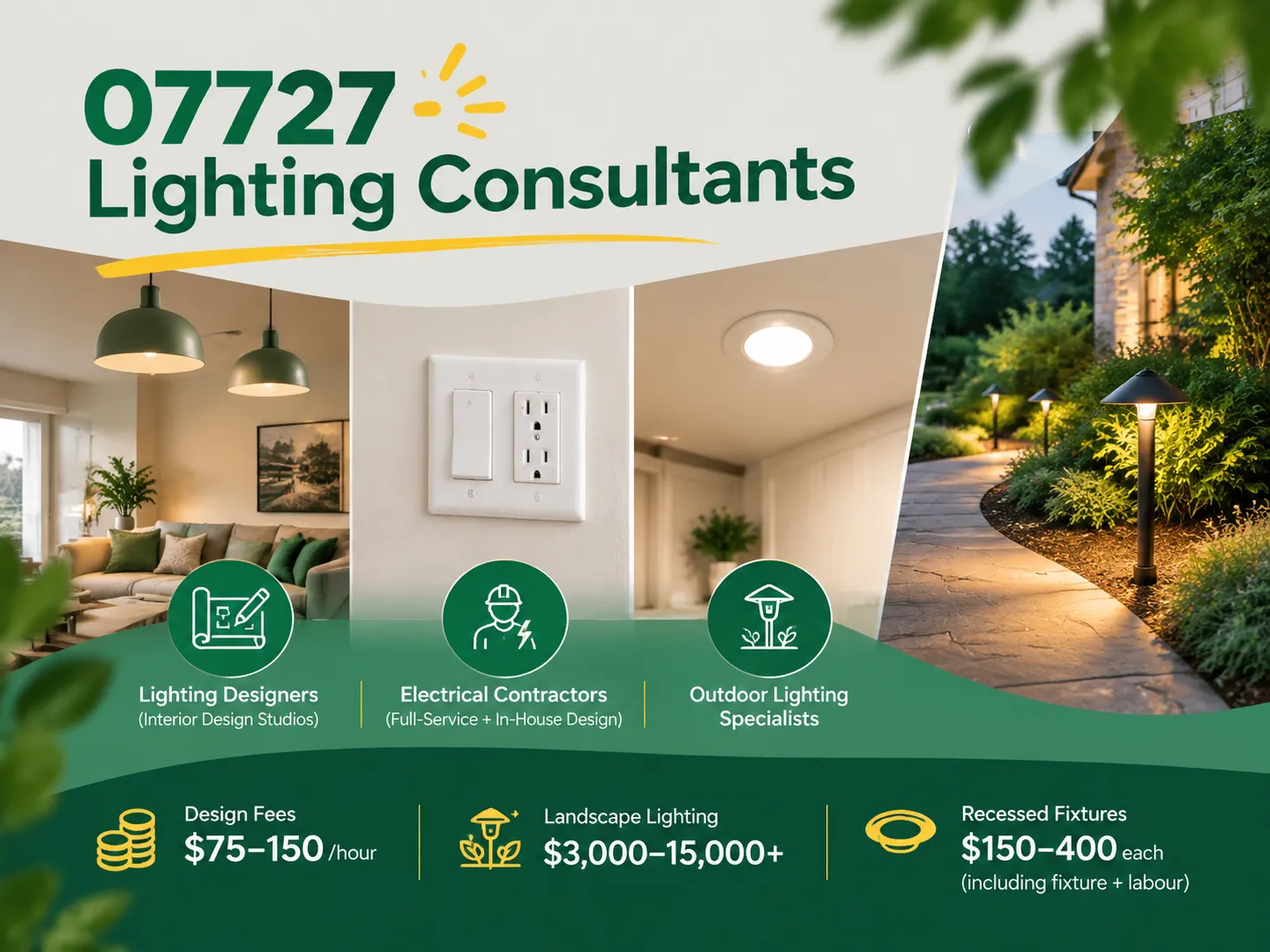
Farmingdale, tillsammans med delar av Wall Township och Tinton Falls, New Jersey, delar samma postnummer 07727. De flesta av husen byggda från 1950-talet till 1990-talet finns fortfarande kvar idag. De flesta av husägarna renoverar sina hus istället för att bygga nya hem. Husägare tenderar att spendera mycket mer på […]

 No.6 Tuozhan Road, Leshang Pioneer Park, Yueqingwan Bay Harbor, Yueqing stad, Zhejiang-provinsen


