

Якщо ви часто подорожуєте, то, напевно, знаєте, що пакування для Сінгапуру — це одна з найпростіших справ в Азії, але також одна з найскладніших, оскільки використовуються вилки типу UK (замість американських). Чи потрібен вам трансформатор, адаптер для вилки або обидва — залежить від двох запитань, які зазвичай плутають туристи.
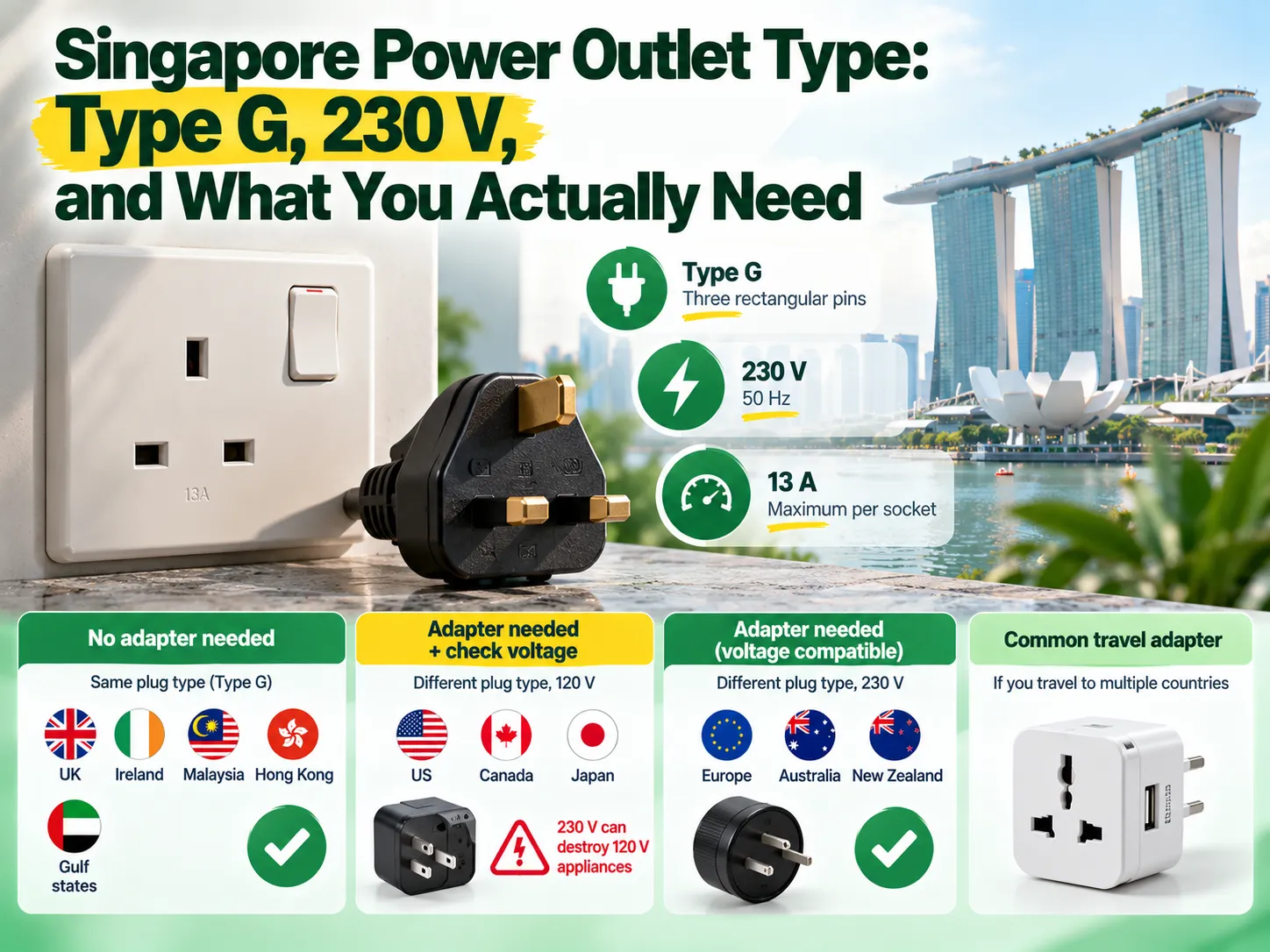
Коротко: у Сінгапурі використовується вилка типу G, яка базується на британському стандарті BS 1363 з характеристиками SS 145. Напруга в Сінгапурі та частота становлять 230 В та 50 Гц. Відвідувачі з Великої Британії, Ірландії, Малайзії, Гонконгу та деяких країн Перської затоки не потребують нічого. Відвідувачі з США, Канади та Японії повинні використовувати адаптер і перевірити напругу. Таким чином, пристрої з живленням 120 В будуть пошкоджені. Відвідувачі з європейських країн, Австралії та Нової Зеландії потребуватимуть лише адаптера, оскільки напруга однакова.
Розташування трьох прямокутних контактів у типі G є унікальним. Два плоскі контакти внизу розташовані для використання як живий та нейтральний контакти, тоді як довший контакт зверху слугує за заземлюючий. Причина довшого заземлюючого контакту полягає в тому, що він дозволяє здійснити заземлення перед підключенням живого контакту.
Усі вилки в Сінгапурі відповідають цій схемі та мають унікальні конструктивні особливості, які роблять їх одними з найбезпечніших у світі. Основні характеристики включають:
Ширша картина того, як форми вилок варіюються в усьому світі — і чому існує п’ятнадцять названих типів, а не один — викладена в цьому огляді різних типів настінних розеток та де кожен з них використовується.
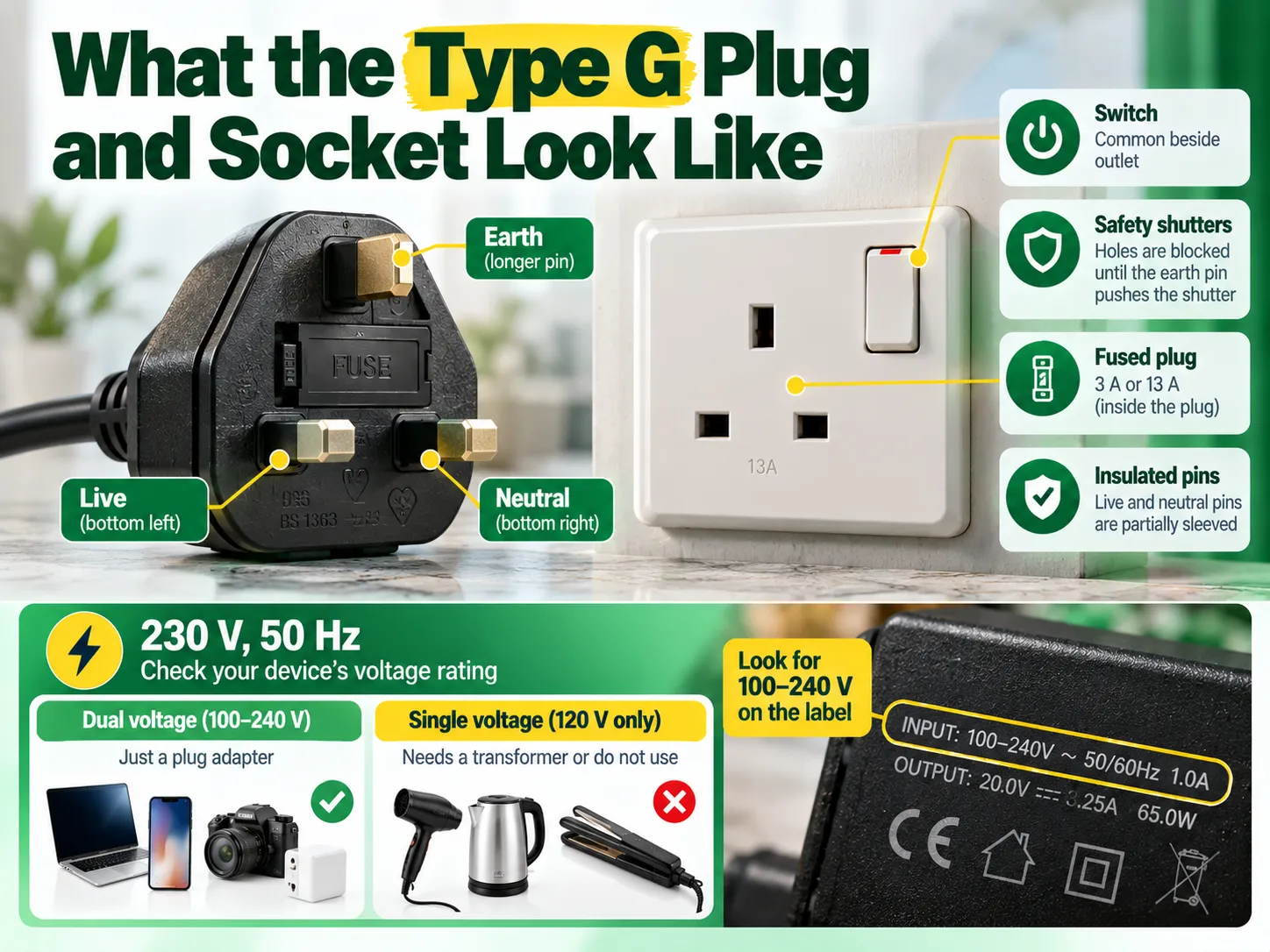
Сінгапур постачається електрикою при 230 В, 50 Гц, що відповідає європейським стандартам, на відміну від Північної Америки. Мережа експлуатується компанією SP Group і відома як одна з найстабільніших у світі. Доставлене напруження майже завжди знаходиться в межах кількох відсотків від номінального значення.
Це число має два важливі значення:
Щоб уникнути проблем під час подорожі до Сінгапуру, переконайтеся, що ви шукаєте мітку з подвійною напругою. Більшість ноутбуків, зарядних пристроїв для телефонів, зарядних пристроїв для камер, зарядних пристроїв для електричних зубних щіток та портативних динаміків останнього десятиліття розроблені для роботи в діапазоні 100 – 240 В, 50/60 Гц і, отже, вимагатимуть лише адаптера для розетки під час використання в Сінгапурі. Єдині пристрої, які мають потенційний ризик відмови, це ті, що споживають електрику безпосередньо (фени, праски, чайники тощо).
Тут більшість непорозумінь зникає, оскільки відповідь повністю залежить від того, звідки ви приїхали.
| Приїжджаючи з | Ваш тип розетки | Потрібен адаптер? | Напруга |
|---|---|---|---|
| Великобританія, Ірландія, Малайзія, Гонконг | Тип Г | немає | Відповідає 230 В |
| ОАЕ, Катар, Бахрейн, Кувейт, Оман | Тип Г | немає | Відповідає 230 В |
| Саудівська Аравія (нові будівлі) | Тип Г | Зазвичай ні | Відповідає |
| Європа (Тип C, E, F), Італія, Швейцарія | Круглі контакти | так | Відповідає — лише адаптер |
| Австралія, Нова Зеландія | Тип I | так | Відповідає — лише адаптер |
| США, Канада | Тип A / B | так | Невідповідність — перевірте кожен пристрій |
| Японія | Тип A / B | так | 100 В — перетворювач потрібен для деяких пристроїв |
| Індія | Тип D / M | так | Відповідає — лише адаптер |
Якщо ваша країна використовує Тип G, вам потрібно буде взяти свої зарядні пристрої і залишити адаптер вдома. Якщо ваша країна не використовує Тип G, є лише один покриття Типу G на всю вашу подорож — Сінгапур не має регіональних варіацій, як деякі більші країни. Повний регіональний розподіл, включаючи які частини світу поділяють який стандарт, охоплюється в цьому посібнику. типів розеток і вилок за регіоном.
Ні, і це найвитратніше припущення, зроблене мандрівником з Північної Америки. Розетка Типу A з США має два плоскі та паралельні леза і не підходить для розетки Типу G, оскільки розетка втоплена, і її заслінки зовсім не відкриються. Крім того, розетка Типу B з її круглим заземлювальним контактом також не працюватиме.
Напруга є більш важливою, ніж це. Якщо пристрій з США, який має рейтинг лише 120В, підключити до 230В через дешевий адаптер, він вийде з ладу. Тому правильний порядок дій для мандрівника з США є таким: спочатку використовуйте адаптер, а потім перевірте етикетку кожного пристрою перед підключенням. Відмінності між північноамериканськими конфігураціями та рештою світу викладені в цьому поясненні про тип розетки Північної Америки, which is worth reading if you are deciding whether a device will travel at all.
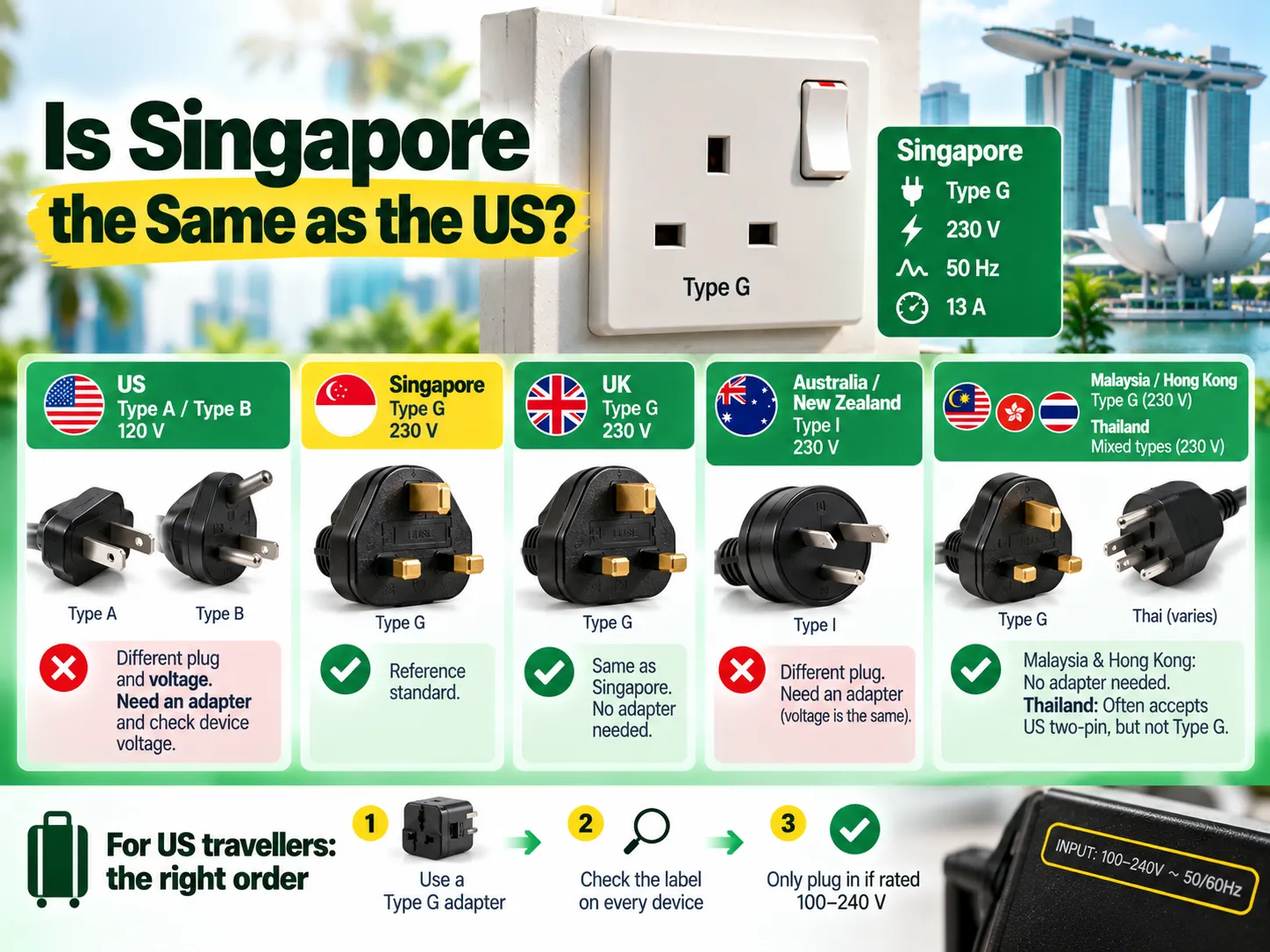
Just like the UK: yes, absolutely. Singapore adopted British standards, meaning that the connectors, sockets, fuses and other power supply infrastructures are the same. So if you have an appliance from the UK, you can use it in Singapore without needing anything else.
Just like Australia: no. Australia and New Zealand use standard I, with three flat pins, and with the exact same voltage and frequency (230 V / 50 Hz) — naturally, the voltage is the same, and you would just need a plug adapter for Type I.
Just like its neighbors: mixed. Malaysia, Hong Kong, and Brunei also use G without needing adapters, while in Thailand, things are different, as there are many different plug types used, depending on the building. Thus, a Thai socket can sometimes accept a US two-prong plug without an adapter, but may not be suitable for G. That kind of regional inconsistency is exactly why travel itineraries through Southeast Asia need more than one adapter even though the voltage stays broadly the same across the region, as set out in this guide to the socket types used in Thailand.
This mistake is the one that can result in a person losing a laptop. A plug adapter only changes the shape of the connector being used; it doesn’t contain any electronics. But a voltage converter changes the voltage from 230V to 120V. If you buy the wrong one, your appliance will fit well only to burn out immediately after.
Cost of appliances in Singapore: plug adapters range from 5-30 SGD while voltage converters and converters for 120V appliances start at 30 SGD onwards (depending on the wattage). If your appliance is a dual-voltage one, it means that it is 10 SGD device, not 100 SGD.
Pay attention to adapters sold in airports. Plug Type G that is sold in the shop for 5-10 SGD will be priced upper 15-30 SGD in Changi, and uncertified plugs will have greater overheat and an electrical short-circuit risks than certified plugs. Opt for certified adapters with a fuse instead of picking the cheapest one on the market. The same logic applies to the European systems, where the differences between Type C, Schuko and the French and Italian variants catch people out — covered in this breakdown of Європейські електричні вилки та розетки if your trip continues onward from Singapore.
Most plug types ensure protection of the wiring behind the wall. However, Type G goes a step further and protects the appliance itself, as it has the fuse in the plug rather than in the panel. This is why you can find both 3 A and 13 A fuses on sale in every supermarket in Singapore, and also why a UK appliance with a 3 A fuse cannot power a 2-kW heater.
For a manufacturer or importer, this means compliance and not travelling. Plugs sold in Singapore need to have an adequate fuse for the load and devices that are to be installed permanently should have appropriate certification and the EMA SAFE mark. The power outlets should have a shutter system as well. Mistakes here lead to customs problems and disruptions related to shipment.
The coverage is acceptable and becoming better but it is still not consistent.
In case you are staying at a hotel that is on the older side or need more devices to be powered by one electrical socket, it is better to go for a power strip rather than buy an additional adapter.
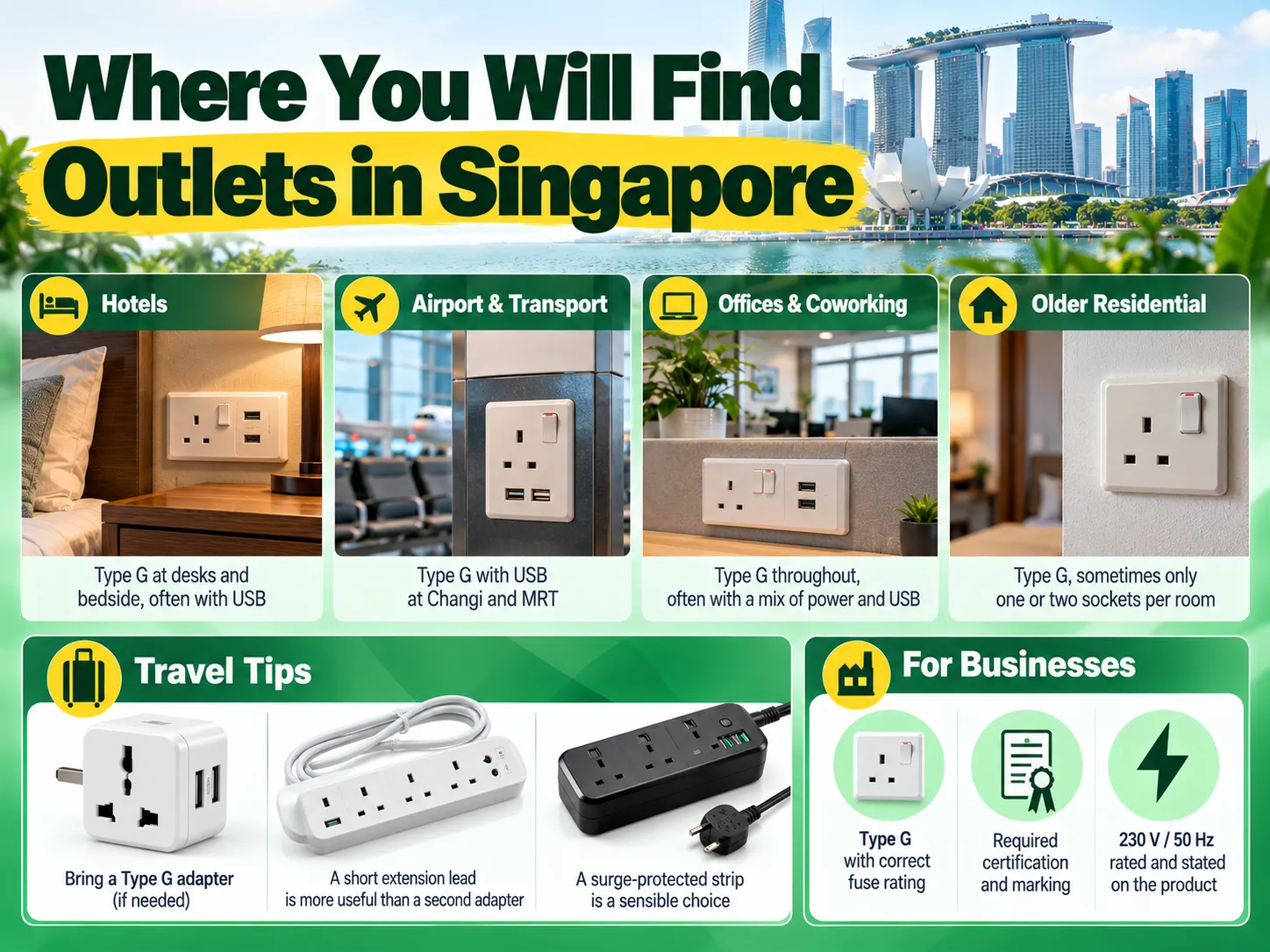
The sale of a product for permanent use depends on three requirements:
A reusable multi-region adapter does not qualify as a travel adapter. A travel adapter is a consumer gadget whereas a shuttered Type G socket rated for 13 A is a different product made under a different standard. The use of one related to another causes the failure of a compliant order at the border.
The type G adapter with three rectangular pins arranged in a triangular shape by itself won’t be needed unless, of course, you are coming from the UK, Ireland, Malaysia, Hong Kong or one of the Gulf states. It would be advisable to get a Type G fused adapter instead of unfused, as not only is it available at a price ranging anywhere between S$5 to 30 but you’re better off buying it in your home country rather than at the airport where it would be two to three times more expensive.
Type G is standardised under SS 145 standards and is largely similar to British BS 1363. Type G has three rectangular pins, the use of an in-plug fuse, sleeved live and neutral pins, and shuttered sockets, with a voltage of 230 V and 50 Hz.
No. The Type A and Type B plugs in the United States will not fit the Type G sockets in Singapore, and their voltages are different – 230 V versus 120 V. American visitors will require a universal plug adapter and must ensure that every device works on voltage ranging from 100 to 240 V. If one-plug appliances are used, they will get destroyed.
No, in Australia, plug type I is used, which has three flat pins arranged in a V shape. Because the voltage and frequency settings in Australia are identical at 230 V / 50 HZ, this means that in Australia, an adapter would be sufficient. However, because the pins are physically different, such as in shape or size, this form of connection will not work in Australia and therefore it must be used.
The voltage and the plug type used in Singapore are Type G 230V 50Hz. Unlike the North American plug which is a different voltage altogether, its shape also varies from that used in Australia. From your travel itinerary, you can deduce what kind of a plug you will need for your appliances. If you are coming from a Type G country, no adapter is necessary. If you are from a 230V country, an adapter will suffice. If your previous destination was a 120V country, you will need an adapter plus careful examination of the appliance tags.
If you travel often, then you probably know that packing for Singapore is one of the simplest things to do in Asia, but also one of the most difficult because it uses UK-type plugs (instead of the US-type ones). Whether you need a transformer, a plug adapter or both depends on two questions that tourists […]
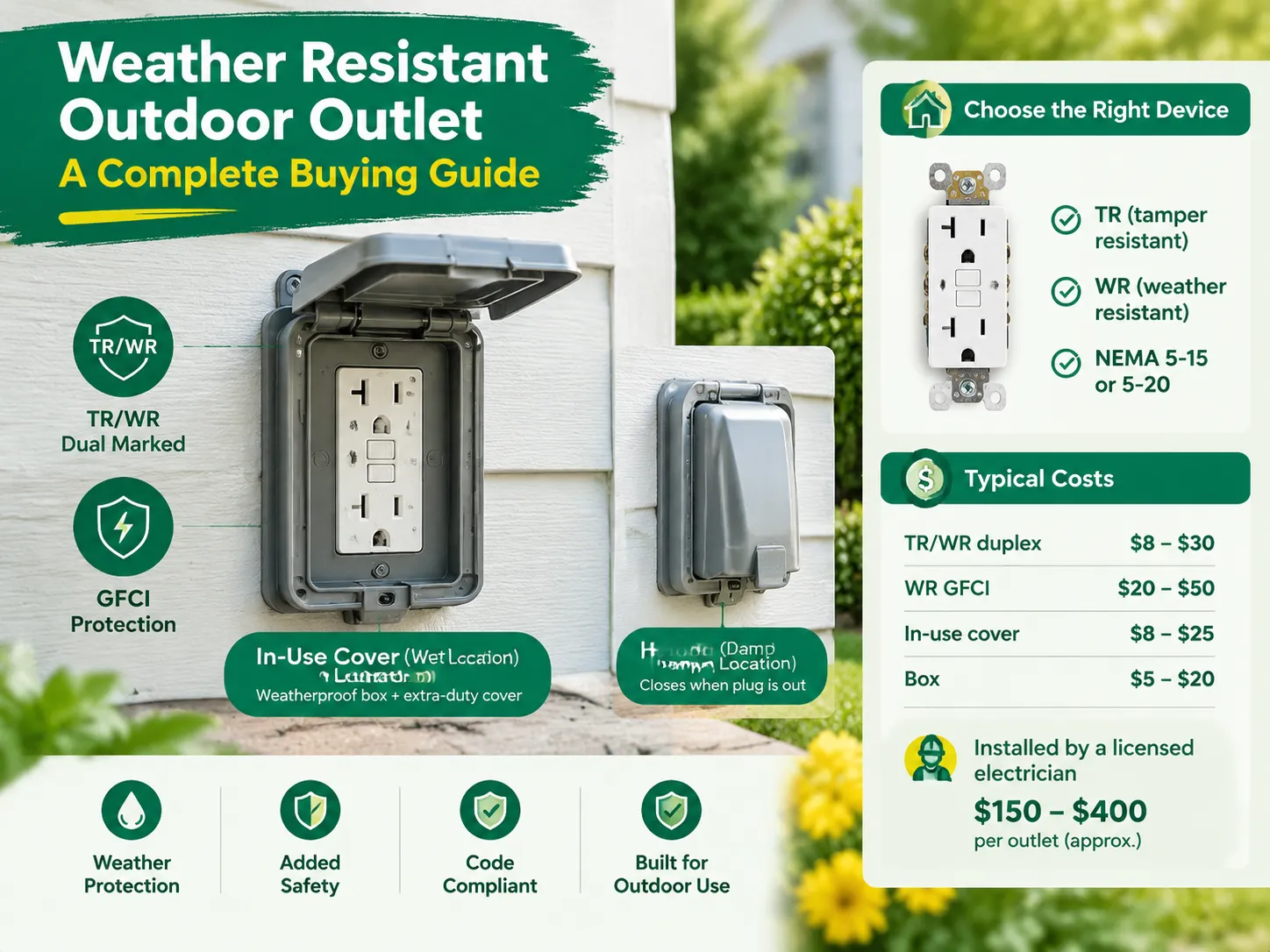
Водонепроникні зовнішні розетки не слід плутати з звичайними зовнішніми розетками. Хоча ці зовнішні розетки можна вважати розетками типу WR, вони також постачаються з корпусом, який забезпечує їх водонепроникність з пристроєм або без нього. Крім того, зовнішня вилка повинна бути стійкою до вандалізму та включати УЗО. Кожна розетка, що витримує погодні умови, повинна бути ідентифікована […]
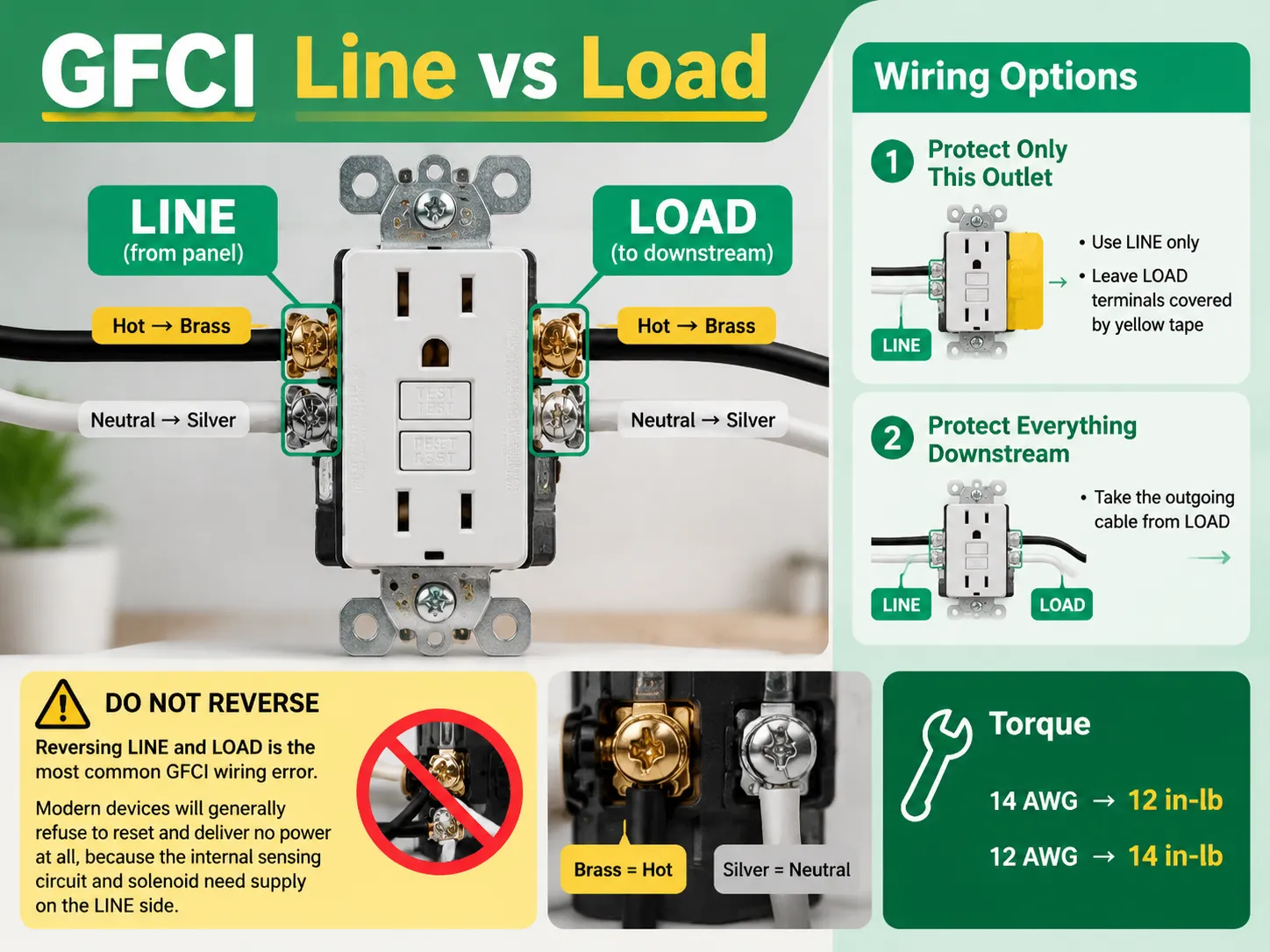
Два типи клем можуть визначити, як функціонує GFCI розетка: одна клема призначена для окремої розетки, а інша клема може захистити кілька розеток від однієї GFCI розетки за тією ж вартістю. Використання відповідної клеми дозволяє вам скористатися економією витрат, використовуючи одну GFCI, в той час як використання […]

 No.6 Tuozhan Road, Leshang Pioneer Park, Yueqingwan Bay Harbor, Yueqing city, Zhejiang Province


