

Прибуваючи до Нью-Йорка, Торонто чи Мехіко з сумкою, повною зарядних пристроїв з Європи, Англії чи Австралії, мандрівник стикається з проблемою, оскільки електричні розетки в готельному номері будуть зовсім іншими, ніж у їхній країні, а подана напруга буде меншою, ніж обладнання може витримати. Розетки північноамериканського стилю ідентичні по всьому континенту, від Канади до Панами, що робить їх більшою базою користувачів, але водночас спантеличує мандрівників.
Посібник містить багато корисної інформації про північноамериканські розетки та вилки, зокрема два типи вилок (A і B), їхні стандарти, визначені NEMA, напругу та частоту (120 В і 60 Гц), дизайн розеток, країни, які мають подібні системи, та необхідність для мандрівників з'ясувати, чи потрібен їм адаптер, перетворювач, чи нічого взагалі.
У Північній Америці використовуються вилки та розетки типу A і B, які відповідають тому ж стандарту NEMA у США, Мексиці та Канаді, а також у більшості країн Центральної Америки та Карибського басейну. Тип A складається з двох плоских паралельних штирів, тоді як тип B має ті ж два плоских штирі з круглим заземлювальним штирем, розташованим під цими двома штирями. США, Канада, Мексика, Японія та значна частина Латинської Америки можуть використовувати свої вилки безпосередньо в розетках. Відвідувачі з Великобританії (тип G), Європи (C/E/F), Австралії (тип I), Китаю та більшості азійських країн повинні використовувати адаптер для зміни форми своїх вилок.
Тип A (також відомий як NEMA 1-15) — це звичайна північноамериканська двоконтактна (або з плоскими лезами) вилка, яка має два плоских леза товщиною приблизно 1,5 мм і довжиною близько 15,9–18,3 мм. Відстань між двома штирями становить близько 12,7 мм. Вилка типу A не заземлена, не має заземлювального штиря і має номінальний струм 15 А/125 В.
Два леза вилки зазвичай поляризовані. Одне з лез ширше за інше; наприклад, ширина нейтрального штиря становить приблизно 7,9 мм, а ширина фазного штиря — 6,3 мм. Така конструкція дозволяє вставляти вилку лише в одному напрямку, що забезпечує безпеку лампи або приладу.
Об'єкти, для яких використовується вилка типу A: дрібні побутові прилади та двоізольовані гаджети, такі як лампи, зарядні пристрої для мобільних телефонів, портативні радіоприймачі, двоконтактні кабелі різних пристроїв. Користувачі пристроїв з цією двоконтактною вилкою США можуть знайти вилки, що підходять не тільки до розеток типу A, але й до розеток типу B.
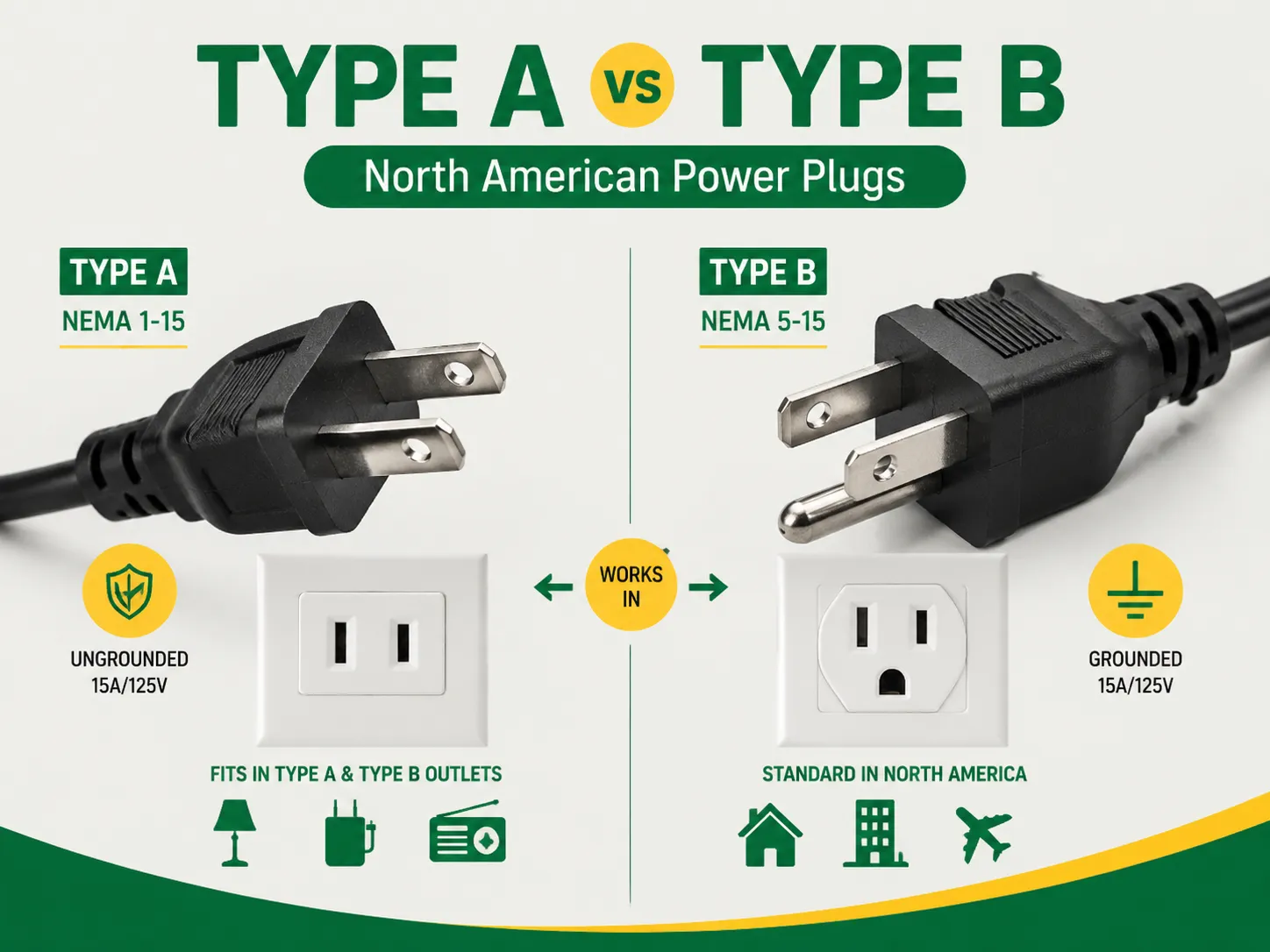
Офіційно відомий як NEMA 5-15, тип B став стандартною вилкою в Північній Америці і використовує ті ж подвійні плоскі паралельні леза, що й тип A, плюс круглий (U-подібний) заземлювальний штир під лезами; цей штир має діаметр 4,8 мм і трохи довший за леза, що гарантує, що заземлювальний штир підключається першим перед активацією живлення. Номінальний струм для цієї вилки становить 15 А/125 В.
Де зустрічається тип B: будь-де, оскільки ця вилка встановлювалася скрізь, де будувалися будівлі з 1960-х років, і використовувалася в будинках, готелях, офісах та аеропортах у США, Канаді та Мексиці. У більшості випадків сучасна розетка має тип B, але також має порти зарядки USB-C, а також TR засувки, які зараз є частиною коду в новому будівництві. Вилка типу A підходить до розетки типу B, тоді як вилка типу B не підходить до розетки типу A (оскільки заземлювальний штир нікуди не підключається).
Якщо ви оновлюєте розетки в північноамериканській нерухомості, сучасні розетки — включаючи інтегровані USB та смарт-варіанти в Асортимент розеток IGOTO — дотримуються того ж форм-фактора типу A/B/NEMA, тому вони встановлюються в будь-яку стандартну коробку.
NEMA означає Національну асоціацію виробників електрообладнання, яка встановлює стандарти для вилок і розеток у Північній Америці. Важливі коди:
| Код NEMA | Загальна назва | Конфігурація | Номінальні характеристики |
|---|---|---|---|
| NEMA 1-15 | Тип A | 2 плоских паралельних штирі, без заземлення | 15 А / 125 В |
| NEMA 5-15 | Тип B | 2 плоских штирі + круглий заземлювальний, із заземленням | 15 А / 125 В |
| NEMA 5-20 | Тип B (20 А) | 2 плоских штирі + заземлення, одне лезо повернуто на 90° | 20 А / 125 В (кухні, ванні кімнати) |
| NEMA 6-15 / 6-20 | Розетки на 240 В | 2 плоских штирі + заземлення, для приладів на 240 В | 15-20 А / 240 В (сушарки, кондиціонери, електромобілі) |
| NEMA 14-30 / 14-50 | Сушарка / плита / електромобіль | 4 штирі (2 фазних + нейтральний + заземлення) | 30-50 А / 240 В |
Для мандрівників актуальні лише типи 1-15 (тип A) і 5-15 (тип B) — усі інші типи є спеціалізованими вилками з вищою силою струму. У кожному готелі та будинку ви знайдете універсальну розетку на 120 В.
Північна Америка працює за системою 120 вольт, 60 герц — що ідентично в США (120 В), Канаді (120 В) та Мексиці (хоча в Мексиці трохи вище, близько 127 В). Цей рівень напруги приблизно вдвічі менший, ніж у решти світу (220-240 В), що становить іншу частину загальної проблеми сумісності.
Рівень напруги також працює в:
Рівень напруги несумісний з Великою Британією, Європою, Японією, Австралією, Новою Зеландією, Китаєм, Індією, Сінгапуром та більшою частиною Африки, оскільки всі вони використовують 220-240В і мають різні форми вилок.
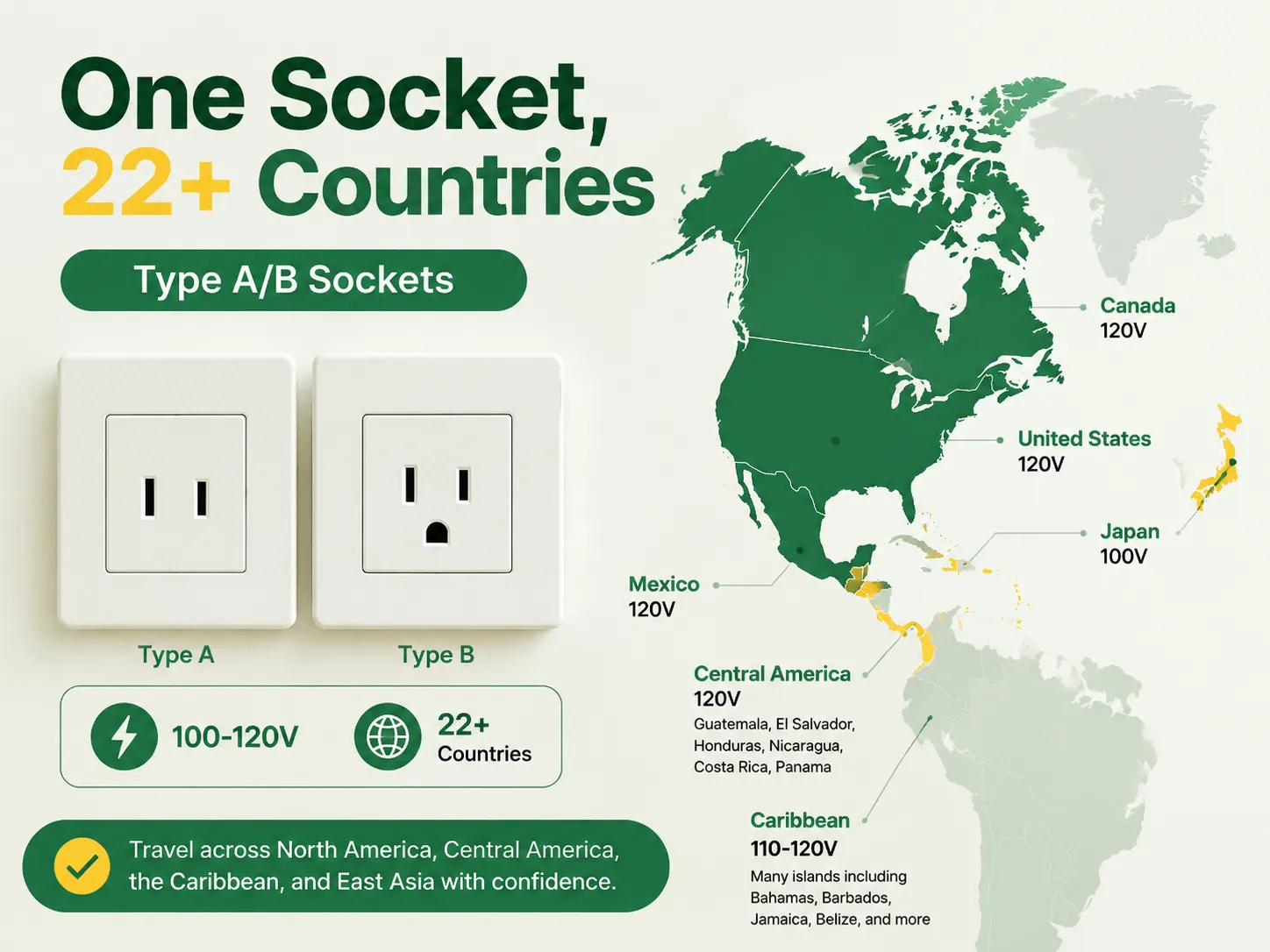
Електрична стандартизація Північної Америки неперевершена: одна конструкція вилки використовується більш ніж у 22 країнах. У цьому відношенні вилки ідентичні в наступних регіонах:
Загалом, людина може приїхати до Канади зі США і, не доїжджаючи до половини світу, до Панами, ніколи не думати про адаптери для вилок, що робить цю електричну систему такою зручною для подорожей для людей зі США.
| Країна / Регіон | Домашня вилка | Потрібен адаптер? | Перетворювач напруги потрібен? |
|---|---|---|---|
| США, Канада, Мексика | А / В | немає | немає |
| Центральна Америка, більшість Карибських островів | А / В | немає | Ні (110-127В) |
| Японія | А / В | немає (вилки підходять) | Зазвичай ні (100В проти 120В) |
| Тайвань | А / В | немає | Ні (110В) |
| Сполучене Королівство / Ірландія | Г | так | Так (для пристроїв, що працюють лише на 230В) |
| Материкова Європа | C / E / F | так | Так (для пристроїв, що працюють лише на 230В) |
| Австралія / Нова Зеландія | Я | так | Так (для пристроїв, що працюють лише на 230-240В) |
| Китай | A / C / I | Можливо (A підходить; C/I потребують адаптера) | Так (220 В проти 120 В) |
| Південна Корея | C / F | так | Так (220В) |
| Індія | C / D | так | Так (230 В) |
Важливе зауваження: адаптер може лише змінити форму вилки, але не змінює напругу. Наприклад, якщо британський фен підключити до американської розетки лише за допомогою адаптера, він отримає 120В замість 230В, що означає, що він працюватиме ледь-ледь і нагріватиметься до небезпечного рівня.
Загальне правило: якщо зазначено INPUT: 100-240V (або 110-240V), то пристрій може працювати на подвійній напрузі і потребує лише адаптера. Якщо зазначено лише 120В або 230В, це одновольтова напруга, і якщо вона походить з країни зі стандартом 230В, їй потрібен перетворювач у Північній Америці. Більшість зарядних пристроїв для телефонів, адаптерів для ноутбуків, зарядних пристроїв для камер та зубних щіток є подвійної напруги, тоді як більшість фенів, плойок та старих пристроїв — ні. Щодо ширшої логіки міжнародних вилок та розеток — і того, як система NEMA вписується у світові стандарти — наші посібники з різних типів електричних вимикачів та розеток та основи встановлення димерів охоплюють апаратну частину настінних пристроїв.
Швидка перевірка займе всього десять секунд; вам просто потрібно подивитися на невелику етикетку на пристрої або на його джерело живлення, зазвичай розташоване в області навколо входу кабелю.
| Текст на етикетці | Значення | Потрібно в Північній Америці (з країни 230В) |
|---|---|---|
| “ВХІД: 100-240 В, 50/60 Гц” | Двовольтовий, універсальний | Тільки адаптер |
| “ВХІД: 110-240 В” | Двовольтовий | Тільки адаптер |
| “ВХІД: 100-120 В” | Одновольтова (стандарт NA/Японія) | Тільки адаптер, якщо з країни з напругою 120 В; перетворювач, якщо з країни з напругою 240 В |
| “ВХІД: 220-240 В” | Одновольтовий (стандарт 230 В) | Адаптер + перетворювач |
Якщо ви подорожуєте з будь-якої країни, де напруга становить від 220В до 240В, вам слід або взяти з собою фен подвійної напруги, або скористатися дорожнім феном, наданим готелем.
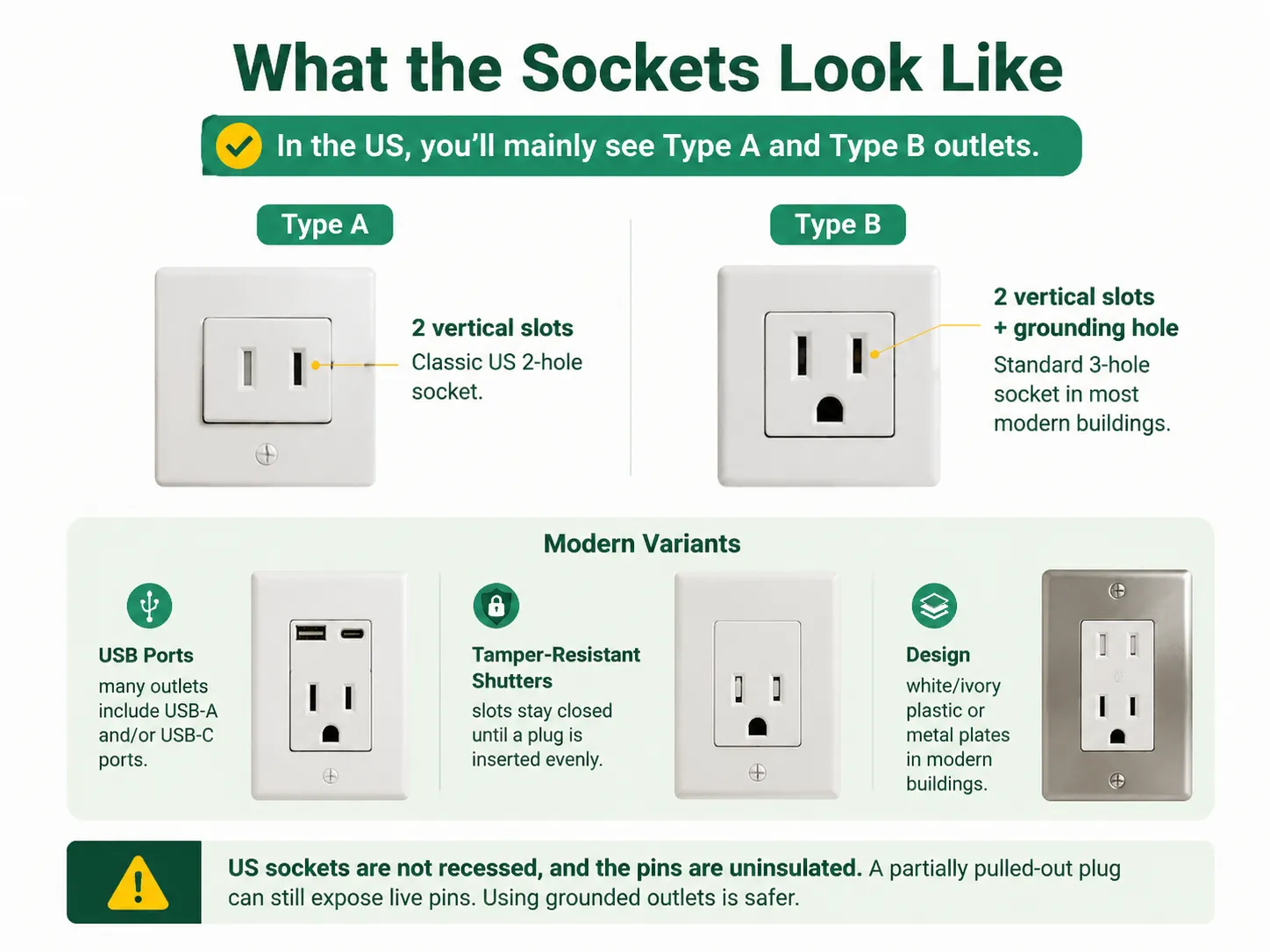
Ідентифікація роз'ємів полегшує подорожі:
Розетка американського типу добре відома тим, що вона не вбудована в стіну, а її штирі не мають ізоляції, що означає, що вилка, частково вставлена, все ще має доступні штирі під напругою. Це достатньо безпечно при нормальному використанні, але це ще одна причина використовувати заземлені, сертифіковані розетки — такі як захищені від несанкціонованого доступу та оснащені USB роз'єми в посібнику з модернізації USB-розеток, та інтелектуальні настінні керування, доступні в асортименті інтелектуальних вимикачів IGOTO для того ж стандартного північноамериканського форм-фактора.
Для частих мандрівників, які перетинають регіони з живленням 120В та 240В, рекомендується використовувати високоякісні універсальні адаптери ($25-$45).
Вилки та розетки, що використовуються в Північній Америці, включають Тип А (з двома плоскими паралельними штирями без заземлення, відомий як NEMA 1-15) і Тип B (з двома плоскими штирями та круглим штирем, який діє як заземлення — NEMA 5-15). Система використовується в США, Канаді, Мексиці, більшості країн Центральної Америки та значній частині Карибського басейну. Використання вилок типу А підходить для обох типів розеток, тоді як вилки типу B є новим обов'язковим стандартом у всіх сучасних будівлях.
Існує два типи електричних вилок: тип А (NEMA 1-15), який є 2-контактним без заземлення, що використовується переважно для приладів з подвійною ізоляцією та зарядних пристроїв. Тип B (NEMA 5-15) — це 3-контактна вилка із заземленням, що використовується для більшості електричних пристроїв та комп'ютерів. Їх номінальні значення також однакові: 15 А та 125 В.
Абсолютно вірно. Канада, як і США, використовує ті ж самі вилки типу А і типу B, ту ж напругу 120 В і ту ж частоту 60 Гц. Тому американську вилку та канадську вилку можна використовувати взаємозамінно. Стандарти, встановлені NEMA у США та CSA у Канаді, визначають сумісність цих вилок.
У Сполучених Штатах Америки використовуються розетки типів А (NEMA 1-15) і типу B (NEMA 5-15) при напрузі 120 В/60 Гц. Тип B — це два слоти з вертикальними отворами та один круглий отвір для заземлення, і це сучасний стандарт; з іншого боку, тип А — це, очевидно, два вертикальні слоти в старих будівлях, де вилки типу А будуть придатні для використання. Розетки NEMA 14-30 або 14-50 з вищою потужністю призначені лише для сушильних машин, плит та зарядних пристроїв для електромобілів.
Північноамериканський тип розетки є прикладом стандартизації. Система вилок типу А і B, що працює при напрузі 120 В/60 Гц, використовується більш ніж у 22 країнах Північної Америки, від Канади на півночі до Панами на півдні. Тому, якщо використовувати вилки 120 В, це найпростіший роз'єм для використання в електроприладах. Для відвідувачів з країн з напругою 220-240 В ця стандартизація знову корисна тим, що дозволяє легко визначити відповідь: адаптер типу А/B за формою та трансформатор напруги для кожного пристрою, що працює на одній напрузі — на основі десятисекундної перевірки етикетки “INPUT”.
Іншими словами, для будь-якого мандрівника, який приїжджає до Північної Америки, відповідь така: вилки з США/Канади/Мексики/Японії просто підходять; всім іншим потрібен адаптер; мандрівники з регіону 230 В повинні придбати трансформатор напруги для кожного зі своїх одновольтових пристроїв — перевірені етикетки та придбаний відповідний універсальний адаптер вирішать усі проблеми, дозволивши відвідувачам просто насолоджуватися прекрасними краєвидами Північної Америки без турбот про спалені зарядні пристрої.
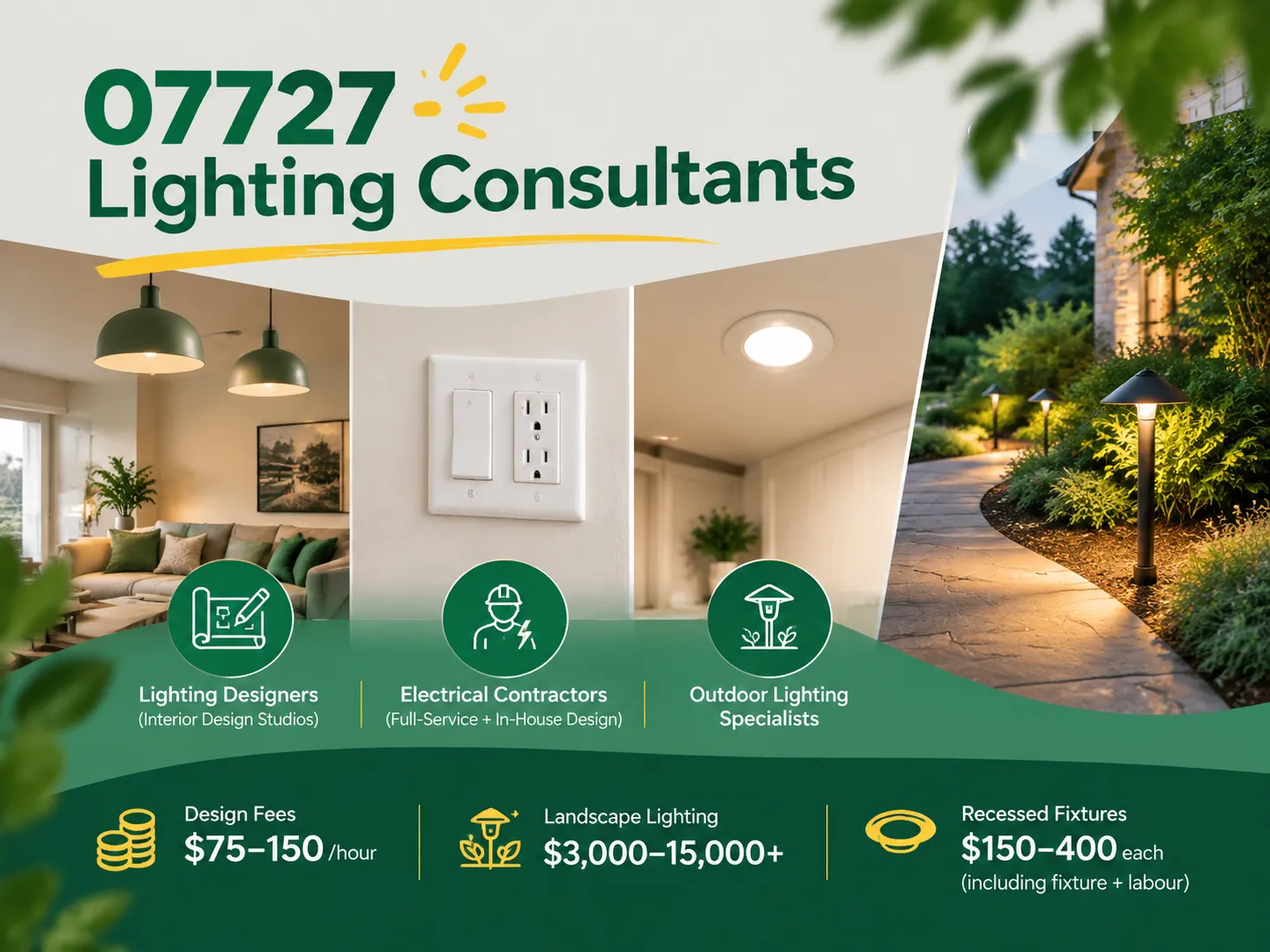
Фармінгдейл, разом з частинами містечка Уолл та Тінтон-Фолс, Нью-Джерсі, мають один і той же поштовий індекс 07727. Більшість будинків, збудованих з 1950-х до 1990-х років, досі існують сьогодні. Більшість власників будинків ремонтують свої будинки, а не будують нові. Власники будинків, як правило, витрачають набагато більше на […]

Термін “07984 lighting consultants” створює в людей враження, що п’ять цифр представляють собою поштовий код певного типу, який вказує на місце, де освітлювальні консультанти надають послуги. Це, однак, неправильно: немає поштової зони з кодом 07984, який є лише кодом мобільного зв’язку у Великій Британії. Це означає, що […]

Сан-Франциско не є середнім ринком управління освітленням. Житловий фонд старий і щільний, а електричний кодекс не дозволяє стільки електричних установок, скільки дозволено майже скрізь в США. Більшість будинків, які хочуть складного освітлення, є вікторіанськими або едуардіанськими будівлями, де ніхто не хоче починати відкривати […]

 No.6 Tuozhan Road, Leshang Pioneer Park, Yueqingwan Bay Harbor, Yueqing city, Zhejiang Province


