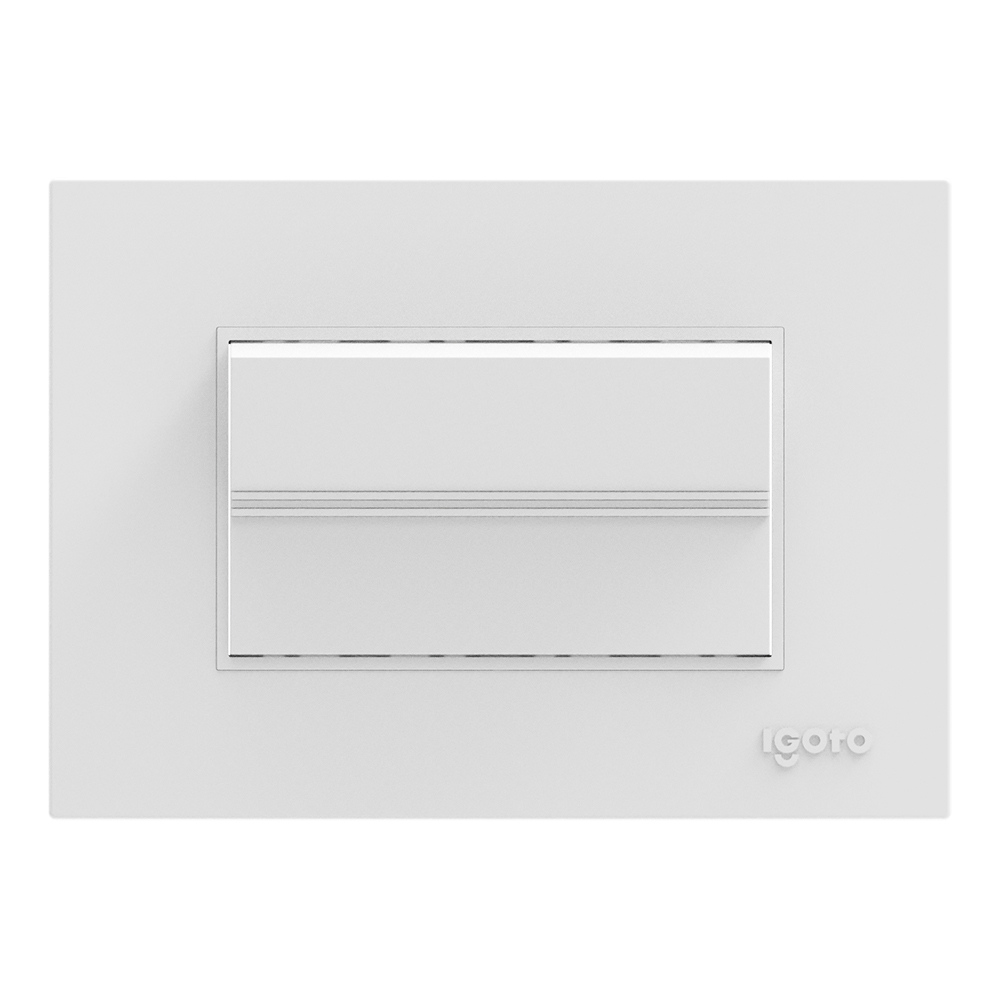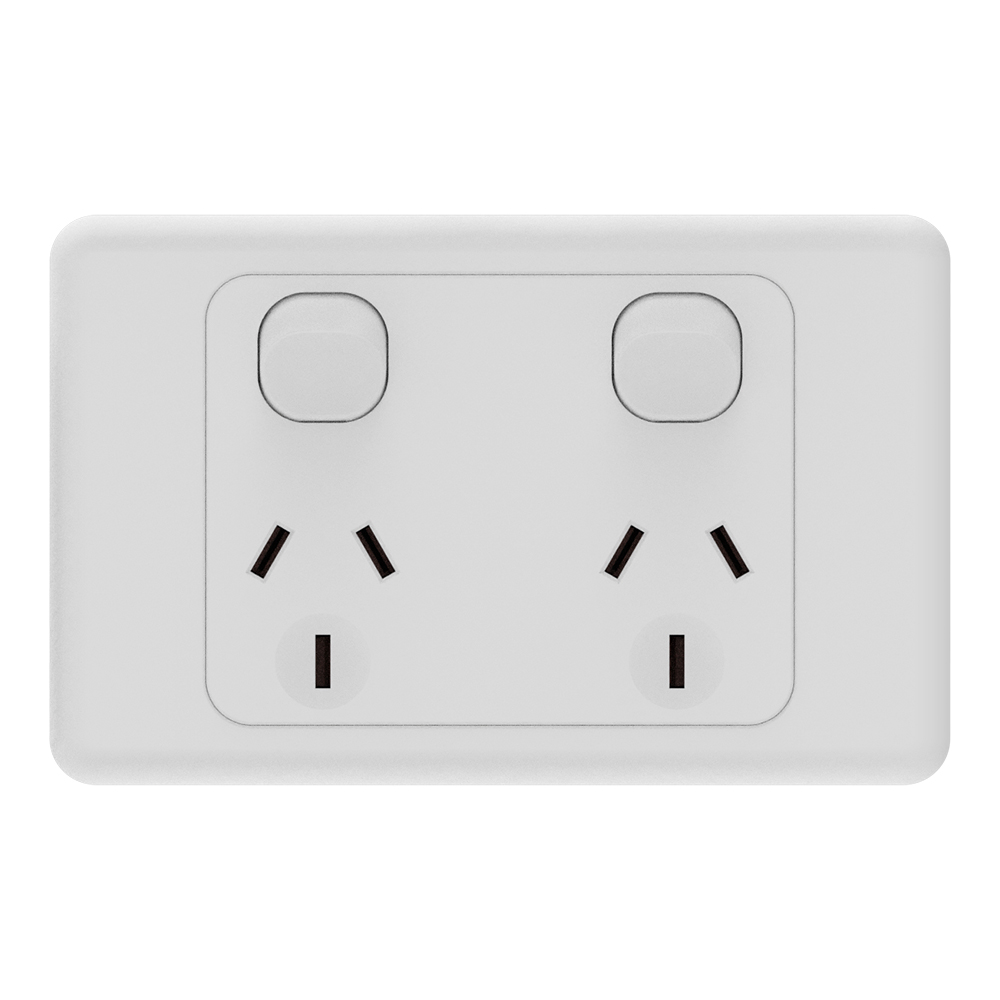


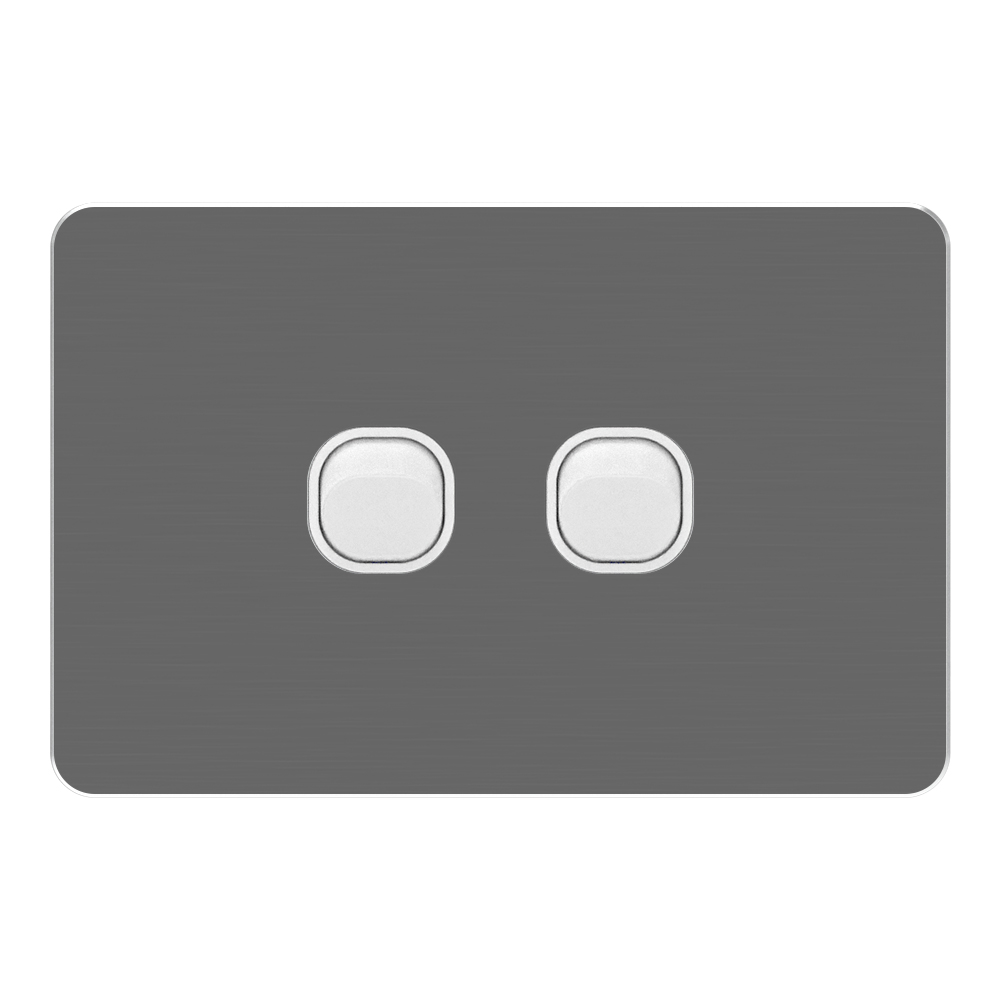


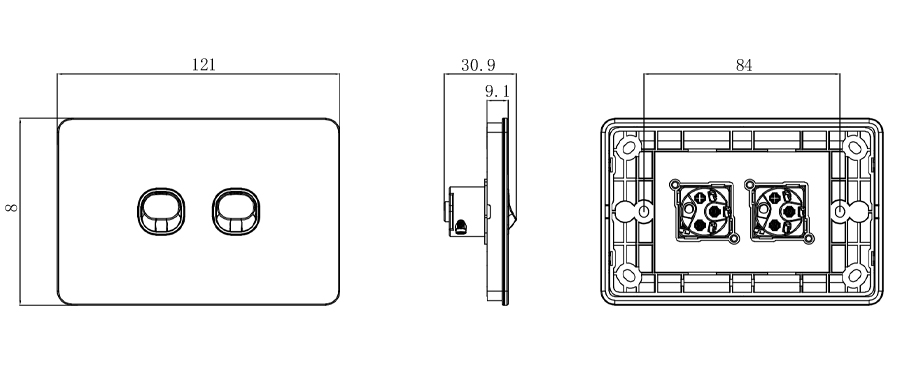
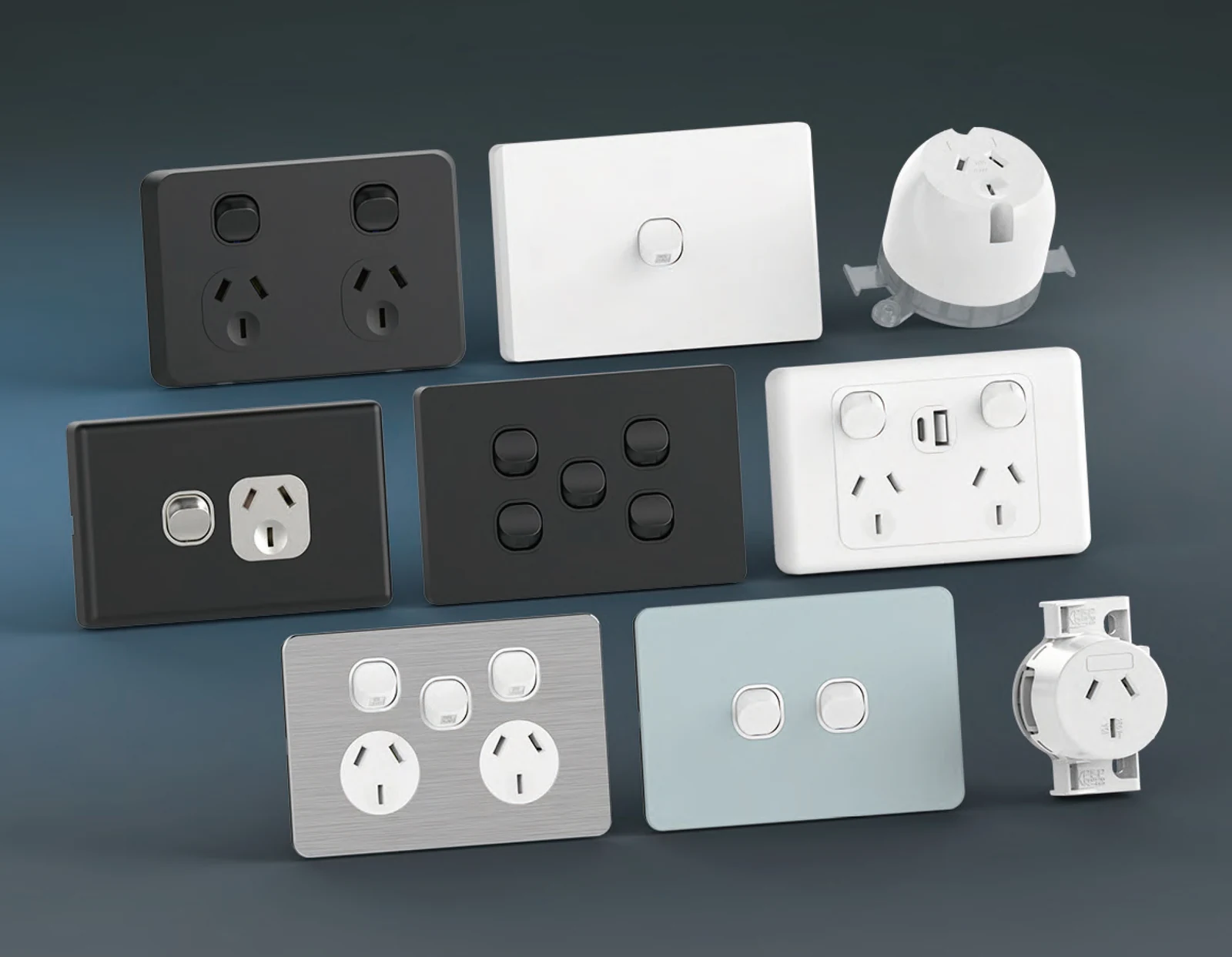
Two lighting groups on a single 121 × 80 mm plate, in brushed aluminium. It is the plate that most often replaces a pair of single plates when a room is re-specified, because it removes one cut-out from the wall without changing the wiring topology.
Each gang is a two way mechanism, so a two gang plate can serve two independent two way circuits, or one two way circuit plus one one way circuit.
That flexibility is why the two gang plate is the most common metal plate in corridor and stair work, where one light is switched from two ends and the second is not.
On a two gang plate the brushed direction is visible across a longer face, so the grain has to be set once for the whole batch.
We brush horizontally in the fitted orientation and keep every plate in an order on the same grain, which is what makes a row of two gang plates on a corridor wall read as one surface.
Gang counts switches on the plate. One gang is one switch on one circuit. Two gang is two switches on one plate, and they can serve two circuits or the same circuit twice.
Way counts control points. A two way switch lets a second switch at the far end of a room work the same light. You can have a one gang two way switch, which is one switch controlling one light from two places. Plate size follows the gang count, never the way count.
| Parameter | Details |
|---|---|
| Product | Australian standard 2 gang wall switch, brushed aluminium plate |
| Switching Function | 2 way (SPDT) on both gangs; either gang usable as 1 way |
| Rated Current | 10A standard; 16A on request |
| Rated Voltage | AC250V |
| Number of Gangs | 2 gang |
| Terminals | Screw terminals, back and side cable entry |
| Contact Material | AgNi15/Cu silver alloy contacts on T2 copper conductor |
| Panel Material | Brushed aluminium plate, 121 × 80 mm |
| Surface Finish | Hairline brushed; anodised colour layer |
| Available Colours | Silver white, matte black, silver grey from stock; custom RAL on request |
| Mounting | Standard Australian wall box, horizontal or vertical |
| Mechanical Endurance | ≥ 40,000 operations per gang |
| Protection Degree | IP20, indoor use |
| Standard | AS/NZS 3112 |
| Approval | SAA |
| Warranty | 15 years (IGOTO standard warranty) |
| Model | Configuration |
|---|---|
| CS303 | 2 gang, 1 way, 10A |
| CS304 | 2 gang, 2 way, 10A |
| CS304/16A | 2 gang, 2 way, 16A |
| CS304DP | 2 gang, double pole, 10A |
| CS304/005 | 2 gang, intermediate, 10A |
A two gang plate can mix functions, for example one two way gang and one intermediate gang, assembled as a single part number. Tell us the function per gang when you enquire, not just the plate size.
More gang counts and finishes are on the CS series page. Where the wall has no width for 121 mm, the two gang plate is also made vertically as CS304-V.
Two gang is the plate you specify when a room has two lighting groups and one obvious switch position: a kitchen with task and ambient lighting, a living room with a pendant and wall washers, a bathroom with mirror and ceiling.
In metal finish it is also the plate that most often replaces a pair of singles that were never aligned properly.
The mechanism is the standard Australian two way, rated 10A at 250V, with screw terminals that accept back and side entry.
Both gangs are independent, so the second gang can be a two way on a different circuit without ordering a special plate. A double pole or intermediate gang can be fitted on the same face when the circuit demands it.
The plate is 121 × 80 mm brushed aluminium, the wider of the two Australian formats, so the two mechanisms sit side by side with room between them.
That spacing matters on a metal face: mechanisms crowded together show as a slight bulge in the reflection, which is why the wider format is the one we build the multi-gang metal range on.
The price difference between a two gang plate and two one gang plates is small.
The difference on site is not: two cut-outs instead of one, two plates to level instead of one, and two boxes to set at the same depth.
On a plasterboard wall that is twenty minutes; on a tiled or rendered wall it is a patching job.
The counter-argument is flexibility. Two singles let you move one switch later without touching the other, and they let an electrician use stock rather than order a plate. On a metal finish that flexibility costs appearance, because two adjacent brushed plates are almost never perfectly level with each other.
A two gang plate fails in a way a single plate does not: one gang works and the other does not, and nobody notices until handover.
We function test both gangs on the finished plate rather than sampling mechanisms before assembly, and we test them independently so a shared terminal fault cannot hide behind a working neighbour.
The plate is inspected for grain direction and colour before assembly. For OEM orders we mark the metal face by laser, pack to your retail specification, and can supply mixed two gang configurations in one carton, one way plus two way, intermediate plus two way, as a single part number.
A metal two gang plate is stiffer than a plastic one, which is good for flatness and bad for tolerance.
If the wall box is set slightly proud or the plaster is uneven, a plastic plate flexes and closes the gap, while an aluminium plate does not, it sits on the high point and leaves a shadow line.
Setting the box flush is therefore more important, not less.
The second difference is thermal. Aluminium conducts, so a plate over a warm wall or in direct sun feels warm to the touch and expands slightly.
We allow for that in the clip design; installers should not over-tighten the fixing screws to close a gap, because that bows the plate and shows in the reflection.
A two gang order goes wrong for one of two reasons: the functions were not specified per gang, or the finish was approved on a screen. Both are avoidable before the order is placed.

Custom anodised colours, laser marking and retail packaging on the standard two gang platform, with SAA documents for the certified range.

Factory-direct pricing with flexible MOQ for distributors stocking two gang metal plates alongside single and three gang versions.

Account management, Australian datasheets and priority production for partners building a coordinated metal range.
Send us the finish, the function of each gang and the quantity, and we quote factory-direct with a physical plate sample before production. SAA documentation under AS/NZS 3112 ships with the order; wholesale and OEM pricing is quoted per order rather than listed.
Contact Our Sales TeamYes, and it is a common configuration. Both gangs use the same two way mechanism, so a one way gang is simply a two way gang wired with two terminals. The plate is identical; only the wiring differs.
If you need a genuinely different mechanism, such as an intermediate gang, that is built on the same plate and carries a different model suffix.
No. The mechanisms sit side by side rather than one behind the other, so the depth requirement is the same as a single plate.
What changes is the box width, and standard Australian two gang boxes are made for this plate format.
The plate is 121 x 80 mm, the wider Australian size, which is what allows two mechanisms to sit side by side without crowding.
Because the face is longer, so there is more distance over which a change in direction can be seen.
On a single plate a mismatched grain reads as a slight difference in sheen; on a two gang plate it reads as a line across the room.
We brush all plates in an order in the same direction and in the fitted orientation, so a row of plates on one wall matches.
|
High-Quality Material
|
The CS304/CS303/CS304DP features a high-quality acrylic panel that provides both elegance and fire resistance. The switch contacts are made of silver alloy (AgCd015/Cu), offering superior conductivity and longer lifespan.
|
|
Long Life Cycle
|
Designed for durability, the CS304/CS303/CS304DP switch can withstand over 40,000 on-off operations, making it perfect for high-use environments such as offices, schools, and shopping centers.
|
|
Enhanced Conductivity
|
The T3 copper terminals and phosphor copper contacts ensure excellent electrical conductivity and strong elasticity, contributing to a reliable and consistent performance over time.
|
|
Versatile Design
|
The sleek, modern design of the CS304/CS303/CS304DP switch makes it a versatile choice for various applications, including residential, commercial, and industrial installations.
|
|
High Safety Standards
|
With SAA certification and compliance with ISO9001 and ISO14001, the CS304/CS303/CS304DP guarantees top-notch quality and safety. It meets all Australian safety standards, ensuring peace of mind for end-users.
|
IGOTO – A Trusted Manufacturer of High-Quality Electrical Products
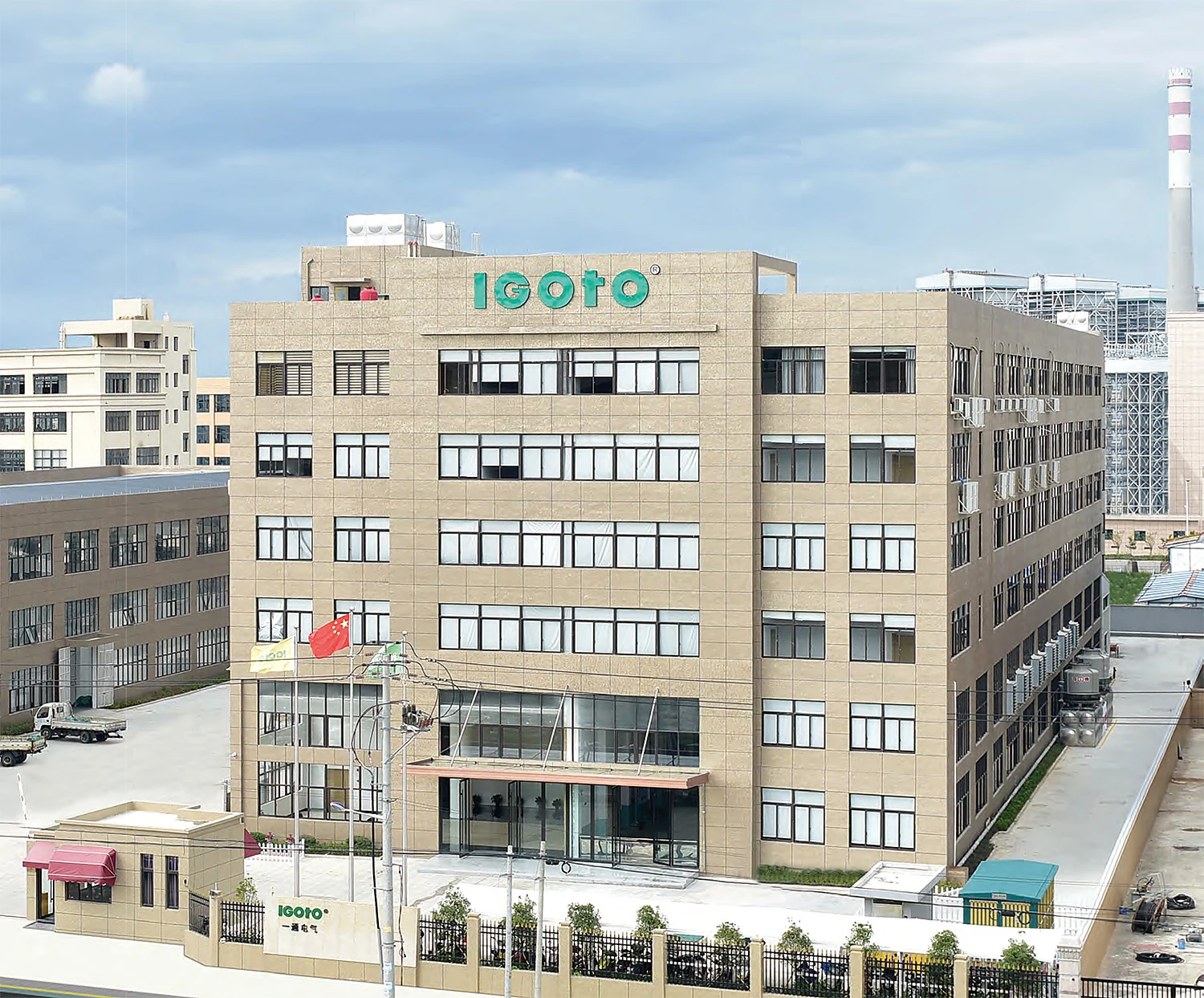
Founded in 1999, Zhejiang IGOTO Electric Co., Ltd. has become a leading manufacturer and supplier of electrical products, specializing in switches, sockets, and related components. With over 20 years of experience in the industry, IGOTO Electric has established itself as a trusted partner for B2B clients worldwide, including well-known companies in Australia, South America, and Southeast Asia.
Our commitment to quality and innovation is backed by over 15 years of research and development, with a focus on producing electrical products that meet the highest safety and performance standards. As an OEM partner for several large global brands, we pride ourselves on delivering solutions that meet the unique needs of each customer.
Our Core Values:

We are dedicated to becoming your reliable partner in providing safe, durable, and cost-effective electrical solutions.

 No.6 Tuozhan Road, Leshang Pioneer Park,Yueqingwan Bay Harbor,Yueqing city,Zhejiang Province