

Australian RCD/RCBO RCBO-protected outlets are mandatory in wet areas like bathrooms, kitchens, laundries, and outdoor spaces.
If you’re supplying or installing electrical outlets in these zones, you need to know exactly what’s required and how to choose the right products.
This guide breaks it down clearly: what’s the difference between RCD and RCBO, what the building codes say, and what to look for when sourcing safe, compliant outlets.
Both devices are designed to protect people from electric shock, but they work in slightly different ways.
For outlets in wet areas, RCBOs are usually preferred because they cover all risks in one device.
That’s why more specifiers and project managers are shifting from RCD-only solutions to Australian RCD/RCBO Protected Outlets.
The AS/NZS 3000 Wiring Rules (also known as the Australian/New Zealand Electrical Code) require all power points in wet areas to be RCD-protected.
Key wet areas include:
In most states, every final sub-circuit must be protected by either a separate RCD or an RCBO.
For new builds and renovations, using RCBO-protected outlets helps you meet these rules in a neater, space-saving way. It also makes compliance easier to document.
If you’re sourcing outlets for a commercial or residential project in Australia, use this quick checklist:
We stock a full line of RCD/RCBO-protected outlets designed specifically for Australian wet area applications. Products feature:
These outlets are ideal for outdoor power points, bathroom sockets in Australia, and all high-risk environments where safety is critical.
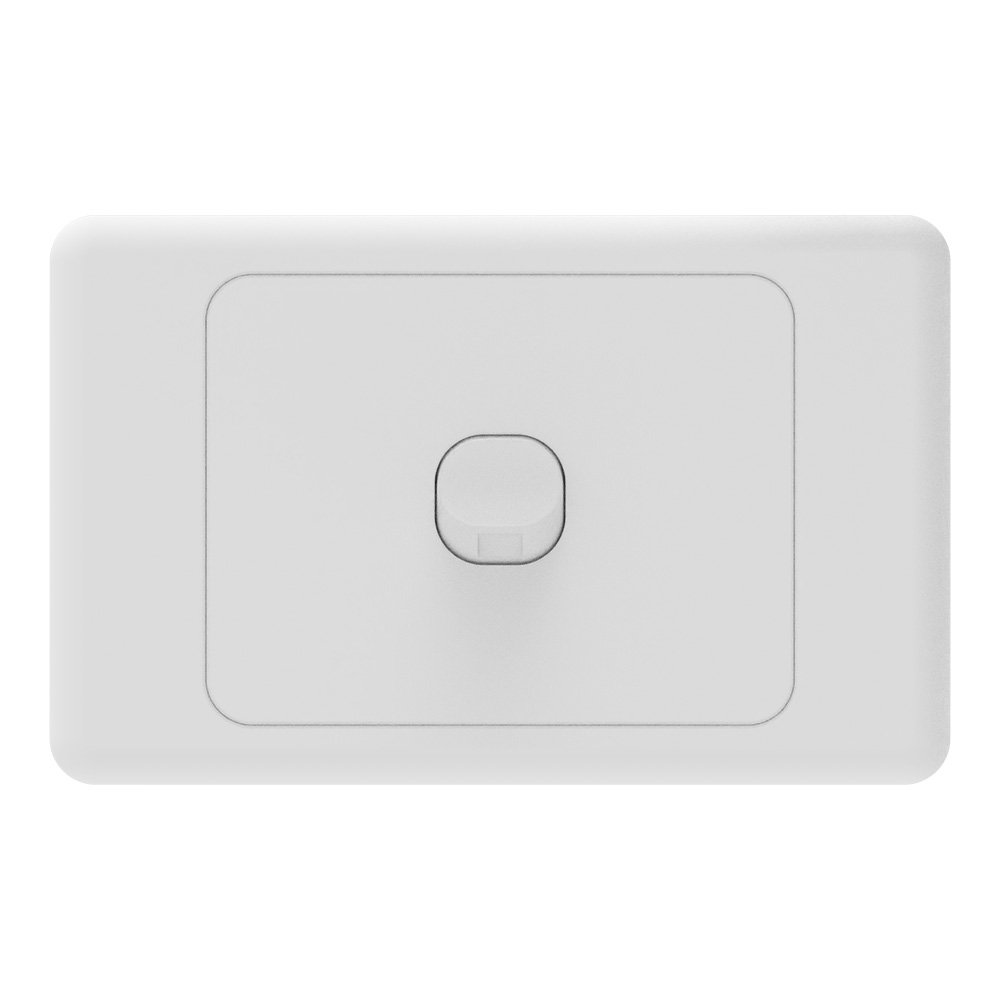
Browse fully certified Australian RCD/RCBO protected outlets from Igoto. They’re built for wet areas, backed by compliance, and ready for immediate dispatch. Speak with our team to get specs, pricing, or bulk order support.
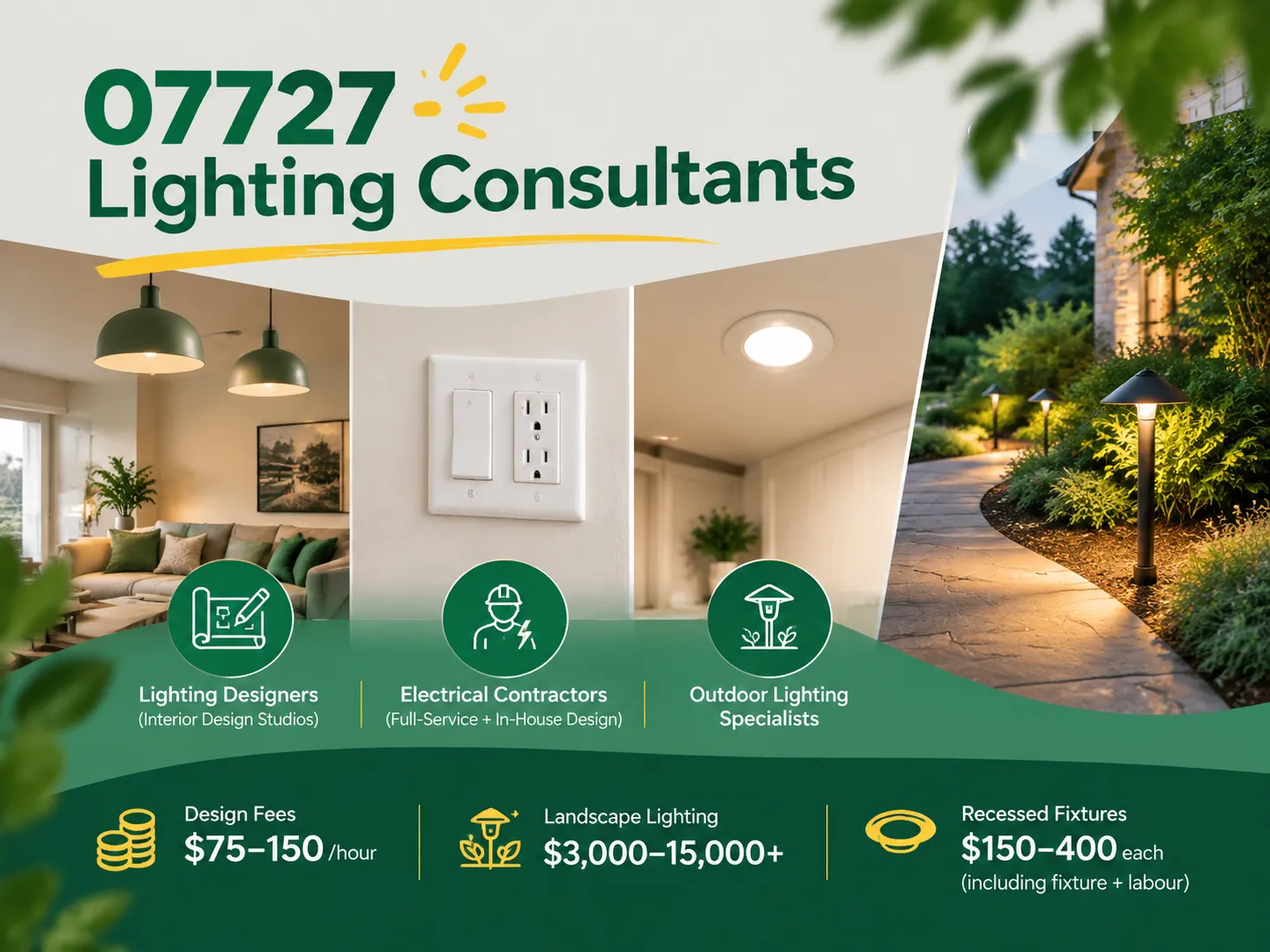
Farmingdale, along with parts of Wall Township and Tinton Falls, New Jersey, share the same zip code of 07727. Most of the houses built from the 1950s to the 1990s still exist today. Most of the homeowners are renovating their houses as opposed to building new homes. Homeowners tend to spend a lot more on […]
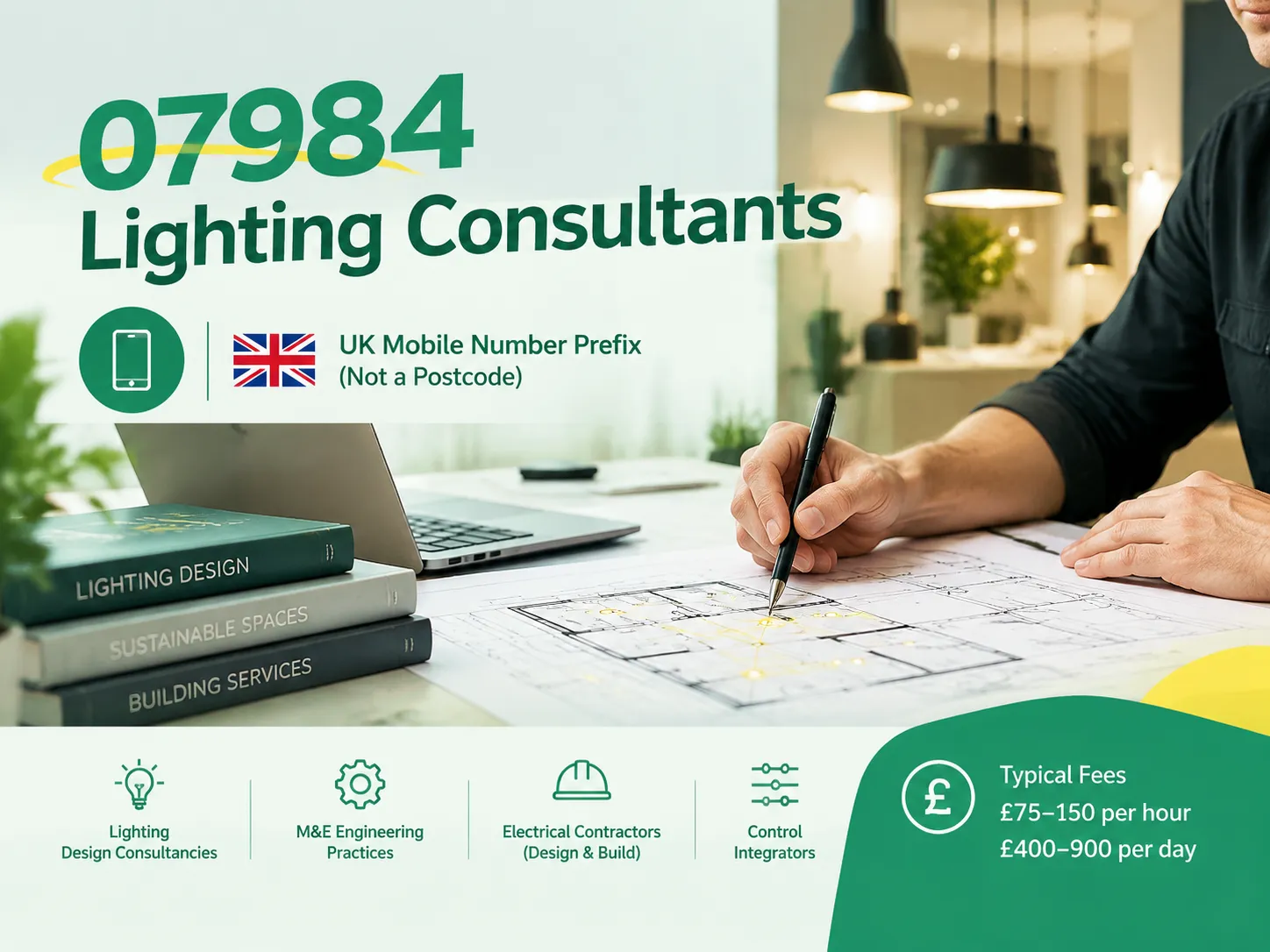
The term “07984 lighting consultants” gives people the impression that the five digits represent a postal code of some sort that indicates the place where lighting consultants provide services. This is, however, incorrect: there is no postal area coded 07984, which is only a code of mobile telecommunications in Great Britain. This means that the […]
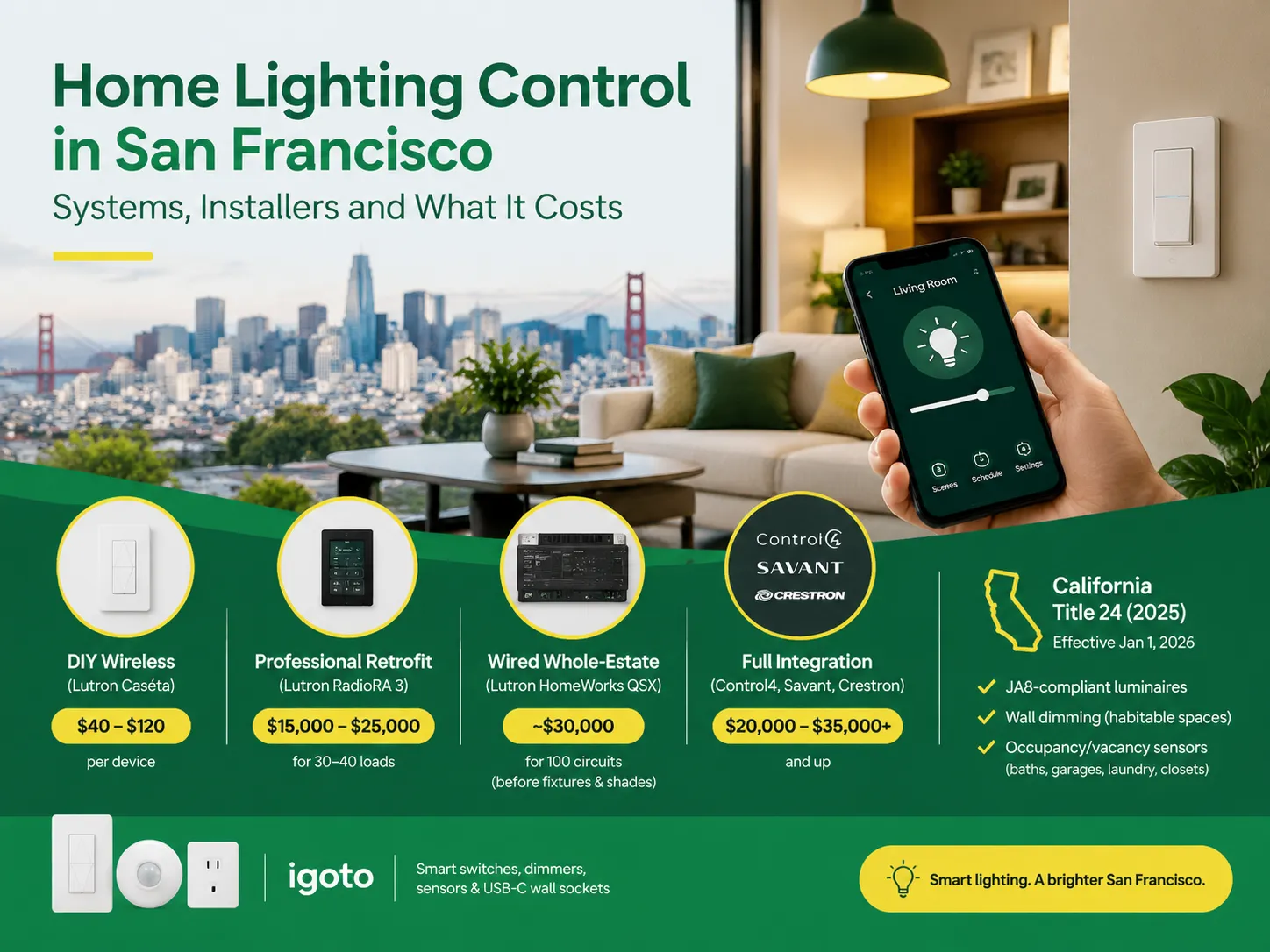
San Francisco is not the average lighting control market. The housing stock is old and dense, and the electrical code does not allow for as many electrical installations as is allowed almost anywhere else in the U.S. Most homes that want complex lighting are Victorian or Edwardian buildings where no one wants to start opening […]

 No.6 Tuozhan Road, Leshang Pioneer Park,Yueqingwan Bay Harbor,Yueqing city,Zhejiang Province


