

Modern kitchens need seven to ten separate circuits to handle everything safely. The exact number depends on your kitchen size, what appliances you’re using, and whether you cook with gas or electricity.
Most people think adding more outlets solves electrical problems. It doesn’t. You need separate circuits because different appliances pull different amounts of power, and running everything through one or two circuits trips your breaker.
Think about breakfast time. Your coffee maker, toaster, and microwave might all run at once. Each pulls 1000-1500 watts. Put them all on one 20-amp circuit, and you’re tripping breakers every morning.
We’ll reference NEC standards here because they’re used widely, but check with a local electrician. Every region has specific requirements, and what works in one place might not meet code in another.
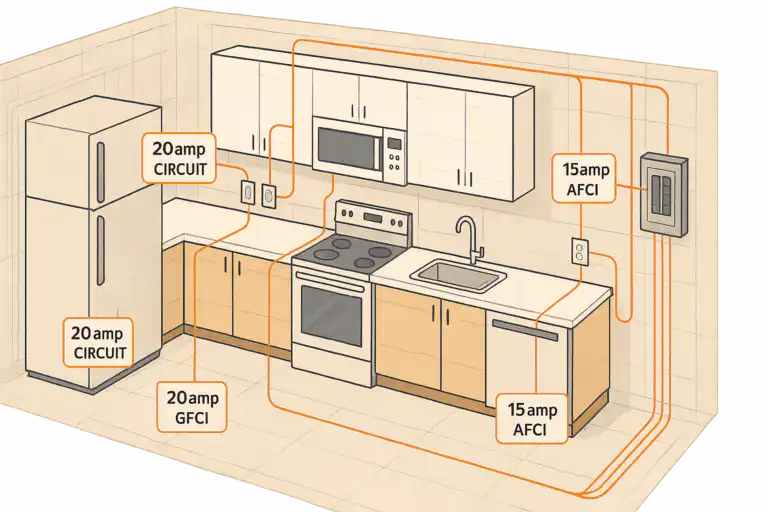
NEC requires at least two 20-amp outlets in kitchen countertop areas. These circuits can’t power your lights or anything else.
Why two circuits instead of one? Because when you’re cooking, you might run your stand mixer while the coffee brews and the bread toasts. One circuit can’t handle that load.
These circuits serve your everyday appliances. Coffee makers, toasters, blenders, and food processors. Spreading them across two circuits means you won’t trip breakers when making breakfast or prepping dinner.
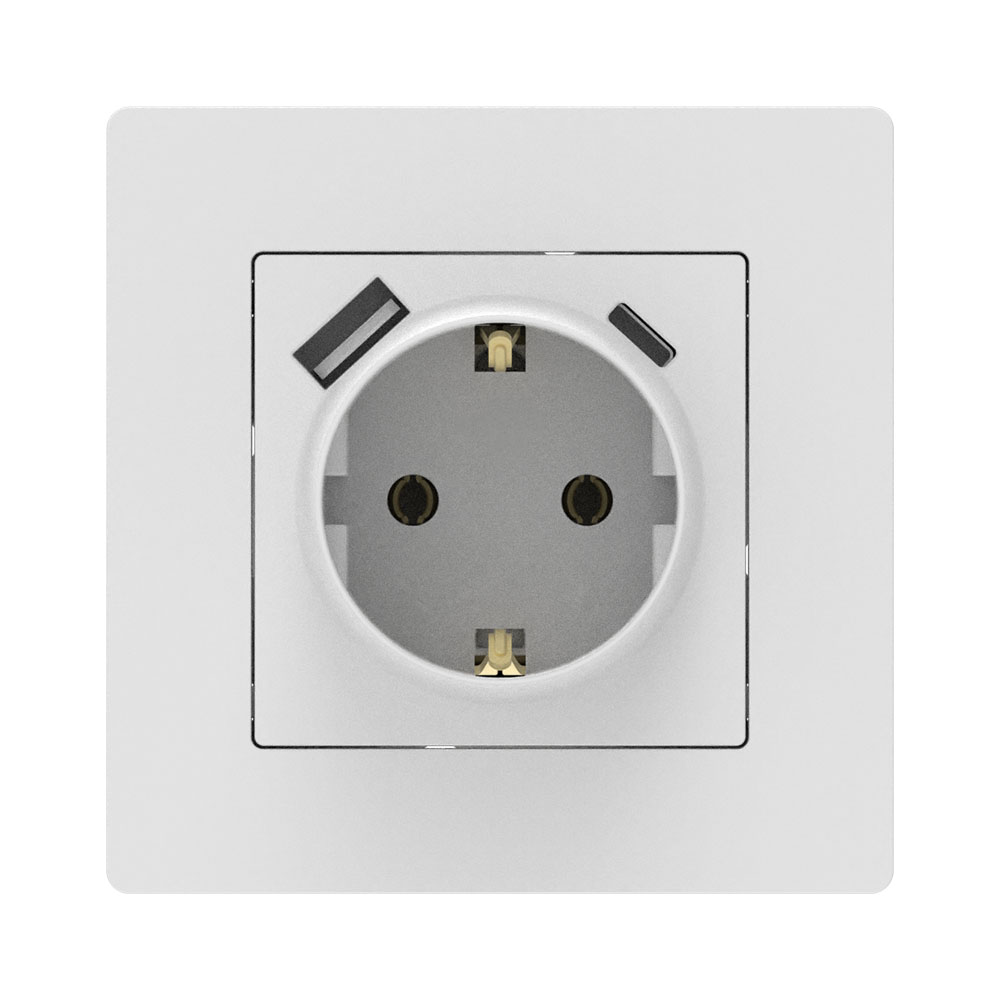
Explore our premium G3-121-A+C wall socket, designed for EU standards. Perfect for modern homes and offices.
View Product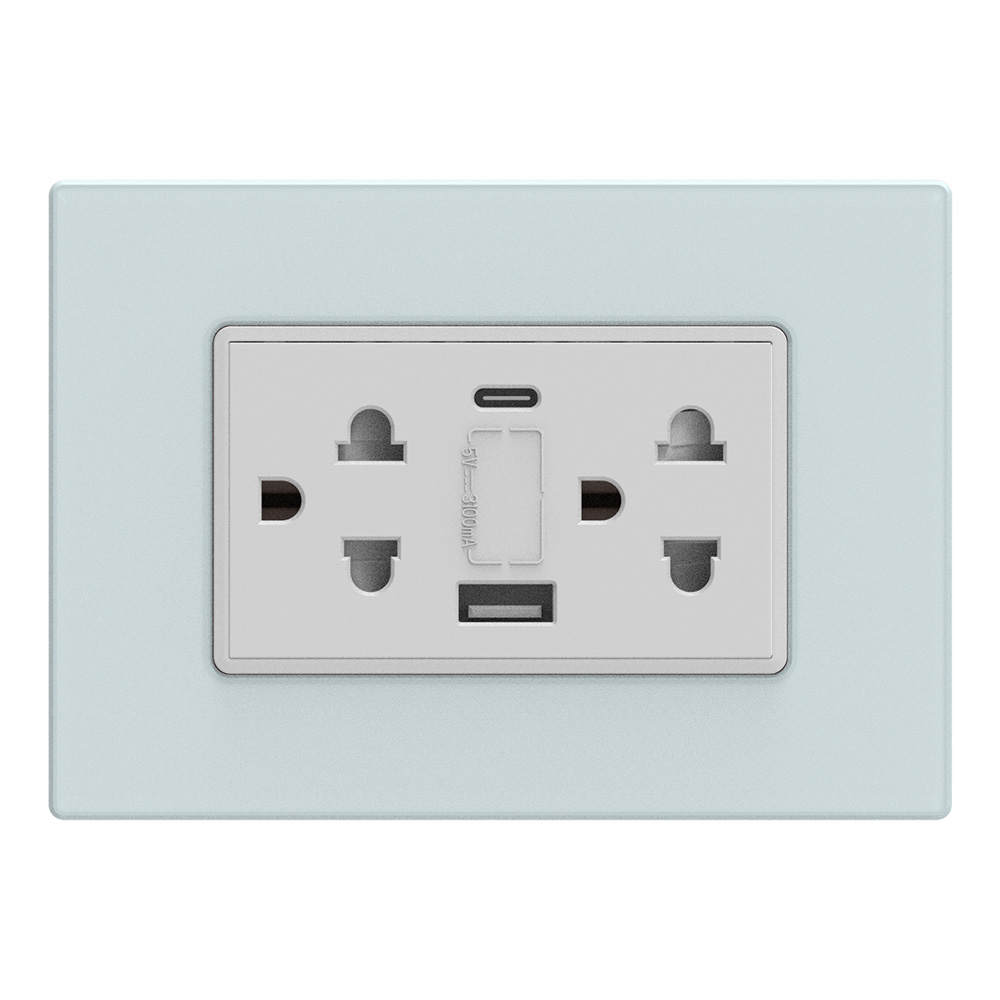
Check out our US Standard VA105D/2-U2 wall socket, built for safety and performance in any environment.
View ProductYour fridge needs its own 20-amp circuit. So does your dishwasher, garbage disposal, and microwave. Why? These appliances draw heavy loads that would overload shared circuits.
Refrigerators run 24/7 even though they cycle on and off. Sharing that circuit with other appliances means your fridge competes for power, and one day you’ll come home to spoiled food because a breaker tripped while you were out.
Electric ranges pull 240 volts at 50 amps. That’s why they get their own circuit. Gas ranges still need a 120-volt circuit because the ignition system and controls require electricity.
| Kitchen Type | Typical Circuit Count | Key Components |
| Small Apartment | 4–5 | 2 SABCs, Fridge, Range, Lighting/Dishwasher combo |
| Standard Family Kitchen | 7–8 | 2 SABCs, Fridge, Dishwasher, Disposal, Microwave, Range, Lights |
| High-End Electric | 10+ | 2-3 SABCs, Individual circuits for all major appliances, Island, Multiple Light Zones |
You can’t stick outlets wherever looks convenient. Placement affects both safety and how your kitchen works.
NEC says no point along your wall can be more than 24 inches from an outlet. This means outlets every 4 feet along your countertops, which is where kitchen receptacle spacing standards come from.
Why so many? Appliance cords are 2 feet long, and running extension cords across counters where you’re cutting and cooking creates safety hazards.
Most kitchens end up with 6-8 outlets along backsplashes just to meet this spacing requirement. Islands need at least one outlet for every 9 square feet of counter space because otherwise you’re unplugging appliances or draping cords across walkways.
When replacing kitchen outlets for major appliances, hide them behind the units. Your fridge outlet should sit directly behind the fridge or in the adjacent cabinet.
Microwave outlets are installed in the cabinet above for built-ins. Dishwasher outlets go in the sink base cabinet next door. You want them accessible for repairs, but not visible because exposed cords look messy and create cleaning headaches.
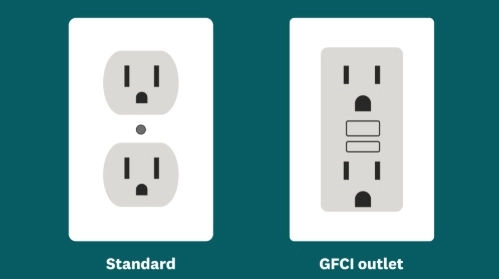
Kitchens mix water and electricity, which creates electrocution risks. That’s why kitchen GFCI protection exists.
GFCI devices watch the electrical current flowing through a circuit. The instant they detect any current leaking to ground, they kill the power. This happens in milliseconds, fast enough to prevent fatal shocks.
You have two installation options. Put GFCI outlets as the first outlet on each circuit, or install GFCI breakers in your electrical panel. Both work for safety, though GFCI outlets make troubleshooting easier since you can see which circuit tripped.
Test those monthly buttons. A GFCI that doesn’t trip when you hit “test” isn’t protecting you and needs replacement.
Good kitchen lighting isn’t one bright ceiling fixture. You need layers because different tasks need different light.
Overhead lights handle general visibility. Recessed cans or flush ceiling fixtures spread light evenly so you’re not working in shadows.
Under-cabinet strips light up your countertops. Try chopping vegetables with only overhead light and you’ll understand why – your hands and body block the light where you need to see.
Island pendants do double duty. They light the workspace when you’re cooking and set the mood when you’re eating. That’s why dimmers matter here – bright for food prep, dim for dinner.
Get dimmers for your island lights. The ability to go from full brightness while cooking to soft lighting during dinner makes your kitchen more useful.
Make sure those dimmers work with LED bulbs. Old dimmers designed for incandescent bulbs cause LEDs to flicker, which gets annoying and can trigger headaches.
For heavy-duty circuits running multiple hardwired appliances, double pole switches give you better control and safety by cutting power to both hot wires simultaneously.
Kitchens destroy cheap electrical components. Heat from cooking, steam from boiling water, grease splatters, and cleaning take their toll.
Get outlets with built-in USB ports for your countertop circuits. Your phone charges without taking up the outlet you need for your toaster, which matters when you’re using the kitchen.
Different materials handle kitchen abuse differently:
Check out different materials and finishes to match your kitchen style without sacrificing durability.
CE, CB, RoHS, REACH, and SAA certifications mean the product passed safety testing. Inspectors recognize these, and you’ll pass compliance audits.
Seeing examples makes circuit planning clearer. Here are two layouts with circuits and kitchen outlet requirements.
Small kitchens need fewer circuits because you have fewer appliances competing for power.
Circuits:
Outlets: 4 outlets along your counter, plus 2 hidden behind your fridge and dishwasher
Switches: One 2-gang panel handling your main light and under-cabinet strips
Bigger kitchens with more appliances need more circuits to avoid breaker trips.
Circuits:
Outlets: 8-10 counter outlets, including 2 on your island, plus hidden appliance outlets
Switches: One 4-gang panel controlling ceiling lights, island pendants, under-cabinet strips, and toe-kick lighting
These examples give you starting points, not final answers. Get a licensed electrician to design your system based on your appliances and local codes.
It depends on your kitchen size and what you’re installing. Small apartments get by with 4-5 circuits. Standard family kitchens need 7-8. High-end kitchens with all-electric appliances need 10 or more because every major appliance gets its own circuit.
Yes, every outlet serving your countertops needs GFCI protection. That’s the current code everywhere because kitchens have water and electricity in close proximity.
Not for major appliances. Your fridge, dishwasher, microwave, and range each need their own circuits. Only your small countertop appliances can share the two 20-amp SABC circuits.
Put them on the sides or ends of your island, not on top. You need at least one outlet for every 9 square feet of island counter space. Top-mounted outlets get in the way when you’re using the counter.
Kitchen electrical planning isn’t something to guess at. The circuits you install today determine whether your kitchen runs smoothly or constantly trips breakers for the next 20 years.
Before starting any installation, talk to a licensed electrician who understands your local electrical codes. They can confirm the correct number of circuits, outlet spacing, and GFCI protection required for your kitchen layout.
Just as important is choosing reliable electrical components. Kitchens expose switches and sockets to heat, steam, grease, and constant daily use. Low-quality outlets may fail quickly, especially when installed behind appliances where replacement becomes difficult and expensive.
For contractors, distributors, and project developers looking for durable solutions, IGOTO Electric manufactures high-performance wall switches and sockets designed for modern residential environments. With over 25 years of manufacturing experience, IGOTO provides products that combine safety, durability, and international compliance, including SAA, CE, CB, PS, TISI, and INMETRO certifications for global markets.If you’re sourcing switches and sockets for residential projects or distribution, explore IGOTO’s certified product range or request free samples to evaluate quality and performance.

Farmingdale, along with parts of Wall Township and Tinton Falls, New Jersey, share the same zip code of 07727. Most of the houses built from the 1950s to the 1990s still exist today. Most of the homeowners are renovating their houses as opposed to building new homes. Homeowners tend to spend a lot more on […]

The term “07984 lighting consultants” gives people the impression that the five digits represent a postal code of some sort that indicates the place where lighting consultants provide services. This is, however, incorrect: there is no postal area coded 07984, which is only a code of mobile telecommunications in Great Britain. This means that the […]

San Francisco is not the average lighting control market. The housing stock is old and dense, and the electrical code does not allow for as many electrical installations as is allowed almost anywhere else in the U.S. Most homes that want complex lighting are Victorian or Edwardian buildings where no one wants to start opening […]

 No.6 Tuozhan Road, Leshang Pioneer Park,Yueqingwan Bay Harbor,Yueqing city,Zhejiang Province


