

Power outlets in Europe differ from those in the US mainly due to historical development, variations in voltage standards, and safety regulations.
European countries standardized their outlets to support 220-240V systems, while the US adopted a 110-120V standard, influencing power outlet design and functionality.
These differences reflect the distinct technological advancements and safety protocols each region prioritized over time.
The US and the UK have different plugs due to their independent development of electrical systems and safety standards.
After World War II, the UK adopted the BS 1363 plug, which includes a grounding pin for safety and is designed to handle the UK’s higher voltage of 230V.
In contrast, the US had already standardized its electrical system at 110-120V and adopted the NEMA 1 and 5 plugs, which are simpler and smaller.
The variations in voltage and safety regulations led each country to create plugs and outlets best suited to their respective systems.
A US power outlet typically has two vertical slots, often with a small round hole below them for the grounding pin.
The two slots represent the live and neutral connections, while the hole at the bottom is for grounding.
US outlets are designed for 110-120V electrical systems and usually support two-prong or three-prong plugs.
The UK’s electrical system is very similar to that of continental Europe, operating at 230 Volts (V) and a frequency of 50 Hertz (Hz). While the voltage and frequency are nearly identical to the rest of Europe, the UK developed its own unique and highly safe plug and socket system (BS 1363) after World War II.
A UK power outlet, also known as a BS 1363 outlet, features three rectangular slots in a triangular configuration.
The top slot is for the grounding pin, while the bottom two are for the live and neutral connections.
The UK outlet is designed for a 230V system and is considered one of the safest due to its built-in fuse, which protects against overloading.
The electrical grid across most of Europe operates on a higher standard of 220-240 Volts (V). The frequency of the current is 50 Hertz (Hz). This 230V/50Hz system was adopted for its efficiency in power transmission over long distances. This is the standard that appliances sold in Europe are built for.
Understanding the differences is good, but knowing exactly what to do is better. This guide will walk you through three simple steps to ensure your devices work safely in Europe, so you can travel without worry.
This is the most important step. Every electronic device has a power label, usually on the charger, power adapter, or on the back of the device itself. Find the text that says “INPUT”.
(Here, you should insert a clear picture showing the “INPUT: 100-240V, 50/60Hz” text on a real charger, like a laptop or phone charger.)
Many travelers confuse these two tools, but using the wrong one is a costly mistake.
(Here, you should insert a picture showing a simple plug adapter next to a heavier, bulkier voltage converter for a clear visual comparison.)
This is the most common and dangerous mistake travelers make.
WARNING: Never use a standard American hair dryer, straightener, or curling iron in Europe with only a simple plug adapter. It will overheat, melt, and likely catch fire.
Most travel voltage converters are only designed for low-power items (under 100W). A typical American hair dryer can use up to 1875W, which will instantly overload and destroy a small converter.
Your Safest Options:
By following these three steps, you can be confident that your electronics will be safe and functional throughout your European adventure.
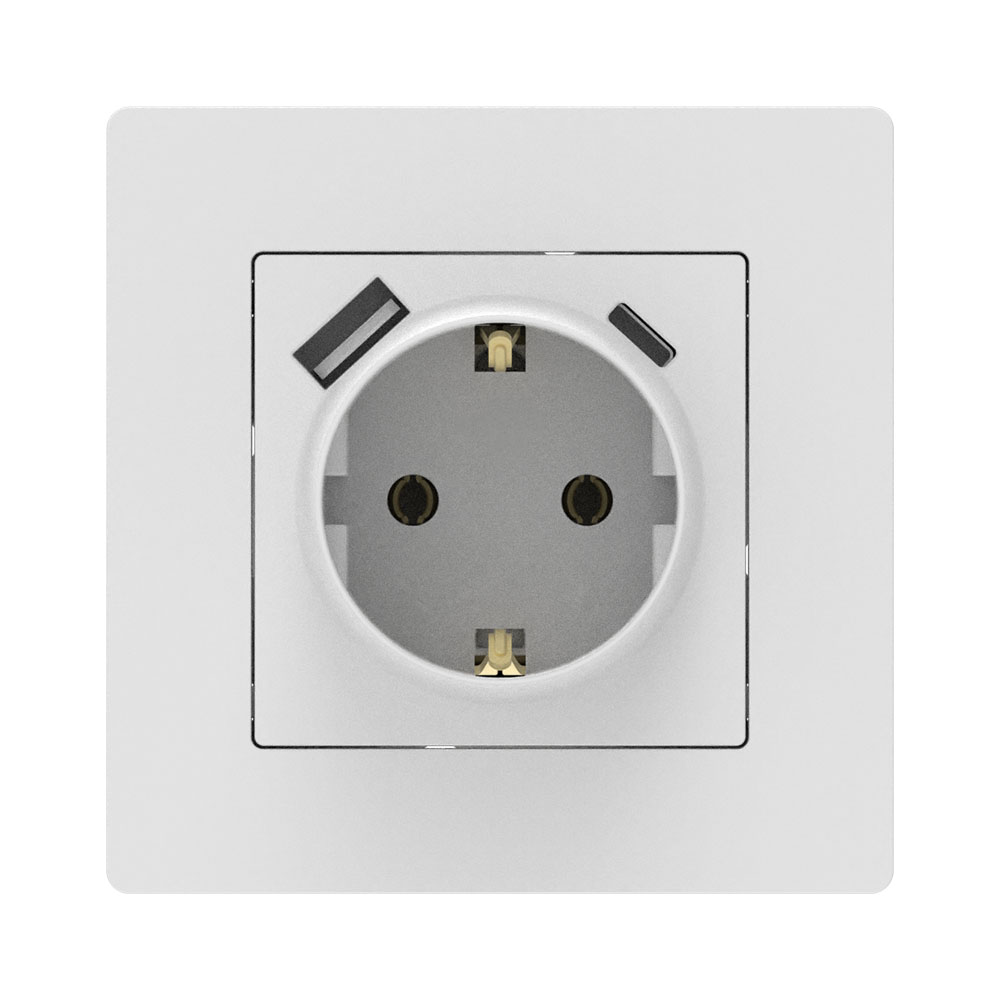
Elegant design with integrated Type A+C ports for efficient multi-device charging.
View Product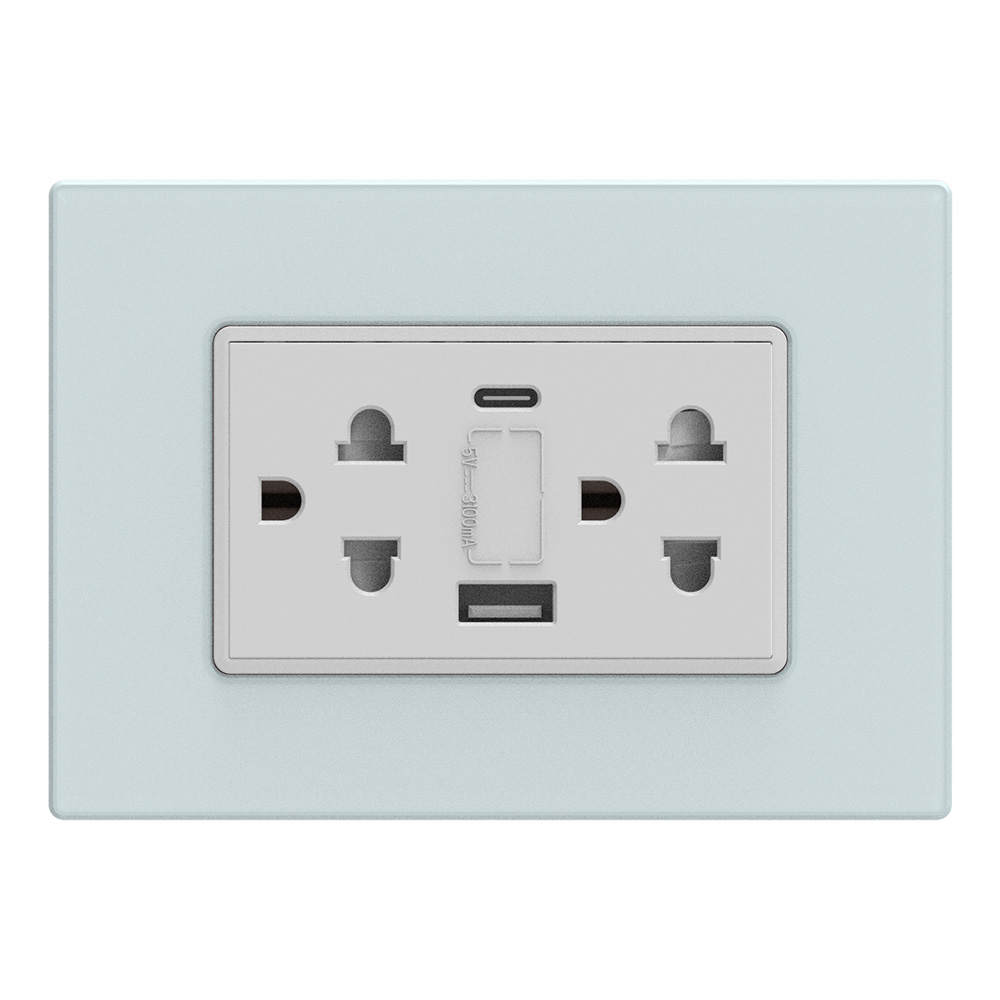
Dual USB ports and universal socket—perfect for modern American living spaces.
View Product
The term “07984 lighting consultants” gives people the impression that the five digits represent a postal code of some sort that indicates the place where lighting consultants provide services. This is, however, incorrect: there is no postal area coded 07984, which is only a code of mobile telecommunications in Great Britain. This means that the […]

San Francisco is not the average lighting control market. The housing stock is old and dense, and the electrical code does not allow for as many electrical installations as is allowed almost anywhere else in the U.S. Most homes that want complex lighting are Victorian or Edwardian buildings where no one wants to start opening […]
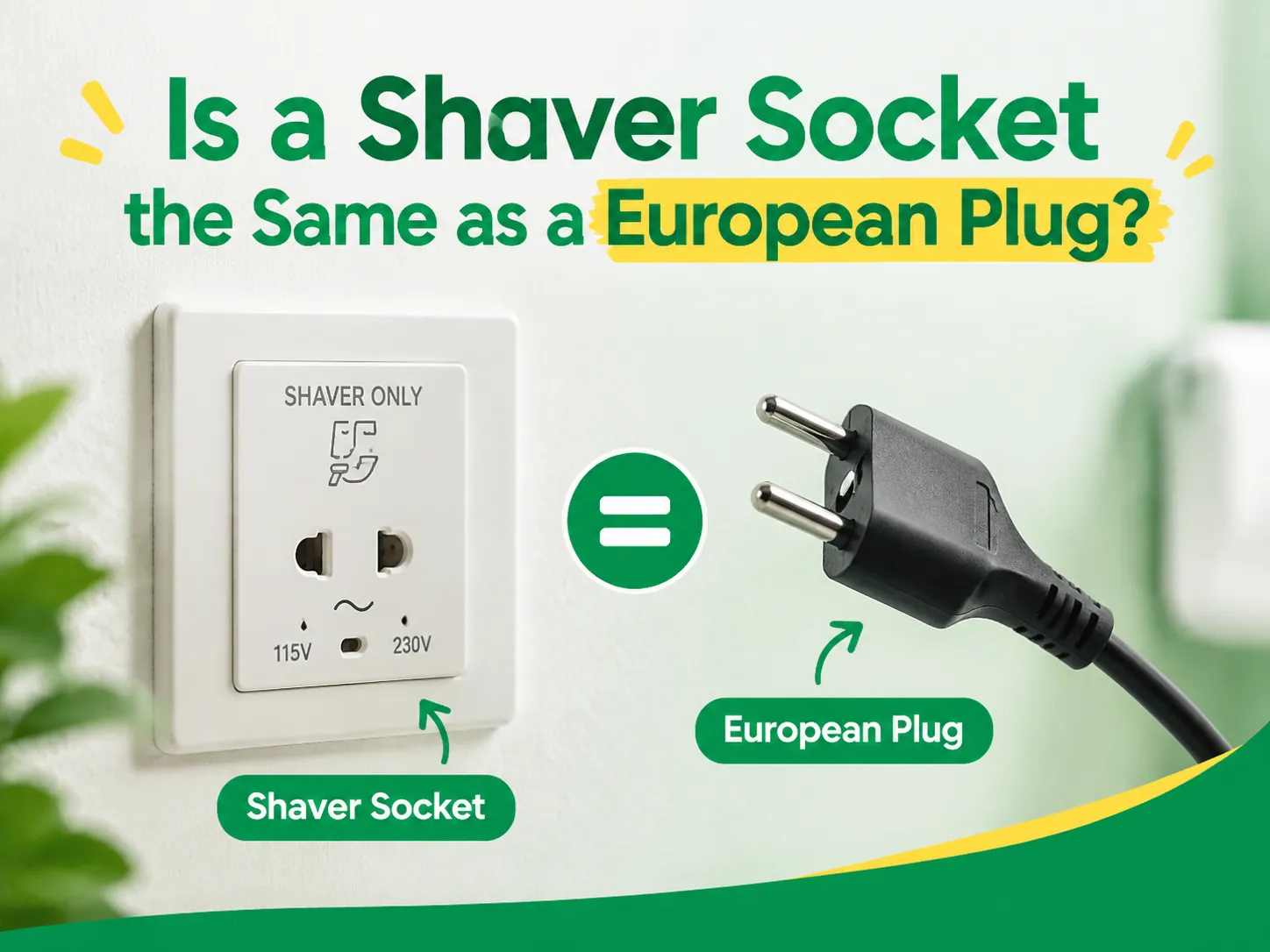
Although they seem to be alike, they both have a round shape with two pins, and they function at a voltage of 230V. This explains why some tourists use a European plug with a British shaver or wonder why a shaver cannot be plugged into a Schuko socket in a Spanish hotel. In reality, they […]

 No.6 Tuozhan Road, Leshang Pioneer Park,Yueqingwan Bay Harbor,Yueqing city,Zhejiang Province


