

Brazil electrical socket type refers to the standardized electrical outlet system used across Brazil, primarily based on the Type N plug standard under NBR 14136. It defines how electrical devices connect to power sources in the country, including safety grounding, plug compatibility, and voltage variation.
Brazil is unique when it comes to electrical sockets. This is because the country has transitioned to a newer, standardized plug type in recent years. Although older plug types are still in limited use.
This post is designed to help you understand the electrical sockets used in Brazil. Let’s unpack the standards, safety measures, and tools you’ll need to power up in Brazil.
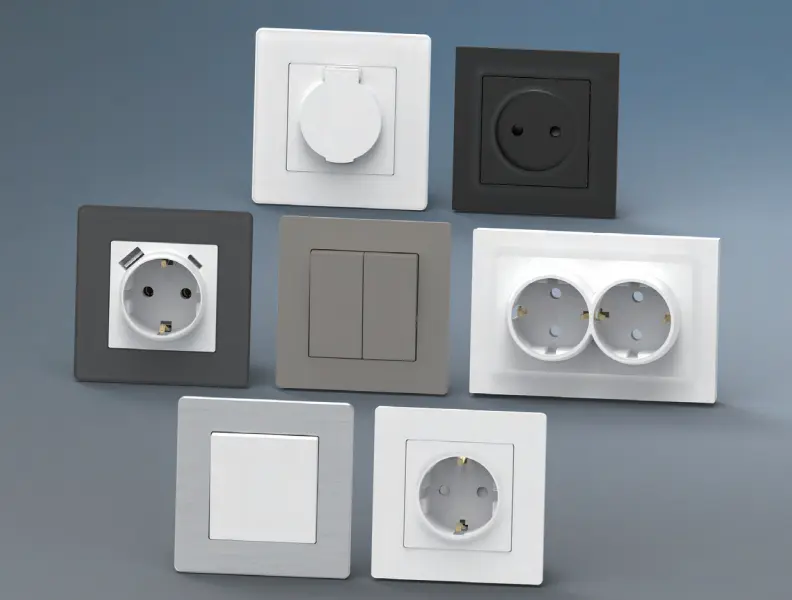
Brazil primarily uses Type N sockets. These have a design that was introduced to create a standardized electrical outlet across the country. However, older systems featuring the Type C plug are still encountered in specific locations.
To grasp the landscape of Brazil’s electric socket standards, it’s essential to explore these types in detail.
The Brazil electrical socket type is officially defined by the Type N plug standard under NBR 14136. This standard was introduced to unify all power outlets in Brazil and improve electrical safety and compatibility.
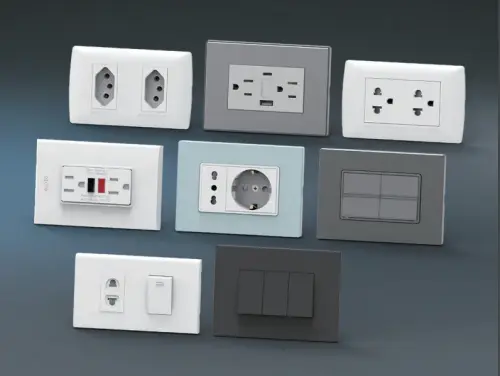
The Type N socket is distinct from sockets in most other countries. This fact may raise questions like, “Is Brazil plug the same as Europe?” While it shares similarities with European Type C plugs, it differs significantly due to its grounding mechanism and overall design.
Although Brazil electrical socket type is standardized under Type N, legacy Type C plugs can still be found in older installations and low-power applications.
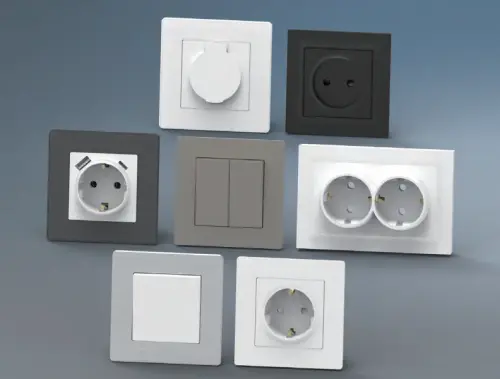
Brazil electrical socket type is mainly based on Type N, which includes grounding and higher safety standards. In contrast, Type C plugs do not include grounding and are considered less suitable for high-power appliances. Compared with European plug systems, Brazil’s Type N socket uses a recessed design for improved safety.
One of the more confusing aspects of Brazil’s electric socket usage is the dual-voltage system. Different regions of Brazil operate on distinct voltage standards:
This dual system necessitates careful consideration when plugging in devices, especially for travelers. Many appliances sold in Brazil are designed for dual-voltage operation, but foreign devices may require a voltage converter.
In addition to voltage differences, the electrical frequency in Brazil is 60Hz. This is consistent across the country. It leads to the simplification of appliance compatibility as compared to voltage. Travelers visiting Brazil should ensure their devices support 60Hz frequency to avoid performance issues.
The NBR 14136 standard established the Type N socket as Brazil’s official power outlet. This shift was designed to:
Despite the transition, the legacy of Type C plugs remains in older buildings, highlighting the gradual pace of infrastructure updates.
For manufacturers, importers, and electrical distributors, understanding the Brazil electrical socket type is essential for ensuring product compliance with NBR 14136 standards and successful market entry into Brazil.
Brazil’s electrical infrastructure is governed by rigorous electrical safety standards. This is particularly true for newer installations using Type N sockets. Key safety measures include:
Grounding is a crucial safety feature integrated into modern electrical systems, including Brazil’s Type N sockets. The grounding mechanism adds an extra layer of protection against electrical faults. These may include power surges or wiring malfunctions. Here’s how it works:
Some countries use flush sockets that leave the pins partially exposed. On the other hand, Brazil’s recessed design aligns with international safety standards.
The adoption of standardized Brazilian power outlets, particularly the Type N socket, has streamlined electrical compatibility across the country. This standardization accomplishes two things:
For travelers and expatriates, understanding the nuances of Brazil’s power socket type is crucial. Here’s what you need to know:
To connect foreign devices to Brazilian power outlets, a plug adapter is essential. Universal adapters typically support both Type N sockets and Type C plugs.
Devices not designed for dual-voltage operation require a converter. Always verify the voltage compatibility of your appliances before use.
Most modern appliances, like smartphones and laptops, are designed for 110V and 220V operation. Check the voltage label on your device to confirm.
| Aspect | Details |
| Primary Socket Type | Type N socket (Standardized under NBR 14136 standard). |
| Legacy Socket Type | Type C plug (Still found in older installations). |
| Voltage in Brazil | Dual voltage system: 110V and 220V, varying by region. |
| Electrical Frequency | 60Hz, consistent nationwide. |
| Grounding Mechanism | Present in Type N sockets, absent in Type C plugs. |
| Safety Standards | Grounding, recessed sockets, and regulated voltage ensure safety. |
| Compatibility with Europe? | No, adapters are needed for European devices. |
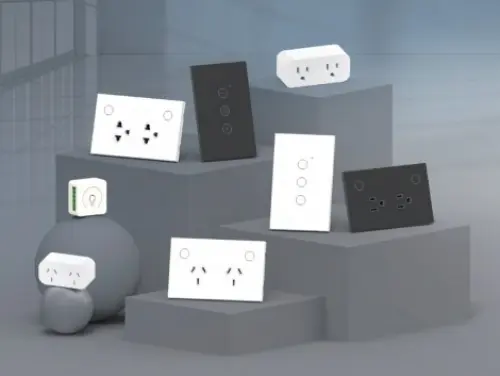
IGOTO Electric is a leading B2B manufacturer specializing in electrical components.
At IGOTO Electric, we offer products that meet international standards, including sockets compatible with Brazil’s specific requirements(European standard wall socket), Australian sockets, and Vietnam wall sockets and switches, ensuring reliable and safe installations for businesses operating in different countries
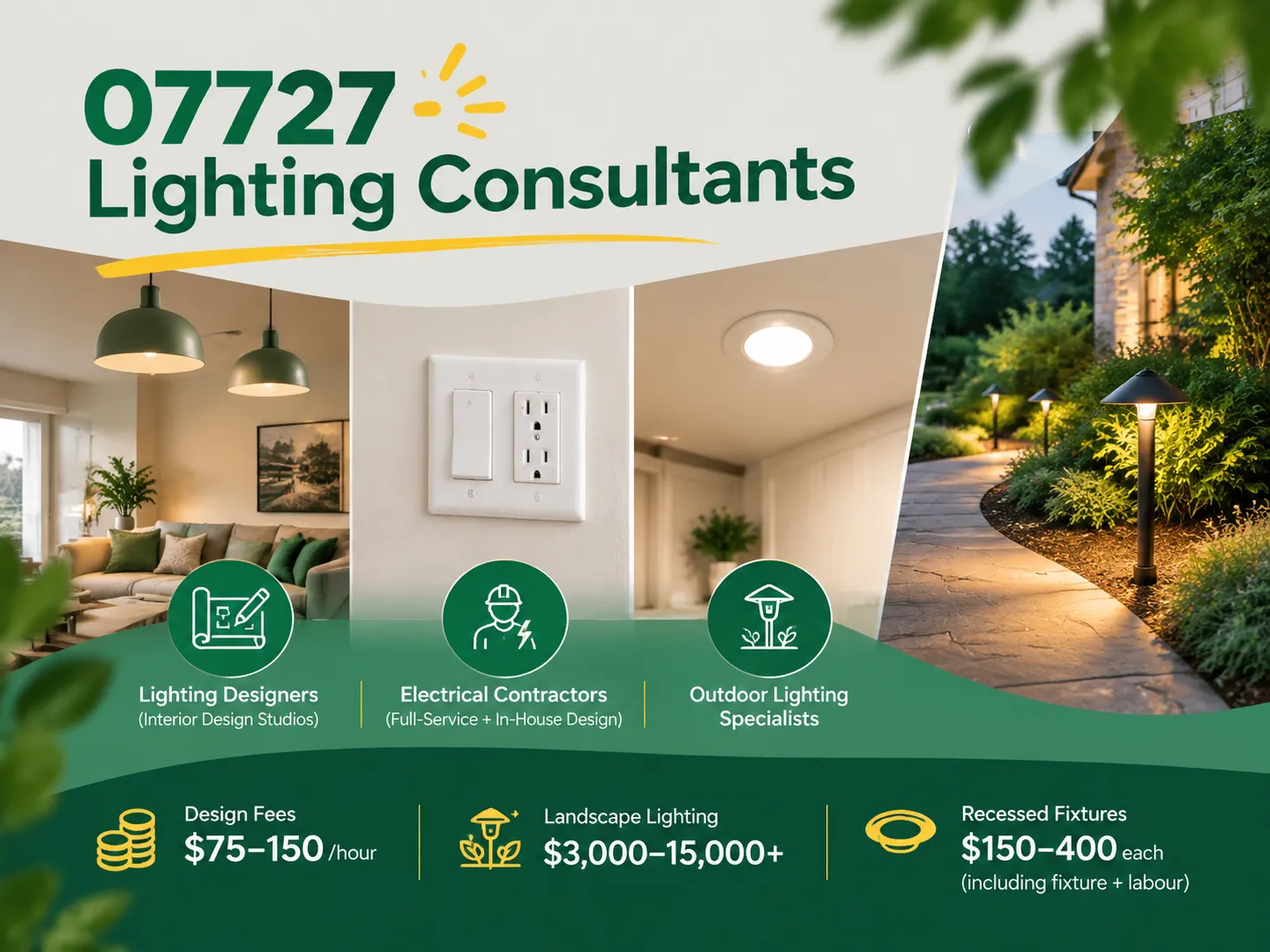
Farmingdale, along with parts of Wall Township and Tinton Falls, New Jersey, share the same zip code of 07727. Most of the houses built from the 1950s to the 1990s still exist today. Most of the homeowners are renovating their houses as opposed to building new homes. Homeowners tend to spend a lot more on […]

The term “07984 lighting consultants” gives people the impression that the five digits represent a postal code of some sort that indicates the place where lighting consultants provide services. This is, however, incorrect: there is no postal area coded 07984, which is only a code of mobile telecommunications in Great Britain. This means that the […]
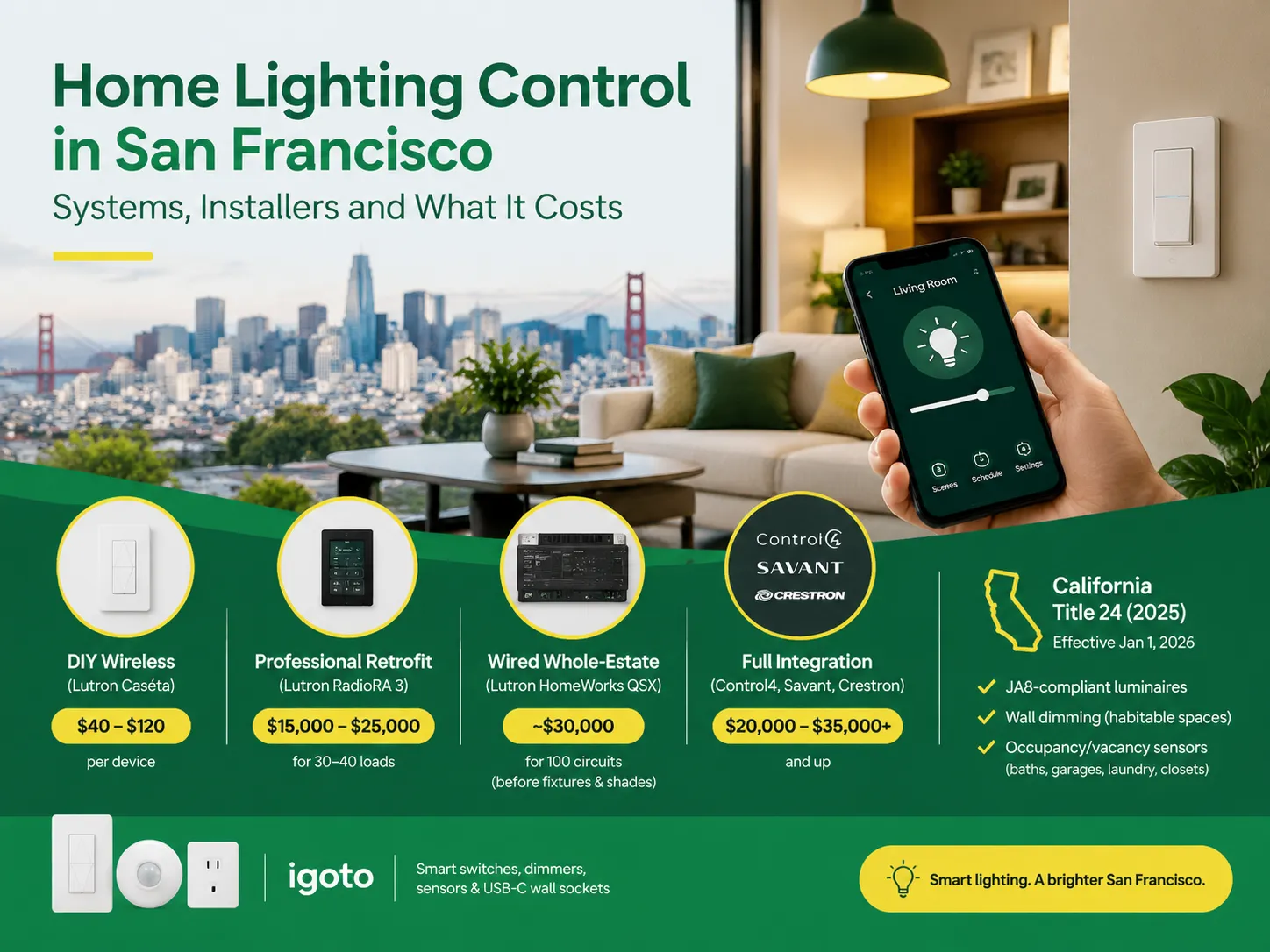
San Francisco is not the average lighting control market. The housing stock is old and dense, and the electrical code does not allow for as many electrical installations as is allowed almost anywhere else in the U.S. Most homes that want complex lighting are Victorian or Edwardian buildings where no one wants to start opening […]

 No.6 Tuozhan Road, Leshang Pioneer Park,Yueqingwan Bay Harbor,Yueqing city,Zhejiang Province


