

Electricians need to know what types of electrical switches are available so they can choose the right ones when wiring a new house, upgrading old panels, or repairing systems. When you know what type of switch to use on your lighting circuit, outlet circuits, and appliance circuits, you can create a safe and reliable circuit control system. The basic classifications of electrical switches are by poles (number of circuits that can be controlled with one switch) and throws (how many positions you can turn the switch to). Knowing the different types of electrical switches will give you the flexibility to install them in a number of ways depending on your needs. In this article, we will compare the designs and functions of several types of electrical switches to help professionals pick the correct switch for their applications when specifying and installing switches from IGOTO Electric and other manufacturers.
An SPST is the simplest type of toggle switch (Single Pole, Single Throw). It has one fixed contact and one movable lever that either connects the circuit or separates it from the electrical source when activated by a person.
When you flip the toggle on your SPST switch, it will either permit or prevent electrical current from flowing from one terminal (the input side) to another terminal (the output side). A good example of how an SPST operates is to use it in a lighting application. You can mount a toggle switch on your wallplate and then flip the toggle down to turn on the ceiling light or flip the toggle up to turn it off.
Although SPST toggle switches can only be put in two positions (on/off), they are an excellent choice when you need to control something in a clear-cut manner, such as when controlling the light of a lamp. Because SPST toggle switches are so simple to manufacture, they are usually inexpensive, long-lasting products. Just be sure to select the appropriate amperage rating for the application before purchasing an SPST toggle switch.
A single pole double throw switch has a common terminal and two other terminals connected to it. It can pivot in either direction to connect to either terminal. This is a simple way to connect to either a power source from the main grid or a generator (for instance) to a transfer panel or to control low voltage devices.Like the SPST toggle switches, the functions of both switches are limited to two positions, but SPDT switches allow for two different load connections, while SPST toggles are limited to only one load. Ensure that your SPDT switches match the power load and voltage of your current load and application.
DPST (Double Pole, Single Throw) is a type of switch that consists of two individual stationary contacts and two independent toggle switches that control those contacts. The two sets of internal contacts connect or disconnect at the same time with one flip of the switch. DPST switches can control two separate circuits without any crossover between the two. Because of this, the DPST is commonly used for 240 volt appliances such as stoves, dryers and air conditioning units. For example, the two poles of the switch control the two hot lines coming from the power source to the appliance, while maintaining the continuous connection of the neutral and ground circuits.
DPST switches are also suitable for the control of multi-phase equipment where it is necessary to provide synchronized switching. The double pole capability of the switch also permits the control of higher combined amperage than would be possible using a single pole switch.
The most sophisticated type of core switch is DPDT or Double Pole and Double Throw. Each DPDT switch consists of two individual stationary contact terminals and the two available positions where the contact terminals pivot to: One contact terminal connects to terminal One or the other contact terminal connects to terminal Two. Thus, by using a DPDT switch, there are four possible switchable contact terminals for each of the two poles that can be connected to different sources of electricity.
The DPDT switch is ideal for use with applications that require the ability to reverse the direction of the electric motor(s), as well as in applications that require the ability to provide DC power or AC power to equipment at the same time. The DPDT switch is also compatible with many types of lighting circuits that use more than one switch in two different locations. DPDT switches enable additional options for controlling and managing the operation of complex wiring grids and circuits. When using pilot lights or electrical contactors in conjunction with DPDT switches, the pilot light and DPDT switch combination indicate the status of the equipment being controlled. Just be sure that the voltage and current ratings of the devices being used in conjunction with DPDT switches do not exceed the voltage and current ratings of the switches.
With many different types of switches and hundreds of manufacturers producing them, it can be difficult for educated electricians to select the best option. In addition to identifying which type of switch and the configurations that are available, electricians should compare the most important specifications of the switches being considered.
A switch can fail to function correctly if the operating voltage exceeds the manufacturer’s specifications. Wall switches that are rated for standard applications such as lighting typically range from 120 to 240 volts. Equipment operating above this range normally use 480 or 600 volt switches.
Connect load currents at the switch with the ratings of the switch, based on the anticipated amp draw. Standard 15 amp switches are generally associated with average lighting loads, while motors and other loads that require larger current draws will require 20 amp and above rated switches. Select the appropriate rated switch for the equipment you are connecting.
There are two types of metals that can be used as the contact material in switches: (1) silver alloys; or (2) copper alloys. The benefit of using silver for switch contacts is that you can safely make smaller contact gaps with silver than you can with copper. However, because silver will degrade more quickly as the amount of current (amps) flowing through it increases, it has a shorter useful life (years) than copper when at its maximum rated current and requires cleaning more often than copper.On the other hand, while copper can handle high loads of current (amps), copper contacts typically require wider contact gaps than silver contacts and the initial cost of copper contacts is greater than that of silver contacts.
Indoor dry-service switches are enclosed in plain plastic, and outdoor and wet/damp locations include switches with enclosures built for moisture, UV rays, extreme temperatures, and physical abuse to ensure reliability under the stress encountered by electricians in most environments. Certified Watertight IP65/IP67 switches allow electricians to work under the worst conditions possible.
The SPST is designed for simply turning power on/off, and SPDT is intended for switching between two circuits. DPST controls two isolated circuits, while DPDT switches between all four connections of a dual pole circuit.
Commercial and residential electricians rely heavily on the IGOTO Electric line of superior-quality switches and outlets manufactured specifically for those applications. IGOTO Electric has been manufacturing high-quality, dependable, durable, and economical electrical switchgear to global standards for the past 27 years. You can purchase your wallplates, rocker switches, outlets, and other items directly from IGOTO Electric at guaranteed cost savings.
The proper selection of switch types to ensure security and usability is essential when installing new construction or upgrading existing systems. It is necessary to understand critical poles/throw classifications for each type of switch: SPST (single pole, single throw), SPDT (single-pole, double-throw), DPST (double-pole, single-throw), and DPDT (double-pole, double-throw).In terms of wiring, simple SPST toggles are a good choice for straightforward on/off operations, while SPDT switches provide more flexibility by allowing you to choose between two different power sources. If you require the ability to control two separate circuits using only a single switch, then consider using a DPST switch. DPDT switches offer even greater possibilities, allowing you to switch between as many as four different sources of power.
The Main Disconnect Switch or the Main Service Disconnect is the Main Electrical Control for the Entire Building’s Electrical System. Positioned near the Electric Meter, it Provides the Capability of Disconnecting All Available Electrical Power to the Building. Having a Main Disconnect Switch at your Building Location is Important for Ensuring the Safety of All Individuals Occupying the Property When Emergency Conditions Exist or Major Repairs to the Electrical System Are Required.
There are Many Standard Types of Light Switches, including: Toggle Switches (Flip-Type Switches), Rocker Switches (Press One End), Push-Button Switchers, Dimner Switches (Adjustable Brightness), Photo Sensors Switches (Motion Sensors), Timer Switches (Project Timer), Smart Switches (Remote Access), and 3-Way or 4-Way Switches (Many Control Points).
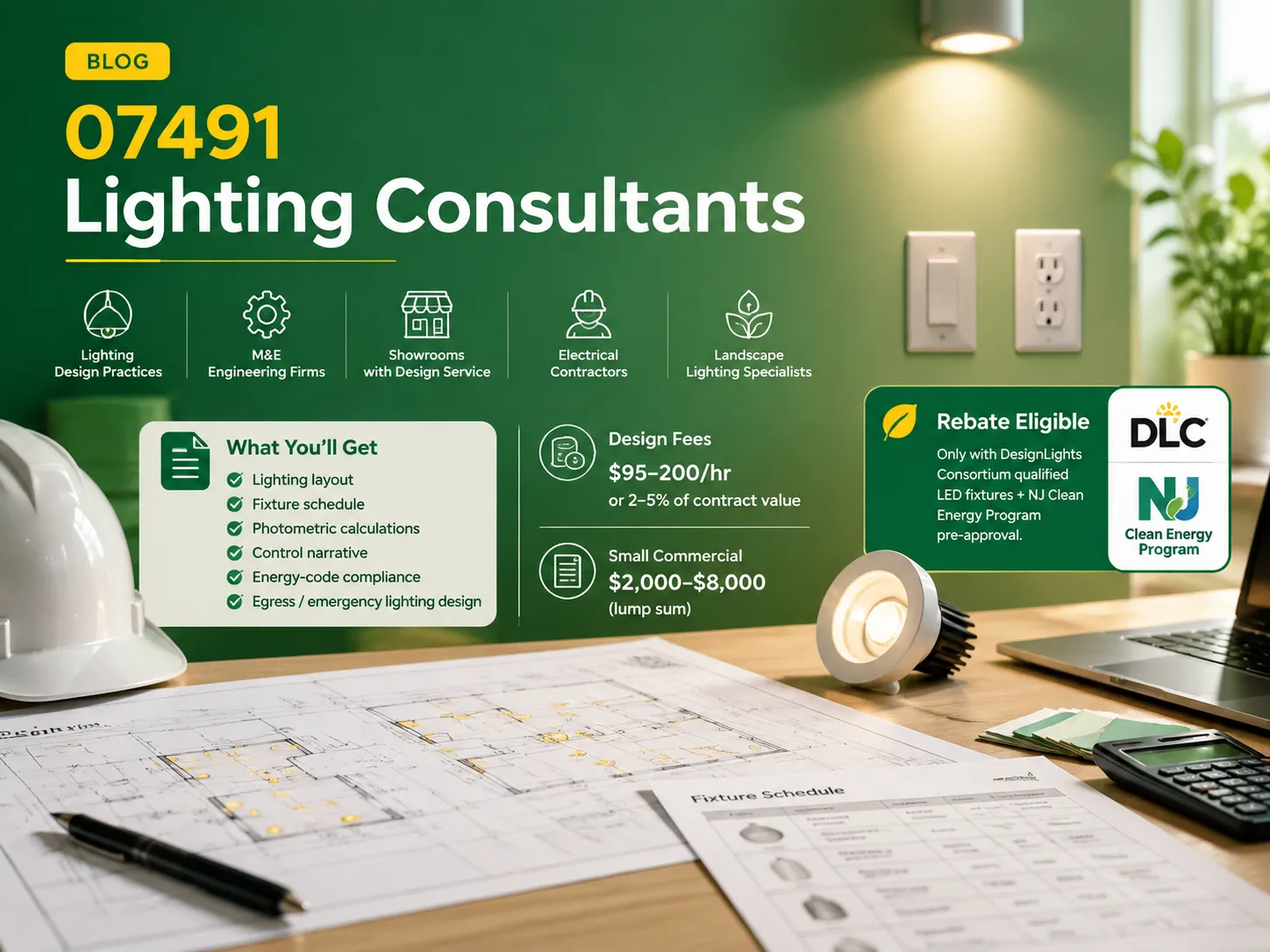
If you need assistance with lighting in the 07491 region, is essential to ask two crucial inquiries: who is operating nearby and how much is charged for the services. Concerning the first question, one can easily find the answer regarding the facts and figures because the market in northern New Jersey is not so broad. […]
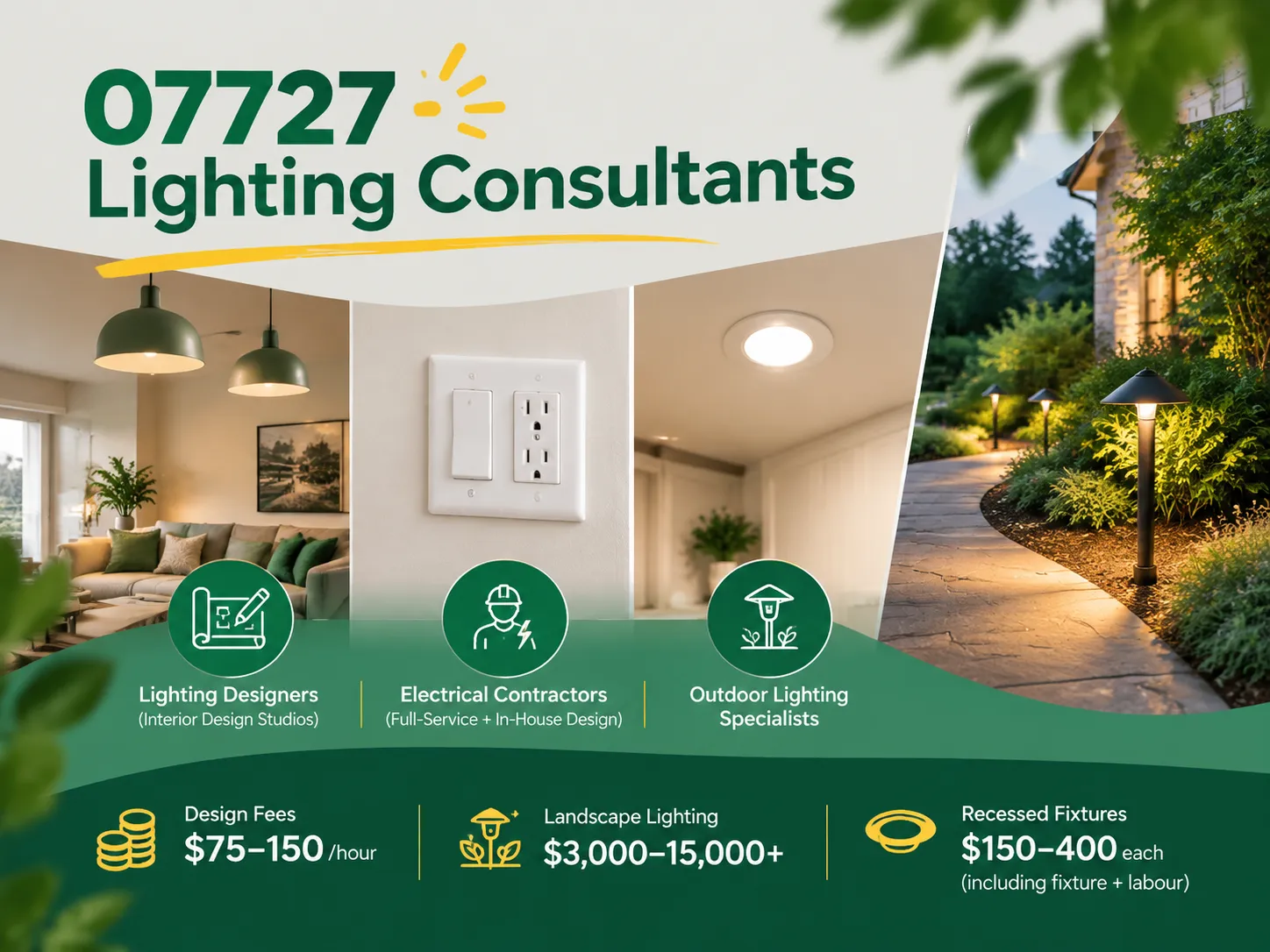
Farmingdale, along with parts of Wall Township and Tinton Falls, New Jersey, share the same zip code of 07727. Most of the houses built from the 1950s to the 1990s still exist today. Most of the homeowners are renovating their houses as opposed to building new homes. Homeowners tend to spend a lot more on […]

The term “07984 lighting consultants” gives people the impression that the five digits represent a postal code of some sort that indicates the place where lighting consultants provide services. This is, however, incorrect: there is no postal area coded 07984, which is only a code of mobile telecommunications in Great Britain. This means that the […]

 No.6 Tuozhan Road, Leshang Pioneer Park,Yueqingwan Bay Harbor,Yueqing city,Zhejiang Province


