

The Randolph township in Morris County is associated with postal code 07869 which is flanked by Dover in the west and Denville in the east. There is Route 10 which crosses the township; thousands of privately owned houses can be found in this township peppered throughout the green hills and woods. When you entered this number in the search for lighting professionals, your inquiry was possibly simpler than the one provided by the results of the search, namely: “Who should I call and how much would it cost me?” but that is the main concern of this article; it would not touch upon the theory of lighting design but rather look closer into the local lighting market and the firms that are present in that market.
The township of Randolph in Morris County is assigned postal code 07869, bordered to the west by Dover and to the east by Denville. The township is crossed by Route 10 and is home to thousands of privately owned houses that are scattered around the green hills and woods area. When you typed this number to search for lighting specialists, you likely had an easier question in mind than what is presented in the search results, namely “Who should I contact and how much will I have to pay?” This is what this article is going to deal with as this article will not cover the basics of lighting design but will focus on the different players in the lighting business in this town.
The ZIP code indicates that you are located in Randolph Township. If you find yourself in Randolph Township, you will be operating in Morris County within the jurisdiction of JCP&L, and in a township that has its department of construction and own construction process.
Speaking about that leads to many important points. The building regulations are provided by New Jersey through Unified Construction Code under which the Department of Community Affairs has the authority to administer the building and electrical codes. However, it is the municipalities that process permits and do inspections. Thus, a lighting project in Randolph Township must be approved by the local construction officials as oppose to county offices and the flow of the paperwork can differ from the one used by a contractor in Denville or Rockaway.
If you are looking for lighting consultants “in 07869” it usually means you are looking for a consultant working within a certain radius rather than strictly in township territory. The majority of consultants for Randolph operate also in Dover (07801), Rockaway (07866), Denville (07834), Wharton (07885), Mine Hill (07803), and in some towns farther away, such as Chester, Mendham, Morristown, and Florham Park.
The housing stock of Randolph explains many peculiarities of the local lighting requirements. A large amount of homes built from around 1960 till 1990 were fitted with just one ceiling lamp per room and a light switch located by the door. Some larger properties in wooded areas of Randolph involve lighting that is very close to a small infrastructure installation: landscape lighting, outdoor architectural lighting, generator-backed panels etc. and do not have a lot in common.
This is where it gets confusing for the local market, so it deserves to be stated explicitly.
When it comes to residential lighting consulting in Randolph, the focus is naturally on renovations and retrofits. In this case, one might be doing a kitchen gut job, adding a primary bedroom suite, completing a basement renovation, and building an addition to the house, which would call for practical advice concerning such issues as the number of circuits, switching, layers of lighting, suitability of a color temperature in relation to the materials used and, most importantly, how to avoid an embarrassing situation when a perfectly renovated space shows four recessed fixtures fitting into a square. What they usually get is pre-finished ceiling plans, schedule of fixtures with unique parts numbers, control plans, and an installation specification for the electrician to provide a quote based on it.
When it comes to commercial or institutional lighting consulting, the situation is quite different. Route 10 in Randolph boasts of commercial activity in the form of retail shops, offices, medical practices and restaurants, while Morris County possesses rich industrial and office spaces. This line of work is hinged more towards compliance with energy codes, eligibility for rebates and, sometimes, photometric requirements. In this case, the consultant will likely be involved only in the lighting aspects of the project procured by an engineering company, design and build contractor, or a lighting agency.
| Residential | Commercial / institutional | |
|---|---|---|
| Typical trigger | Renovation, addition, new build | Fit-out, retrofit, code-driven upgrade, rebate project |
| Who hires the consultant | Homeowner, sometimes the architect or builder | Architect, engineer, general contractor, or the owner directly |
| Main constraints | Existing wiring, ceiling structure, budget, taste | Energy code, illuminance targets, glare, rebate eligibility, schedule |
| Deliverables | Reflected ceiling plan, fixture schedule, control layout | Full photometric study, compliance documentation, equipment schedules |
| Fee basis | Hourly, flat package, or per room | Percentage of project value, or per-fixture / per-area |
| Rebate angle | Limited; occasional appliance or envelope programmes | Significant; NJ Clean Energy commercial lighting incentives |
| Duration | Days to a few weeks | Weeks to months |
The takeaway: Do not engage a commercial lighting consultant for kitchen work, nor ask a residential designer to provide a photometric design to meet the requirements of an energy code reviewer. While their skills may overlap, the actual deliverables, software utilized and fee structure are very different.
The term is not clear, hence the work is broken down into segments. A competent consultant does some or all of the following, depending on the requirements.
In case the project is driven by design, the consultant simply follows the processes already established by the designer.That mode of working has its own conventions and documentation expectations, and the specifics of how lighting scope fits into a design professional’s workflow are set out in this overview of how lighting and wiring device scope is handled on design-led projects.
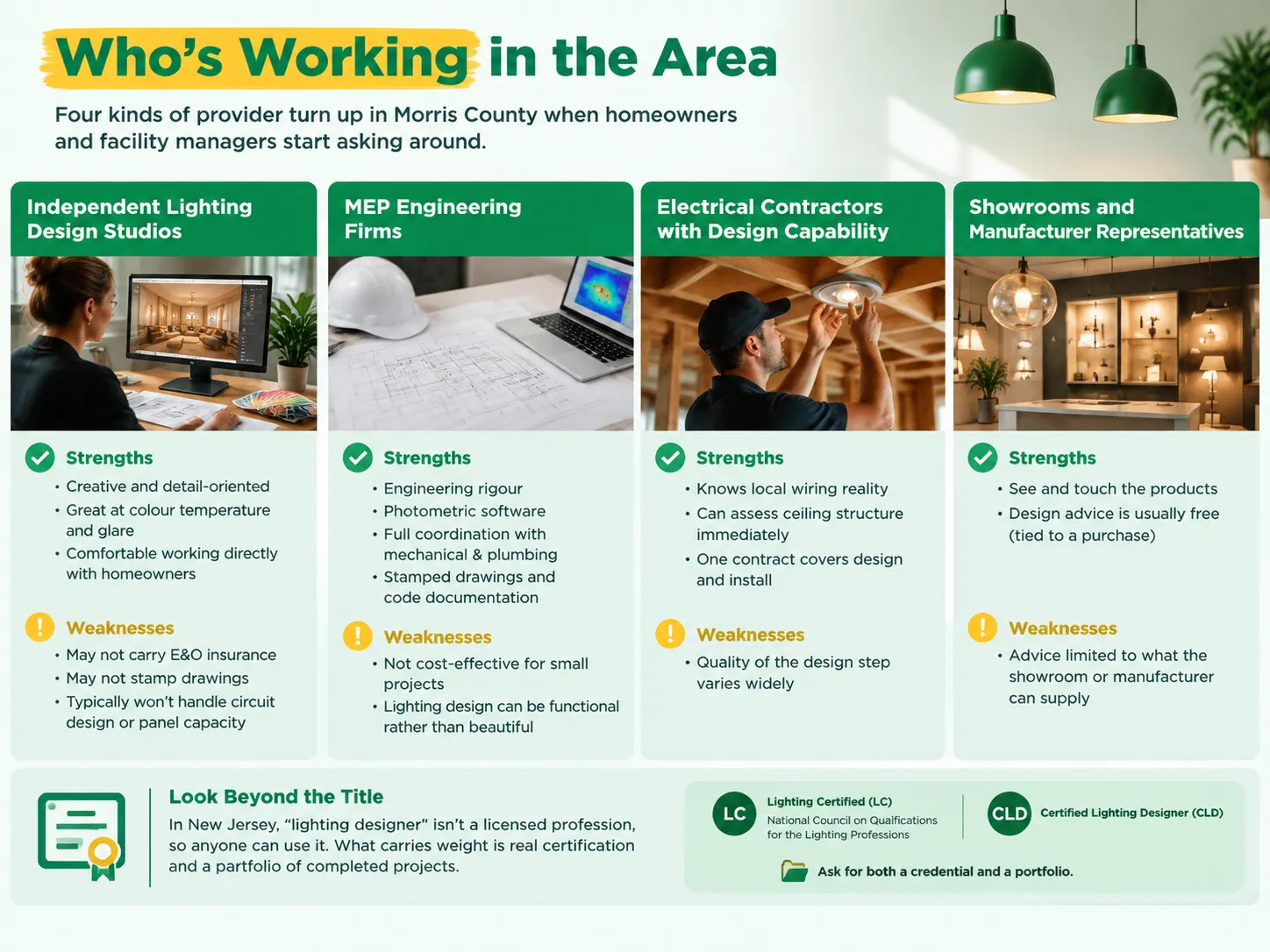
In Morris County, there are four types of lighting designers that professionals and homeowners consult. Each kind has their own distinct advantages and disadvantages.
When looking for a designer in New Jersey, remember, that the accreditation does not always mean the title. The profession of lighting designer is not regulated, so it can be used by anybody. The accreditation that speaks out is not a title, but rather certification and a portfolio. You may be sure, that practice may outweigh theory.
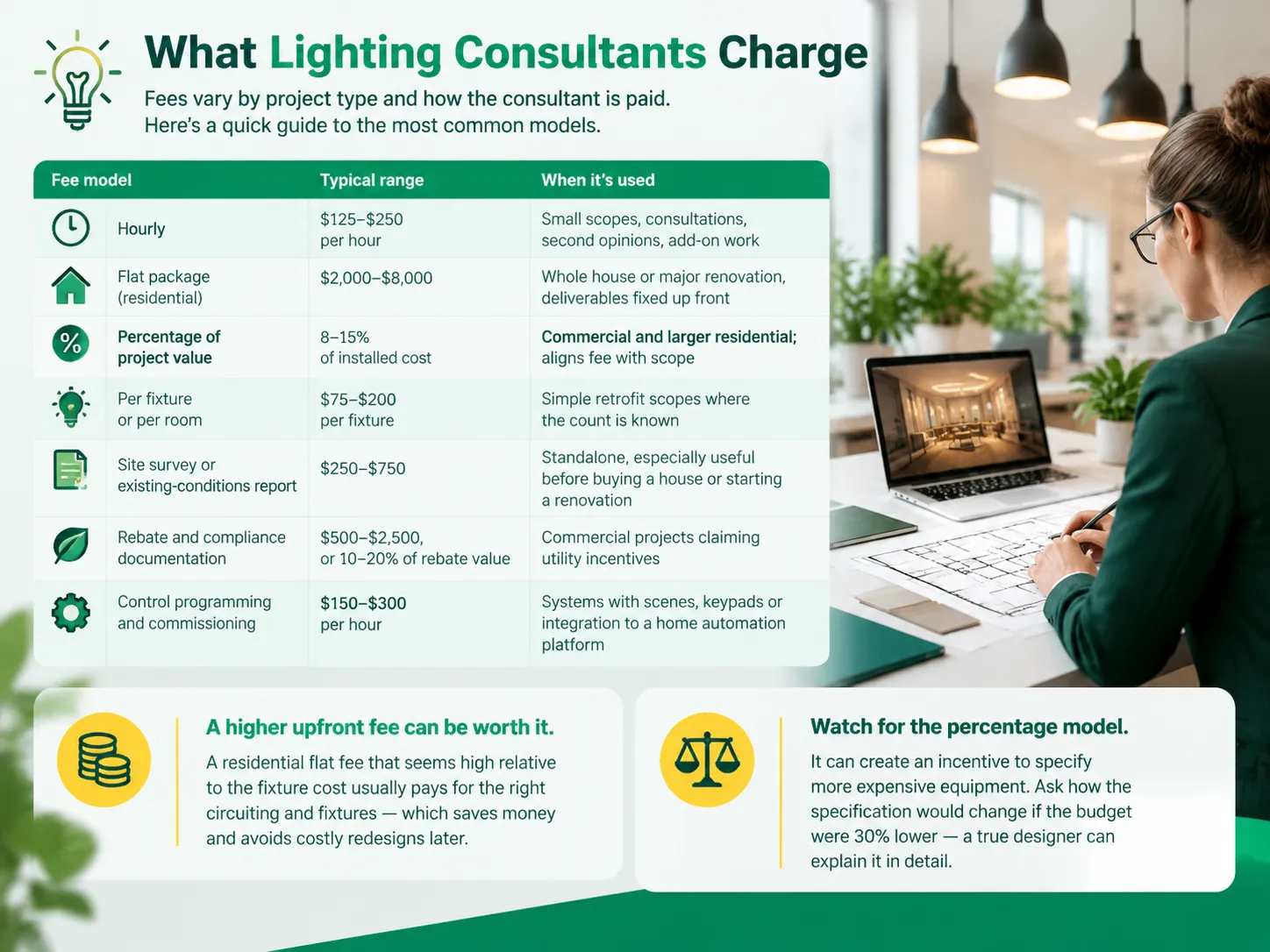
The market pricing is reflected in four different manners, and it is highly important to identify the one being offered to you.
| Fee model | Typical range | When it’s used |
|---|---|---|
| Hourly | $125–$250 per hour | Small scopes, consultations, second opinions, add-on work |
| Flat package (residential) | $2,000–$8,000 | A whole house or a major renovation, deliverables fixed up front |
| Percentage of project value | 8–15% of installed cost | Commercial and larger residential; aligns fee with scope |
| Per fixture or per room | $75–$200 per fixture specified | Simple retrofit scopes where the count is known |
| Site survey or existing-conditions report | $250–$750 | Standalone, especially useful before buying a house or starting a renovation |
| Rebate and compliance documentation | $500–$2,500, or 10–20% of the rebate value | Commercial projects claiming utility incentives |
| Control programming and commissioning | $150–$300 per hour | Systems with scenes, keypads or integration to a home automation platform |
There are a couple of facts about these numbers. To start with, a costly flat rate usually does not mean that it is not beneficial, because it covers something that makes you money-saver: correct circuiting and proper fixture selection performed once. Redesigning the lighting project after the walls are built makes it very costly.
The second aspect of the percent model is easy to overlook. When the consultant is paid as a percent of the cost, he gets the incentive to suggest more expensive devices. This does not mean that this model is incorrect, but it is definitely worth asking how the design would change if the budget was reduced by 30%.
There are three primary causes of problems in lighting project design as indicated by common failure points of designs.
It is unlikely that the above mentioned elements are very attractive. Yet, it is they that will differentiate the installation which operates smoothly and correctly from the installation which needs to be modified.If you’re doing your own coordination rather than hiring it out, the practical considerations around box selection and device compatibility are covered in this guide to choosing electrical boxes for outlets and switches, and it’s worth reading before the rough-in stage rather than after.
A lighting plan is an electrical plan, which in New Jersey entails compliance with two rules: the Uniform Construction Code and the National Electrical Code. Although your consultant does not necessarily need to be an electrician, the plan produced should be possible to comply with practically.
Here are some common pitfalls of a poor lighting plan:
Heights are one of these details that seem insignificant, until you find yourself in the room where either the switches do not line with the door casing or the dimmer appears to have intentional placement in the hallway but should not have been normal. If you want the practical conventions rather than the code citation, this piece on standard light switch height from the floor covers the typical figures and when accessible-design rules change them.
The switching is the aspect of lighting design where the difference between good and bad design is most noticeable in real life.
In the past, lighting control was straightforward: one switch for each grouping of lights and maybe a dimmer. Nowadays, it is common to see a mixture of conventional switches, trailing-edge dimmers, multi-way dimmers, occupancy sensors, and various keypads in a refurbished building and it presents a problem. Each kind of device has its own requirements, such as the kind of wiring used, whether the device is compatible with the others, etc.
The problem of compatibility is what confuses people. The fact that not every LED lamp or fixture can work with dimmers poses no problem as long as the curve of the controlled voltage is compatible between the two devices. Thus, if a phase-cut dimmer is used in tandem with a device meant for 0-10 V control, it may cause problems like flashing, hum, limited dimming capabilities or no minimum light at all. When a dimmer has a minimum load requirement higher than the fixture’s, it may not function at all, which can be a predicament, which can be solved by having the compatibility chart. This is basically a table given by the manufacturer that shows compatibility between certain drivers and lamps.
In addition to compatibility issues, the installation can be a problem too, as a wonky wiring scheme in a three-way or using a dimmer on the wrong leg can make the system behave as if there were faulty devices involved.The wiring arrangement for a straightforward dimmer installation on an existing circuit is set out step by step in this guide to installing a dimmer switch, and reading it before you brief a contractor is a good way to spot whether the person quoting you actually understands the circuit.
Scene programming gives you that last step of convenience. A house with eight keypads and no programming set up is worse than one with regular switches because no one knows what anything does. Make sure that you allocate a budget for programming time. It is inexpensive during the commissioning phase, but it becomes costly when the dissatisfied client attempts to fix it after six months of living with it.
We need to clarify the limits of this term because “lighting” refers to various professions and products.
A lighting designer is the one who creates a lighting system, while an electrician carries on the installation work. The manufacturer produces fixtures. There is also the fifth, frequently ignored element, which is the switches, dimmers, sockets, and plates that are operated by the customer during many hours every day long after everything has been arranged and all the designers have left the place. This latter part of the business does not take up much space in any lighting project in terms of money but is the part that allows to define whether the project will please you in five years from now.
IGOTO specializes in this fifth part of the business. We manufacture wall switches, sockets, plugs, and other electrical apparatus and sell them through distributors and contractors. If you are engaged in specifying a project located in New Jersey, your consultant will most likely never mention a certain brand. The difference between a device that makes a smooth dimming effect for fifteen years and one that starts buzzing after three years is made at the plant, with the help of contacts, components, quality control experts, and various tests. That’s the part of the project we look after, and if you want to see what the range covers, the formats used across different regional standards are set out in this overview of wall socket and light switch formats for different markets.
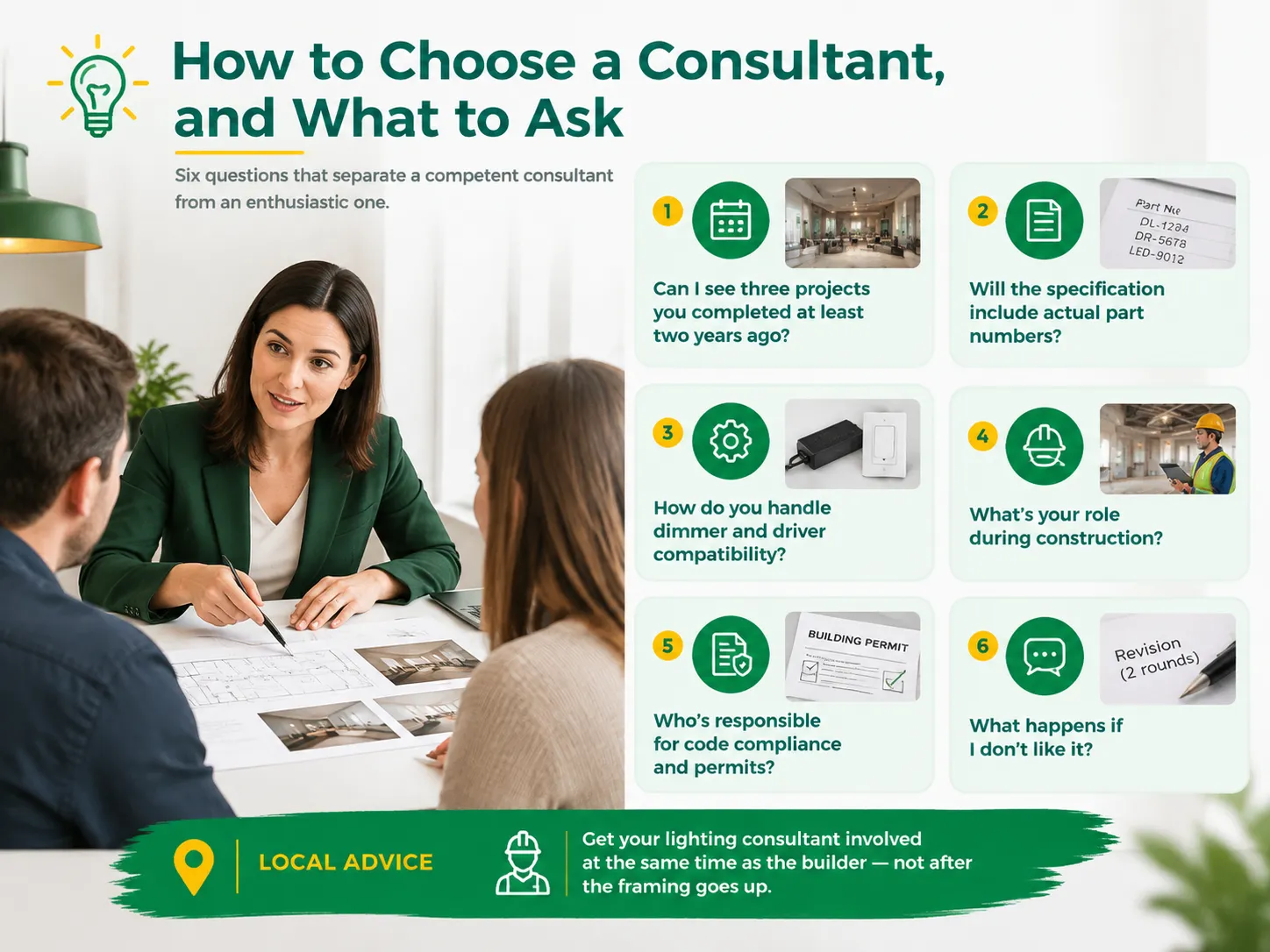
Here are six inquiries that set an effective consultant apart from an enthusiastic one.
Next piece of local advice. Here, the bottleneck is determined by electrician’s schedule, not by design. If you are planning to rebuild, use the lighting consultant at the same time as designer.
A lighting consultant determines how a space will be illuminated and records it adequately to make light fixtures. As the reality is the survey of existing conditions, working on the essential needs of each area, designing the lighting in layers (ambient, general, accent, decorative), choosing specific fixtures giving their specific numbers, calculating the illuminance if necessary, designing the control scheme, coordinating with the electrician and builder and ensuring everything is done correctly. On commercial projects, they have energy code regulation and utility rebate documentation. They do not install anything and do not design the electric systems in most of the residential projects either, as it’s the job for the electrician.
The hourly rates for this industry typically range from $125 to $250. The total cost of a full residential design package ends up being anywhere from $2,000 to $8,000 on average depending on the complexity of the project. Commercial projects are usually charged on the basis of 8 to 15% of the project’s value, or on a per-fixture basis in the range of $75 to $200 per fixture. An independent site assessment or existing site report would cost $250 to $750. Control systems programming and commissioning are billed at around $150 to $300 on an hourly basis.
Not necessarily. If you are merely changing fixtures in an existing room, an electrician and even a showroom may be enough to make it work without spending much money. You may need a consultant in cases where more than one room is involved, when remodeling is taking place, when there is a need for a control system or automation, or even when a room is utilized differently than initially planned. The most obvious scenario is a renovation that has not yet reached the rough-in stage.
Electricians install and sign off the electrical work such as circuits, boxes, wiring, devices, and connection to panel. Lighting designers will determine what needs to be installed and why. There is a crossover, as an electrical contractor with design abilities can do both, but the roles are different and the certification and licensing are also different. Electrical work in the state of New Jersey requires a certified electrical contractor as well as a permit from local construction office. Lighting designer is not a licensed title in the state, thus the qualification to check is the certification such as Lighting Certified (LC), or Certified Lighting Designer (CLD) etc. as well as examples of completed projects.
For a single room home job, one week to two weeks from the first site visit until specification is issued. For a whole house remodel, the amount of time involved will be three to six weeks, with completion time determined by how long it takes to finalise architectural drawings; a design cannot be marked off against a design plan that is still in formative stages. For commercial work, the timeframe can vary from a few weeks for a simple fit-out to several months for a complete building as a result of the coordination with other trades and review cycles. Also include the time for control programming at the end; this is commonly a different visit after the electrician has completed his part.
The lighting design industry in Randolph, New Jersey, 07869 is relatively small and consists of four types of companies; independent studios, MEP engineers, electrical contracting companies that specialize in lighting design, and showrooms which combine lighting design with product sales. All companies have good professionals, therefore an error by a customer may be hiring the wrong company type.
Cost calculations are fairly straightforward. Prices start from $125 per hour, then can be up to thousands of dollars for residential assignments and can account for 8%-15% of construction projects. However, this raises the question of how many points if the specifications contain all necessary details like the amount of the installed lighting, compatibility checks, and a visit to the site after installation. If yes then money is not wasted on sketches.
Two pieces of important advice, firstly, it is advisable to hire a lighting design consultant before starting implementation of a project, at this time the consulting services are the cheapest. Secondly, certification does not guarantee anything in this field, therefore it is always better to check the portfolio of the designer.
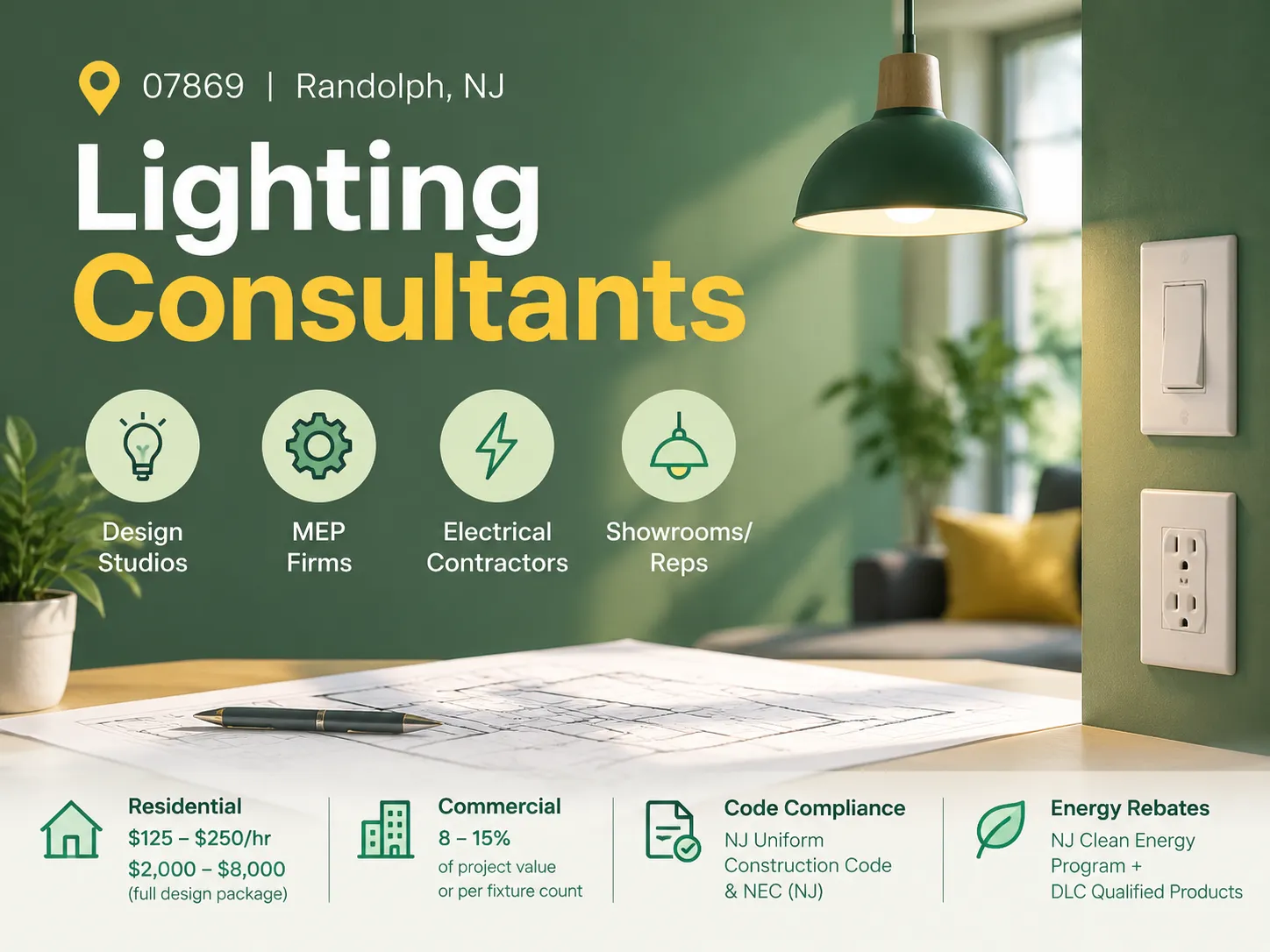
The Randolph township in Morris County is associated with postal code 07869 which is flanked by Dover in the west and Denville in the east. There is Route 10 which crosses the township; thousands of privately owned houses can be found in this township peppered throughout the green hills and woods. When you entered this […]

When someone asks the question “do GFCI outlets go bad”, they may really be asking how long an outlet will last before failing. There is no definite or absolute answer to that question as every situation is unique; therefore each GFCI outlet should properly work as long as there are no other factors contributing to […]
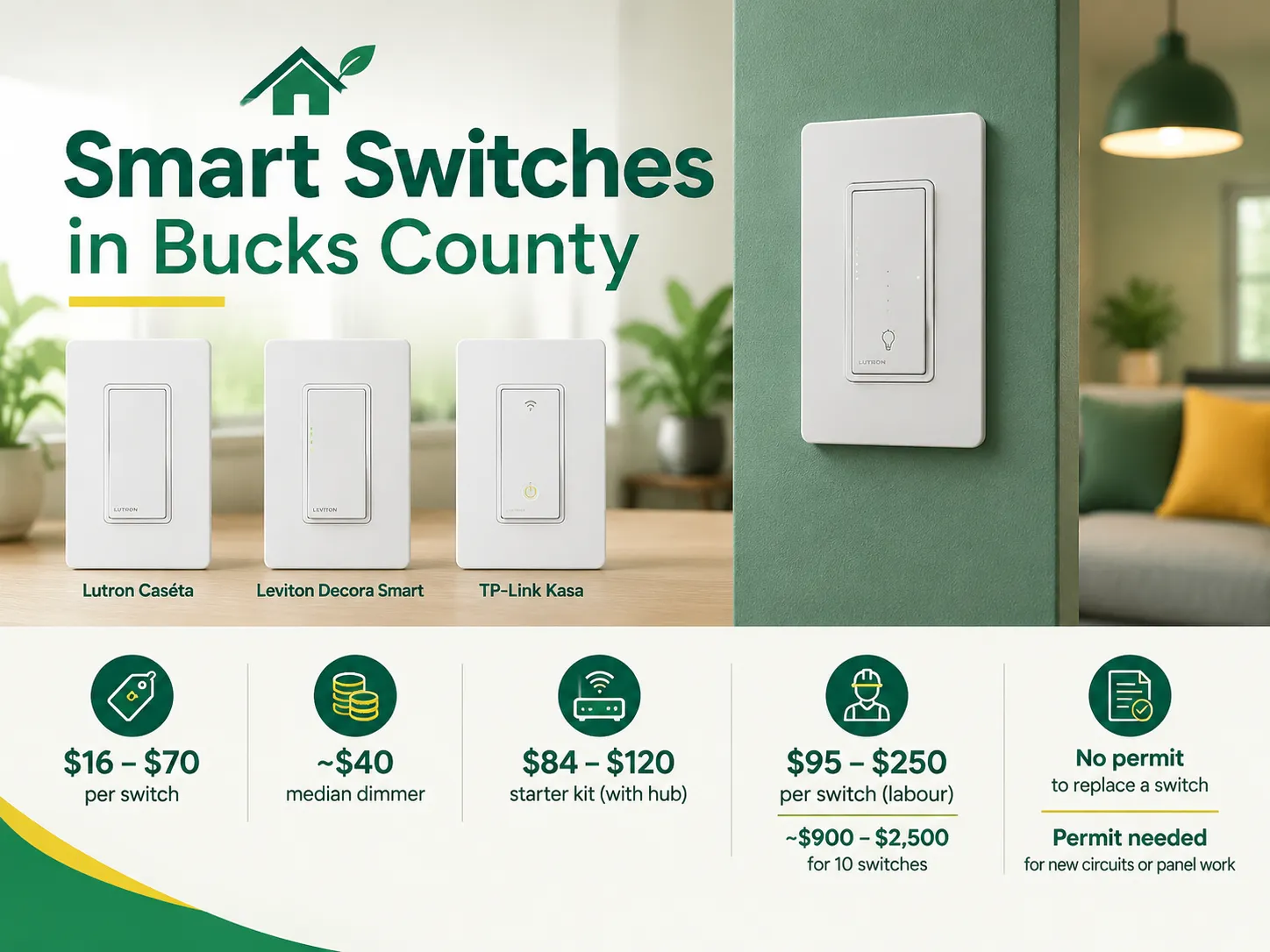
Purchasing smart switches in Bucks County is relatively tricky, with the difficulty being more a matter of characteristics of the local real estate rather than the availability of the systems. One can drive from Solebury, where some of the houses can be dated back to the 1790s, to Warrington, where some newer constructions were built […]

 No.6 Tuozhan Road, Leshang Pioneer Park,Yueqingwan Bay Harbor,Yueqing city,Zhejiang Province


