

Many businesses are now transitioning to integrated USB charging systems to keep up with modern technology demands. By upgrading your traditional wall sockets, you can eliminate adapter clutter and streamline commercial power setups. Keep reading to know more about the key standards, costs, and installation steps for a safe, efficient transition.
Modern workplaces operate on portable digital devices. Employees, clients, and visitors bring smartphones, tablets, and laptops that require frequent charging. This forces users to carry bulky charging bricks that block adjacent outlets on double power points.
When users cannot find enough outlets, they might start daisy-chaining power boards and adapters together. This practice resulting from adapter shortage can create fire risks due to circuit overloading.
By installing direct USB power points or wall chargers, business owners can remove these hazards. It also helps create a safer, more professional work environment.
Integrated wall chargers do more than just clear desk clutter. They contain internal transformer circuits that can step down 240V AC electricity to low-voltage DC power. This conversion process prevents high-voltage spikes from reaching sensitive mobile components.
Plus, certified models use smart charging technology. Through this feature, internal chips detect a connected hardware’s specific current needs. This system also prevents devices from battery degradation, overcharging, and excessive heat. Commercial developers are now sourcing USB power points Australia-wide to future-proof their building assets.
Not every socket in a facility requires an upgrade. By implementing a strategic placement, you can achieve an optimal return on your electrical investment.
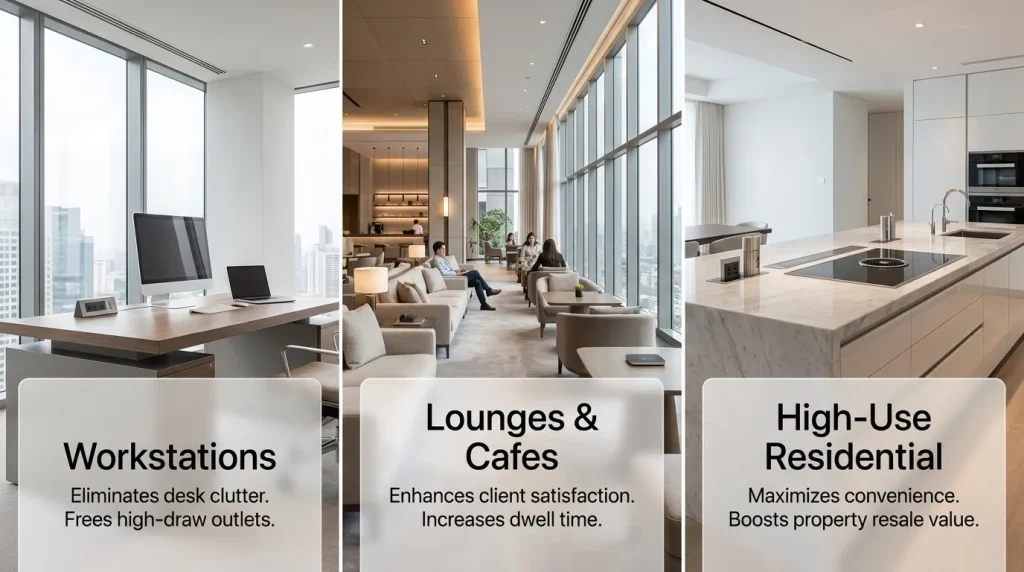
One thing to keep in mind in office settings is that employee desks are prime upgrade zones. By installing a single USB power point in their workstations, you can keep their work areas orderly. This allows staff members to charge their accessories directly from the wall. This dual capability keeps standard outlets free for high-draw equipment.
Owners and managers of hotels and other similar establishments may often see guests in lounges and cafes looking for charging access. Providing integrated ports in these areas can improve client satisfaction. Dedicated charging stations also keep customers in retail stores longer. This shows your business understands client needs.
In residential projects, expect more homeowners to charge their devices on bedside tables or plug their tablets on kitchen benches. Therefore, by installing USB power points in these zones, you can bring significant convenience and help increase a property’s resale value.
The standard physical charging port is undergoing a major transition. Selecting the right connector mix allows your business to stay ahead of the curve and keep your installations useful for years.
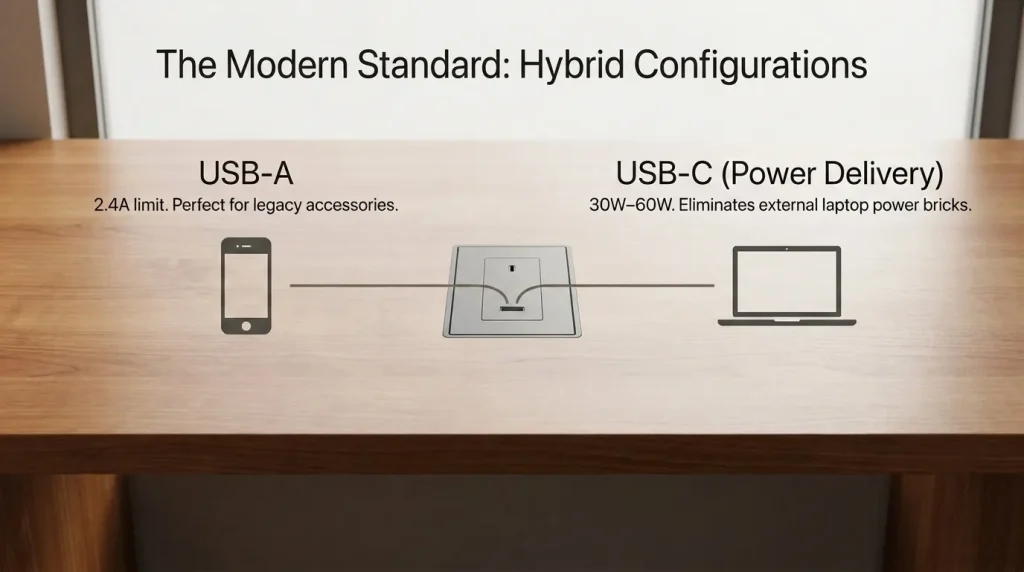
The rectangular USB-A port has been the standard since the late 1990s. It delivers low-wattage power, typically under 2.4 amps. While this rate is sufficient for legacy accessories, it is not enough for modern devices as these ports can only charge them slowly.
These days, the reversible USB-C connector has become the global standard. It uses Power Delivery (PD) technology to negotiate variable voltages. In-wall USB-C ports typically can deliver between 30W and 60W.
This output can sufficiently charge modern laptops with demanding power requirements. For example, some 60W units can power workstations even without external bricks. These ports eliminate the need for external power bricks at office workstations.
Many commercial and residential properties still use legacy USB-A cables. Because of this, hybrid outlets featuring one USB-A and one USB-C port are still highly practical. Since users have varying devices with diverse charging needs, these ports offer maximum flexibility. Hybrid models represent the most practical choice for Australian power points with USB connections today.
When you are sourcing electrical components, you need careful technical scrutiny. Some items have poor manufacturing quality and, thus, tend to present severe safety risks for commercial projects.
Australian electrical safety regulations are among the strictest in the world. Products supplied to the Australian market generally require appropriate RCM labeling and compliance with applicable EESS requirements.
Depending on the product type, they should also comply with relevant Australian standards, such as AS/NZS 3112 and AS/NZS 62368.1 where applicable.
Comment: AS/NZS 60950-1 has been superseded by AS/NZS 62368.1 for relevant products. In addition, AS/NZS 4665 does not apply to all USB wall sockets, so please reference only the standards applicable to the specific product.
Thus, if you have cheap, uncertified imports, expect them to fall short of these benchmarks.
When you use non-certified outlets, they present the following risks:
You must also note that uncertified units can send unstable voltage spikes, which can damage expensive mobile devices. This sudden surge can fry battery management chips. It also creates a fire risk behind the drywall. Furthermore, if a fire occurs due to such events, unlicensed installations can void commercial building insurance policies.
In many cases, integrated USB sockets have complex in-wall circuit boards. This extra hardware makes them significantly deeper than traditional plates. Typical units require wall backing depths of 40mm to 50mm.
Before ordering the unit, you must check the cavity depth if there is enough space. In older buildings with shallow plasterwork, conducting these checks help prevent installation delays.
Quality USB wall sockets feature low standby power draw. Standard models draw less than 0.1W when idle. This phantom draw can help prevent energy waste. In commercial establishments, it can also lower utility bills.
The following table compares typical technical parameters of certified Australian power points:
| Parameter | Standard USB-A Port | High-Power USB-C (PD) Port | Double GPO Mains Outlet |
| Output Voltage | 5V d.c. | 5V, 9V, 12V, 15V, 20V d.c. | 230-240V a.c. |
| Current Rating | 1.2A to 2.4A | 3.0A | 10A |
| Maximum Wattage | 12W | 30W to 60W | 2400W |
| Standby Power | < 0.1W | < 0.1W | 0W |
| Surge Protection | 1kV | 2kV | None (Receptacle level) |
| Efficiency Level | Level VI (> 87%) | Level VI (> 87%) | N/A |
Upgrading your electrical infrastructure is a vital step for modern facilities. Replacing standard double outlets with a certified power point improves workplace utility. It streamlines charging setups and reduces the risk of electrical hazards.
Additionally, make sure that all fixed electrical work is performed by a licensed electrician. For example, Australian law requires compliance with AS/NZS 3000:2018 Wiring Rules. Under this law, licensed electricians must provide a signed certificate validating the work. This certificate ensures peace of mind and preserves your building insurance coverage.
For commercial projects, sourcing from trusted suppliers is essential. You must partner with manufacturers that understand local compliance. Consider IGOTO when sourcing wholesale switches and sockets in Australia. They offer certified products that meet all national regulatory requirements.
You can learn more about IGOTO and their commitment to safe, durable electrical components. Explore their full range of electrical wiring accessories to find the perfect match for your design. Upgrading your USB power points has never been simpler.
Ready to future-proof your commercial property? Contact IGOTO today for your electric socket needs. Their expert team will provide a tailored quote and guide you through the compliance process.
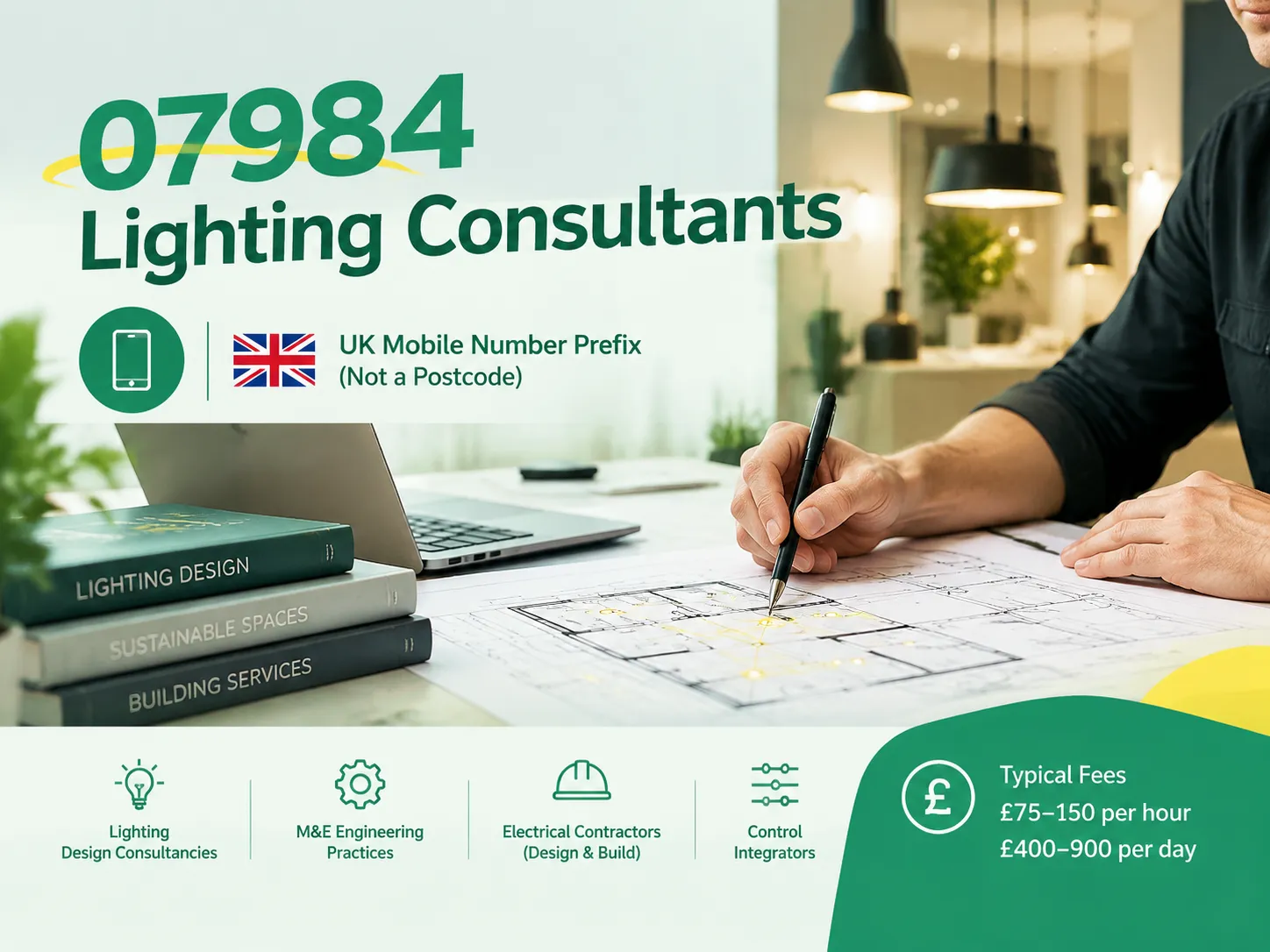
The term “07984 lighting consultants” gives people the impression that the five digits represent a postal code of some sort that indicates the place where lighting consultants provide services. This is, however, incorrect: there is no postal area coded 07984, which is only a code of mobile telecommunications in Great Britain. This means that the […]

San Francisco is not the average lighting control market. The housing stock is old and dense, and the electrical code does not allow for as many electrical installations as is allowed almost anywhere else in the U.S. Most homes that want complex lighting are Victorian or Edwardian buildings where no one wants to start opening […]
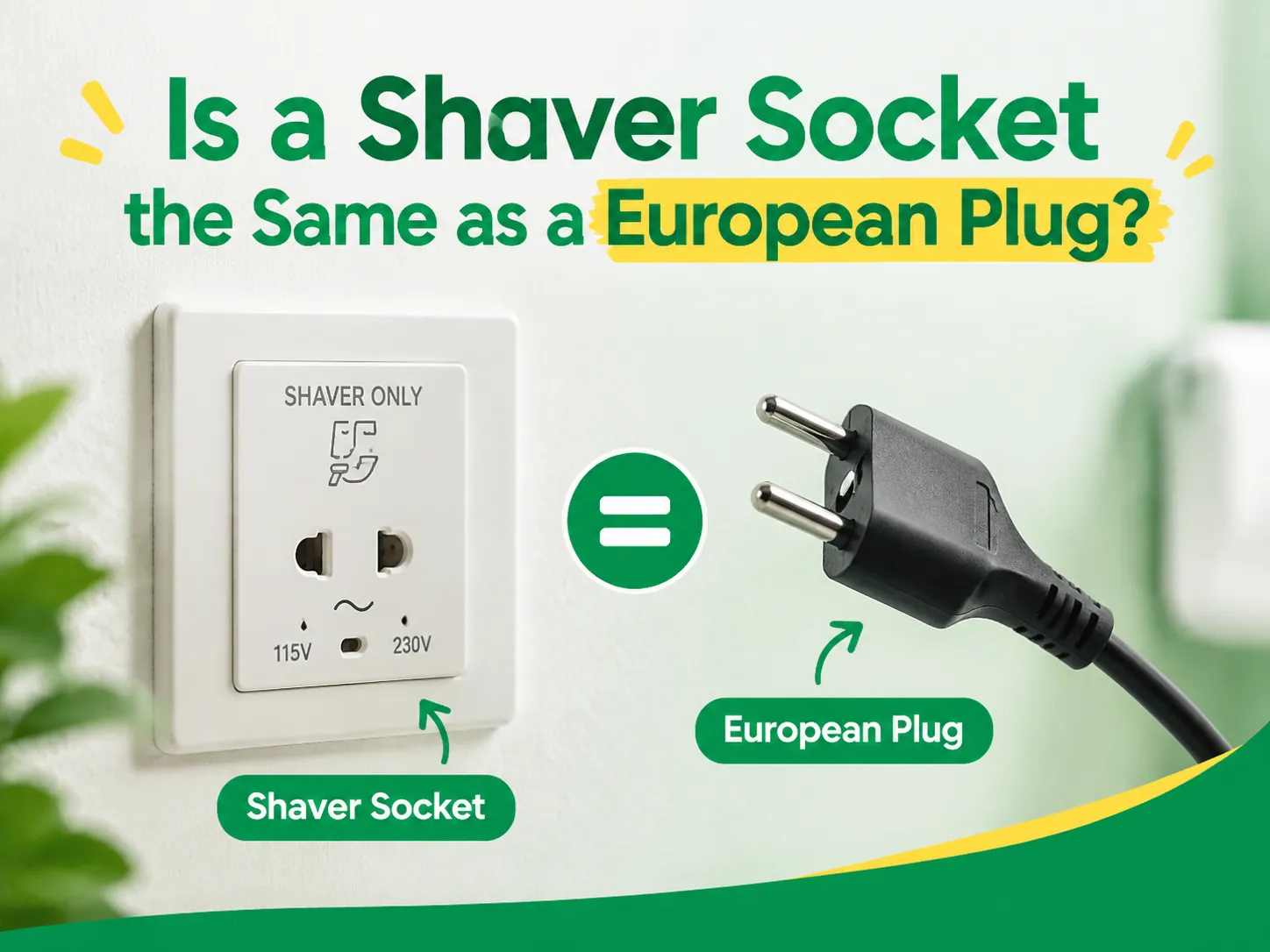
Although they seem to be alike, they both have a round shape with two pins, and they function at a voltage of 230V. This explains why some tourists use a European plug with a British shaver or wonder why a shaver cannot be plugged into a Schuko socket in a Spanish hotel. In reality, they […]

 No.6 Tuozhan Road, Leshang Pioneer Park,Yueqingwan Bay Harbor,Yueqing city,Zhejiang Province


