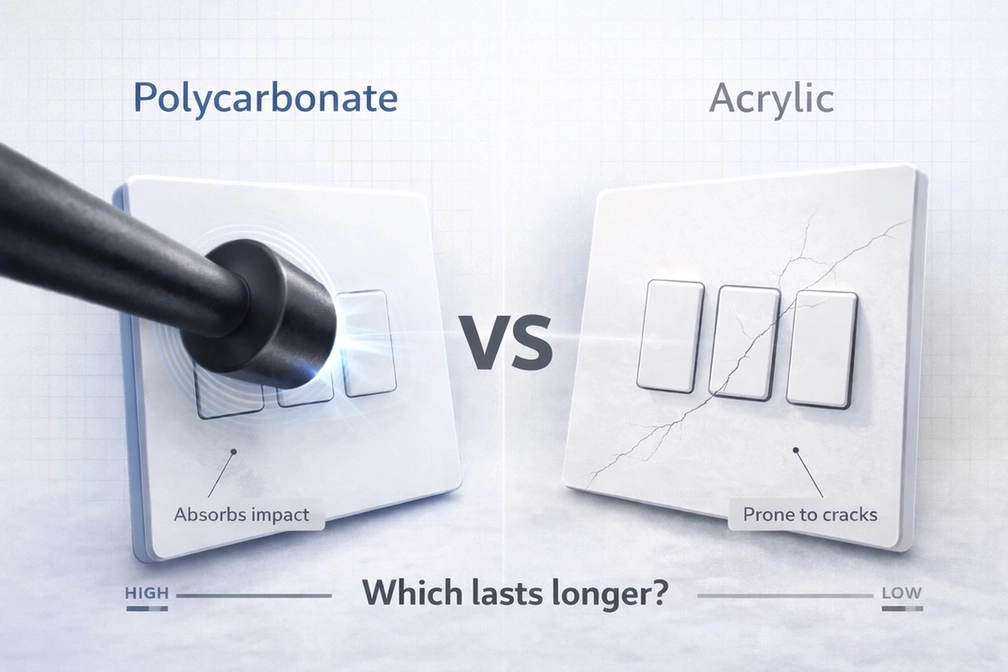
Polycarbonate handles impacts 10 times better than acrylic, so it survives longer in rough environments. The acrylic light switch resists scratches far better, though, keeping its appearance fresh for years longer than PC. Which one actually lasts depends on where you install it and how much abuse it takes.
Both materials last 15+ years when you match them to the right setting. Here’s how they stack up against other switch plate materials:
| Factor | Polycarbonate (PC) | Acrylic |
| Impact Resistance | 10x stronger than acrylic | Moderate; can crack under force |
| Scratch Resistance | Prone to surface scratches | Excellent; maintains finish longer |
| UV Resistance | Good with treatment | Superior clarity retention |
| Heat Tolerance | Up to 120°C (248°F) | Up to 90°C (194°F) |
| Fire Resistance | Good flame retardant | Superior fire resistance |
| Optical Clarity | 88-90% light transmission | 92% light transmission |
| Maintenance | Scratches are permanent | Can be polished and restored |
| Cost | Higher ($$ tier) | Lower ($ tier) |
| Best Applications | High-traffic commercial, outdoor | Hotels, boutiques, residential |
PC bends when something hits it instead of breaking. Drop a wrench on it and the plate stays intact because the material absorbs the impact.
Acrylic doesn’t flex like that. Hit it hard enough and you’ll see cracks appear because it’s rigid. For example, IGOTO’s FS316 acrylic switch survives over 40,000 switch flips and carries a 15-year warranty, which works fine for homes and quiet offices. But stick it in a busy restaurant kitchen or loading dock where things bang around constantly, and PC will outlast it by years.
Acrylic’s hard surface shrugs off the daily wear that leaves marks on PC. Wipe down an acrylic light switch weekly, and it still looks new years later. Get a scratch somehow? You can polish it out.
PC shows every little scrape. A rough sponge leaves marks, brushing against it with keys in your pocket leaves marks, and those marks stay there. After a couple of years of normal cleaning, PC plates start looking dull and worn. In a hotel lobby or upscale home where looks matter, acrylic keeps that pristine appearance much longer.
Acrylic takes more heat before it ignites and produces less smoke when it does burn. That matters when building codes care about fire safety.
PC resists flames decently but softens faster when temperatures climb. Both meet ISO9001 and ISO14001 standards, but if fire safety sits high on your checklist, acrylic performs better.
PC handles temperature extremes better. It works fine up to 120°C while acrylic starts having problems around 90°C. Cold weather makes acrylic brittle while PC stays flexible.
Acrylic handles sunlight better and maintains optical clarity for years in bright indoor spaces. Standard PC may develop slight yellowing over time without UV stabilisation, while UV-stabilised PC grades significantly reduce discolouration.
A custom acrylic light switch in sun-exposed hallways still looks clear a decade later. You can treat both with UV inhibitors if needed, but acrylic starts ahead.
Acrylic transmits 92% of light that hits it, beating even glass. That crystal-clear look makes spaces feel more upscale, and you don’t get the faint blue-green tint that PC has.
The glossy finish and slim profile create a premium look. Acrylic comes in white, green, champagne, and black with clean square lines that fit modern designs. Learn more about choosing the right wall switch finish for your interior.
Got scratches on acrylic? Grab some polishing compound and buff them out. The hard surface responds well to polishing, so you can keep it looking new for decades with minimal work.
PC’s softer surface makes scratch restoration difficult, and polishing often results in surface haze rather than a full visual recovery. Scratches stay permanent, and trying to polish them usually leaves a cloudy haze instead of fixing anything.
Acrylic works with standard cleaning products like mild soap, water, and alcohol-based sprays. Follow our guide on how to clean light switches safely. Just avoid harsh solvents like acetone that can eat into the surface.
PC handles solvents better but gets damaged by ammonia cleaners and bleach. For switches that get wiped down regularly, acrylic plays nicer with normal household cleaners while PC needs you to check labels first.
Acrylic costs 30-50% less than PC upfront. That gap adds up fast when you’re buying switches for an entire building.
But think about how often you’ll replace them. An acrylic light switch in a quiet home might never need replacing. That same switch in a warehouse could crack in six months, while PC survives the whole time. Both come with 15-year warranties, showing they last when you use them right.
PC can bend without snapping, which helps during installation in tricky spots. The material flexes when you need to fit it around uneven surfaces or adjust the angle, then springs back to shape without damage.
Acrylic stays rigid. Try to bend it at room temperature and it’ll crack before it flexes. You can heat it up to reshape it, but even after that process it stays pretty stiff. For standard wall installations this doesn’t matter much, but if you’re working with curved surfaces or need some give during mounting, PC handles it better.
If you’re dealing with busy commercial spaces where things get bumped, outdoor installations with wild temperature swings, or industrial sites with heavy equipment, polycarbonate makes sense. It survives the abuse.
If you care more about looks in upscale spaces, need fire code compliance, have indoor spots with normal traffic, or want to save money on residential projects where scratch resistance matters, acrylic delivers better value. With polishing, you can keep acrylic light switch plates looking perfect for years.
Both materials last 15+ years in the right setting. IGOTO makes PC and acrylic switches with SAA certification, CE, and ISO certifications, drawing on 25 years of manufacturing experience. Need acrylic for a hotel job? PC for a factory?
For engineers, project managers, and distributors, selecting the right wall switch material is as important as the switch design itself.
IGOTO’s engineers can walk you through which material fits your situation. Contact us to discuss what you’re working on, or get samples sent out so you can compare the clarity and finish yourself.

The term “07984 lighting consultants” gives people the impression that the five digits represent a postal code of some sort that indicates the place where lighting consultants provide services. This is, however, incorrect: there is no postal area coded 07984, which is only a code of mobile telecommunications in Great Britain. This means that the […]

San Francisco is not the average lighting control market. The housing stock is old and dense, and the electrical code does not allow for as many electrical installations as is allowed almost anywhere else in the U.S. Most homes that want complex lighting are Victorian or Edwardian buildings where no one wants to start opening […]
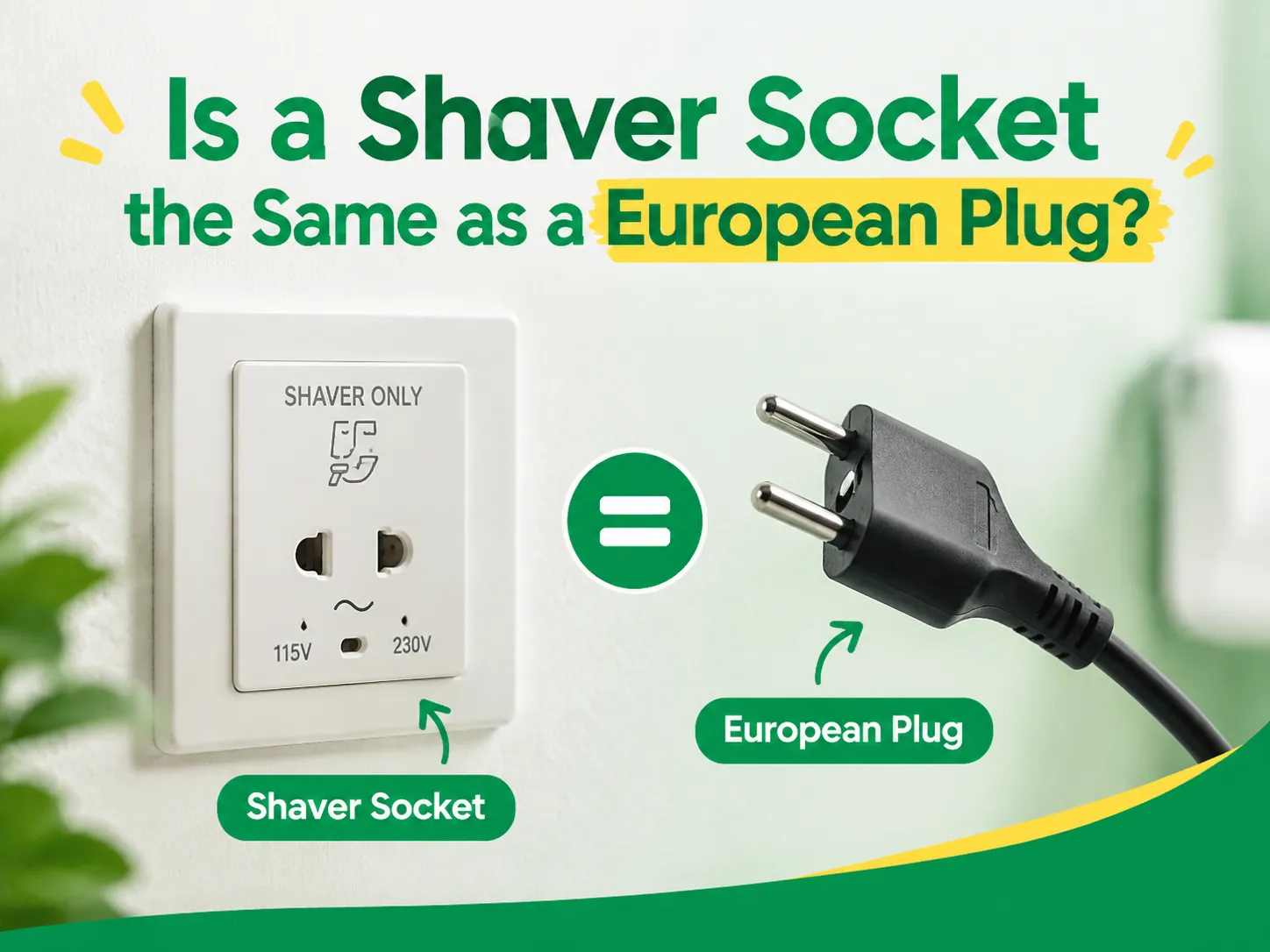
Although they seem to be alike, they both have a round shape with two pins, and they function at a voltage of 230V. This explains why some tourists use a European plug with a British shaver or wonder why a shaver cannot be plugged into a Schuko socket in a Spanish hotel. In reality, they […]

 No.6 Tuozhan Road, Leshang Pioneer Park,Yueqingwan Bay Harbor,Yueqing city,Zhejiang Province