

Plugging into Vietnam is an easy job compared to most countries in Asia and so is making one of the gadgets go dead. The plugs are globally accepted, but the voltage is not. These two facts are true about each hotel in Vietnam from Hanoi to Can Tho and it is good if you know them so that you avoid a lot of troubles.In this guide you will learn what is found in the wall, what types of plugs fit where, and what types of travelers will need an adapter in their suitcases. You will also be informed about the difference in the requirements when it comes to the electrical outlets for buildings and hotel rooms.
Short answer: Vietnam uses a voltage of 220 V at 50 Hz and plug types A and C – flat pin and round pin respectively, with plugs of type F also used in modern buildings and type G used in some hotels of a higher standard. Mostly, the sockets used are hybrid and able to accept various plug types. Tourists coming from USA, Canada, Japan and a majority of mainland Europe will usually not need an adapter, unlike those coming from UK, Ireland, Australia, New Zealand, India and South Africa. A traveler taking along a single-voltage appliance of 120 V will have to carry a converter.
| Coming from | Plug type | Adapter needed | Voltage issue |
|---|---|---|---|
| United States, Canada, Mexico | A, B | No, A fits | Yes, if the device is 120 V only |
| Japan | A, B | No | Yes, 100 V devices |
| United Kingdom, Ireland | G | Usually yes | No |
| Germany, France, Netherlands, Spain | C, E, F | Rarely; Schuko needs a hybrid socket | No |
| Australia, New Zealand, Argentina | I | Yes | No |
| India, Sri Lanka | C, D, M | Often yes | No |
| South Africa | M, N | Yes | No |
| China | A, C, I | Usually no | No |
There are two surprises in these tables for travellers from Australia and the United States. Gathered information indicates Australians think that their appliances will work anywhere in Asia, based on the fact that they worked perfectly in Bali and Thailand, while in Vietnam they do not work. Meanwhile, Americans think that an adapter will be required for the trip to Vietnam, which is 220 volts, while there is no such need since physical pin shapes are the same.
Type A is the one of two flat parallel pins used in the US and Japan. It is ungrounded and has a voltage capacity of 15 A and 125 V respectively. Although it is the oldest type in Vietnam, however, it still dominates outside the urban areas.
Type C is the Europlug, having two round pins together with the diameter of 4 mm. It is ungrounded and its rating is 2.5 A. It was used during the time when the French were in Vietnam.
Type F is the Schuko plug. The Schuko has two round pins, which are 4.8 mm each, and two side earth clips rated 16 A. The Schuko is present in newer buildings and modern hotels, often at the same sockets as the Type A and Type C plugs.
Type G is the UK fused rectangular-pin plug. The UK plug is rated at 13 A. The plug is mostly used in modern hotels and serviced apartments.
Type D is the Indian three-round-pin plug. It is still being used in some old buildings in the North of India.
The full taxonomy, including the pin dimensions and the current ratings that go with each shape, is set out in this reference to the wall socket types used around the world, which is worth a look before you buy an adapter for a multi-country trip.
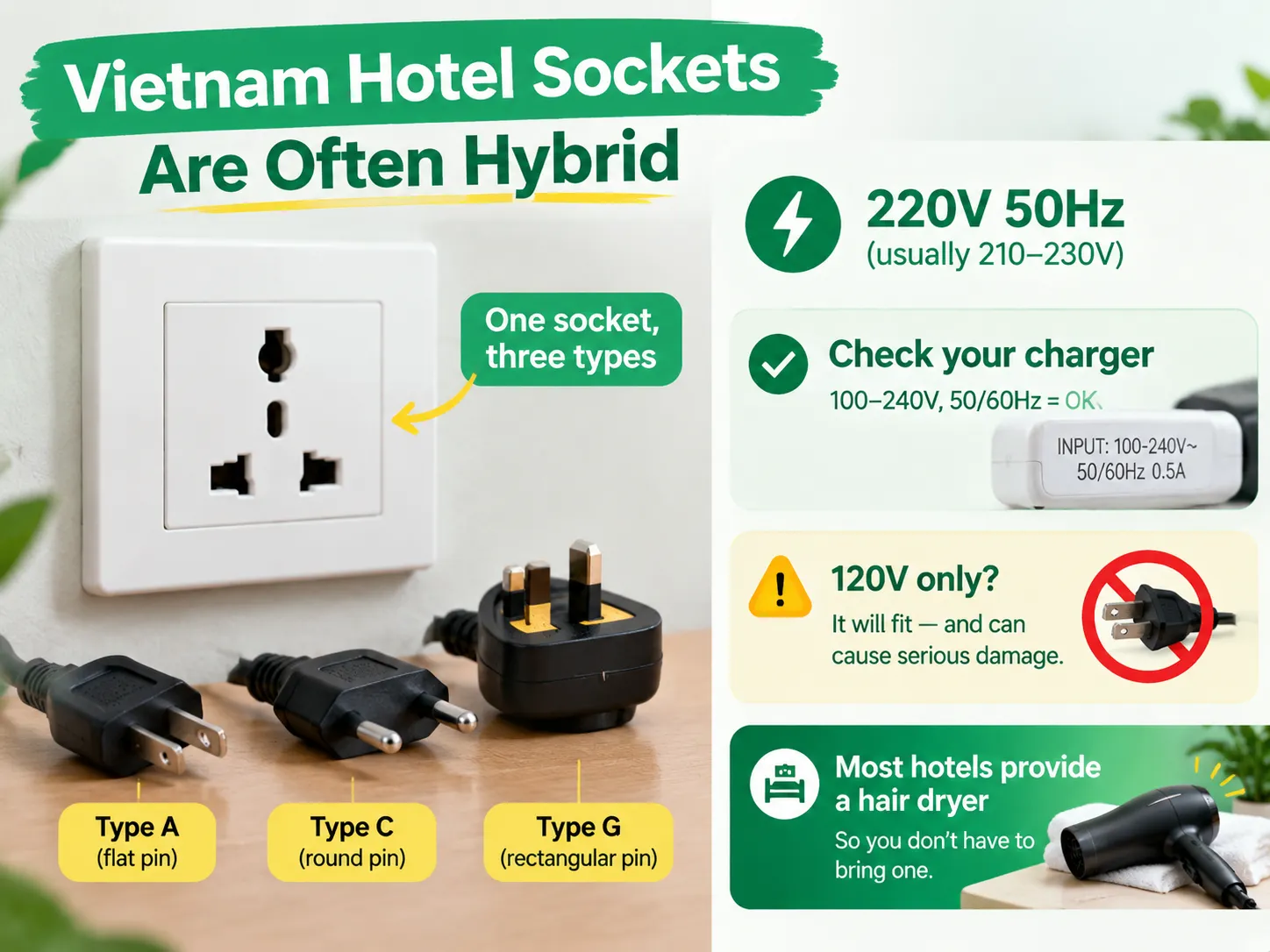
Many of the sockets found in Vietnam are called “three-in-one” as they can accommodate three distinct types of pins on a single outlet. Many other places around the world have used similar designs, but the difference is that sockets in Vietnam are unlike universal sockets that accept all types of equipment but do not serve as grounding points. Instead, sockets in Vietnam are built to accommodate different voltages and are sold as practical products.
The reason for this is the heritage of the buildings in this country: dating back from the French colonial rule and the Soviet Union to a decade of rapid development as well as the latest wave of construction focused on luxury hotels. Hotel owners refurbishing hotels built in 1990s will prefer to use these “three-in-one” sockets so that their guests will be able to plug in their devices regardless of the local voltage standards. Thailand solved the same problem the same way, and the result there is the equally varied set of outlets described in this guide to the Thailand electrical socket type.
For the traveller, the key question “will my plug fit?” entirely depends on which building one is in, and that is why the table above used the term “usually” to define the power adapters in each country. A British tourist staying at a four-star hotel in Ho Chi Minh City will discover that there is a Type G socket built into the desk. In a guesthouse in Dalat, he will not!
Vietnam has targeted a nominal voltage of 220 V and a frequency of 50 Hz, which is supplied by EVN or Electricity of Vietnam. The actual voltage of the electricity flowing from the outlet can range from 210 V to 230 V, but in summer it declines even more during peak hours, which can be a problem for sensitive devices such as ACs.
The rule of thumb is there on the charging accessories you own. Just check every charging device and you will see the indicated voltage of “100-240 V, 50/60 Hz,” meaning that most chargers including the ones for phone, laptops, cameras, power bank, and toothbrushes that have been manufactured over the last 15 years can work fine in Vietnam only by using an adapter for plugs. The one system where that check fails is the North American 120 V pattern, which is why the North American socket type causes more damage abroad than any other, purely because the pins fit so many foreign sockets.
A simple “$120” means that the machine is going to fail immediately, and most likely also burn. What’s dangerous is that it will fit. An American hair dryer will perfectly plug into Vietnamese Type A socket and will give double voltage. Hair dryers, curling irons, straighteners, old electric razors, and cheap kitchen appliances are the most frequent victims.
Most mid-class and good hotels provide hair dryers, which single-handedly eliminates the most common failure from your packing.
In North America and Japan, devices make use of a frequency of 60 Hz while most countries operate at a frequency of 50 Hz. Dual-voltage devices are indifferent to the frequency as they rectify AC supply to DC in their circuits. However, devices that have an AC motor or clock have to take the frequency into account.
If an induction motor made for 60 Hz is run on 50 Hz, it will operate about 17% slower. It will also consume more energy in performing the same task. An AC clock will lag 10 minutes an hour. Old stereos can create hum due to magnetic interference from transformers. However, none of the devices will break down entirely, but will give faulty performance that will be blamed on the devices rather than supply.
For the short term, such variation may be of no consequence; however, those importing machinery to Vietnam or installing electrical fittings in factories where such machines are used should take the frequency into account when designing the specifications.
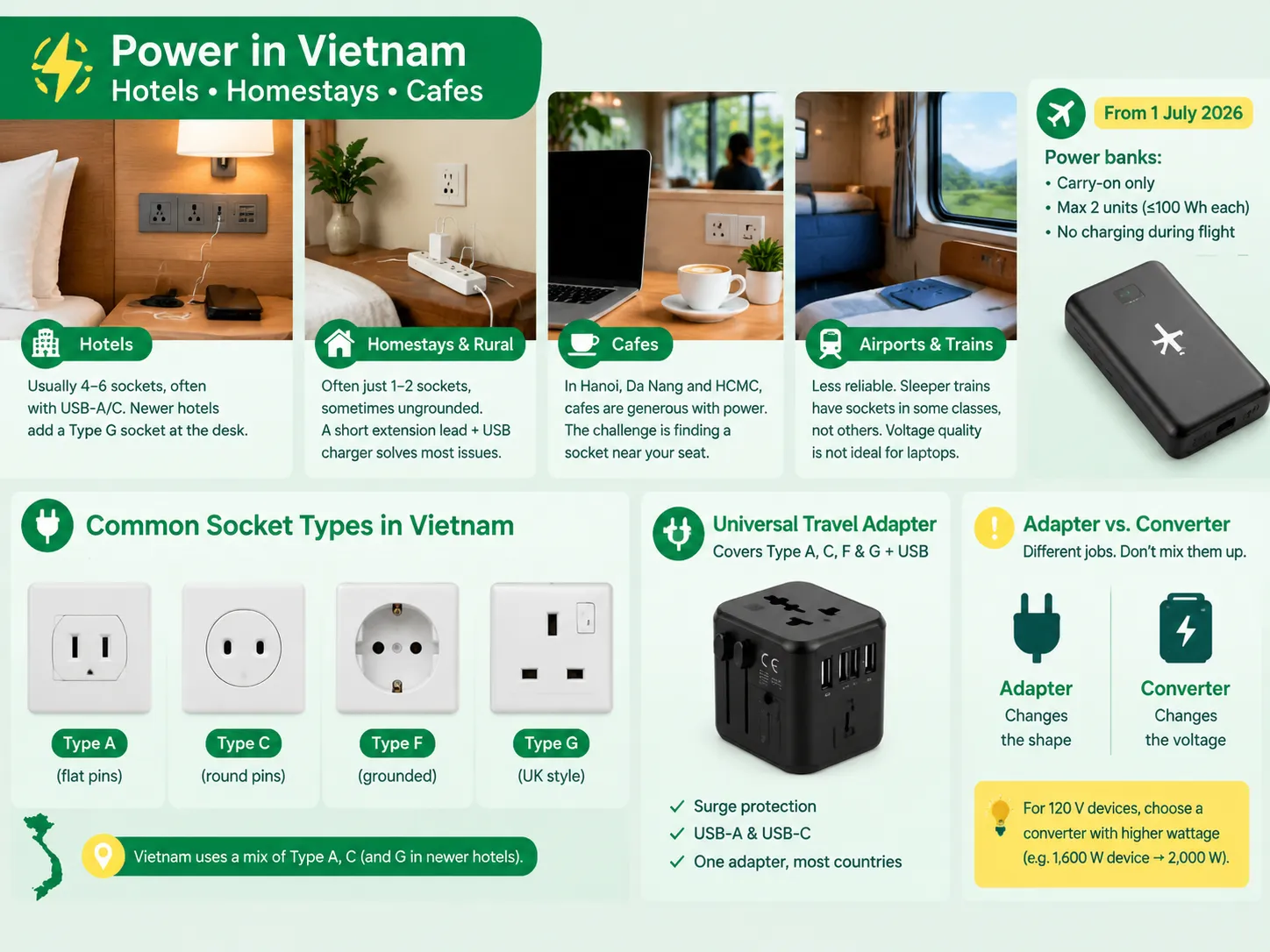
Normally, city hotels may provide four to six sockets in one room, many of which would be hybrid sockets. Two of them might be new types of sockets with USB-A and USB-C ports on the bedside panel. Newer hotels are known to use G-type sockets containing charging facilities on the office desk.
Staying in homestays may provide you with one or two sockets in the entire room, some of which might be A-type but ungrounded sockets. They might share the same electrical circuit with the water heater. But you can always use an extension cable and multiport USB to fulfill your needs.
Hanoi, Da Nang, and Ho Chi Minh City cafes are generous in providing electric power, and it seems that many cafes, designed with working clients in mind, make profit because of the availability of socket outlets. So perhaps you can find plenty of sockets near your seat.
Aviation and train traveling is much less predictable. Reunification Express use electric sockets in some types of cars, but not in others. Also, the quality of voltage might not be performed well enough till the train arrives to its destination.
If you have decided to travel within the country domestically, keep in mind that starting from July 1, 2026, the Civil Aviation Authority of Vietnam permits taking no more than two power banks with capacity not greater than 100 W each in carry-on luggage and the use of power banks for charging devices in flight will be prohibited.
An adapter changes the shape of the connection. A converter changes the voltage. They are different products and confusing them is how devices get destroyed.
| Device input | Plug compatible | Plug not compatible |
|---|---|---|
| 100–240 V dual voltage | Nothing needed | Plug adapter only |
| 220–240 V only | Nothing needed | Plug adapter only |
| 120 V only | Converter needed | Adapter plus converter |
A universal travel adapter is the most effective solution for everybody since it works with types A, C, F, and G together and also comes with USB charging. Make sure to buy one with a surge protector rather than the least expensive option found at the airport; the older buildings have poor earthing, and the extra protection costs only a small amount of money.
When using a converter with a 120 V device, make sure that it has a wattage higher than that of the device. For example, a 1,600 W hairdryer will need a converter rated above 2,000 W, and using an inadequate converter will either blow a fuse or overheat it. However, on a two-week trip, it is easier to carry a cheap dual-voltage hair dryer bought at the destination than bother with a large converter.
While travelling within the region, it becomes even harder to sort out the adapter issue, as countries don’t share the same standards. A guide to the sockets and adapters you need in Bali shows the Indonesian pattern, which accepts Type C and F and is genuinely different from Vietnam’s A-and-C mix. Anyone doing a multi-country Southeast Asia itinerary should buy universal and stop thinking about it.
In preparing to sell into the Vietnamese market, there are four important implications to consider.
Choose the socket, not the adaptor. A dual-standard outlet is a good option for hotels but not for factories; using a specific standard decreases maintenance as well as stops chances to plug in inappropriate devices. The outlet should correspond to the type of equipment that is going to be connected.
Grounding is a problem. Most local sockets are ungrounded two-pin devices and a building, which uses such sockets everywhere, exposes itself to electrocution risks that can’t be eliminated by reliable RCDs. Really grounded sockets of Type F or Type G should be used for the applications that include machines with metallic casings.
Capacity should be sufficient. A 2.5 A Europlug socket is not the same as a 16 A socket with another face-plate. Therefore, kitchens, workshops, and places with heaters need sockets designed according to the electric circuitry of this area.
Voltage is important. A voltage range of 210 V-230 V and an additional drop during the peak moments mean that instruments requiring a precise voltage of 220 V will be faulty. A device should state that it nominal voltage is 220 V, but it is able to work at a voltage from 190 V to 250 V.
This is the layer being supplied by Igoto; these are switches and socket outlets along with power strips operating according to the local standard, and the route of OEM and private label is available for all distributors wanting their branding on the face-plate.
It is most advisable for travelers to buy a universal adapter for Type A, C, F and G plugs, since the types of sockets in Vietnam vary across types of buildings. However, if you’re coming in from America, Canada or Japan, and your appliances work with both low and high voltage, you don’t actually need an adapter. If traveling in from Australia or New Zealand, however, an adapter is indeed necessary.From the UK or Ireland you almost certainly need one, since the rectangular-pin pattern described in this guide to the Ireland outlet type only fits where a hotel has deliberately installed that socket.
In case you are carrying devices that are rated for 100 to 240 volts, you will need a plug adaptor, but not a voltage converter. The types of sockets that you will need to consider are types A and C which represent the types that you will find almost anywhere, plus types F and G if you are staying somewhere new and fancy.
From the perspective of the physique, there are no such requirements. Vietnamese Type A socket can accept US Type A plug directly, while it can also work for hybrid sockets in hotels. The most important point to look at is voltage: looking at the input ratings of every device and leaving everything that is indicated to be operating on 120 volts unless a converter rated for more than its power is in the possession of the traveler.
The two-pin (round or flat) configuration is what’s needed in the sockets; consequently, an adapter that has the correct Type C pins on the wall end will be compatible with most sockets across Vietnam, including those found in older buildings that use the round-only configurations typically installed in the French times. A universal plug that has C, F or G on the wall end will work for every scenario.
Vietnam uses a voltage of 220 V and a frequency of 50 Hz, so its electrical sockets may accommodate devices that run on either of these frequencies. If your device is rated from 100 V to 240 V, you need to be careful only about the shape of the plug, which is usually not an issue.However, if your device is rated 120 V, technology-wise, you should leave it in your suitcase, as it will become incompatible the moment it is plugged in.
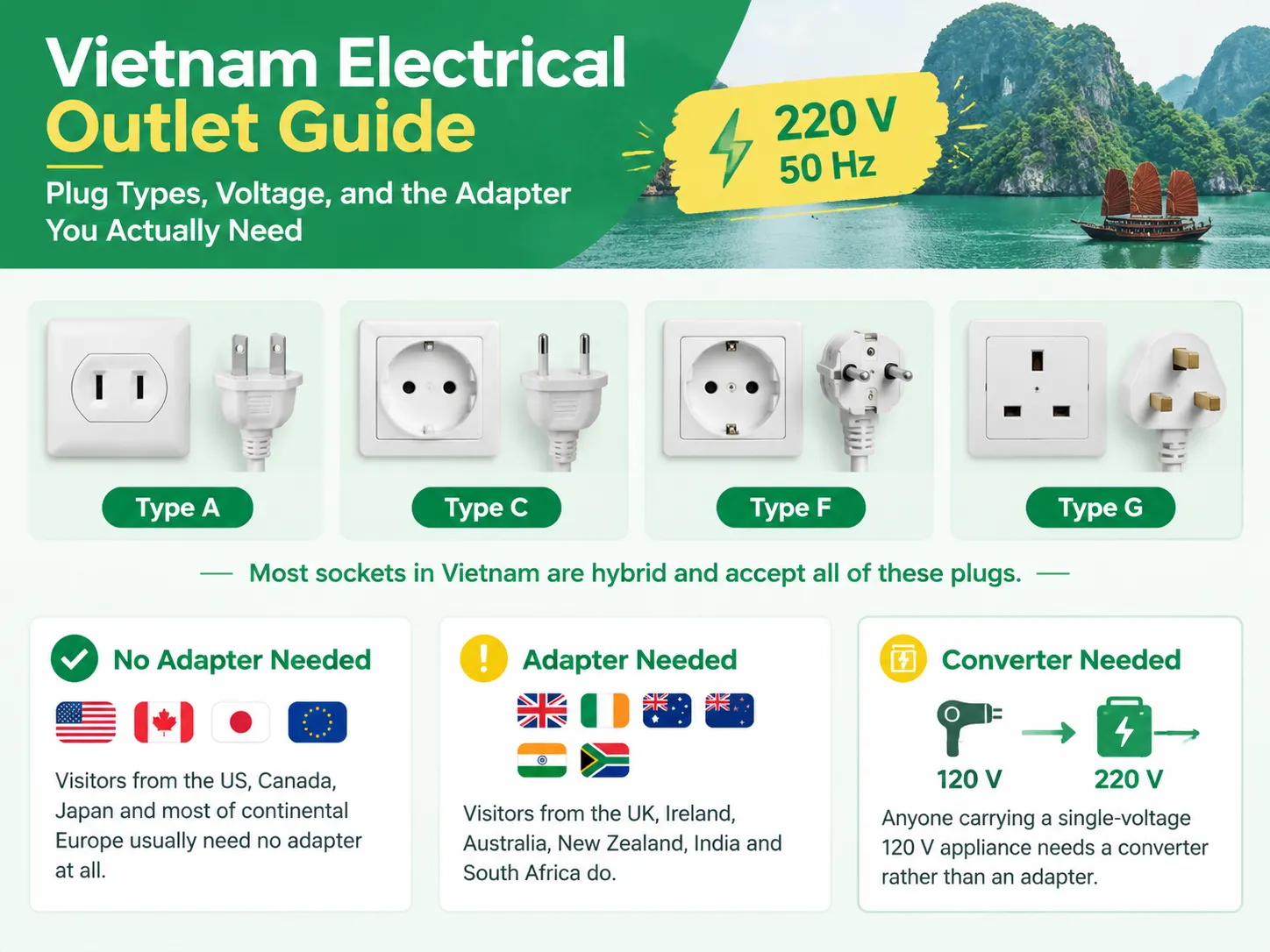
Plugging into Vietnam is an easy job compared to most countries in Asia and so is making one of the gadgets go dead. The plugs are globally accepted, but the voltage is not. These two facts are true about each hotel in Vietnam from Hanoi to Can Tho and it is good if you know […]

Commercial lighting control in Minneapolis is now a necessity rather than an option. With the application of the new NEC on July 1, 2023, occupancy sensing has now become a legal requirement in most commercial buildings without any modification of the law on the part of the state authorities.So the discussion has changed from “if” […]
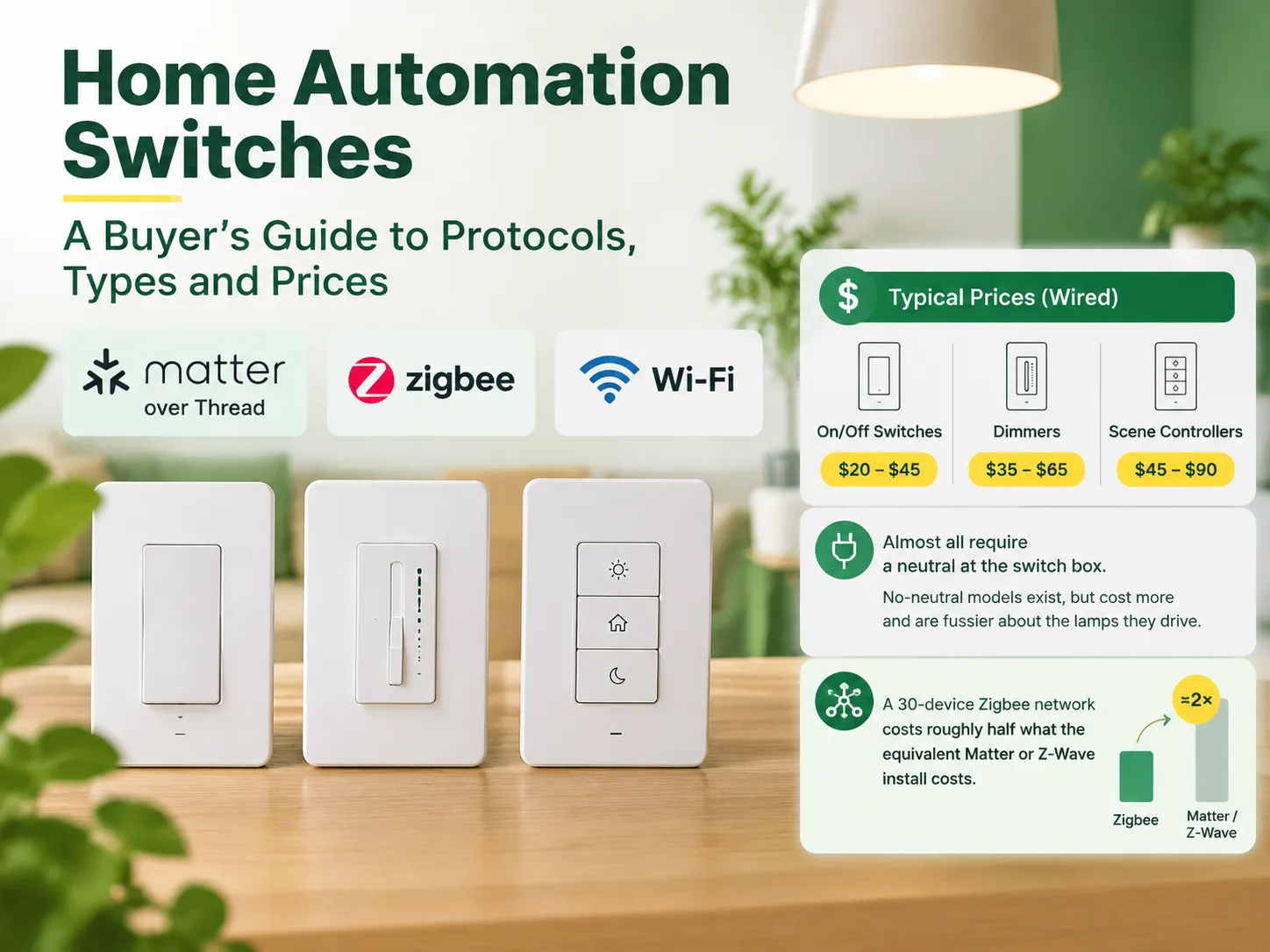
Purchasing a home automation switch is not simply purchasing a light switch. For a light switch, all you need to choose is the color and how many gangs you would like. For an automation switch, barely anything is that simple as you also have to select a protocol, a hub system, whether present wire is […]

 No.6 Tuozhan Road, Leshang Pioneer Park,Yueqingwan Bay Harbor,Yueqing city,Zhejiang Province


