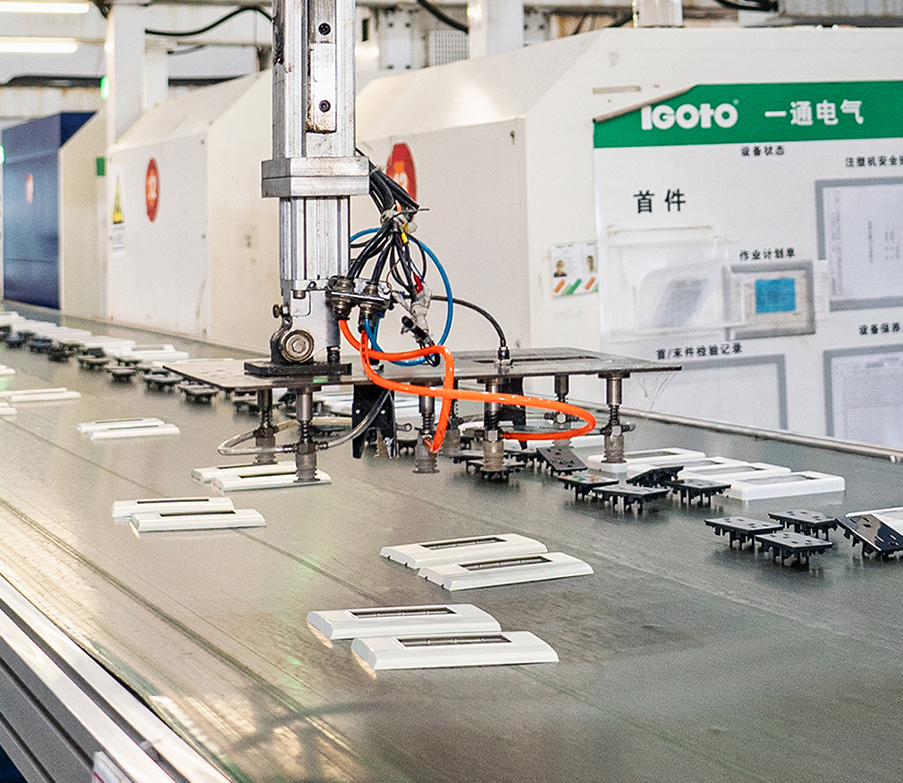
Screwless switch plates hide mounting hardware with a snap-on cover over a subplate, giving you a seamless, modern look. Screw switch plates attach straight to electrical boxes with visible screws, delivering a traditional appearance at a lower cost. Your choice depends on whether sleek aesthetics and easy cleaning matter more than budget-friendly simplicity.
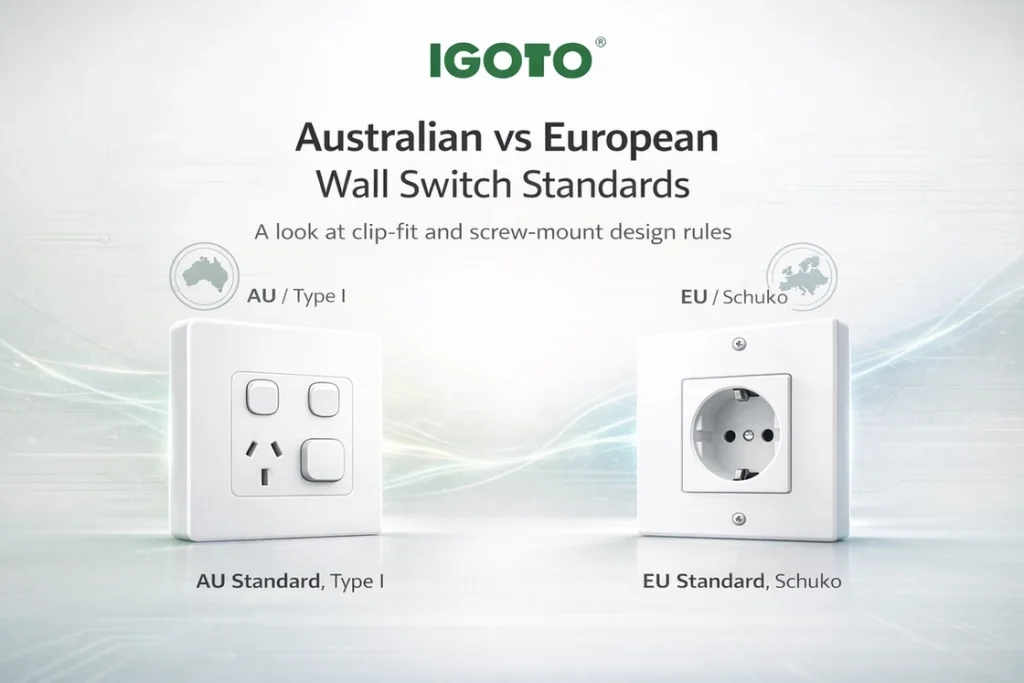
Plates without visible screws use a two-part setup that hides mounting hardware. A subplate fixes to your electrical box, then a decorative cover snaps over the top.
The cover clips onto tabs or grooves built into the subplate, creating a flush surface with no visible fasteners. Pop the cover off when you need to access wiring, then snap it back when you’re done.
Traditional screw plates fix straight to electrical boxes with visible screws at each corner. These line up with pre-drilled holes, and you drive them in before tightening everything down.
The screws show through even when they match the plate finish. Most people recognize this classic look since it appears in the majority of homes.
Both styles cover outlets, but they work differently in installation, look, and price:
| Feature | Screwless Plates | Screw Plates |
| Appearance | Sleek, seamless, modern | Traditional with visible screws |
| Installation | Two-part (subplate + snap cover) | Single-part (screw directly) |
| Cost | Higher initial investment | Budget-friendly |
| Safety | Harder for children to remove | Easy to tamper with a screwdriver |
| Cleaning | Smooth surface, easy to wipe | Screw holes trap dust |
| Materials | PC, acrylic, glass, metal | Plastic (most common), metal |
Screwless plates give you clean, modern finishes that blend into contemporary spaces. The smooth surface sits flush, letting paint colors and wall textures take center stage instead of hardware.
Screw plates deliver traditional looks with exposed fasteners. Some folks lean toward this classic style, especially in older homes where sleek minimalism feels wrong.
IGOTO offers materials that become screwless panels:
The range covers Australian, European, American, and Vietnamese standards, so you can source everything for cross-border projects without juggling multiple suppliers.
Installing screwless plates takes two steps. You screw the subplate to the box first, then snap the cover over it. Aligning multi-gang screwless plates requires careful positioning, as the snap-on cover depends on precise tab alignment.
Screw plates are installed in one motion. Line things up, drive screws through, and tighten them. This simple approach saves time when replacing multiple plates across rooms.
Screwless designs reduce accidental access because the snap-on cover is harder to remove without knowing the release points. This adds an extra layer of protection against casual tampering, especially in residential environments.
The snap-on cover doesn’t release easily without knowing where the clips sit, which adds child safety protection.
Screw plates come off with a basic screwdriver, something curious kids figure out fast. This creates tampering risks when young children grab tools and start exploring what sits behind plates.
Smooth surfaces on screwless plates wipe clean without dust settling in screw holes. You can clean them quickly with a damp cloth since grime has nowhere to hide.
Screw holes and plate edges catch dust over time. Cleaning takes more effort as you work around hardware, and buildup piles up in those recessed spots.
Screwless plates are often positioned as premium products and are commonly offered in materials such as polycarbonate, tempered glass, or brushed metal.
Traditional screw plates are frequently made from molded plastic for cost efficiency, although metal and higher-grade materials are also available depending on application and budget.
Common durability advantages:
Standard screw plates often use cheap plastic that cracks when you overtighten screws. Metal versions exist but cost more, so plastic stays the go-to pick for budget work.
Screwless options cost more upfront because of two-part construction and premium materials. The price gap grows when outfitting entire homes with dozens of plates.
Traditional screw plates stay affordable, making them practical for large jobs where cost beats aesthetics. The savings add up fast across multiple rooms.
Some screwless styles project slightly from walls, hiding minor flaws around electrical boxes. This helps in older homes where walls aren’t perfectly level or smooth.
Screw plates sit flat, showing every gap or rough patch around boxes. You’ll patch and sand walls first if clean appearances matter.
Screw plates come in virtually every configuration you can imagine. Specialty combo plates and unusual setups appear readily since manufacturers produce a massive variety.
Screwless selection keeps expanding but hasn’t matched traditional options yet. Finding specific combo configurations in screwless versions can prove difficult.
Painting over screwless subplates causes headaches when pulling covers off later. Paint bonds pieces together, making separation tough without damaging plates or walls.
Screw plates come off before painting and go back on after. This flexibility matters during renovations when updating colors or doing major work.
Standard wall plates use #6-32 screws running 3/4 inch to 1 inch long, typically. Most electrical boxes include matching screws, though you can grab replacements at hardware stores when needed.
Screwless plates need identical screws for subplate installation. The decorative cover skips screws entirely, which is exactly why people choose this design.
Screwless plates work best in modern homes, upscale renovations, and spaces where clean lines drive design choices. Hotels, offices, and contemporary residences benefit from the refined look they deliver.
Strong screwless applications include:
Screw plates fit traditional homes, rental properties, and cost-conscious projects well. Their versatility and low price make them the default for many builders and property managers.
Choosing screwless makes sense when you want a premium feel and have the budget for it. These are ideal for finished spaces where painting won’t happen soon, and where the safety of children is a priority.
Screw plates are better when the budget sits at the top of your list or you need maximum flexibility in styles. You can use these for rentals, flips, or anywhere function beats form.
IGOTO’s complete collection covers both screwless and screw-mount options across Australian, European, American, and Vietnamese standards, letting you match regional requirements with your design preferences.
A screwless switch plate uses two parts, where a subplate screws to the electrical box, then a decorative cover snaps over the top. The cover clips onto tabs or grooves, hiding mounting hardware for a seamless look.
Screwless wall plates are worth it when you value modern aesthetics, easy cleaning, and child safety over cost. They deliver premium looks that justify higher prices in finished spaces, though traditional screw plates work better for tight budgets.
Wall plates use 6-32 screws running 3/4 inch to 1 inch long, typically. Most electrical boxes include matching screws, though replacements are available at hardware stores when you lose them or need different lengths.
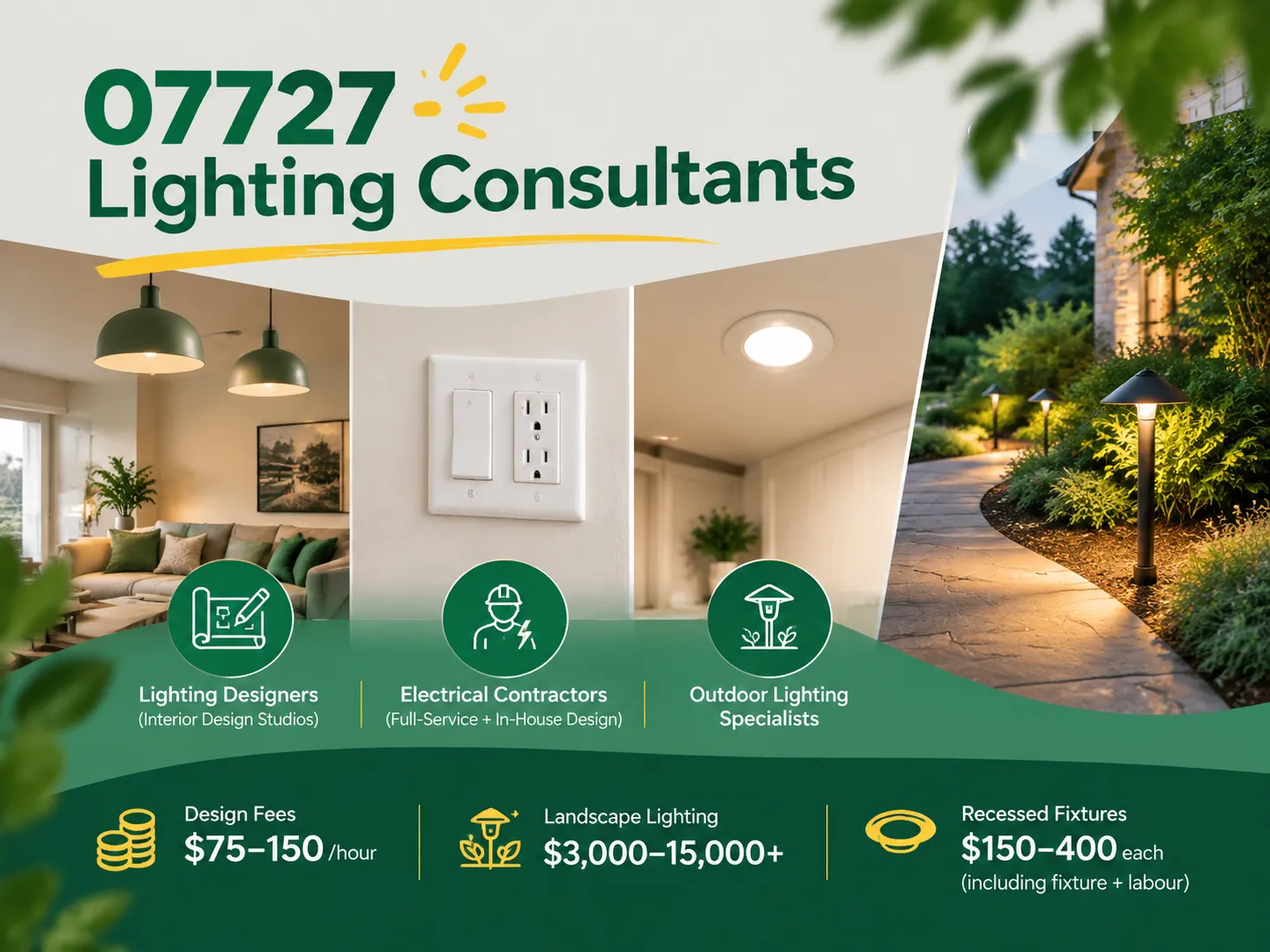
Farmingdale, along with parts of Wall Township and Tinton Falls, New Jersey, share the same zip code of 07727. Most of the houses built from the 1950s to the 1990s still exist today. Most of the homeowners are renovating their houses as opposed to building new homes. Homeowners tend to spend a lot more on […]

The term “07984 lighting consultants” gives people the impression that the five digits represent a postal code of some sort that indicates the place where lighting consultants provide services. This is, however, incorrect: there is no postal area coded 07984, which is only a code of mobile telecommunications in Great Britain. This means that the […]

San Francisco is not the average lighting control market. The housing stock is old and dense, and the electrical code does not allow for as many electrical installations as is allowed almost anywhere else in the U.S. Most homes that want complex lighting are Victorian or Edwardian buildings where no one wants to start opening […]

 No.6 Tuozhan Road, Leshang Pioneer Park,Yueqingwan Bay Harbor,Yueqing city,Zhejiang Province