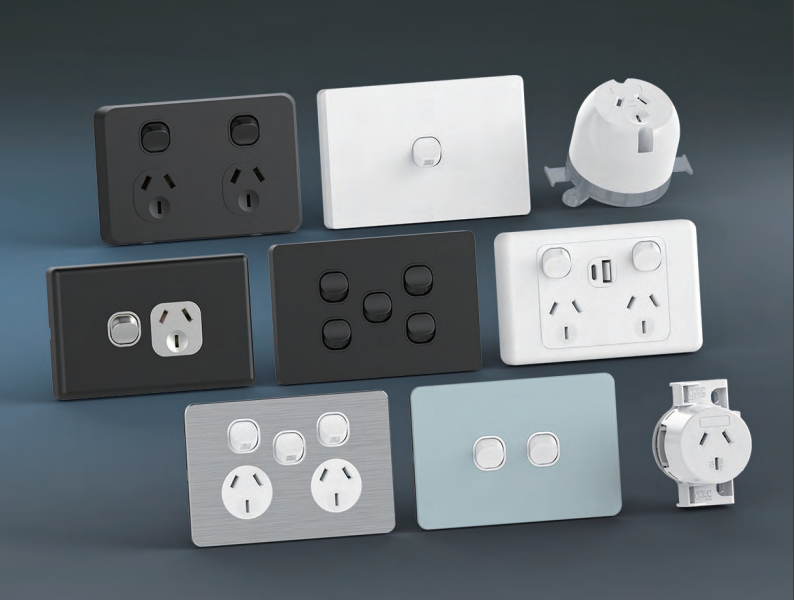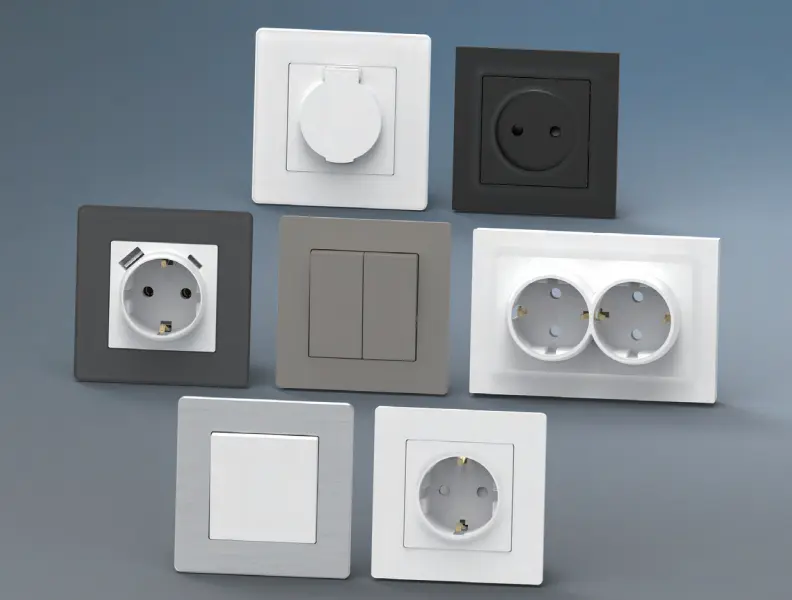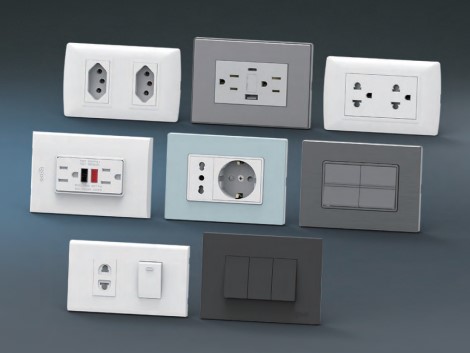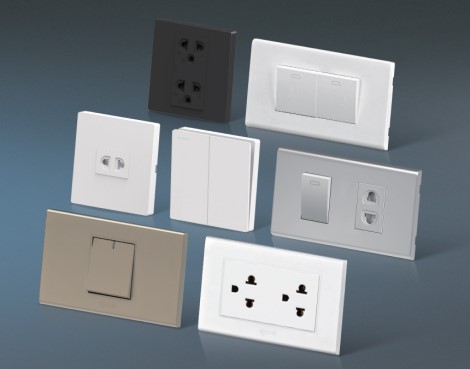
Before you launch a private label for switches and sockets to create your own switch brand requires careful planning. If you need a guide detailing the steps and regulatory standards to open your brand for the global market, this article will help you. This way, you can mitigate product liability risks while helping your business achieve long-term success.
If you want to source white label electrical products, partnering with a Chinese manufacturer offers a commercial advantage. China holds 50 percent of the Asia-Pacific electrical switches market. This regional market was valued at 796.3 million dollars in 2025 and continues to grow every year.
Demand for electrical installation devices in residential and commercial sectors is rising. This growth provides a potential foundation for new B2B distributors. This trend will likely convince many business owners to ask how to start electrical business operations. By entering the market now, you may secure an early position.
If you plan to join this trend, starting with private label switches is an effective strategy. This minimizes upfront research and development costs. Plus, you can focus on brand building and regional distribution.
One common pain point you may encounter as an electrical distributor is inventory bloat. Sourcing modular switches and outlets can help solve this issue. Modular designs use separate switch mechanisms and matching frames. This allows you to combine components to meet varied project specifications. It reduces the cash capital tied up in slow-moving stock lines.
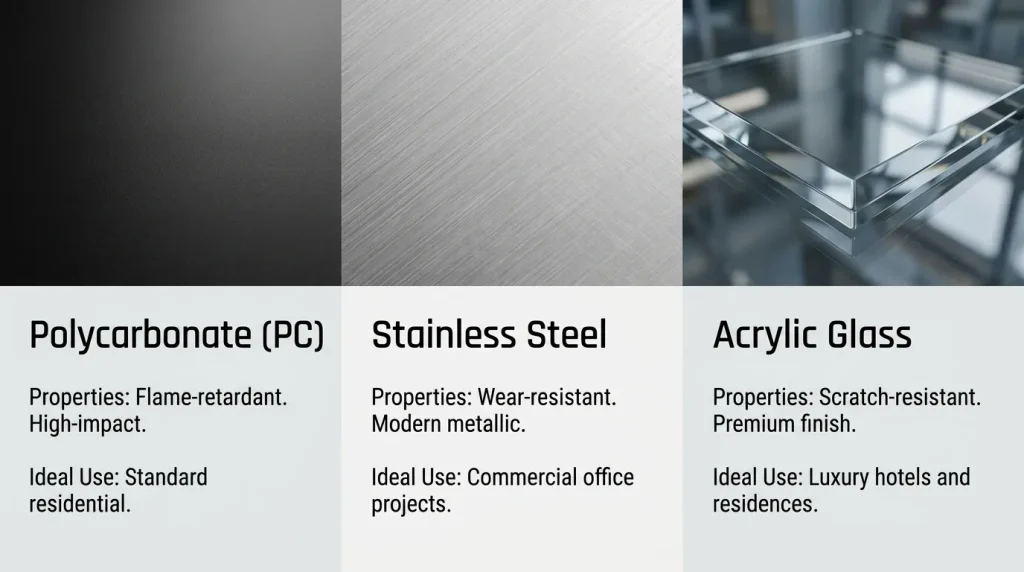
Here are some key characteristics of panel materials you can choose for outlets and switches:
You can also consider offering rocker, toggle, and dimmer mechanisms. Dimmer switches are necessary for dimmable lighting installations. Rocker switches handle higher power circuits. Meanwhile, toggle switches are more likely to fit traditional electrical configurations.
You must ensure that your private label switches comply with safety standards. Doing so is a legal necessity, especially if you plan to import these physical goods. Certifications establish your factory credibility in export markets. Your partner factory should possess ISO 9001 and ISO 14001 certifications.
To sell in Europe, you must have a CE mark on your electronic devices. Also, your products must comply with three core directives:
If you need a specific harmonized standard for switches, check for EN 60669-1. For sockets, EN 60309-1 applies. Either way, you must verify that your components undergo routine testing.
Do note that combining CE marked components does not guarantee final compliance. Still, you can use certified parts to help lower the testing failure risk. It also lowers overall laboratory testing costs.
If you plan to buy low-voltage systems, they must comply with IEC 61439. This standard mandates verification of temperature rise limits. Take bare copper busbars as an example. Their temperature limit must not exceed 105K. Meanwhile, terminals for PVC insulated cables must not exceed 70K.
Check for the following technical parameters that help protect switch systems from failure:
Electricians typically use the Rated Diversity Factor (RDF) to make realistic thermal calculations. This approach prevents over-engineering and lowers production costs.
Before you start purchasing and importing electrical switches, it is crucial to have a well-defined contract manufacturing agreement. Having this document minimizes your risk of pricing disputes and production delays. Be sure that the contract specifies minimum order quantities. It should also outline a clear pricing structure if you need volume scaling.
Tooling ownership is another critical negotiation term. These pieces of equipment usually require a large upfront investment. The contract must state that you, as the buyer, will own the tooling. You can also pay for molds upfront. Alternatively, you can amortize the cost.
Aside from the MOQ and tooling ownership details, your agreement must define standard lead times. Keep in mind that late shipments can disrupt your supply chain operations. Thus, you should include late delivery penalty clauses. Having this structure in your contract enforces supplier accountability.
The following table shows a typical price reduction structure for late shipments. Your terms may vary depending on your business needs:
| Number of Days Late | Unit Price Reduction |
| 14 Days or Less | No Price Reduction |
| 15 to 28 Days Late | 4% Unit Price Reduction |
| 29 to 42 Days Late | 5% Unit Price Reduction |
| More than 43 Days Late | 8% Unit Price Reduction |
Your contract must protect your intellectual property. The agreement must explicitly state that you own all CAD files. In other words, it must protect your bill of materials from unauthorized use.
Private labelers are legally responsible for product defects. If your product causes property damage, there is a possibility for legal action. You must secure product liability insurance before selling physical goods. This insurance protects your business from costly claims.
Most distributors pay between several hundred to a few thousand dollars annually for coverage. This policy should include general liability protection. Your coverage limits should match common commercial contract requirements.
Here are some of the common coverage types and limits for electrical product distributors. Your limits may vary depending on your insurance provider and coverage type:
A Waiver of Subrogation is also necessary. This clause ensures your insurer will not pursue your manufacturing partners. It maintains positive relationships in your supply chain.
Developing your own electrical switch brand is a rewarding venture. Sourcing from a factory that holds multiple regional certifications is vital. This ensures seamless entry into international markets.
IGOTO Electric provides certified products for Europe, South America, and Southeast Asia. The company’s range of certifications include CE, CB, SAA, PS/TISI, and INMETRO.
You can source Australian sockets and switches to expand into Oceania. IGOTO offers premium materials like stainless steel, PC, and acrylic panels. This variety helps you serve diverse architectural projects.
IGOTO Electric provides custom B2B solutions for global brands. They offer extensive OEM and ODM options. This helps you establish a distinctive market presence. Contact IGOTO Electric today to discuss your light switch and electric socket needs. Partner with an experienced manufacturer to build a secure, compliant brand.
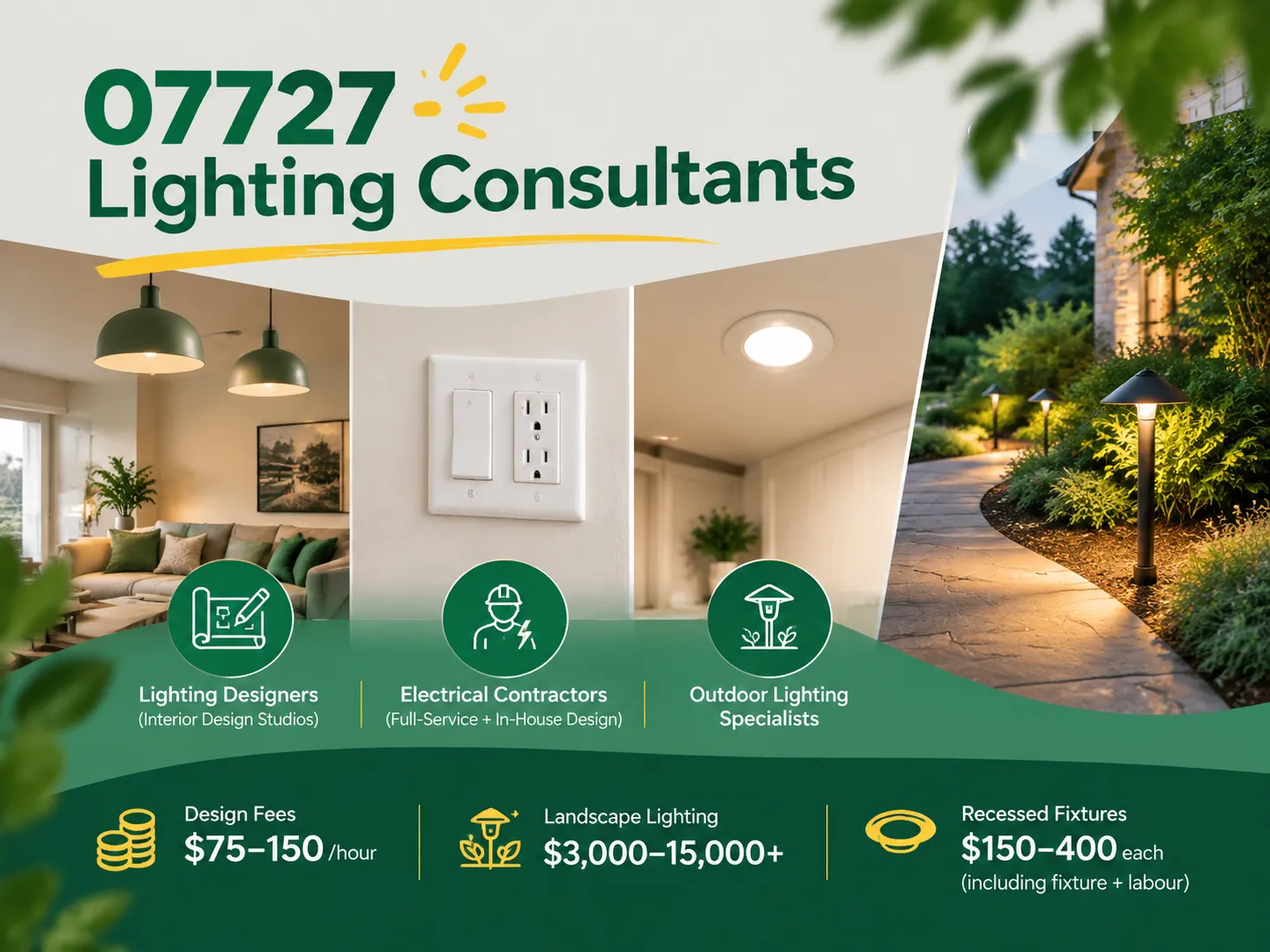
Farmingdale, along with parts of Wall Township and Tinton Falls, New Jersey, share the same zip code of 07727. Most of the houses built from the 1950s to the 1990s still exist today. Most of the homeowners are renovating their houses as opposed to building new homes. Homeowners tend to spend a lot more on […]

The term “07984 lighting consultants” gives people the impression that the five digits represent a postal code of some sort that indicates the place where lighting consultants provide services. This is, however, incorrect: there is no postal area coded 07984, which is only a code of mobile telecommunications in Great Britain. This means that the […]
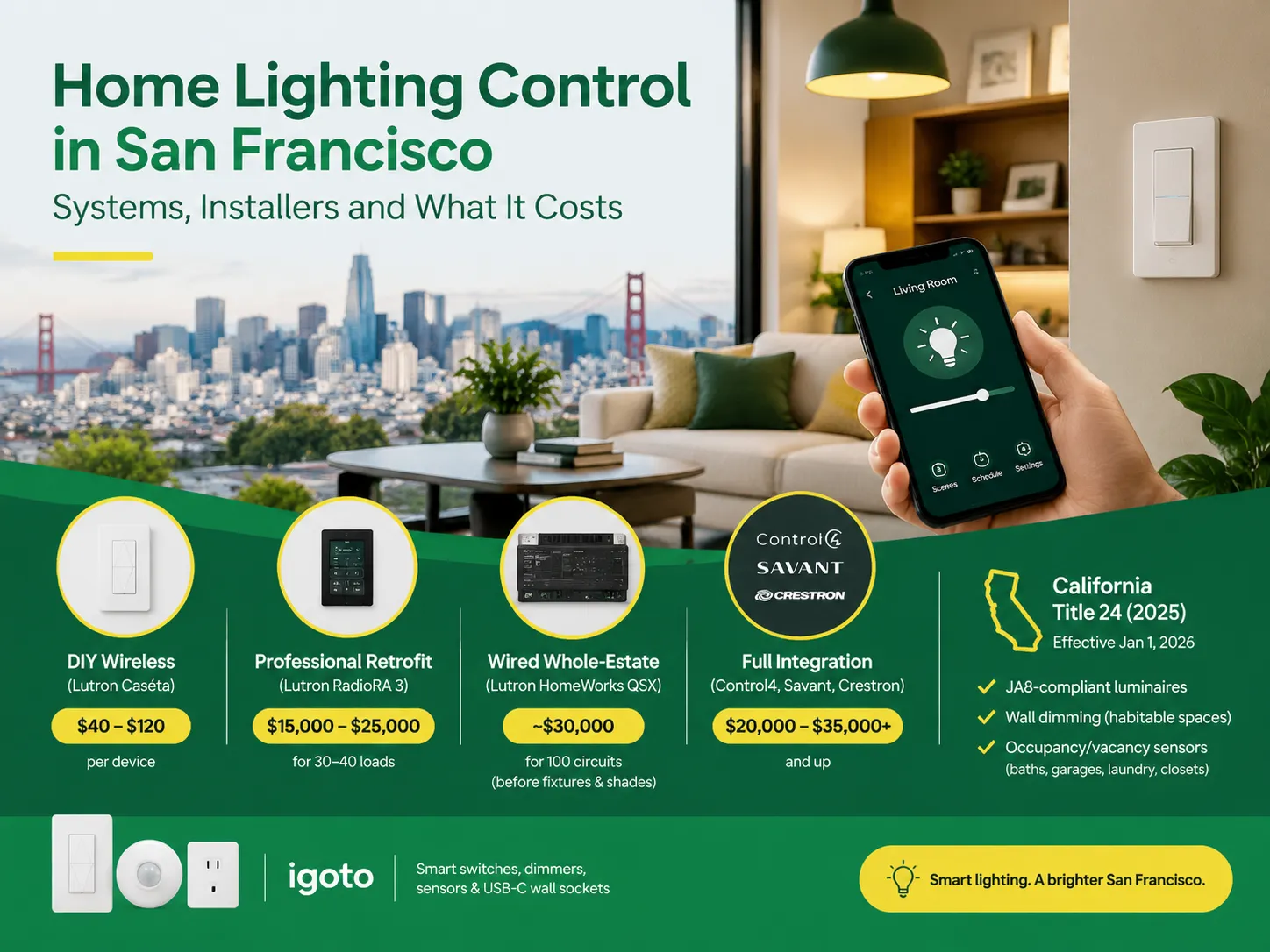
San Francisco is not the average lighting control market. The housing stock is old and dense, and the electrical code does not allow for as many electrical installations as is allowed almost anywhere else in the U.S. Most homes that want complex lighting are Victorian or Edwardian buildings where no one wants to start opening […]

 No.6 Tuozhan Road, Leshang Pioneer Park,Yueqingwan Bay Harbor,Yueqing city,Zhejiang Province