

New Zealand is a small but distinct electrical market. If you are buying smart switches in New Zealand, you are dealing with a plug standard that is different from anywhere else in the world, an approval process with its own paperwork, and a wiring system that excludes half of the smart switch models available overseas. This article will answer what kind of systems are used in the country, who is selling them, and what ‘smart’ means in New Zealand. It will also discuss the no-neutral trap that confuses most buyers, prices in NZ dollars and the paperwork to be checked before making any payments.
In brief: New Zealand uses 230 V / 50 Hz electricity supplied through AS/NZS 3112 Type I sockets which have three flat pins and are different from plugs found in Europe, the UK, and North America. All switches are designed per AS/NZS 3133 standards and adhere to the basic requirements laid down in AS/NZS 3100. Electrical devices must have a certificate of compliance to WorkSafe NZ and carry an RCM marking. The main players in the market are Schneider Electric products like PDL, Iconic, 600 series, and Saturn. The same brands produce products under Clipsal, HPM by Legrand, and other labels. The average cost of a normal switch is NZ$14-48 and the smart switch costs NZ$60-150 plus the cost of installation by an electrician of NZ$80-120. All the work with the fixed wiring must be done by a qualified electrician.
The most important thing that one should understand about New Zealand electrical equipment is that it isn’t British or European even though 230 volts looks good enough to belong to Europe. The configuration of New Zealand plug follows the AS/NZS standard 3112, which has three flat pins in the form of triangle and where two live pins are installed at an angle and one pin is straight. The other country that uses this configuration is Australia. Almost nobody else utilizes it.
| Parameter | New Zealand | Practical consequence |
|---|---|---|
| Nominal voltage | 230 V (240 V nominal in older documentation) | Compatible with European/Australian device ratings, incompatible with 120 V North American equipment |
| Frequency | 50 Hz | Not interchangeable with 60 Hz equipment where frequency matters |
| Plug and socket standard | AS/NZS 3112, Type I | Three flat pins; no European or UK plug fits |
| Typical socket rating | 10 A standard, 15 A for heavier duty | 10 A at 230 V is about 2,300 W per outlet |
| Typical switch rating | 10 AX / 20 A depending on range | Switch ratings often exceed the socket rating, which matters for lighting loads |
| Terminology | “Power point”, not “outlet”; “switchboard”, not “panel” | Useful when writing a specification or talking to a local sparky |
| Grounding | Mandatory earth on socket circuits | No unearthed socket tradition as in some European markets |
Before making any purchases, it is advisable to know one wiring convention: in the vast majority of homes in New Zealand, the lighting circuit is set up to complete the loop at the ceiling instead of the switch. This point will be elaborated further elsewhere in this guide as it is the biggest culprit when it comes to smart switches not functioning properly in New Zealand homes.
The wiring accessories market in the area is more oligopolistic than expected by international customers. A few brand names generate most of the supply.
| Brand | Range | Position in the NZ market |
|---|---|---|
| PDL by Schneider Electric | Iconic, Iconic Styl, Iconic Essence, 600 Series, Saturn | The market leader. A New Zealand brand since the mid-20th century, part of Schneider Electric since 2001, and still the default choice for Kiwi residential and light commercial work |
| Clipsal | Iconic, Solis, 2000 Series | Schneider’s Australian sibling brand, widely sold in NZ with overlapping product families |
| HPM by Legrand | Aqua Life, Excel Life | Legrand’s Australasian brand; strong in weatherproof and outdoor switching |
| Legrand | Excel Life, Arteor | Design-led and commercial ranges, often specified for premium projects |
| Schneider Electric | Resi9, Wiser | Protection devices and the Wiser smart-home platform that PDL devices integrate with |
| Specialist and imported brands | Shelly, Fibaro, Aeotec, Philips Hue and similar | Retrofit and DIY-adjacent smart control; certification and support quality vary widely |
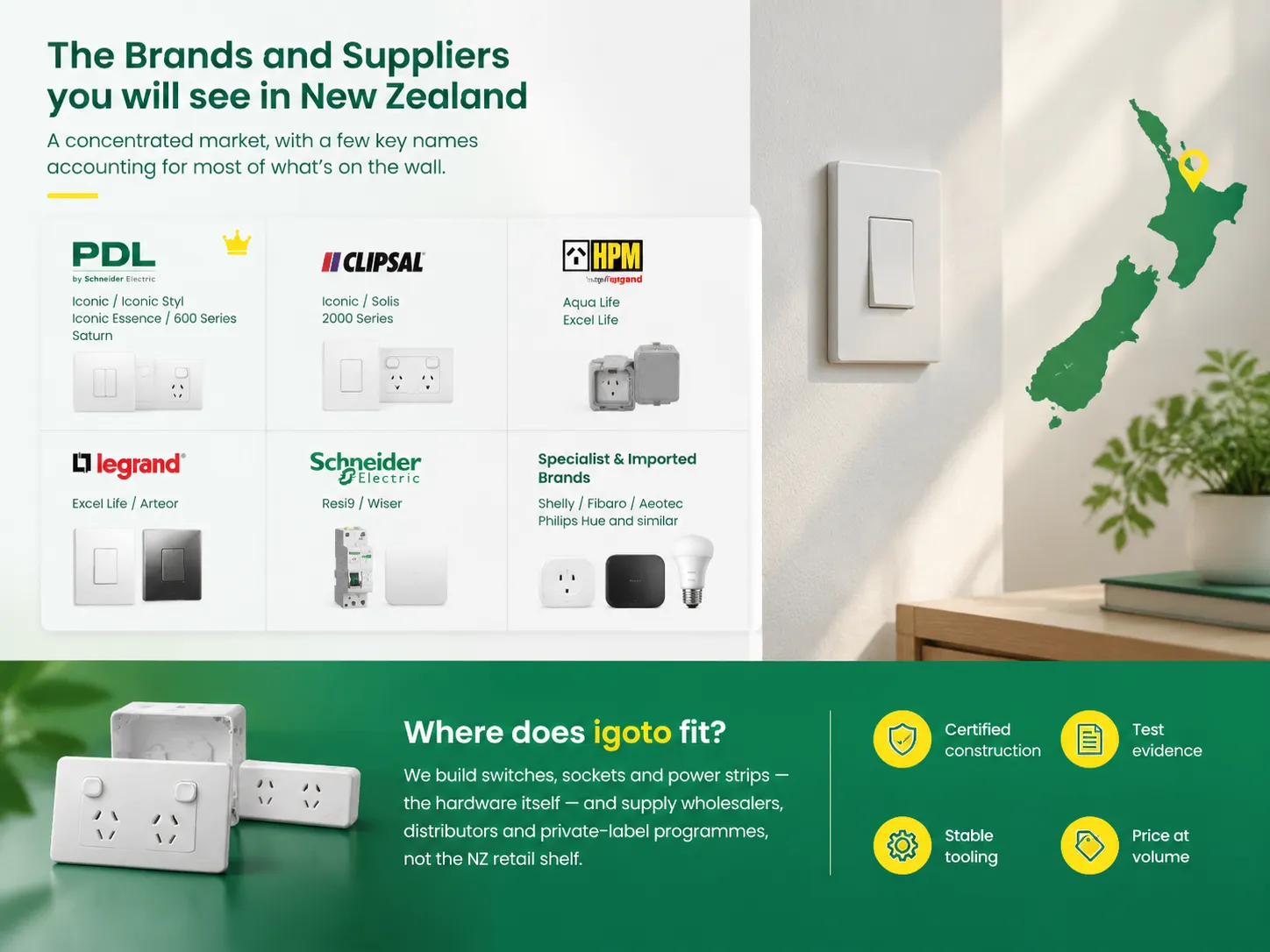
The component segment is just beneath the above; it consists of things like switches, sockets, and power strips manufactured by suppliers that target wholesale and private-label operations, rather than the retail market. igoto operates within this segment. It is important to point out here that both businesses are able to solve different tasks. If the task at hand is finding a solution that can be integrated with an already existing installation, it is better to go for the brand that owns the solution since this is where inexpensive devices tend to hit the snag. On the other hand, if the task is purchasing switch and socket hardware on a larger scale, or using a private-label product line, this is component manufacturing.The test to apply is the same either way, and it is set out in how to assess a switch and socket manufacturer, whichever market you are buying for.
Three different options can be classified under the term “smart,” which leads to people buying the wrong product for their needs.
The protocols that are used to connect systems here are relatively simple, with Bluetooth being used for local management, Zigbee for mesh networking purposes, Wi-Fi for all devices that are connected over the cloud, and the Z-Wave protocol in older setups. On the market side of things, each of the Apple HomeKit, Google Home, Amazon Alexa, and Home Assistant platforms is fairly healthy, and PDL devices communicate through the Wiser ecosystem. It is extremely difficult to make the most of the devices, and therefore making the wrong choice in the very beginning may cost a fortune, since matching the platform can be an extremely costly mistake that one would rather avoid at all costs.
Connected hardware sits in the device layer rather than the platform tier. A Wi-Fi smart curtain and dimmer switch is a fair example of the type: specified by an installer or a distributor to do one job well, not built to own an ecosystem. That distinction usually matters more than the feature list, because a device that tries to be a platform tends to end up being neither.
This is the problem that stumps the majority of people, yet figuring this out is far less expensive now than when it comes time to install units.
An ordinary lighting circuit in New Zealand works differently. With this type of wiring, the power goes to the ceiling rose or light fitting before connecting down to the switch box. This is fine for old-fashioned switches, as they only work by breaking a current, but it is an issue for many types of smart switches that require a neutral wire to power the electronics.
Now, let’s dig deeper into this question.
The prices shown are based on recommended retail pricing in New Zealand dollars as per the current NZ electric supply listing and installer price guidelines. Trade and bulk pricing usually is lower.
| Item | Product cost (NZD) | Installation (NZD) |
|---|---|---|
| Standard wall switch, 1 gang (e.g. PDL Iconic) | $14 – $16 | $80 – $120 per switch (if required) |
| Standard wall switch, 2 gang | $24 – $48 | $80 – $120 per switch |
| Premium finish switch (Iconic Essence, Iconic Styl) | $35 – $50 | Same as standard |
| Weatherproof switch, IP44 – IP66 | $36 – $58 | Site-dependent |
| Smart light switch (connected) | $60 – $150 each | $80 – $120 per switch |
| Smart dimmer switch | $80 – $200 each | $80 – $120 per switch |
| USB powerpoint (USB-A / USB-C) | $40 – $80 each | $80 – $100 per point |
| Smart thermostat (for context) | $200 – $400 | $150 – $250 |
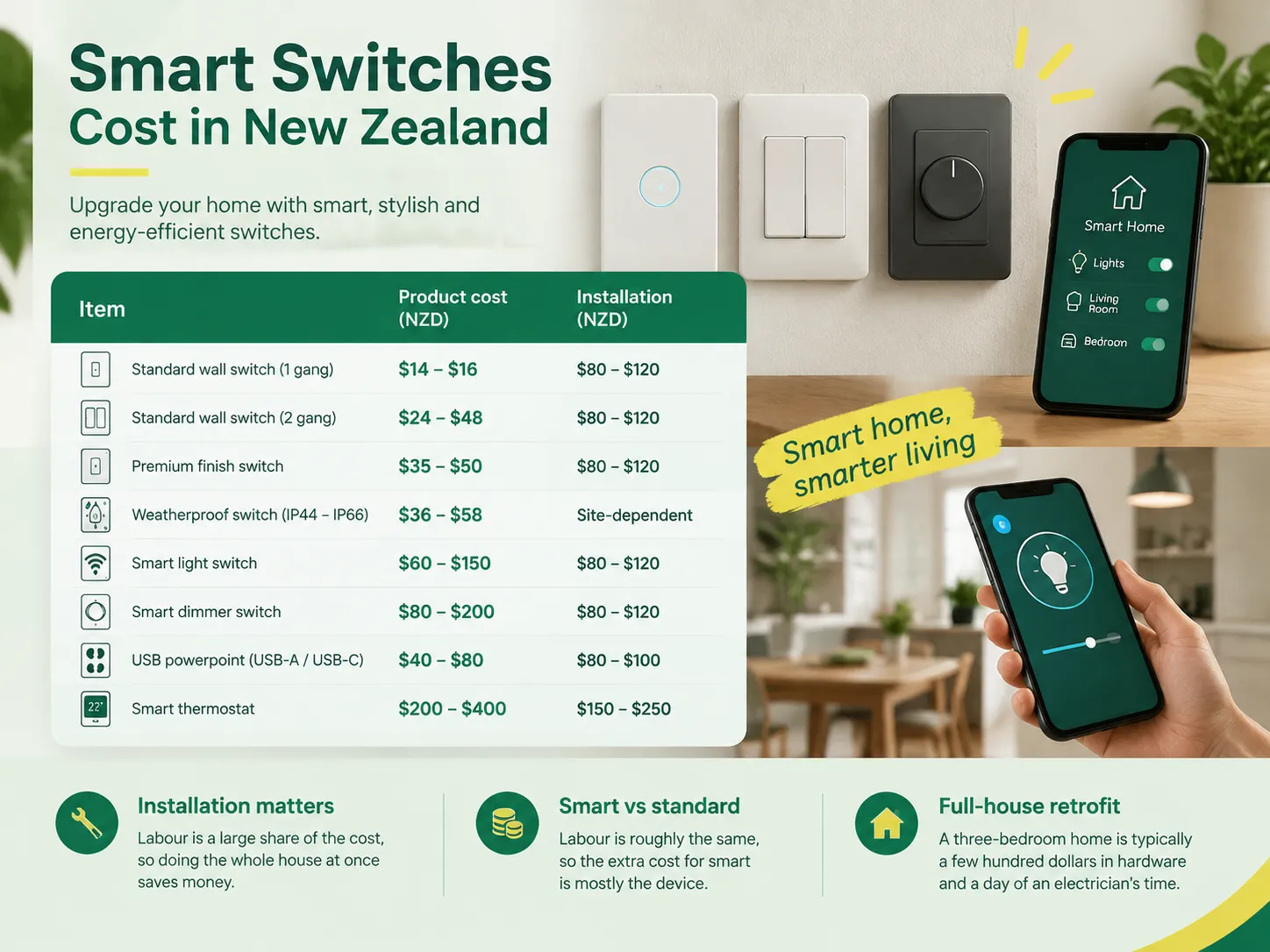
Two things that are really important to highlight. The cost of the installation is considerable, so changing an entire house at once is much cheaper than doing it in a room-by-room fashion because the electrician is already available for the work, meaning the switchboard can remain open. Also, the difference between a $15 switch and a $120 one is completely due to the cost of the hardware as the installation will last about the same amount of time for both options.
So in the case of a full-house installation, one can have a sensible budget for a three-bedroom house in several hundred dollars of hardware plus a day working for an electrician, depending on the number of switches that require replacing and the wiring processes. Combining other work to be done at the same time is where the hourly rate will be well paid off.
The New Zealand’s electrical safety guidelines come as nothing less than rigid, and imported smart switches have proven to be a frequent source of compliance issues. The following six points are worth verifying:
The certification documents belonging to these products specify the ratings for each model and very often contain information about certain compatible grid, cover, and mounting accessories that are being part of the certified combination. It may seem to be insignificant, but this aspect should not be overlooked. In modular systems, the certified product may be a combination of the switch and a compatible grid or the cover rather than the switch itself. This means that by installing the wrong cover in the modular system, a person may be violating the certification.
| Situation | What I would specify | Why |
|---|---|---|
| Rental property | Standard modular switch range, robust finish | Cheap to replace, easy to source, survives tenant wear |
| Owner-occupied family home | Standard range plus smart switches at key positions (entry, living, bedroom) | You get the convenience where it is actually used, without paying for it in every room |
| Older villa or heritage interior | Premium finish range that suits the period detail, or a relay behind the existing plate | Preserves the appearance; hardwired replacement risks visual mismatch |
| New build | Full modular range, neutral run to every switch position, smart-ready grid | Future-proofing costs almost nothing at first fix |
| Coastal or exposed outdoor | Dedicated weatherproof range, IP56 minimum | Standard plates corrode and fail within a few seasons |
| Commercial or retail fit-out | Commercial-grade devices, separate lighting control system where scene control is needed | Duty cycle and loading are higher; consumer smart hardware is not rated for it |
Whenever an electrician is on the premises, there is little extra cost in doing additional work since there is already someone there, and two upgrades can always be added.
The first upgrade is the installation of power points with USB ports, which in New Zealand sell for around $40-80 each plus installation costs and gets rid of the annoying wall-warts that accumulate in kitchens and bedrooms. However, technology has advanced in the meantime and equipment that was cutting-edge just a few years ago is now outdated. It is worth checking what a USB point actually supports before buying a house full of them, which is the ground covered in the USB wall outlet and fast-charging guide.
The next one is outdoor lighting control, and that fits well with the weather-resistant systems in use everywhere and also is one of the few upgrades associated with safety and comfort.
Sometimes, but this varies depending on the kind of switchboard used. In many older residential homes in New Zealand, light wiring is looped through the ceiling, meaning that the cable feeding the switch does not receive a neutral wire, which means that most wired smart switches will not work. Check for a neutral wire first. If there is none present, you will need to go for either a two-wire smart switch which is built specifically for this scenario or else use smart LED light bulbs or else put in a relay at the light fitting instead.
Indeed, this applies to all types of hardwired switches, as they involve a fixed wiring installation that only licensed electricians are allowed to perform in New Zealand. The legal alternatives are smart plugs that can easily be plugged in or smart bulbs that can be installed in a socket like a normal bulb. Fix an installation budget of around NZ$80-120 for each switch plus a lower price for each unit in case of multiple installations.
The cheap alternatives are often non-compliant . A switch that is sold on the New Zealand market must meet the requirements of AS/NZS 3100 and AS/NZS 3133, be certified by WorkSafe with a supplier declaration of conformity that indicates that it has been tested for that particular model and hence found to be safe to be installed. All this compliance costs money, which is the difference between a switch that is legal and safe to install and an electrical switch that your electrician will not install.
Modularity and breadth of range. PDL Iconic provides you with the advantage of separating mechanism, grid and cover plate which is beneficial as you are able to alter the appearance without having to rewire. Standard, premium finish and connected switches are all available using the same mounting system. Using a standard fixed switch will save you money but to alter anything, you need to replace the whole unit.
Where smart lighting structures are useful: entry and hallway lights operating on programs, interior spaces capable of scene management, lights in locations which are hard to reach or even outdoor lights and anywhere remote control or voice activation is genuinely useful. Where smart lighting structures would not be of any value: rooms where it is easiest to operate with a traditional switch on the wall. This is how people waste a lot of money create systems which they won’t even use.
The most popular choices are solutions from Schneider Electric (the iconic series with Bluetooth or Zigbee modules and using the Wiser platform) and Clipsal, while other Legrand ranges include Excel Life and HPM. Besides, other imported systems like Shelly, Fibaro, and Aeotec are available for retrofitting and DIY-related work but they have different certifications and levels of support, therefore, be sure to check compliance before starting a full home installation.
Smart switches in New Zealand are easy to purchase if people understand three simple local facts. The type of plug used is a Type I plug, as per AS/NZS 3112, which is not compatible with the plugs used in Europe or the United Kingdom. The latest switches must meet the demands of AS/NZS 3133, which falls under the AS/NZS 3100 specification and has undergone supplier’s declaration for WorkSafe and RCM marking. At the same time, many old homes in New Zealand do not have a neutral wire to the switch that serves as a major deciding factor for the category of the product in question.
As far as the price is concerned, budget NZD 60–150 for a smart switch and NZD 80–120 more for installation, which costs the same whether one is installing a NZD 15 switch or a NZD 150 switch. The biggest economy comes from carrying out the work in one visit. Make sure to check if the suppliers carry the required combination of the switch and the grid, and run a neutral wire through all switch locations, if the wall is open.
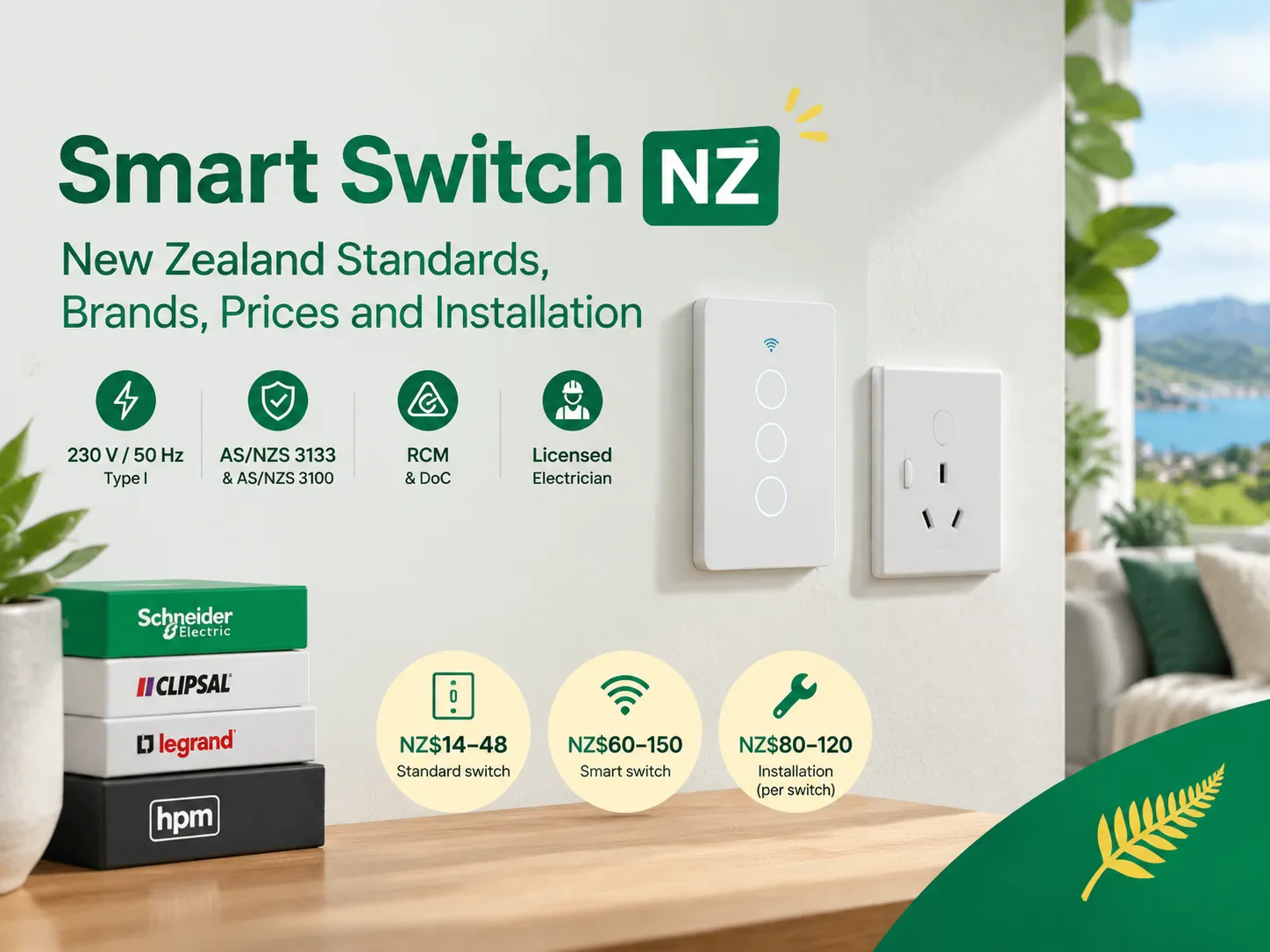
New Zealand is a small but distinct electrical market. If you are buying smart switches in New Zealand, you are dealing with a plug standard that is different from anywhere else in the world, an approval process with its own paperwork, and a wiring system that excludes half of the smart switch models available overseas. […]
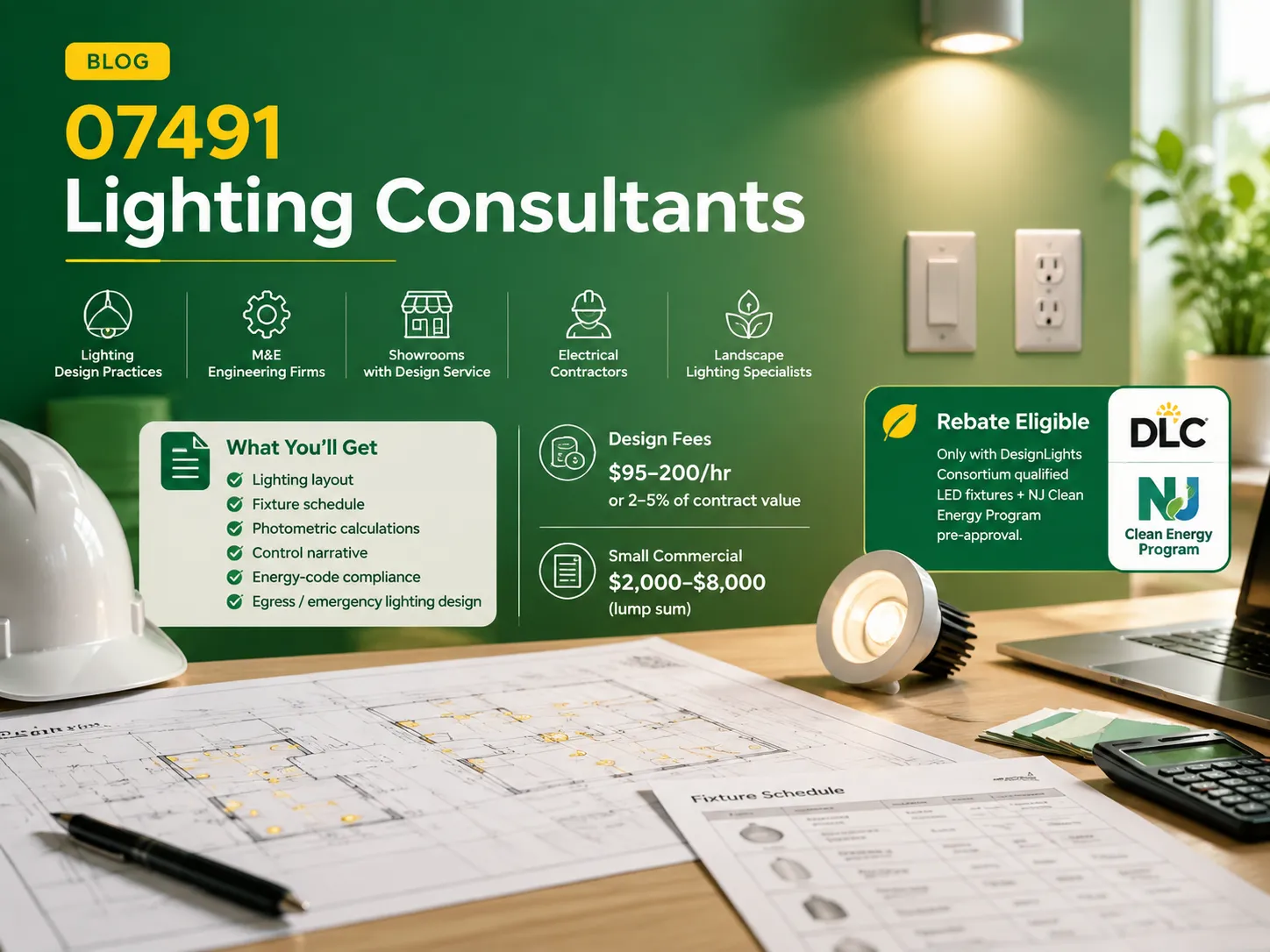
If you need assistance with lighting in the 07491 region, is essential to ask two crucial inquiries: who is operating nearby and how much is charged for the services. Concerning the first question, one can easily find the answer regarding the facts and figures because the market in northern New Jersey is not so broad. […]
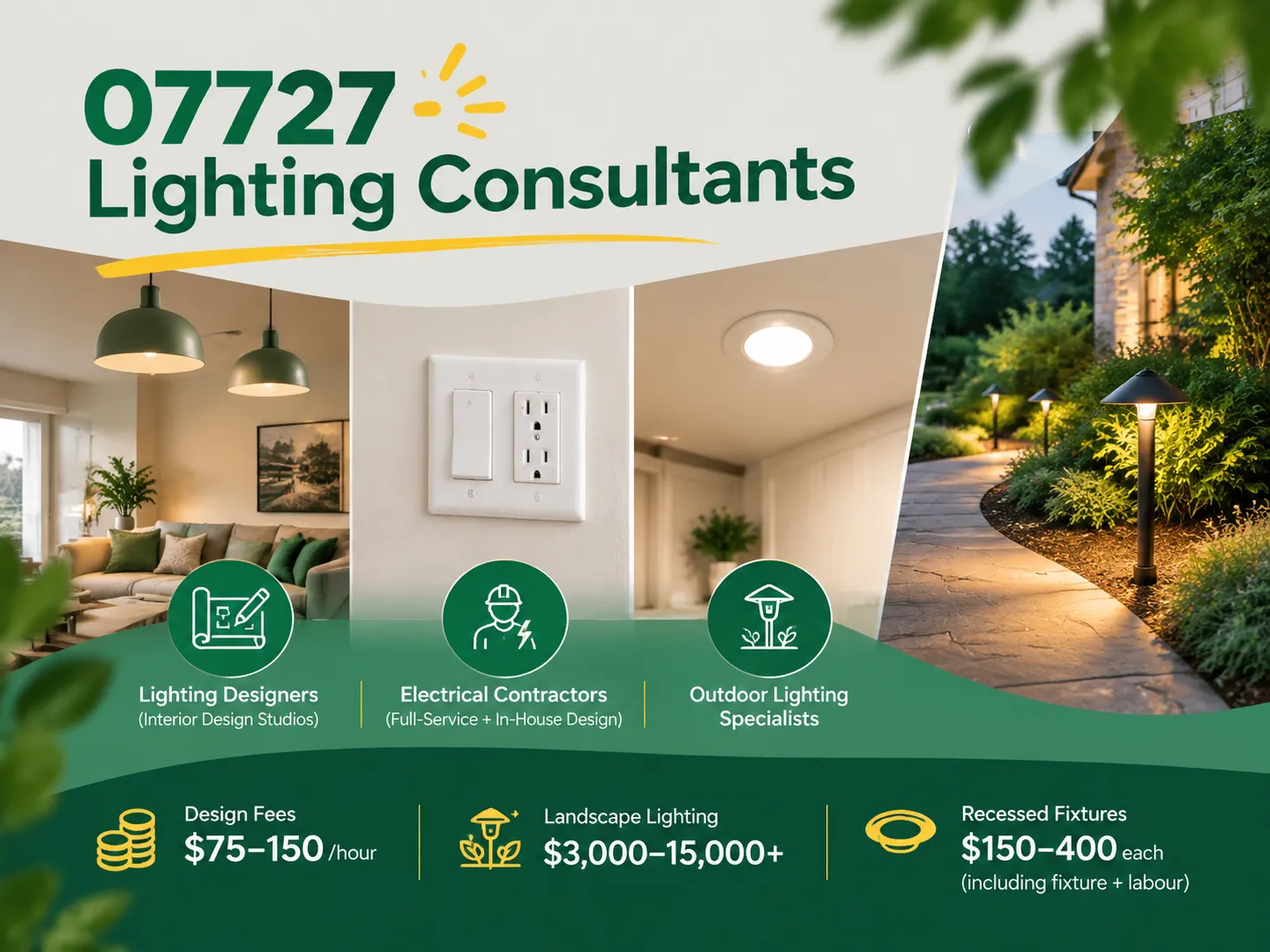
Farmingdale, along with parts of Wall Township and Tinton Falls, New Jersey, share the same zip code of 07727. Most of the houses built from the 1950s to the 1990s still exist today. Most of the homeowners are renovating their houses as opposed to building new homes. Homeowners tend to spend a lot more on […]

 No.6 Tuozhan Road, Leshang Pioneer Park,Yueqingwan Bay Harbor,Yueqing city,Zhejiang Province


