

Chile is the easiest country in South America to choose wiring equipment for, but it is also one of the most difficult to get into because of this. All electrical plugs conform to a single type that is referred to as the “Type L” or “Italian CEI 23-50” plug. The only certification for electrical equipment sold in Chile is that which has been provided by the state.
Quick answer: In Chile, power is typically at 220V, 50Hz, and uses type L sockets (Italian CEI 23-50) that are available in 10 amp and 16 amp. Of the many manufacturers that provide wiring devices for the Chilean market, there are four dominant brands in the Chilean market: BTicino (part of the Legrand group), Schneider Electric, Gewiss, and Rema who is the only Chilean manufacturer and was established in 1940. Chilean plugs will accept the European Type C Europlug but will not accept the Schuko plug. A 16 amp plug will not fit into a 10 amp socket, and every switch and socket sold in Chile must have SEC certification along with an attached QR code and a representative in Chile, which is the real barrier to entry as opposed to the product itself.
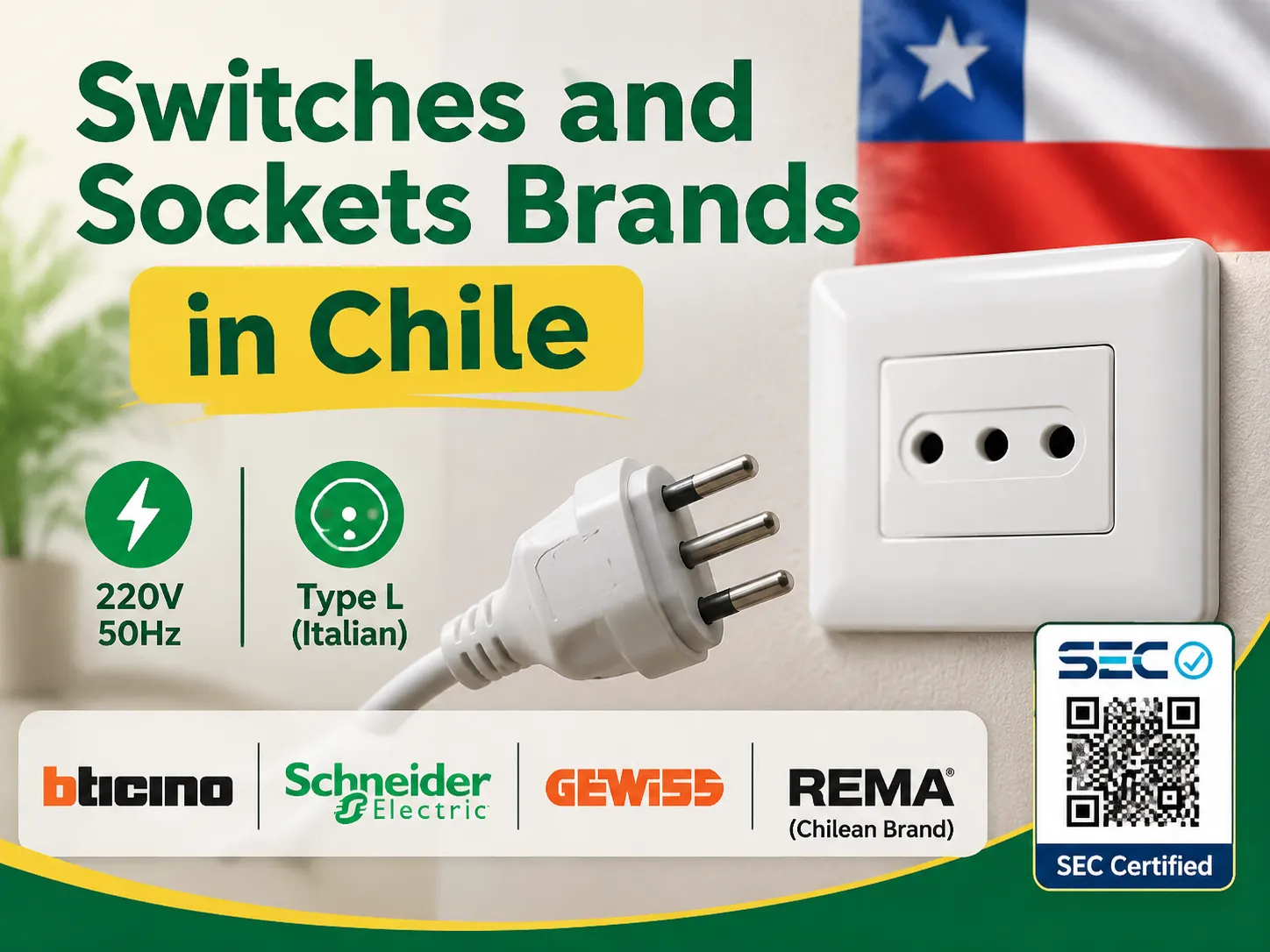
Initially the Italian style outlet was implemented throughout Chile, and no mixture of flat blade outlets (North America) or angled pin outlets (Australasia) has taken place. This single decision provides enough coherency in the market, as an electrician in Chile will only carry one type of outlet, a distributor will stock only one family of outlets, and specifications will not need to specify beyond either 10A or 16A.
The Chilean electrical outlet consists of three round pins that are positioned in a straight line, with the ground pin located between the two current-carrying pins. In addition to accepting earthed three-pin plugs, many single-phase outlets are also designed to accept the unearthed two-pin plug. The 10A version of the outlet uses 4.0mm diameter pins positioned 19mm apart, whereas the 16A version uses 5.0mm diameter pins positioned 26mm apart. Both types are rated at 220V. The maximum voltage rating for both of these is 250V.
The standard household voltage in Chile is 220V 50Hz for the majority of devices. This voltage rating is relevant for importing products to Chile, as any device that is only rated for 120V will not be a candidate for importing, and most 60Hz appliances will operate in Chile, but likely not function as intended.
If you are a resident of Chile, you are likely aware that there are two very different appliance plug types available – Type L 10 A (the standard) and Type L 16 A (the heavier load). Generally speaking, if you purchase appliances from Europe, you can plug them directly into any Type L socket (10A/16A). An appliance made in North America, on the other hand, will require a transformer to convert the voltage to the appropriate level for Chile.
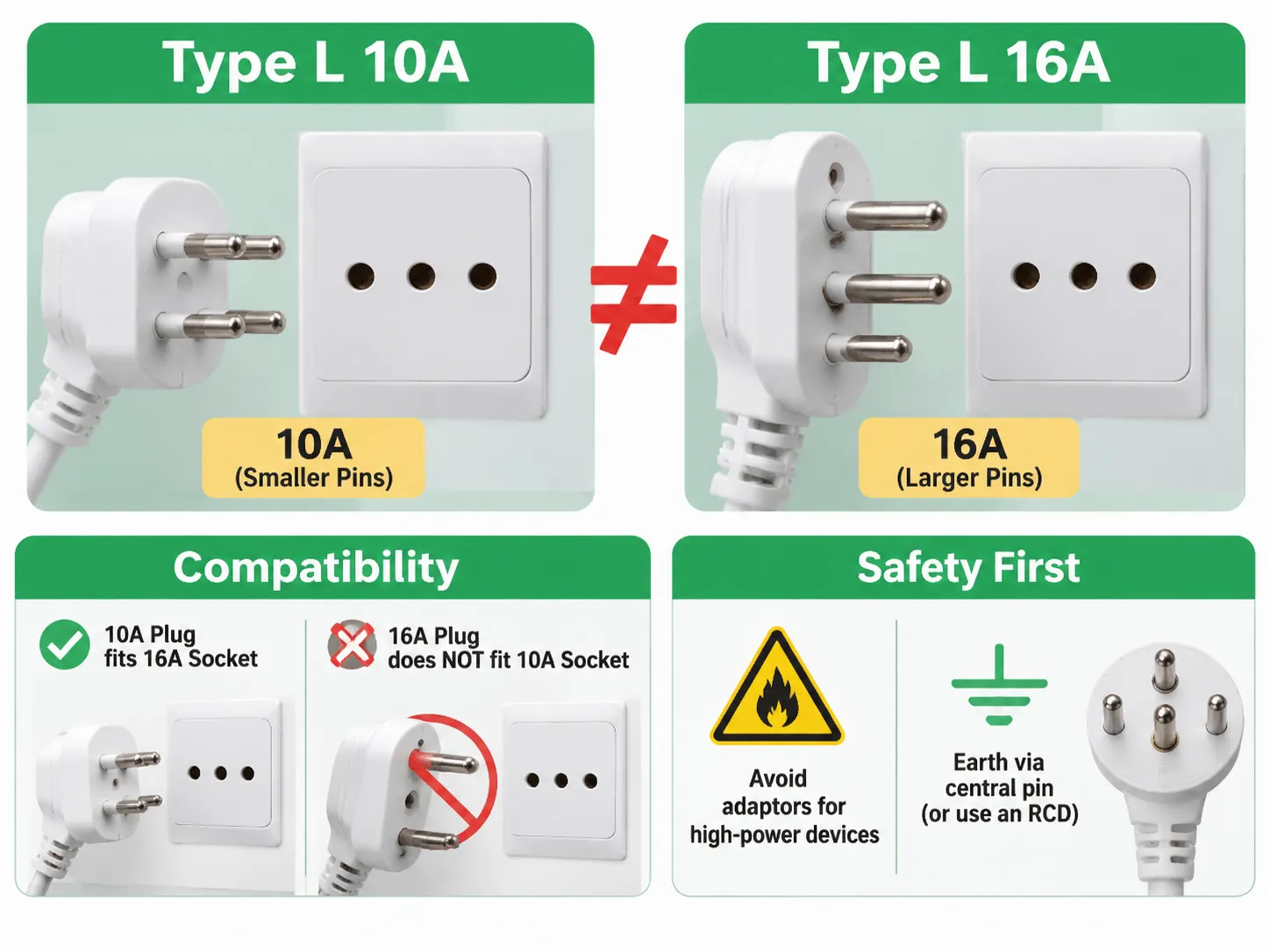
There are also some important safety features associated with these differences as well. For example, the two plugs are incompatible by design, so a Type L 16A plug will not fit into a Type L 10A socket due to the larger size of the pins and the greater distance between them.
Similarly, a Type L 10A plug will fit into a Type L 16A socket, but it will not be able to create a reliable connection with the larger contacts. This is important to note because the design intent is to prevent high consumption (current) appliances from being used in circuits intended for lighting and general purpose use.
When designing an installation, it is essential that you include both versions of the Type L plug in your schedules. Type L 10A sockets will be used for general use in bedrooms, living rooms, and other general-purpose circuits, while Type L 16A sockets will be used in kitchens, laundries, and any area intended to serve a heater, kettle, or washing machine.
If you include only Type L 10A sockets in the schedule, you can expect your board will contain a lot of adaptors when it arrives for installation. Conversely, if you include only Type L 16A sockets, you will have a board where a standard lamp plug will not fit into the socket.
In addition to the above, it is important to remember that adaptors are readily available and sold in many retail stores, so the problem is typically not detected until an inspector looks closely at the installation. Installing a 16A appliance via an adaptor onto a 10A socket is a fire hazard because the adaptor does not prevent the problem, as the electrical protection is built into the geometry of the plug.
A comparison of connectors and plug/socket combinations by geographic location lays out the compatibility of the Type L plug with the Schuko, Type G and North American blade types of connectors. It would be wise to review this comparison before making purchases for a Chilean facility based on overseas catalogs.
The second aspect of an electric power supply is the earth connection or earthing arrangement. Chilean power outlets are earthed via the central pin of the plug. However, some older installations may have been constructed in such a way that there is no earth connection; when this occurs, the best alternative is to install a Residual Current Device (RCD) at the electrical panel to protect against ground fault current and to use sockets that do not have the false appearance of being earthed with an unconnected earth pin.
Certification by the Superintendencia de Electricidad y Combustibles is required to be able to import and sell electrical products, including electrical switches and wall outlets, into Chile under Law No. 18.410 and Decree No. 298/2005. This mandatory certification is achieved through the creation of a QR code that must be printed on each electrical product or its packaging, and connected to an original SEC certification.
There are three operational points which determine if a product will be allowed to be imported successfully into Chile. First, the certificate holder must be a legally defined Chilean entity possessing a RUT (Registro Único Tributario) number; foreign manufacturers are prevented from making application for SEC certification directly; they may apply indirectly through the use of an import representative or authorised agent. Second, the technical documentation submitted to the SEC must be written in the Spanish language, including the operating instructions and labeling/packaging artwork.
To obtain certification, testing must comply with the Chilean standard or an accepted equivalent (typically IEC 60884, with national variations, at an input voltage frequency of 220V and 50Hz).
Certification approaches vary based on the type of screening included within the type approval process. A certification model that incorporates type testing plus batch inspections is suitable for a company that imports infrequently, whereas a certification model that incorporates factory inspections and periodic in-field market sampling is suitable for a company that continuously exports under its own label. If the factory in which the goods are manufactured has already obtained CB or European certifications, a certification route may exist that requires a reduced scope of testing, but the plug configuration and the associated Spanish documentation must still be completed. These are the reasons for delays associated with first shipments.
If you walk into any residential apartment in Santiago, you will probably find electrical outlets from only four companies. The most widely installed brand with residential installations throughout the country is BTicino (until recently part of the Legrand Group), and the preferred brand for Type L socket installations. Schneider Electric shares the market for residential and commercial applications as well, but has an extensive distribution network. Gewiss, an Italian company with a Chilean subsidiary, is a major supplier of electrical enclosure products and wiring devices for industrial and commercial applications. Finally, Rema, a domestic manufacturer founded in 1940 in Chile, is recognized as the brand that continues to be prominent in older buildings and price-sensitive markets.
The concentration of these four companies in the Chilean market is a direct result of the high cost and lengthy timeframe associated with the certification process. This creates a limited number of brands that offer full certification ranges, which consequently reduces the options available to distributors. Distributors prefer to stock brands that they know will perform well in the market.
A new product line really only competes with 4 brands that have all completed the proper documentation.
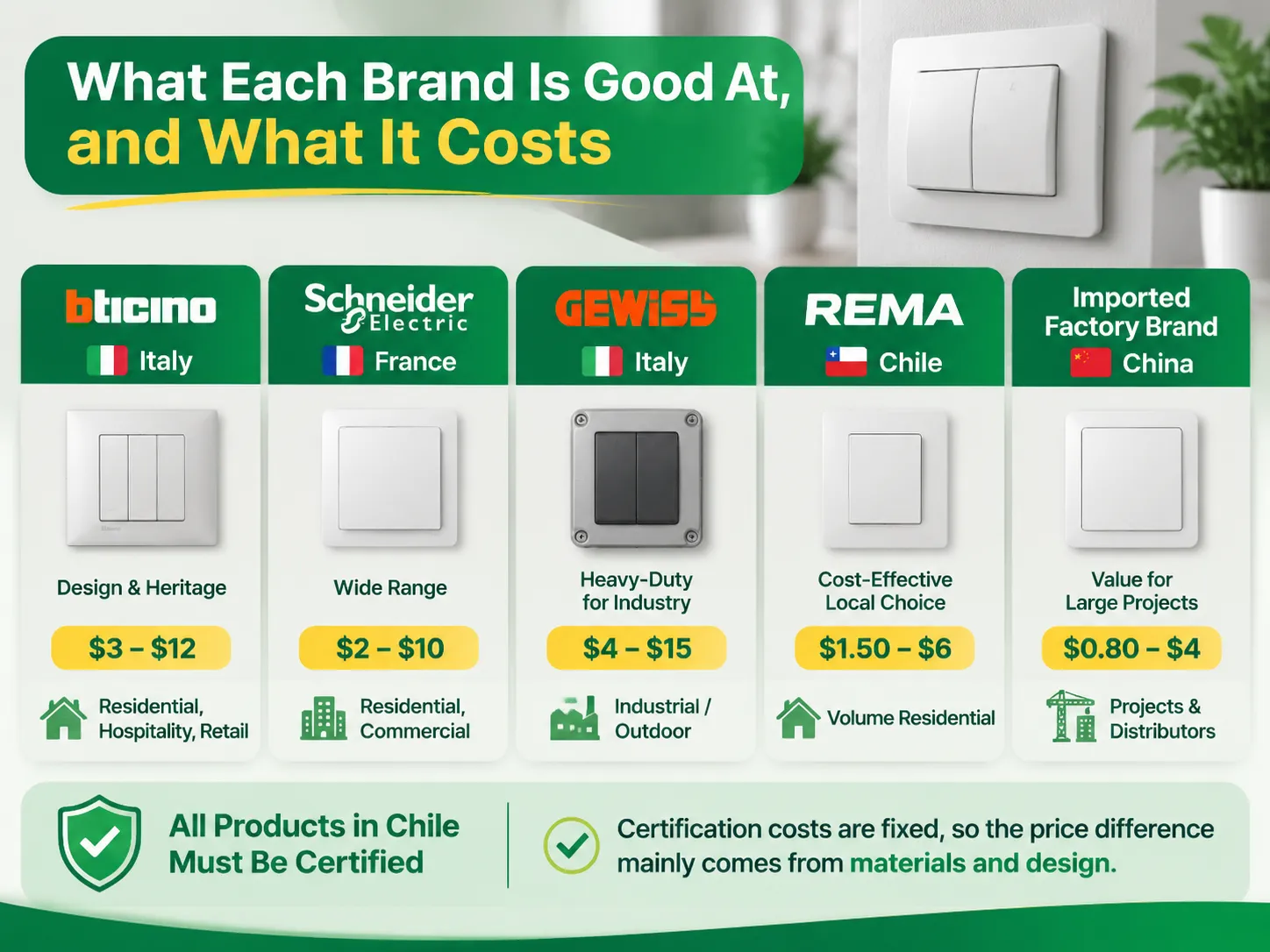
The following table shows the approximate wholesale cost of one unit of the product from each manufacturer. The cost of goods is not uniform across Chile, and there are variations based on distribution area (regions) and quantity ordered.
| Brand | Country of Origin | Strong Selling Attributes | Average Cost of a Unit | Target Users |
|---|---|---|---|---|
| BTicino | Italy, part of the Legrand Group | Cultural heritage of type L, multiple colour designs, combined plate designs | Between $3 and $12 | Residential, Hospitality, Retail |
| Schneider Electric | France | All types of electrical devices with a very broad offering | Between $2 and $10 | Residential, Commercial or Project Distribution |
| Gewiss | Italy | Heavy-duty leading manufacturers of Electrical goods for Industrial Applications | Between $4 and $15 | Industrial/ Outdoor/ Wet Applications |
| Rema | Chile | Locally manufactured product; therefore offers lowest prices combined with reasonable availability of spare parts. They target volume based residential and electrical replacement markets. | $1.50 – $6 | Volume Residential / Electrical Replacement |
| Imported Factory Brand | China mainly | Generally priced based on volume and Private Label | $0.80 to $4 | Projects and Leading Distributors with their own Trade Mark |
Because certification costs are fixed and distributed equally across all manufacturers per product model, they do not create significant price differences between brands. Brand does not affect the quality, value, or regulations of any given product in a particular market. All products sold in Chile must be certified before being sold to the public. Cheaper products typically cost less to produce and sell due to differences in materials and overall product mechanism; this is not to say that they failed to go through the required testing. Without proper certification, a manufacturer cannot legally market or sell their products in any region.
The manufacturing region plays an important part in most buyers’ perceptions regarding Manufacturers from those regions within Chile; however, they typically misunderstand this relationship. In actuality, the location where a product is manufactured has no actual correlation with its performance capabilities in Chile.
Factory reputation doesn’t change the fact that a product is only suitable if it meets the Type L specification and the SEC Certification. Thus, even if the manufacturer has a great reputation in the US, its device is not the proper device for a project in Chile because:
An Australian product has the same problem but in a different shape. The only imported devices that fit the Type L specification without modifications are those made in Europe in accordance with CEI 23-50, thus, Italian and Spanish manufacturers have an unfair advantage in this area of the market based on CEI-compliance and nothing else.
Chinese manufacturers who understand the marketplace build Type L devices that have the correct geometries (10 A and 16 A) and also provide documentation that confirms that the product is SEC-compliant. There are a number of additional factors that determine which plugs and sockets fall into this family, as well as where the Europlug and Schuko plugs do not. This is very important to determine whether or not an imported product can be used.
There are two different distribution channels: Retail and Wholesale, and they each have different requirements and sell at different prices.
Retail—The majority of retail is controlled by home improvement retail chains (i.e., Sodimac being the largest) and the other segment consists of professional electrical wholesalers (e.g., Construmart, electrical wholesalers). Retailers typically buy consumer packaging, focused on a small range of products, and prefer to buy from trusted brand names.
Wholesalers prefer bulk quantities, a wide range of products, and to base decisions on certification numbers and delivery dates.
Typically a brand will enter the Chilean market at wholesale, before entering retail operations later; this is simply because retailers require volume, packaging and marketing budget to be set up to achieve chain listing, which a first-year importer will not have. Private label is very popular in Chile, because a distributor that has an established relationship with a supplier can order a device under their own name through that supplier’s factory and be competitive with the four existing brands on price, while not competing against them with brand recognition.
A distributor in Chile will have a regional, rather than national structure. The majority of buying activity occurs in Santiago, but the northern mining regions and southern regions have their own wholesale suppliers that carry different stock than Santiago. Therefore, a supplier in Santiago that serves only the Santiago market will soon discover that the majority of mining projects are going elsewhere for their products.
In Chile, when a buyer assembles their first range of products, the product range will be organised according to device and plate system, rather than by room. The way in which a Chilean quantity surveyor writes a bill of quantities is based upon this structure.
The following table illustrates the typical way in which decisions are made regarding project types, and assumes that devices are certified in both cases.
| Project | Devices | Reason |
|---|---|---|
| Apartment/Housing, Developer Volume | Rema or a Certified Factory Brand for 10A | The price per point is the only item considered when it comes to brand request; the product carries no brand recognition in terms of selling points. |
| Hospitality & Show Apartments | BTicino or Schneider Design Range | The finish of the plate and the matching accessory styling are part of the total sale. |
| Kitchen & Laundry Points | 16A Socket, any certified brand | It is the plug geometry that is important; not the brand of the device. |
| Industrial plants/Workshops | Gewiss or an IP-rated industrial range | The item must withstand extreme impacts, dust, washdown conditions (for example, sauces). |
| Retrofit & Replacement | Rema or the existing brand | The plate and box compatibility with what’s already installed is of utmost importance. |
| Mining camp/Remote site | Certified Industrial Range with spare parts available locally | The cost of downtime far exceeds the price of the device many times over. |
| Private Label for a Distributor | Factory supply with a private-label distributor’s product | Allows the distributor to have margin and range control without factory investment. |
In Latin America, most of the new supply relationships have started with the private label product, and the same pattern exists throughout the entire region. An example of this is the Brazilian case of distributor expansion. Here we see how a range has been established for a country that buys in small quantities on a regular basis versus buying an entire container once per year. In this case, Brazil is more like Chile regarding wholesale buying patterns than it would be for a “container-only” type of buying pattern.
There are five items that should be included in a purchase specification: The configuration should be identified (10 A or 16 A Type L, etc.) as well as the plate system; the voltage and frequency should be indicated (e.g. 220 V 50 Hz); the certification should be specified (e.g. SEC certification); the plate material and finish should be stated; and the SKU and QR code must be present on all packaging.
Due to the commonality in Chilean projects specifying colours for switches, sockets and data outlets, the finish and material used on plates is an important consideration when purchasing devices. Also, because a round or square box standard does not necessarily have the same mounting distance as the plate standard in Chile, the round/square mounting box from another market cannot be inserted into a Chilean plate without an adapter.
The terminal arrangement(s) (unless the project has a wiring standard) and the packaging language may be left to the supplier. However, the Spanish nameplate and instruction (as required by the certification file and customs inspection) must be present.
Most times, the specification error is in the box, since each plate is made to a specific fixing centres specification, and importing plates without the corresponding boxes is the most frequent reason for a first shipment that is unable to be installed.
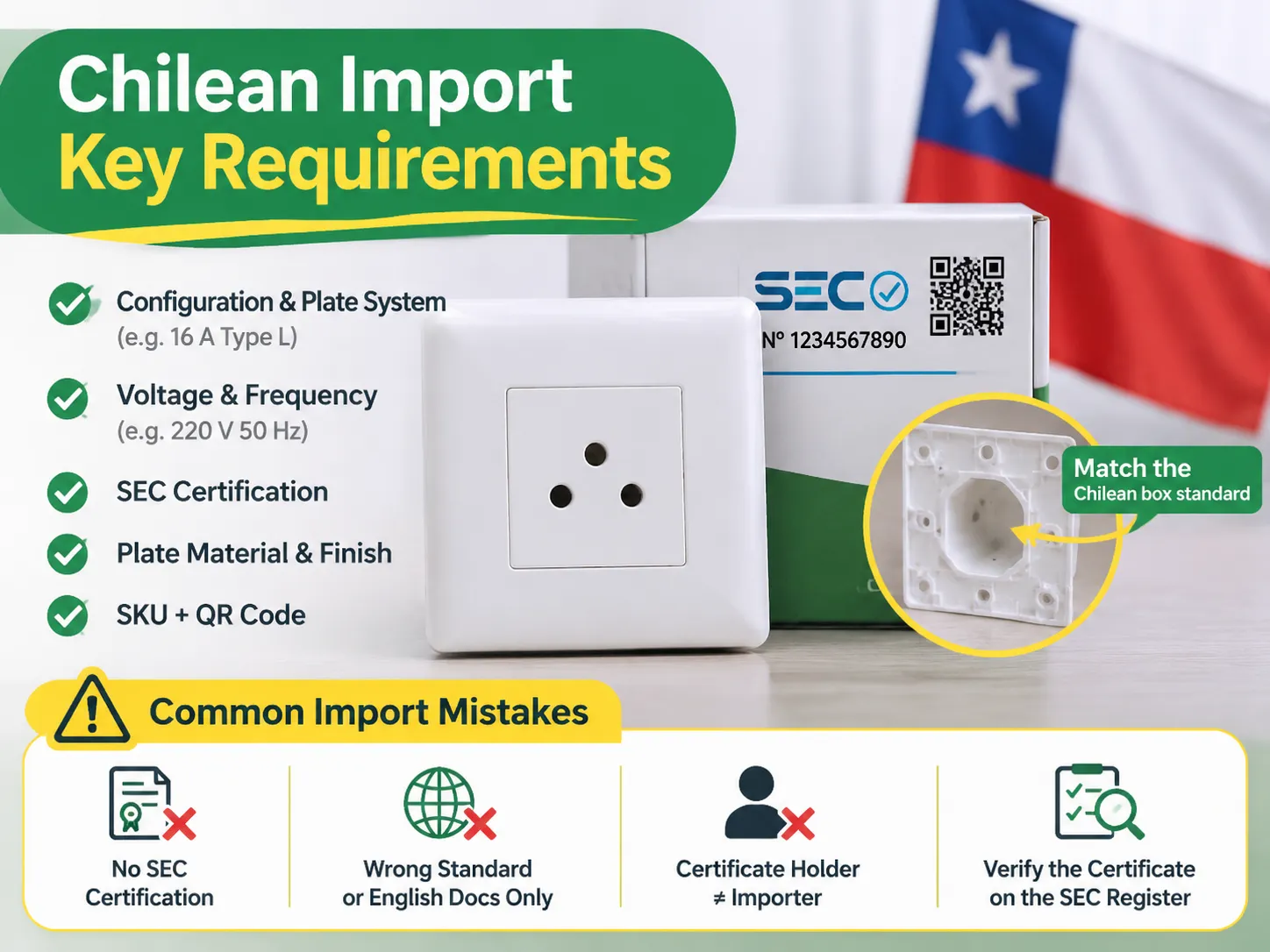
The following are the most frequent errors made when importing items that result in failed first shipments.
There is a fifth mistake that does not appear to be an error. That is, a device can be certified for one model and shipped as another model; however, that shipment will pass through customs if the packaging has the proper QR code affixed to it.
Fraud and not an error. This is why buyers are taking the additional step of requesting the certificate number and verifying it against the SEC register rather than relying on the carton as a source of truth.
We are a component manufacturer and not a Chilean brand, which provides a clarity of position in this market. We manufacture the plate, module, and switch/socket mechanism and supply them to both distributors and project buyers who either sell under their brand or sell ours. As a manufacturer of European wall socket and switch products, we manufacture the complete Type L family along with Schuko and Europlug compatible versions for the Chilean buyer’s needs.
What we do not hold is the SEC certificate (that is held by a Chilean entity). What we provide are the necessary documents that make up the SEC certificate: IEC 60884 test reports, Spanish nameplate artwork, material declarations, and model lists as required by the certifying body. This is the section of the process that a factory controls and it is frequently the most significant delay in product launches.
For a distributor building a complete range, the working model is first order covering the typical configurations, a certificate file for each configuration and a reorder period based on the wholesale/products season, not the container economics.
The type of electrical outlet used in Chile is type L, which is in accordance with the CEI (Italian) Standard 23-50. The type L outlet has three round pins lined up in a row with the grounding pin located at the center position. There are two configurations for this type of outlet: one is rated at 10 amps and has a pin diameter of 4mm spaced 19mm apart, and the other is rated at 16 amps and has a pin diameter of 5mm spaced at 26mm apart. Power supply to the outlets is 220 volts with a frequency of 50 hertz.
Type C plugs are compatible with both the 10 amp and 16 amp sockets, which is why most European appliances can be used in Chile without the need for an adapter. Type L plugs are designed to comply with the socket rating (10 amp plugs for general use and 16 amp plugs for appliances that draw more power than a standard appliance). A 16 amp plug will not fit into a 10 amp socket.
Yes; type C Europlugs fit into type L sockets because they consist of two pins measuring 4 mm. Type E plugs do not fit into type L sockets because their pins are 4.8 mm and the width of the plug’s body is too large for the recess within the Chilean Socket. An adapter is required to connect type G (British) plugs to Chilean Sockets. An adapter is also required to connect North American (flat blade) plugs to Chilean Sockets.
Yes. In Chile, all switches and outlets must be certified by Superintendencia de Electricidad y Combustibles (SEC). Since 2026, SEC has applied QR codes to all approved wiring devices to verify certification. A device that has not been certified is not to be cleared through customs, meaning that the main obstacle to a new brand is the certification process, and not necessarily the design of the product itself.
The largest ISPs in Chile include Movistar, Entel, VTR, and Claro; GTD and Mundo Pacífico are popular in specific areas; and WOM is focused on mobile services in Chile. An important consideration is that most devices operate on the 2.4 GHz frequency band, and therefore if your router advertises both 2.4 and 5 GHz networks using a single name, it may cause problems with pairing your smart switch during installation.
Neither has an inherent advantage due to country of origin. What really makes a difference is the configuration of the TYPE L connector, the 220 V rating, and having the SEC certification on each device. A Chilean brand has the required documents and stock available locally, while a factory-branded imported item may offer better pricing for bulk purchases, but will require a local agent to accept the SEC certification and provide a technical file in Spanish.
Chile is a one-standard market, meaning that it has only one gate. If you meet all 3 requirements—TYPE L connector for 10 A and 16 A, 220 V at 50 Hz, and SEC certification on all devices—you should have no problem selling to Chile; failing any of these requirements will make your entire consignment of devices worthless.
The brand issue is less important than some people think. There are currently four (4) companies on the wall with the certification and distribution; a fifth can also join them by obtaining the same documents and establishing a distributor relationship. By far the easiest part is the device itself.
Chile is the easiest country in South America to choose wiring equipment for, but it is also one of the most difficult to get into because of this. All electrical plugs conform to a single type that is referred to as the “Type L” or “Italian CEI 23-50” plug. The only certification for electrical equipment […]
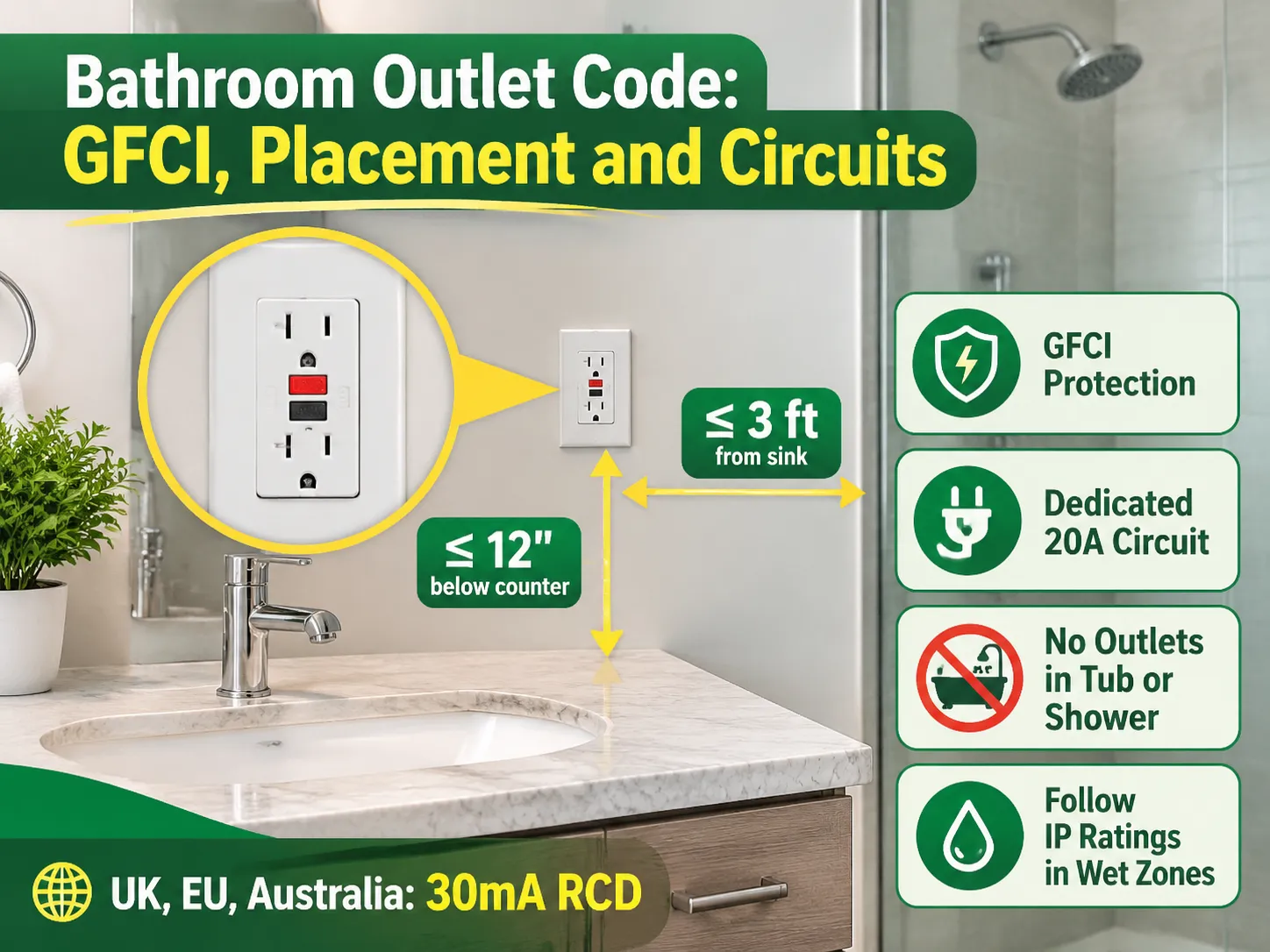
Each of these rules is reviewed in more detail below. The geometry of receptacle placement, the dedicated branch circuit requirement, receptacle types that meet the code, 15A and 20A questions, differences among countries with regard to the rules, installation details that do not pass inspection, what to consider when buying a product, lighting and fan […]
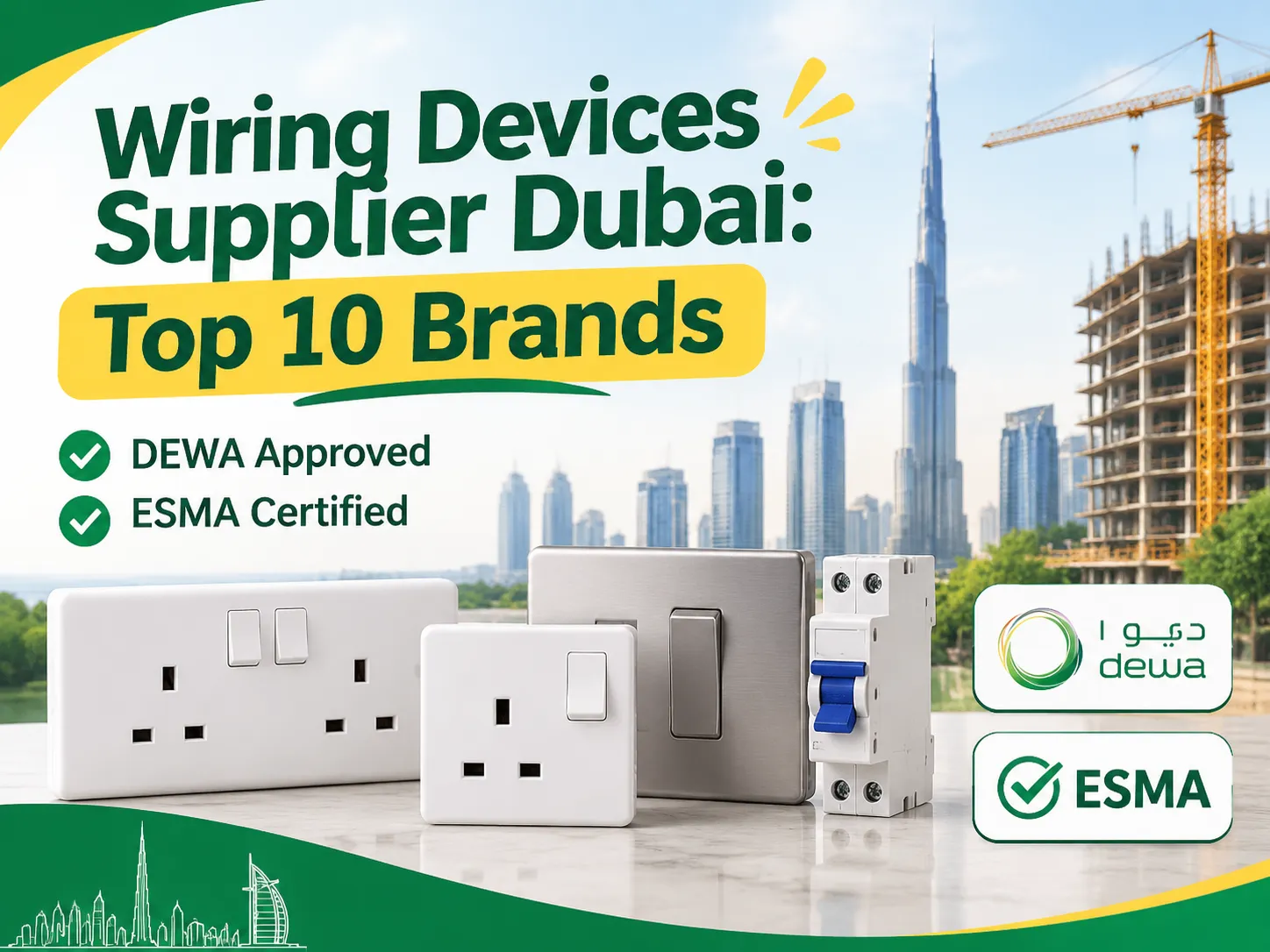
Dubai – Easy market to buy wiring devices and hard market to select correct wiring device(s) for use on any project. All International brands have wide representation in Dubai; delivery of products can occur within one week of order placement; and qualification to pass DEWA inspection is obtained by all suppliers based upon the DEWA […]

 No.6 Tuozhan Road, Leshang Pioneer Park,Yueqingwan Bay Harbor,Yueqing city,Zhejiang Province


