

If you’re browsing the electrical aisle of a home improvement store, you may feel disoriented. It can be hard to know the difference between toggle switches, rocker switches, push buttons, dimmers and smart switches — they may all look like they perform the same function. But they vary in how they operate, how much they cost, how they are wired, and where they can be used. If you make the wrong choice, you might find yourself stuck with a noisy switch for your LED lighting, a switch that requires a neutral wire that’s not present in your house built in the 1970s, or one that doesn’t fit the décor of your newly remodeled house.
Here’s everything you need to know about light switches: how they look, how they work, how they are wired, their cost, and where they should be placed. Whether you need a switch to replace the one currently installed in your house, to install a switch in a new house you are constructing, or if you need to source switches to fit the requirements of a set of plans you are doing work on, this guide is informative and helpful.
Quick answer: Various kinds of light switches can be found including single-pole switches, three-way switches , four-way switches , dimmers , smart/Wi-Fi switches , and other special switches such as timer switches, double-pole switches, and motion detector switches. The wiring of single-pole switches is pretty easy being just two screws plus a ground, though for 3-ways, 4-ways, and smart switches wiring can be more complicated .
A single pole switch is used to operate one light fixture or one receptacle at the most basic level. It is usually located next to the bedroom door containing two brass terminal screws and a green ground screw; its markings reflect the clearly visible ON/OFF options. Approximately 80% of switches found in a standard household are single pole.
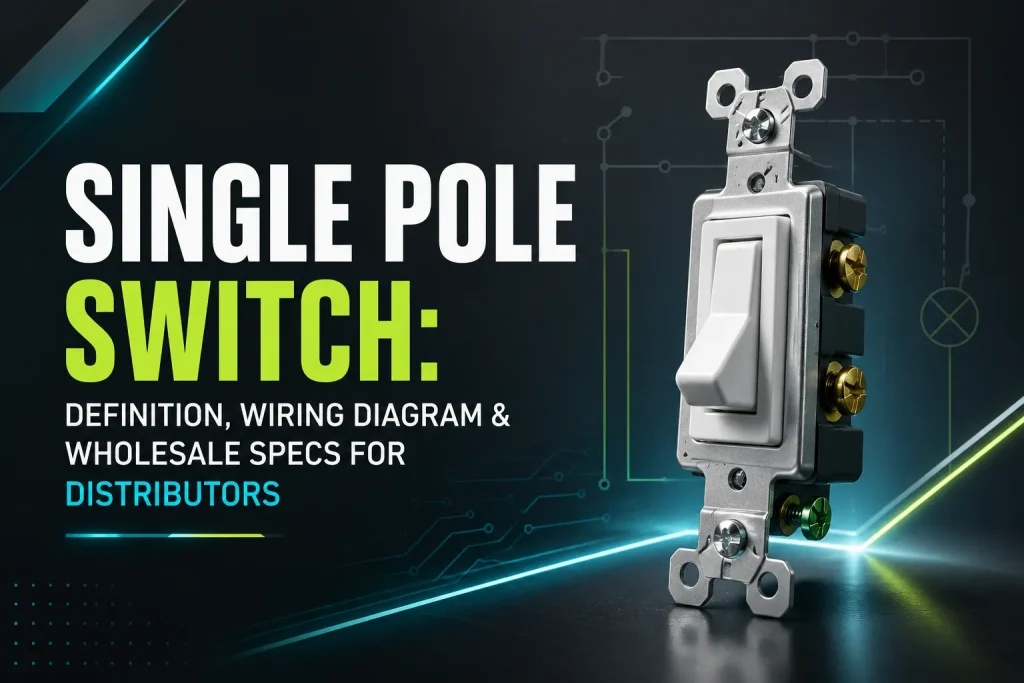
One light can be controlled from two different locations through a three-way switch. For instance, at the top and bottom of the stairs or at two ends of the hallway. Every switch has three screws (plus ground) and is not marked ON/OFF as “up” can be ON or OFF depending on the position of the other switch.
A four-way switch enables a third (or more) control point and is always positioned between the two three-way switches. It has 4 brass screws along with the ground connection. A long corridor having three doorways employs2 three-way switches at both ends and a four-way switch in the center.
The double pole switch can cut off both hot lines of any 240V electrical device at once. It has four brass screws plus ground and is rated for the high voltage. You’ll see it on water heaters, well pumps, baseboard heaters, and some more heavy duty appliances.
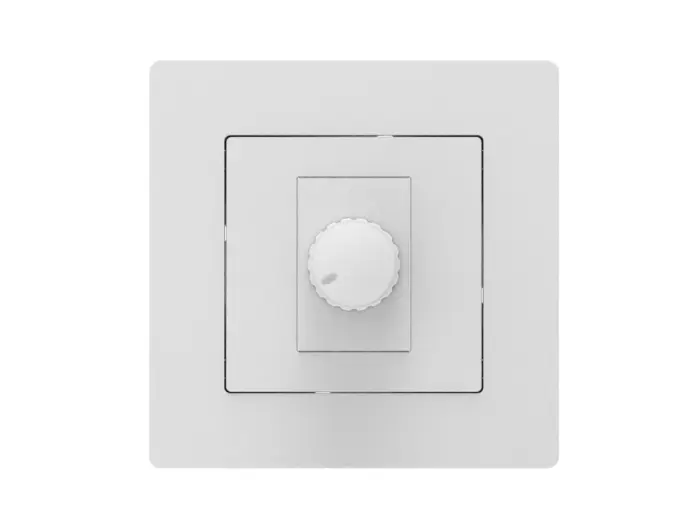
Dimmer switches are devices that adjust your light output from as little as zero to its maximum. Modern LED dimmers don’t make any noise and can dim your lights right down to around 1%.
If you already have a dimmer in hand and need the full installation walkthrough, our step-by-step guide on how to install a dimmer switch covers safety, wiring, and testing in detail.
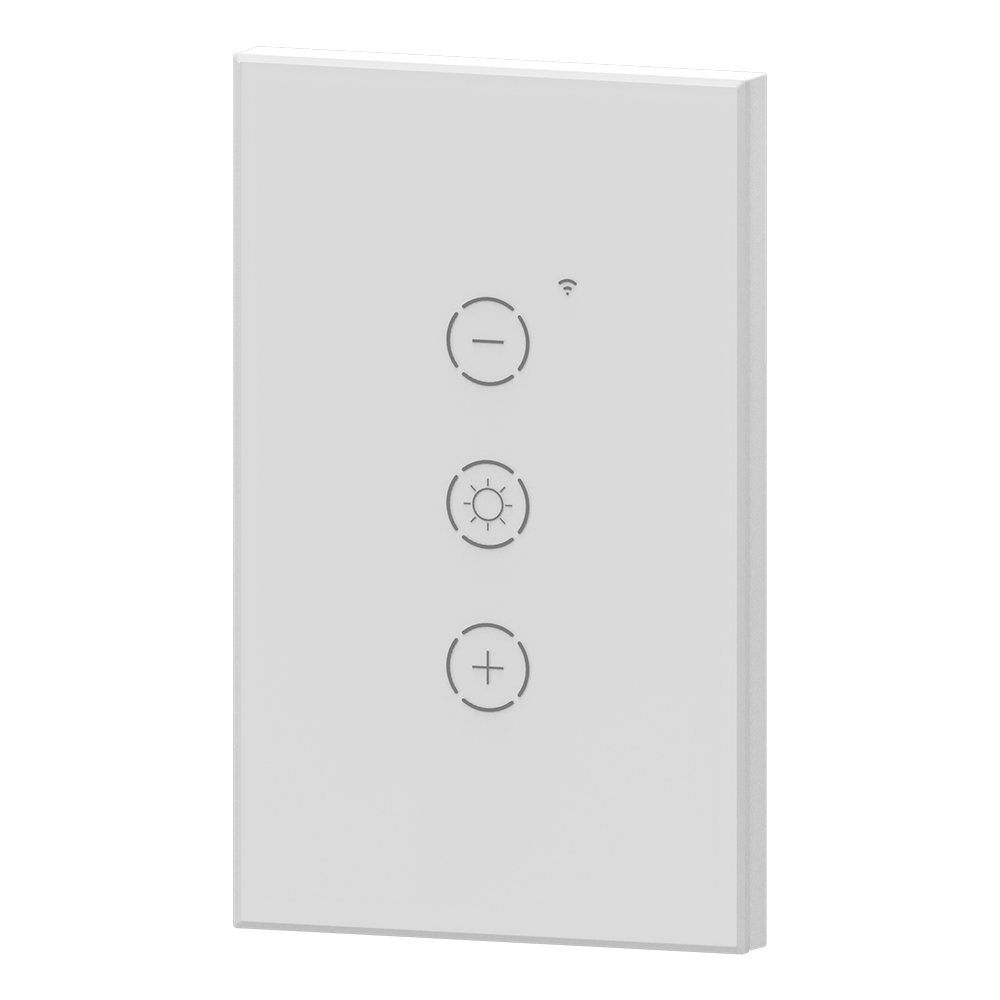
Smart switches replace ordinary on and off operation of electrical appliances with methods of using mobile applications, smart speakers (e.g., Alexa, Google Assistant, etc.), timers, motion sensors, etc. These devices require some source of connectivity, either Wi-Fi, Zigbee or Z-Wave and some of them need to be connected to neutral wire in the electrical box.
The use of special switches allows for automatic regulation without using any applications:
In addition to the electrical operation of a switch, there’s also its appearance and design. This plays a major role than people actually think because delicate and elegant switches are touched innumerable times every day and seen from different sides.
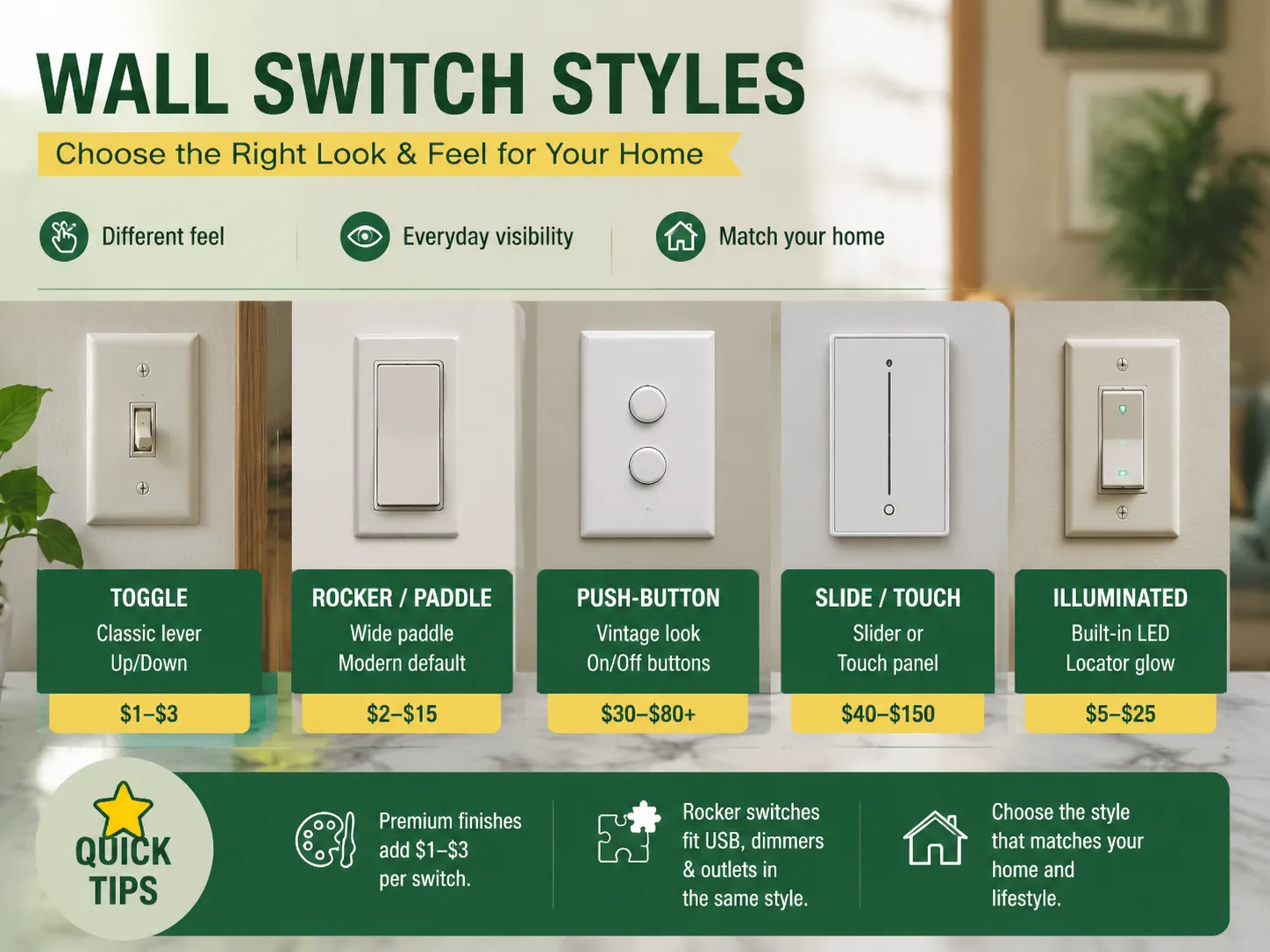
| Style | Appearance | Price Range | Best Suited To |
|---|---|---|---|
| Toggle | Classic small lever, flips up/down; in production since the 1920s | $1–$3 | Traditional, craftsman, farmhouse, historic homes; cheapest option |
| Rocker / Paddle (Decora) | Wide flat paddle that rocks; modern default since Leviton’s 1989 Decora line | $2–$5 (builder); $8–$15 (premium) | Modern interiors, new construction, kitchens and baths |
| Push-Button | Two stacked round buttons (on/off); vintage revival style | $30–$80 + $20–$50 plates | Restored homes, period-correct builds, formal rooms |
| Slide / Touch | Horizontal/vertical slider, or capacitive touch panel flush with the wall | $40–$150 | High-end suites, home theaters, modern design statements |
| Illuminated | Built-in LED locator glow | $5–$25 | Hallways, dark rooms, bedrooms |
Rocker switches are popular in new buildings. Their cover plates simplify installation of such items as USB ports, dimmers, and outlets, as the cover plates can be matched. The more expensive finishes, like matte black and brushed nickel, increase the cost of the switch by $1–$3. Our overview of different kinds of switches in electrical systems covers the same ground from a buyer’s perspective.
The term gang refers to the number of switches included in a faceplate. A one-gang plate can hold just one switch, while a two-gang plate can hold two switches, and so on. Multi-gang plates allow multiple lights or fans to be controlled from one location. Stack switches make it possible to combine two or three switches in one place in order to save space in the box. This is especially useful in older houses, where adding a box can be expensive. Another kind of switch is the combination switch, which is a combination of a switch and an outlet, or a pilot light.
| Switch Type | Typical Price (each) | Neutral Wire Needed? |
|---|---|---|
| Single-pole toggle | $1–$4 | No |
| Single-pole rocker (Decora) | $2–$15 | No |
| Three-way switch | $4–$8 | No |
| Four-way switch | $6–$12 | No |
| Double-pole switch | $8–$25 | No |
| Dimmer (rotary/slide) | $10–$25 | No |
| Dimmer (LED-rated premium) | $20–$50 | No |
| Motion sensor switch | $15–$40 | Usually yes |
| Timer switch | $15–$40 | Usually yes |
| Smart Wi-Fi switch | $20–$60 | Yes (most models) |
| Touch / slide design switch | $40–$150 | Usually yes |
There are four main types of light switches, which are single-pole (where one light can be controlled from one location); three way (where one light is controlled from two points); four way (where one light is controlled from more than two locations) and double-pole (where both wires in a two-hundred forty volts circuit are controlled at the same time). The four mentioned types show the basic wiring systems. The other types of switches in existence, such as smart switches and dimmer switches, can be called upgraded versions of these basic types. Among these types, the most widely used one is single-pole which constitutes about eighty percent of all switches found in an average house.
Apart from the four types of wiring, switches are available in a huge range of types and designs. Some of them are dimmer switches, which include types such as rotary, slide, toggle-with-slider, and tap-to-fade. There are also smart switches such as Wi-Fi, Zigbee, and Z-Wave, which can be controlled via apps or voice. There are also motion sensor switches that can be automated. The various types of switches also include pilot light switches that have indicators, AFCI/GFCI switches with extra safety features, and many others such as toggle, rocker (or paddle), push-button, illuminated, slide and touch designs.
The toggle switch involves the traditional design, which includes a small lever that can be flipped either up or down. This is the kind of switch that is present in most houses constructed before around the year of 1990. The rocker switch uses a wide, flat rectangular panel, moving like a seesaw, in which one end is pressed for turning the switch on and the other end for switching it off. As opposed to toggle switches, rockers are considered the basic option in the new constructions, which is due to the fact that they are more modern, convenient to use, and have a standard wide faceplate that allows combining dimmers, switches, and plugs. The cost of toggle switches is lower; they vary in price from 1 to 3 dollars while rockers are sold for about 2 to 5 bucks.
When it comes to selecting a lighting switch, it shouldn’t actually be difficult as long as you have an understanding of the basics, made up of single-pole for one site, three-way (pairs) and four-way (middle) switches for areas with multiple sites, and of double-pole for loads of 240V — these can then be combined with dimmer, smart, or sensor functions based on your real usage of the room.
The most common mistakes people make are the choice of a dimmer that is not compatible with LED, selecting a smart switch when no neutral wire is available inside a switch box, and mistaking between toggle and rocker faceplates. Be sure to check all connections before you purchase; make sure your switch matches the type of room required and always shop only for certified devices.
If you’re sourcing switches for a project in volume — or want OEM manufacturing for your own brand — IGOTO Electric is a China-based manufacturer of switches, sockets, and smart home wiring devices with CE, UKCA, and other certifications, offering both standard and customized switch ranges.
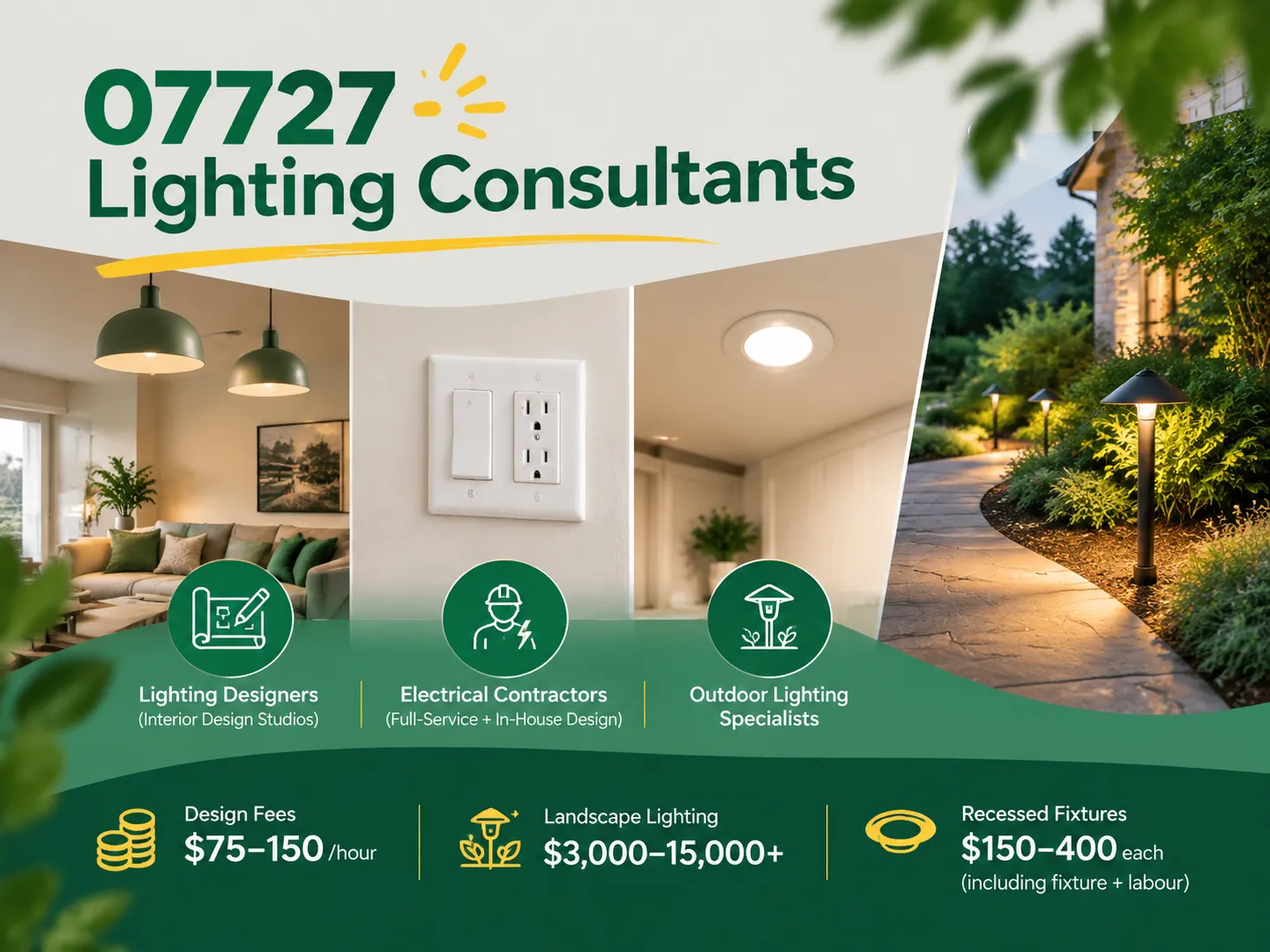
Farmingdale, along with parts of Wall Township and Tinton Falls, New Jersey, share the same zip code of 07727. Most of the houses built from the 1950s to the 1990s still exist today. Most of the homeowners are renovating their houses as opposed to building new homes. Homeowners tend to spend a lot more on […]
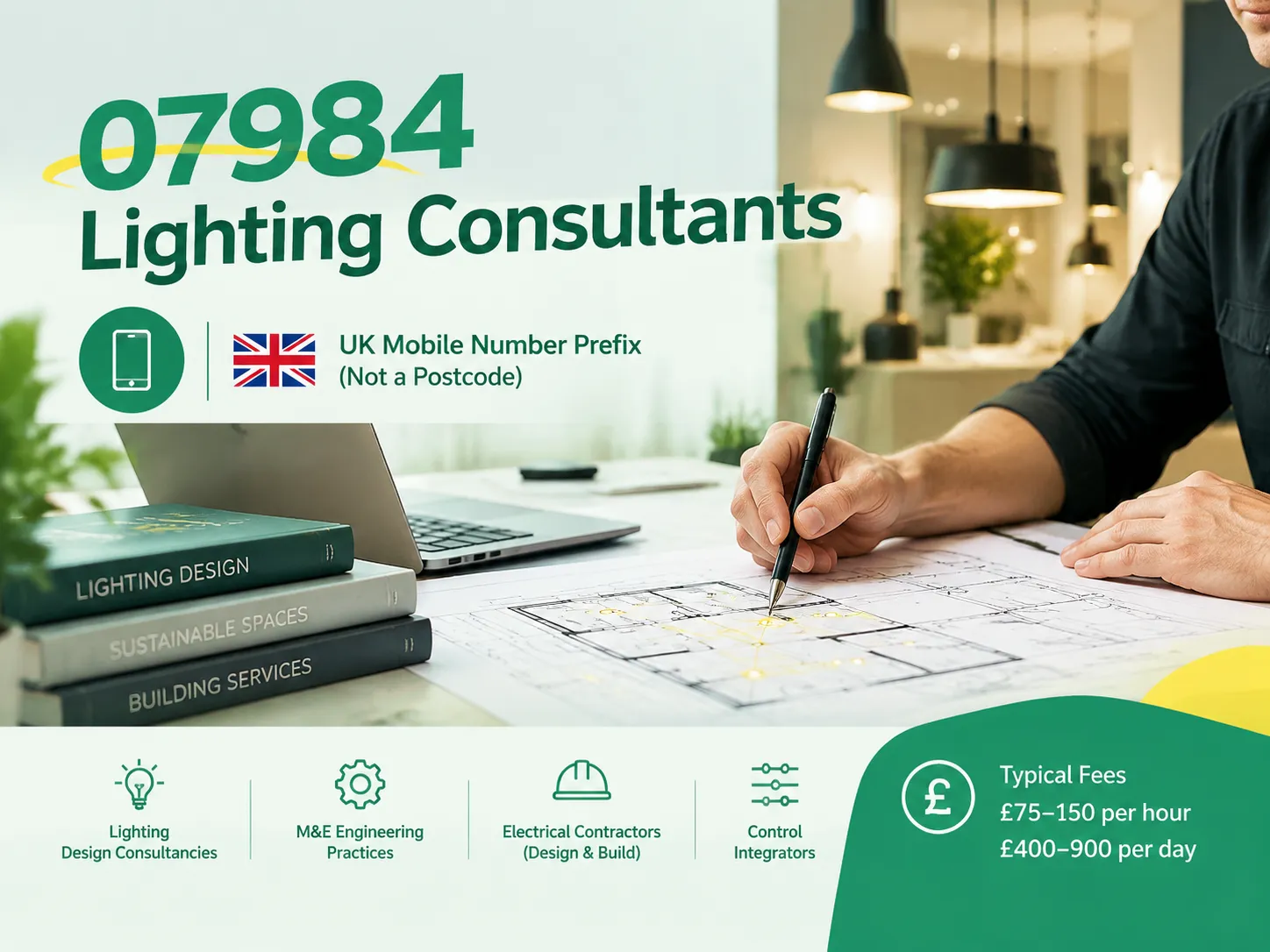
The term “07984 lighting consultants” gives people the impression that the five digits represent a postal code of some sort that indicates the place where lighting consultants provide services. This is, however, incorrect: there is no postal area coded 07984, which is only a code of mobile telecommunications in Great Britain. This means that the […]
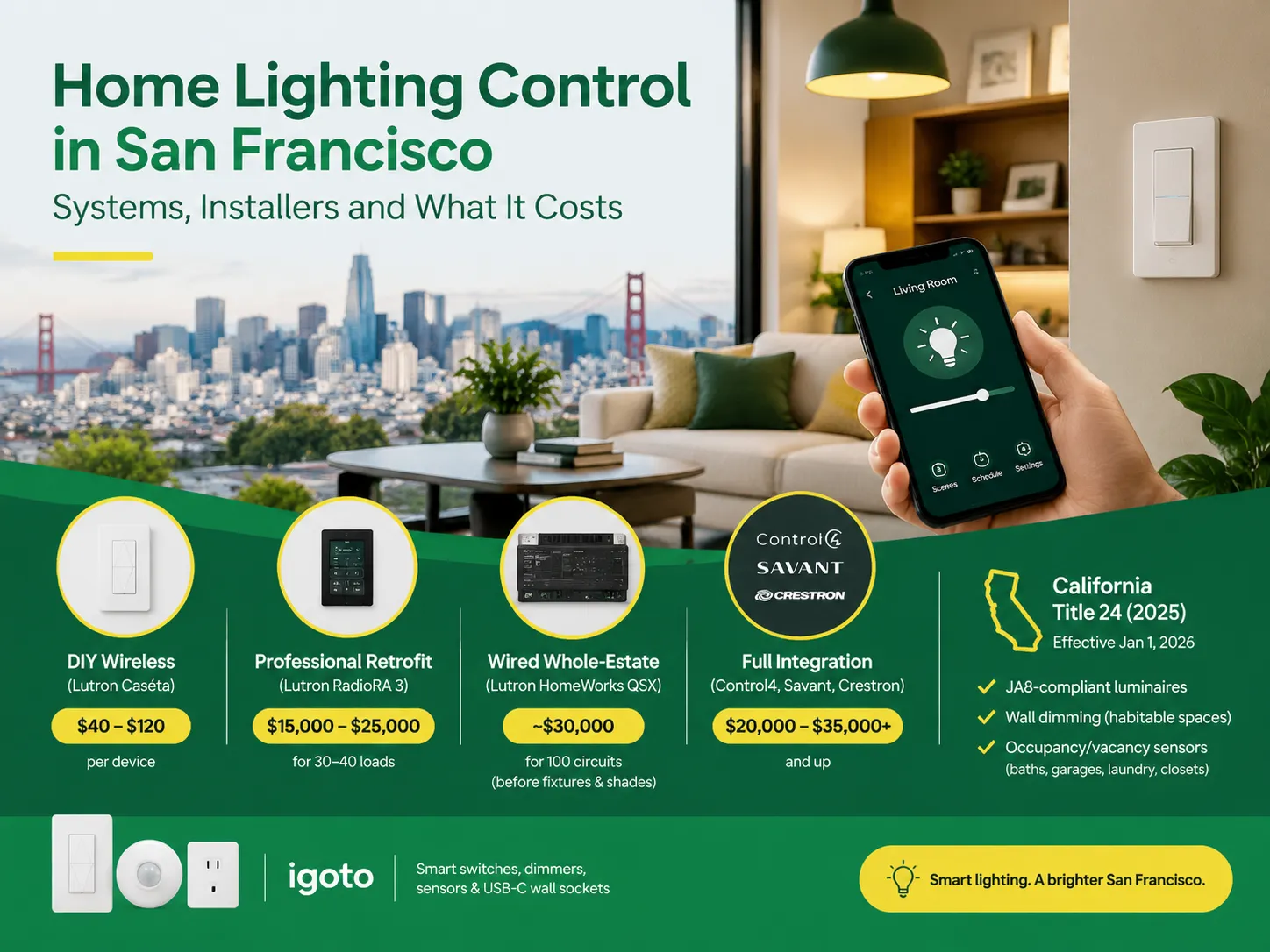
San Francisco is not the average lighting control market. The housing stock is old and dense, and the electrical code does not allow for as many electrical installations as is allowed almost anywhere else in the U.S. Most homes that want complex lighting are Victorian or Edwardian buildings where no one wants to start opening […]

 No.6 Tuozhan Road, Leshang Pioneer Park,Yueqingwan Bay Harbor,Yueqing city,Zhejiang Province


