

Quick answer: A dual switch light typically refers to two independent controls on the same wall plate. Think one switch for an exhaust one and another for a ceiling light. It’s different from a double-pole switch, which operates two electrical paths simultaneously. IGOTO offers 2-gang and other multi-gang switch configurations for residential and commercial projects across various regions.
A dual light switch provides you with two controls at one wall location. The typical setup has each switch operating a different fixture or light independently, meaning that using one has no effect on the other.
Let’s say you have a kitchen with separate under-cabinet lights and ceiling. One switch can be used to control the former and the other can handle the ceiling lights. The same arrangement can also be made for your bathroom, with the switches controlling the exhaust fan and main light separately.
This setup is also sometimes described as a 2-gang switch, where the gang implies the number of controls grouped at the wall. However, it doesn’t say how the switches were configured electrically.
Each switch also has an independent switched path to the fixture it controls behind the plate. Based on how it’s installed, the two switches might receive power from the same supply at the box and transmit power to their respective loads. The type of wiring depends on the electrical system and the switch in place.
That also implies that the 2-gang plate doesn’t reveal whether the switches are double-pole or single-pole. It could be two single-pole switches grouped on the same plate, in your case.
IGOTO’s multi-gang range shows the overlap between these two classifications. Our JS Series switches include 2-gang 2-way switches and also a 2-gang double-pole mode. You’ll want to check both the electrical configuration and gang count when deciding which switch to purchase.
Although sometimes used interchangeably because of confusion, these two terms describe different things.
A 2-gang or dual switch is used to describe the number of controls grouped at a single location. Meanwhile, a double-pole switch is basically describing the electrical configuration in a switch. It uses a single actuator to open or close two current-carrying paths simultaneously.
Therefore, you can have two single-pole switches on a 2-gang plate. On the other hand, a double-pole switch can be a single control that occupies one position.
IGOTO covers the related terminology in its guide to gang and way switches.
A single current-carrying path is opened and closed by a single-pole switch. You typically use it where a light or another load requires basic on/off control.
A dual pole light switch (aka double-pole switch) operates two paths together. As you operate the toggle or rocker, both paths close or open at the same moment.
The type of electrical system determines what these paths carry. In North American 240V applications, for instance, a double-pole switch usually disconnects two hot conductors. In certain applications, it may disconnect live and neutral instead.
So while the switch’s electrical configuration is described by single-pole and double-pole, terms like 2-gang and 1-gang, reveal how many controls are grouped at the wall location.
On a basic double-pole light switch diagram, you can see two electrical paths passing via the same switching mechanism.
The typical arrangement is:
Supply 1 → Switch contact → Load 1
Supply 2 → Switch contact → Load 2
The contacts here tend to move together. So turning it off means both opens open, and turning it on means both paths close.
The conductor labels will vary with the circuit. A generic diagram can show how a double-pole switch works, but it shouldn’t be treated as wiring instructions for a specific installation. Always use the diagram supplied with the switch and follow the electrical requirements for the project.
When it’s the correct type for the circuit and wired properly, a double-pole or 2-pole switch is safe to install and use.
Before installation:
Keep in mind that a double-pole switch isn’t necessarily safer than a single-pole model. Because they are made for varying circuit arrangements, the right pick depends on what you plan to switch.
The best way to proceed with installation is to follow the wiring diagram that came with the switch along with the electrical requirements applicable in your area.
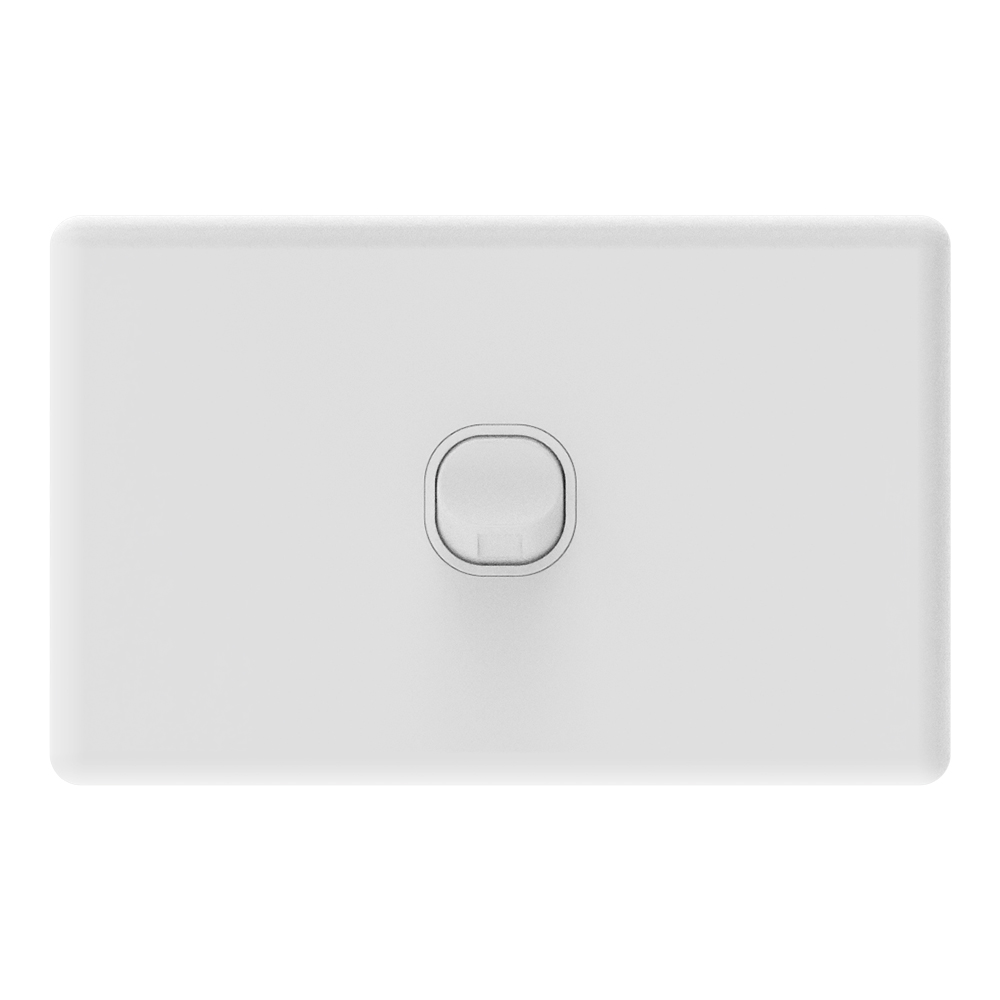
When an installation requires two controls in the same place, dual control switches work better.
For example, a dual switch is often used to control the exhaust fan and main light separately in bathrooms. It’s also used similarly in other commercial spaces, such as meeting rooms and hotels, where the lighting is typically divided into two zones.
You may also see dual switches where two nearby areas need to be controlled from one convenient point, such as a hallway and adjoining room. If a project needs three or more controls together, the same idea extends to 3-gang, 4-gang, and larger multi-gang configurations.
Begin by asking the customer what exactly they mean when they say they need a “dual switch.” Because they might be asking for a double-pole switch that operates two electrical paths together or two independent controls on one plate.
After clearing that up, check the regional standard and plate dimensions. Also see the gang count and the function of the switch. The certification should also match the product you’re looking at and the market where it will be used.
It IGOTO, we have modular and multi-gang switches that work across several regions. For ODM/OEM orders, we also let you customize elements such as plate materials, modules, branding, and finishes to suit your product line.
We also have certain ranges that add smart controls via Zigbee or WFI. So if your current requirement is to source a switch for a connected building, check the compatibility and protocol required by the project. It’s better than assuming any smart switch will work with the building management system.
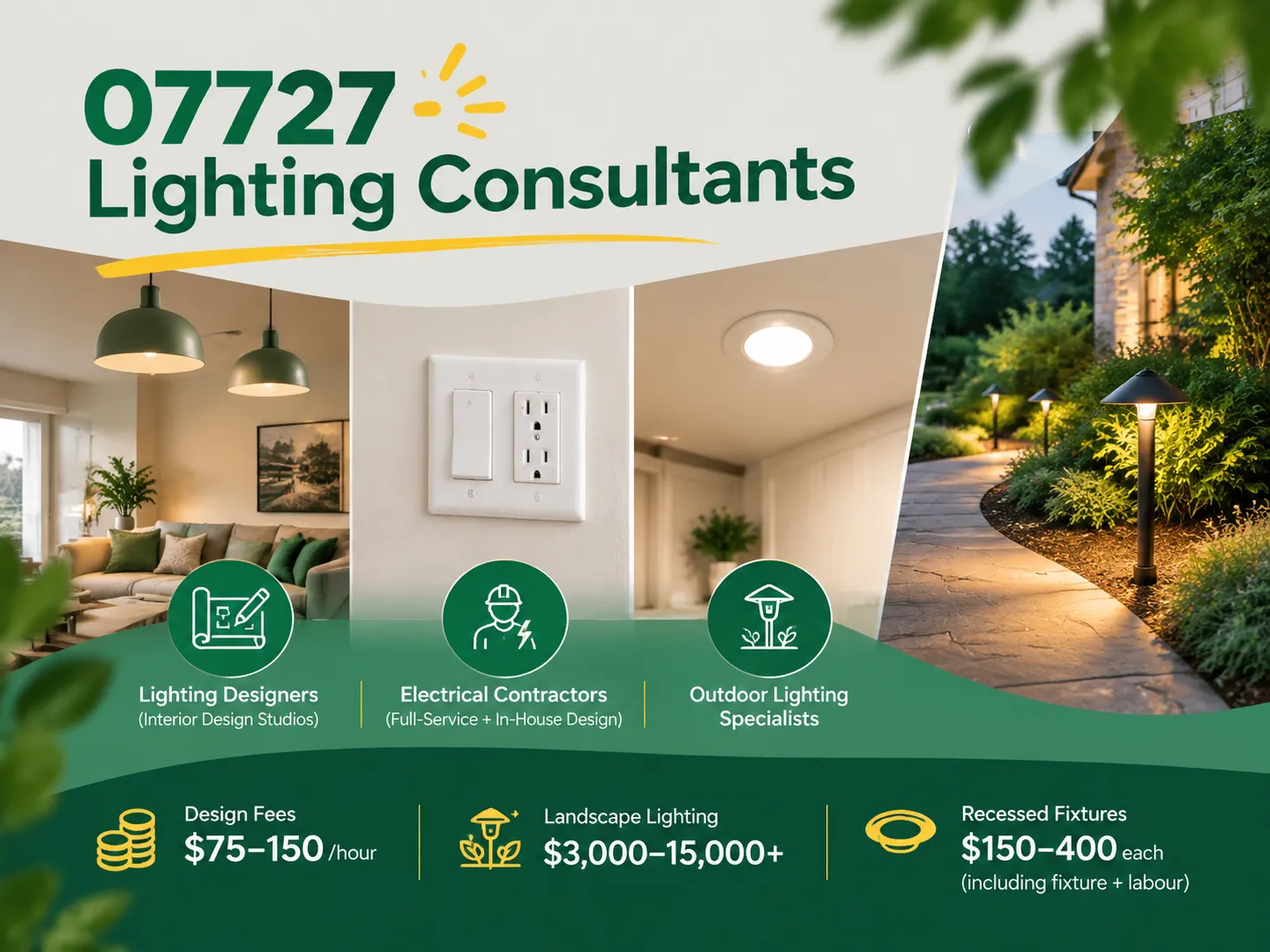
Farmingdale, along with parts of Wall Township and Tinton Falls, New Jersey, share the same zip code of 07727. Most of the houses built from the 1950s to the 1990s still exist today. Most of the homeowners are renovating their houses as opposed to building new homes. Homeowners tend to spend a lot more on […]
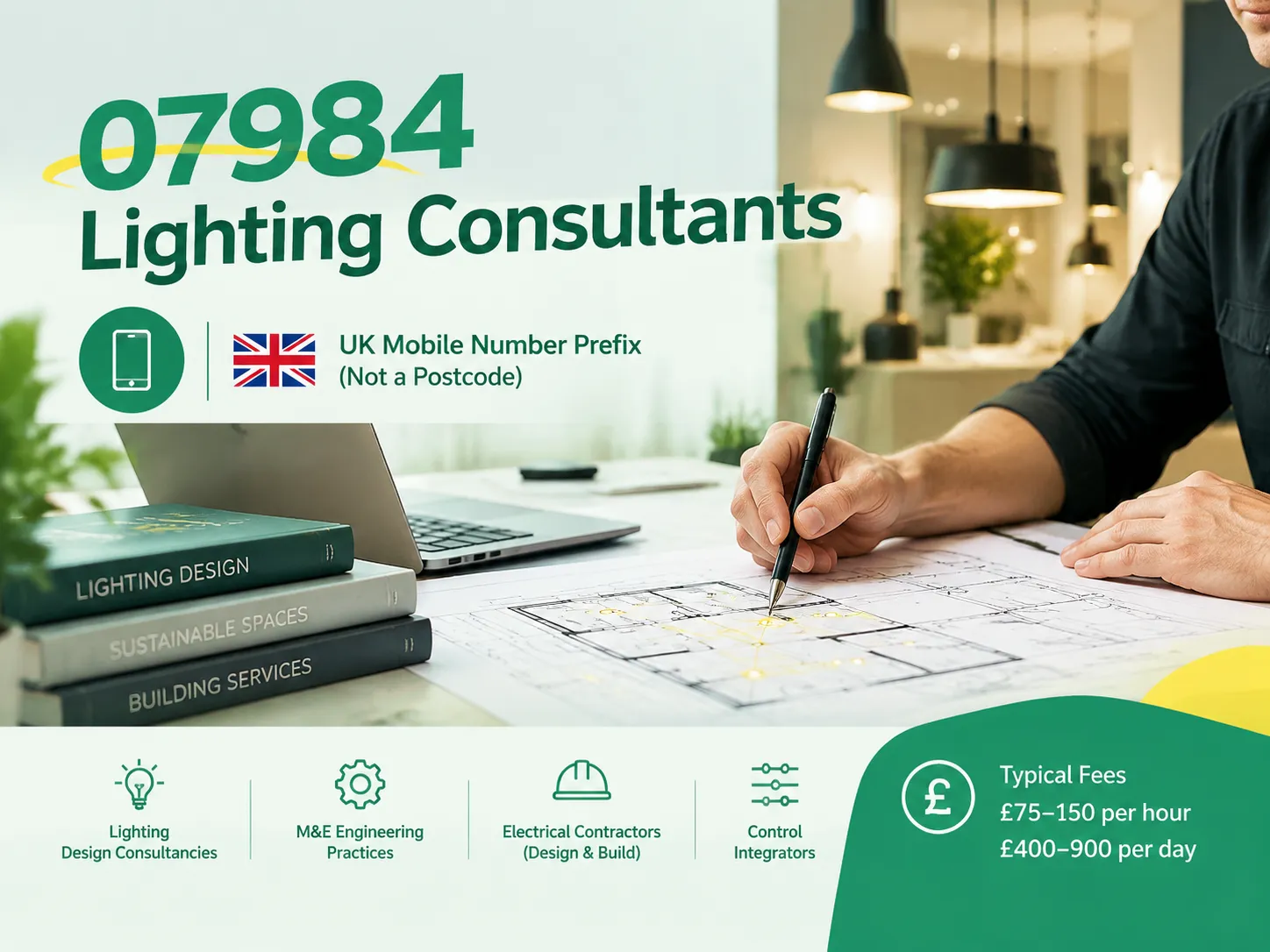
The term “07984 lighting consultants” gives people the impression that the five digits represent a postal code of some sort that indicates the place where lighting consultants provide services. This is, however, incorrect: there is no postal area coded 07984, which is only a code of mobile telecommunications in Great Britain. This means that the […]
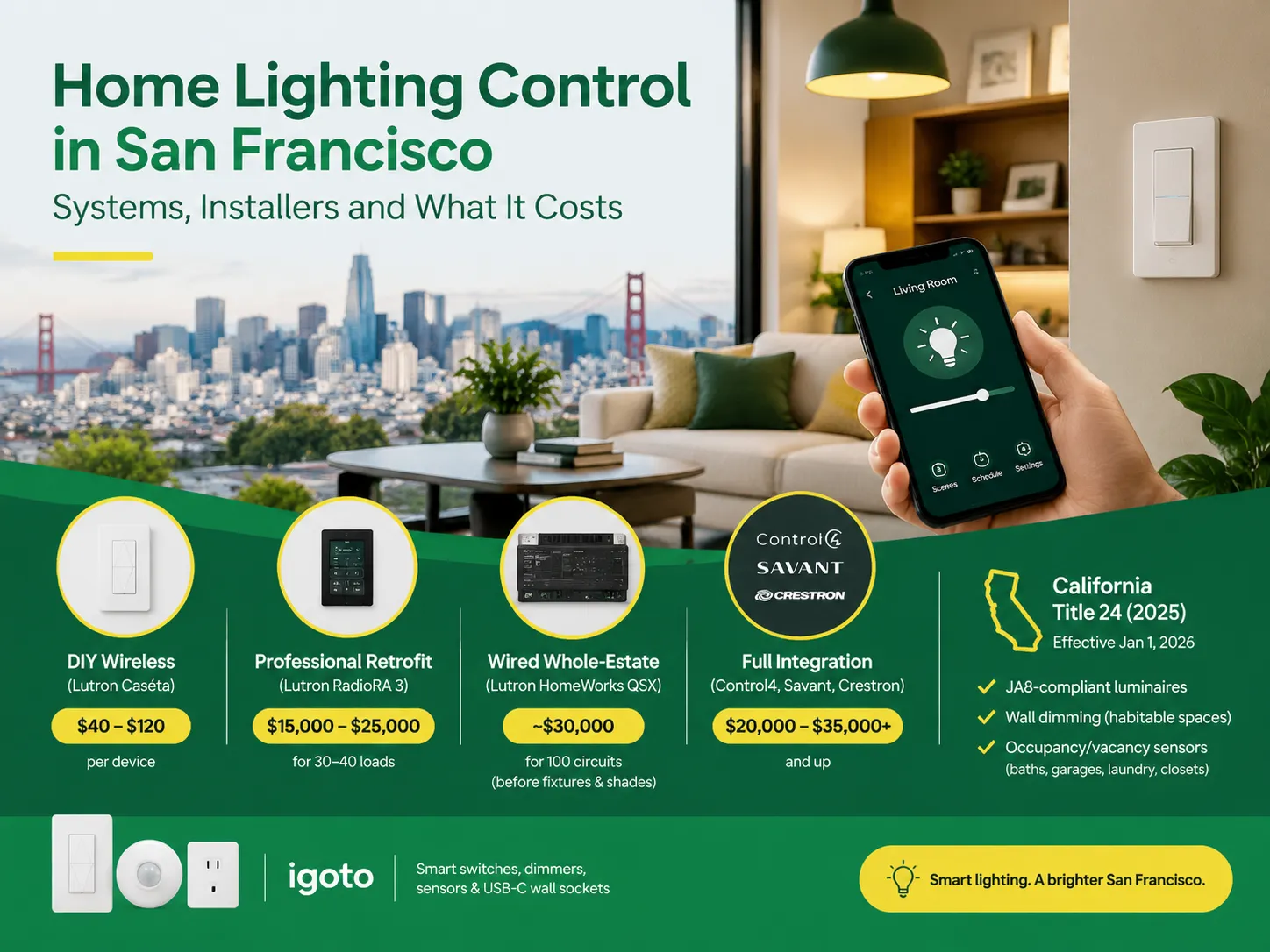
San Francisco is not the average lighting control market. The housing stock is old and dense, and the electrical code does not allow for as many electrical installations as is allowed almost anywhere else in the U.S. Most homes that want complex lighting are Victorian or Edwardian buildings where no one wants to start opening […]

 No.6 Tuozhan Road, Leshang Pioneer Park,Yueqingwan Bay Harbor,Yueqing city,Zhejiang Province


