

The electric switch is used to turn current on or off. That’s the purpose! All of the others (the house, the contacts, the wiring setup) exist to serve that one purpose.
The value of the electrical switches market in 2025 was $16.50 billion. By 2035 it reaches $27.72 billion at a 5.32% CAGR. For every building, every machine and every device that must be controlled, there is a switch doing the job without fail over millions of operations.
In this guide, you will learn:
The purpose of an electric switch is to open or close a circuit when it is needed. If the switch is open, then no current can flow through the switch, and the device remains off. It is then closed and the circuit is completed, current reaches its destination, the device responds.
That sounds simple. However, there are implications that extend into all electrical systems ever constructed.
If a circuit is wired in series, it will be energized, or if wired in parallel, it will be dead, without the switch. There is a switch to add choice. The switch does not automatically open or close the circuit; the switch is controlled by the person or system controlling it. Control is the function. All other things are derived from it.
The other dimension that is seldom mentioned when giving a simple explanation is safety. Switches can switch off the circuits for maintenance, repair or emergency shutdown without disconnecting the entire electrical installation. A switch is used to separate one portion of a system from the rest, without shutting down the system. The controlled isolation function is essential as much as the on-off function is in a home in commercial/industrial applications. Sometimes more so.
First, knowing the components of a switch helps you to see how the function is actually provided.
The actuator is the part that the person touches. Toggle, rocker, push-button or rotary. The actuator is whatever is needed to cause a physical operation to alter the state of the circuit, regardless of the form. It’s the portion that is exposed from the wall or panel, but it’s not where the switching occurs.
It does happen at the contact mechanism. Two conductive contacts touch to make the circuit or separate to break the circuit. The amount of current a switch can handle reliably and how many times it can switch before it wears out, is dependent on the contact material used. A contact designed for light loads in a residential application will not last in an industrial motor control circuit that is used for heavy loads.
The housing keeps everything in place and allows for the electrical insulation that keeps current contained. The housing also offers the mounting surface for the switch to be installed in the electrical box behind the wall in wall switches. Switch connections are to the circuit wiring with terminal connections. The number and arrangement of the poles determine the possibilities of switching and, for this reason, a double-pole switch is different from a single-pole switch.
The function is performed by each part. All of them depend on it.
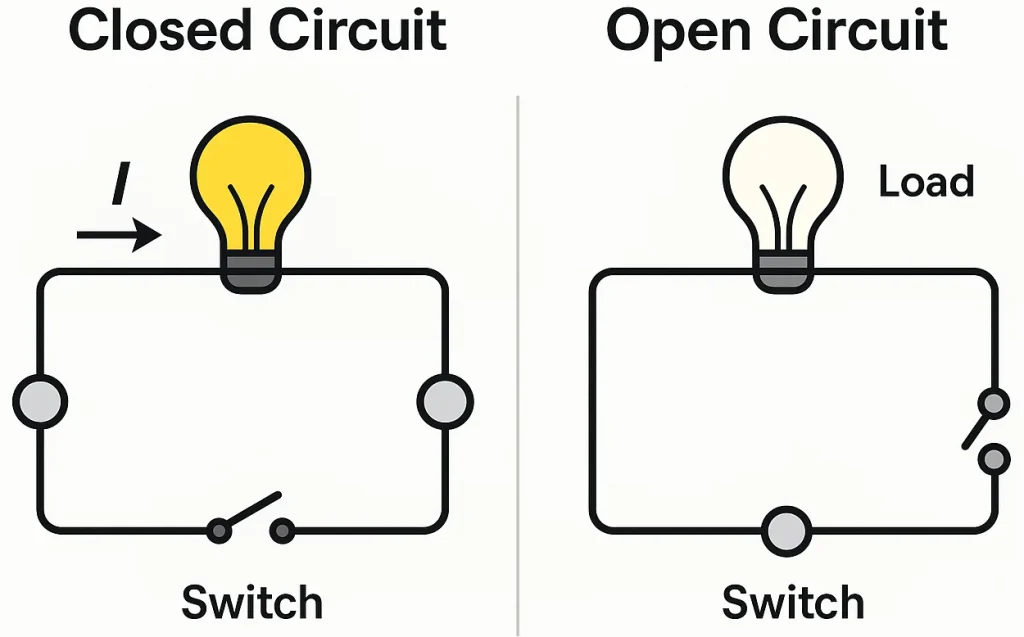
A switch is the ‘gatekeeper’ of current within a circuit. The circuit is a loop, with power source, conductors, load and return path. The switch is in that loop and if it is switched on or off it will open or close the loop.
If the contacts inside the contact make contact, the circuit is closed and the current flows. They are separated, the loop opens and the current ceases. The load is proportional. The purpose of the switch at any particular time is unmistakable.
The switch controls the circuit that it is connected to. Only one load is controlled by a single switch connected in series with it. Several switches can be connected in various combinations to provide control of a load from various locations. All circuits have the same function – to either complete or stop the flow of current at the location where control is needed. The application changes. The function does not.
Residential use of switch is the most common. All outlets, fans and lights that are controlled from a wall plate have a switch to control the current flow. There’s no significant difference in the function between a simple single pole toggle and a smart switch that’s plugged into a home automation system. Close and open a circuit. The intelligence that is added on top of it is different but the basic electrical function is the same in all of them.
It’s expanded even further in the commercial sector. Switches are used to control the various load needs in lighting zones, HVAC systems, access control and emergency circuits to ensure they can handle the different requirements without fail over the years. Multi-location switching is also used in hotels where the guest can adjust the room’s light from the bed as well as the door. Hospital products require certain switches with a higher rating in terms of hygiene and durability, which residential products don’t have.
Switch function is taken to the next level in industrial environments. Switches to control motor circuits, isolate equipment, and to activate emergency stops must be rated for far greater currents and switching cycles. The function remains unchanged; open or close a circuit at the appropriate time. What is changing about the specification for that function to be reliable under extended load and what are the consequences if that is not the case.
The standard type is a single pole switch. One switch, two loads, one position, on and off. The vast majority of domestic wall switches are located in this space.
Shared control is added to two-way switches. Two switches to control the same circuit from separate points. Neither of them works independently: the position of the circuit depends on the position of both. The intent is to provide a practical control in a wider area that will cause a hassle if only a single switch location had been provided.
Double-pole switch is one that controls two circuits at the same time with one switching action. The live conductors are both disconnected at the same time. Partial disconnection will not work in higher-voltage applications or in safety-critical installations, so double-pole function is particularly relevant there.
Basic function can be enhanced by the addition of dimmer switches. They adjust the current to the load, instead of open or close the circuit completely. The basic operation of current control remains the same but applied with a more sensitive degree of freedom than a binary on-off control can offer. Both types have the same basic function. Which type to use and which specification this type should have depends on the application environment.
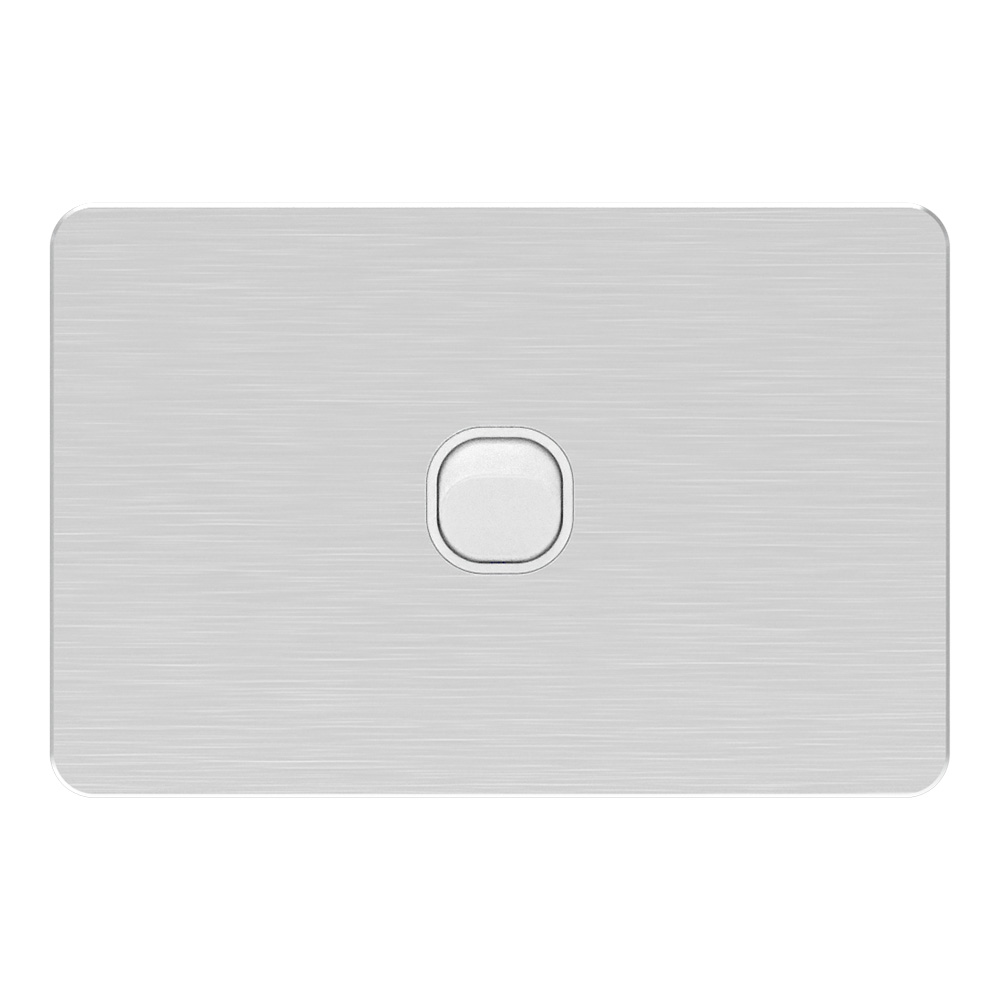
The function of an electric switch has not changed since the first one was installed. Open the circuit, close the circuit, control what happens in between. What has changed is the range of environments that function needs to serve and the specifications required to serve them reliably.
For buyers and distributors sourcing switches across multiple markets, the switch needs to perform that function consistently across the full range of applications it encounters. IGOTO Electric covers 2-way and double-pole switch configurations for complex circuit requirements. Automated testing ensures multi-pole switch reliability before products leave the factory. CE, CB, SAA, PS/TISI, and INMETRO compliance makes the same product range distributable across international markets without requiring separate certifications per region.
Learn more about IGOTO’s switch range at igotoele.com.

The term “07984 lighting consultants” gives people the impression that the five digits represent a postal code of some sort that indicates the place where lighting consultants provide services. This is, however, incorrect: there is no postal area coded 07984, which is only a code of mobile telecommunications in Great Britain. This means that the […]

San Francisco is not the average lighting control market. The housing stock is old and dense, and the electrical code does not allow for as many electrical installations as is allowed almost anywhere else in the U.S. Most homes that want complex lighting are Victorian or Edwardian buildings where no one wants to start opening […]
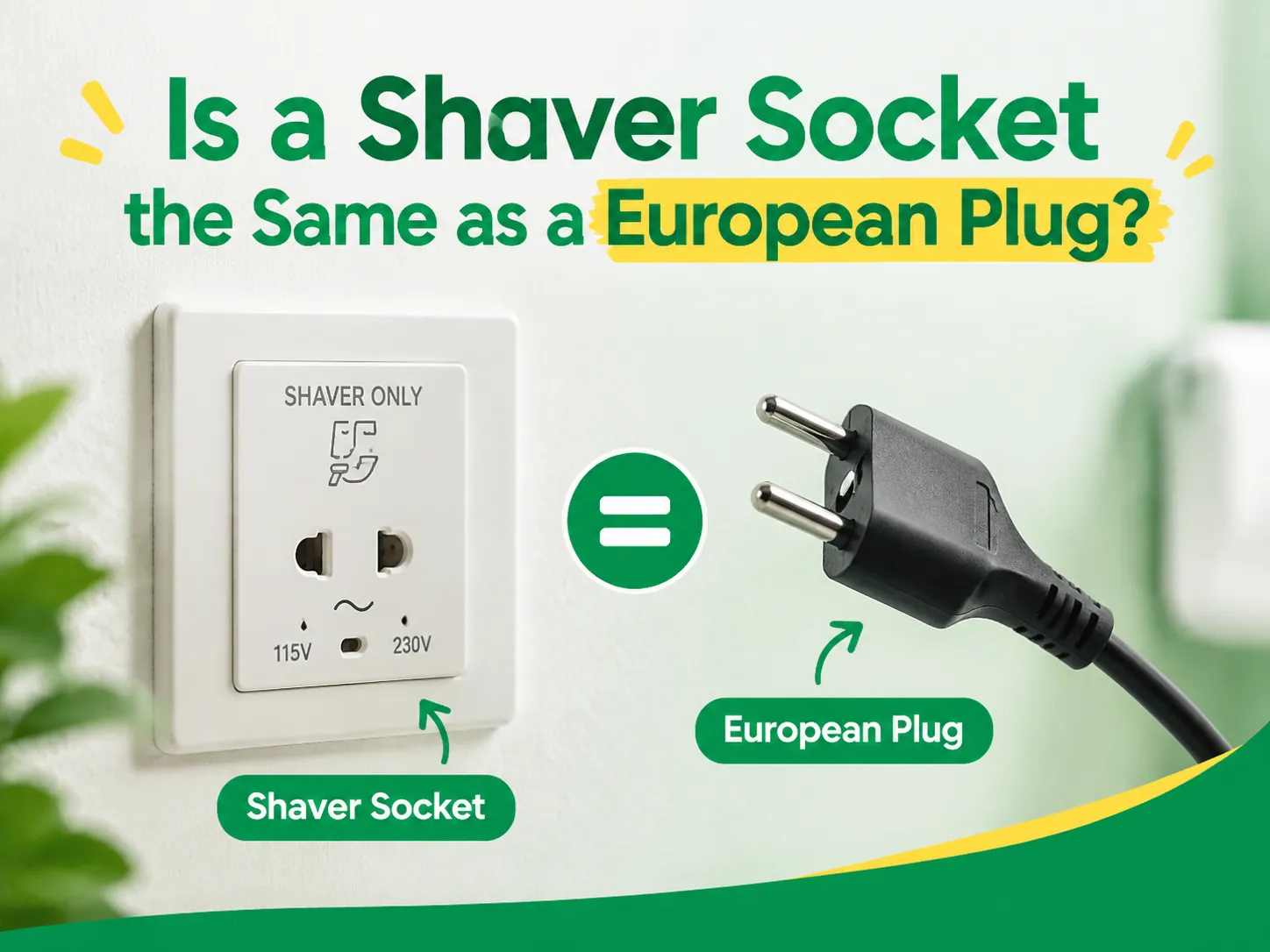
Although they seem to be alike, they both have a round shape with two pins, and they function at a voltage of 230V. This explains why some tourists use a European plug with a British shaver or wonder why a shaver cannot be plugged into a Schuko socket in a Spanish hotel. In reality, they […]

 No.6 Tuozhan Road, Leshang Pioneer Park,Yueqingwan Bay Harbor,Yueqing city,Zhejiang Province


