

You’ve secured your ticket to Honolulu, rented out your dream condo in Maui, and packed your favorite snorkel equipment. But how are you planning on charging your phone, laptop, or camera? Anyone travelling from the U.S. will not encounter any problems charging their gadgets, but people traveling to Hawaii from places like Europe, Australia, or Asia would need a converter, as the U.S.A. has plug outlets different from theirs. The guide contains detailed information regarding sockets used in Hawaii, what plugs fit the outlets, and what voltage is used in Hawaii, thus answering the questions of travelers regarding how to charge their electronic devices in Hawaii.
Hawaii is already equipped with the same type of plugs and sockets as the US mainland, which means that visitors can plug in their devices without any complications at a voltage of 120 volts with a frequency of 60 hertz. Type A is characterized by two flat pins and Type B is its variation that is complemented with a rounded ground pin. The electrical systems of the United States, Canada, Mexico, Japan, and the vast majority of South American countries match the specifications of Hawaii wire as they work at a voltage of 100 to 127 volts. Visitors from the United Kingdom, Europe, Australia, New Zealand, and Asia need to use an adapter and a power converter with their devices since the voltage in their countries is 220 to 240 volts. Most phones and laptops have dual-voltage chargers that allow them to work in Hawaii without the need for a voltage converter.
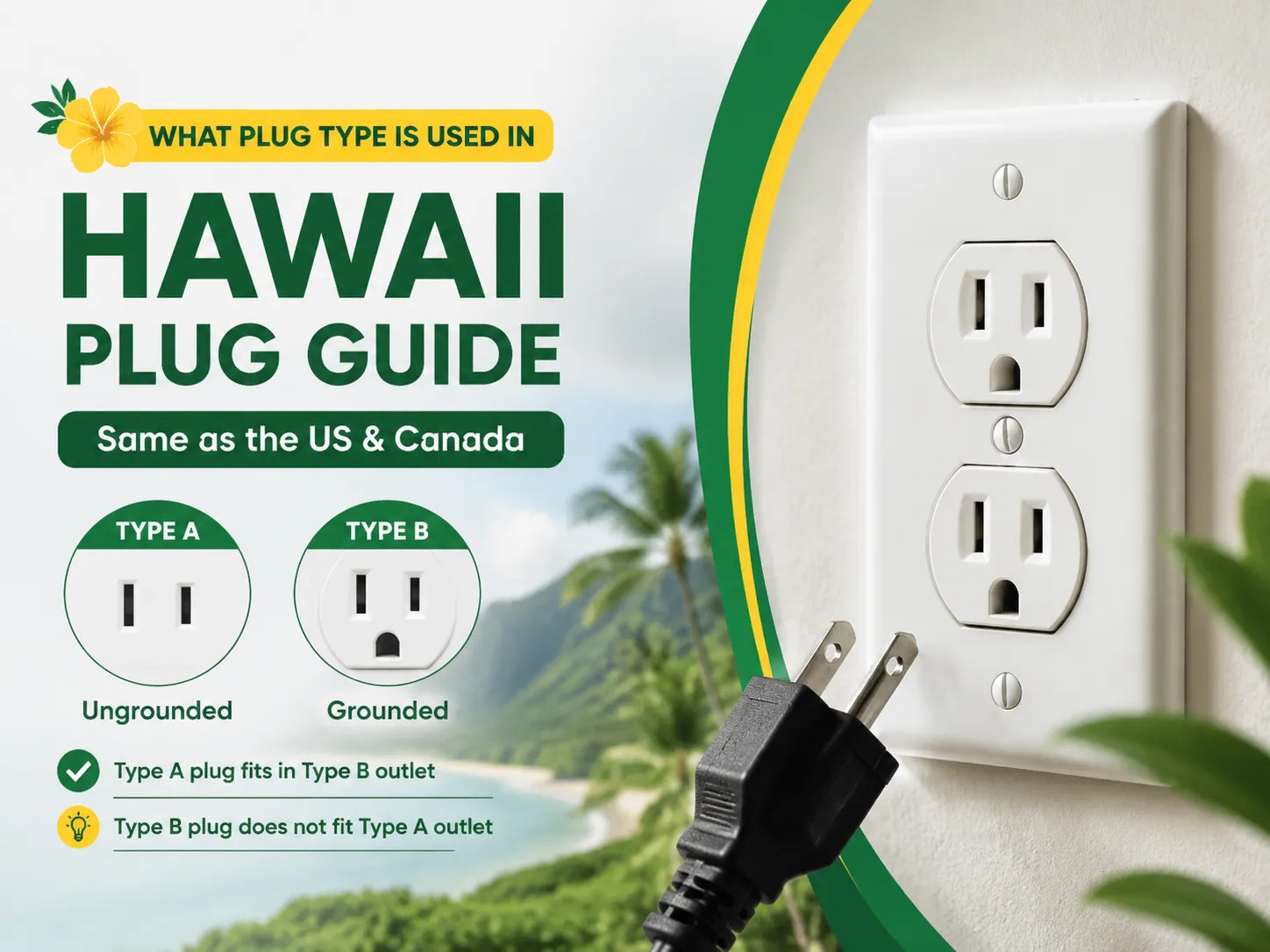
Regarding the first electrical standard, Hawaii complies with the North American standard. Hawaii follows the same plug type and outlet standard as the United States and Canada and applies both NEMA 1-15 and 5-15 standards.
There are two kinds of plugs used in Hawaii:
Thus, one can find Type B socket in almost every unit, and Type A in older constructions. At the same time, any Type A plug can be inserted in Type B socket, which indicates that anything equipped with US two-pins plug can work in Hawaii. However, Type B plug cannot work with Type A socket, but in case you come across such a socket, it will be possible to use a simple 3-to-2-prong adapter.
Hawaii utilizes an electrical current of 120 volts and 60 hertz. This is the same voltage and frequency as is used in the USA and Canada according to the official IEC standards. All of the electric sockets in Hawaii provide an electrical input of 120V/60Hz. The voltage used in Hawaii is the same as it is for:
However, the voltage of Hawaiian electricity differs from that used in different countries, such as the UK, Ireland, most of Europe, Australia, New Zealand, China, Singapore, India, and in most of Africa, where 220-240V systems are commonplace. Visitors from such countries will need to carry an adapter for the sockets and possibly an inverter to adjust the voltage levels as well.
Type A (NEMA 1-15) refers to the well-known classic American two-prong plug, which has got two flat blades, each being 1/8 inch in thickness and around 0.25 inch in width, while they usually have 0.5 inch (approximately 18mm) of distance between them. This plug has got a rating of 15A/125V.
Where could you find those plugs in Hawaii? Older houses, cheap hotels, small electric appliances like lamps, cell phone chargers, etc. Grounded devices (like computers, kitchen appliances, power tools) will be typically using Type B plugs instead of Type A ones. But don’t worry that all Type A products can be used on the islands.
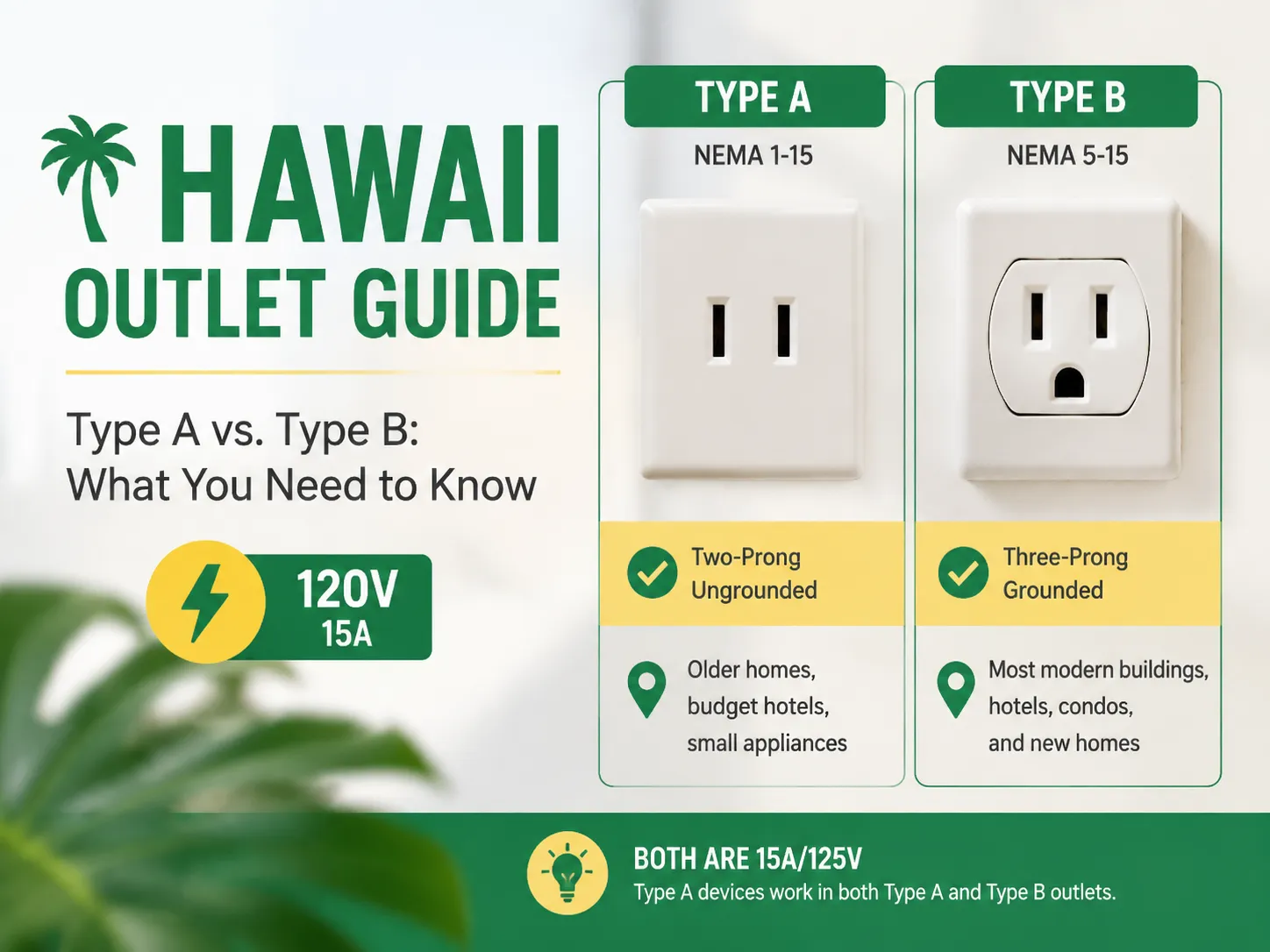
Type B (NEMA 5-15) is called a modern standard in America because it has two flat blades as Type A, in addition to a round grounding pin below them. Thus, it creates the traditional shape of the American outlet. The maximum voltage of Type B is 15 A and 125 V. Also, the ground connection is part of the National Electrical Code.
In Hawaii, Type B outlet can be seen practically in all buildings constructed starting from the 1960s. The Type B outlet is used in various hotels, complex resorts, apartments, airports, and newly-built houses in Hawaii.If you are planning a property upgrade with smart or USB wall outlets, our USB wall outlet upgrade guide explains what to look for in modern receptacles, and the Wi-Fi smart dimmer switch on the IGOTO range shows how smart controls replace standard wall plates.
The fastest way to check is to compare your home country’s plug with Types A/B. If your plug has two flat parallel pins (with or without a ground), you are all set. If it has round pins, angled pins, or three rectangular pins, then an adapter is required.
| Country / Region | Home Plug Type | Adapter Needed in Hawaii? | Voltage Converter Needed? |
|---|---|---|---|
| USA, Canada | A / B | No | No |
| Mexico, Central America | A / B | No | No |
| Japan | A / B | No (plugs fit) | Rarely (100V vs 120V — fine for most devices) |
| Taiwan | A / B | No | No (110V vs 120V) |
| United Kingdom | G | Yes | Yes (for single-voltage devices) |
| Australia, New Zealand | I | Yes | Yes (230-240V vs 120V) |
| Mainland Europe (most) | C / E / F | Yes | Yes (220-230V vs 120V) |
| China | A / C / I | Maybe (A plugs fit; C/I need adapter) | Yes (220V vs 120V) |
| South Korea | C / F | Yes | Yes (220V vs 120V) |
| Singapore, Malaysia | G | Yes | Yes (230V) |
| India | C / D | Yes | Yes (230V) |
Keep in mind that a converter helps change the plug shape, but doesn’t affect the voltage level. For example, an appliance such as a hair dryer from the UK can be plugged into a socket in Hawaii using only an adapter—still the voltage will be 120 whereas it is supposed to receive 230 volts and might not work properly or causes any damage. Refer also to the converter part of this guide below.
Misunderstood and misinterpreted, here’s a guide to get your travel plan rolling:
If you are going to travel to a country where there is a 240 V supply, the best recommendation is to buy a universal travel adapter with USB ports. For more on choosing adapters and understanding international plugs, our guide to different kinds of switches and sockets and the dimmer switch installation basics explain the hardware standards behind the walls.
The process of checking only takes a few seconds to complete. All you need to do is read the small writing on either the gadget itself or on its power source, which is often positioned close to where the power cord goes into the machine.
| Label Text | Meaning | Needed in Hawaii (from 230V country) |
|---|---|---|
| “INPUT: 100-240V, 50/60Hz” | Dual-voltage, worldwide | Adapter only |
| “INPUT: 110-240V” | Dual-voltage | Adapter only |
| “INPUT: 100-120V” | Single-voltage (US/Japan standard) | Adapter only if from 120V country; converter if from 240V country |
| “INPUT: 220-240V” | Single-voltage (230V standard) | Adapter + converter |
| “230V only” | Single-voltage | Adapter + converter (or leave it home) |
Travelers visiting places that run on either 220V to 240V are encouraged to purchase a dual voltage travel hairdryer or utilize the hair dryers provided at hotels. In Hawaii specifically, hotel hair dryers run on 120V and are free of charge. Carrying a 230V hair dryer along with a converter will tend to weigh a lot and may also cause the circuit breaker to trip.
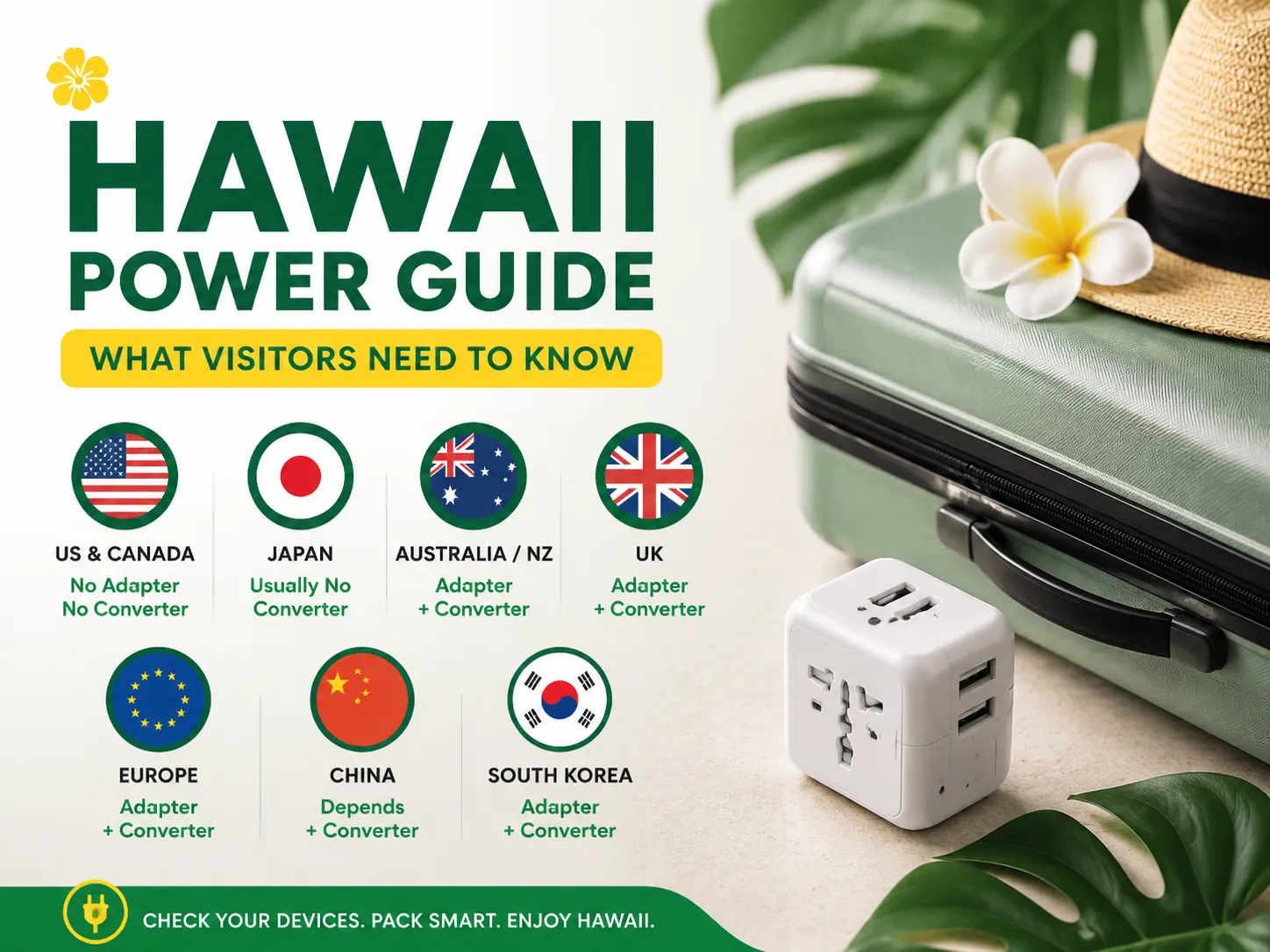
Hawaii’s visitor mix skews heavily to the US mainland, Japan, Canada, and increasingly China, Australia, and Europe. Here is exactly what each group needs:
| Visitor From | Adapter? | Converter? | Notes |
|---|---|---|---|
| US mainland | No | No | Plug in and go |
| Canada | No | No | Identical standard |
| Japan | No (plugs fit) | Usually no | 100V vs 120V: most devices tolerate the difference; check the label |
| Australia / NZ | Yes (Type I → A/B) | Yes for 240V-only devices | Most phone/laptop chargers are dual-voltage — adapter only |
| UK | Yes (Type G → A/B) | Yes for 230V-only devices | Bring a UK-to-US adapter; check each appliance |
| Germany / France / Italy / Spain | Yes (C/E/F → A/B) | Yes for 230V-only devices | Standard Europe-to-US adapter works |
| China | Depends on plug (A fits; C/I need adapter) | Yes for 220V-only devices | Many Chinese chargers are dual-voltage |
| South Korea | Yes (C/F → A/B) | Yes for 220V-only devices | Same as Europe |
Purchasing before travelling is generally advisable:
Finally, if you regularly travel between 120V and 240V countries, it definitely makes sense to invest in a good quality universal adapter with surge protection and to pay $25-$45.And if you are a property owner upgrading guest-facing outlets in a US-standard market, matching certified receptacles — like the switch and socket ranges available through IGOTO’s product catalog — keeps every room consistent and code-compliant.
Hawaii utilizes Type A (the two flat parallel pins) and Type B (the two flat pins and grounding pin) outlets as well as plugs, which are on par with the NEMA standard on the US mainland. The standard voltage in Hawaii is 120V at 60 Hz. Both outlets can take a Type A plug, while Type B plugs will only work with Type B outlets.
The plug type used in New Zealand is Type I, which is shaped in a triangular way with three flat pins. The two angled pins are for live/neutral wires while the longer flat pin in the middle serves as the ground pin. Type I is compatible with Australia, Argentina, China (the three-pin version), and Papua New Guinea, and its voltage/ frequency rating is 230V/50Hz. The New Zealand plug is not suitable for use in Hawaii where Type A/B can be used and adapters need to be used instead.
Much of the Caribbean utilizes Type A/B outlets operating at 110-127V like Hawaii, meaning if you’re traveling from a country that uses Type A/B plugs you won’t require anything. However, if you’re coming from Europe or the UK, a regular US travel adapter will be necessary. Exceptions exist on a few islands like Dutch Caribbean and Francophone parts of the Caribbean which utilize the European version of plug Type C/E/F having a power supply of 220V. Check with each specific island before going.
, 120V) while Australia has Type I (three flat angled pins, 230-240V). The plugs cannot be substituted for each other since an American plug will not fit an Australian socket, and vice versa. So travelers from the USA to Australia will need a Type A/B to Type I adapter and must also confirm that their devices are voltage compatible.
The type of sockets in Hawaii makes it easy for visitors from North America, as they are the same as the ones found in the U.S., namely type A and B sockets at voltages of 120v and frequencies of about 60Hz. However, this can be a source of confusion for travelers from countries that use 220-240V sockets. In summary, travelers from Canada, Mexico, Japan, and the U.S. can plug their devices without any problem, while other travelers must buy a power plug adapter, and those from countries that use only 230V single-voltage devices must buy a voltage converter. Check out the “INPUT” label on the devices you want to take — if it says 100-240V, just the adapter will work fine.
Make sure that you pack a good power adapter together with USB ports, check the hair dryer before you leave for Hawaii, and forget about boring gadgets. In Hawaii, all you will need is your adapter, as everything else will work as expected.
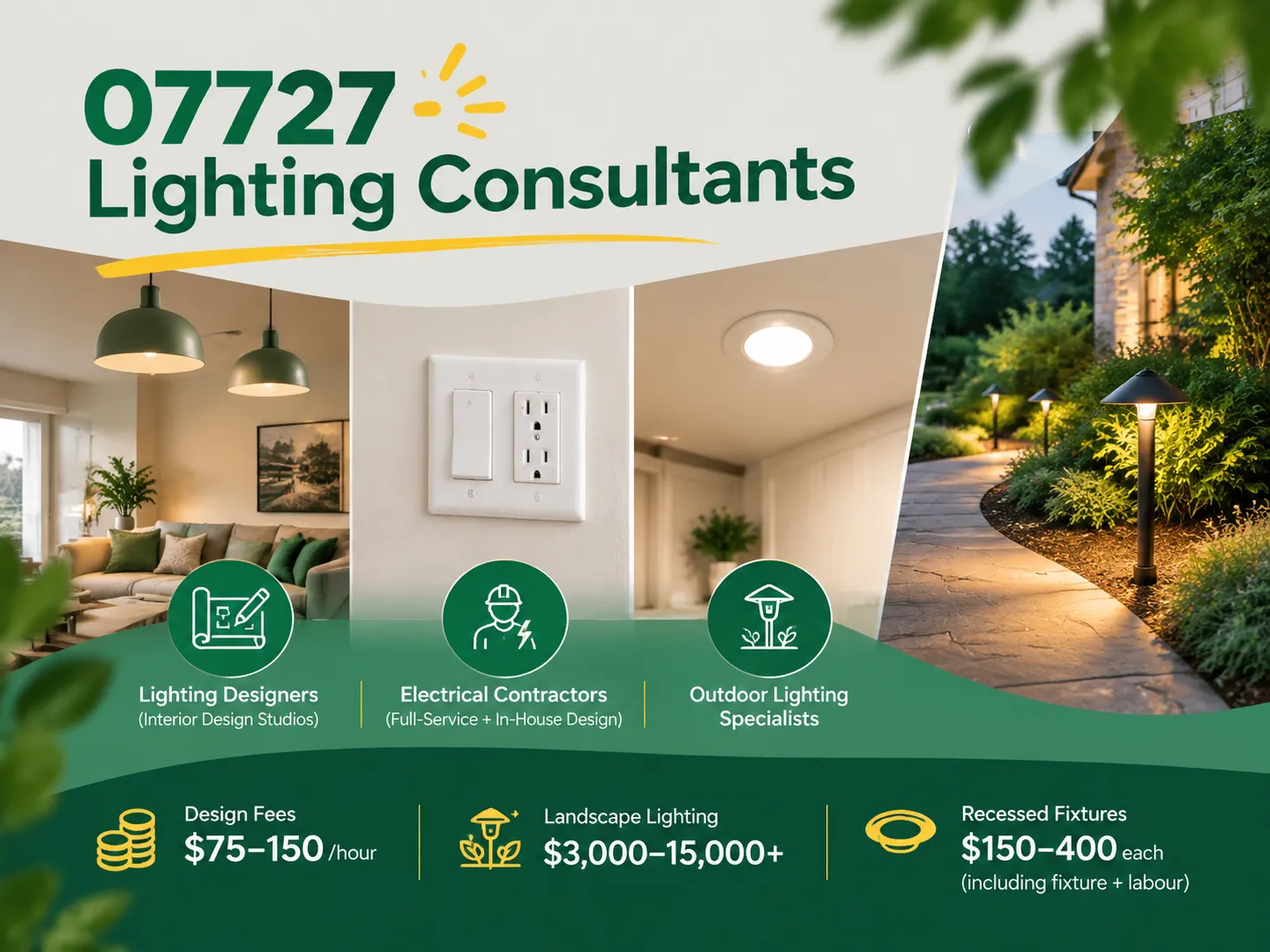
Farmingdale, along with parts of Wall Township and Tinton Falls, New Jersey, share the same zip code of 07727. Most of the houses built from the 1950s to the 1990s still exist today. Most of the homeowners are renovating their houses as opposed to building new homes. Homeowners tend to spend a lot more on […]
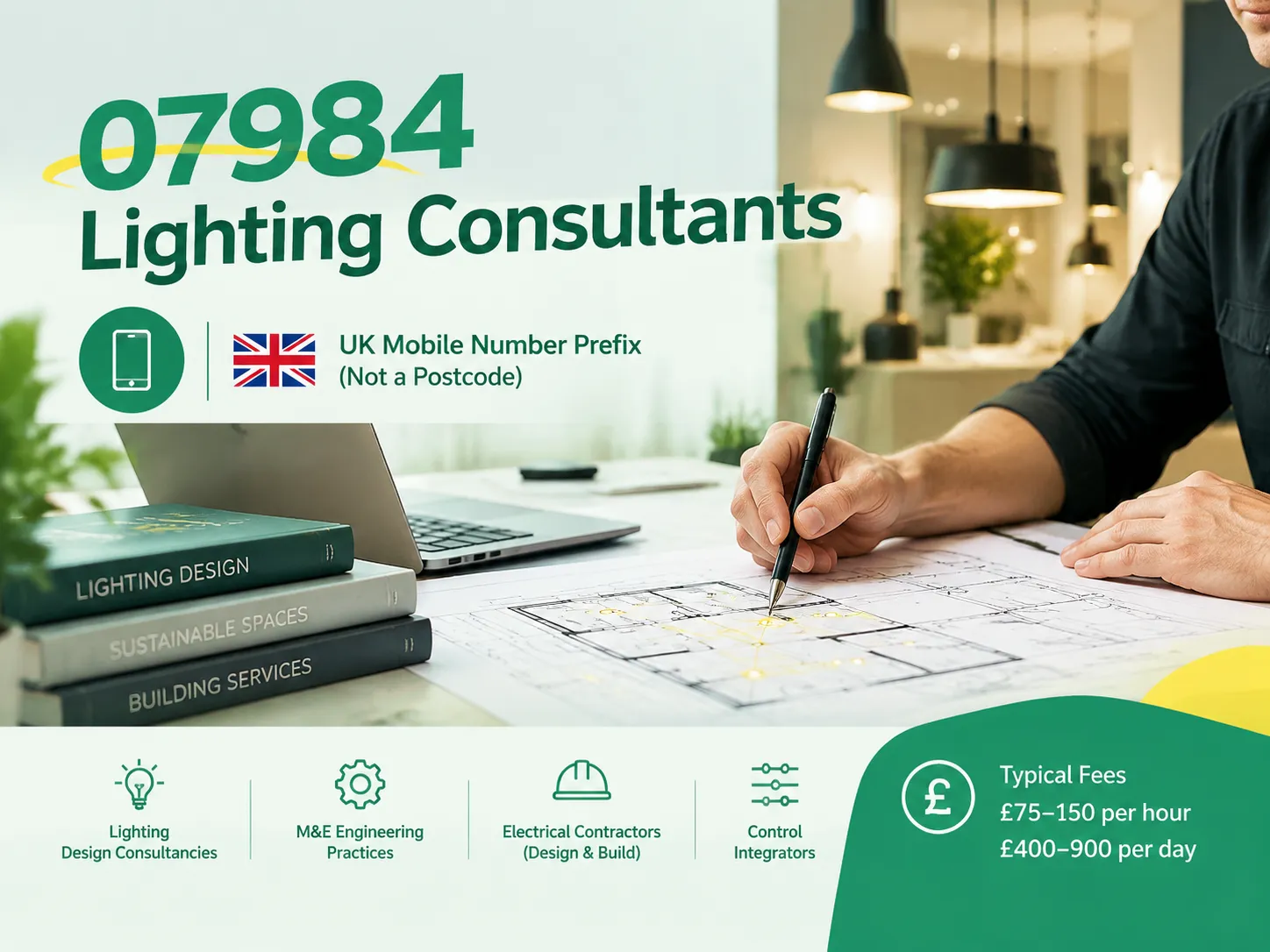
The term “07984 lighting consultants” gives people the impression that the five digits represent a postal code of some sort that indicates the place where lighting consultants provide services. This is, however, incorrect: there is no postal area coded 07984, which is only a code of mobile telecommunications in Great Britain. This means that the […]
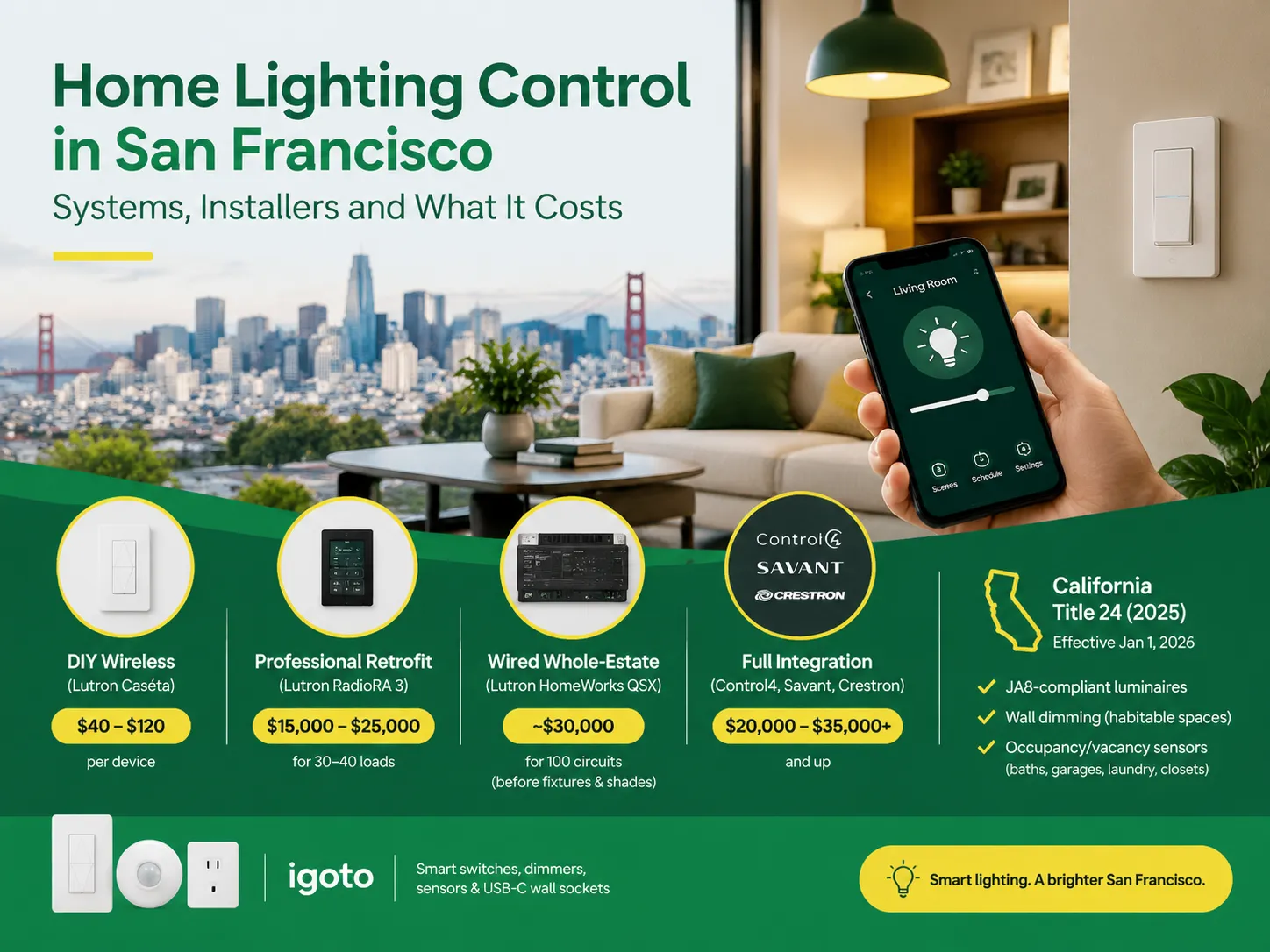
San Francisco is not the average lighting control market. The housing stock is old and dense, and the electrical code does not allow for as many electrical installations as is allowed almost anywhere else in the U.S. Most homes that want complex lighting are Victorian or Edwardian buildings where no one wants to start opening […]

 No.6 Tuozhan Road, Leshang Pioneer Park,Yueqingwan Bay Harbor,Yueqing city,Zhejiang Province


