

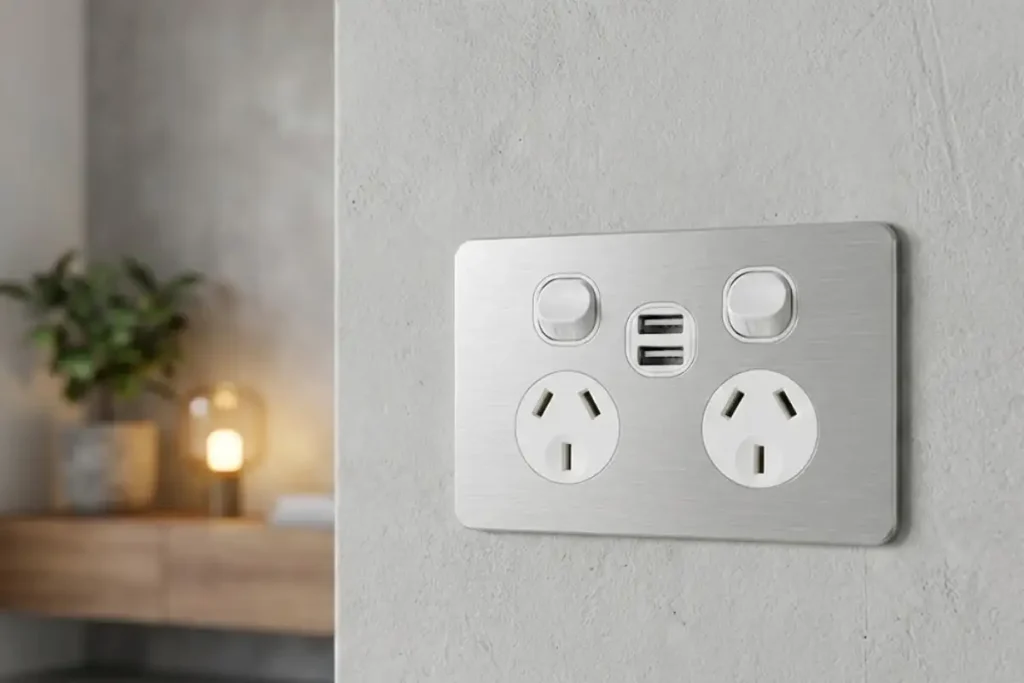
This electrical glossary A to Z defines technical, commercial, and safety terms for procurement teams, distributors, and industry staff. Use this reference when reviewing supplier catalogues, writing specifications, or training new staff on product categories.
Amp (Ampere). Standard unit measuring electrical current in the International System of Units. Common ratings include 6A, 10A, 13A, 16A, and 20A, depending on regional standards and intended loads.
AFCI (Arc Fault Circuit Interrupter). A protection device that detects dangerous electrical arcs that standard breakers miss. Building codes increasingly require AFCIs in commercial and residential projects to prevent fires from damaged wiring.
Back Box. Metal or plastic enclosure mounted inside walls to house switch and socket mechanisms. Standard depths include 25mm for basic switches, 35mm for standard applications, and 47mm for dimmer modules. Learn more about choosing electrical boxes for specific walls.
Busbar. A metallic strip distributing power to multiple circuits within distribution boards. Copper busbars offer superior conductivity, while aluminium reduces material costs in larger installations.
CE Marking. Mandatory conformity marking for products sold within the European Economic Area. CE indicates compliance with health, safety, and environmental standards required for European market access.
Circuit Breaker. An automatic safety device interrupts current flow when detecting an overload or short circuit. It’s available in single-pole, double-pole, and multi-pole configurations. Understanding the importance of circuit breakers is critical for system safety.
Dimmer Module. An electronic device controlling light intensity by regulating power delivery. Traditional dimmers work with incandescent loads, while specialised versions handle LED and CFL lamps without flickering. See how a dimmer switch works.
Double Pole. The switch configuration controls two separate circuits simultaneously, breaking both live and neutral connections. The Double Pole design provides complete isolation for high-power appliances.
DP Switch. Abbreviated term for double-pole switch. DP switches appear frequently in industrial specifications and cost more than single-pole versions.
Earth (Ground). Safety connection directs fault current safely to ground, preventing dangerous voltage on metal enclosures. It’s identified by green/yellow insulation. Read about how Earthing enhances safety.
EMC (Electromagnetic Compatibility). A product’s ability to operate without creating or being affected by electromagnetic interference. EMC testing verifies compliance before products enter specific markets.
Faceplate. Visible front cover concealing switch or socket mechanism. Materials include plastic, metal, and glass. Learn how to choose the right wall switch finish for your decor.
Fused Socket. Socket incorporating a replaceable fuse for overcurrent protection. UK 13A sockets use BS1362 fuses rated at 3A, 5A, or 13A, depending on appliance requirements.
Gang. Number of individual switches or sockets mounted on a single faceplate. Common configurations include 1-gang, 2-gang, 3-gang, and 4-gang. Understand the difference between Way and Gang.
GFCI (Ground Fault Circuit Interrupter). US term for residual current device. GFCI devices trip within milliseconds when detecting current leakage, preventing electric shock in wet locations.
Grid System. Modular approach allowing custom switch and socket configurations within standardised frames. Individual components snap into grid plates for tailored control layouts in commercial installations.
IP Rating (Ingress Protection). Two-digit code specifying protection against solid objects and liquids. First digit (0-6) indicates solid particle protection, second digit (0-8) indicates liquid protection.
Isolator Switch. Switch providing visible circuit disconnection for maintenance or emergency shutdown. Isolators create a physical break visible through the switch position or viewing window.
LED Indicator. Light-emitting diode showing switch or socket operational status with minimal power consumption. Indicators may illuminate when the circuit is energised or switched off, depending on the application.
Load Rating. The maximum electrical load a component can safely handle. Ratings specify capacity separately for resistive, inductive, and capacitive loads to prevent overheating and failure.
Modular System. Installation approach using standardised interchangeable components. Modular designs suit commercial buildings where tenant improvements require electrical reconfiguration.
Momentary Switch. Switch maintains contact only while pressed, automatically returning to the default position when released. Applications include doorbells and Button Switch controls.
Plate. Alternative term for faceplate in product specifications. Plate dimensions must match regional wiring standards and back box sizes.
Plug Socket Switch. Combined unit integrating a socket outlet with a built-in switch control. The Plug Socket Switch allows users to control connected devices without unplugging.
Pole. The number of separate circuits a single switch controls simultaneously. Single-pole switches control one circuit, double-pole switches control two circuits.
RCD (Residual Current Device). Safety device monitors the current balance between live and neutral conductors. The RCD trips when an imbalance indicates leakage, preventing electric shock.
RCBO (Residual Current Breaker with Overcurrent). Combined device integrating RCD protection with circuit breaker overcurrent protection. The RCBO saves consumer unit space while providing comprehensive protection against both shock and overload.
Retractive Switch. Switch automatically returns to the off position when released. The retractive switch activates devices only while pressed, commonly used with dimmer modules for lighting adjustments or door chimes.
Retrofit. Installation approach utilising existing wiring and back boxes for upgrades. Retrofit solutions minimise wall damage and installation time in renovation projects.
Rocker. The switch mechanism operates with a rocking motion. The Rocker provides intuitive down-for-on, up-for-off operation and remains the most popular residential switch type.
Rotary Switch. The switch is operated by rotating the knob, commonly used for dimmer control. Clockwise rotation increases light intensity, as seen in Fan Speed Controller units.
SAA Certification. Standards Australia approval is required for electrical products in the Australian market. IGOTO Australian Switch series carries the SAA mark, indicating compliance.
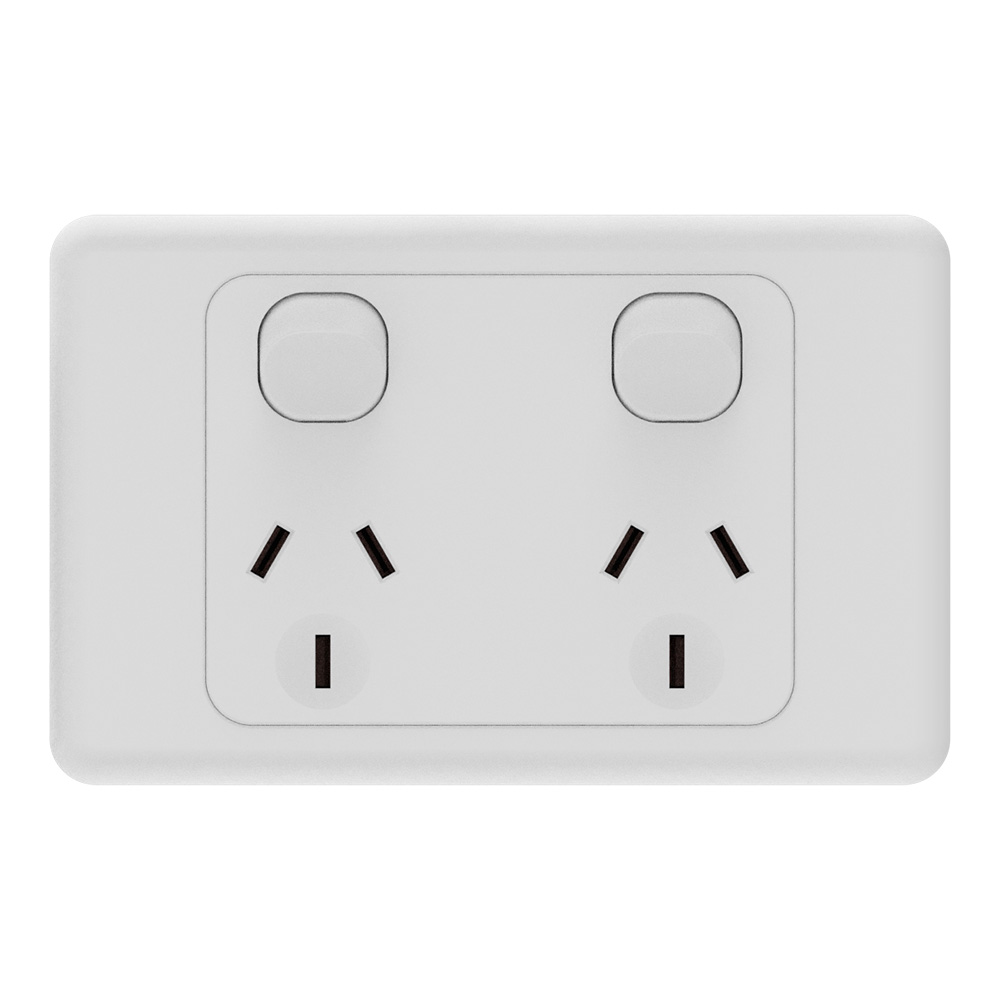
Single Pole. Switch controlling one circuit with a basic on/off function. Single-pole switches represent the most common residential configuration and cost less than multi-pole alternatives.
Smart Switch. Network-connected switch enabling remote control, scheduling, and automation. Smart Switch units integrate with building systems via Wi-Fi, Zigbee, or Z-Wave protocols.
Terminal. Connection point where wires attach to devices through screw, push-fit, or spring mechanisms. Screw terminals provide a secure mechanical connection for permanent installations.
TISI Certification. The Thai Industrial Standards Institute certification is mandatory for electrical products in Thailand. Products require TISI approval for legal distribution in the Thai market.
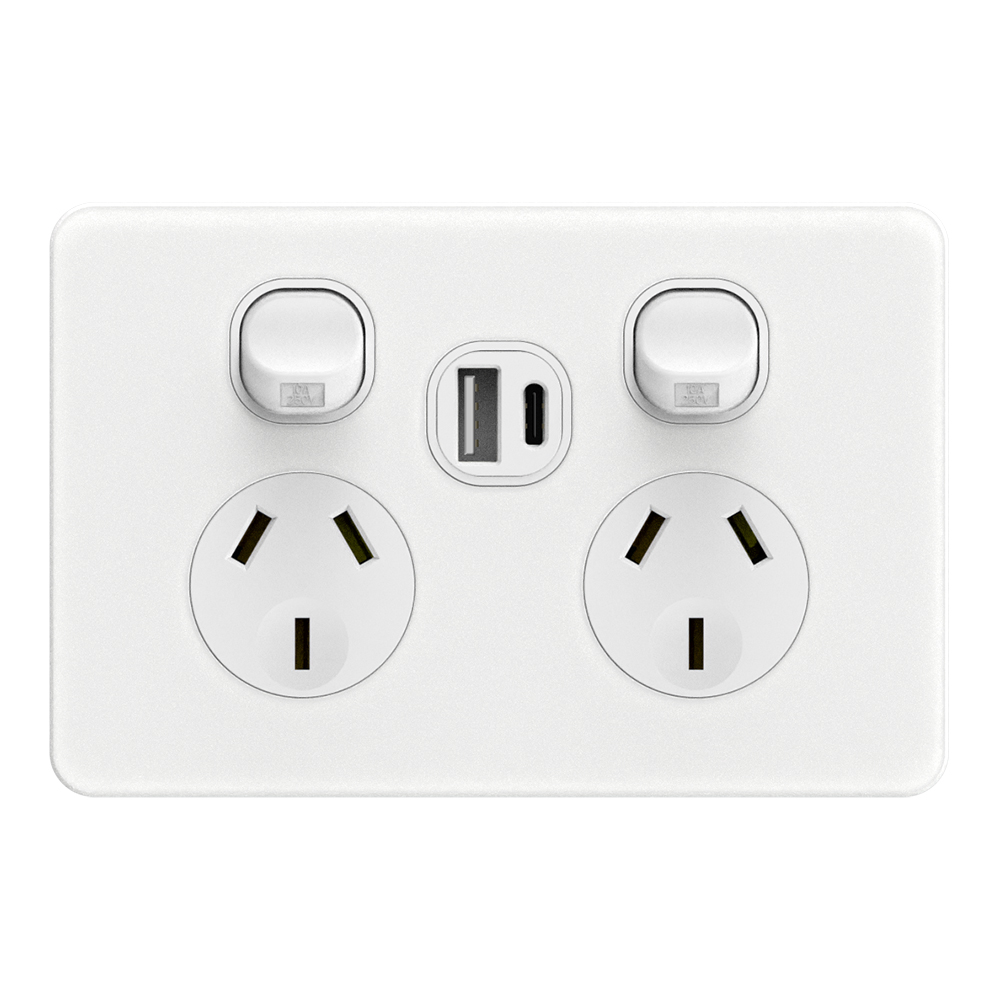
USB Socket. Socket integrating USB charging ports with traditional power outlets. The USB Socket allows direct device charging, while USB-C supports modern fast-charging protocols.
Volt (Voltage). A unit measuring the electrical potential difference driving current through circuits. North America uses 110-120V systems, while most other regions use 220-240V systems.
Watt (Power). Unit measuring electrical power, calculated by multiplying voltage by amperage. Switch and socket ratings specify maximum safe wattage to prevent overheating.
Way. The number of different locations from which a single light circuit can be controlled. Two-way switching allows control from two positions, like the staircase top and bottom.
Weatherproof. Components designed for outdoor exposure, typically rated IP54 or higher. Weatherproof enclosures use gaskets and sealed entries to prevent moisture ingress.
This electrical glossary A to Z covers essential terminology for B2B procurement:
IGOTO Electric manufactures switches and sockets meeting international standards, including SAA for Australia, CE for Europe, and TISI for Thailand. Our range includes rocker switches, double pole configurations, RCD and RCBO devices, and retractive switch mechanisms.
With 26 years of manufacturing experience under ISO 9001, ISO 14001, and ISO 45001 processes, we deliver specification-grade reliability. View our product catalogue or request distributor pricing.
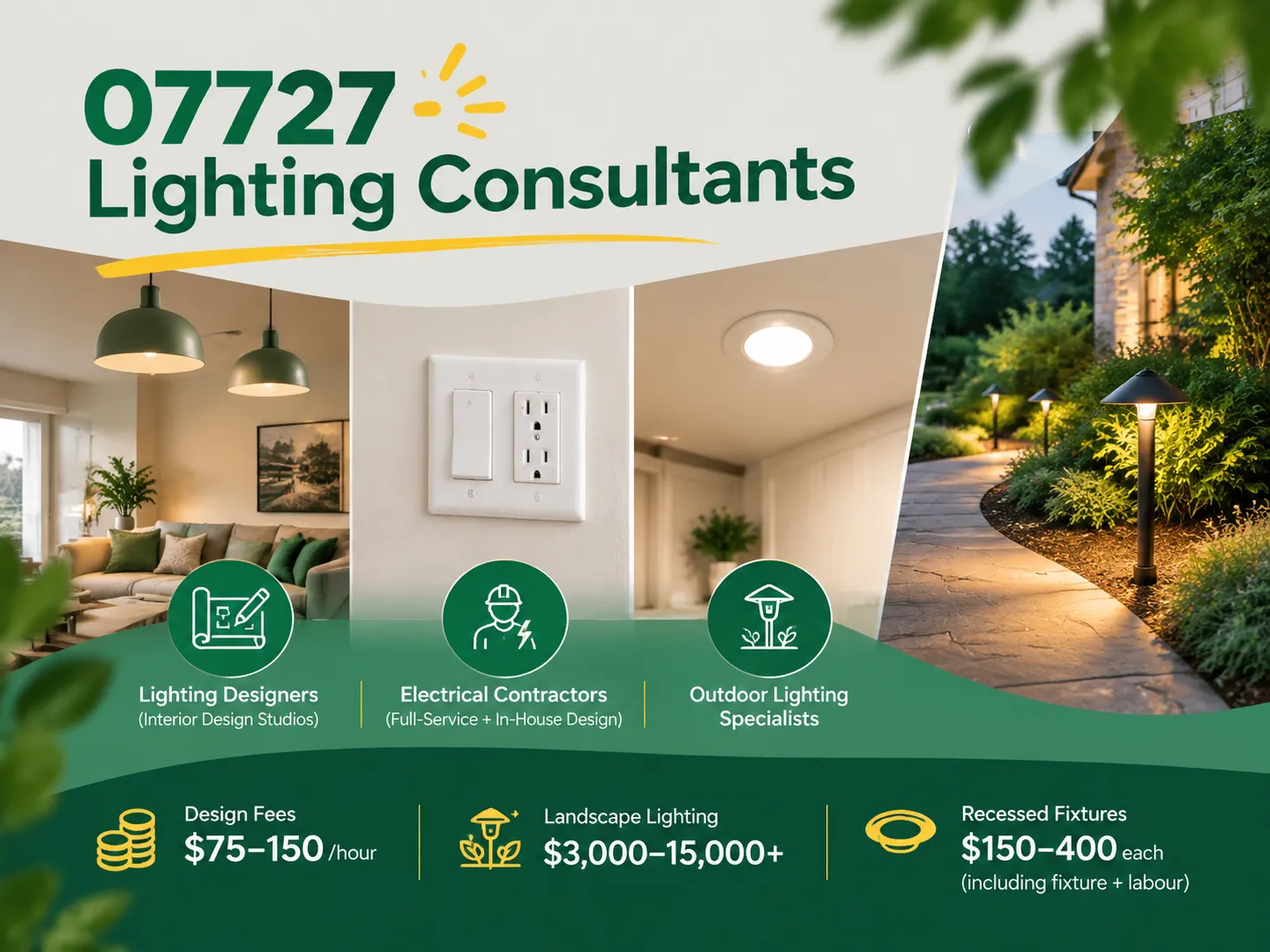
Farmingdale, along with parts of Wall Township and Tinton Falls, New Jersey, share the same zip code of 07727. Most of the houses built from the 1950s to the 1990s still exist today. Most of the homeowners are renovating their houses as opposed to building new homes. Homeowners tend to spend a lot more on […]

The term “07984 lighting consultants” gives people the impression that the five digits represent a postal code of some sort that indicates the place where lighting consultants provide services. This is, however, incorrect: there is no postal area coded 07984, which is only a code of mobile telecommunications in Great Britain. This means that the […]
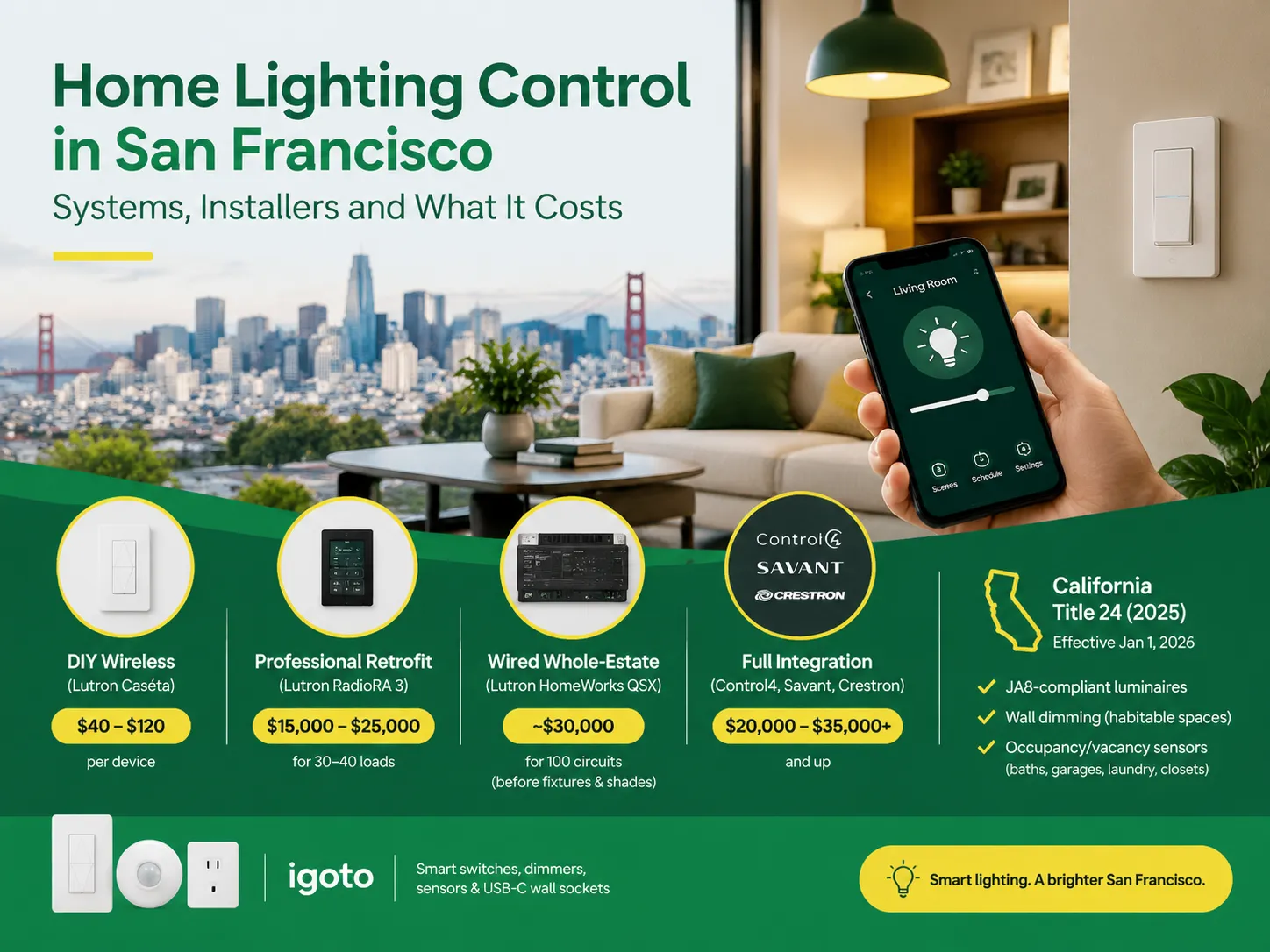
San Francisco is not the average lighting control market. The housing stock is old and dense, and the electrical code does not allow for as many electrical installations as is allowed almost anywhere else in the U.S. Most homes that want complex lighting are Victorian or Edwardian buildings where no one wants to start opening […]

 No.6 Tuozhan Road, Leshang Pioneer Park,Yueqingwan Bay Harbor,Yueqing city,Zhejiang Province


