

It’s laundry day and the new electric dryer arrives equipped with a four-prong cord, which is incompatible with the old three-hole wall outlet. Perhaps you are constructing a garage and wonder what the spec sheet outlines about a 30-amp outlet. The outlet in mention is NEMA 14-30, which is a standard 240-volt, 30-amp, four-wire outlet used in electric dryers in modern homes across North America. This is a comprehensive guide that explains exactly what NEMA 14-30 outlet is, how the plug looks like, what it is used for, what makes it different from a similar outlet called NEMA 14-50 and what installation involves.
Short response: The NEMA 14-30 is the 4-wire outlet type commonly used in clothes dryers in North America. It provides a 240V supply with a current rating of 30 amps and a four-wire configuration – two hot wires, one neutral, and one ground wire – while requiring a double-pole breaker rated at 30 amps and wired using 10 AWG copper cables (8 AWG aluminum cables). The configuration of the plugs is four prongs: two flat vertical conductors (hot wires), a flat horizontal wire (neutral) and a round/ U-shaped ground wire. Other devices like electric cooking ranges, RVs and more electric car chargers cannot use this plug type.
The NEMA 14-30 code distinguishes a specific plug and receptacle type, as mandated by the National Electrical Manufacturers Association. The code can be defined as follows:
Thus, a NEMA 14-30 outlet lets you supply 120/240V at 30A employing four wires. The two live wires supply 240V between themselves and this voltage is responsible for the dryer heating element operation, while the neutral wire does the return circuit for 120V components of the dryer (the motor, control unit, drum light) and guarantees equipment safety. This explains why modern dryers require four wires, as they operate on both 240V and 120V power.
The abbreviation NEMA 14-30 is also written as 14-30R (or R = receptacle) for the outlet and 14-30P (where P = plug) for the appliance cord plug.
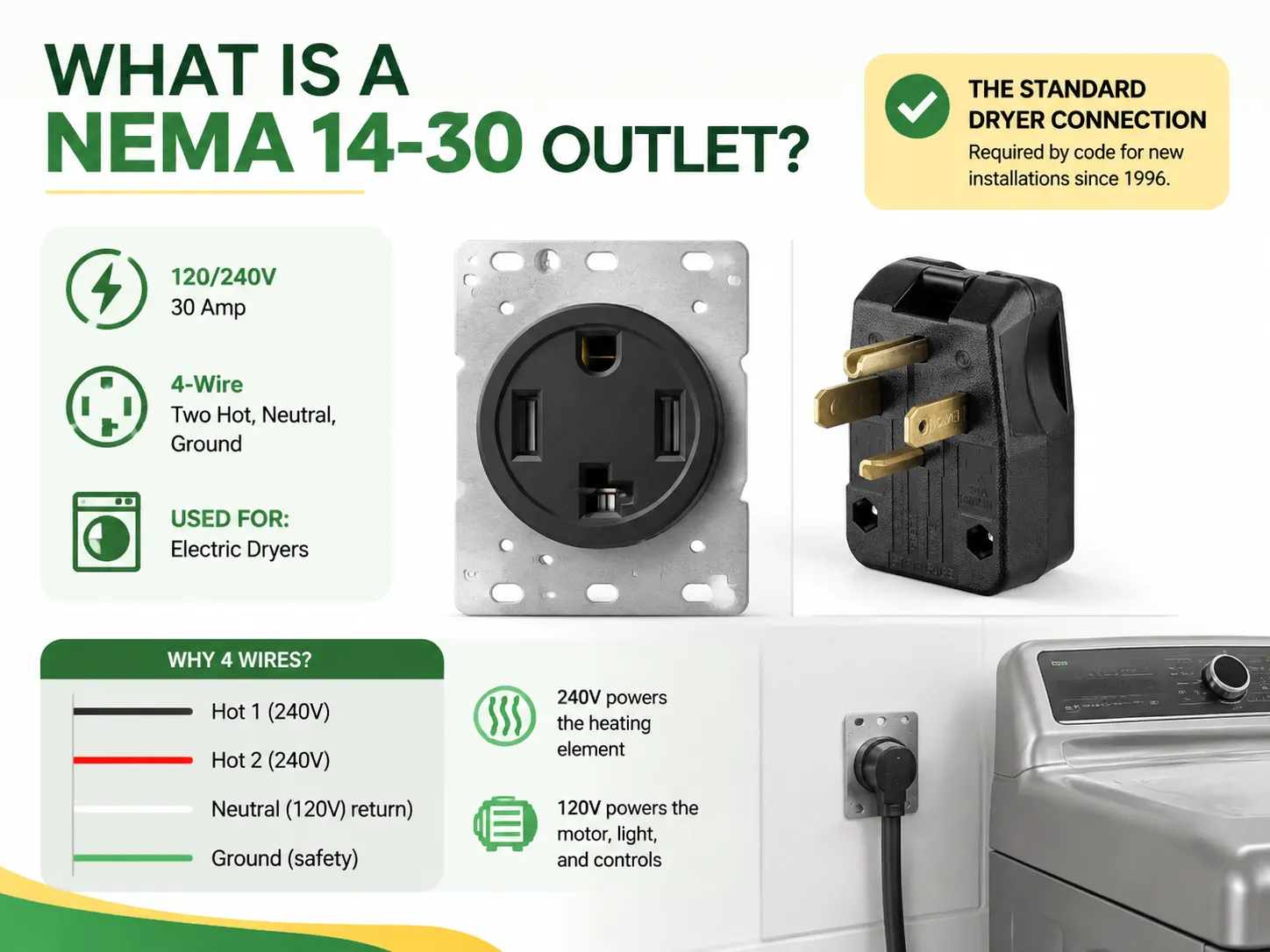
Main purpose of a NEMA 14-30 is to run electric clothes drying machines. The NEMA 14-30 outlets are also usually found in households that have an electric drier installed having been used mostly since 1996. The NEMA 14-30 is a four-wire dryer plug that adheres to NEC guidelines for any new installations. The three-wire version which is known as 10-30 and is used mostly for any already installed machines has been termed as grandfathered.However, apart from electric dryer machines, 14-30 receptacles can also be used for:
When you hear about NEMA 14-30 outlet, think in terms of electric driers since it essentially refers to electric driers and nothing else.
The NEMA 14-30 plug features a recognizable design that makes it easy to identify. The plug contains four prongs arranged in characteristically distinguishable patterns such as:
When looked at from the perspective of comparison of the two plugs, the NEMA 14-30 plug has smaller dimensions (i.e. it is narrower than the NEMA 14-50 plug and has different blade arrangement). Thus, the two plugs cannot be confused with each other. The NEMA 14-30 plug is approximately 1.5 inches wide, while the 14-50 plug has a greater plug. One can also say whether it is a NEMA 14 plug, based on the configurations of its blades: if there is a flat neutral L-shaped blade, one can state that it is from a series of 14 plugs; the numbers 30 and 50 indicate the size of the plugs.
Both are true, and neither is true at the same time. The NEMA 14-30 has a rating of 120/240V nominally. However, referring to it as “220V” dates back to old utility standards; in reality, the voltage level in North American homes is 120/240V (two 120V lines combining to deliver 240V across both hot wires). In some cases, 208V voltage still applies to multi-tenant buildings with three-phase supply provided 208V.
In both cases, the most crucial point is: the 14-30 outlet is a high-voltage circuit (240V), which is rated at 30 amps; thus, you are prohibited from plugging any 120V equipment into it.
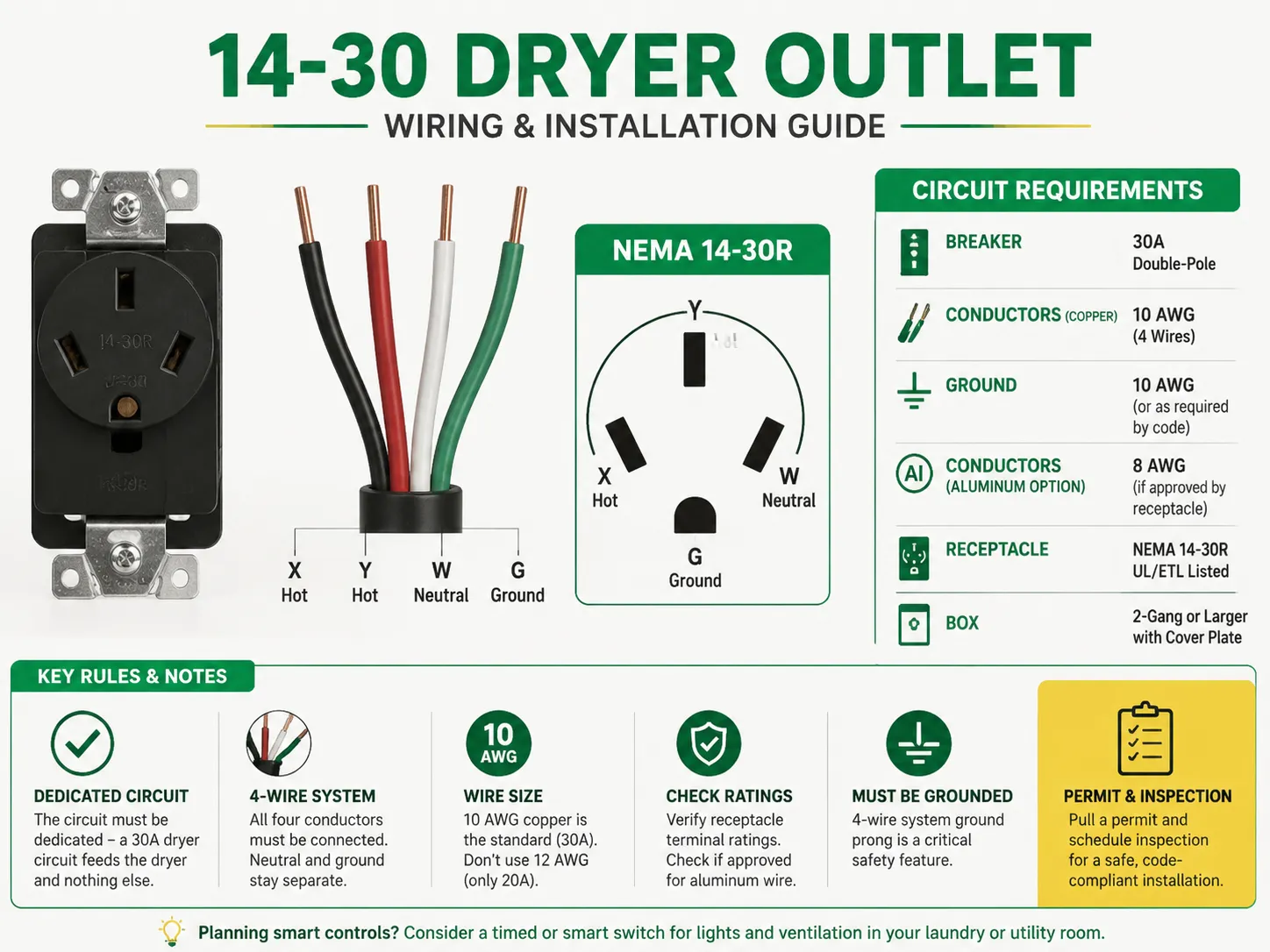
The installation of a 14-30 socket should only be performed by a qualified electrician (or an extremely skilled consumer who possesses the proper permit). The requirements for this circuit are listed below:
| Component | Requirement |
|---|---|
| Breaker | 30-amp double-pole breaker |
| Conductors (copper) | 10 AWG (two hots + neutral) |
| Ground | 10 AWG (or as required by local code) |
| Conductors (aluminum alternative) | 8 AWG (if approved by the receptacle) |
| Receptacle | NEMA 14-30R, UL/ETL listed |
| Box | Suitable 2-gang or larger box with cover plate |
A few things to keep in mind:
The 14-30 and 14-50 look related — they’re both 4-wire 120/240V — but they’re different products for different loads:
| Feature | NEMA 14-30 | NEMA 14-50 |
|---|---|---|
| Amperage | 30 A | 50 A |
| Voltage | 120/240V | 120/240V |
| Conductors | 4 (2 hot, neutral, ground) | 4 (2 hot, neutral, ground) |
| Wire (copper) | 10 AWG | 6 AWG |
| Breaker | 30 A double-pole | 50 A double-pole |
| Typical use | Electric dryer | Electric range, RV hookup, most EV chargers |
| Plug size | Smaller | Larger |
| Interchangeable? | — | No — physically and electrically incompatible |
The simplified version is as follows: the dryer uses 14-30 sockets, while RVs, ranges, and electric vehicles make use of 14-50 sockets. Always remember that it is impossible to fit a 14-50 plug into a 14-30 socket and that it can lead to serious overloading of a 50 Amp device working on a 30 Amp circuit. If you have to charge an electric vehicle using a dryer outlet, then make sure that the device you utilize is designed and certified for 14-30 usage.
Older homes typically have a 3-prong NEMA 10-30 dryer outlet, which has three slots with no ground. The 10-30 was used before it was mandatory to have a separate ground conductor, meaning that the neutral was being used as the ground, which was later prohibited by the NEC for safety reasons, as neutral does not act as a safe ground in case of faults.In case you have a 3-prong outlet and a new dryer with a 4-wire plug, you may follow these two approaches:
When in the process of taking or renting an older property, make sure that the outlet for the dryer is usable and operable; it is better to spend about $20 for an outlet improvement now, than to pay for rewiring later.
Anyone with an electric vehicle may ask if they can plug their car into the dryer outlet. The short answer is:
The key thing: as 14-30 circuit delivers maximum capacity of 30A, power consumption during EV charging should be set at 24A (according to the 80% continuous current method). Certified chargers can work in a proper manner.Before planning any home circuit upgrades, the same load-limit logic applies to the lighting circuits behind them — the switch and socket decisions in different kinds of switches in electrical help you balance the panel as you add circuits.
A NEMA 14-30 outlet itself is inexpensive; the wire and labor are where the cost lives:
| Item | Typical Cost |
|---|---|
| 14-30R receptacle (retail) | $10-$25 |
| 14-30P plug only | $3-$10 |
| Dryer cord with 14-30P (6 ft, 4-wire) | $15-$40 |
| 10 AWG wire (per foot) | $1.00-$1.50 |
| 30A double-pole breaker | $10-$30 |
| Box + cover plate | $5-$20 |
| Electrician install (new circuit, labor) | $200-$600 (new wiring) or $100-$250 (outlet swap) |
If the 4-wire system is already in place and simply the outlet needs to be changed, the job is fast and affordable. The more expensive option will be wiring a new 30A circuit from the electrical panel which involves going through walls and getting a breaker and a permit.
The best manufacturers for quality 14-30R receptacles include the top wiring device companies: Leviton (with the 279-S00 being the industry staple), Eaton (Cooper), Hubbell, Pass & Seymour (Legrand), as well as the budget names that include ENERLITES, TopGreener, and GE. Here are the purchase considerations for contractors and retailers:
NEMA 14-30 refers to the standard specification for a receptacle rated at 30 amps, which has four wires and works at 120/240 volts; “14” means three contacts and four wires (two contacts for hot supply, one neutral contact, and one for grounding), while “30” stands for the rating in amps. This particular receptacle was introduced and became a standard installation for dryers across North America starting from 1996. The corresponding plug type is known as the 14-30P.
It has a nominal voltage of 120/240V. The term “220V” is outdated; the standard voltage for households in North America is 240V in the two hot phases (it is 208V for some apartment buildings). The 14-30 outlet is part of a 240V circuit, so you should not plug in devices intended for 120V into it as it requires a specialist to be wired.
There’s no way a 50A NEMA 14-50 plug will fit into a 30A NEMA 14-30 receptacle, and attempting to attach an adapter is a hazard, since a 50A device may draw much more than the 30A circuit can handle leading to overheating and fire. Dryers are wired with 14-30 and ranges, RVs and most electric vehicles are wired with a 14-50 plug. Use equipment that has received certification for use with a 14-30 rating on a 14-30 line only.
The plug type NEMA 14-30 has four prongs consisting of two flat, vertical blades (the hot wires), one horizontal flat blade (the neutral, perpendicular to the hot blades), and one round or U-shaped ground prong. It is noticeably smaller than the NEMA 14-50 plug, which can help to differentiate the two types of plugs. It can only fit into a NEMA 14-30R wall receptacle.
The 30-amp, 240-volt four-wire outlet known as NEMA 14-30 is the most commonly used outlet for electric dryers. This outlet has two power wires providing energy for the heating element, a neutral wire supplying power to the controls, and a ground wire for safety purposes. Its four-prong connector has a simple construction (two vertical pins, one horizontal pin, and the ground pin), and it is necessary to distinguish this outlet from the larger 50-amp NEMA 14-50 outlet used for electric stoves and chargers. Installing the NEMA 14-30 outlet requires the installation of a double-pole 30A circuit breaker, with copper wire of size 10 AWG used for the installation. If the outlet is used to charge an electric car, only the 24A-rated charger should be used. For the broader picture on household wiring devices — from receptacles to the switches that control them — our guide to the different kinds of switches in electrical and the dimmer switch installation guide cover the control side of the same walls.
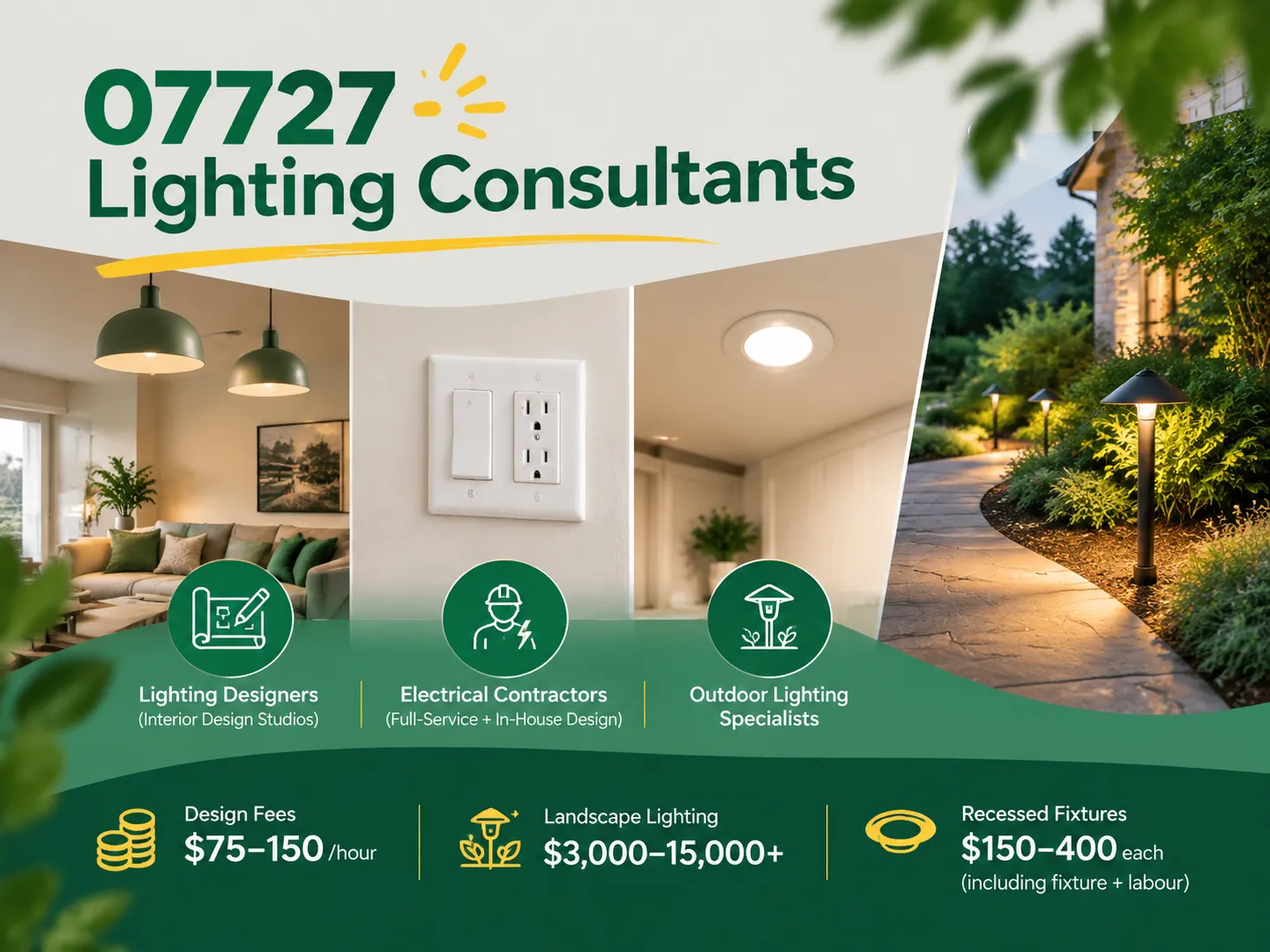
Farmingdale, along with parts of Wall Township and Tinton Falls, New Jersey, share the same zip code of 07727. Most of the houses built from the 1950s to the 1990s still exist today. Most of the homeowners are renovating their houses as opposed to building new homes. Homeowners tend to spend a lot more on […]

The term “07984 lighting consultants” gives people the impression that the five digits represent a postal code of some sort that indicates the place where lighting consultants provide services. This is, however, incorrect: there is no postal area coded 07984, which is only a code of mobile telecommunications in Great Britain. This means that the […]

San Francisco is not the average lighting control market. The housing stock is old and dense, and the electrical code does not allow for as many electrical installations as is allowed almost anywhere else in the U.S. Most homes that want complex lighting are Victorian or Edwardian buildings where no one wants to start opening […]

 No.6 Tuozhan Road, Leshang Pioneer Park,Yueqingwan Bay Harbor,Yueqing city,Zhejiang Province


