

The selection of the proper switches would depend on how many points would be used to operate the lighting system.
There have been a lot of installation problems because buyers confuse switch types during planning.
A good understanding of the differences among 3-way, 4-way, and single-switch systems will prevent such problems in the future.
| Feature | Single-Pole Switch | 3-Way Switch | 4-Way Switch |
| Control points | One location | Two locations | Three or more locations |
| Typical application | Bedrooms, bathrooms | Hallways, staircases | Large corridors, commercial spaces |
| Number of switches required | One | Two | One 4-way plus two 3-way switches |
| Terminal type | Two brass terminals | One common and two traveler terminals | Four traveler terminals |
| Wiring complexity | Simple | Moderate | More complex |
| ON/OFF markings | Yes | No | No |
| Common wire count | 2 wires + ground | 3 wires + ground | 4 wires + ground |
| Installation difficulty | Low | Medium | Higher |
| Typical building type | Residential | Residential and commercial | Commercial and large residential buildings |
Depending on the number of control positions that the switch requires, it can operate differently. This means that the manner in which the switch functions depends on its wiring and connections in the circuit.
The normal light switch controls one single light fixture from one control position. When you press the switch, you either close or interrupt the circuit.
It consists of one incoming and one outgoing wire only, which is commonly installed in bedrooms, storage rooms, and offices.
A 3-way switch is one that controls a single light fixture using two separate locations.
Unlike an ON-OFF switch, the 3-way light switch reroutes the electric current using traveler wires.
When one switch is flipped, the electric current path within the circuit changes. Thus, either of the two switches can independently turn the light on or off.
A 4-way light switch operates together with two 3-way switches. It’s used to control lighting from three or more different locations.
What happens is that the switch is not directly wired into the power supply or the light fixture. The switch simply reroutes the traveler wires between the two 3-way switches.
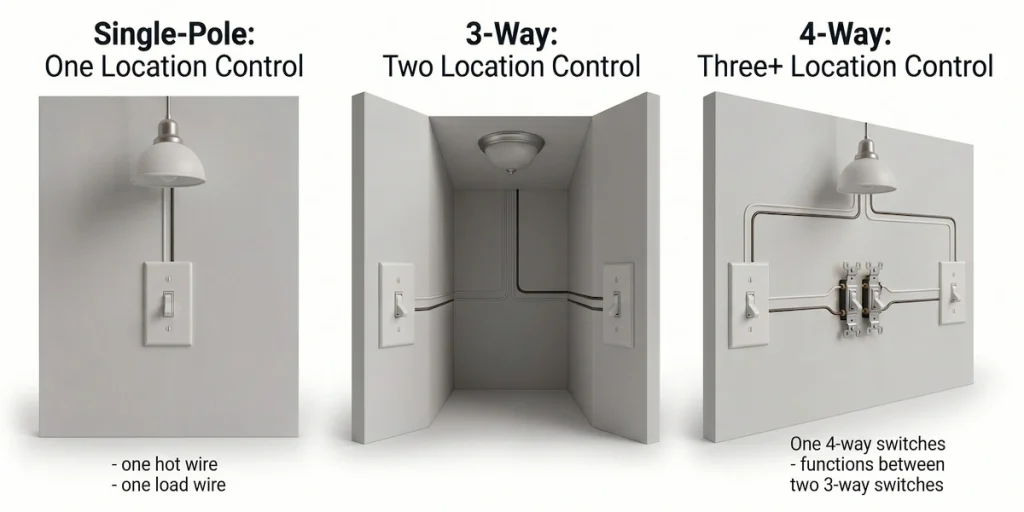
Each switch type requires a different wiring layout. The number of terminals and conductors increases with control complexity.
Simple installations often require fewer materials and less labor time.
| Switch Type | Control Locations | Common Wire Count |
| Single-pole | One | 2 wires + ground |
| 3-way | Two | 3 wires + ground |
| 4-way | Three or more | 4 wires + ground |
Understanding these differences helps reduce installation mistakes during renovation projects.
Electricians frequently use a single-pole light switch wiring diagram PDF during field work. Printed diagrams help verify wire routing and terminal placement before installation begins.
Digital copies are also common on tablets and mobile devices during commercial projects.
Switch installation and maintenance are essential in ensuring that electrical safety hazards are reduced. Electrical faults may cause overheating, short circuiting, and even equipment damage.
When installing switches, electricians may apply the NEC and IEC guidelines depending on the installation project location.
They are crucial in preventing electrical risks, overheating, and faulty wiring.
The NEC is an American national standard used in the United States. Its provisions include appropriate wiring size, effective grounding methods, circuit protection, and safety during installation procedures.
For instance, NEC guidelines determine the appropriate box fill and grounding in switch installations.
On the other hand, the IEC standards are dominant in Europe and Asia.
The International Electrotechnical Commission emphasizes safety measures in products, test procedures, insulation performance, and electrical compatibility in various devices and machines.
They also consider environmental factors in material performance.
There are some cases where switches should be made dustproof or water-resistant, particularly in factories, kitchens, and outdoor installations.
Compliance with these guidelines ensures that contractors have safer installation practices and comply with mandatory inspections.
Every switch has a rated voltage and current capacity. Common residential switches operate at 120V or 250V, depending on regional systems.
Overloading a switch may reduce operating lifespan and increase heat buildup.
Grounding helps reduce shock risks during faults. Circuit breakers also protect wiring from overload conditions.
Many modern switches now include fire-resistant thermoplastic housings for additional protection.
Some older dimmer switches may flicker when paired with LED bulbs. This happens because LEDs use lower electrical loads.
In some cases, a single-pole light switch with a dimmer is required to match the load range and improve lighting stability.
Manufacturers now produce dimmers designed specifically for LED lighting systems.

Installation costs usually increase as switch systems become more complex.
Standard switches often require fewer materials and less labor time, making them the most affordable option for small rooms.
3-way systems need additional traveler wires and extra switch units. This increases both wiring work and installation time compared to standard switch setups.
4-way systems generally cost the most because they require multiple switches and more complicated wiring layouts.
Large homes and commercial buildings may also need additional electrical boxes and conduit work.
Proper planning helps reduce labor delays and unnecessary material costs during installation.
While the efficiency of light switches does not solely rely on their design, it can also depend on how well they have been manufactured.
Ineffective switches can become loose after some time, overheat, or malfunction due to constant usage.
Light switches manufactured according to IEC, CE, and RoHS standards are expected to ensure higher quality control.
It becomes particularly important when talking about commercial buildings, hotels, educational institutions, and factories.
Product range also matters during construction and renovation projects.
Contractors often prefer manufacturers that offer matching switch series, dimmers, smart controls, and multi-gang options for easier installation planning.
IGOTO is one example of a manufacturer supplying wall switches and sockets for residential and commercial applications.
The company offers different switch styles, modular designs, and smart-compatible products for modern electrical projects.
Its product range also supports various international market requirements and installation preferences.
For more light switch inquiries, contact us immediately.
3-way, 4-way, and standard switches each serve different lighting control needs.
Simple rooms usually work with one control point, while larger spaces require multiple switching locations.
Understanding wiring layouts, safety requirements, and application differences helps reduce installation mistakes and maintenance issues.
Proper switch selection also improves convenience, energy control, and long-term electrical performance.
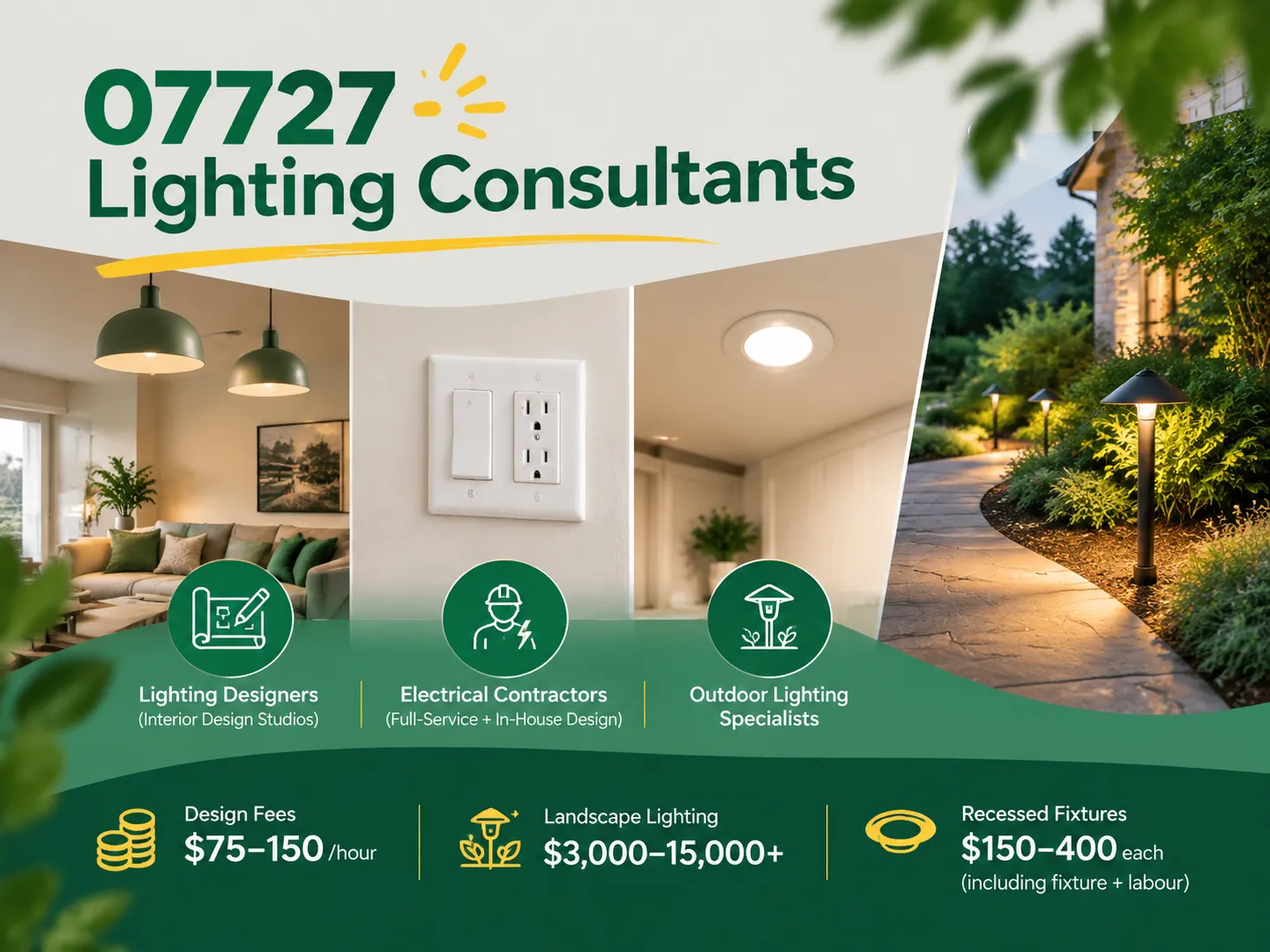
Farmingdale, along with parts of Wall Township and Tinton Falls, New Jersey, share the same zip code of 07727. Most of the houses built from the 1950s to the 1990s still exist today. Most of the homeowners are renovating their houses as opposed to building new homes. Homeowners tend to spend a lot more on […]

The term “07984 lighting consultants” gives people the impression that the five digits represent a postal code of some sort that indicates the place where lighting consultants provide services. This is, however, incorrect: there is no postal area coded 07984, which is only a code of mobile telecommunications in Great Britain. This means that the […]

San Francisco is not the average lighting control market. The housing stock is old and dense, and the electrical code does not allow for as many electrical installations as is allowed almost anywhere else in the U.S. Most homes that want complex lighting are Victorian or Edwardian buildings where no one wants to start opening […]

 No.6 Tuozhan Road, Leshang Pioneer Park,Yueqingwan Bay Harbor,Yueqing city,Zhejiang Province


