

The district of Greenwich offers a unique combination of historical importance and modernity, which can be seen in its historical sites as well as its contemporary apartment buildings. In Greenwich, the old and the modern coexist in harmony. Despite the presence of the antique buildings of the Georgian architecture, they can be installed with the latest systems of smart homes without the use of too much wiring. The new technologies of dimming can be concealed by the historical style. The latest residential units which are still vacant nowadays can be wired from the very beginning in order to use systems such as LTN and KNX. This guide includes the information on smart home technologies used in Greenwich, their specifics, companies which work with these technologies, pricing for their services and much more.
A short answer: The term smart lighting control in Greenwich designates controlling lights through the use of keypads, apps, voice control or through automatic scenes instead of using just one switch for each circuit. If you happen to live in a listed building or a conservation area, which applies to a large part of central Greenwich and Blackheath, you should opt for wireless retrofit solutions such as Lutron RadioRA 3 and Philips Hue since they cause minimum disruption to your property. If you are building or extensive remodelling your house, a wired system will allow for the most reliable and trouble-free operation.
Smart lighting solution is what separates dimmer switch from lighting system. Dimmer operates one light at one spot in one electrical circuit. In contrast, lighting system treats light in the house as an element of scenery or series of serial sequences. As a result, a command for evening would dim lights in the dining room, make lights in the kitchen brighter and turn corridor into warm light. Moreover, utility room lights will be automatically switched on by motion detectors and application will help you to see all lights present in your house and find out how to turn them off while lying in bed or being at the airport.
The hardware splits into three layers. The control layer is the keypads, dimmers, and switches you touch — the range of switch types and their behaviour is explained in our guide to the different kinds of electrical switches. Brain is referred to as controller or hub which is programmed. Meanwhile, integration layer connects lighting with curtains, heating system, security system and voice help, thus one command “Goodnight” will carry out 20 actions.
| Platform | Type | Strengths | Typical budget |
|---|---|---|---|
| Lutron (RadioRA 3 / HomeWorks) | Professional lighting-control platform | The lighting benchmark; ultra-reliable dimming incl. LED; wired or wireless retrofit; keypads with engraved scenes | From ~£4,000 multi-room retrofit; whole-home £10,000-60,000+ |
| KNX | Open international bus standard (500+ manufacturers) | Future-proof, no vendor lock-in, architecturally integrated; the default for high-end London new builds | £5,000-8,000 per room wired; whole-home £35,000-80,000 |
| Control4 | Integrated smart-home platform | Lighting + audio + security + shading in one intuitive system; strong retrofit options | From ~£15,000; whole-home £20,000-75,000 |
| Crestron | Luxury integrated platform | Fully bespoke programming and interfaces; estate-grade reliability | Typically £40,000+ |
| Loxone | Centralised control platform | Excellent value per function; strong automation logic and energy features | £18,000+ whole house |
| Rako | UK-made wireless lighting control | Simple retrofit lighting control; clean keypads; lower cost than full platforms | Mid-range |
| Philips Hue / Matter smart switches | Consumer / DIY layer | App + voice control, colour scenes, no electrician needed for bulbs; smart switches replace existing wall plates | £50-300 per room |
However, for many people who have a home in Greenwich, there is an option that combines the use of these solutions: advanced expert systems for the essential rooms in the household like the kitchen in the bathroom or possibly the bedroom, and simple smart switches for use in all the other rooms. To help in comparing the various offers keep in mind some terms: “1 gang” means a switch on the plate, “dimmer” means variable light intensity, and LED compatible is used most often like a bait as cheap dimmers start to buzz or flicker with LED light bulbs hence the advanced solutions utilize trailing edge dimmers and tested LED bulbs.One load rule worth remembering before you design scenes: ceiling fans need fan-speed controls, not dimmers — a point explained in our dimmer-on-a-ceiling-fan guide.
Within this postal code, there are 3 specific limiting conditions to consider in any smart lighting project:
Whatever the system, most rooms in a retrofit will keep their existing light fittings, so the LED compatibility of the chosen dimmers matters — the practical rules for dimming LED circuits without problems are in our LED dimming guide.
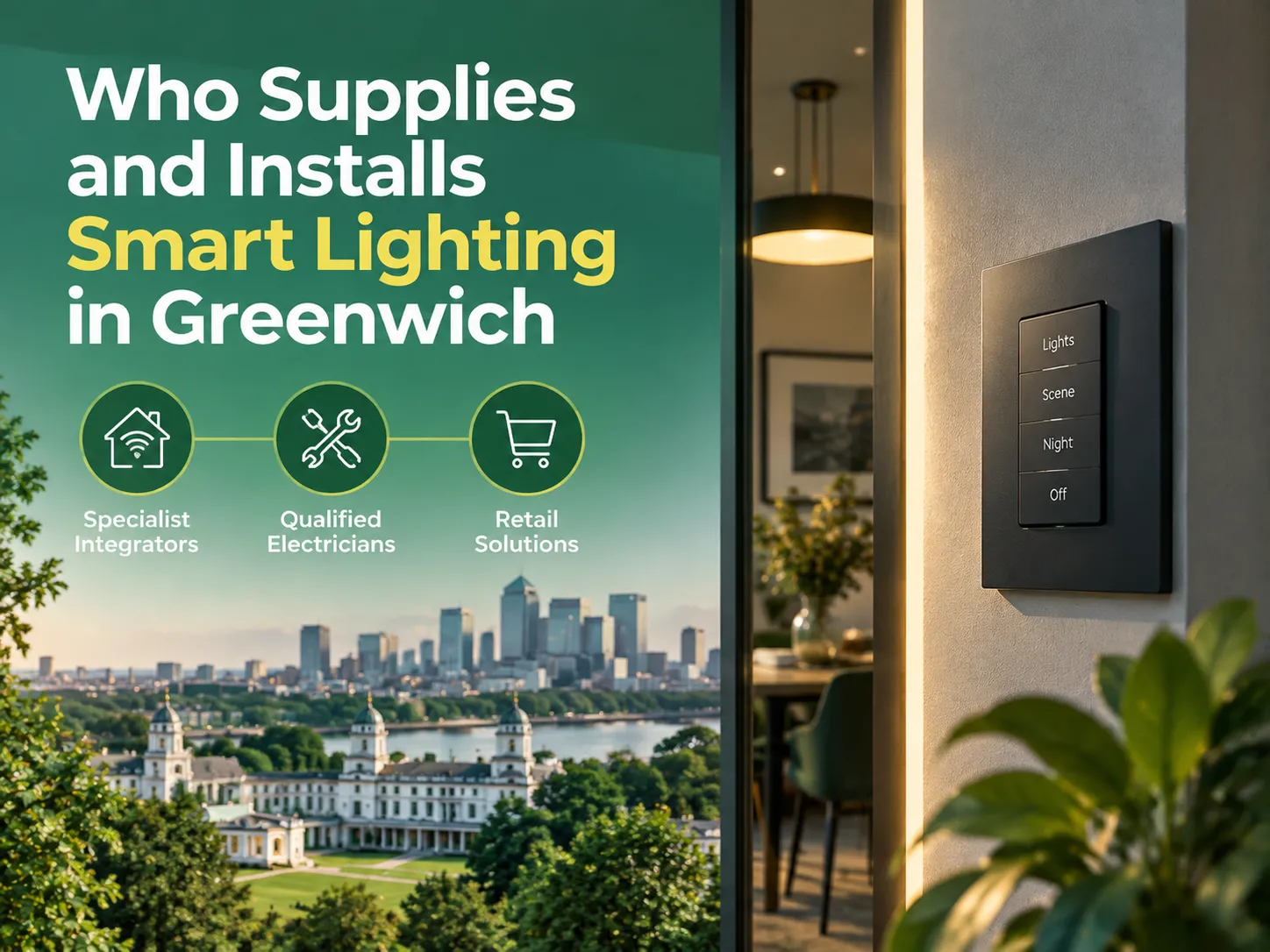
London’s smart lighting market has three layers of supplier, and Greenwich is served by all of them:
| Supplier type | Who they are | Services |
|---|---|---|
| Lighting-control specialists (CEDIA integrators) | Firms like Lutron Gold Dealers and Control4/KNX certified integrators serving South East London, e.g. Inspire AV (Lutron primary), Vertex AV (Control4/Crestron/KNX), Home Automate (Loxone/KNX/Control4/Lutron) | Lighting design, AutoCAD drawings, supply, installation, programming, commissioning, aftercare; coordinate with your architect and interior designer |
| NICEIC/Part P electricians | Local registered electrical contractors offering smart lighting as a service | Single-room and whole-home smart switching (approx. £280-550 per room for up to four circuits), app and voice setup, plus any rewiring needed |
| Retail / consumer layer | DIY and app-based ecosystems | Hue-style bulbs and Matter/Zigbee smart switches fitted by a handyman or competent DIYer, controlled per room |
It is vital to remember at least three important aspects when selecting an installer: membership with CEDIA, registration with NICEIC/NAPIT in terms of electrical installation under Part P, and possession of platform credentials (qualification in Lutron, Control4 programming, or KNX partnership). In addition, please ask the installation company to provide at least two examples of their work in the southeast corner of London, as well as one example of work completed in a historical building.The installation steps for the simpler end of this work — replacing a standard switch with a smart dimmer — are exactly what our dimmer installation guide walks through, and they apply to most Greenwich retrofit rooms.
Budgeting in Greenwich for 2026 (based on common prices in London and the South East, including both supply and installation costs):
| Project | Typical cost | Timeline |
|---|---|---|
| Single room converted to smart switching (up to 4 circuits) | £280-550 | 1 day |
| Whole-home smart lighting (basic, retrofit, app-controlled) | £1,800-4,500 | 3-7 days |
| Multi-room lighting control (Lutron RadioRA or similar) | From ~£4,000 | 1-2 weeks |
| Whole-home premium platform (Lutron/Control4/Loxone) | £10,000-75,000+ | 4-10 weeks including design |
| KNX whole-home (wired, new build) | £35,000-80,000+ | Built into construction programme |
| Design fee (high-end schemes) | Often £2,000-5,000, credited against install | 2-4 weeks |
Most of cost factors are the same all over: The difference between retrofit vs. new installation (the costs of wiring will be less when the walls are down), the total number of circuits and zones being controlled, the load testing done on the LEDs themselves and the degree of difficulty in connecting to various systems including window coverings, heating, security systems. Deposits of 10-20% are typical but if a company demands payment in advance this would be a warning sign. Reputable integrators always send quotes with itemized costs shortly after an on-site evaluation.
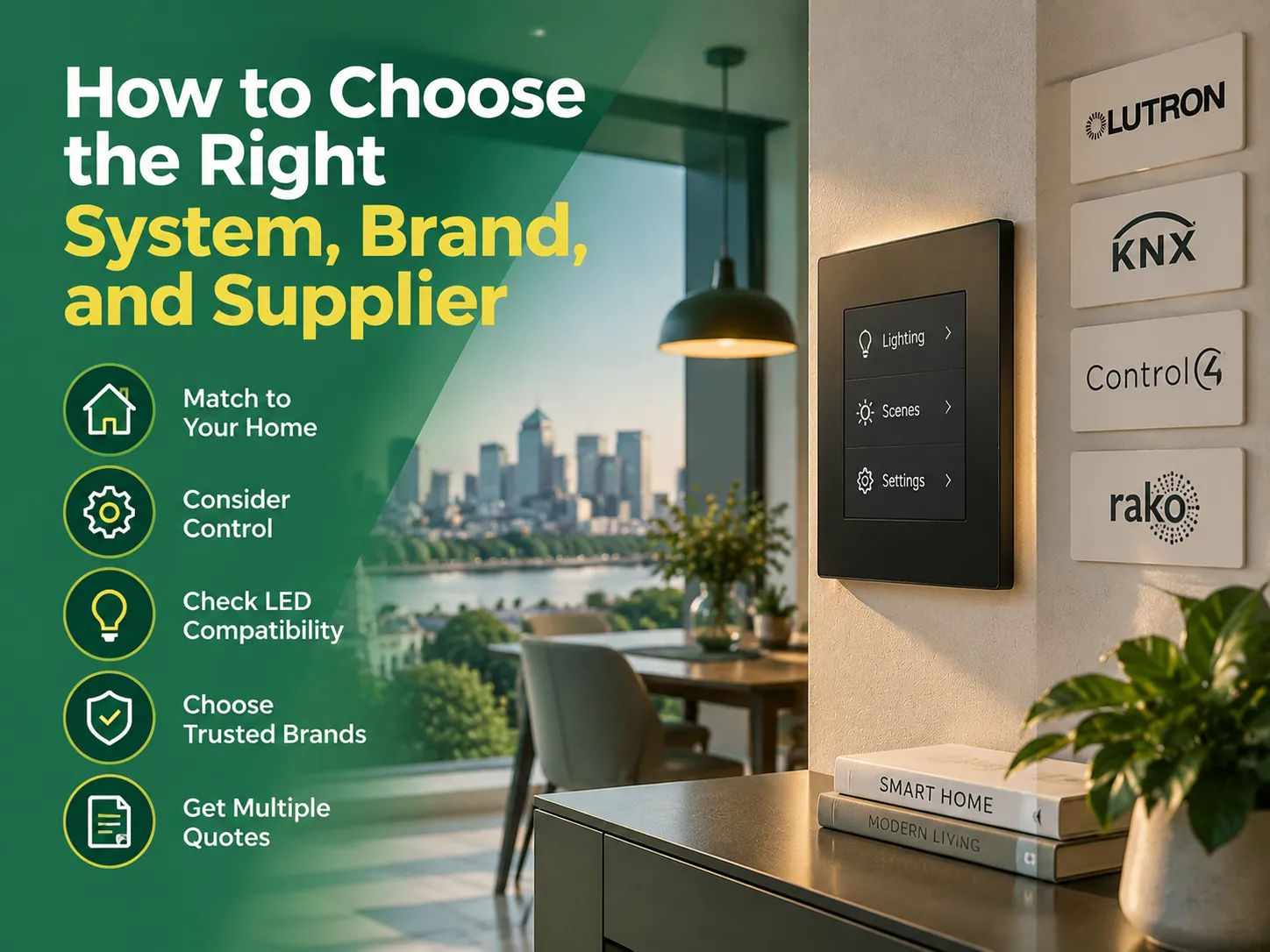
When you make a solid choice, you essentially link the tier with your home instead of selecting the glitziest brochure available.
In most cases, no. Wireless upgrade systems (Lutron RadioRA 3, Rako, Philips Hue technology, smart switches, etc.) are available. They utilize existing electrical wiring. What you should check is if the Outlet Box has a neutral wire. If not, they may be able to use no-neutral dimmers or wireless relays instead.
The average retrofitting cost of one room with smart switches is £280-550. The average cost of the entire setup is about £1,800-4,500 depending on the work performed by the electric professional. Prices on professional lighting control systems start from £4,000 for retrofitting several rooms at once and can go as high as £10,000-75,000. The price on wired KNX technology in new houses will be around £35,000-80,000.
In terms of system usage in this type of residence, Lutron’s wireless retrofit (RadioRA 3) is preferable because it does not require bus wiring plus it works with specialized lighting. KNX, on the contrary, works very well when it comes to use in newer homes and in substantial renovations.
Yes, it is possible to enhance the house price using the right technology: as per UK property agents, the installation of this technology can boost the value of the house by 3-8%.
The range of smart lighting control products on offer in Greenwich is remarkably diverse, affording clients numerous possibilities. For example, a Georgian house allows a client to use a variety of systems for smart lighting control, such as the Lutron RadioRA 3 and Rako, which do not entail installation of any new cables. In contrast, in the cases of the more modern buildings on the Peninsula, a wired KNX system or Control4 would allow the client to enjoy a more efficient solution. As well as taste, the type of system is determined by the amount of money available. In most cases, prices for smart lighting systems vary from £280 for the simplest systems to more than £75,000 for more sophisticated devices. It is worth mentioning that with every deal, a client must make sure that the lighting solution fits the particular property, that they choose appropriate LED technology, that the company providing the solution is CEDIA accredited, and that it possesses references for its work in Southeast London. Furthermore, if a client can ensure compliance of the used hardware, he can turn the light on and off and set the mood in the room with just one press of the button.
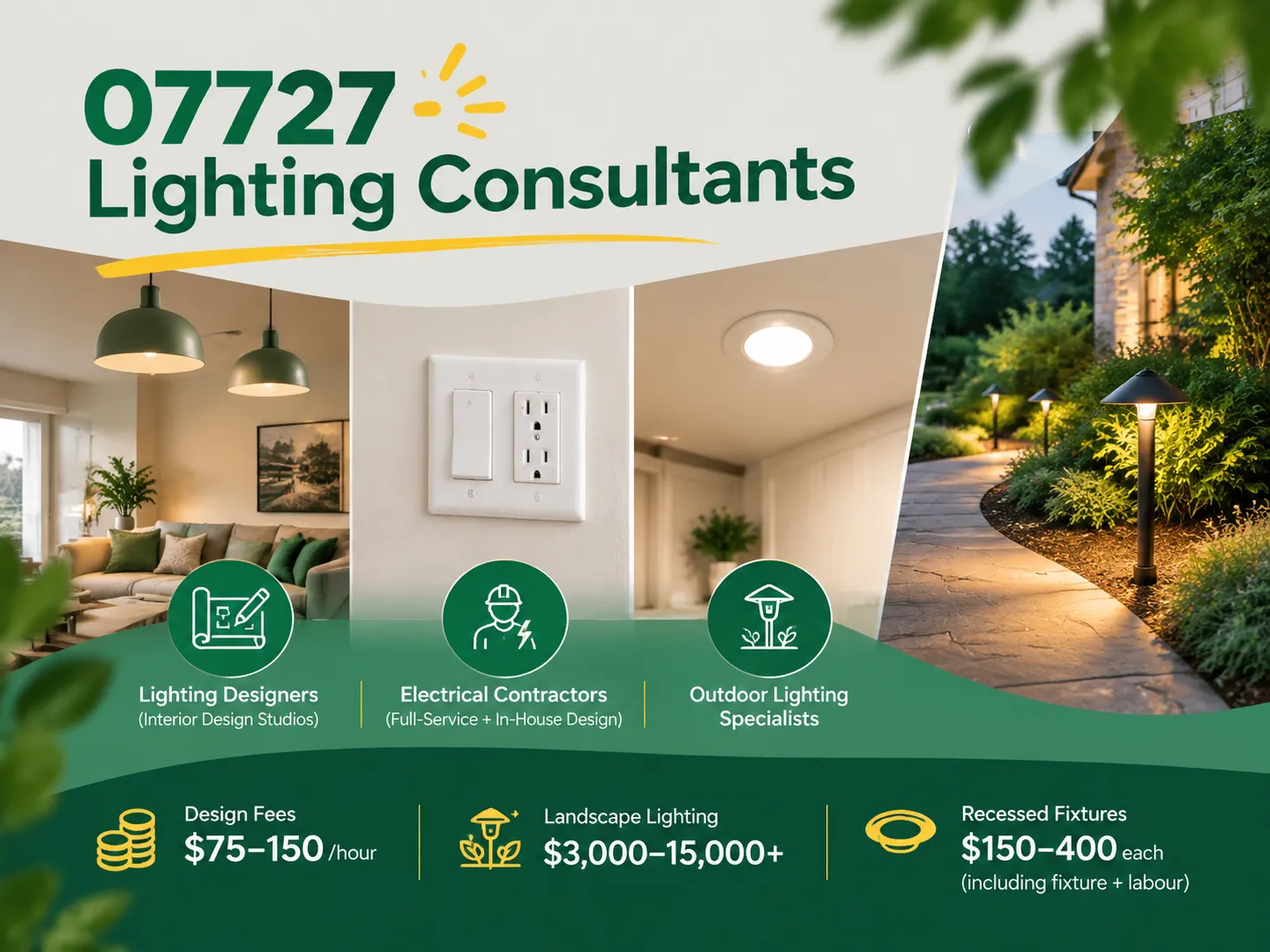
Farmingdale, along with parts of Wall Township and Tinton Falls, New Jersey, share the same zip code of 07727. Most of the houses built from the 1950s to the 1990s still exist today. Most of the homeowners are renovating their houses as opposed to building new homes. Homeowners tend to spend a lot more on […]

The term “07984 lighting consultants” gives people the impression that the five digits represent a postal code of some sort that indicates the place where lighting consultants provide services. This is, however, incorrect: there is no postal area coded 07984, which is only a code of mobile telecommunications in Great Britain. This means that the […]
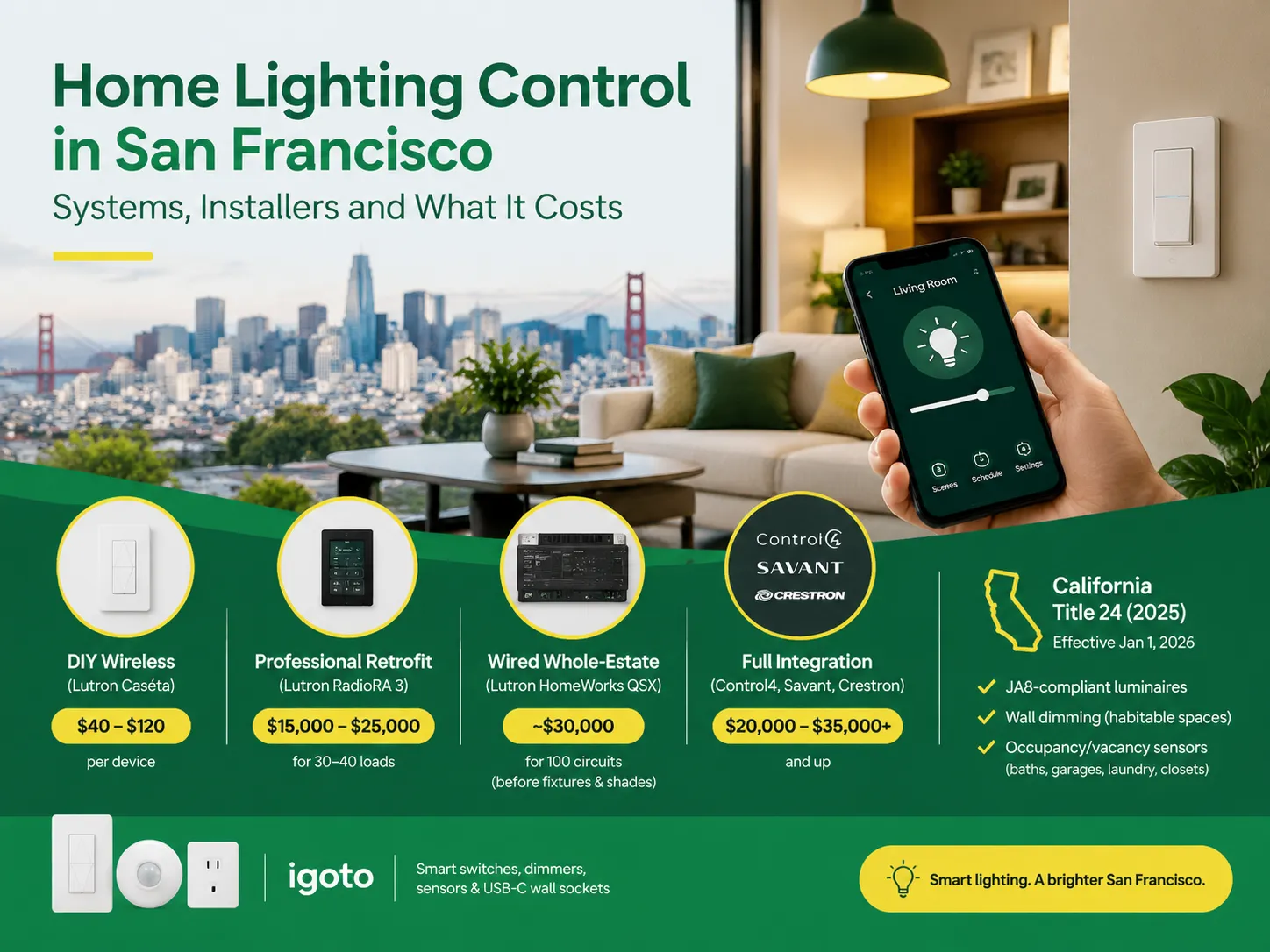
San Francisco is not the average lighting control market. The housing stock is old and dense, and the electrical code does not allow for as many electrical installations as is allowed almost anywhere else in the U.S. Most homes that want complex lighting are Victorian or Edwardian buildings where no one wants to start opening […]

 No.6 Tuozhan Road, Leshang Pioneer Park,Yueqingwan Bay Harbor,Yueqing city,Zhejiang Province


