

If you need assistance with lighting in the 07491 region, is essential to ask two crucial inquiries: who is operating nearby and how much is charged for the services. Concerning the first question, one can easily find the answer regarding the facts and figures because the market in northern New Jersey is not so broad. In terms of the second question, one cannot get a concise answer because this sphere is characterized by an uncomplicated invoice, while the end result can look rather different. Below, there will be the answers to the questions together with some New Jersey licenses and rebates laws that make a scheme either attractive, compliant, and fundable.
If we consider the situation in New Jersey regarding the lighting design, there are four types of businesses that participate in this business. Those are dedicated agencies specializing in lighting design, M&E agencies, lighting showroom, and electric contractors with their own design expertise. What you get is the documentation of the lighting concept, lighting layout, devices list, photometric calculations, control description, energy code compliance, and egress/emergency lighting program. The typical rates for designers are within $95-200/hour and normally make up for five percent of the contract value, small commercial projects being priced for $2-8K.
The block of ZIP codes 074xx belongs to New Jersey and stretches across northern Bergen, Passaic, and Morris counties — where the edge of the New York metropolitan area meets the Ramapo foothills. The adjacent ZIP codes provide the relevant market information: 07480 for West Milford, 07481 for Wyckoff, 07495 for Mahwah, 07470 for Wayne, 07417 for Franklin Lakes, 07436 for Oakland, 07444 for Pompton Plains, 07450 for Ridgewood, 07456 for Ringwood, and 07465 for Wanaque. Accordingly, this means that the practical service area combines a string of commuter towns located between Route 23 and Route 208 and roughly 30-40 minutes away from Manhattan.
There are three aspects associated with this market that define what lighting jobs involve. First, this market is focused more on renovating the existing properties than building new ones; a significant portion of the housing stock appeared between the 1950s and the 1990s, which means that the work to be done here is usually associated with extension of kitchens, working on basements, and performing full-scale remodeling of the properties. Second, given the expensive nature of this kind of housing, homeowners are willing to pay for design services instead of simply buying associated materials. And third, it is important to highlight that outdoor lighting is an important factor in this market due to large sizes of properties that are usually located in woods away from the road. This is why many local companies deal both with indoor lighting and with outdoor (landscape) lighting.
One thing that is worth recommending for those who have just found advertising about lighting companies in the directory: if a five-digit number is given to you as part of the address, do not assume that it is really an address and make sure to check it using the USPS lookup tool. This is necessary because certain ZIP codes present in the 074xx range are not used for delivery, which means that this number shows a particular area, rather than an individual town.
They cannot be interchanged, and choosing the wrong one is the main reason why lighting projects do not seem to be worth it.

This is when you determine if you are receiving a design or merely an idea. Deliverables also have their titles so do not hesitate to ask for those.
Every item on the list relies on a device that is to be purchased and installed, and it is in the final stage of the project that things go off track most often—such as a device that resembles another device but does not have the capacity for the load, or the dimmer that hums with a driver that was not meant to be used.That’s the same discipline buyers apply when choosing a switch and socket manufacturer: rated load, certification and terminal design, verified from a datasheet rather than a product photo.
New Jersey is more strict in this regard than many states which is why you go over the rules before hiring someone.
| Requirement | What it means in practice |
|---|---|
| Electrical contractor licensing | Work must be performed under a Licensed Electrical Contractor (LEC) credentialed by the New Jersey Board of Examiners of Electrical Contractors, with the business holding a board business permit. A home improvement registration alone does not authorise electrical work. |
| Insurance and bond | A $1,000 surety bond is required for licensure, plus general liability insurance and workers’ compensation for employees. Commercial owners routinely require higher liability limits than the state minimum. |
| Permits and inspection | Permits are issued by the local construction office where the work happens, and the local electrical subcode official inspects — typically a rough inspection and a final. Minor fixture and outlet replacements on existing circuits generally don’t need a permit; new circuits and service work do. |
| Code basis | The New Jersey Uniform Construction Code adopts the National Electrical Code along with a commercial energy code aligned to ASHRAE 90.1 and IECC editions. Lighting power density, automatic shutoff and zone control requirements come from there. |
| Life safety lighting | Egress and emergency illumination is a compliance item tied to the building’s occupancy and fire strategy, not an optional extra. |
| Verification | License and registration status can be checked through the New Jersey Division of Consumer Affairs before you sign anything. Unlicensed electrical work carries substantial civil penalties, and for a building owner the practical risks are failed inspections and insurance exposure. |
License check is perhaps the most practical of all as it is very quick and saves a lot of trouble. This should be done before the first meeting as a licensed contractor will provide you with it without any problems.
If you want to benefit from one of the most highly funded commercial lighting incentive programs in the US, you must adhere to the strict rules that the program has put in place.While promoting programs is important, the rules are more critical. With the New Jersey Clean Energy Program, for example, commercial lighting incentives are prescriptive, based on a specific dollar amount per fixture or lamp depending on the category. To qualify, however, the products used must be on the DesignLights Consortium qualified products list. However, project planners must note that pre-approval is typically required before implementation, which can result in problems in project planning. For instance, if an LED retrofit were installed in March and just presented for approval in June, it probably wouldn’t qualify under the program. All categories of lighting, including high-bay, linear panel, linear ambient, wall-mounted, pole-mounted lighting, and parking garage lighting, carry different payment amounts based on the applicable regulations. Additionally, lighting controls may be claimed as separate items under the program provided that they exceed those required by code. For facilities that are small or medium in size, there is the Direct Install pathway that will help them pay for a larger part of the installation costs thanks to its demand threshold.
It is worth noting two key factors for those who want to benefit from the commercial lighting incentive program. First, one should choose which lighting fixture and control products they want to buy beforehand and check whether these products are on the DesignLights Consortium qualified products list. Second, commissioning should be viewed as an integral part of the program and not just an optional activity that can be skipped. A designer who is well-acquainted with the qualifications will include proper paperwork; one who is not, however, will only provide the layout of their design.
Lighting controls are now perceived as the area with the most potential for disappointment because of the electronic nature of the device and the interconnectedness of the design decisions made. In a house from 1965 in North Jersey, the theory manifests itself in a very concrete manner.
Dimming compatibility. LED fixtures contain electronics, but not every dimmer matches with every such driver. The symptoms are familiar: flickering at low output, buzzing when the dimmer is at mid-range, and the fixture may fail to work when the level is lower than a certain. The reason is the mismatch rather than a defective product. In commercial projects, the solution lies in the application of the right 0-10V or protocol-based control system; in the case of houses, a dimmer matched with the driver needs to be specified beforehand. If you’re dealing with the problem after the fact, the installation rules and box requirements are covered in how to install a dimmer switch.
Neutral wires: Many modern smart switches and control systems require neutral wires. Houses constructed prior to the 1980s generally do not utilize neutral wires in switch loops. Even if the wiring is adjusted to make do without neutral wires, the fact that they are absent will dictate whether a control scheme requires just a swap of hardware or entire rewiring of the house. Do this investigation when the house is still under construction, while the walls or ceilings are still open, and don’t wait until the first fix is done.
Easily remedied issues: Problems such as daylight harvesting getting the wrong zone, motion sensor not working properly and controls being improperly programmed can be solved within a few hours, but, most likely, they won’t be. Commissioning should be covered by the contractor in the proposal and the settings should be provided in the handover document.
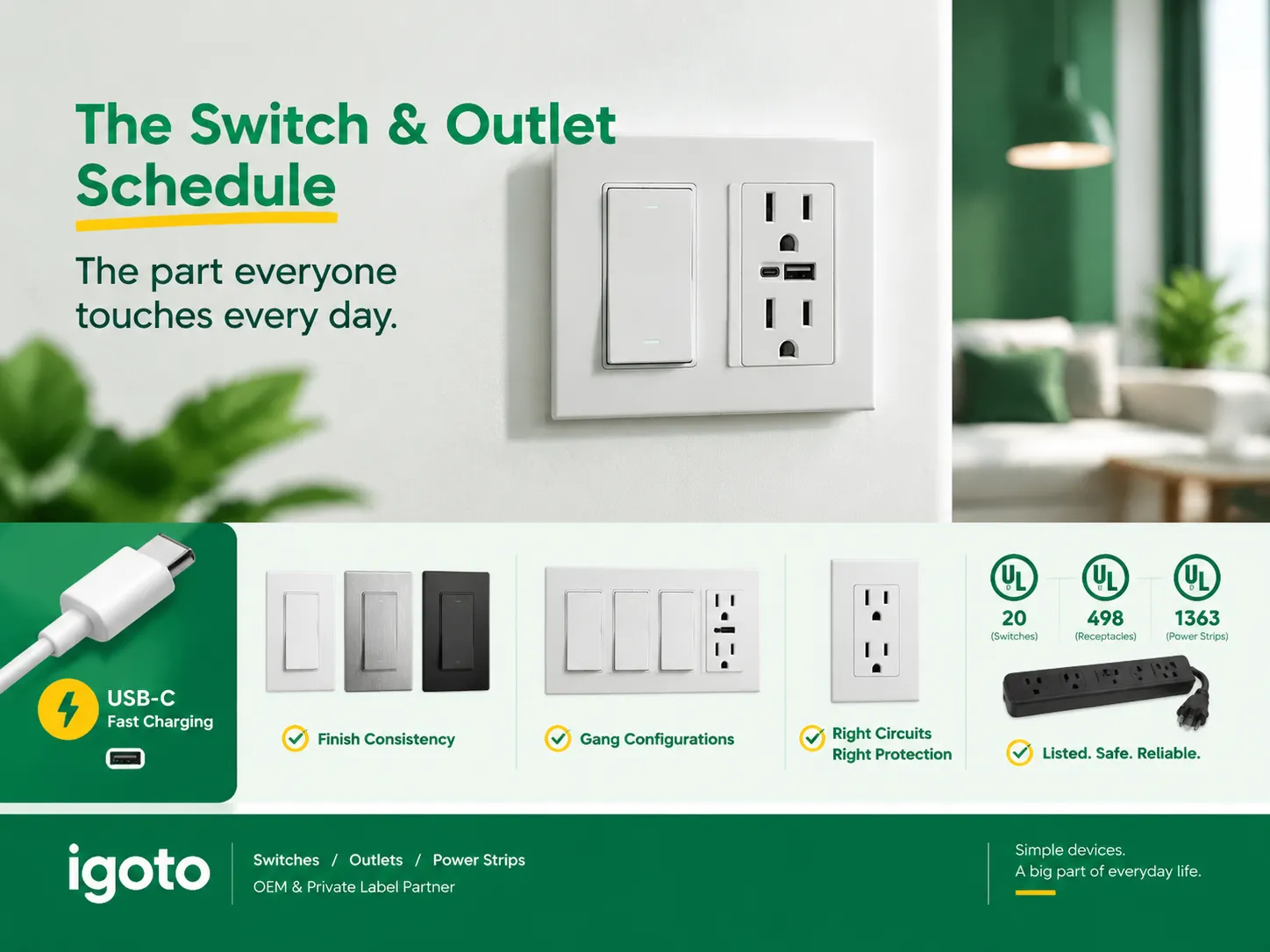
There’s a blunt fact regarding lighting installations. The planning is given weeks of attention, the fixtures take hours of discussion, and the placements of the switches and sockets are arranged in about ten minutes based on whatever location was used last time.
It must be corrected, as wiring is the only part of the installation that the owners come into contact with on a daily basis. A project that has beautiful fixtures, but a switch that looks and feels cheap, or creates sounds and fails in two years, will always be remembered poorly.And the specification choices are real ones: finish consistency across a building, gang configurations matched to the switching layout, receptacles on the right circuits with the right protective devices, USB charging outlets in kitchens and bedrooms — where the move from USB-A to USB-C fast charging has quietly made a lot of five-year-old hardware obsolete — and the split between decorative plates in public areas and robust hardware back-of-house.
In the United States, the certification level also has to be mentioned because, as the word “certified” refers to different regulations and fulfilling requirements of separate products. For instance, switches are certified by UL 20, plugs by UL 498, and power strips, which are called as relocatable power taps, are regulated by UL 1363 which ensures that each device is built according to particular construction and wire requirements.When one buys the power strips according to their prices, the result is that the facility obtains the device that does not meet the requirements of its use.
To be honest, we are in the place that is responsible for the production of the switches and outlets and power strips — the layer of devices that is installed at the end of the lighting project. Within the lighting solution, it plays an insignificant role, although this device is being installed at least forty times a day. We produce them as an OEM and private-label partners for distributors and brands which brings us to say that we are in an unimportant but still the only required place in the market.
Retrofit work makes up the bulk of work in the business, and the retrofit process operates in three different ways, which are: First, access- recessed lights in existing ceilings results in cutting and patching around fixtures, the cost of which is affected by the overhead surfaces- whether there is a loft above, whether the space beneath the lights is a second level floor, or whether the area is fire-rated construction. Second, insulation contact- insulated ceilings necessitate IC rated fixtures because an IC- rated fixture cannot be used in conditioned ceilings creating a building-code issue in addition to a science-building impact. Third, existing wiring- some old buildings would have no neutral at the switch, no equipment and ground, and no spare power supply making the lighting installation process more challenging.
Using a simple sequence makes the process easier and more effective. The first step is to finalize the lighting scheme before the ceiling opens up, as having the walls open makes checking the status of the boxes cost-effective for wiring.And where the job is a like-for-like replacement of a failed or outdated device rather than a new scheme, follow the same working sequence any wiring device demands — replacing a light switch looks trivial right up until the point the circuit is misidentified.
A lot of homes in northern New Jersey are equipped with ceiling-fan-lamp fixtures, but they can be a control nightmare. A ceiling fan’s motor is an inductive load. A dimmer intended for resistive or LED loads won’t operate correctly in this case, and as a result can ruin either the control gear, the fan motor, or both, if you continue to use it. Fans require their dedicated speed controller and ceiling-fan lamps have to be dimmed on their own dimming channel. Technically, both functions can be combined in one plate, but for this purpose a special device needs to be installed.The distinction between the two device types is set out in dimmer switch versus fan switch.
There are four forms of fees, so before comparing costs, it is advisable to find out which one is applied to your case.
| Fee basis | Typical range | When it’s used |
|---|---|---|
| Hourly design | $95-200 per hour | Single rooms, ad-hoc advice, developing an existing scheme |
| Percentage of contract value | 2-5% for lighting-only scope | Larger commercial projects with a defined lighting package |
| Lump sum per project | $2,000-8,000 for a small commercial scheme | Single-floor fit-outs and straightforward renovations |
| Included in the installation price | Not itemised | Contractor-led design on residential and small commercial work |
In addition to the design cost, make sure to allocate funding for the installation and check if photometric calculations are on the list of deliverables, instead of being perceived as one of the assumptions. The commissioning is the stage that makes the system functional, and in New Jersey, it is one of the requirements of the rebate programs. Rebate application support is something your designer will likely help you with for an additional fee, however, the fee pays off with plenty of projects. If you have doubt, it is better to know that installed LED downlights costs between $150 and $400 and there are residential systems available for $3,000 to $15,000.
While the electrician is responsible for installing and certifying their electrical work, the lighting consultant’s job is to determine everything that needs to be installed and why. This includes performing photometric calculations, determining what types of fixtures to use, determining their placement according to the task demands, developing a control strategy, and aligning egress lighting with both fire codes and occupancy codes. They also document the scheme so that it can be bid upon, and then installed correctly. In New Jersey, the lighting consultant also needs to ensure that the proposed fixtures qualify for rebate programs.
The 074xx band represents a region within New Jersey, which mostly includes bits of northern Bergen, Passaic, and Morris counties, and how it plays into the rest of this article. Importantly, not every number in this band indicates the delivery area. Some numbers are probably in holes between ZIPs assigned to municipalities like West Milford, Wyckoff, Mahwah, or Wayne. It is best to treat the number as indicating a region instead of a municipality and check the USPS for a specific address.
When it comes to a one-room upgrade or a direct swap of fixtures, no — a visit to a lighting showroom or a trained electrician can do the same job in a more cost-effective manner. In the case of a commercial installation where the lighting needs to comply with energy regulations, a project that needs rebates, a construction site with emergency lighting requirements, or an area where natural light affects the situation significantly, the calculations are worth it since they help avoid the problems rather than save money in energy expenses. The main point is to find out whether someone will be obliged to confirm that it is compliant or not.
Yes, this is not uncommon, and for simple residential projects this is perfectly logical — shop selling facilities in this field provide the design service in the price of products, and a number of producers offer the designs and calculations for their products. The drawback of such an arrangement is the same in both instances: the designer will provide solutions based on the company’s offer and no one is going to tell you that another solution may be better.
In most cases the answer is yes, and this is in fact the most financially catastrophic example in this category. The NJ Clean Energy Program lighting incentives are prescriptive and thus require getting pre-approval for the whole installation plan before the actual implementation can take place. The installed devices should also be present on the DesignLights Consortium qualified items list. The project is conducted starting from the installation process and becomes the part of eligibility criteria. Pay attention that the successful integration of rebates requires following these steps: take the listed items, get the approval for installation procedures, install the devices and document everything necessary for the final submission.
07791 lights on the water are the type of market that northern New Jersey is famous for. You can find a much simpler distribution in this area than many other locations depending on what part of the territory you are in. For instance – in the northern territory you will see various towns in an easy way, which means that you may want to hire a lighting designer working with lights on the water. Everything depends on what type of job you need completing and who will complete it – in some cases you might need to contact a distributor of light fixtures for replacement, an electricity contractor for wiring or the design studio for development and implementation of specific project plans. It is worth remembering that after implementing a project you will always receive a set of reports. Specifically, these may include the space plan with the calendar of works, photometric calculations, a plan of managing light during the works, and a plan of getting through different codes and regulations in that specific region. Therefore, you should budget $95 to $200 per hour or around 2 to 5% of the spending for electrical work and do not forget about costs that come with different documents like calculations, commissioning and rebate.
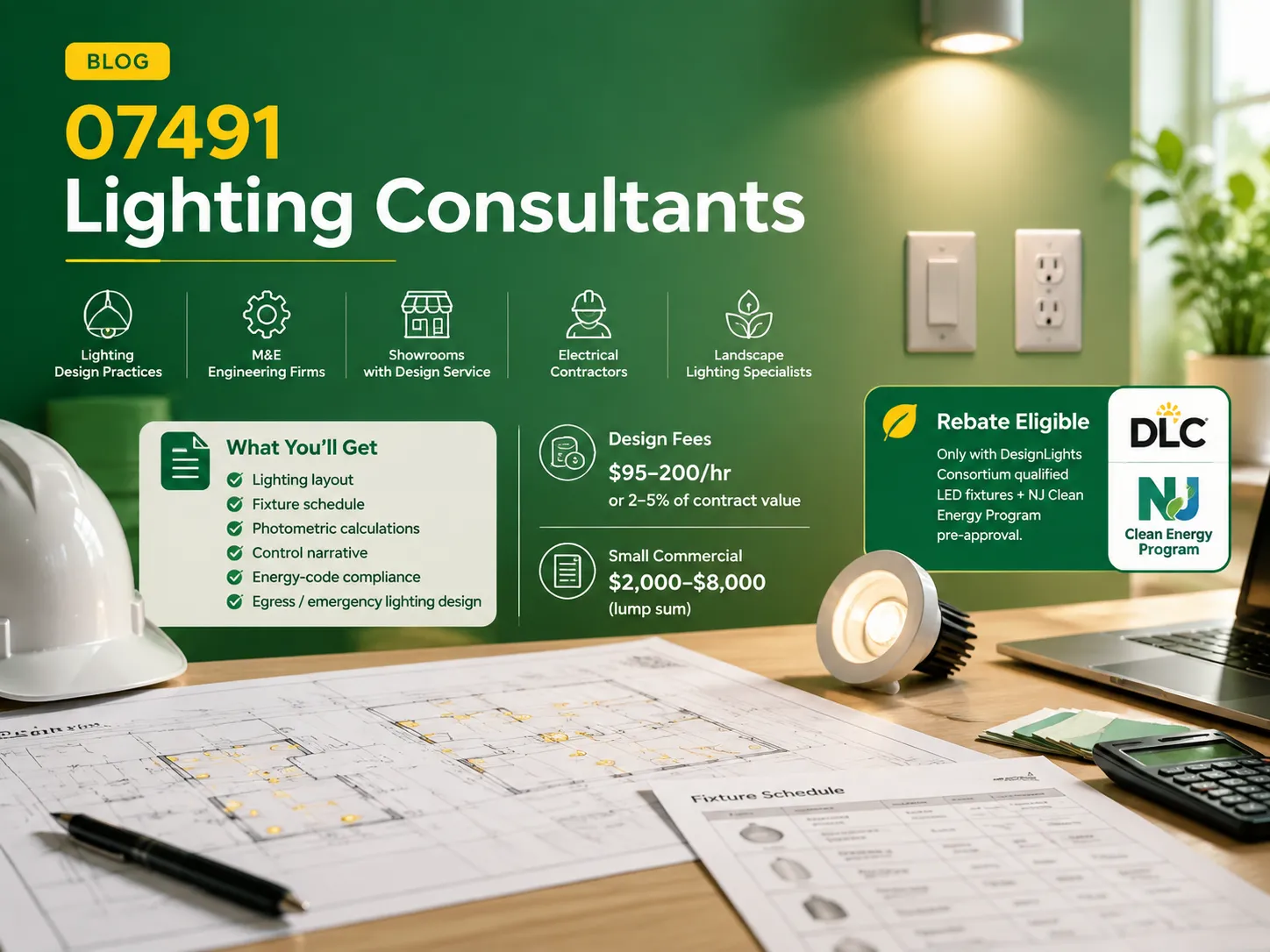
If you need assistance with lighting in the 07491 region, is essential to ask two crucial inquiries: who is operating nearby and how much is charged for the services. Concerning the first question, one can easily find the answer regarding the facts and figures because the market in northern New Jersey is not so broad. […]
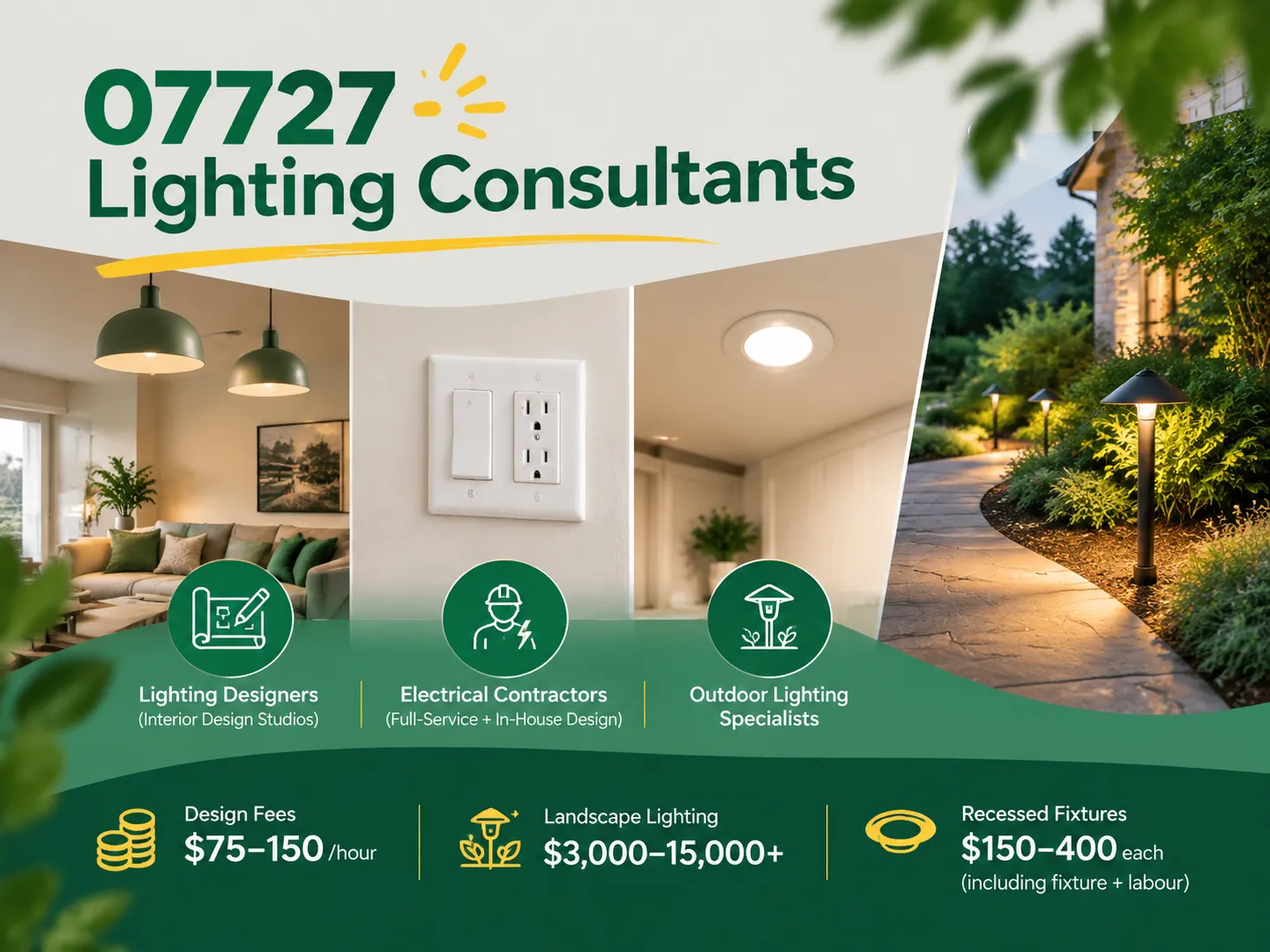
Farmingdale, along with parts of Wall Township and Tinton Falls, New Jersey, share the same zip code of 07727. Most of the houses built from the 1950s to the 1990s still exist today. Most of the homeowners are renovating their houses as opposed to building new homes. Homeowners tend to spend a lot more on […]

The term “07984 lighting consultants” gives people the impression that the five digits represent a postal code of some sort that indicates the place where lighting consultants provide services. This is, however, incorrect: there is no postal area coded 07984, which is only a code of mobile telecommunications in Great Britain. This means that the […]

 No.6 Tuozhan Road, Leshang Pioneer Park,Yueqingwan Bay Harbor,Yueqing city,Zhejiang Province


