

If you travel often, then you probably know that packing for Singapore is one of the simplest things to do in Asia, but also one of the most difficult because it uses UK-type plugs (instead of the US-type ones). Whether you need a transformer, a plug adapter or both depends on two questions that tourists usually confuse.
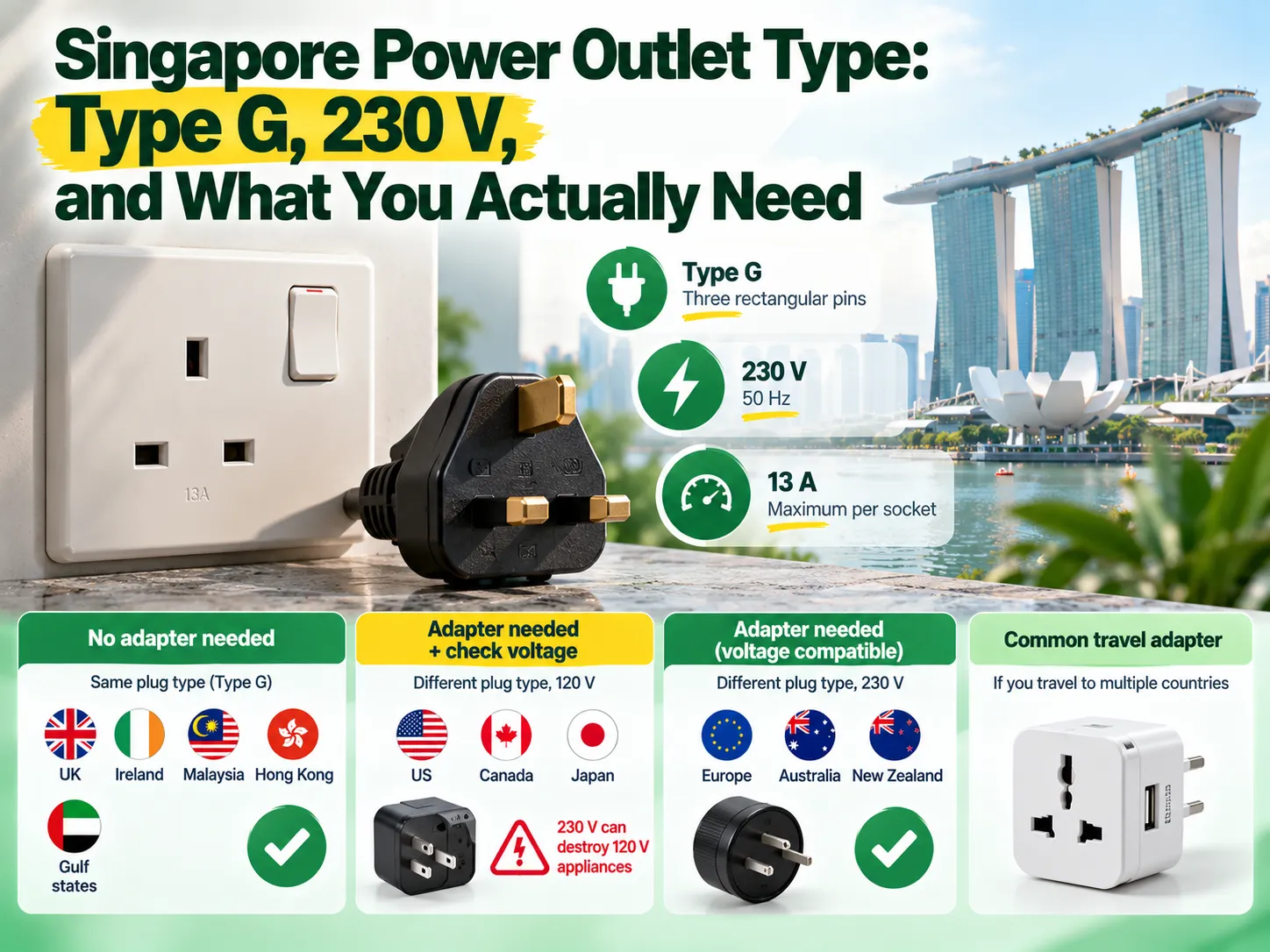
In brief: In Singapore, the plug used is the Type G, which is based on the British BS 1363 of the SS 145 standard with the same features. The supply voltage of Singapore and the frequency are 230 V and 50 Hz. Visitors from the UK, Ireland, Malaysia, Hong Kong, and some Gulf states won’t need anything. Visitors from the USA, Canada, and Japan should use an adapter and check the voltage. Thus appliances from the 120 V supply will be damaged. Visitors from European countries, Australia, and New Zealand will need only the adapter, as the voltage is the same.
The arrangement of three rectangular pins in Type G is unique. The two flat pins on the bottom are positioned to serve as live and neutral pins while the longer one at the top serves as the earth pin. The reason for the longer earth pin is that it allows the earth connection to be made prior to the live connection.
All plugs in Singapore conform to this pattern and possess unique design features which make them one of the safest plugs in the world. The major features include:
The wider picture of how plug shapes vary globally — and why there are fifteen named types rather than one — is set out in this overview of the different wall socket types and where each one is used.
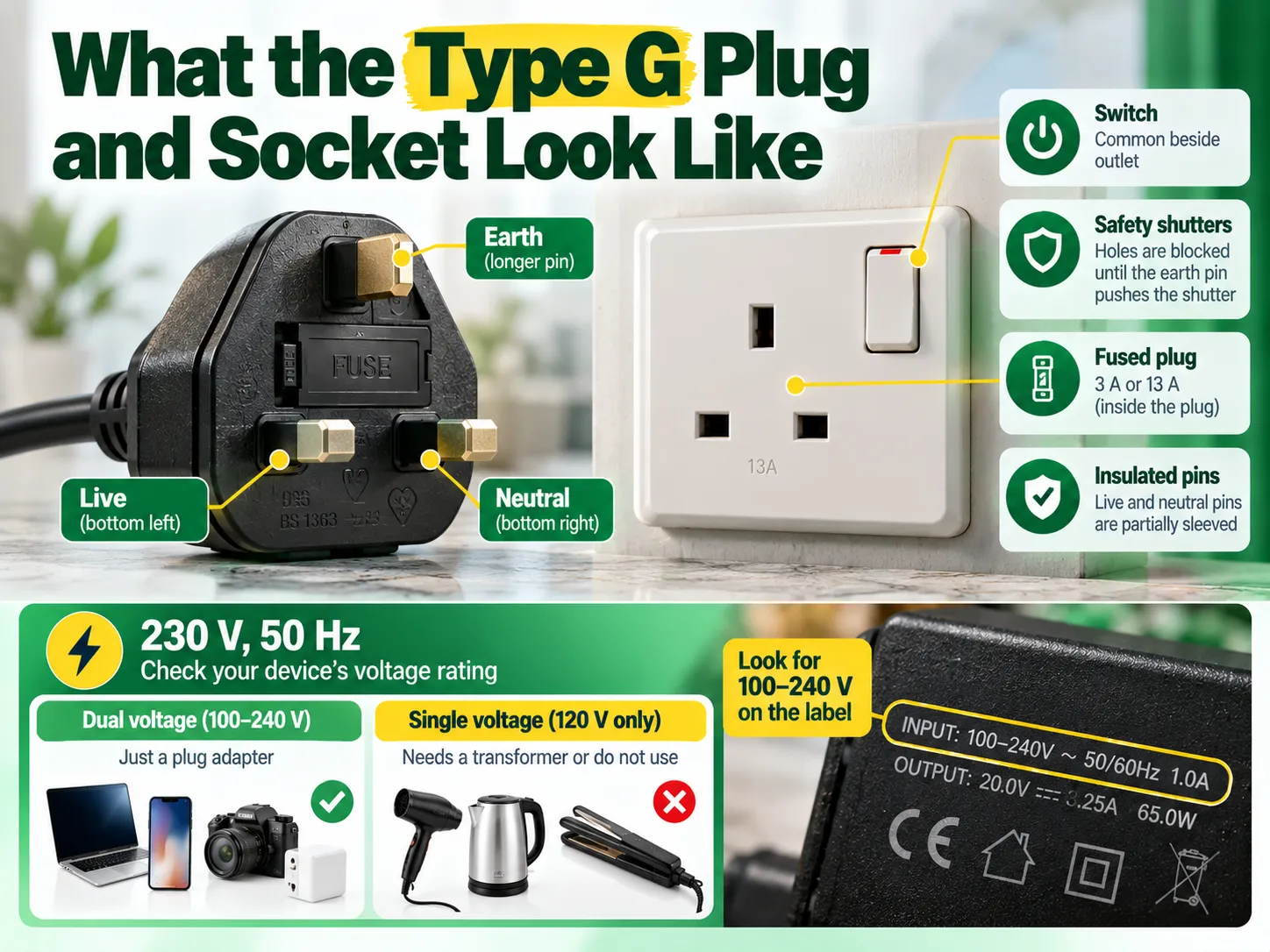
Singapore is supplied with electricity at 230 V, 50 Hz, which is in accordance with European standards, unlike North America. The grid is operated by SP Group and is known to be one of the most stable grids of the world. The delivered voltage is almost always within several percent of the nominal value.
This number implies two important things:
In order to avoid problems when traveling to Singapore, make sure to look for the dual-voltage label. Most laptops, phone chargers, camera chargers, electric toothbrush chargers and portable speakers of the last decade are designed to work in the range of 100 – 240 V, 50/60 Hz and will thus require only a plug adapter when used in Singapore. The only devices having a potential risk of failure are the ones that consume electricity directly (blow dryers, flat-irons, kettles etc).
This is where most of the confusion disappears, because the answer depends entirely on where you are coming from.
| Coming from | Your plug type | Adapter needed? | Voltage |
|---|---|---|---|
| UK, Ireland, Malaysia, Hong Kong | Type G | No | Matches at 230 V |
| UAE, Qatar, Bahrain, Kuwait, Oman | Type G | No | Matches at 230 V |
| Saudi Arabia (newer buildings) | Type G | Usually no | Matches |
| Europe (Type C, E, F), Italy, Switzerland | Round pins | Yes | Matches — adapter only |
| Australia, New Zealand | Type I | Yes | Matches — adapter only |
| US, Canada | Type A / B | Yes | Mismatch — check every device |
| Japan | Type A / B | Yes | 100 V — converter needed for some devices |
| India | Type D / M | Yes | Matches — adapter only |
If your country uses Type G, you will need to bring your chargers and leave the adapter at home. If your country does not use Type G, there is just one Type G cover for your whole trip — Singapore does not have regional variation like some larger countries.The full regional breakdown, including which parts of the world share which standard, is covered in this guide to plug and socket types by region.
No, and this is the most costly assumption made by a traveller from North America. A Type A plug from the United States has two flat and parallel blades and does not fit into a Type G socket because the socket is recessed and its shutters will not open at all. Furthermore, a Type B plug with its round earth pin will also not work.
Voltage is more important than this. If a device from the US, which is only rated for 120V, is connected to 230V through a cheap adapter, it will fail. Therefore, the correct order of operations for a US traveller is as follows: use an adapter first, and then check the label of every device before plugging it in.The distinctions between the North American configurations and the rest of the world are set out in this explanation of the North American socket type, which is worth reading if you are deciding whether a device will travel at all.
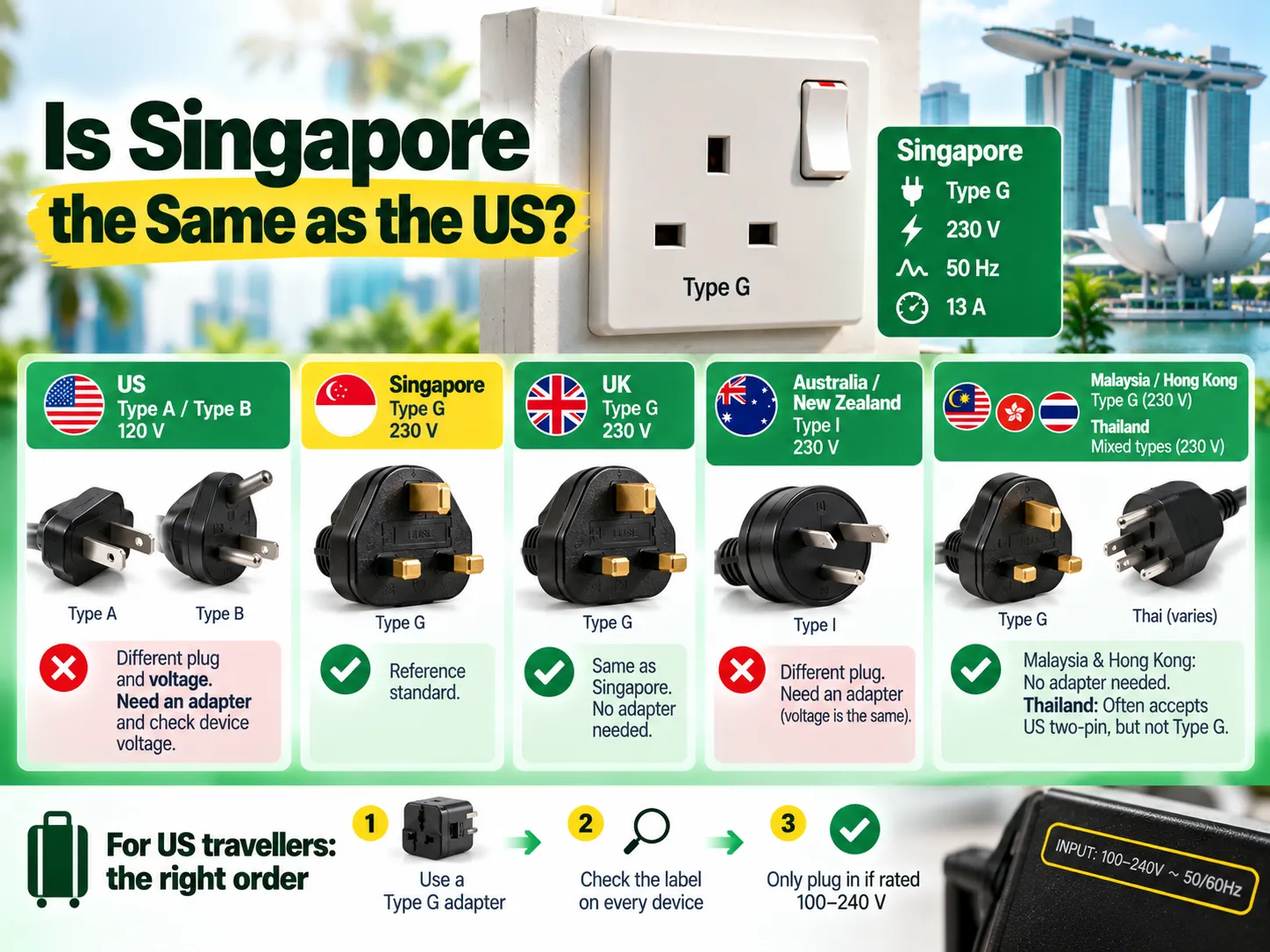
Just like the UK: yes, absolutely. Singapore adopted British standards, meaning that the connectors, sockets, fuses and other power supply infrastructures are the same. So if you have an appliance from the UK, you can use it in Singapore without needing anything else.
Just like Australia: no. Australia and New Zealand use standard I, with three flat pins, and with the exact same voltage and frequency (230 V / 50 Hz) — naturally, the voltage is the same, and you would just need a plug adapter for Type I.
Just like its neighbors: mixed. Malaysia, Hong Kong, and Brunei also use G without needing adapters, while in Thailand, things are different, as there are many different plug types used, depending on the building. Thus, a Thai socket can sometimes accept a US two-prong plug without an adapter, but may not be suitable for G. That kind of regional inconsistency is exactly why travel itineraries through Southeast Asia need more than one adapter even though the voltage stays broadly the same across the region, as set out in this guide to the socket types used in Thailand.
This mistake is the one that can result in a person losing a laptop. A plug adapter only changes the shape of the connector being used; it doesn’t contain any electronics. But a voltage converter changes the voltage from 230V to 120V. If you buy the wrong one, your appliance will fit well only to burn out immediately after.
Cost of appliances in Singapore: plug adapters range from 5-30 SGD while voltage converters and converters for 120V appliances start at 30 SGD onwards (depending on the wattage). If your appliance is a dual-voltage one, it means that it is 10 SGD device, not 100 SGD.
Pay attention to adapters sold in airports. Plug Type G that is sold in the shop for 5-10 SGD will be priced upper 15-30 SGD in Changi, and uncertified plugs will have greater overheat and an electrical short-circuit risks than certified plugs. Opt for certified adapters with a fuse instead of picking the cheapest one on the market. The same logic applies to the European systems, where the differences between Type C, Schuko and the French and Italian variants catch people out — covered in this breakdown of European electrical plugs and sockets if your trip continues onward from Singapore.
Most plug types ensure protection of the wiring behind the wall. However, Type G goes a step further and protects the appliance itself, as it has the fuse in the plug rather than in the panel. This is why you can find both 3 A and 13 A fuses on sale in every supermarket in Singapore, and also why a UK appliance with a 3 A fuse cannot power a 2-kW heater.
For a manufacturer or importer, this means compliance and not travelling. Plugs sold in Singapore need to have an adequate fuse for the load and devices that are to be installed permanently should have appropriate certification and the EMA SAFE mark. The power outlets should have a shutter system as well. Mistakes here lead to customs problems and disruptions related to shipment.
The coverage is acceptable and becoming better but it is still not consistent.
In case you are staying at a hotel that is on the older side or need more devices to be powered by one electrical socket, it is better to go for a power strip rather than buy an additional adapter.
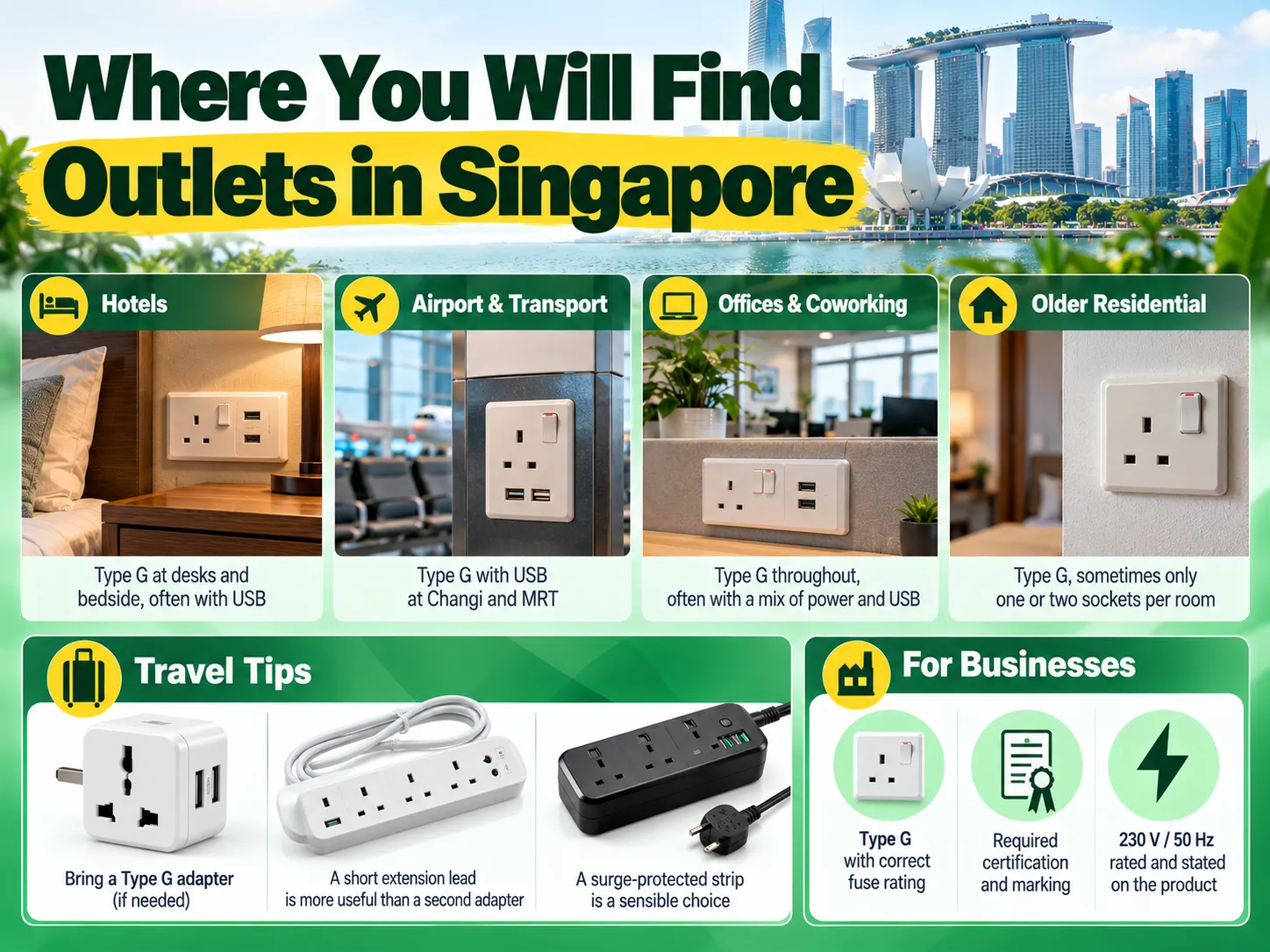
The sale of a product for permanent use depends on three requirements:
A reusable multi-region adapter does not qualify as a travel adapter. A travel adapter is a consumer gadget whereas a shuttered Type G socket rated for 13 A is a different product made under a different standard. The use of one related to another causes the failure of a compliant order at the border.
The type G adapter with three rectangular pins arranged in a triangular shape by itself won’t be needed unless, of course, you are coming from the UK, Ireland, Malaysia, Hong Kong or one of the Gulf states. It would be advisable to get a Type G fused adapter instead of unfused, as not only is it available at a price ranging anywhere between S$5 to 30 but you’re better off buying it in your home country rather than at the airport where it would be two to three times more expensive.
Type G is standardised under SS 145 standards and is largely similar to British BS 1363. Type G has three rectangular pins, the use of an in-plug fuse, sleeved live and neutral pins, and shuttered sockets, with a voltage of 230 V and 50 Hz.
No. The Type A and Type B plugs in the United States will not fit the Type G sockets in Singapore, and their voltages are different – 230 V versus 120 V. American visitors will require a universal plug adapter and must ensure that every device works on voltage ranging from 100 to 240 V. If one-plug appliances are used, they will get destroyed.
No, in Australia, plug type I is used, which has three flat pins arranged in a V shape. Because the voltage and frequency settings in Australia are identical at 230 V / 50 HZ, this means that in Australia, an adapter would be sufficient. However, because the pins are physically different, such as in shape or size, this form of connection will not work in Australia and therefore it must be used.
The voltage and the plug type used in Singapore are Type G 230V 50Hz. Unlike the North American plug which is a different voltage altogether, its shape also varies from that used in Australia. From your travel itinerary, you can deduce what kind of a plug you will need for your appliances. If you are coming from a Type G country, no adapter is necessary. If you are from a 230V country, an adapter will suffice. If your previous destination was a 120V country, you will need an adapter plus careful examination of the appliance tags.
If you travel often, then you probably know that packing for Singapore is one of the simplest things to do in Asia, but also one of the most difficult because it uses UK-type plugs (instead of the US-type ones). Whether you need a transformer, a plug adapter or both depends on two questions that tourists […]
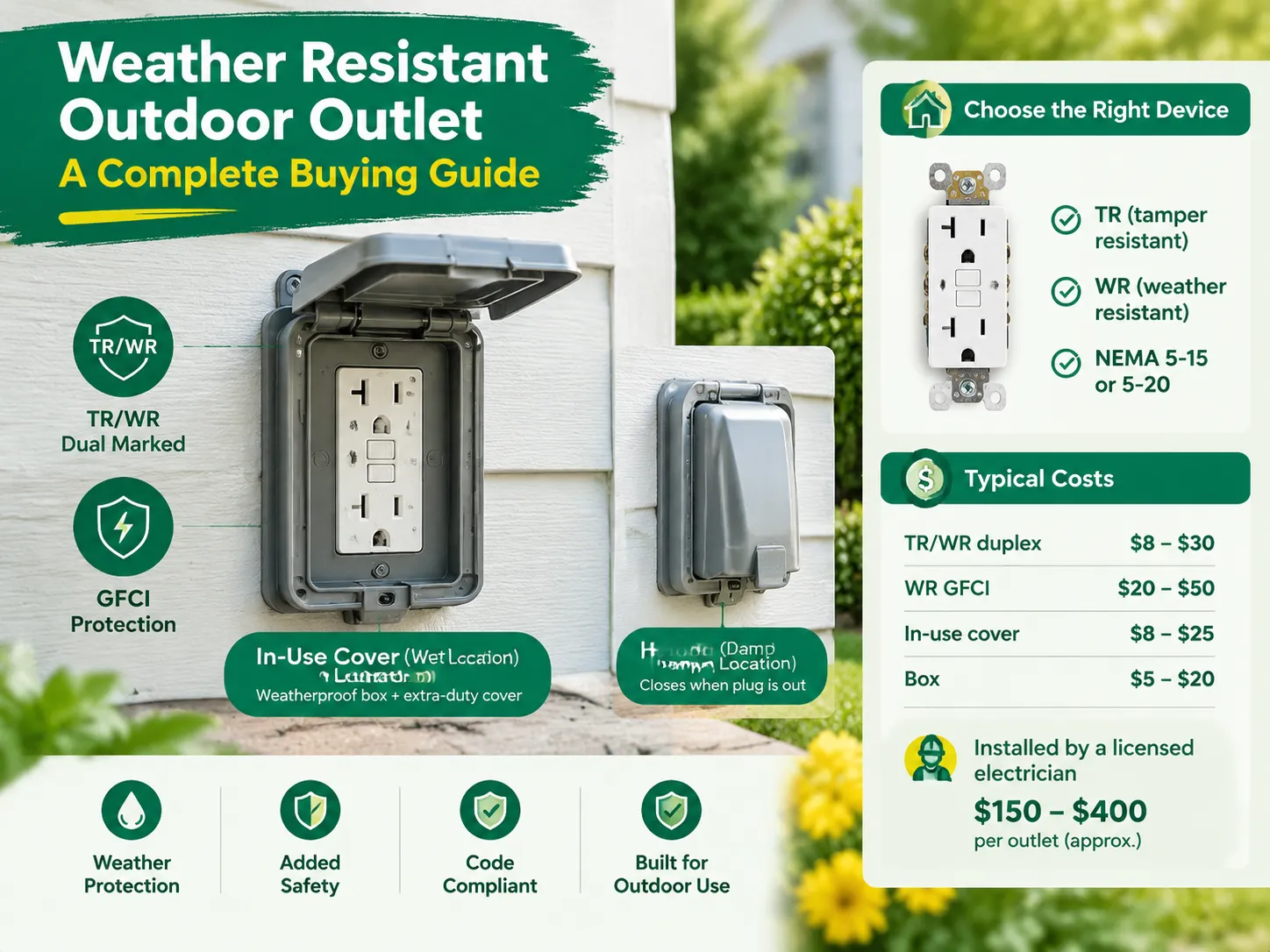
Waterproof outdoor sockets should not to be confused with ordinary outdoor sockets. Although these outdoor sockets can be considered WR-type outdoor sockets, they also come with an enclosure that provides their waterproofness with or without a device. Additionally, the outdoor plug needs to be vandal-resistant and include an RCD. Every weatherproof socket should be identified […]
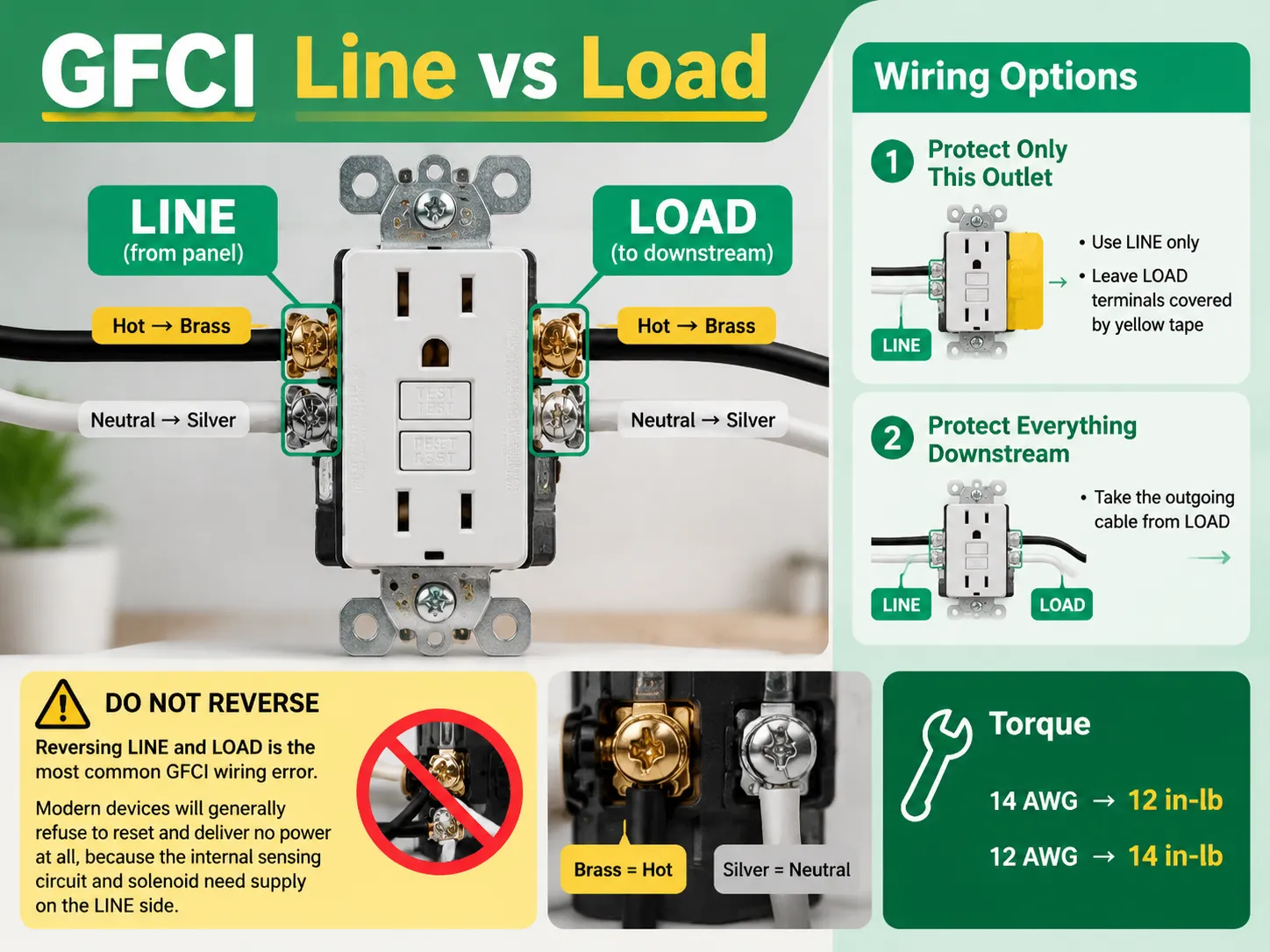
Two types of terminals can define how a GFCI outlet functions: One terminal is for an individual outlet and the other terminal can protect several outlets from a single GFCI outlet at the same cost. Using the appropriate terminal allows you to take advantage of the cost savings of using a single GFCI, while using […]

 No.6 Tuozhan Road, Leshang Pioneer Park,Yueqingwan Bay Harbor,Yueqing city,Zhejiang Province


